Small SUVs are often defined by compromise. They’re designed to be affordable, compact, and efficient. But rarely do they manage to inject genuine personality into the mix. That’s where the 2026 Kia Stonic is trying to stand out. With a refreshed design, a new mild-hybrid system and some subtle premium touches, it aims to offer more than just basic urban transport.
But this is also a segment that has evolved rapidly. Buyers now expect not just value, but meaningful technology, refinement and even more efficiency that wasn’t demanded a few years ago. The Stonic GT-Line sits at the top of Kia’s compact SUV range, and with that comes higher expectations.
For the month of September in 2026, it sits in fourth place behind the Mazda CX-3, Toyota Yaris Cross and Suzuki Jimny in the light SUV sales, according to VFACTS. After spending a week behind the wheel, it’s clear this pint-sized SUV gets a lot right, but it also leaves some gaps we’d like to share.
2026 Kia Stonic GT-Line: Specifications
Engine: 1.0-litre turbo three-cylinder mild-hybrid
Output: 88kW@6000rpm / 172Nm@1500-4000rpm
Gearbox: Seven-speed dual-clutch auto
Drive type: Front-wheel drive
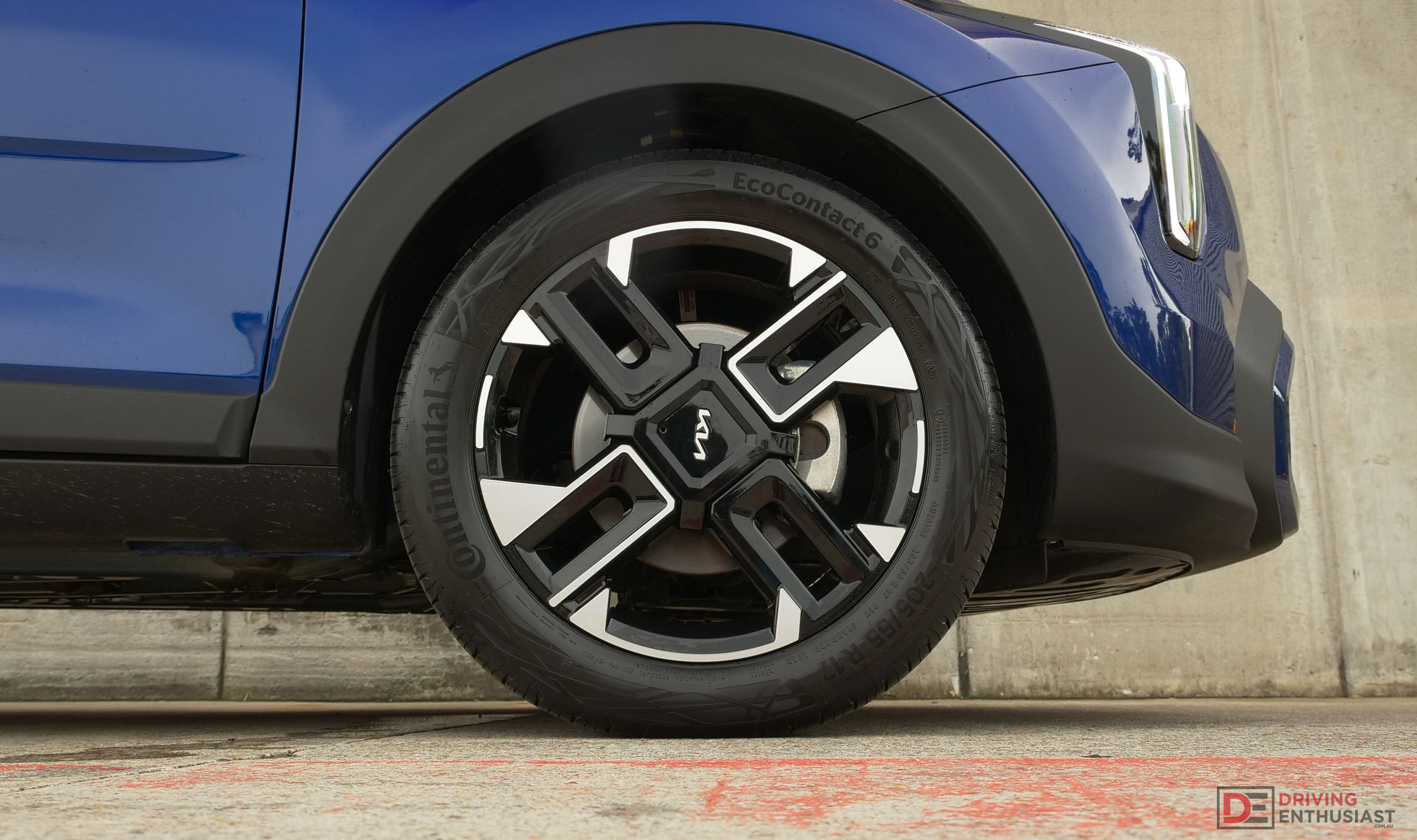
Wheels: F & R: 17×6.5, 205/55
ANCAP: Not tested
Tare weight: 1160kg
Power-to-weight: 13.18:1 (kg:kW)
Official consumption: 5.0L/100km
Our consumption: 6.2L/100km
Fuel tank/Fuel type: 45L/91 RONPower efficiency: 17.6kW:L/100km
0-60km/h: 5.38 seconds*
0-100km/h: 11.48 seconds*
60-110km/h: 8.32 seconds*
1/4 mile: 18.62 seconds at 125.1km/h*
Max acceleration: 0.507g*
100-0km/h braking: 40.00m in 3.06 seconds*
Max deceleration: -1.414g*
Decibel at idle: 36*
Peak decibel at 60-100km/h: 76*
Starting price: $36,040
*Figures as tested by Driving Enthusiast on the day. Manufacturers’ claims may be different
2026 Kia Stonic GT-Line: How much does it cost?
Sitting above the S from $28,480 and the Sport from $32,590, the GT-Line starts from $36,040 (all prices exclude on-road costs). That places it in the middle of the pricing scale for the segment, when comparing headline variants.
The Toyota Yaris Cross GR Sport is more expensive, from $36,990, but it goes with a more economical full hybrid setup. While the Mazda CX-3 Akari demands $39,190 and it has no hybrid tech. Hyundai’s now older Venue Elite undercuts with a $30,500 retail price, and the newer entrant Chery Tiggo 4 Hybrid Ultimate retails from a lower $34,990, and gets a more powerful hybrid powertrain.
Yes, the Stonic GT-Line tries to justify its price through added specification and its new 48-volt mild-hybrid system, but half of the competition now offer more electrified hybrids in this value-driven segment.
Kia backs the Stonic with its well-known 7-year, unlimited kilometre warranty. Servicing is required every 12 months or 10,000km, more often than most, distance-wise. Capped-price servicing edges on the higher side, with the first seven services totalling $3780 ($334, $552, $391, $812, $375, $681, and $635). But it’s good to know the long-term ownership costs upfront.
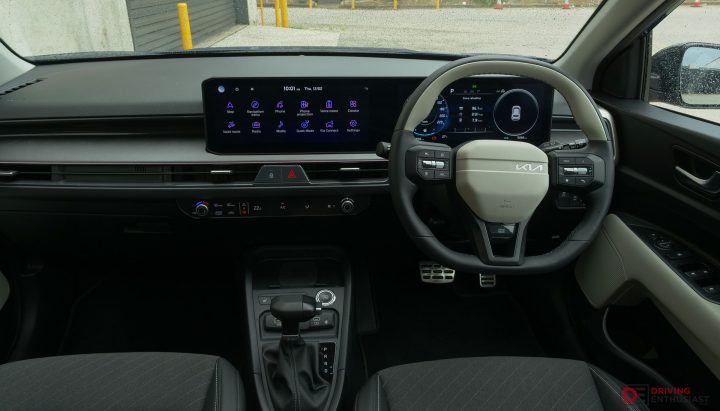
2026 Kia Stonic GT-Line: Interior & packaging
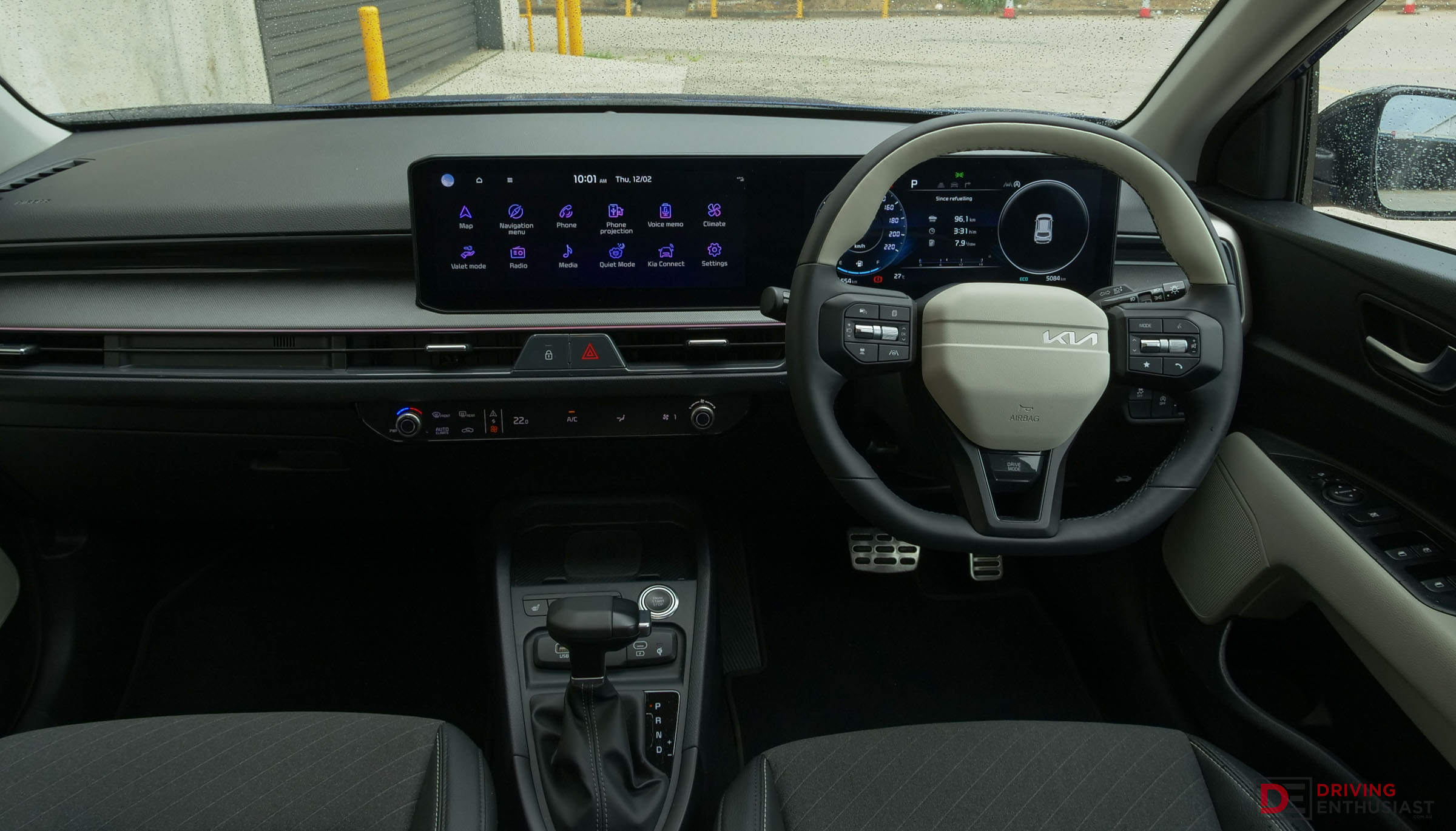
When you open the door and hop inside, you’ll notice the Stonic GT-Line presents a cabin that’s simple but thoughtfully styled. There’s a mix of materials that attempt to lift the ambience above entry-level expectations, including leather-accented trims, contrasting cream-coloured highlights, and a subtle LED light strip running along the dashboard only. It’s not a lavish interior – there are some hard-plastic surfaces – but it feels more considered than its own and rivals at the opposite end of the trim spec.
The overall design is clean, and build quality feels solid for the segment. The steering wheel introduces a sportier design with four flattened edges, which feels a little unusual at first but becomes familiar with time.
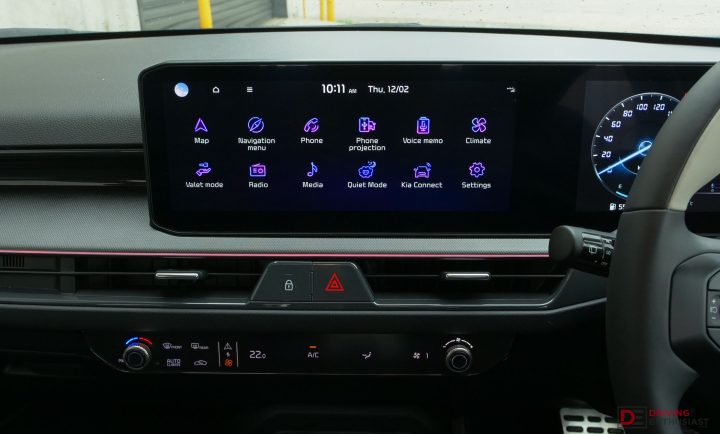
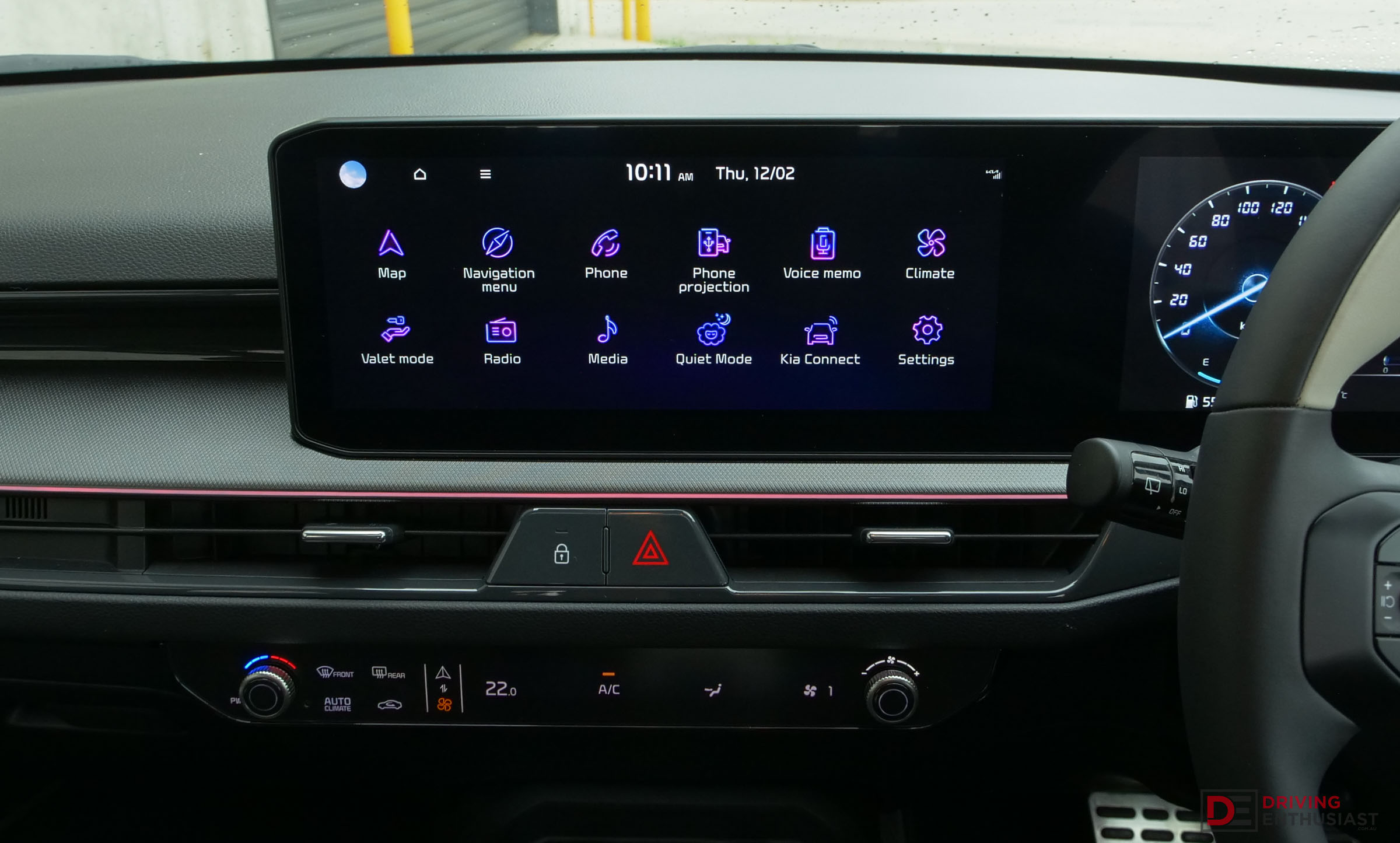
Technology is easy to use and familiar within the wider Kia community. The 12.3-inch infotainment and instrument screens are bright, clear, and responsive, making everyday interaction straightforward. However, the climate control adjustments introduce a minor frustration. They sit on a separate slim panel below the screen. But the panel is shared with multimedia controls. You need to toggle between two modes to change what the panel and physical knobs do. It’s a slightly fiddly solution to save real estate while still including physical controls.
In a surprising omission for a top-spec variant, there’s no wireless Android Auto. In 2026, that’s a feature we simply expect. Especially when it is available in the lowest spec S variant. Research suggests that hardware limitations on older 12.3-inch screens used in the Stonic GT-Line would only support wireless projection or Kia Connect telematics. But not both. Kia chose the latter. But you score built-in sat-nav and digital radio for those capital city dwellers.
Audio performance is respectable despite the lack of a branded sound system. GT-Line specs in other Kia models usually get one. It doesn’t deliver standout depth, but it’s perfectly acceptable for everyday listening.
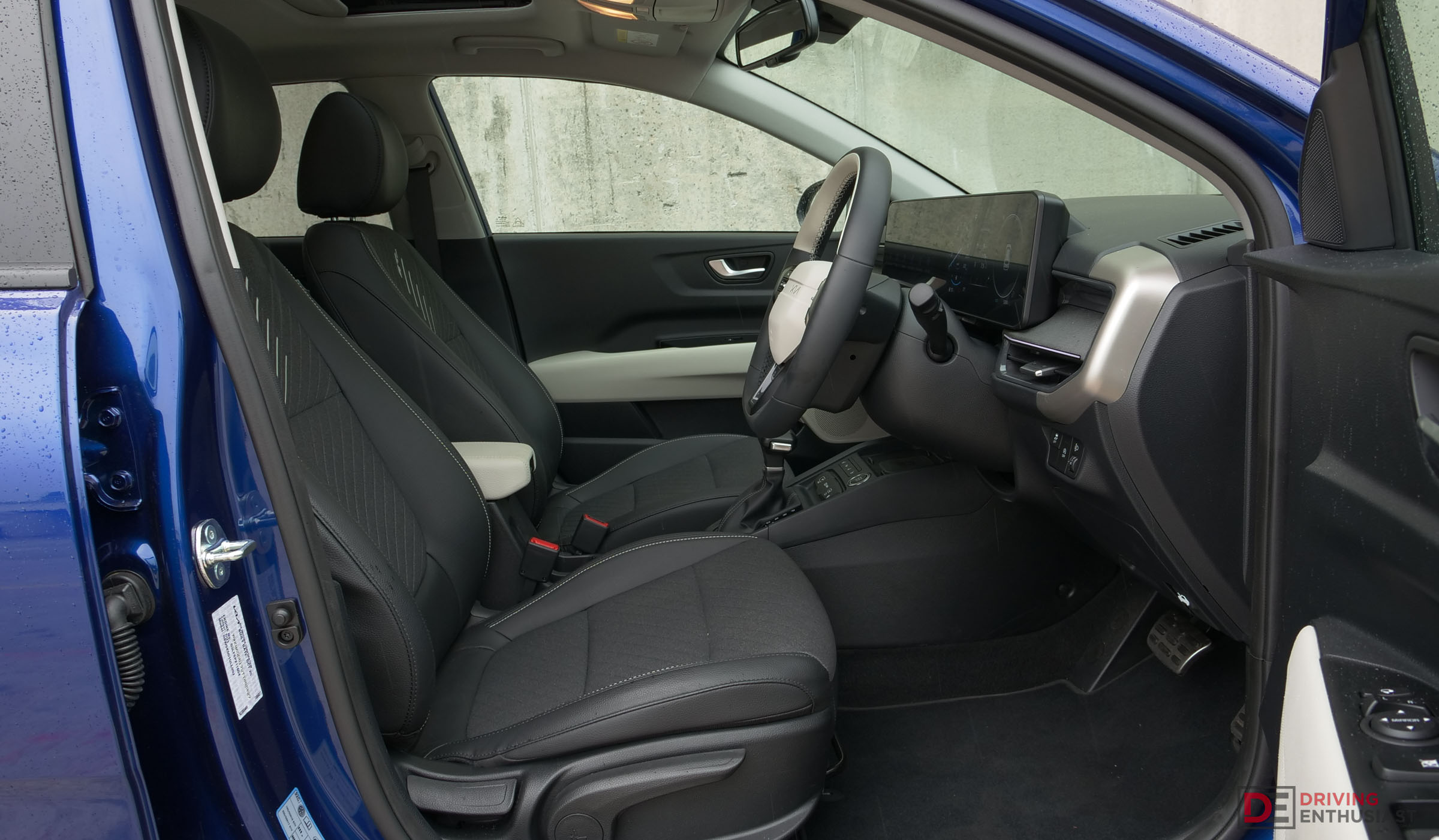
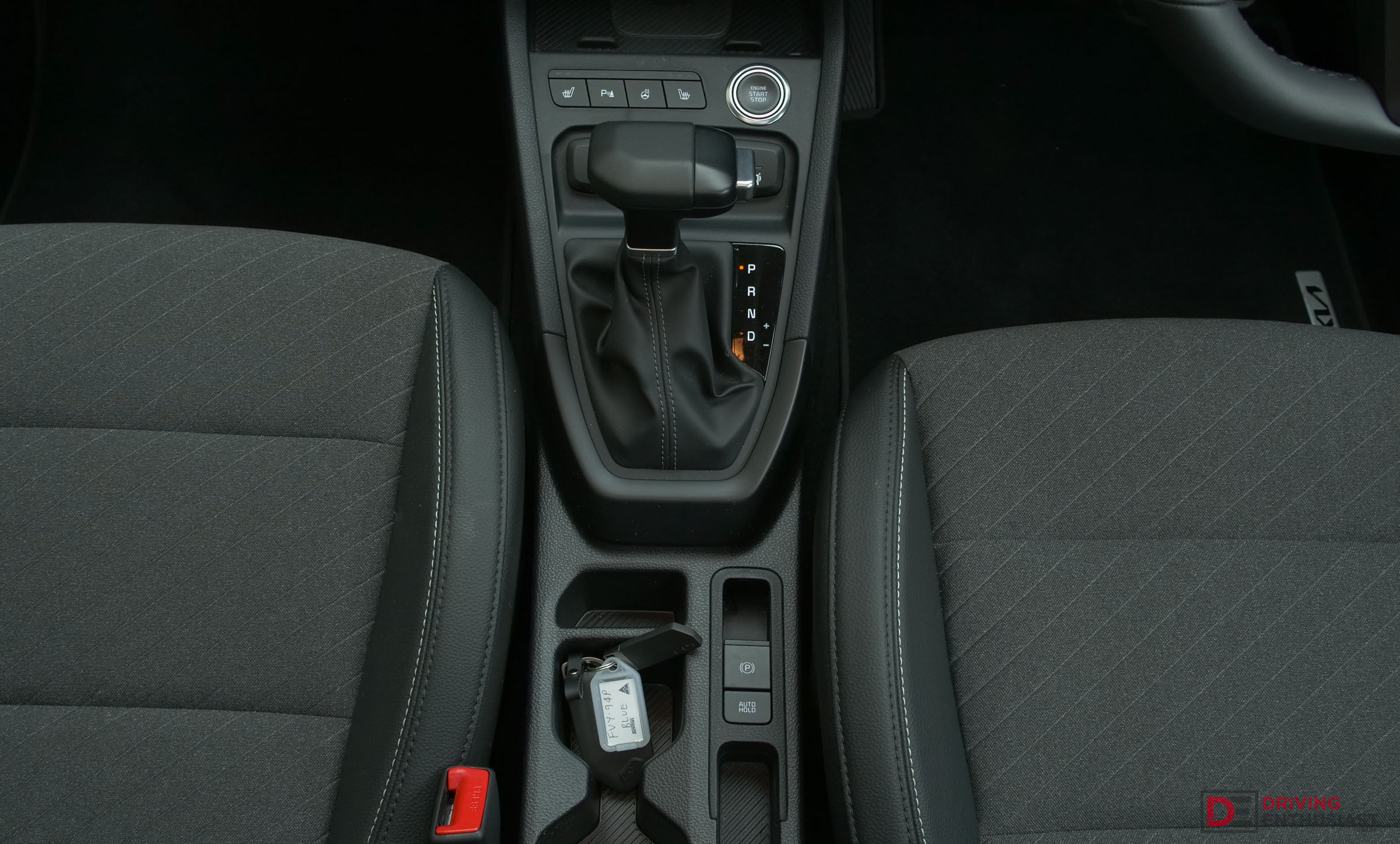
Other wins include a wireless phone charger with a cooling fan, a slidable front centre armrest, cloth and artificial leather seating, heated front seats and steering wheel, auto defog, a tilt and slide sunroof, and that Kia Connect Telematics.
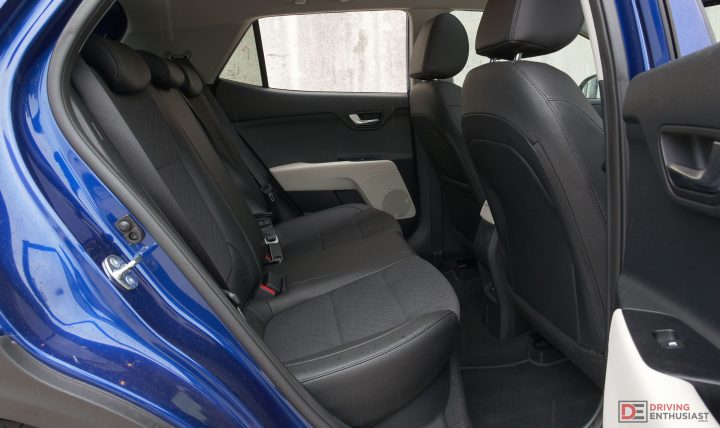
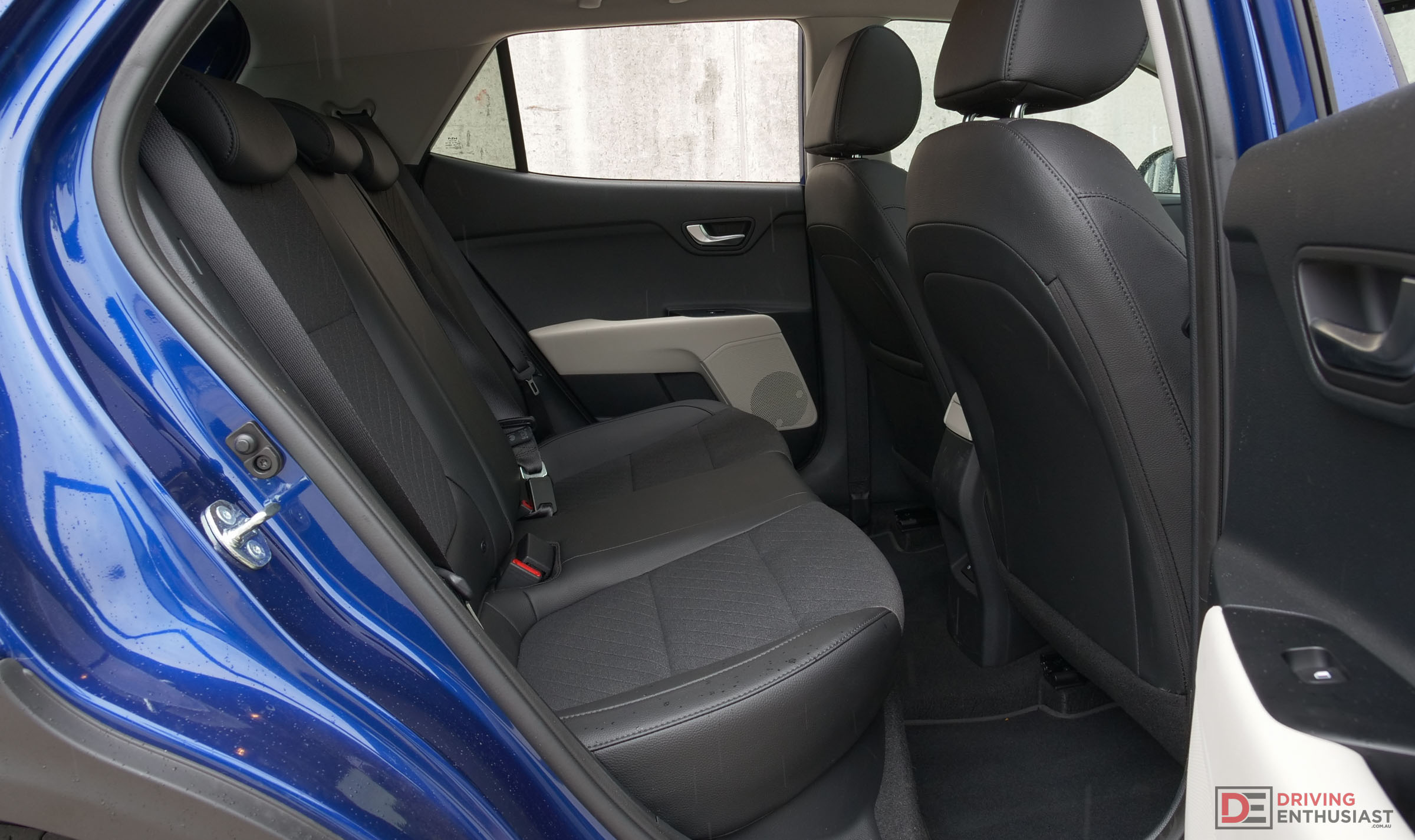
Storage is decent for a vehicle of this size, with enough space for everyday items, though it doesn’t go above and beyond in clever packaging. Rear seat space is adequate, which is actually a win in this segment. There’s enough legroom for adults on shorter trips, and headroom is particularly good. But rear passengers miss out on a few expected conveniences the mid-size SUV market usually gets. There are no rear air vents and no fold-down centre armrest. However, these are common omissions in this class.
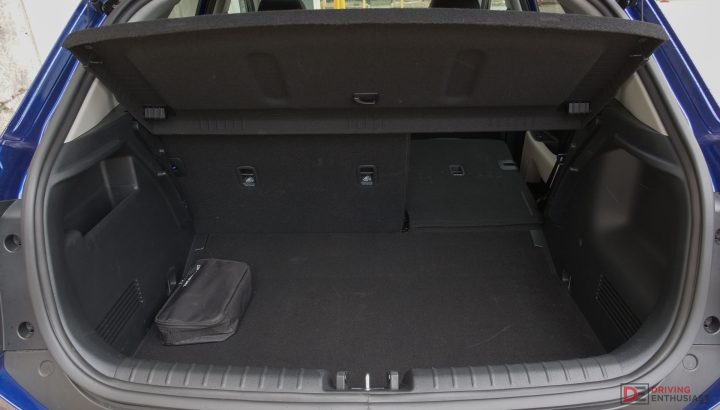
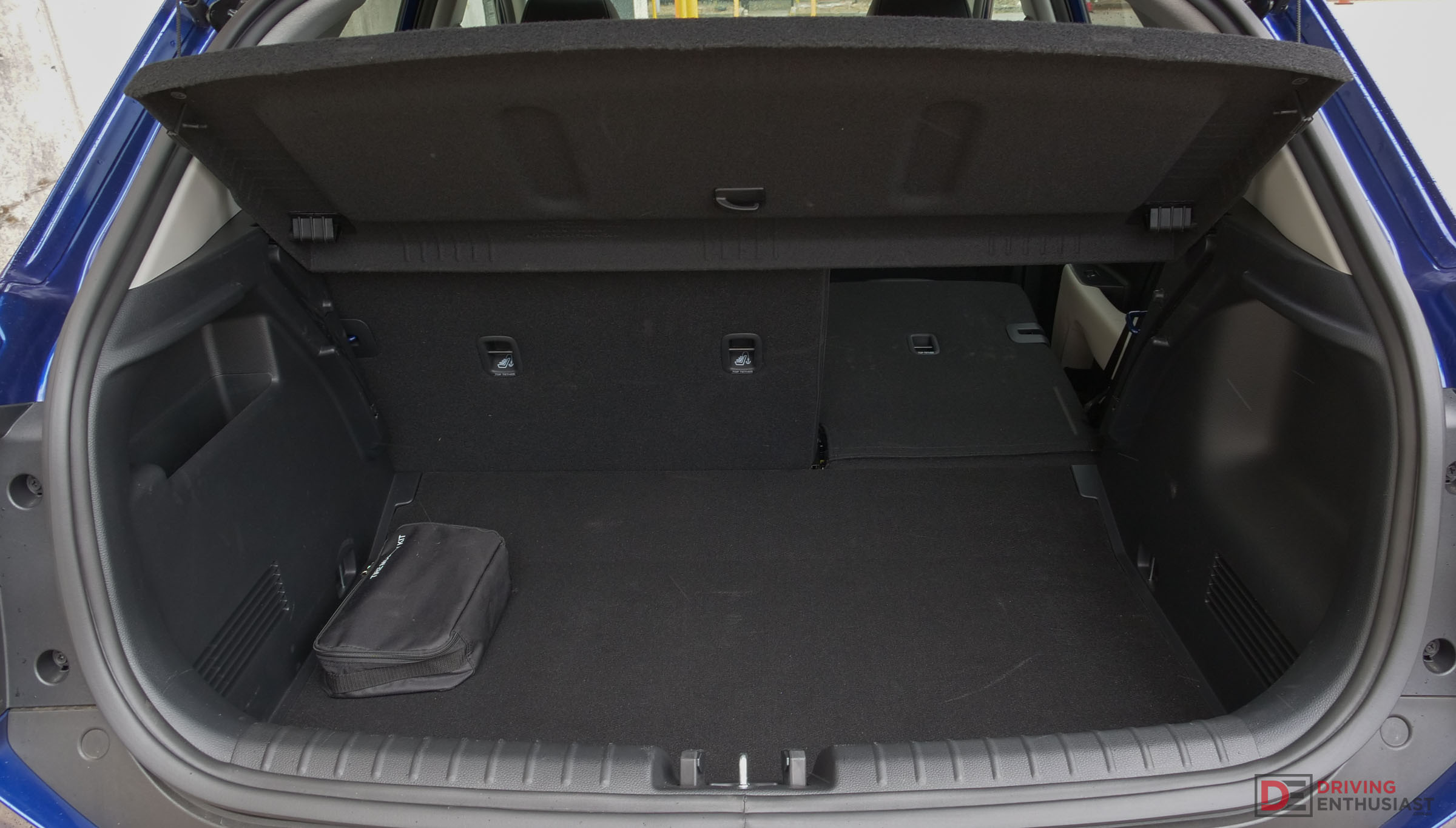
At 352 litres, boot space is typical for a compact SUV, offering enough room for groceries or a couple of small bags. Fold the rear seats down and it becomes more versatile with 1155L of volume, but not a car designed for large cargo duties. In comparison, the CX-3 fits just 264L, and the Venue squeezes in a similar 355L. But the Yaris Cross and Chery Tiggo 4 lead with 390L and 470L, respectively.
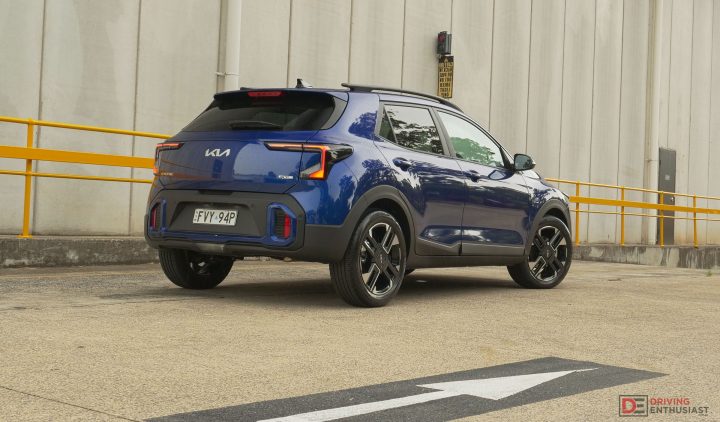
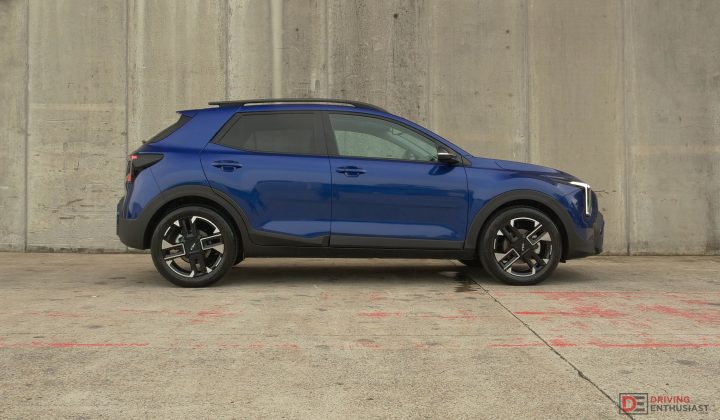
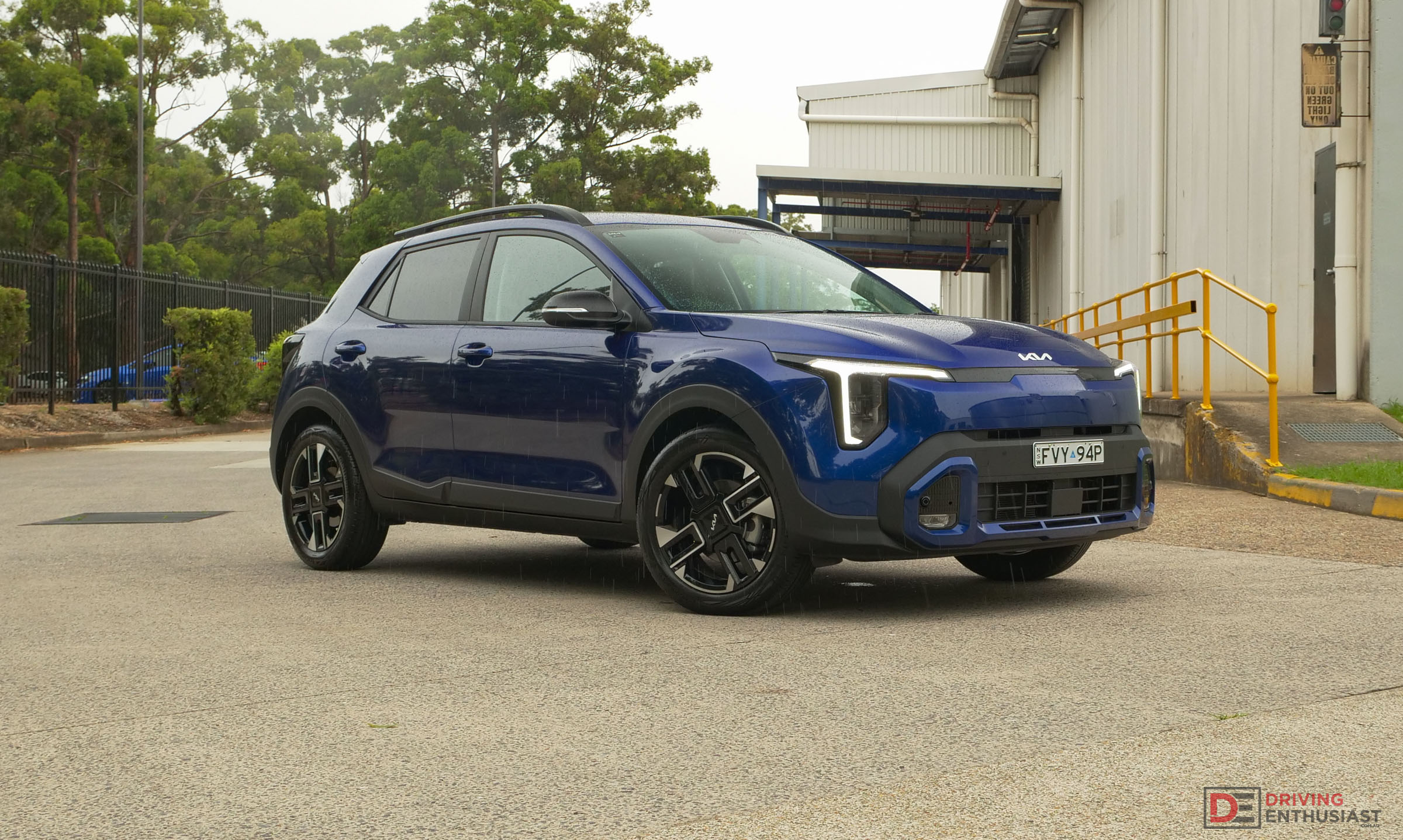
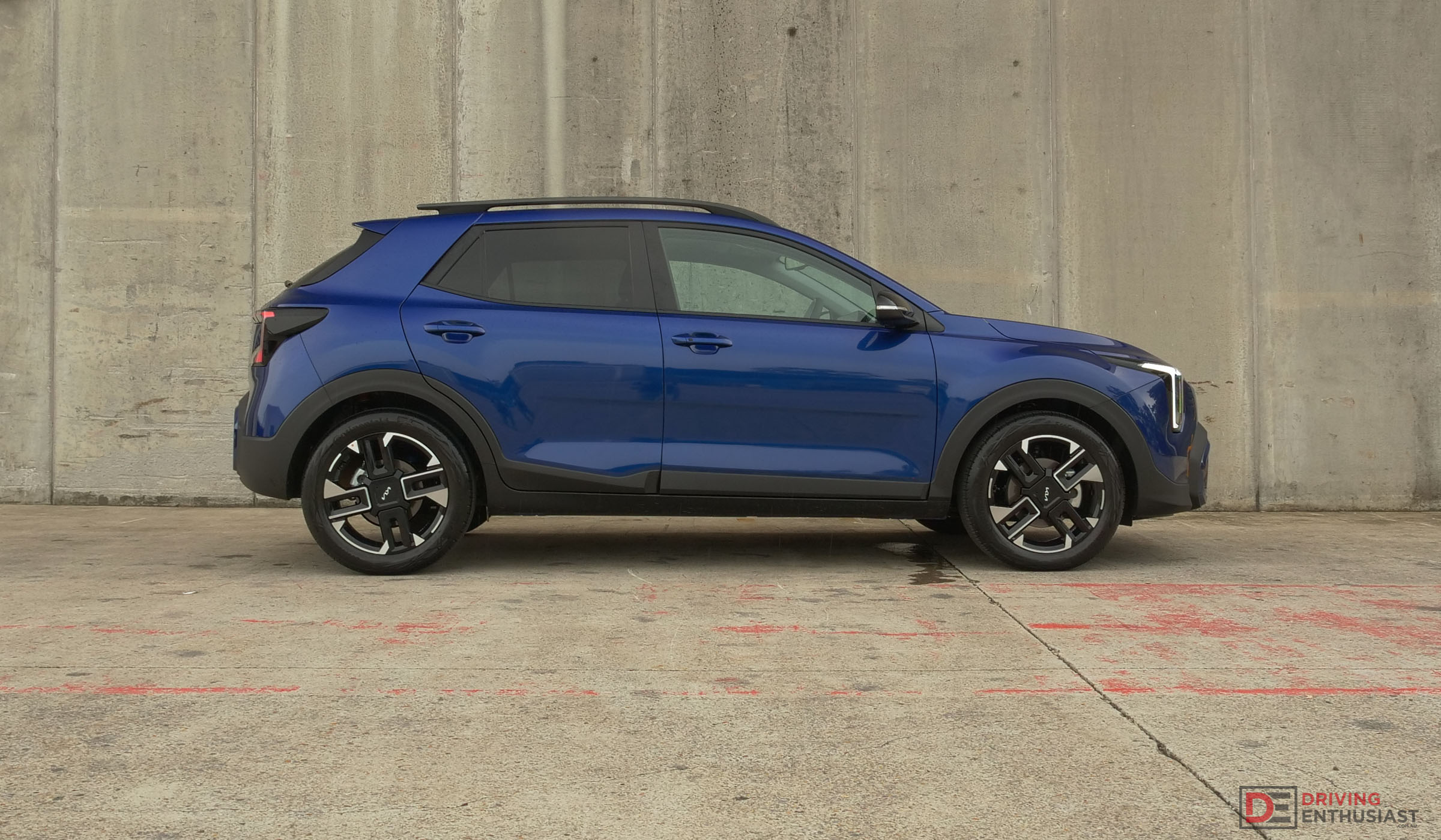
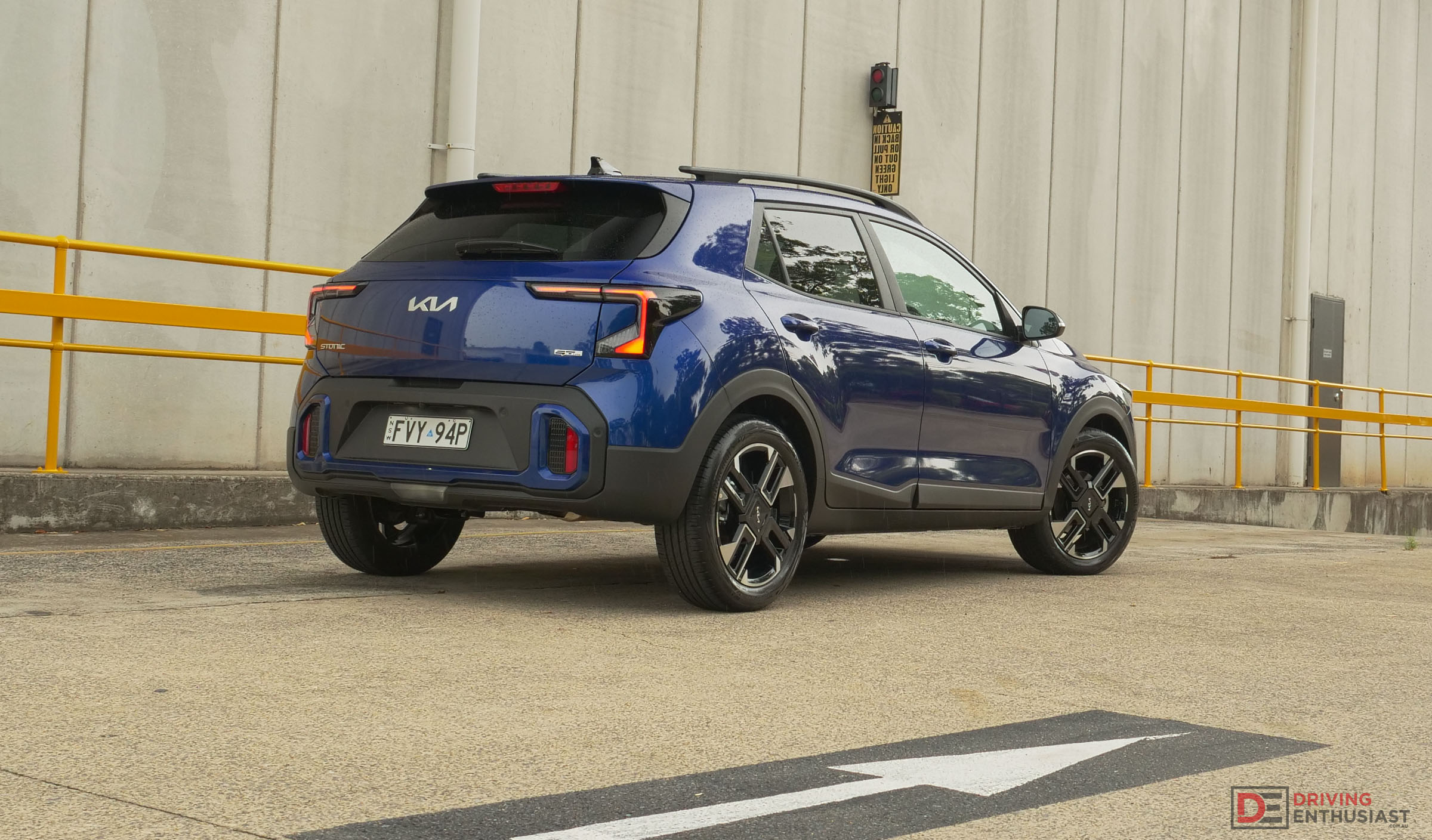
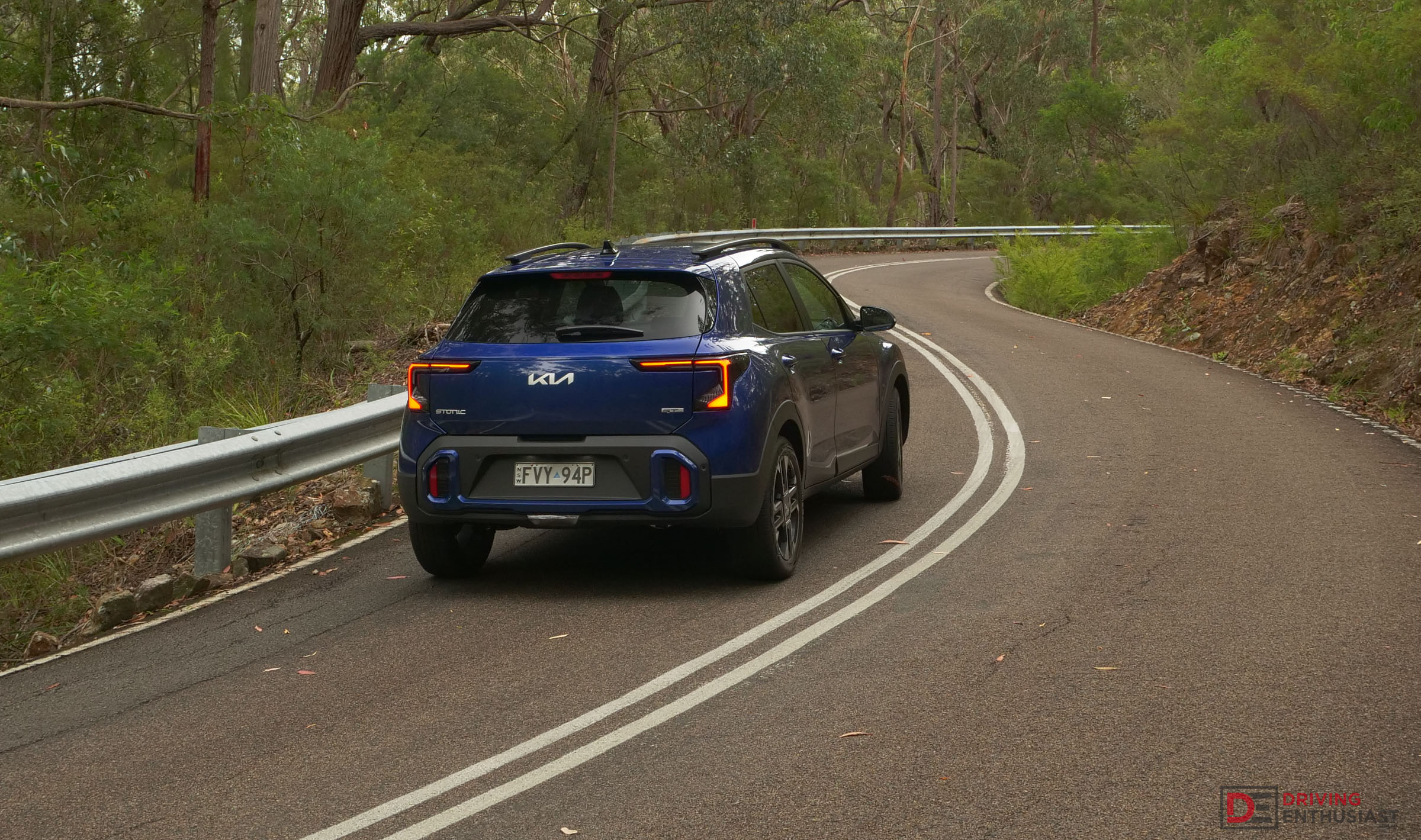
Externally, the Stonic GT-Line is one of the more attractive offerings in this segment – in our opinion. It adopts Kia’s latest design language without being too outrageous. Sharp, L-shaped LED lighting and clean lines add to a cohesive, modern look. The proportions remain compact and approachable, but there’s a level of sophistication here that helps it stand out. The cute curved rear adds a touch of hatchback character. Exclusive to the GT-Line is a body-coloured overlay contrasting on top of black plastic that is mirrored on the front and rear bumpers, adding a unique quirk.
In the matter of safety, the Stonic gets all the latest tech you’d expect in 2026, including blind-spot collision avoidance, forward emergency braking with junction turning, adaptive cruise, lane keep and follow assist, driver attention alert, and front and rear parking sensors. But it misses out on side door exit warning, reverse collision mitigation, and 360-degree cameras. Though, those are rarely seen in this segment. ANCAP is yet to stamp a rating on this latest model.
2026 Kia Stonic GT-Line: Powertrain & handling
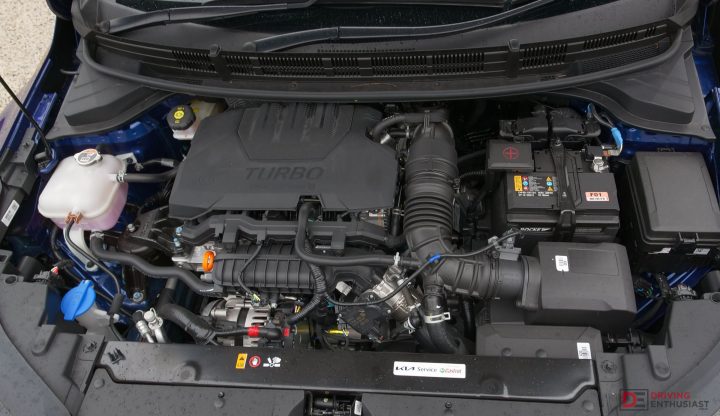
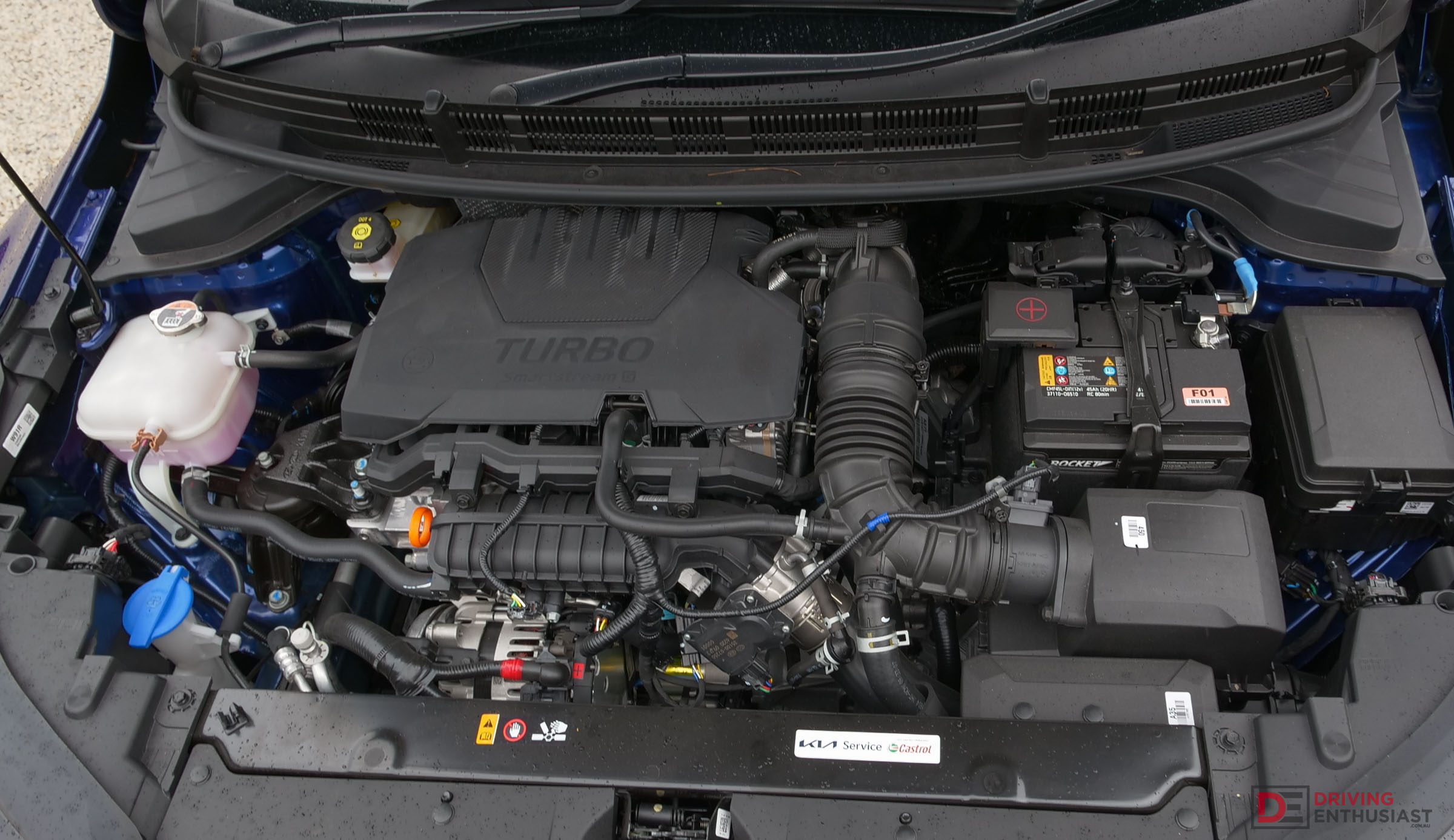
Under the bonnet sits a tiny 1.0-litre, three-cylinder, turbo engine paired with a 48-volt mild-hybrid system. It is the same powertrain offered in all Stonics, so no upgrades here to differentiate the GT-Line. Outputs are modest on paper, but in practice, the Stonic feels surprisingly eager in everyday driving. It goes with 88kW and 172Nm, but it only weighs 1160kg, giving it a weight advantage.
There’s a decent amount of torque available, and the mild-hybrid system helps to provide a subtle boost when accelerating. We timed 0-100km/h in 11.48 seconds. Around town, it feels responsive enough, and the engine produces a throaty note when pushed, adding character and excitement to the driving experience.
However, the dual-clutch automatic transmission introduces some discord. Power delivery can feel uneven depending on whether the petrol engine, electric assistance, or both are in play. Transitions between these power sources aren’t always seamless. For example, when coasting with the engine off and it resumes, the gearbox can take a moment to find the right ratio, occasionally resulting in a jerky response. We think using a dual-clutch auto here is an odd placement. Historically, they have been better suited to higher performance vehicles.
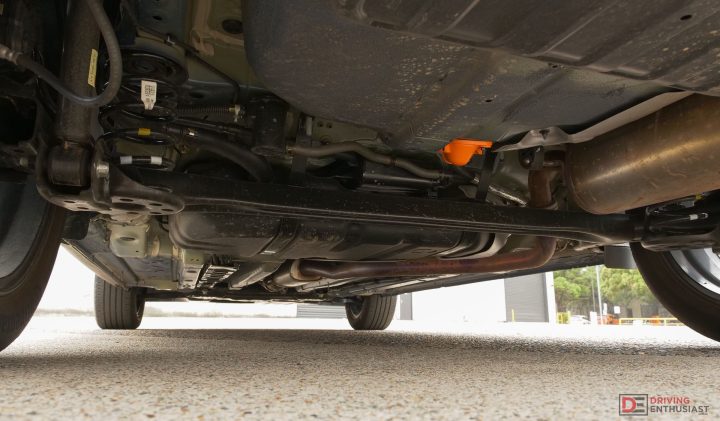
The 48-volt mild-hybrid side of operation does little to contribute any extra power compared to a full hybrid. The previous non-mild-hybrid model produced 77kW and the same torque figure. It cannot drive the wheels on electric power alone. It is there mainly to facilitate the engine being turned off while rolling when acceleration is not being applied.
Often called ‘coasting’, Kia refers it as ‘sailing’ – and it is done in an effort to save fuel. In practice here with the Stonic, it’s quite limited. It only activates under very specific conditions, such as perfectly flat roads. It also disengages easily with even slight gradients or brake inputs. Compared to the coasting function from other brands, it feels under-utilised here.
And that segues us into all-important fuel economy. On paper, it averages 5.0L/100km. It’s not unsurprising, given the tiny 1.0-litre, three-cylinder engine. But we weren’t able to achieve anywhere near that in the real world. The lowest we could produce was 6.2L/100km. And we’re not talking all-wheel drive here either. The full hybrid advantage gives the Yaris Cross a low 4.1L/100km average, and then the completely un-hybrid Mazda CX-3 drinks 6.3L/100km. So, the Stonic is lost somewhere in the middle. At least it can run on lower 91 RON fuel, given the current petrol price.
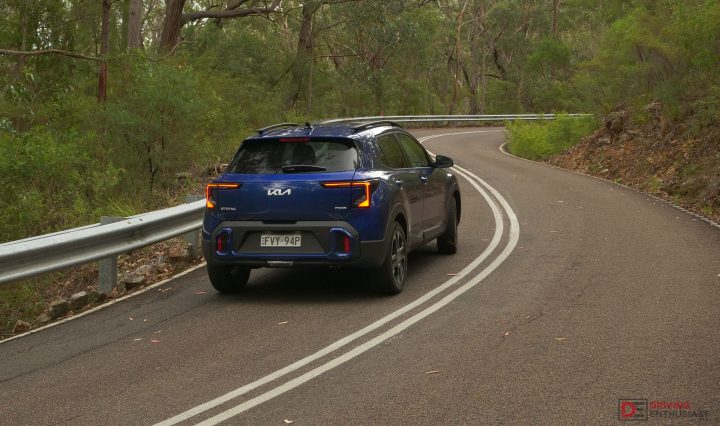
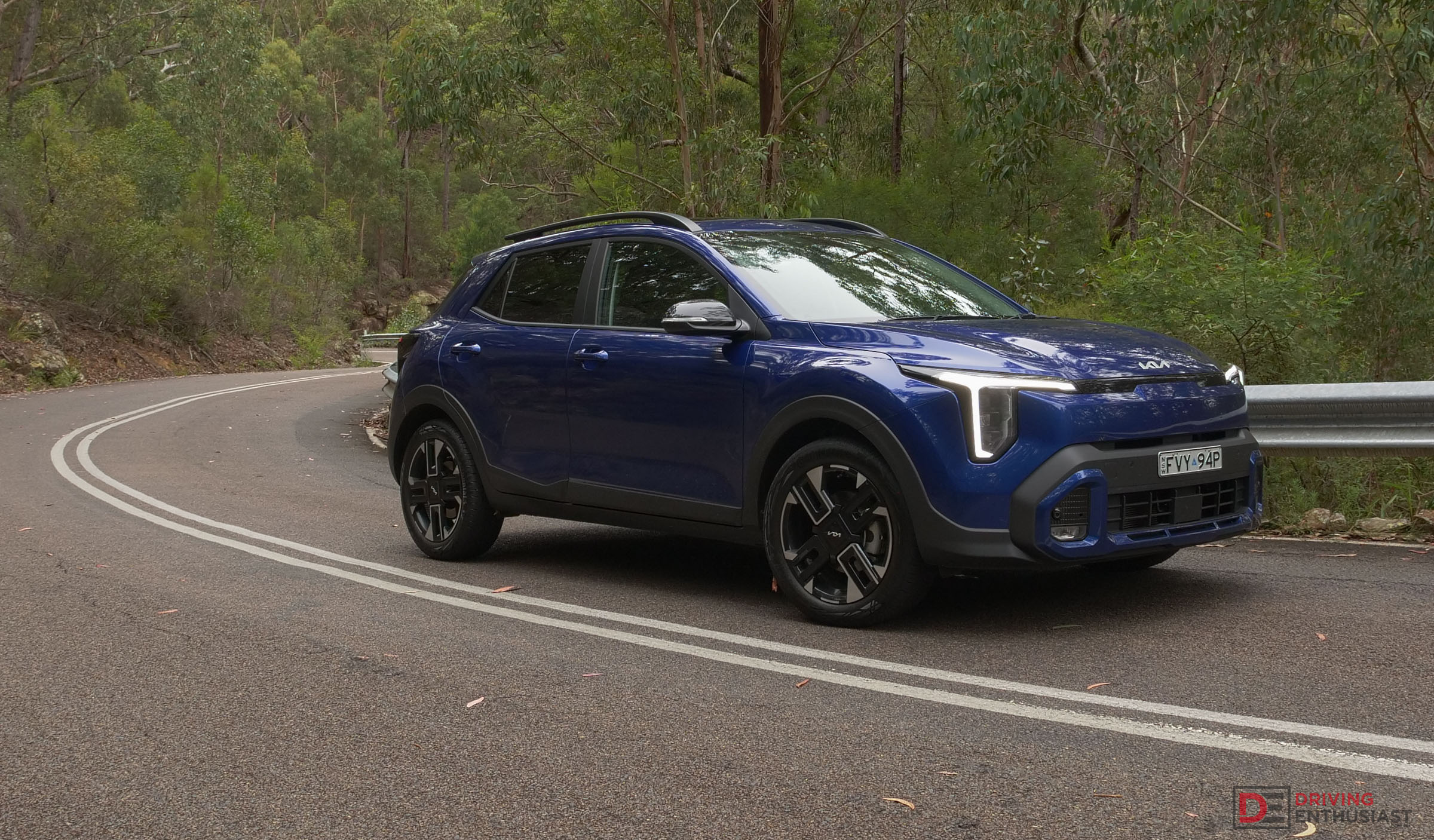
We feel the Stonic really shines in driving dynamics. The compact size makes it incredibly easy to manoeuvre, and steering is direct and easy to manage, suiting the car’s urban focus. The first thing to give out is grip, which only adds the right amount of playfulness. The suspension absorbs speed humps with impressive composure, maintaining calm without being overly soft. But also retaining enough firmness to keep the car feeling controlled and stable when pushed through corners. It’s a result of Kia’s local suspension and steering calibration.
2026 Kia Stonic GT-Line: Key attractions/reasons to buy
- Engaging and well-balanced ride: The suspension strikes an excellent balance between comfort and control, making it one of the more enjoyable light SUVs to drive.
- Modern and stylish exterior design: Sharp LED lighting and clean proportions give the Stonic a sophisticated and contemporary look.
- Easy to drive and manoeuvre: Compact dimensions and light steering make it ideal for city environments and tight parking situations.
- Strong ownership package: Kia’s 7-year warranty and strong reputation provide long-term peace of mind over some newcomers.
2026 Kia Stonic GT-Line: Key considerations before you buy
- No wireless Android Auto: A surprising omission for a top-spec variant in 2026.
- Transmission and power delivery inconsistencies: Dual-clutch behaviour can feel jerky during transitions between engine and electric power.
- Limited rear seat amenities: No rear air vents or centre armrest reduces passenger comfort.
- Fiddly climate control interface: Shared control panel requires toggling between functions.
How does it rate against its rivals
- Price
- Quality look & feel
- Interior tech
- Powertrain performance
- Ride & handling
- X-factor (does it stand out in its class?)
Final word
The 2026 Kia Stonic GT-Line doesn’t reinvent the light SUV formula, but it does refine it in some areas. It delivers a genuinely enjoyable driving experience, an attractive design, and enough safety tech to satisfy most buyers. The mild-hybrid system adds a tiny layer of efficiency, even if it’s not transformative. At the same time, a few omissions and quirks hold it back from being a clear segment leader; no wireless Android Auto and an odd transmission pairing.