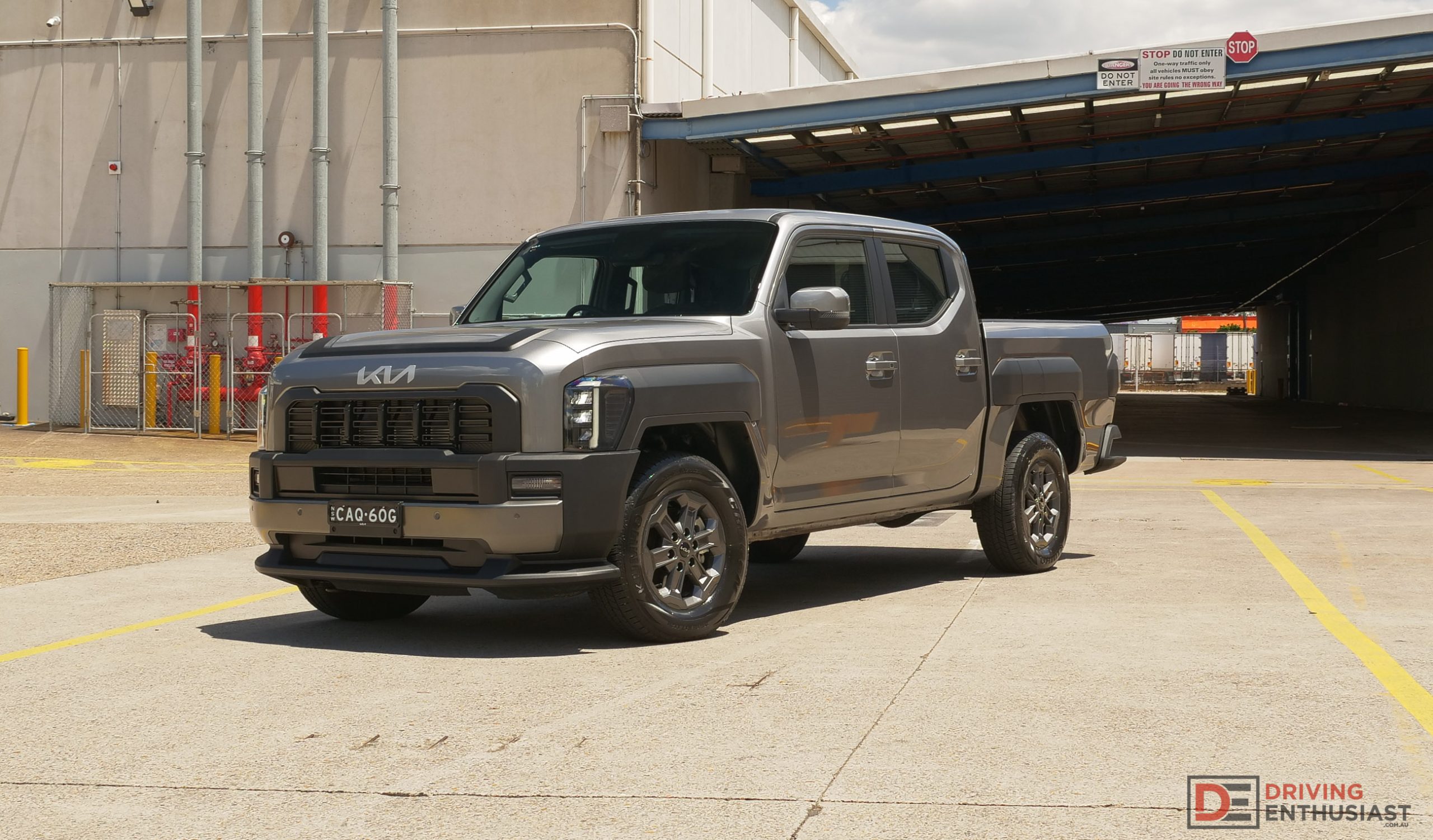
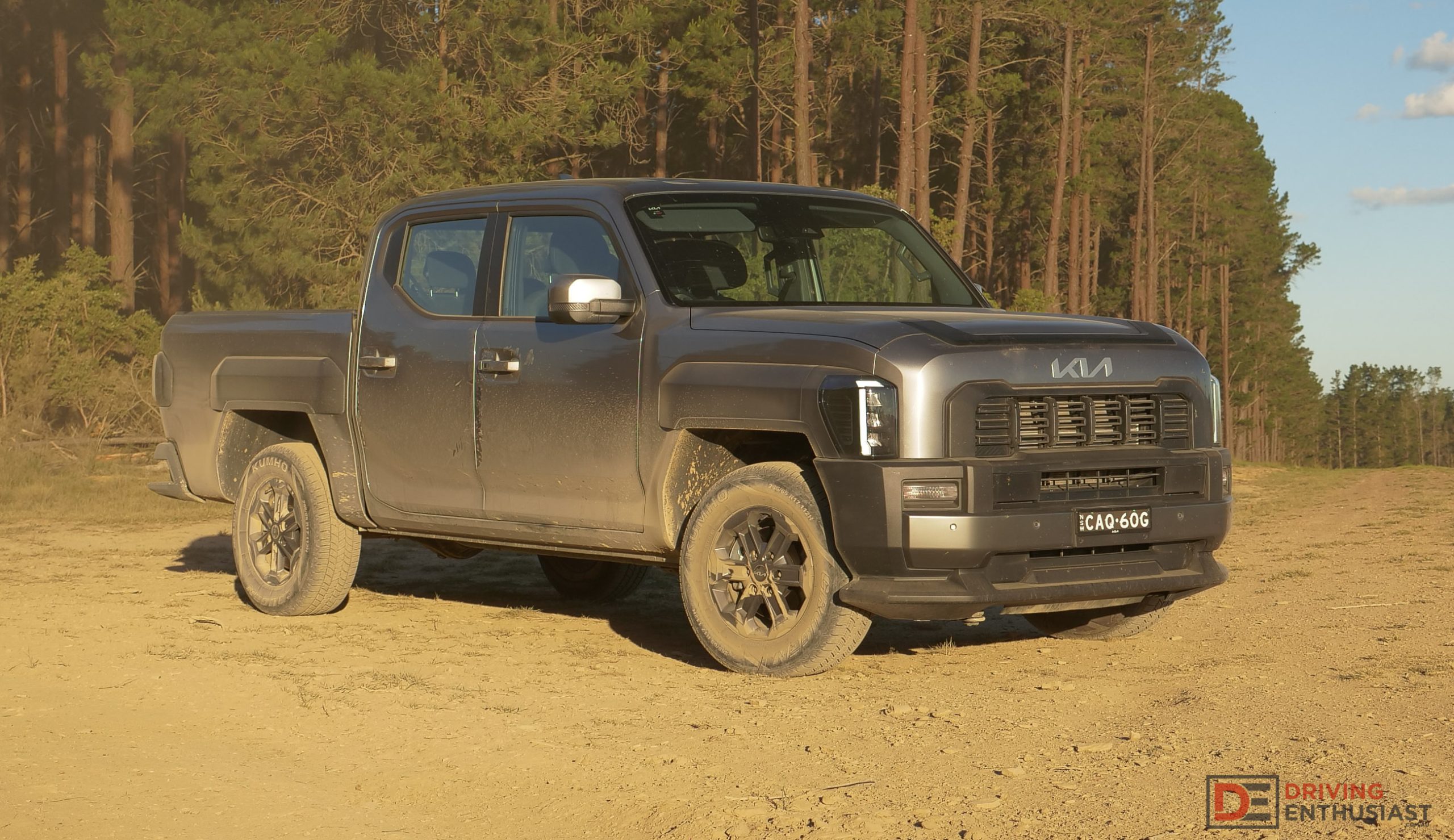
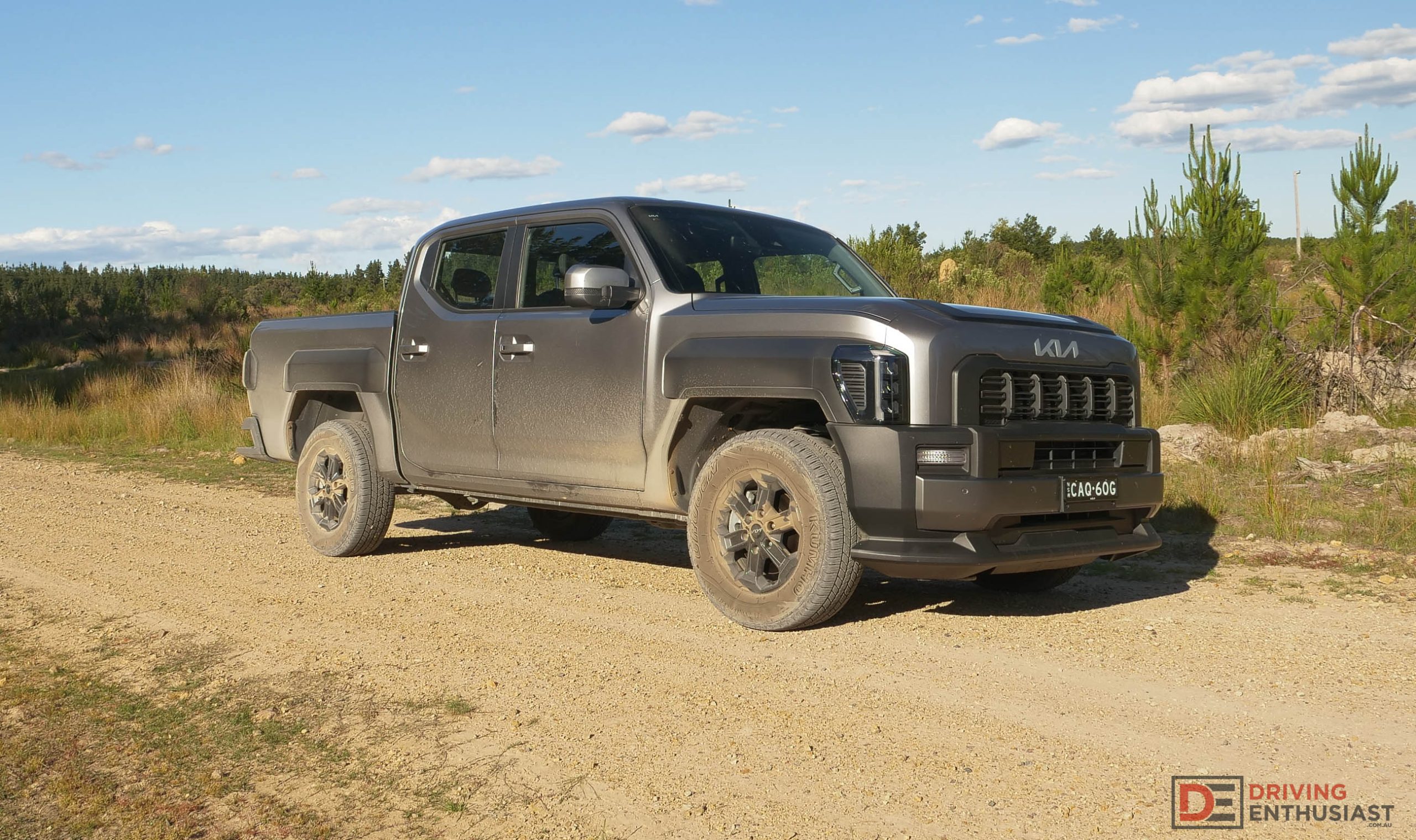
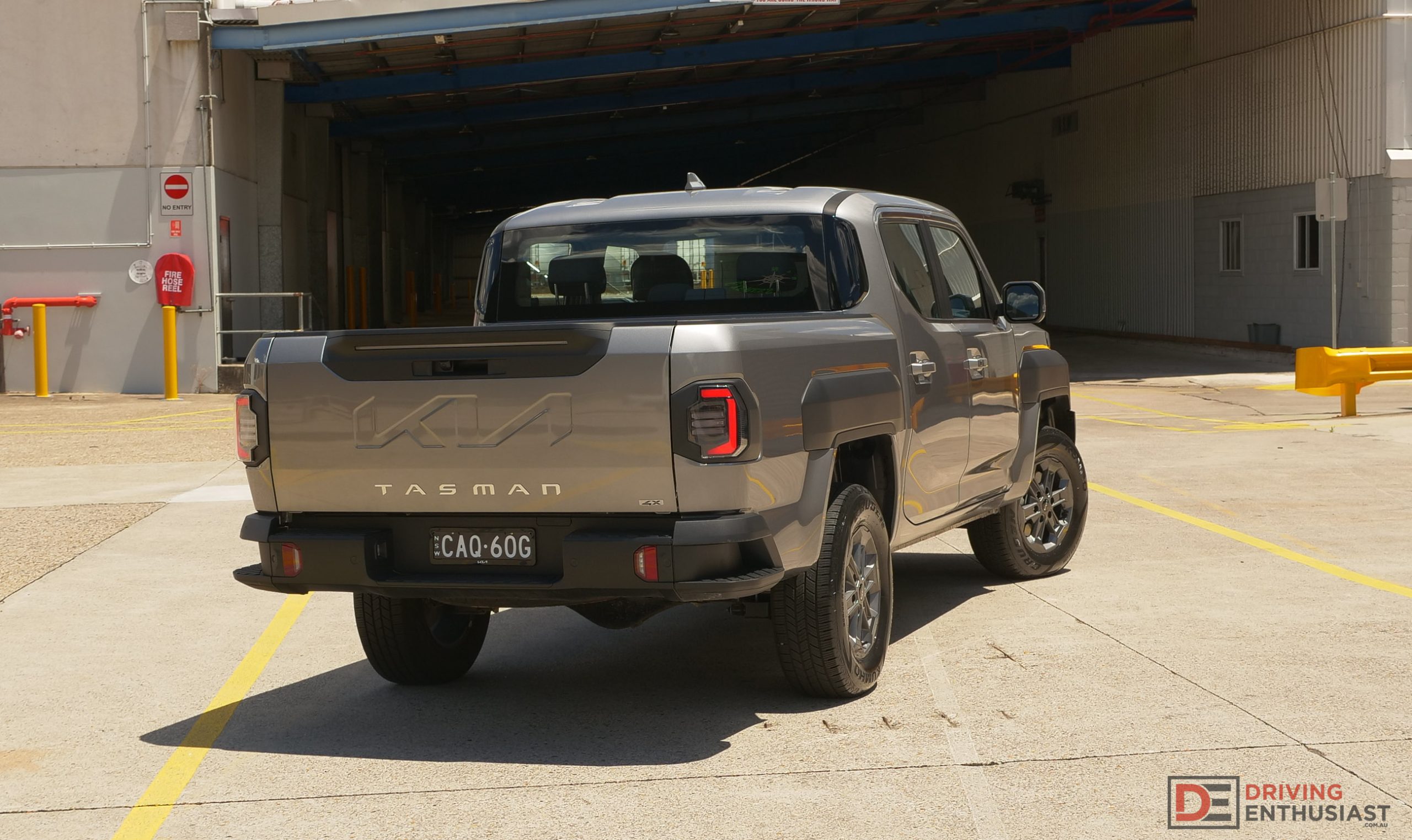
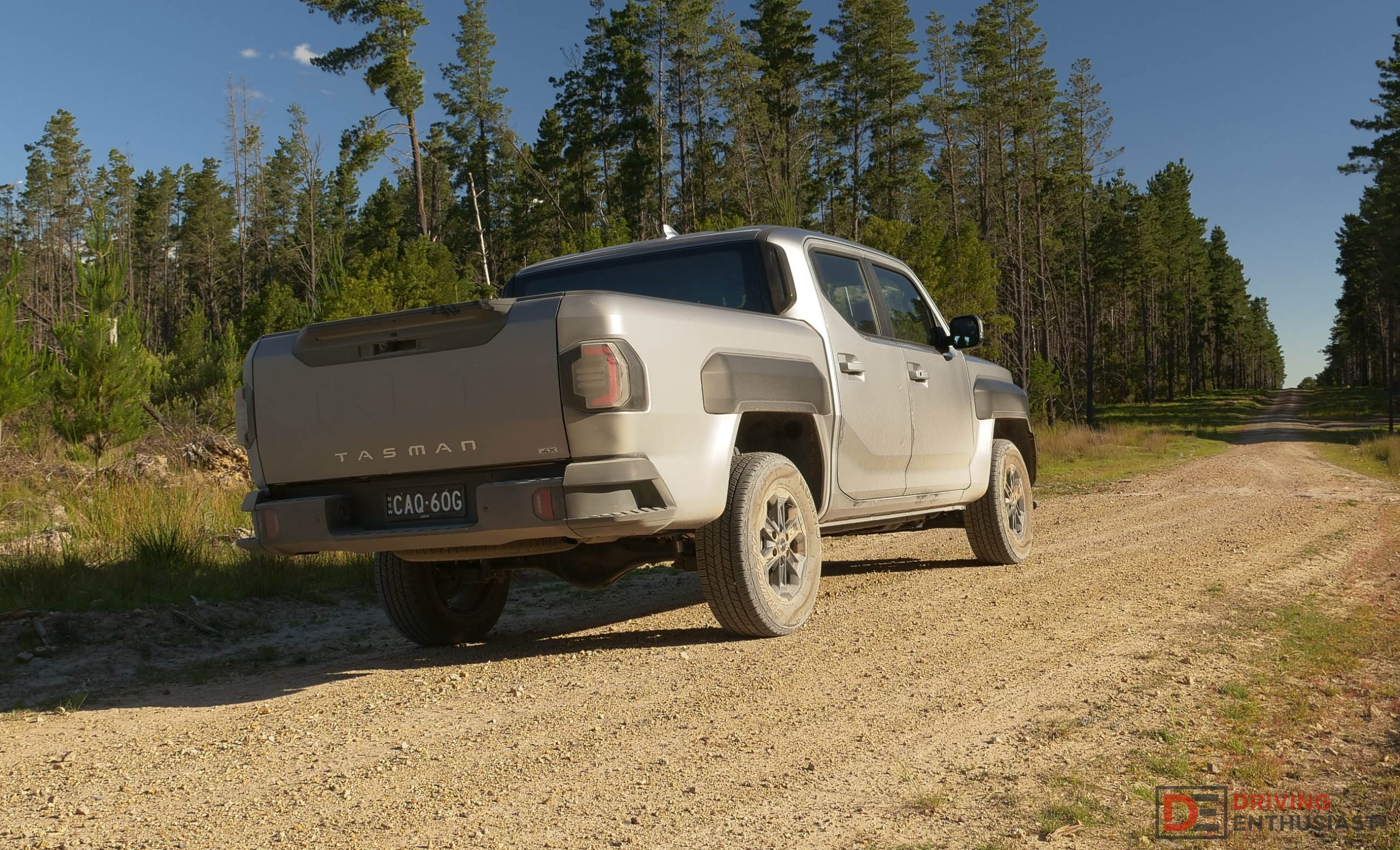
Let’s put the Tasman’s awkward looks to one side for a moment – you can make your own call there. What matters more is that Kia has finally thrown its hat properly into Australia’s ute ring. This is Kia’s first crack at a segment dominated by household names like HiLux, Ranger, Triton and D-Max; and Kia has arrived swinging.
The SX sits in a critical sweet spot of the Tasman range. One up from the base spec S, and underneath the SX+, X-Line and X-Pro. It’s no-frills enough to still feel like a working ute, but it adds just enough technology, safety and usability to appeal to private buyers who expect more than vinyl floors and steel wheels. More importantly, it highlights where Kia has focussed its engineering effort; fundamentals. Chassis strength, payload, braking hardware, towing stability and diesel performance all feel like they were prioritised before styling sketches ever left the drawing board.
That approach showed clearly once we took this SX away for a camping trip. It doesn’t feel like a dressed-up lifestyle ute pretending to work hard; it’s a serious tool first, with modern comforts layered on top. It isn’t perfect, and it’s not always cohesive from front to rear, but as a first-generation ute, it’s far more competent than many rivals. Here are our top five pros and cons.

2026 Kia Tasman SX: Pros
1. Strong, punchy diesel performance:
The 2.2-litre four-cylinder turbo-diesel is one of the standout powertrains in the segment. With 154kW, it exceeds all key four-cylinder competitors like the HiLux, Navara, Triton and Ranger (now that the bi-turbo is gone). 440Nm to play with also provides plenty of low-end torque and strong in-gear response. It feels muscular, confident, and well suited to towing or hauling without needing to be worked hard, and a lot of that is down to the eight-speed automatic and its calibration. We timed 0-100km/h in just 8.79 seconds, making it the quickest four-cylinder diesel 4×4 ute we’ve ever tested.
2. Serious workhorse fundamentals
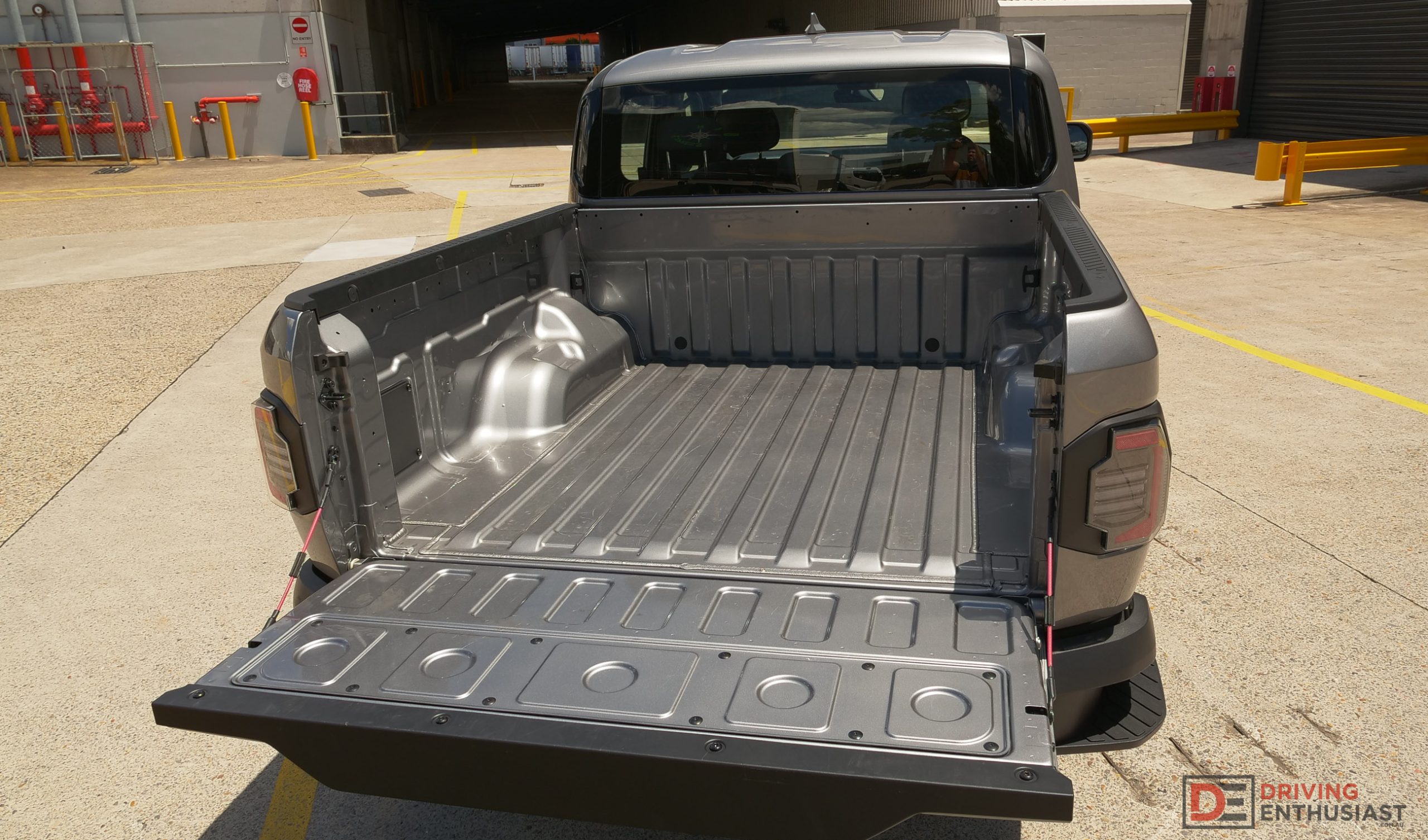
The max payload peaks at 967kg for dual-cab pick-up variants, and the gross combination mass is 6200kg, with a braked towing capacity of 3500kg. All models also score an integrated trailer brake controller, and offer 206mm of ground clearance. Tub size has not been overlooked either, swallowing 1173 litres, or 1512mm by 1572mm by 540mm – an Australian pallet will fit in.

3. Practical, well-executed interior
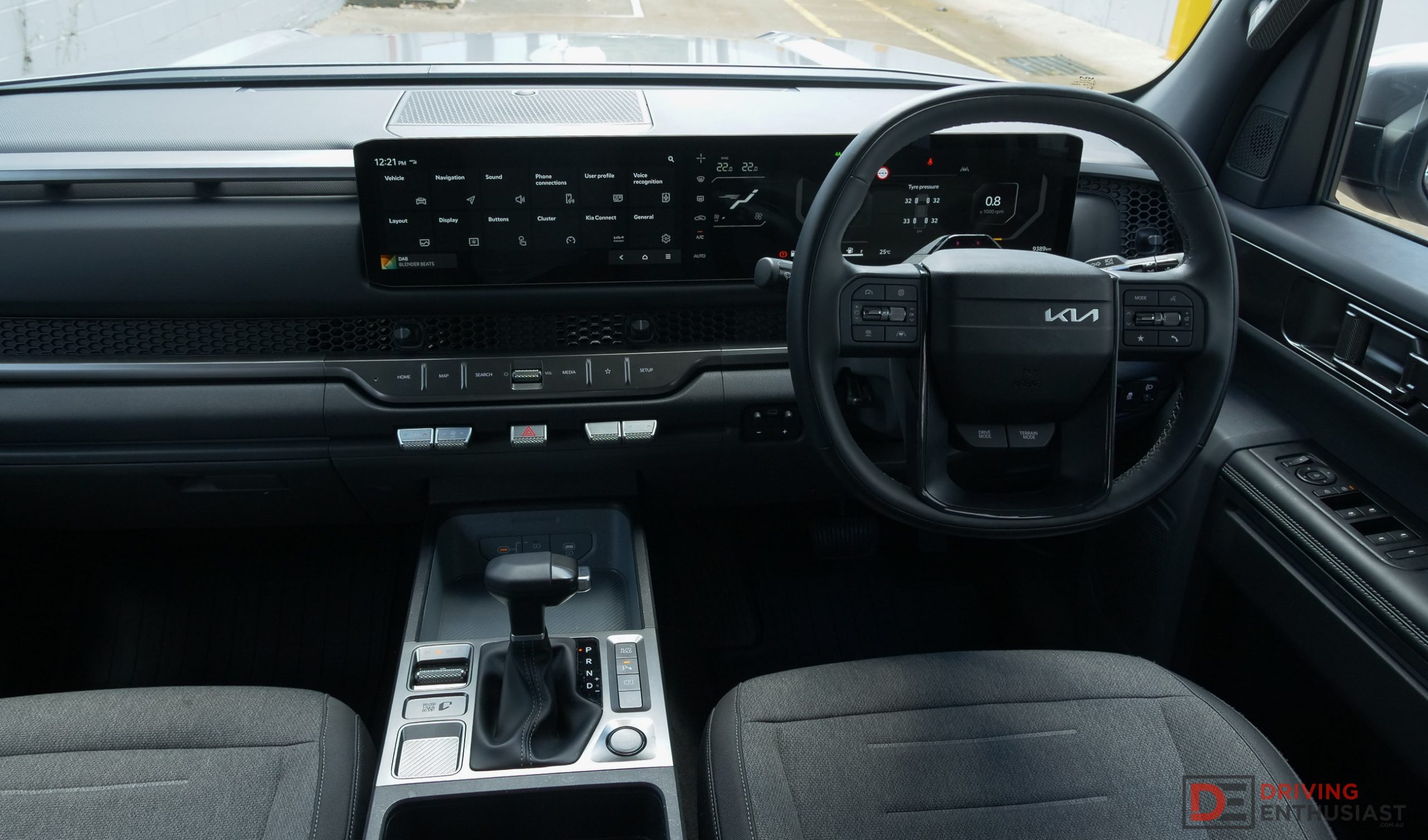
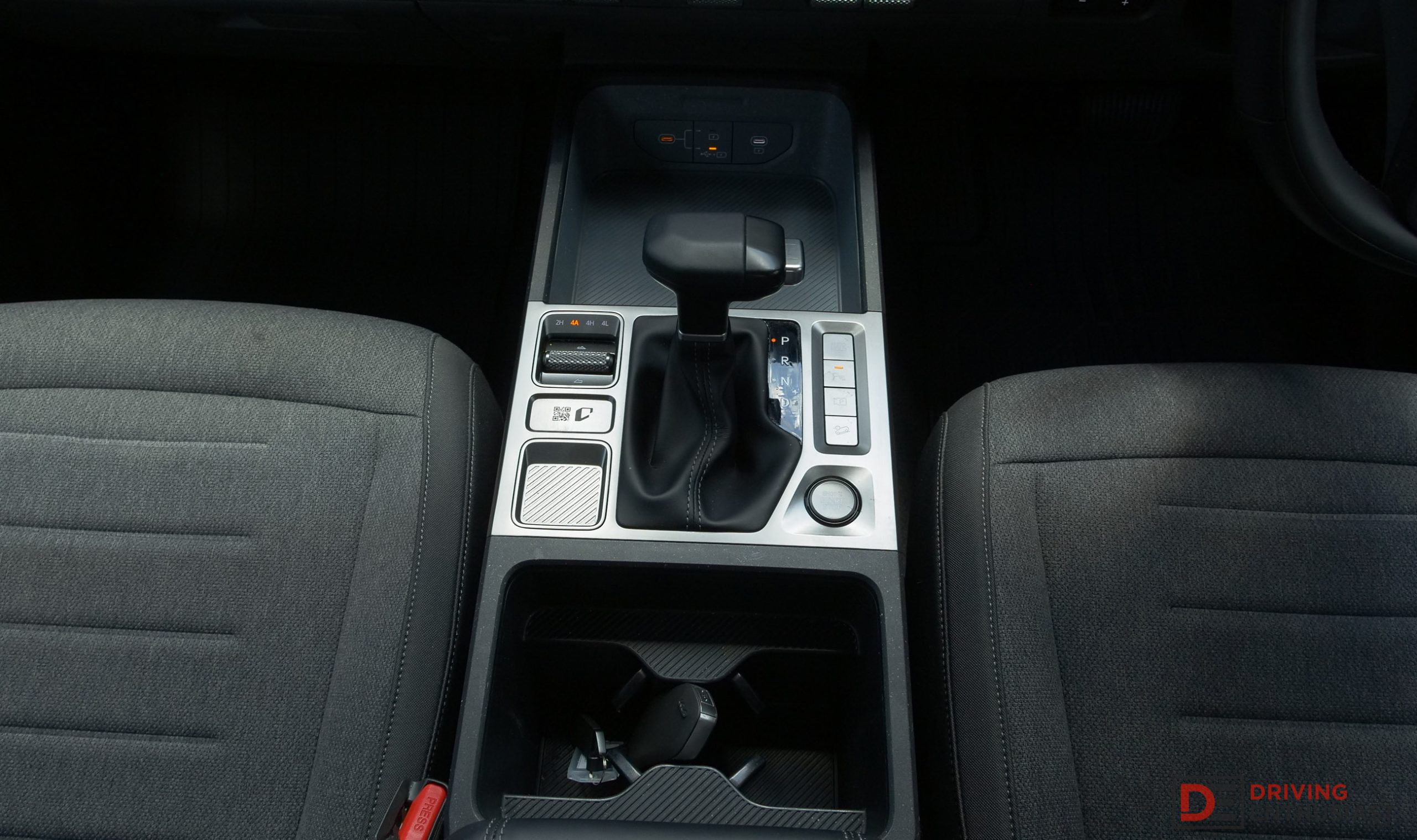
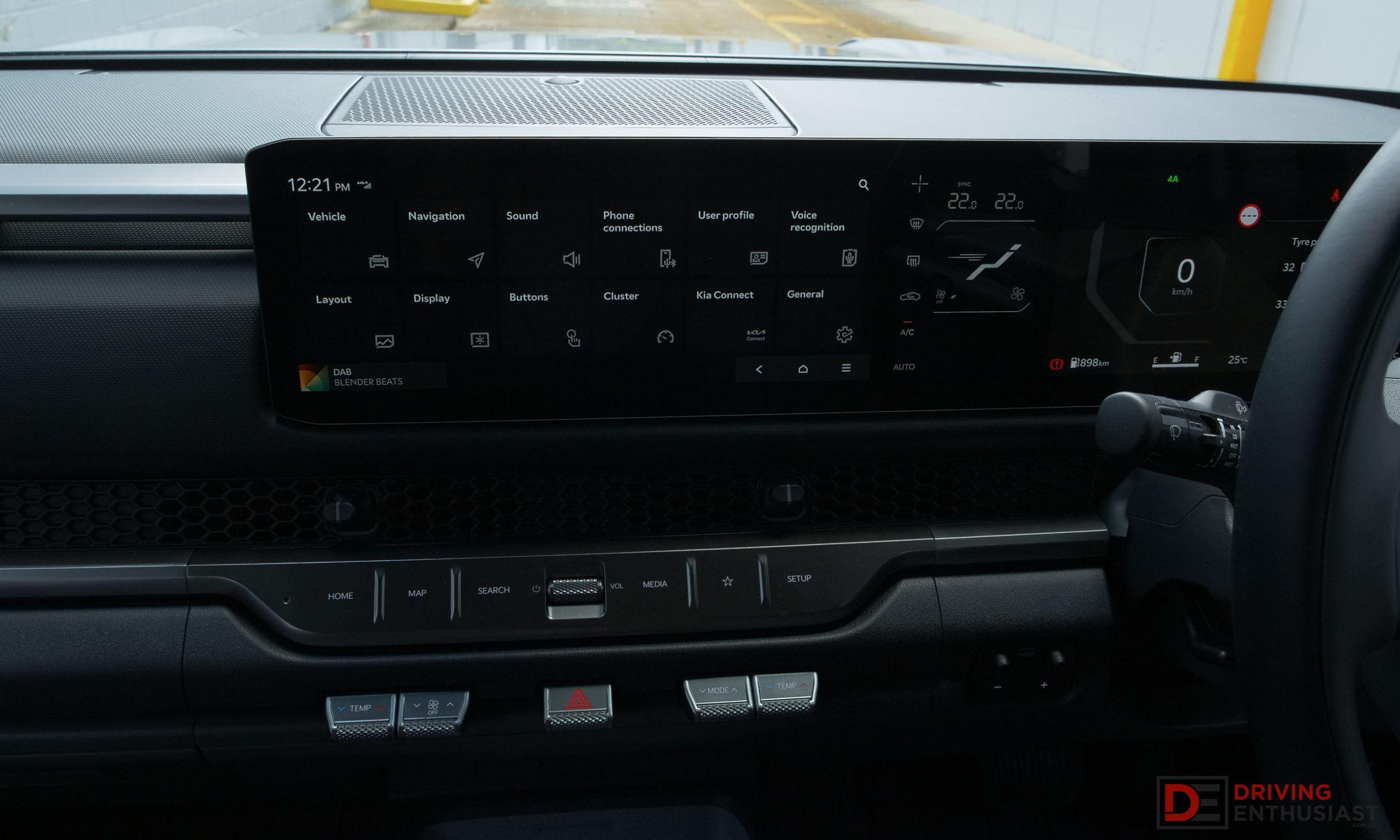
Inside, the Tasman is refreshingly easy to live with. The layout is logical, controls are intuitive, and the cabin feels surprisingly elegant for a ute. Full panoramic 12.3-inch digital displays as seen in other Kias, wireless app connect, a dedicated 5.0-inch climate control panel, crisp lighting, and a clean dash design lift the ambience above what you might expect from a work-focussed variant. There is a generous 45 litres of under-seat storage in the second row, too.
4. Australian-tuned, steering and brakes
Unlike some rivals that feel overly boosted or artificial, the Tasman’s steering and braking feel solid, mechanical, and reassuring. There’s a sense of real connection, especially when driving with a load or navigating rougher roads. While the front end can bounce a little bit more than you might expect, the ride quality walks an ideal balance between everyday comfort and being able to absorb Aussie backyards, as well as handling load-carrying duties.

5. Thoughtful practical touches
Built-in corner steps at the rear make tub access easy, and the assisted tailgate lowers smoothly instead of free-falling. These small details genuinely improve day-to-day usability and show Kia has paid attention to how utes are actually used. Again, the interior blends in with this philosophy perfectly, with lots of storage and practical measures applied.
2026 Kia Tasman SX: Cons
1. Exterior design is polarising
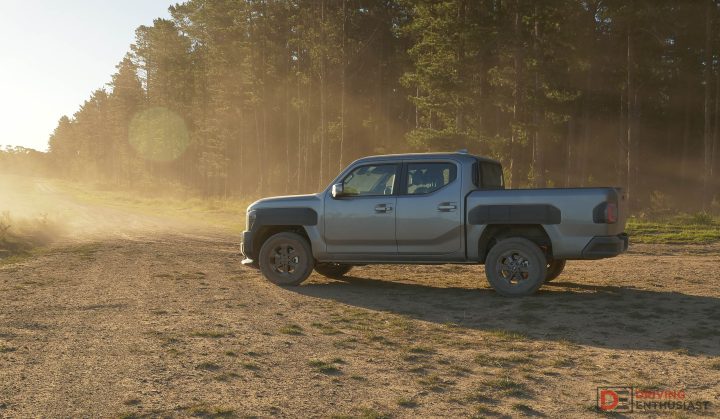
There’s no avoiding it – the Tasman’s styling is unconventional, and not many have warmed to it. While some unique individuals may appreciate its boldness, others will find it awkward or overly quirky. In a segment where visual appeal still matters to many buyers, this could be a genuine deal-breaker before the test drive even happens.

2. Suspension tweak
The Tasman’s biggest dynamic attribute is how differently it behaves front to rear. The rear suspension is clearly tuned for heavy loads, and it shows. Unladen, bumps are taken with a firm thud that contrasts sharply with the softer, more compliant front end. As a result, it can feel like two different vehicles depending on where the impact occurs. It’s not uncomfortable in a typical sense, but the contrast is more noticeable than what best-in-class utes manage to achieve.
3. Fuel economy; no hybrid or fully electric option
Consumption figures sit right in the middle of the segment. It’s not thirsty, but it doesn’t meaningfully undercut HiLux, Ranger or Triton, if it is setting out to do better. Given how strong the engine feels, the efficiency is acceptable. But buyers hoping for standout economy as they start to get used to hybrids and EVs, the Tasman doesn’t win any bonus points here.

4. Unproven reputation in a conservative market
Despite how capable the Tasman feels, it enters a market that values long-term durability and reputation above almost everything else. The HiLux and Ranger have decades of hard-earned credibility and buyer loyalty behind them. But VFACTS sales figures reveal buyers are not willing to take the punt on one of these; just 382 sales in July (4×2 and 4×4 combined). Kia will need time and real-world proof before sceptical buyers fully trust the Tasman as a household name.
5. No rear climate vents in console
Rear-seat comfort misses an obvious feature; for a dual-cab that otherwise presents as modern and well thought out, the absence of rear air vents in the SX is disappointing. In Australia’s hot climate, rear passengers will notice this omission quickly, especially on longer trips. Rivals at similar price points increasingly include rear vents as standard, making this feel like an unnecessary cost-saving measure. Rear air vents are added in SX+ models and above.
2026 Kia Tasman SX: Specifications
Engine: 2.2-litre turbo-diesel four-cylinder
Output: 154kW@3800rpm / 440Nm@1750-2750rpm
Gearbox: Eight-speed auto
Drive type: RWD/4WD
Wheels: F & R: 17×7.5, 265/65
ANCAP: Five stars
Tare weight: 2225kg
Power-to-weight: 14.44:1 (kg:kW)
Official consumption: 7.6L/100km
Our consumption: 8.5L/100km
Fuel tank/Fuel type: 80L/DieselPower efficiency: 20.26kW:L/100km
0-60km/h: 3.94 seconds*
0-100km/h: 8.79 seconds*
60-110km/h: 6.47 seconds*
1/4 mile: 16.41 seconds at 137.1km/h*
Max acceleration: 0.699g*
100-0km/h braking: 42.18m in 3.27 seconds*
Max deceleration: -1.226g*
Decibel at idle: 46*
Peak decibel at 60-100km/h: 77*
Starting price: $54,490
*Figures as tested by Driving Enthusiast on the day. Manufacturers’ claims may be different
2026 Kia Tasman SX: Video