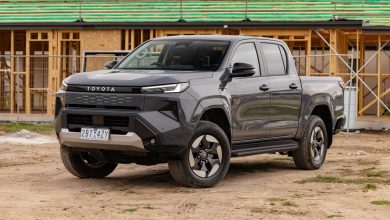
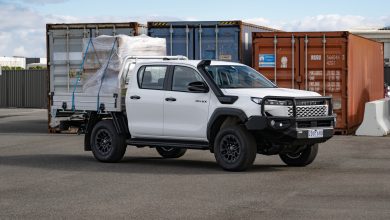
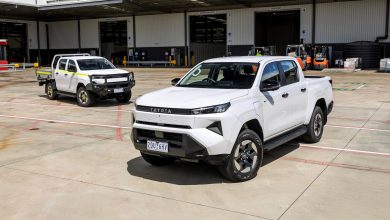
You can’t accuse Toyota Australia of phoning it in with the new-shape HiLux. The cabin is miles better, the exterior has more attitude, and under the skin it picks up electric power steering, suspension changes and ladder-frame refinements like hydraulic engine mounts and revised crash structures. But it is still fundamentally an IMV-based HiLux, not a TNGA-F like Tundra and Tacoma. As a result, cabin space trails rivals and some feel not enough has been done.
With Ford Ranger Raptor currently at the top of the tree for tradie aspirations, we thought we’d have a crack at a proper, off-road HiLux performance model. The retention of the old platform matters, because the bones decide everything from front diff packaging to rear suspension orientation.

Thankfully, Toyota itself has already left a few breadcrumbs. Now available locally, the Tundra’s 3.4-litre twin-turbo ‘i-FORCE’ V6 makes 326kW and 790Nm with a ten-speed auto. Toyota has also built the Tacoma X-Runner concept with that same V6 and a proper street-truck brief, while the Tacoma TRD Pro introduced the segment-first IsoDynamic Performance Front Seats with shocks. It’s all technically possible.
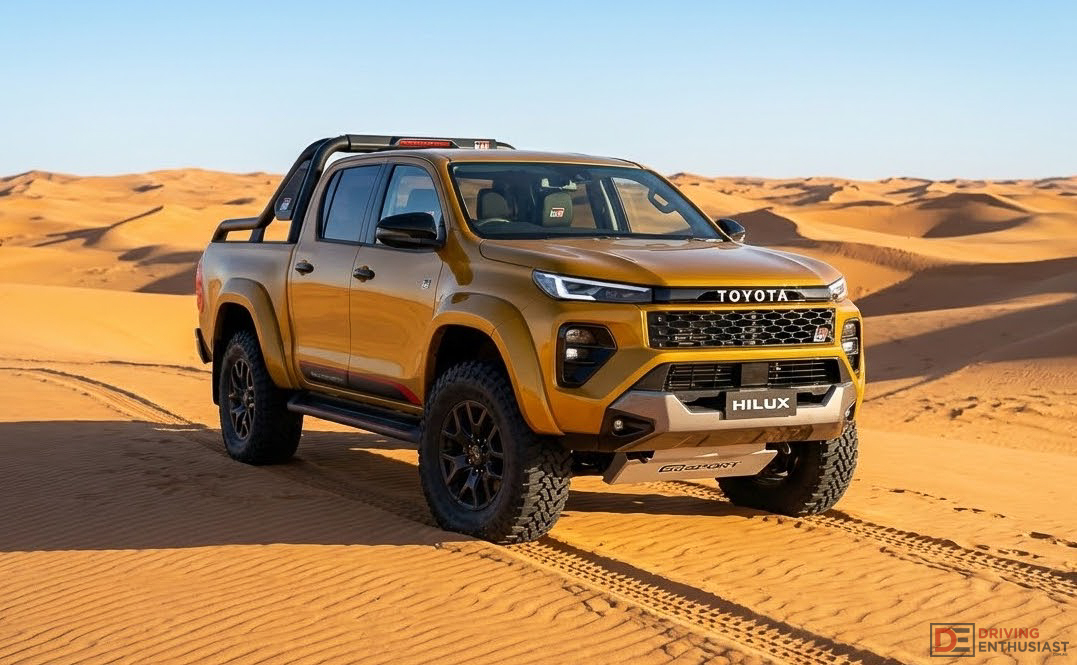
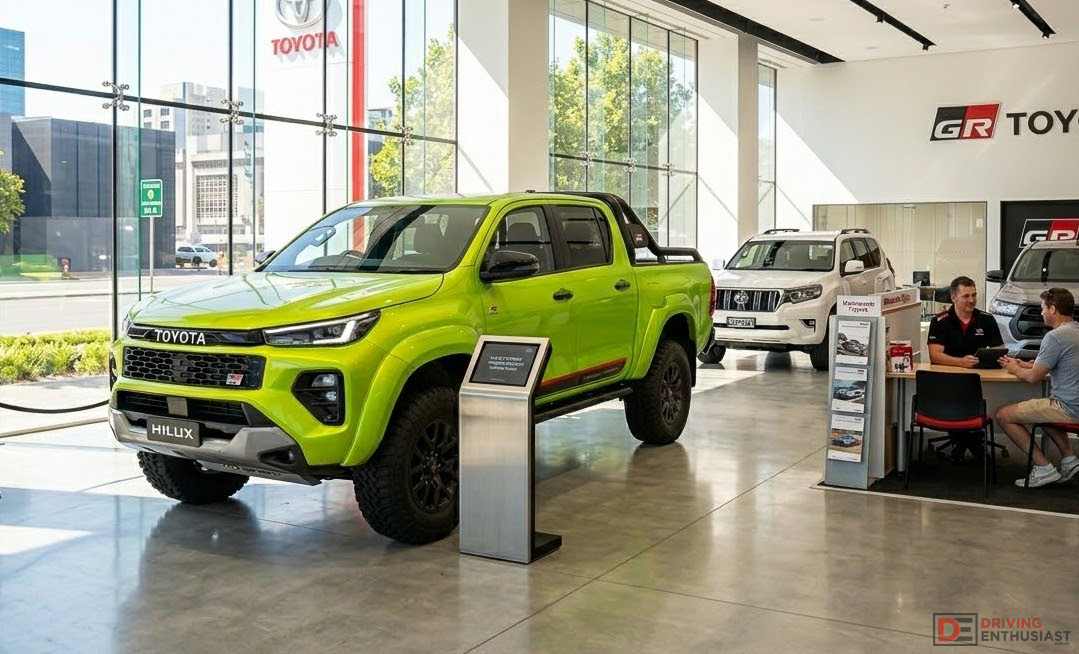
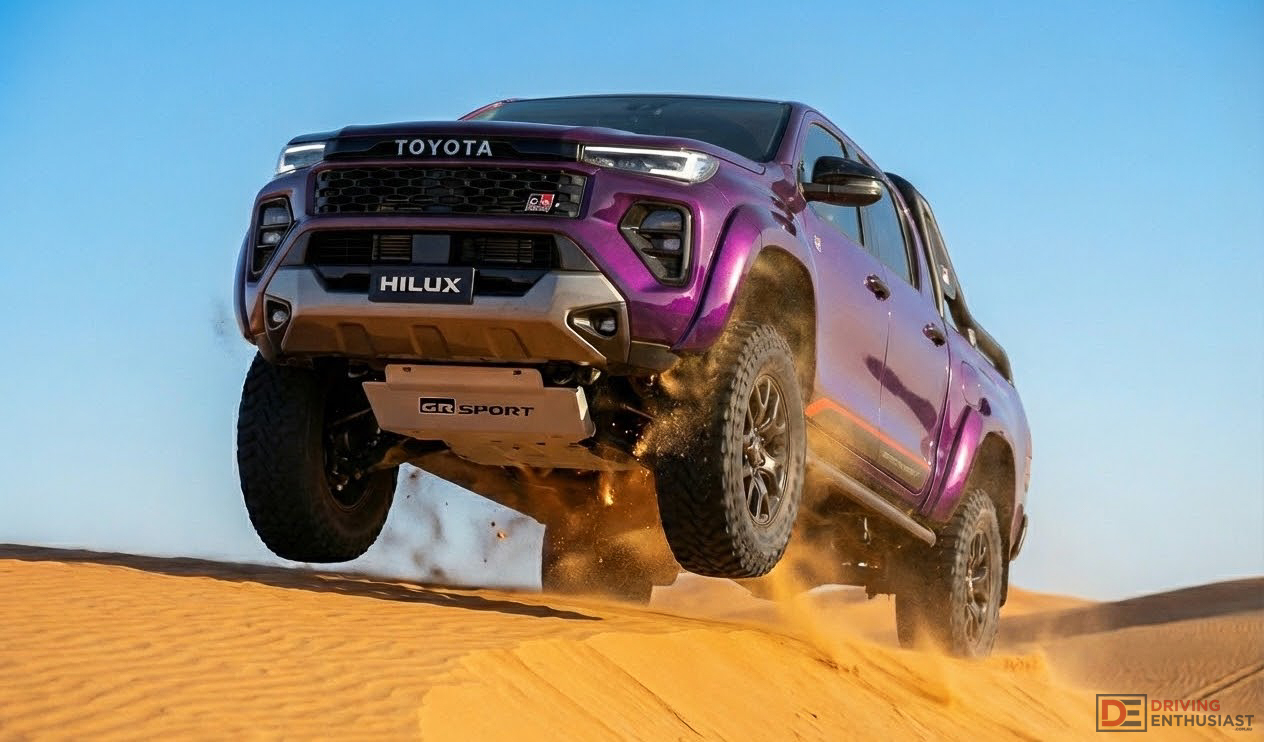
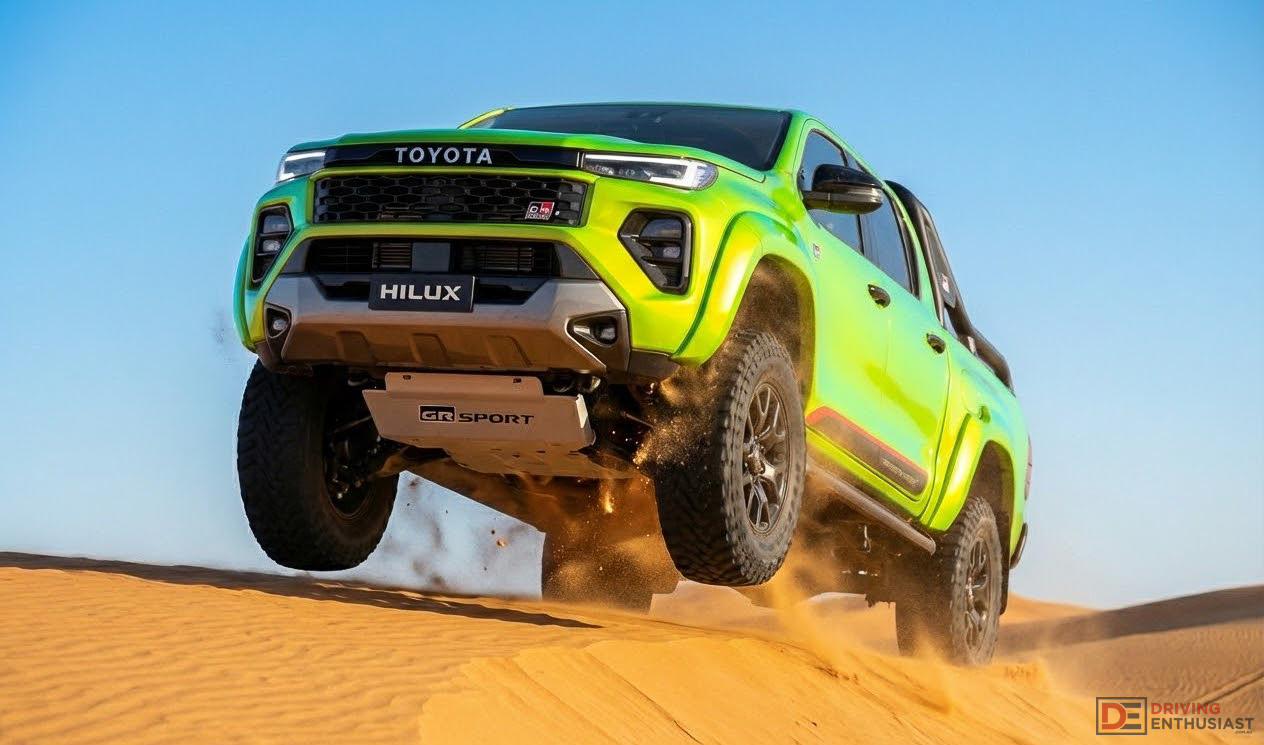
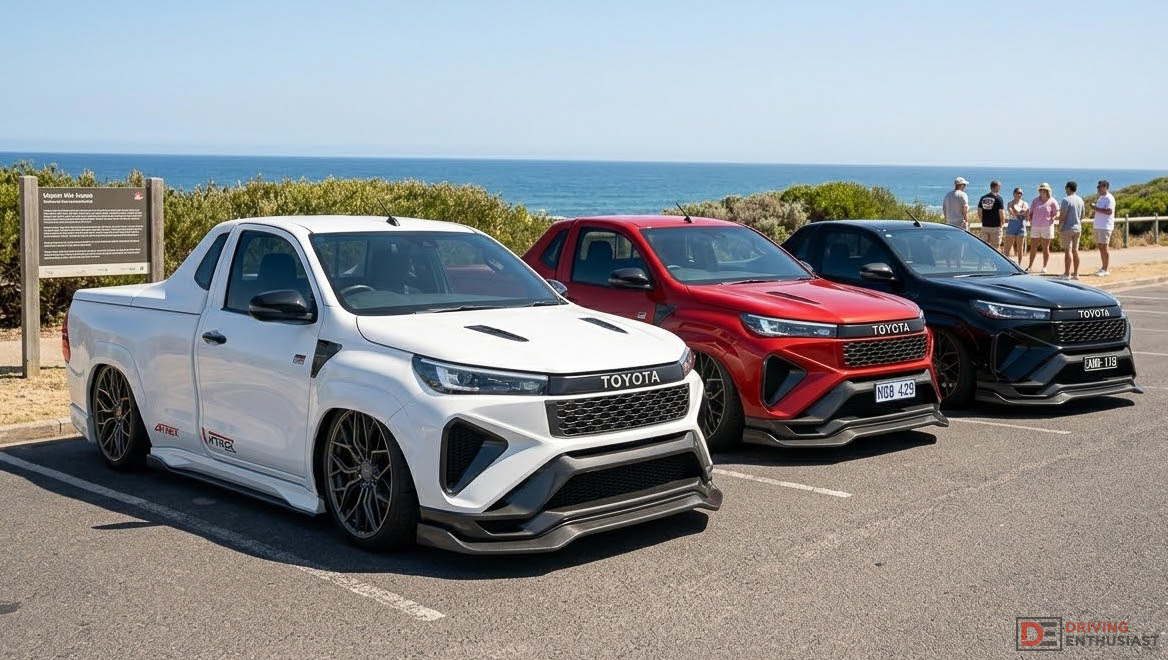
So here’s the pitch. Not one GR HiLux, but two. First, a full-fat desert runner aimed squarely at the Ford Ranger Raptor. Second, a single-cab lowrider in the spirit of the old HSV Maloo/ FPV Pursuit, but with a very Australian twist. Same engine family, same 10-speed auto, very different brief.

The off-road flagship would start with the 4×4 double-cab HiLux shell because Toyota already sells the Rogue and Rugged X with the wider 1885mm body, softer rear leaf tune, rear disc brakes, 18-inch wheels and a 3120kg GVM. The snag is mass; the current Rogue already sits at 2342kg kerb, so once you add the V6, bigger cooling pack, more driveline, bigger brakes, underbody armour and wider-track suspension, you’re nudging well past 2.4 tonnes. That means this fantasy GR HiLux needs to be clever, not just loud.
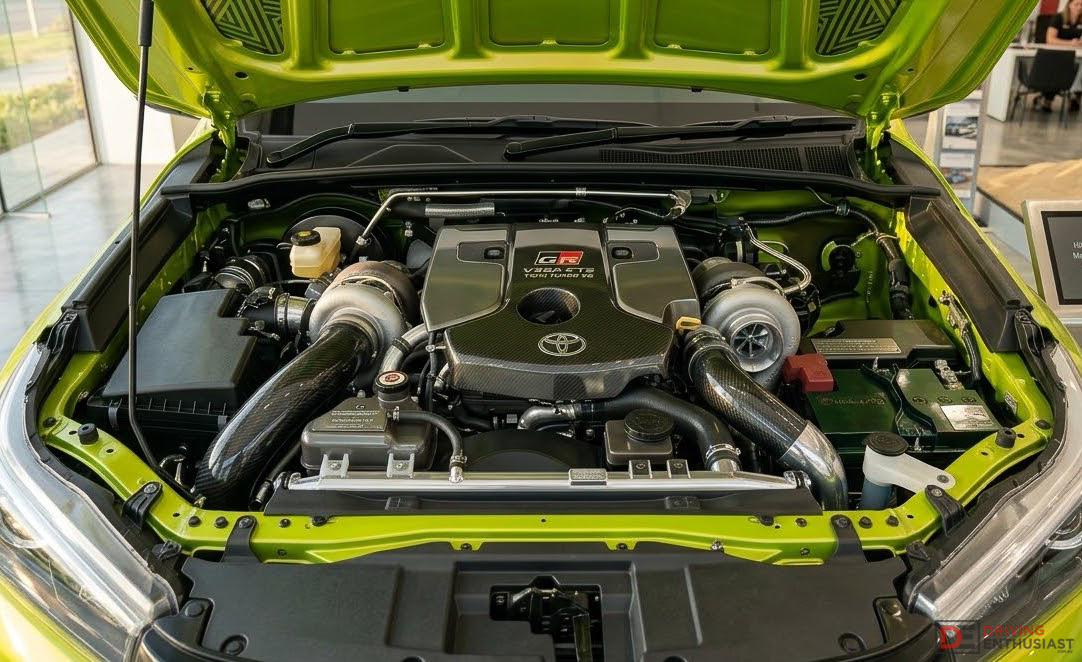
My call is to use the 3.4 twin-turbo V6 in TRD Performance Package-style tune, because Toyota has already done the hard work on intake flow, exhaust back pressure and calibration. That gives us a believable 314kW and roughly 650Nm, fed through Toyota’s existing 10-speed auto. It would be enough to gazump the Ranger Raptor’s 292kW/583Nm on paper, but the bigger challenge would be heat management, transfer-case packaging and axle control on an IMV platform that still relies on leaf springs at the rear rather than the Raptor’s coil-and-Watt’s-link arrangement.
In other words, it could match the Ford’s straight-line punch, but it would need very expensive dampers, hydraulic bump stops and a seriously reworked rear leaf pack to match its composure at speed. Better still, the Fortuner’s coil spring layout would be called into action.
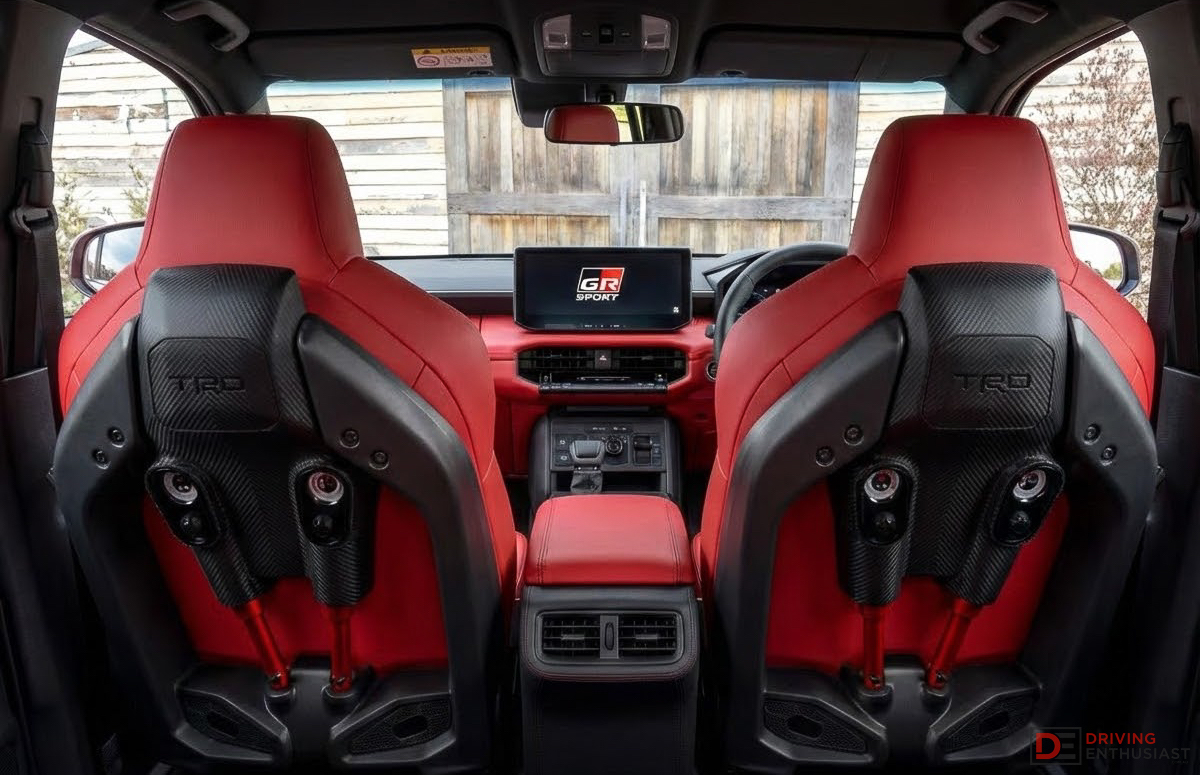
I’d also be selective about which Tacoma bits make the cut. The TRD Pro’s IsoDynamic Performance Front Seats are a cool marketing hook and their air-over-oil damper setup suits a halo ute, but they are visually bulky and mounted externally on the seatback. In the Tacoma’s roomier, newer cabin that works; in a HiLux double cab that already isn’t swimming in rear legroom, they’d eat into knee space and make the back seat feel even more punitive. Considering how cool they look, I’d still be inclined to use them anyway, because this exercise isn’t about rationality.

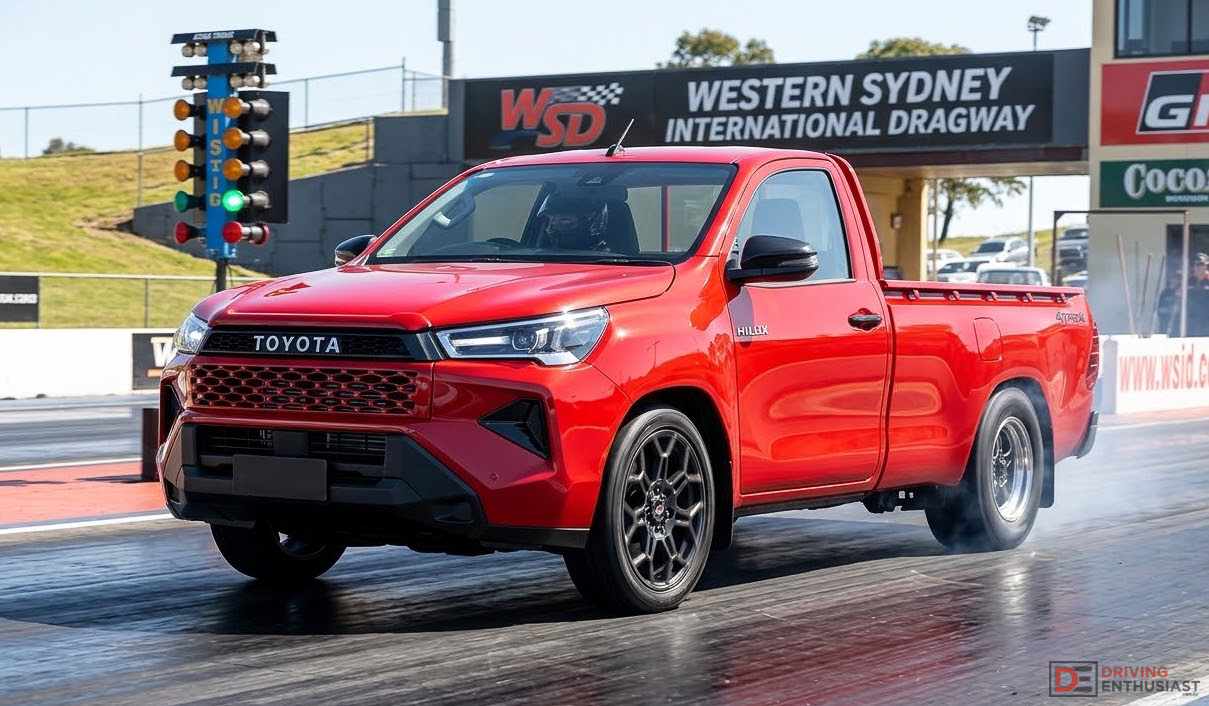
The single-cab street truck is the one that gets really interesting. Toyota’s own Tacoma X-Runner concept proved there is still life in a slammed pickup if the engine and stance are right, and the regular HiLux WorkMate single-cab gives you a much lighter base to play with at 1700kg kerb weight in 4×2 auto form. Start there, fit the same 3.4TT V6 and 10-speed auto, lock it to rear-drive with a proper e-LSD or clutch LSD, throw in a wider rear axle, serious front brakes and a properly resolved lowered suspension setup, and suddenly you’ve got something closer to a Thai Maloo than another lifted lifestyle rig. And that’s before we even think about the Champ.
Because it is lighter, lower and rear-drive only, this is the variant that would feel a bit unhinged in the best possible way. You wouldn’t chase massive towing or payload numbers here; it’s all about dat stance, steering precision, throttle response and the sort of rolling punch that makes most dual-cab utes feel half asleep.
It would also be the easier of the two to engineer around the HiLux’s IMV limitations, because you are not trying to reinvent the rear axle into a Baja special while also preserving seven different off-road drive modes and a family-friendly rear seat.
Speculative Specs (GR HiLux):
Engine: 3.4-litre twin-turbo petrol V6 (Toyota i-FORCE/V35A family), high-flow dual intake, uprated charge-air cooling, freer-flowing cat-back exhaust
Output: 314kW / 650Nm
Gearbox: 10-speed automatic
Drive type: Full-time 4WD with low range, centre coupling and locking rear differential
Wheels & Tyres: 17 x 8.5-inch alloys, 285/70R17 all-terrain tyres
Tare weight: 2465kg (est)
Power-to-weight: 7.85:1 (kg:kW) / 127.4kW:1000kg
Fuel consumption: 13.2L/100km
Fuel tank/Fuel type: 80L/98 RON
0-100km/h: 5.6 seconds
Starting price: $92,990

Speculative Specs (GR HiLux Single-Cab Street Truck):
Engine: 3.4-litre twin-turbo petrol V6 (Toyota i-FORCE/V35A family), TRD-style intake and exhaust hardware
Output: 314kW / 650Nm
Gearbox: 10-speed automatic
Drive type: Rear-wheel drive with e-LSD
Front wheels: 20 x 9.5-inch alloy, 275/45
Rear wheels: 20 x 10-inch alloy, 295/40
Tare weight: 1890kg (est)
Power-to-weight: 6.02:1 (kg:kW) / 166.1kW:1000kg
Fuel consumption: 12.4L/100km
Fuel tank/Fuel type: 80L/98 RON
0-100km/h: 5.2 seconds
Starting price: $79,990
*Performance estimates modelled from current HiLux and Ranger Raptor weights/outputs, benchmarked against tested Ranger Raptor acceleration and current-model HiLux masses.

Feasibility: 6.5/10
The engine exists. The 10-speed exists. Toyota has already shown the 3.4TT V6 in hotter TRD form, and it has already dabbled in both off-road theatre and street-truck silliness with Tacoma-based concepts. The reason this doesn’t score higher is simple; the current HiLux is not TNGA-F, and that means a lot of the sexy Tacoma and Tundra stuff doesn’t just fall in.
The single-cab street truck is actually the easier one to justify mechanically. The Raptor rival is doable, but only with serious spending on cooling, crash engineering, driveline calibration and rear suspension control.
Probability 2.5/10
Toyota’s actual new-generation HiLux is currently all about the 2.8-litre diesel, V-Active 48V tech, a BEV due later this year and an FCEV variant slated for 2028. There is no confirmed GR halo ute in the official plan, and a thirsty petrol V6 would be a hard sell in the current emissions climate.
Still, the fact Toyota is simultaneously broadening the HiLux powertrain story and playing with performance truck ideas elsewhere means the door isn’t completely welded shut. I just wouldn’t hold my breath waiting for it to arrive at your local dealer.
Personally, the single-cab is the one I’d want. The Raptor rival makes sense on paper, but the slammed one is where the weirdness could really pay off.