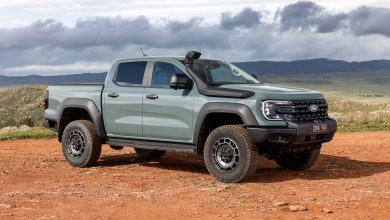
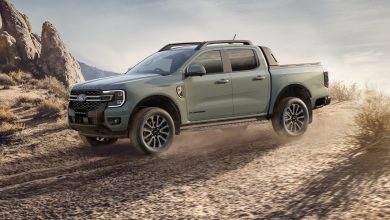
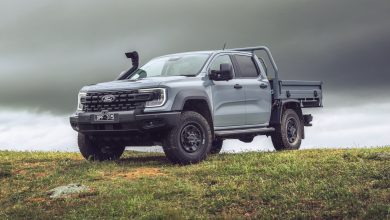
It has now been a decade since the last Falcon ute rolled out of Broadmeadows, bringing more than half a century of Ford Australia’s car-based ute lineage to an end. The Ranger effectively inherited its place in the showroom, but emotionally, these are very different animals.
A Falcon XR6 Turbo ute was low, rear-wheel drive, slightly uncouth and capable of embarrassing fairly serious sports cars while still having somewhere to carry a lawnmower. The modern Ranger is an excellent ute, but almost every desirable version has headed in the opposite direction; taller, wider, heavier, more off-road capable and usually with four doors.
The Ranger Raptor is the obvious exception when it comes to performance. Its 3.0-litre twin-turbo EcoBoost V6 produces 292kW at 5650rpm and 583Nm at 3500rpm, fed through a 10-speed automatic. Driving Enthusiast has tested one from 0-100km/h in 5.88 seconds despite a tare weight of 2419kg and a set of chunky 285/70R17 all-terrain tyres. It is properly rapid.
But what if you took that engine and pointed the rest of the Ranger in completely the other direction?
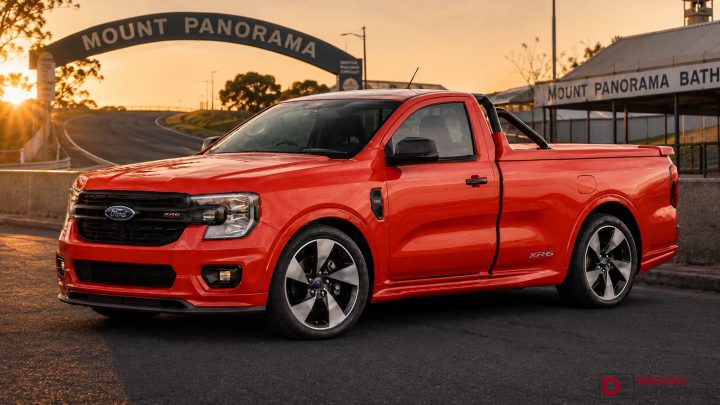
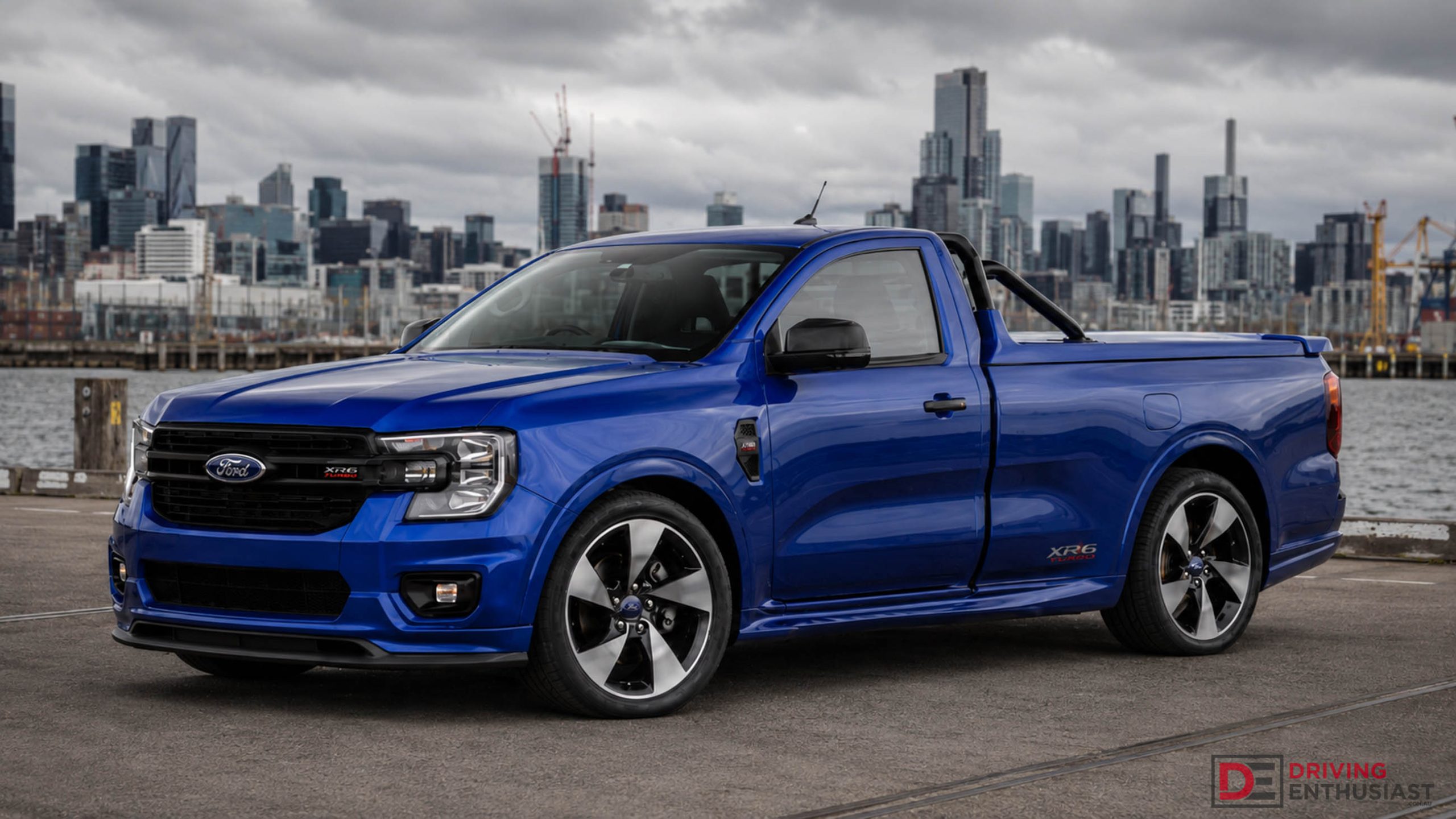
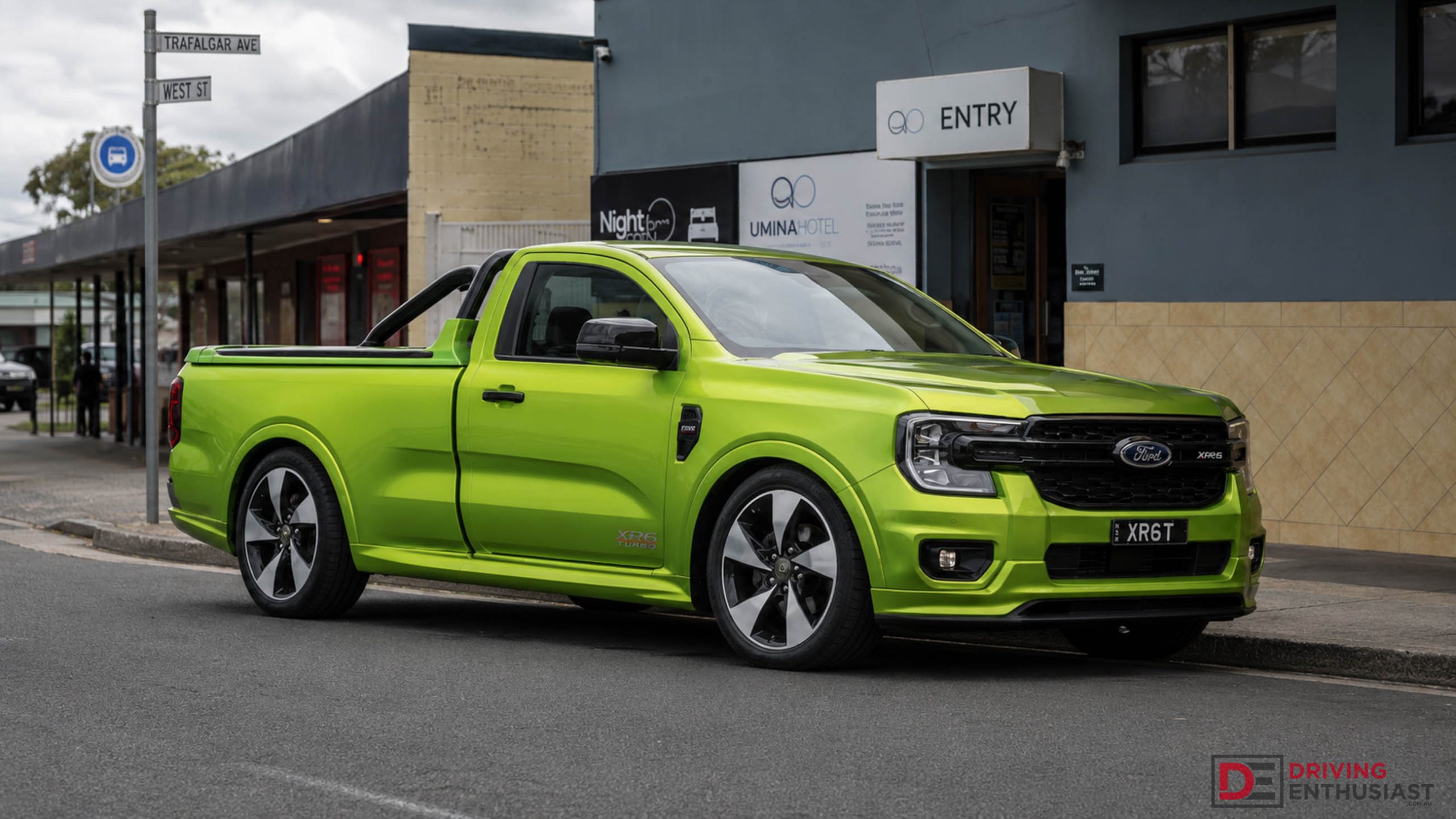
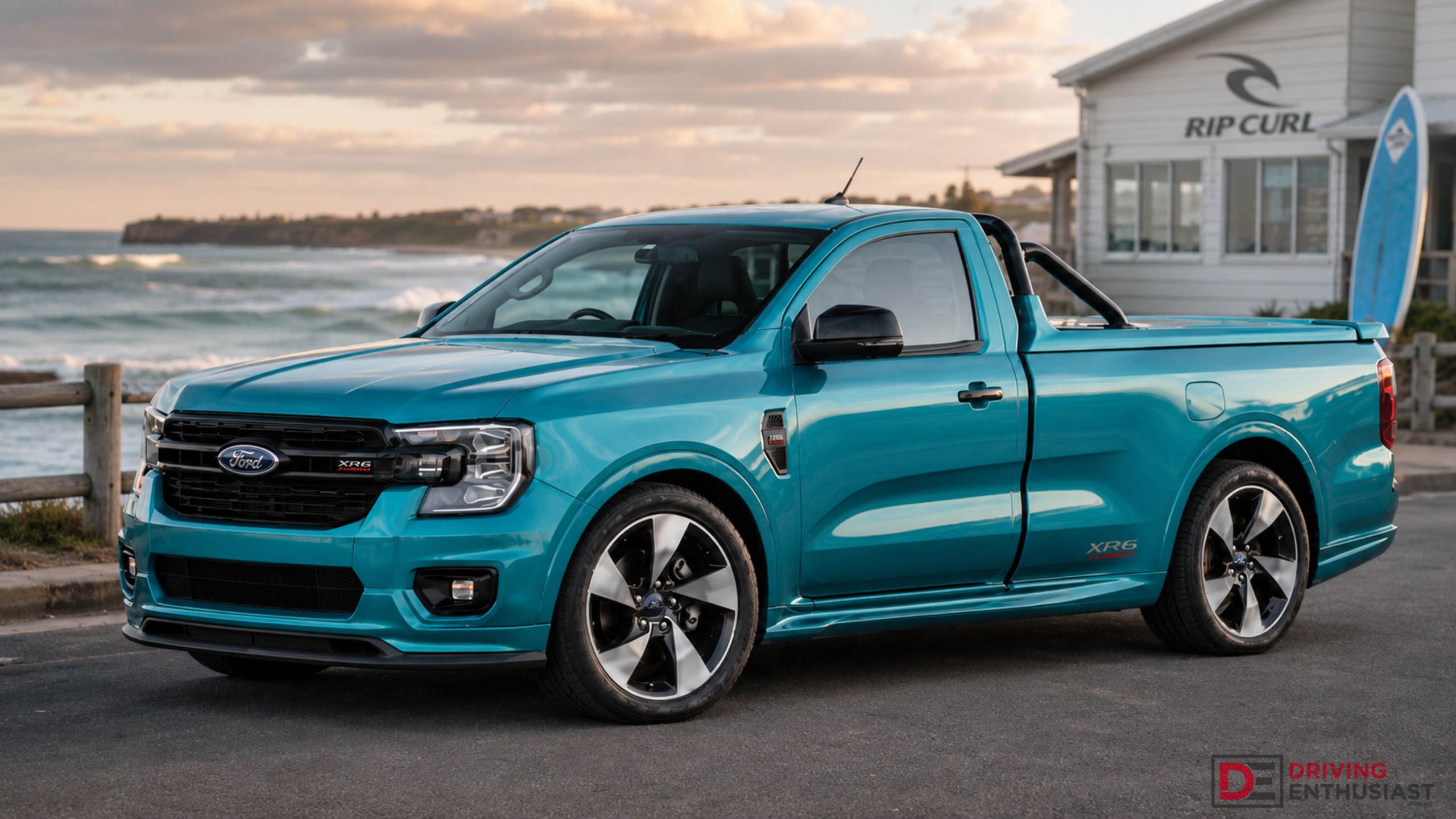
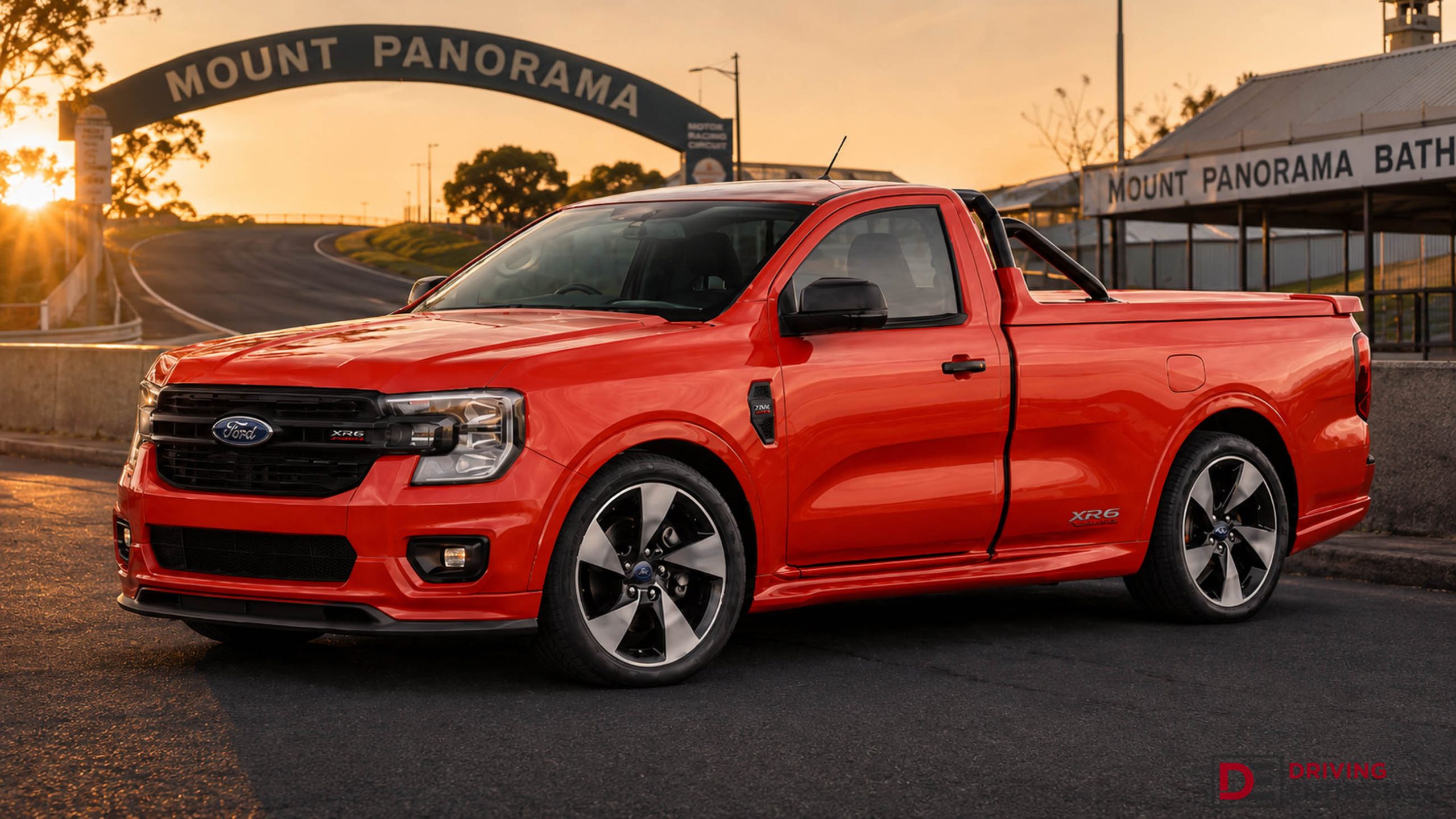
Here’s my idea: Ranger XR6 Turbo.
Not a desert racer. Not another jacked-up dual-cab with plastic wheelarches. A low, rear-drive, single-cab street ute designed to capture as much of that old Aussie ute flavour as is realistically possible using hardware Ford already has. And surprisingly, this might be one of the easier Imagination Lab creations to engineer.
The Australian MY26.5 Ranger range already includes a 4×2 XL single-cab chassis, while Ford has even expanded the 3.0-litre turbo-diesel V6 into the single-cab body in 4×4 form. Every regular Ranger rides on the same 3270mm wheelbase, regardless of cab configuration.
Better yet, the wellside body shown in our renders isn’t completely imaginary. Ford sells current-generation single-cab Rangers with a factory pickup box in South Africa, where the load floor stretches to a whopping 2305mm. So Ford already has the body engineering for a proper two-door, long-bed Ranger rather than forcing Australians to bolt an alloy tray onto a cab-chassis. That gives us our starting point.
Under the bonnet goes the Raptor’s Australian-spec 3.0-litre twin-turbo petrol V6 in its existing 292kW/583Nm tune. We wouldn’t go chasing more power because, frankly, it doesn’t need it. Keeping the engine internally standard also preserves the strongest part of the feasibility argument; this powertrain is already emissions-certified, durability-tested and sold in a Ranger.
The 10-speed automatic comes with it, but the transfer case, front differential, front driveshafts and associated four-wheel drive hardware can stay on the shelf.
The normal Ranger already exists as a rear-drive vehicle, while the Raptor itself is capable of operating in rear-wheel drive. The job would therefore be combining Ford’s existing rear-drive Ranger architecture with the Raptor engine and its powertrain electronics rather than inventing an entirely new driveline.
At the back we’d swap the workhorse differential calibration for a proper road-oriented mechanical limited-slip differential. An electronically controlled LSD would be nice, but it also starts adding engineering expense to something that should remain relatively simple.
And yes, before someone sets fire to the comments section; it isn’t a Barra. The EcoBoost is a V6 rather than an inline-six, it loses a litre of capacity and there is no pretending it would have the same lazy, bottomless character as the old 4.0-litre engine. But the badge says XR6 Turbo, not XRI6 Turbo.
There is also something satisfyingly appropriate about Ford Australia’s closest modern descendant of the Falcon ute still having six cylinders, two turbochargers and enough power to get itself into trouble.
When Falcon ute production finished in 2016, the FG X XR6 Turbo produced 270kW and 533Nm from its 3984cc Barra 270T. A manual version had a 1762kg tare mass, giving it 153.2kW per tonne, while regular XR6 Turbo utes carried only about 453kg of payload. Our Ranger would be heavier, but not by as much as you might assume.
A current 4×2 Ranger XL single-cab/chassis has a kerb weight of around 1738kg before a tray is fitted, while the new 3.0 V6 diesel 4×4 single-cab is around 1925kg in cab-chassis form. Removing the front driveline while adding the petrol V6, factory wellside, larger brakes, wheels and nicer cabin trim should put a Ranger XR6 Turbo somewhere around 1920kg tare by our estimates.
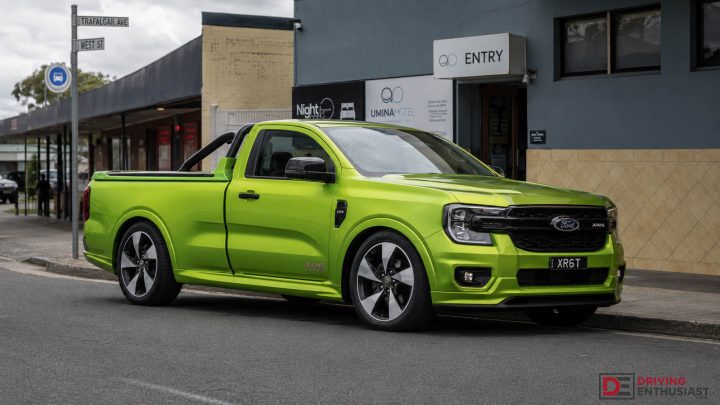
That would give it almost exactly the same power-to-weight ratio as the final Falcon XR6 Turbo Ute. Funny how that worked out.
Forget the Raptor suspension. This is where the concept really needs restraint. It would be tempting to transplant the Raptor’s entire FOX Live Valve suspension, coil-sprung Watt’s-link rear end and widened track. But that would make the car heavier, more expensive and fundamentally turn it back into a Raptor. We want the opposite.
The normal Ranger’s independent front suspension and live rear axle stay, including leaf springs at the back. That might sound agricultural for a performance vehicle, but Falcon Utes themselves persisted with a leaf-sprung live rear axle long after Falcon sedans switched to independent rear suspension. The important part is the tune.
We’d lower the body by roughly 60-65mm, using properly developed front springs, revised rear leaves and road-focused monotube dampers rather than simply chopping coils and hoping Centrelink doesn’t notice. Revised bump stops, firmer anti-roll control and quicker steering calibration would sharpen things further without making it unusable over broken Australian roads.
Ground clearance would still sit at roughly 160mm, enough to deal with driveways and speed humps without giving the car the visual centre of gravity of a refrigerator.
The current Ranger Raptor’s 17-inch wheel and enormous BFGoodrich tyre package also goes directly into the bin. Our renders use a modern interpretation of the FG XR6 Turbo’s five-spoke wheel design, upsized to 20 inches. We’d run 275/45R20 Michelin Pilot Sport 4 SUV tyres up front and 295/40R20s at the rear. Both sizes already exist in that tyre range, with suitably high load ratings for a vehicle of this weight.
That should give it substantially better turn-in, braking response and lateral grip than any regular Ranger, while the fat rear footprint would give the traction control at least a fighting chance against 583Nm.
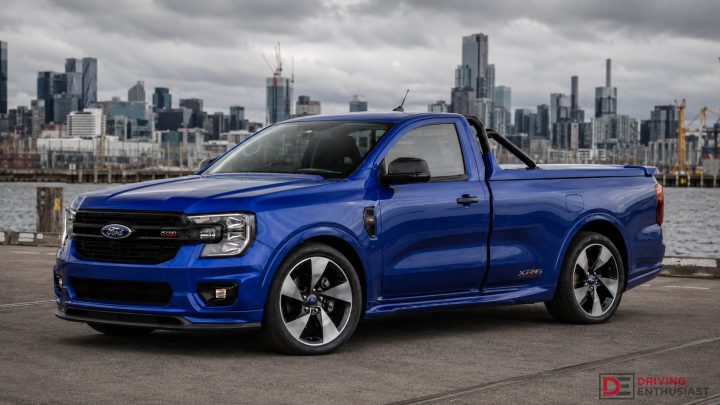
Braking hardware is another easy win. MY26.5 V6 Rangers already receive rear disc brakes, while the Raptor uses ventilated discs front and rear with an electronic brake booster. We’d take the Raptor hardware, change the pad compound for repeated high-speed road use and add some discreet cooling ducting behind the front bumper.
Visually, we deliberately haven’t given it enormous bolt-on guards or a giant FORD billboard across the grille. The standard Ranger body is already handsome enough. Lowering it over proper wheels completely changes its proportions, particularly with the long single-cab tub.
Our XR6 Turbo gets a cleaner black grille with a small red XR6 Turbo badge, deeper front chin, subtle side skirts, body-coloured wheelarches, sports bar and a hard tonneau cover. Twin exhaust outlets would sit neatly underneath the rear quarters rather than looking like drainpipes from a Bunnings car park.
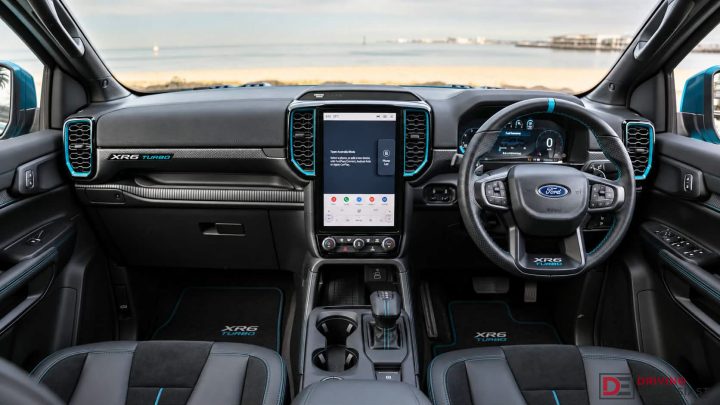
Inside, the Raptor steering wheel, paddle shifters and digital instruments would be obvious donor pieces, but the orange detailing would make way for blue or graphite stitching and embossed XR6 Turbo seats.
The current Ranger XL already gets Ford’s 12-inch SYNC 4A touch-screen and dual-zone climate control, meaning even the cheap single-cab donor isn’t exactly a 1997 Courier inside.
A 10-speaker B&O system, heated sports seats, wireless charging and some soft-touch trim would be enough to lift it above XL without trying to turn a two-seat street ute into a Platinum.
And crucially, it would still have a huge usable tray. You could take it to Bunnings. You’d just get there surprisingly quickly.
Speculative Specs – 2027 Ford Ranger XR6 Turbo
Engine: 3.0-litre twin-turbo EcoBoost petrol V6, direct injection, active-valve sports exhaust
Output: 292kW @ 5650rpm / 583Nm @ 3500rpm
Gearbox: 10-speed automatic with paddle shifters
Drive type: Rear-wheel drive, mechanical limited-slip differential
Front suspension: Independent double wishbone, lowered performance springs, monotube dampers, uprated anti-roll bar
Rear suspension: Live axle, revised multi-leaf springs, monotube dampers, uprated anti-roll control
Ride-height reduction: Approx. 60-65mm
Ground clearance: Approx. 160mm
Front wheels: 20 x 9.0-inch alloy, 275/45R20 Michelin Pilot Sport 4 SUV
Rear wheels: 20 x 10.0-inch alloy, 295/40R20 Michelin Pilot Sport 4 SUV
Brakes: Raptor-derived ventilated four-wheel discs, electronic brake booster, road-performance pads
Wheelbase: 3270mm
Load-box length: Approx. 2305mm
Tare weight: 1920kg (est.)
Power-to-weight: 6.58kg / 152.1kW:1000kg
Fuel consumption: 10.8L/100km (est.)
Fuel tank/Fuel type: 80L / 95 RON premium unleaded
Payload: 600kg target
Braked towing capacity: 2500kg target
0-100km/h: 5.3 seconds (est.)
Starting price: $69,990 before on-road costs
Weight estimate based on current Ranger single-cab chassis masses, the existing 3.0-litre V6 Ranger and the additional mass of a factory wellside, performance running gear and trim. Acceleration estimate is benchmarked against Driving Enthusiast’s 5.88-second Vbox result for the current Ranger Raptor.
Feasibility: 8.5/10
This is the part that makes the Ranger XR6 Turbo more than just another Photoshop fantasy.
The engine exists. The gearbox exists. The rear-drive Ranger exists. The single-cab exists. The long factory pickup box exists. The brakes, electronics, dashboard and higher-grade interior components all exist.
Even Ford itself has rediscovered the street-truck genre. In the US, the new F-150 Lobo combines a V8 with 22-inch wheels, ground effects and a factory-lowered rear suspension specifically to create a road-biased street truck. This is no longer some genre Ford abandoned in 2008.
The actual engineering work would revolve around cooling validation, rear-drive powertrain calibration, ESC tuning, spring and damper development, differential durability, exhaust certification and integrating the petrol powertrain with the single-cab electrical architecture.
That is still real engineering. But compared with creating a new passenger-car platform, developing a Barra replacement or trying to turn the Raptor into a low-rider, it is almost comically achievable.
Probability: 3.5/10
The obvious problem is that Australians overwhelmingly buy dual-cab utes now, and manufacturers have worked very hard to convince everyone their ute needs to climb Cape York or beer hill while towing a house.
A thirsty 292kW petrol single-cab also isn’t going to do Ford any favours when manufacturers are facing increasingly tight fleet CO2 requirements.
Then there is the Raptor problem. Ford already has customers lining up to spend $90,690 before on-road costs on its flagship Ranger, so giving people the same engine in a lighter, $70,000 street ute might cause an uncomfortable conversation in the product-planning department.
But as a limited-production Ford Performance model? That becomes much more interesting. Call it XR6 Turbo, build a thousand of them, give it some proper colours and let Ford’s Australian engineering team loose on the chassis tune.
It wouldn’t be a new Falcon ute – nothing built on a ladder frame with a 3.0-litre V6 was ever going to be. But if the objective is to create the closest thing to a modern Australian performance ute with the smallest realistic amount of engineering effort, there probably isn’t a better starting point anywhere in the Ford catalogue.
Personally, I’d have this over a Raptor. Just make mine Toxic Green.