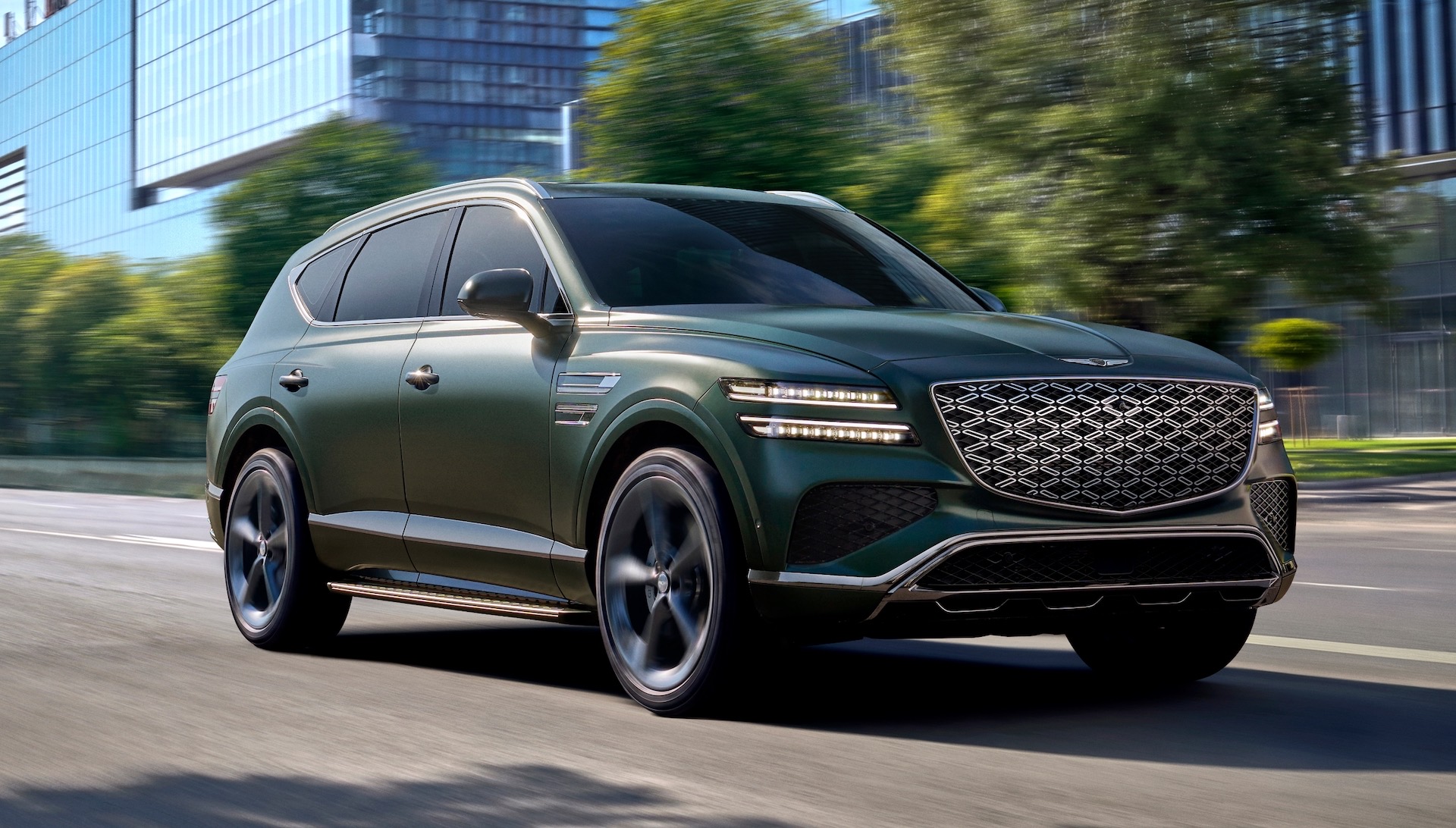
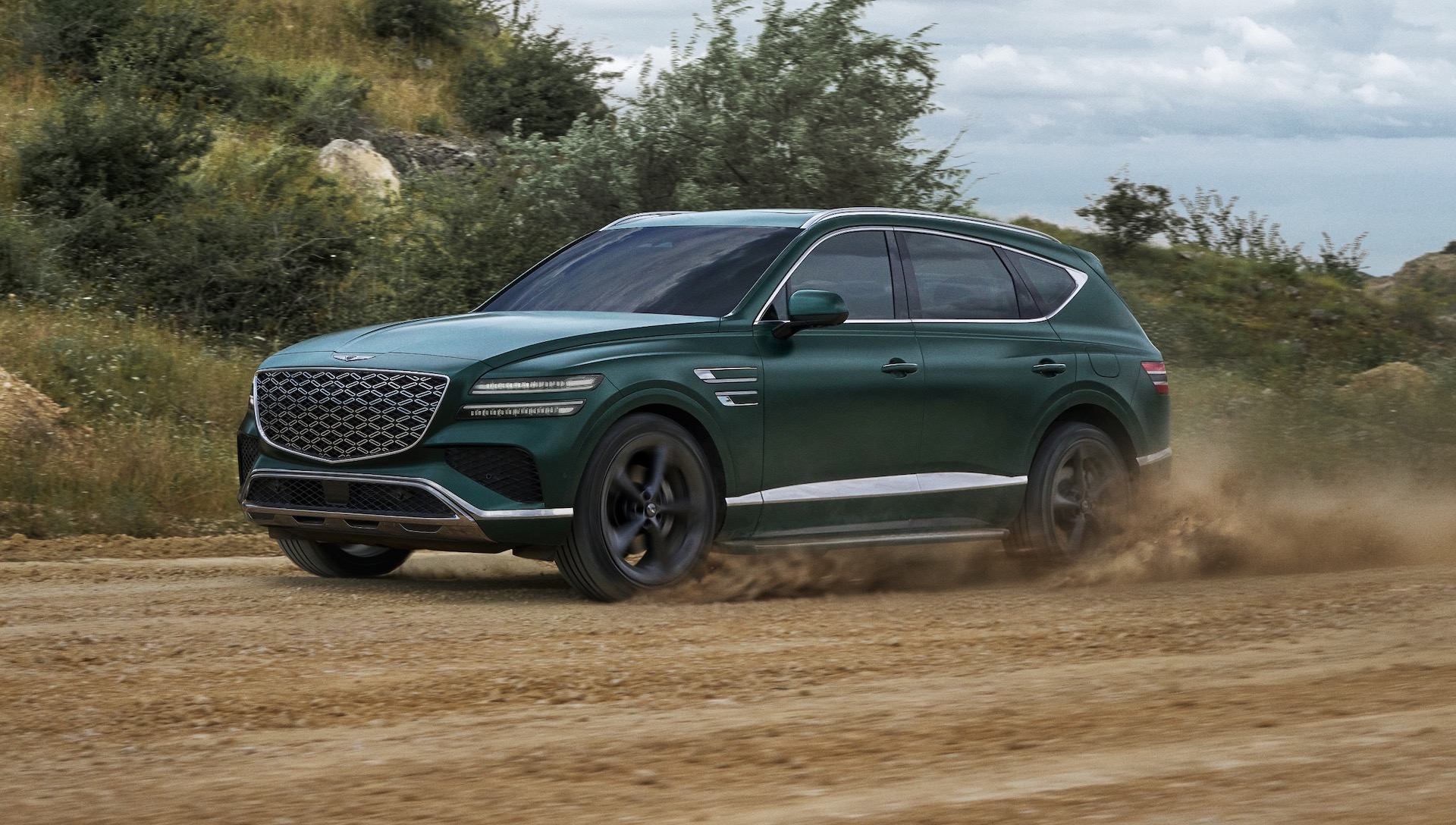
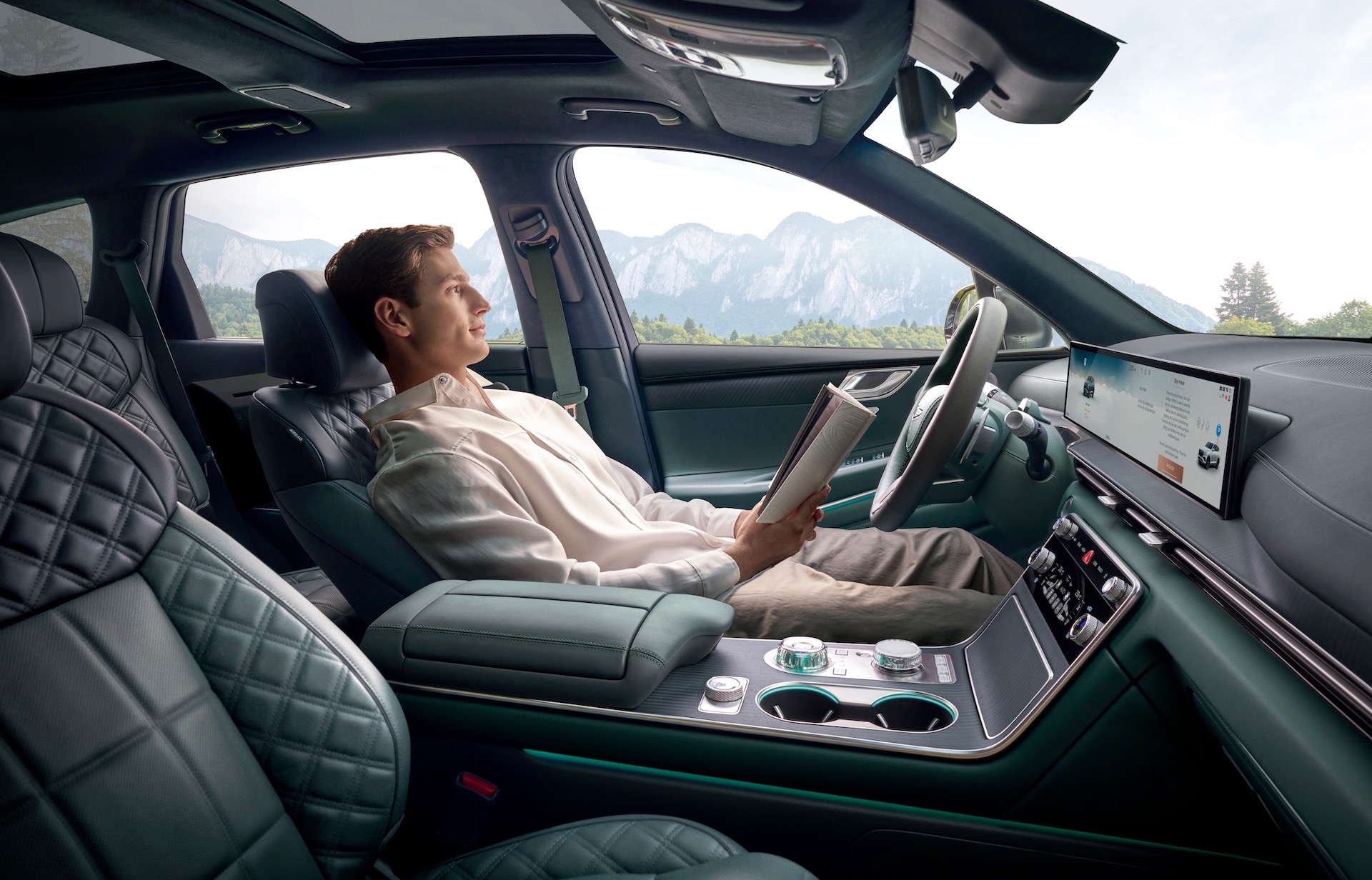
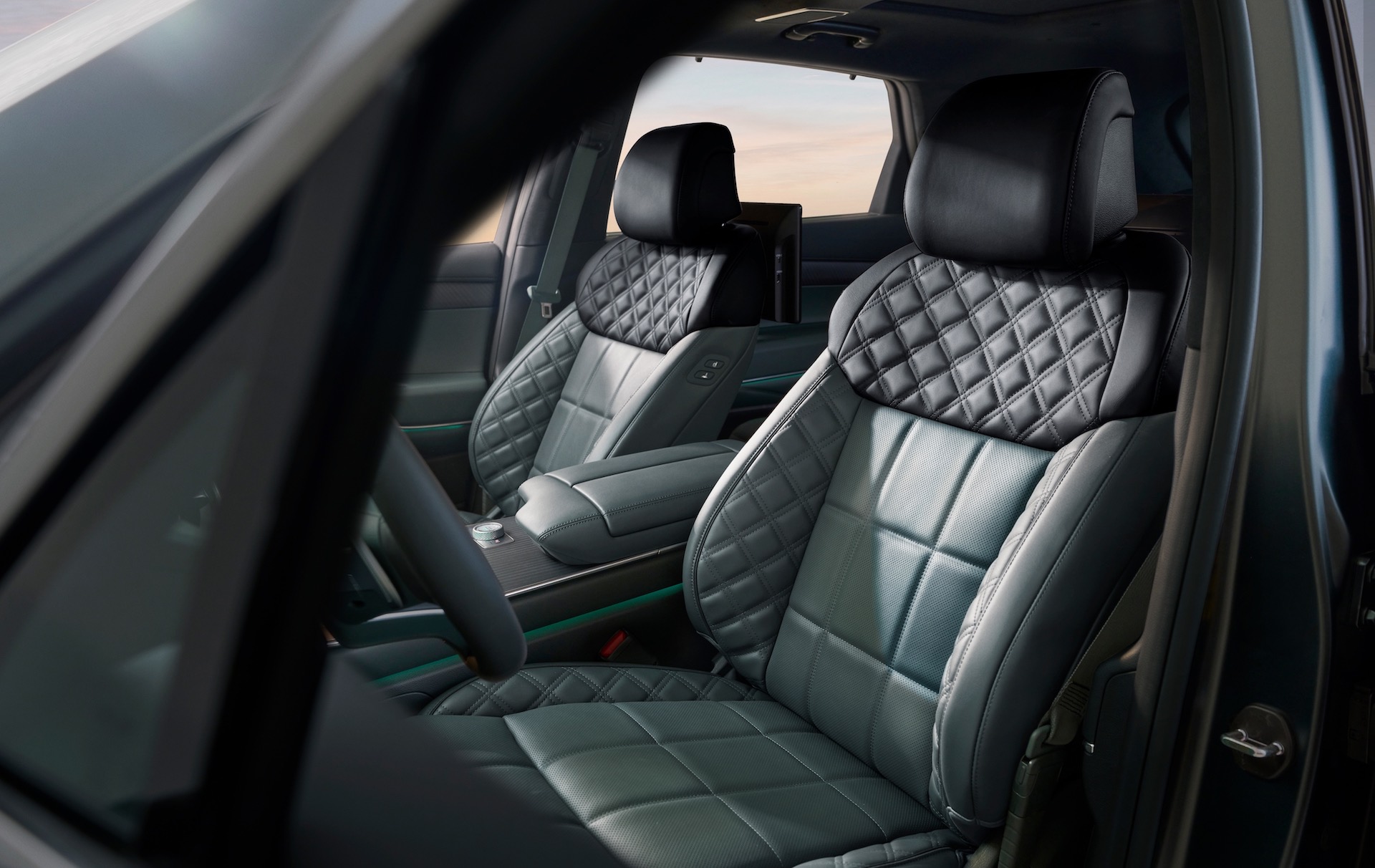
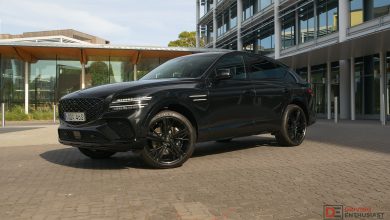
Fresh off the back of releasing the dazzling GV90, Genesis has officially pivoted away from its EV-only strategy, detailing its first-ever petrol-electric model; the GV80 Hybrid.
Representing a major shift for the Korean luxury marque, the GV80 Hybrid debuts a ‘next-generation’ powertrain that will serve as the vanguard for a broader electrified rollout. The parallel system pairs a 2.5-litre turbo four-cylinder petrol engine with a starter-generator and a dedicated drive motor, drawing power from the Hyundai Motor Group’s first liquid-cooled hybrid battery.
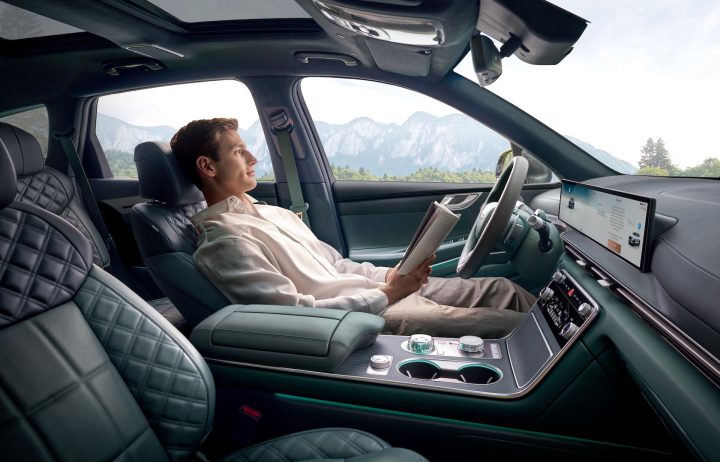
Total system output is rated at a healthy 258kW of power and 529Nm of torque, representing a 34kW and 107Nm jump over the standard, non-electrified 2.5T variant.
Drive is sent through a newly-developed seven-speed automatic transmission. In a clever bit of engineering aimed at shedding weight and friction, the gearbox completely deletes the physical reverse gear; instead, the GV80 Hybrid reverses purely under the power of its electric motor.
Genesis engineers have calibrated the system to mimic a pure EV in urban environments. The SUV operates on electric power alone from start-up until approximately 30km/h, contributing to a claimed 25 per cent improvement in fuel economy over the standard combustion model.
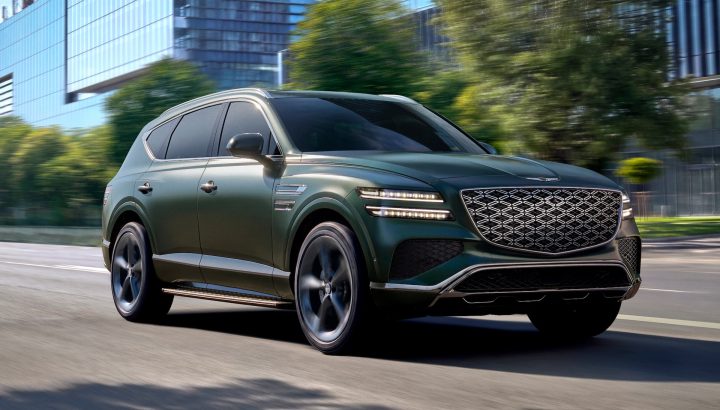
For the Australian market, the introduction of the GV80 Hybrid will finally give buyers an economical option, since the 3.0-litre, turbo-diesel was taken away, leaving mainly the rather thirsty yet desirable 3.5-litre twin-turbo V6 petrol.
While local launch timing is yet to be officially confirmed, global production is slated to commence next month, providing local buyers with a direct, luxury alternative to the dominant Lexus RX.
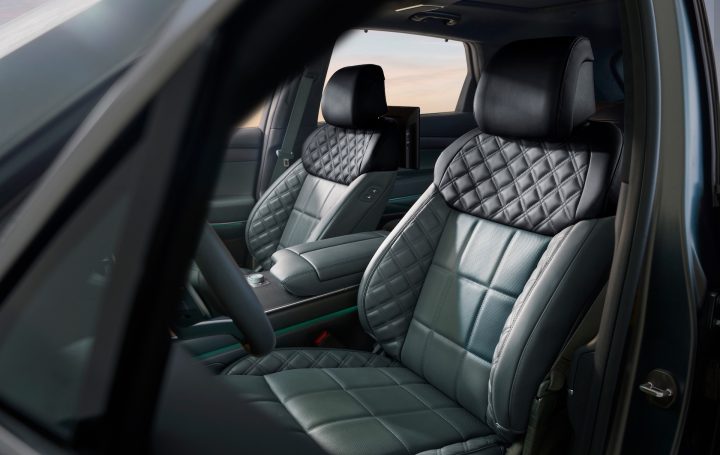
The GV80 is just the beginning of the brand’s hybrid revival. A petrol-electric variant of the smaller, high-volume GV70 is expected to follow closely, with global production reportedly earmarked for March 2027.
Furthermore, Genesis is preparing to introduce Range-Extended Electric Vehicle (REEV) technology across its lineup. These REEV models, which use a combustion engine purely as a generator to feed the battery, while electric motors drive the wheels, are slated to launch globally from 2027. Promising total driving ranges in excess of 900km, the upcoming REEV architecture could prove to be the ultimate luxury solution for tackling the vast distance in Australia.