

The production version of MG’s upcoming compact electric hatchback, previewed earlier this year by the MG GO! concept, has been photographed completely undisguised in China during what appears to be a promotional shoot ahead of its 2027 showroom rollout.
Surfacing via Chinese outlet Autohome and reported by Autocar Philippines, the spy images confirm that MG has retained the vast majority of the concept car’s stubby, wide-stanced proportions as it transitions from motor show stage to assembly line.
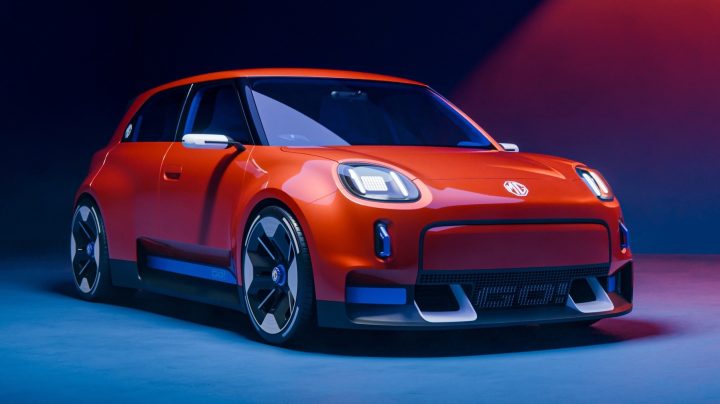
First unveiled at the 2026 Goodwood Festival of Speed in July, the MG GO! was penned at the marque’s Advanced Design Centre in London under design director Carl Gotham. Measuring roughly four metres long, the B-segment electric supermini will slot underneath the MG4 – potentially reviving the ‘MG2’ badge in select markets – to rival the BYD Atto 1 (Dolphin Mini), Renault 5 E-Tech, and Geely EX2.
Compared with the Goodwood show car, the road-going prototype wears toned-down front and rear bumpers that trade the concept’s aggressive aero vents for a cleaner, conventional finish. Up front, intricate concept lighting makes way for simpler projector headlight clusters reminiscent of the Suzuki Swift, while standard door-mounted wing mirrors replace the concept’s slimline cameras.
Despite those pragmatic tweaks, the hatch carries over its floating contrast roof, C-pillar hidden rear door handles, multi-spoke alloy wheels, roof spoiler, and upright LED taillights. MG says the silhouette draws inspiration from classic British stablemates including the MGB GT, MG Metro Turbo, MG ZR, and MG EX4.

”With MG GO!, we wanted to create something compact and contemporary, but also warm, expressive and immediately likeable, an embodiment of all that we admire about the MG brand,” Gotham said. “It is not about looking back for its own sake, but about capturing some of the clarity, charm and emotional appeal that have always made MG so distinctive.”
While SAIC-owned MG has yet to confirm battery capacities or motor outputs, the hatch is tipped to use a cost-optimised front-wheel drive platform targeting a £20,000 (around AU$39,000) starting price in Europe when production commences in 2027.


