Renault is expanding its Australian lineup considerably in 2026, and one of the more important new arrivals is the Symbioz. It enters the highly competitive small SUV segment with a distinctly European flavour, while giving buyers the choice of two quite different hybrid systems developed by Horse Powertrain.
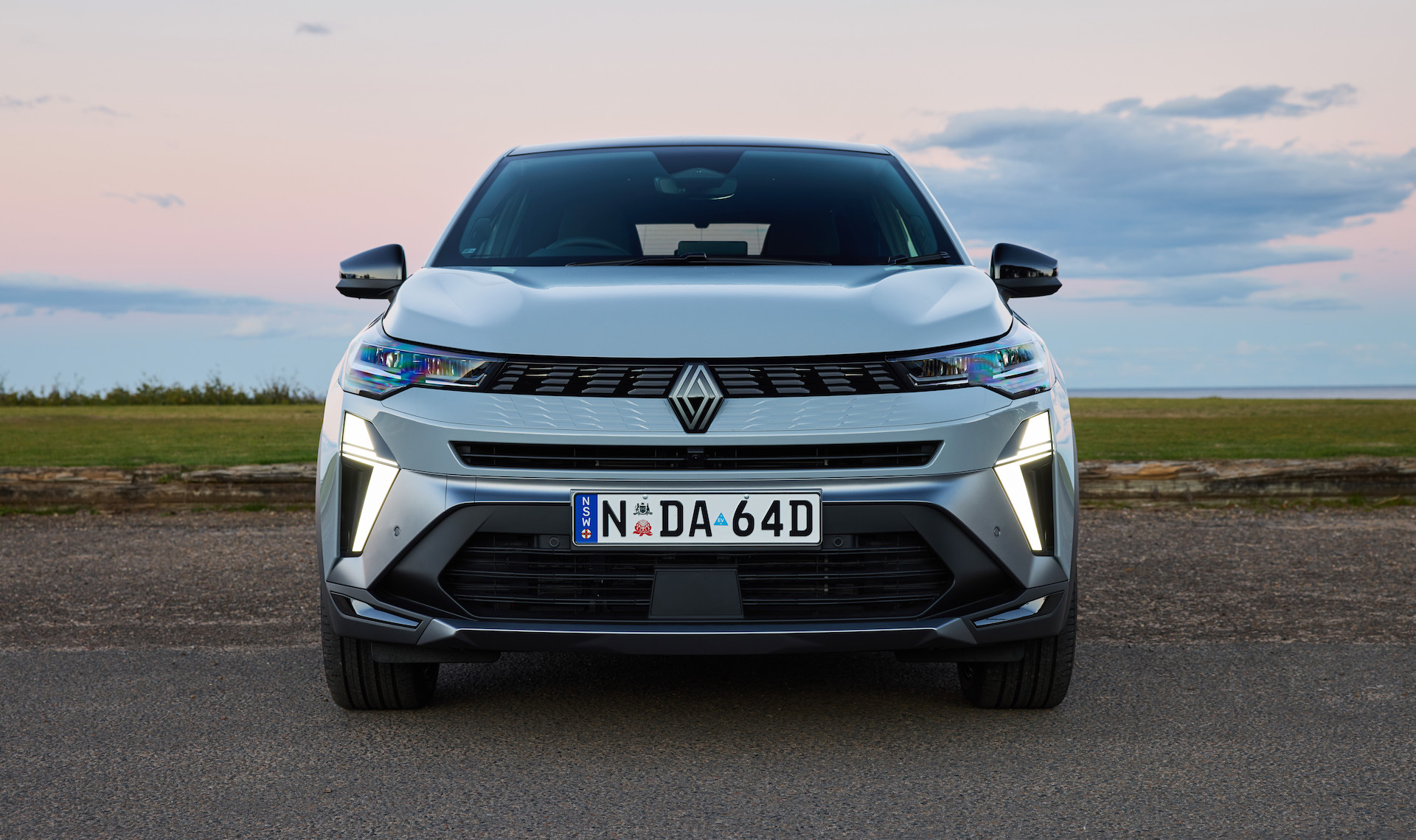
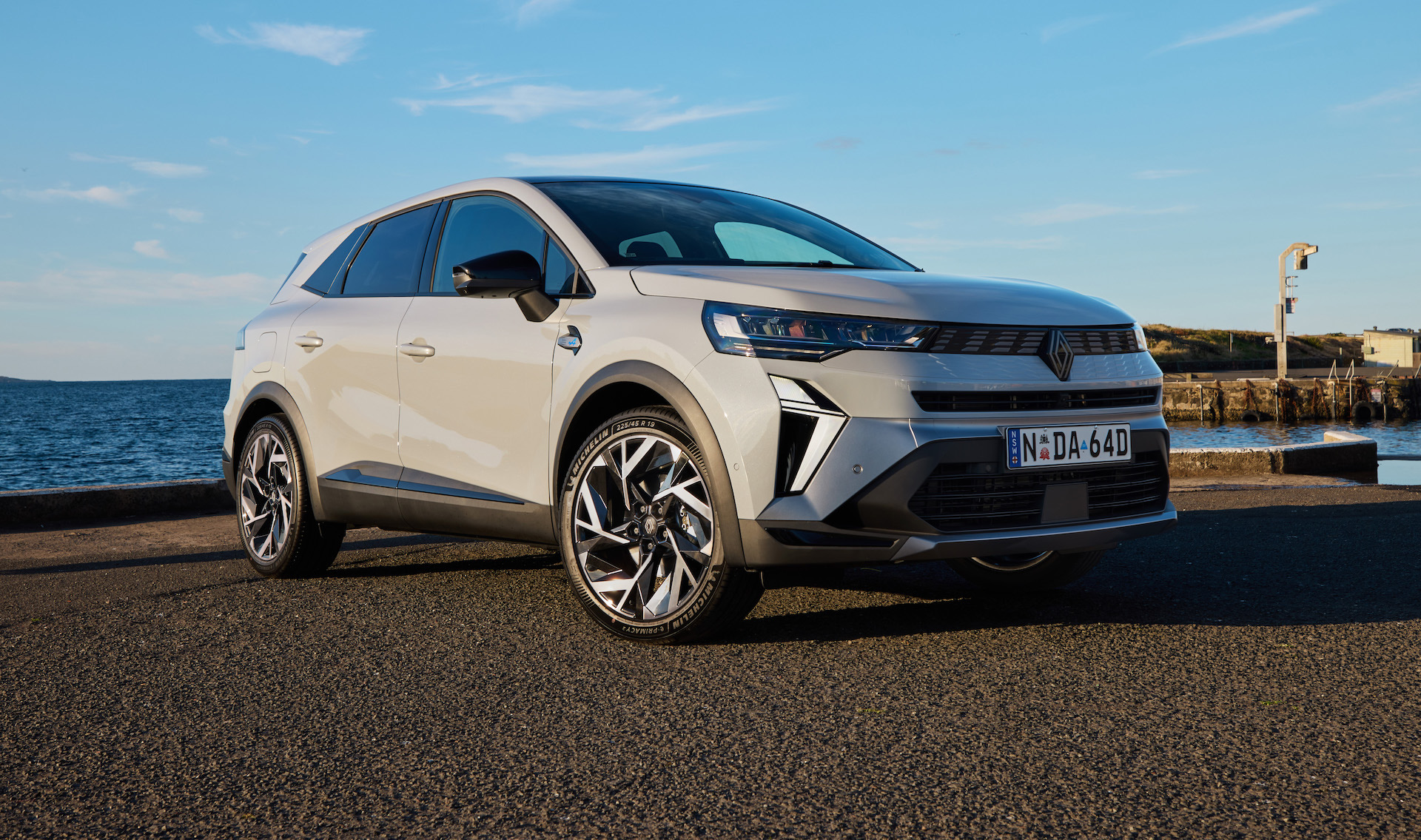
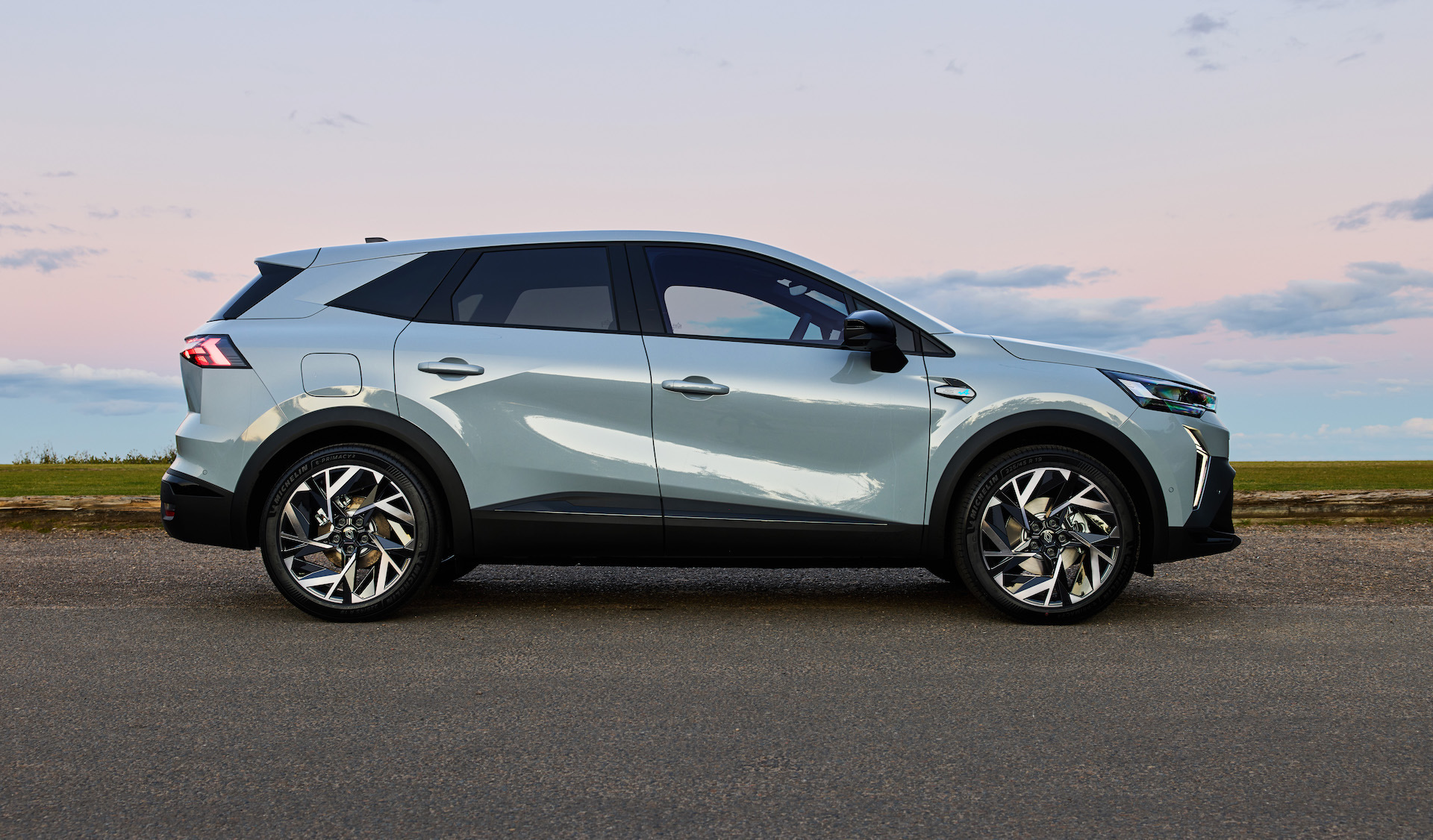
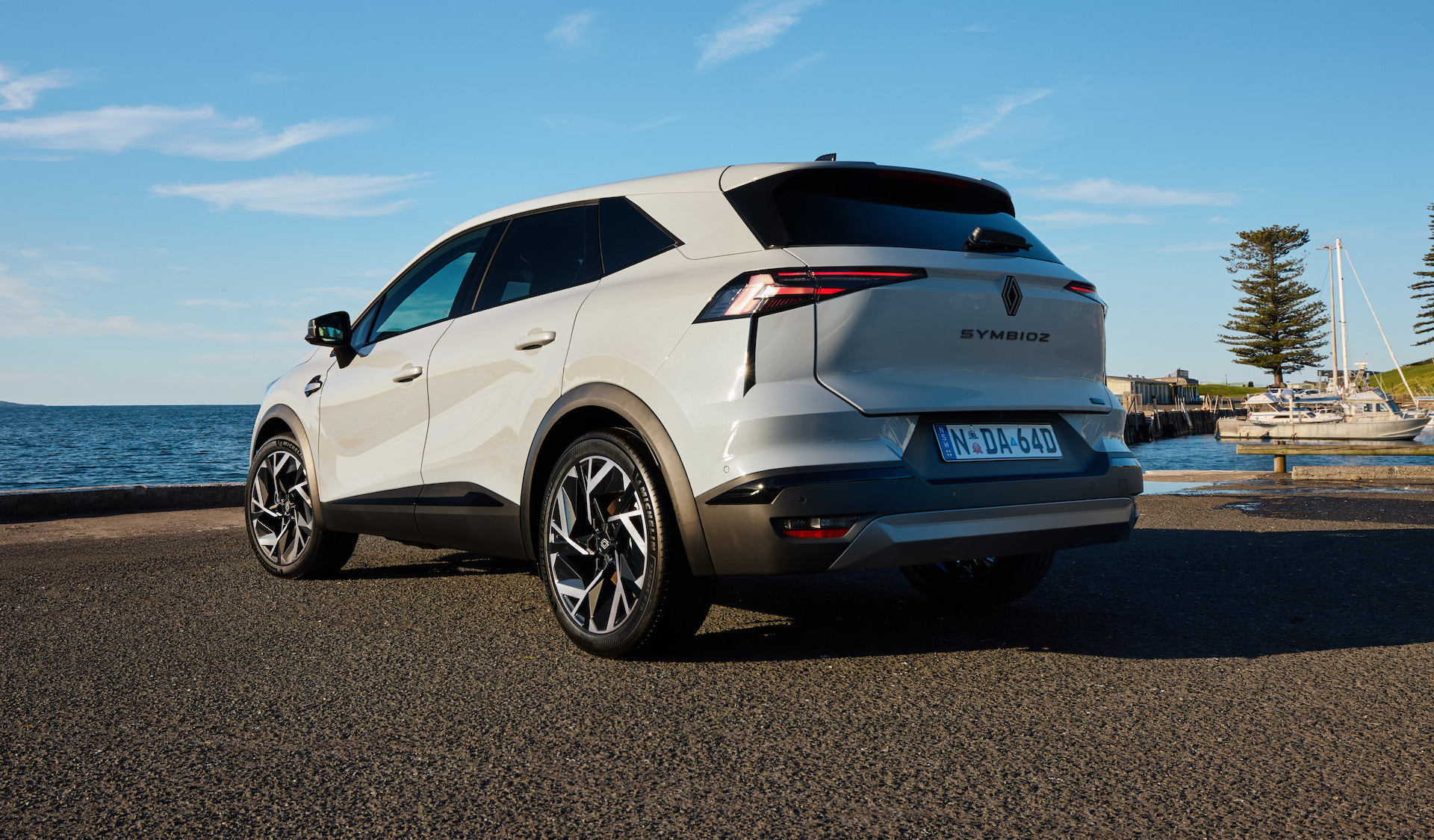
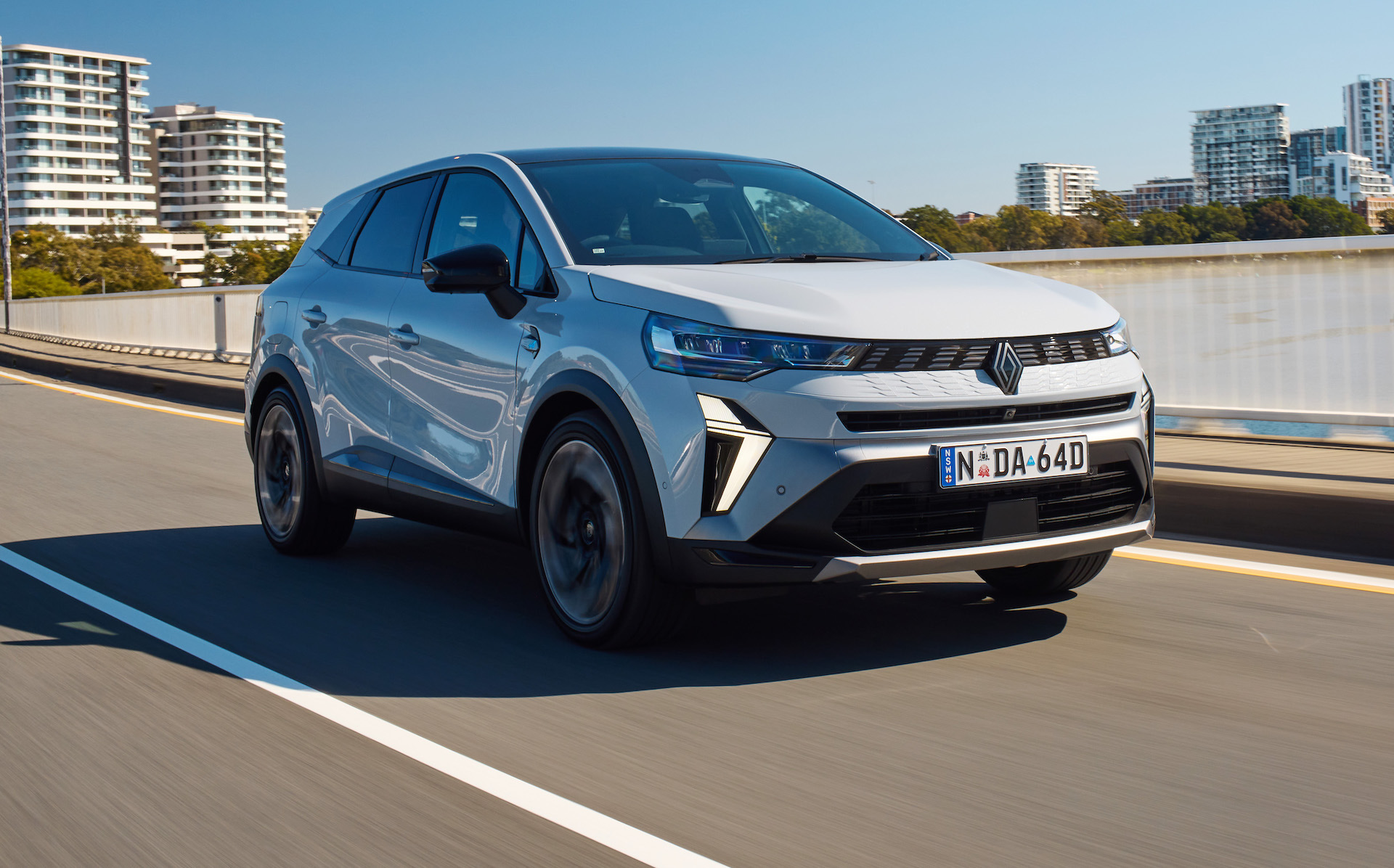
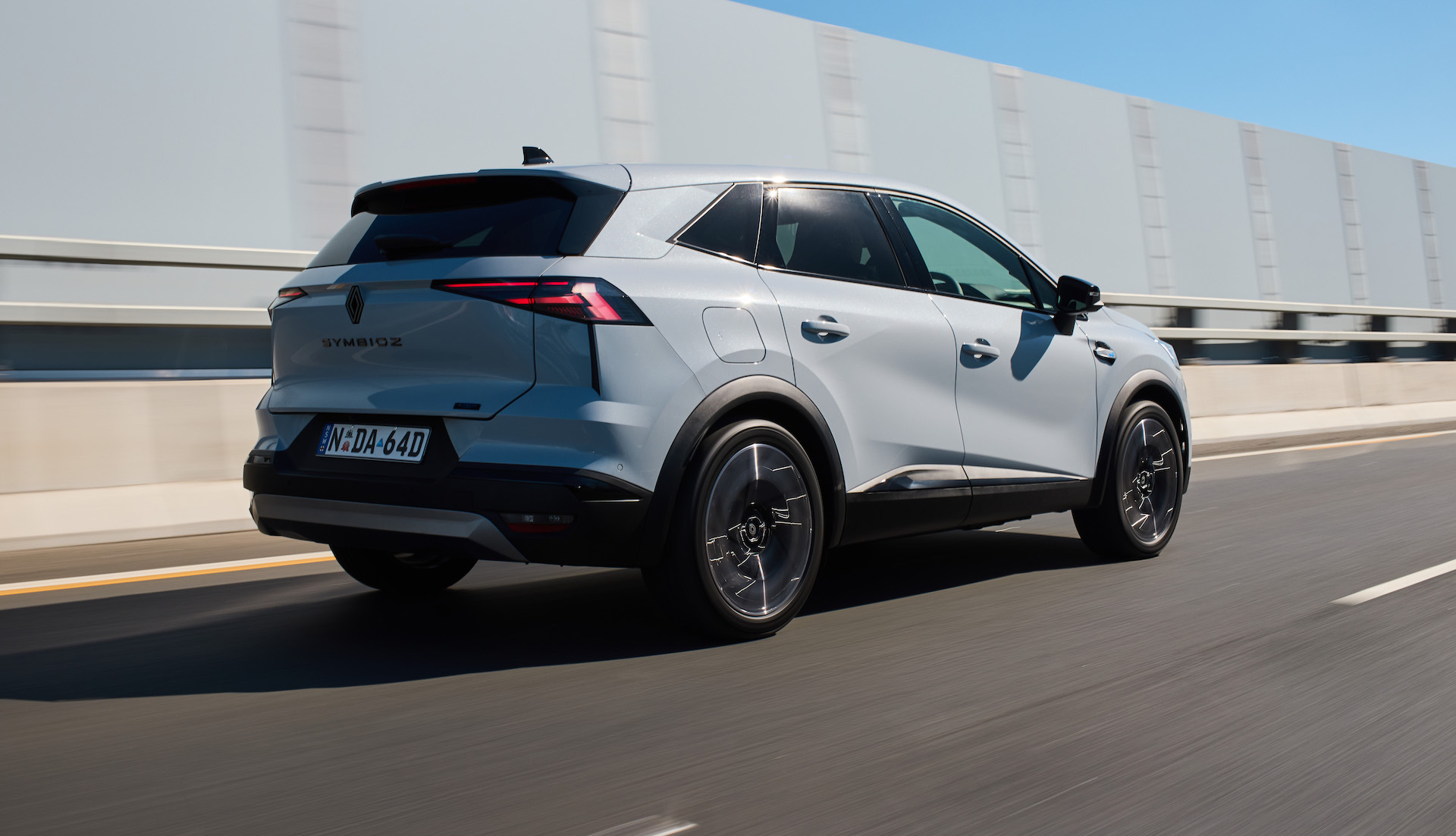
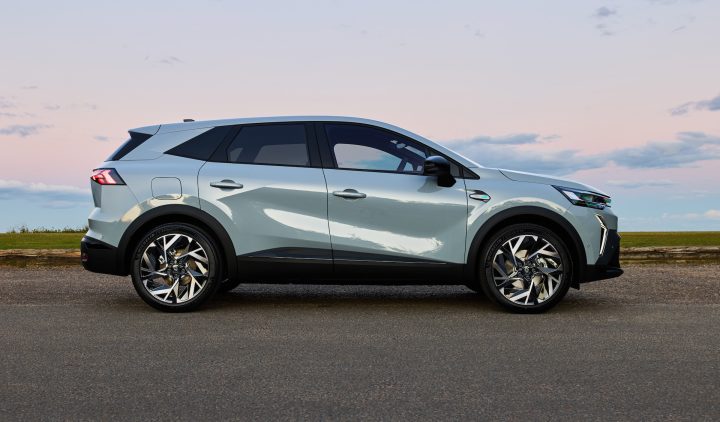
And it certainly makes a good first impression. In our opinion, the Symbioz has to be one of the sharpest and suavest-looking SUVs in this class. There’s a sophistication to the exterior design that helps it stand out without relying on oversized grilles, excessive body cladding or other gimmicks. But what’s it like to drive and live with? We recently had a good test drive of both powertrains during the official Australian media launch event to find out.
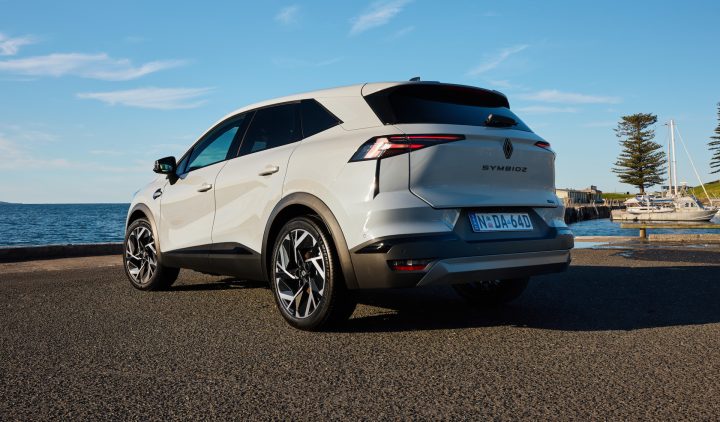
2026 Renault Symbioz Esprit Alpine: Specifications
Engine: 1.8-litre four-cylinder E-Tech hybrid
Electrical: 1.4kWh battery
Output: 116kW@5250-5500rpm / 265Nm@1800-3750rpm
Gearbox: Hybrid auto
Drive type: Front-wheel drive
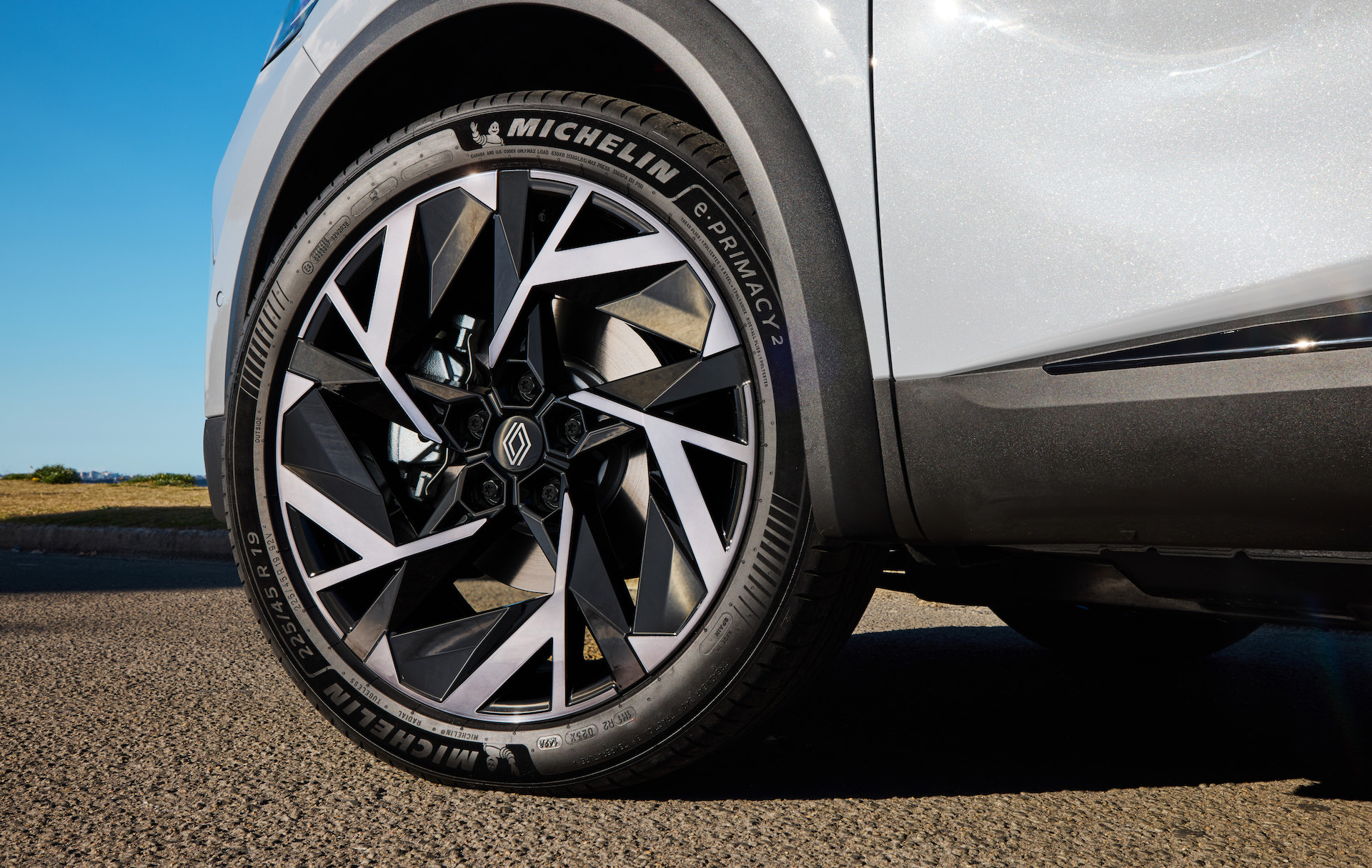
Wheels: F & R: 19×7.5, 225/45
Tare weight: 1373kg
Power-to-weight: 11.83:1 (kg:kW)
Official consumption: 4.7L/100km
Fuel tank/Fuel type: 48L/95 RONPower efficiency: 24.68kW:L/100km
0-60km/h: 4.54 seconds*
0-100km/h: 8.99 seconds (base Techo mild-hybrid: 8.79s)*
60-110km/h: 6.21 seconds*
1/4 mile: 17.00 seconds at 137.6km/h*
Max acceleration: 0.696g*
100-0km/h braking: 38.59m in 3.01 seconds*
Max deceleration: -1.108g*
Starting price: $45,990 (Techno from $36,990)
*Figures as tested by Driving Enthusiast on the day. Manufacturers’ claims may be different
2026 Renault Symbioz: How much does it cost?
Three variants are available in Australia. The range opens with the Techno Mild Hybrid, followed by the Techno Full Hybrid and flagship Esprit Alpine Full Hybrid. Prices start from $36,990, $42,990, and the Esprit Alpine Full Hybrid tops the range at $45,990 (all excluding on-road costs).
Interestingly, that $6000 difference between the two Techno variants makes the mild hybrid particularly appealing. The full hybrid undoubtedly uses less fuel, but it would take considerable driving to recover that difference purely through fuel savings.
On the other hand, buyers who spend most of their time in urban traffic may appreciate the full hybrid’s ability to operate electrically at low speeds, along with its lower overall consumption.
Renault Australia provides a five-year/unlimited kilometre warranty, with 12-month/30,000km service intervals. The battery on the full hybrid is covered for 8 years/160,000km.
2026 Renault Symbioz: Interior & packaging
Standard equipment is strong across the range, with adaptive cruise control, blind-spot monitoring, rear cross-traffic alert, front and rear autonomous emergency braking, parking sensors, Google built-in, wireless smartphone connectivity, heated steering wheel, and wireless phone charging included from the entry level.
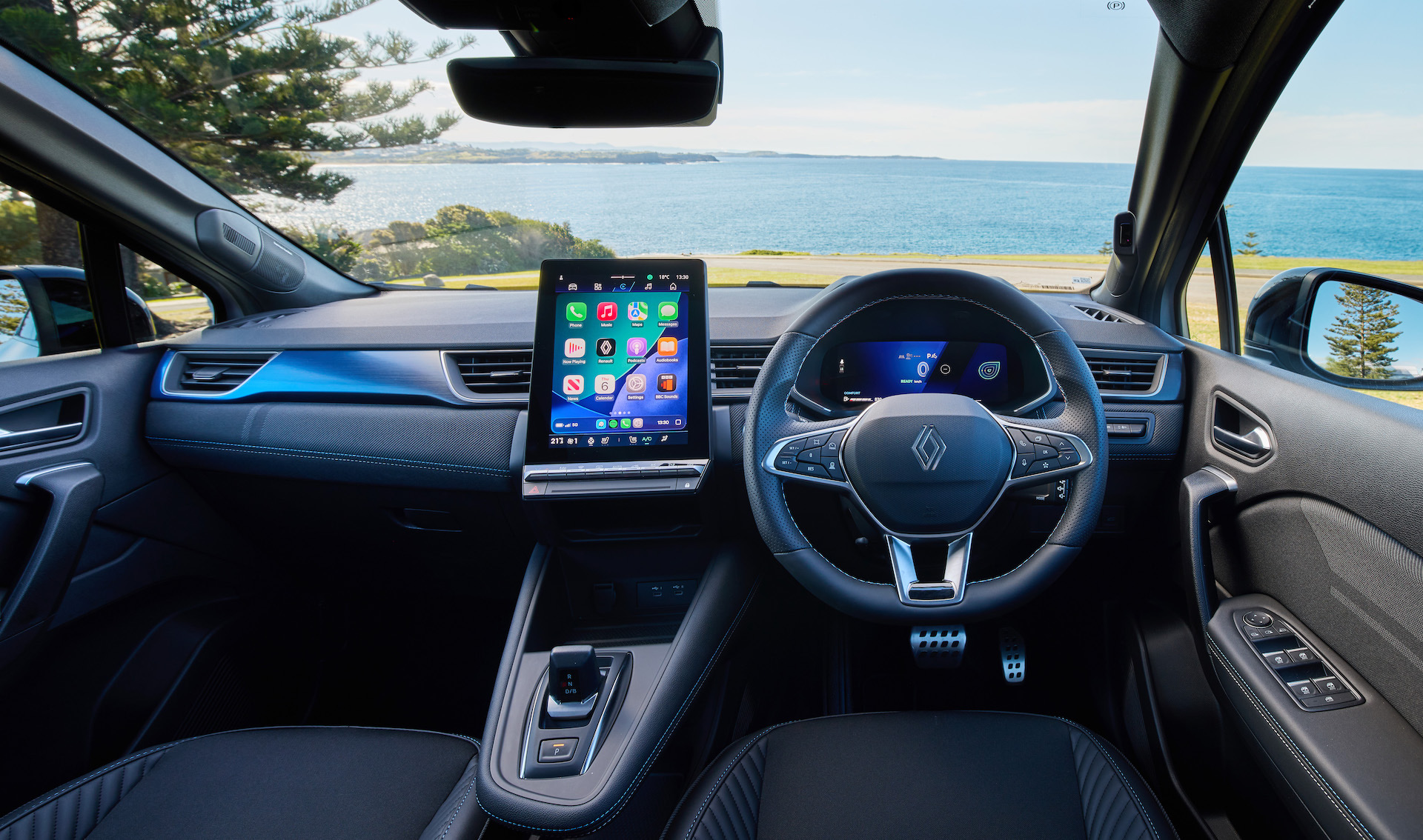
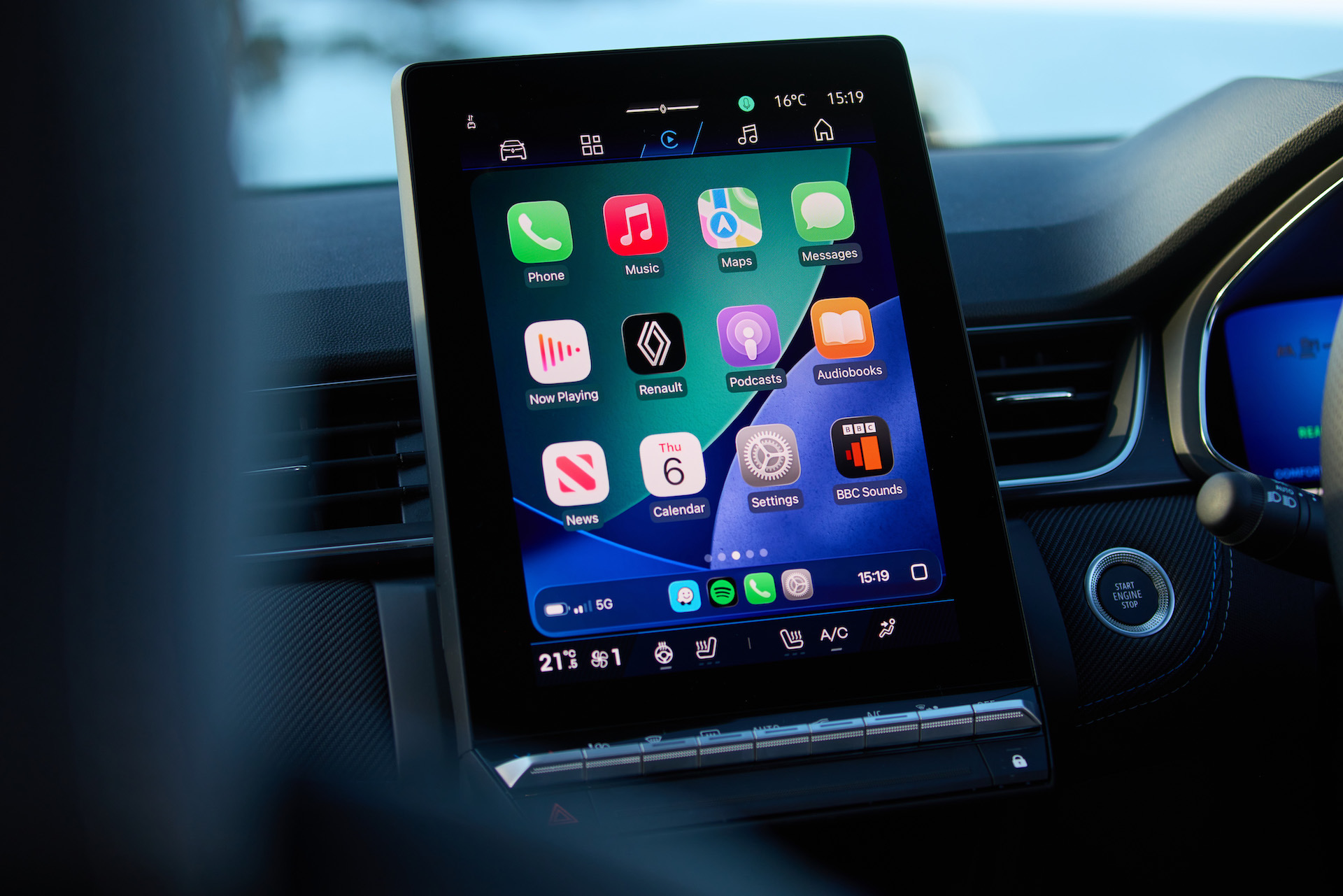
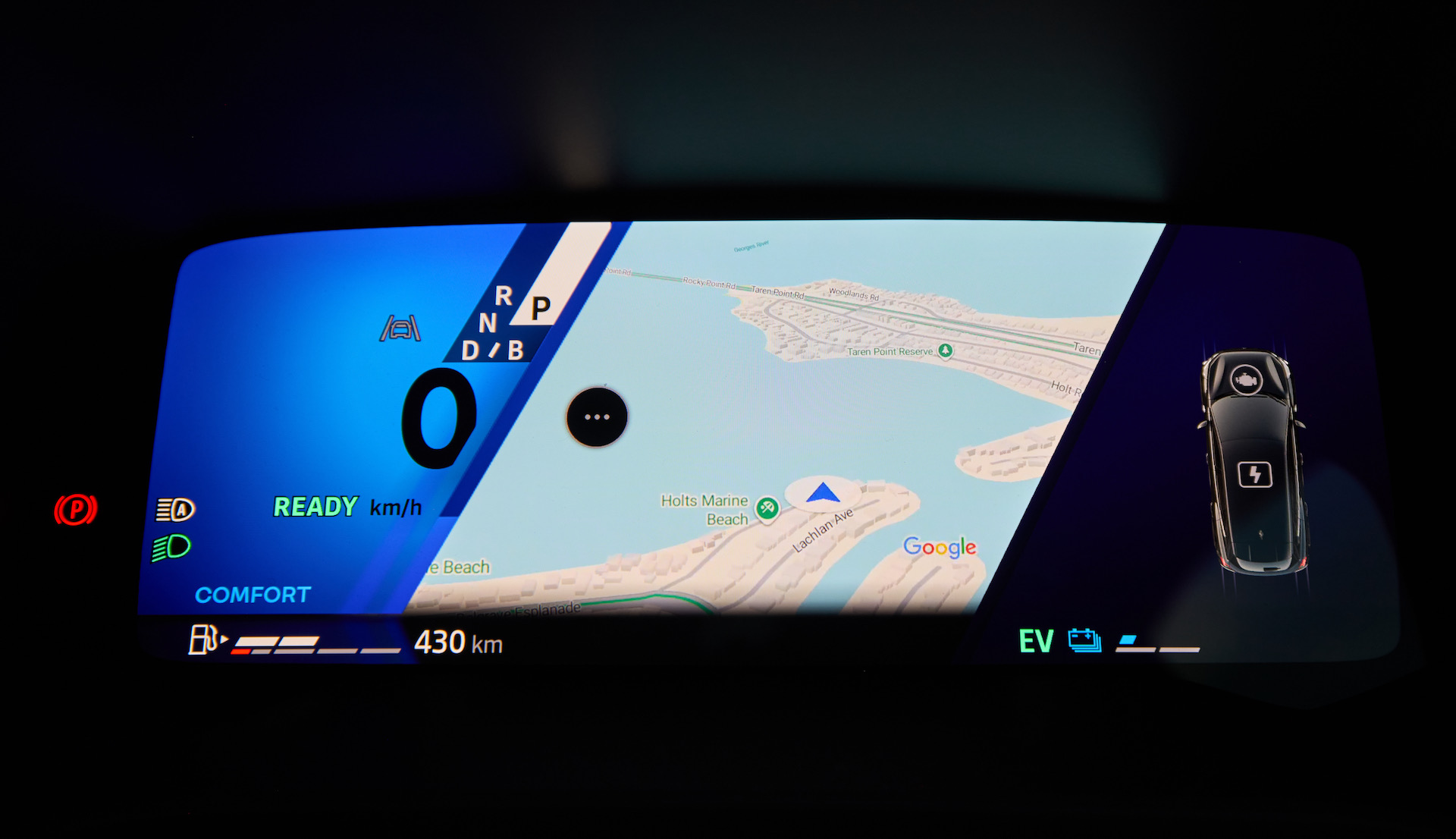
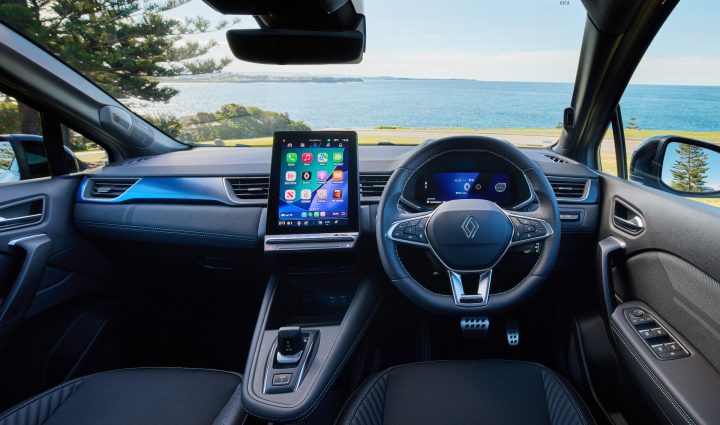
The Symbioz continues Renault’s recent run of smart, contemporary interior designs. It feels modern without being needlessly futuristic, with a 10.25-inch digital instrument cluster sitting alongside a portrait-oriented 10.4-inch central touch-screen.

One of the highlights is the Google built-in functionality. Google Maps and other Google Automotive Services are integrated directly into the vehicle, rather than simply relying on smartphone mirroring. It is very user-friendly and is able to learn and adapt, as well as automatically update to the latest system. Wireless Apple CarPlay and Android Auto are also standard if you prefer to use your own device.
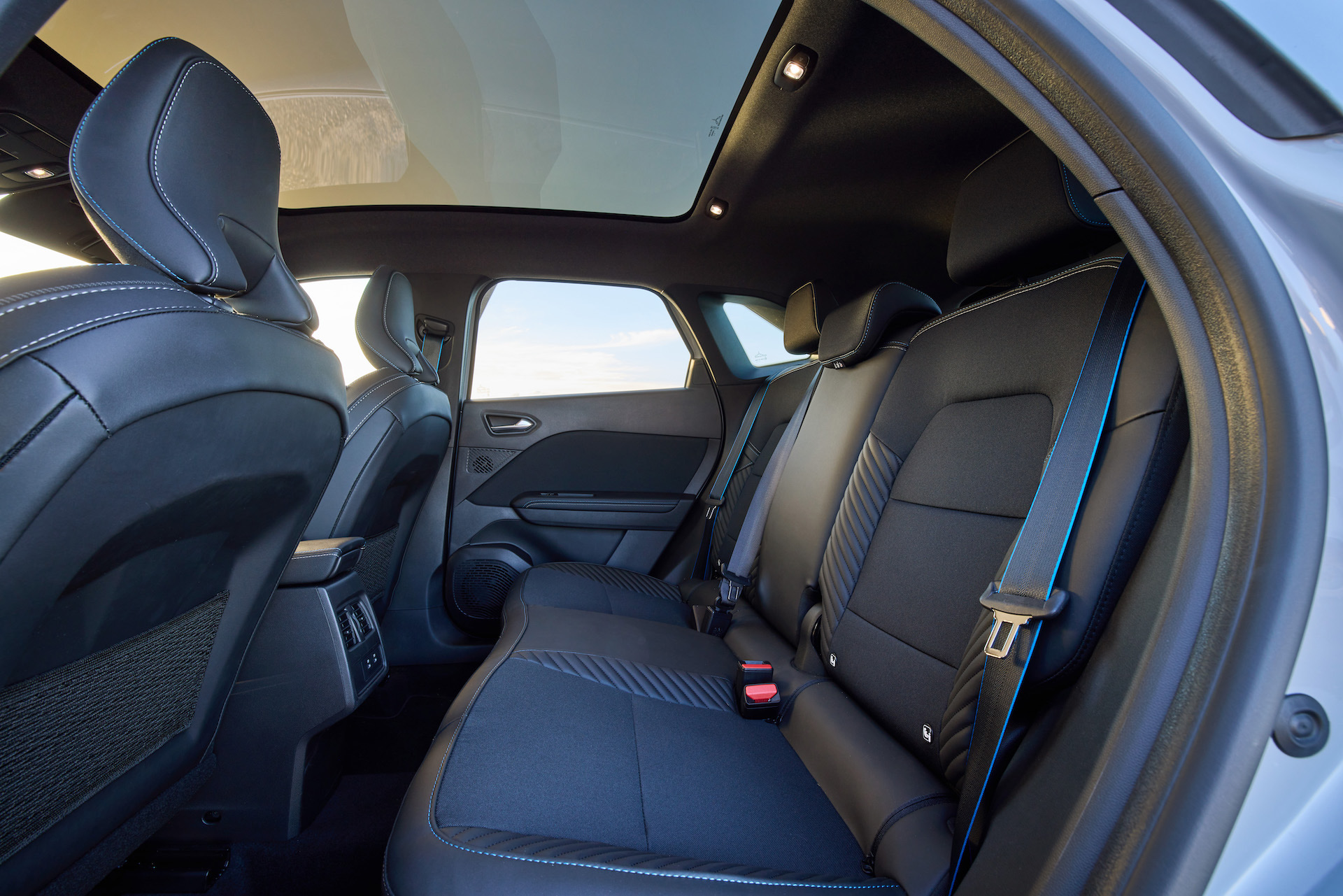
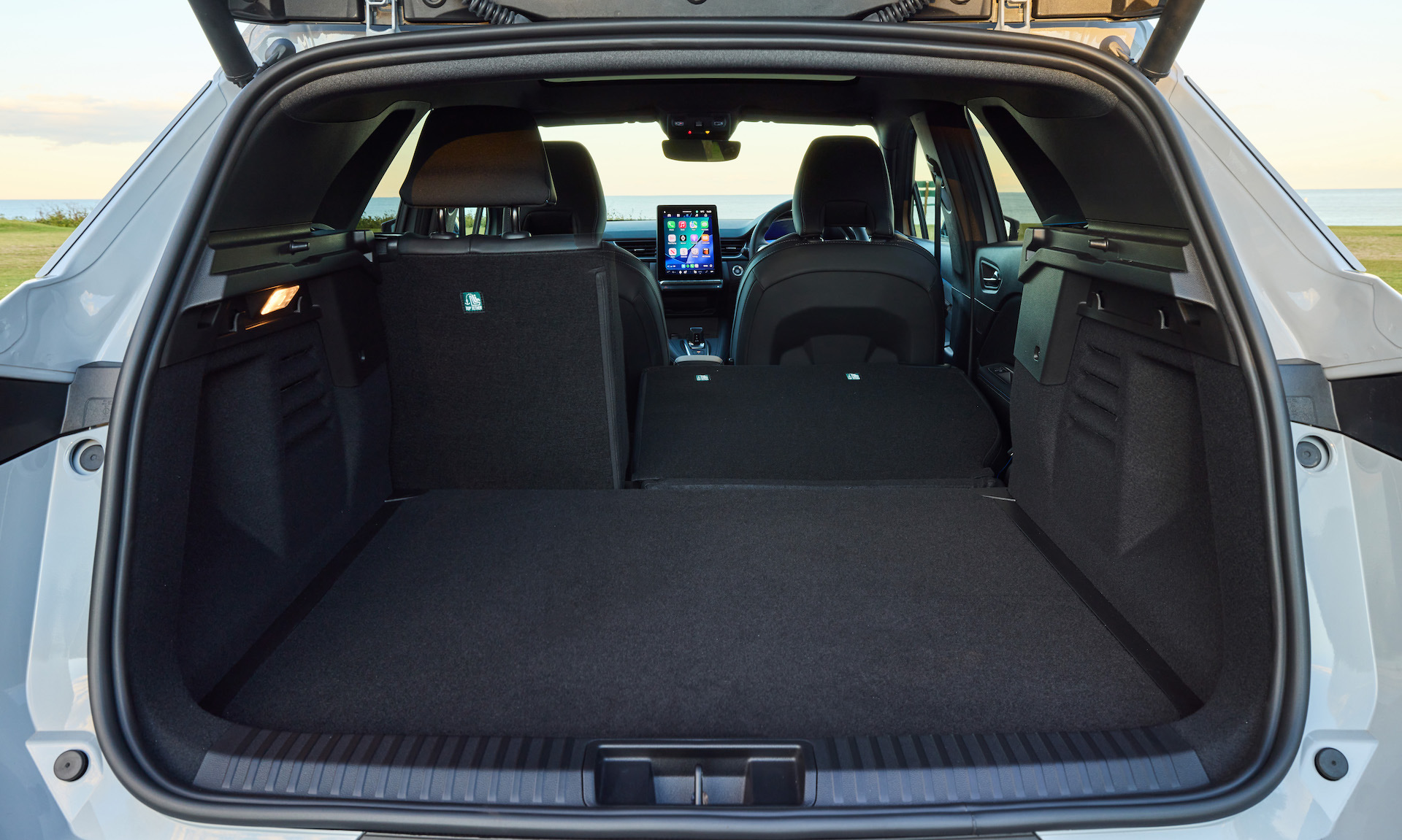
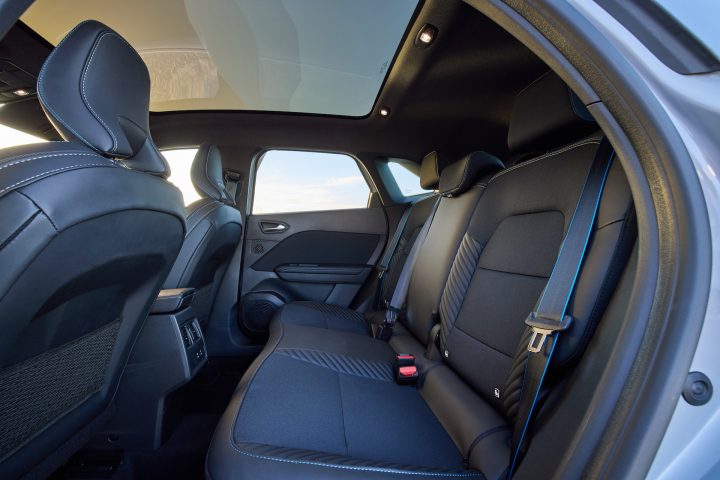
There’s decent room in the back for adults, and the rear bench can slide through 160mm – a very unique convenience in this class. It allows owners to prioritise rear legroom when carrying passengers or move the seat forward when maximum luggage capacity is required.
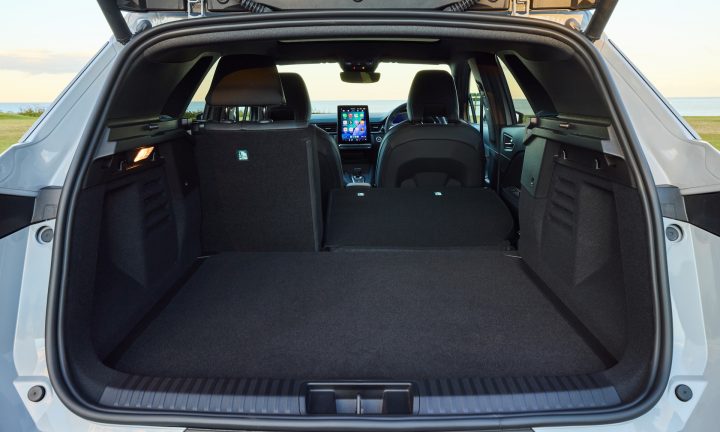
Speaking of which, boot space is excellent for the class, although there is a difference depending on which powertrain you choose. The mild hybrid provides 563 litres with the rear seat in the normal position, increasing to 695 litres with the bench moved forward. Folding the rear seats opens up 1668 litres.
The full hybrid loses some capacity due to its additional electrical hardware, but still provides a useful 460 litres in its standard configuration, 592 litres with the rear bench forward and 1546 litres when folded. All impressive numbers for this segment.
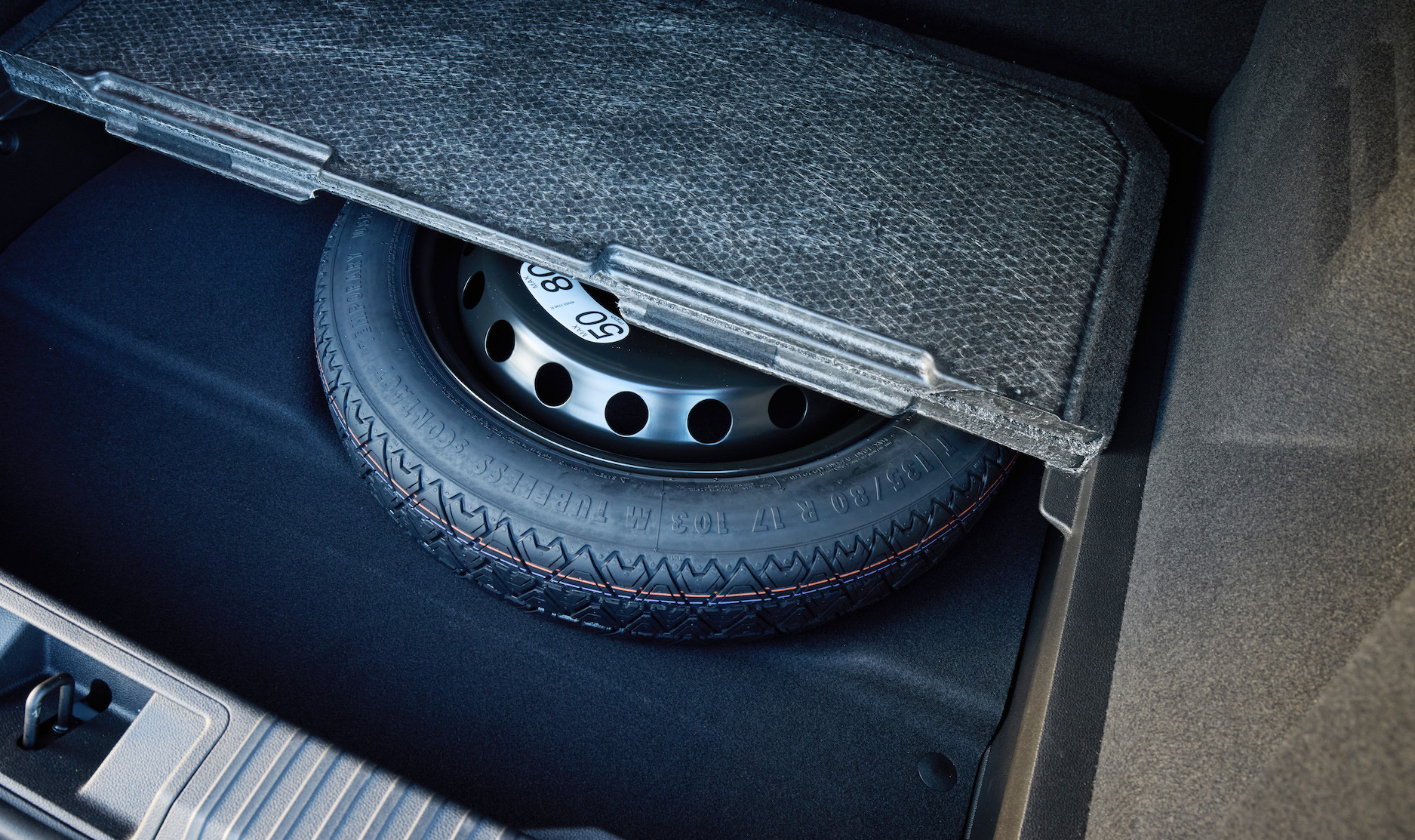
There’s another practical detail we particularly like; every Symbioz comes with a space-saver spare wheel. That might not sound particularly exciting, but it’s becoming increasingly common for modern SUVs to feature a tyre repair kit rather than a spare, and finding one in a full hybrid is especially rare. For Australian buyers travelling long distances or regularly venturing outside metropolitan areas, we’d take a space-saver over a tyre repair kit any day.
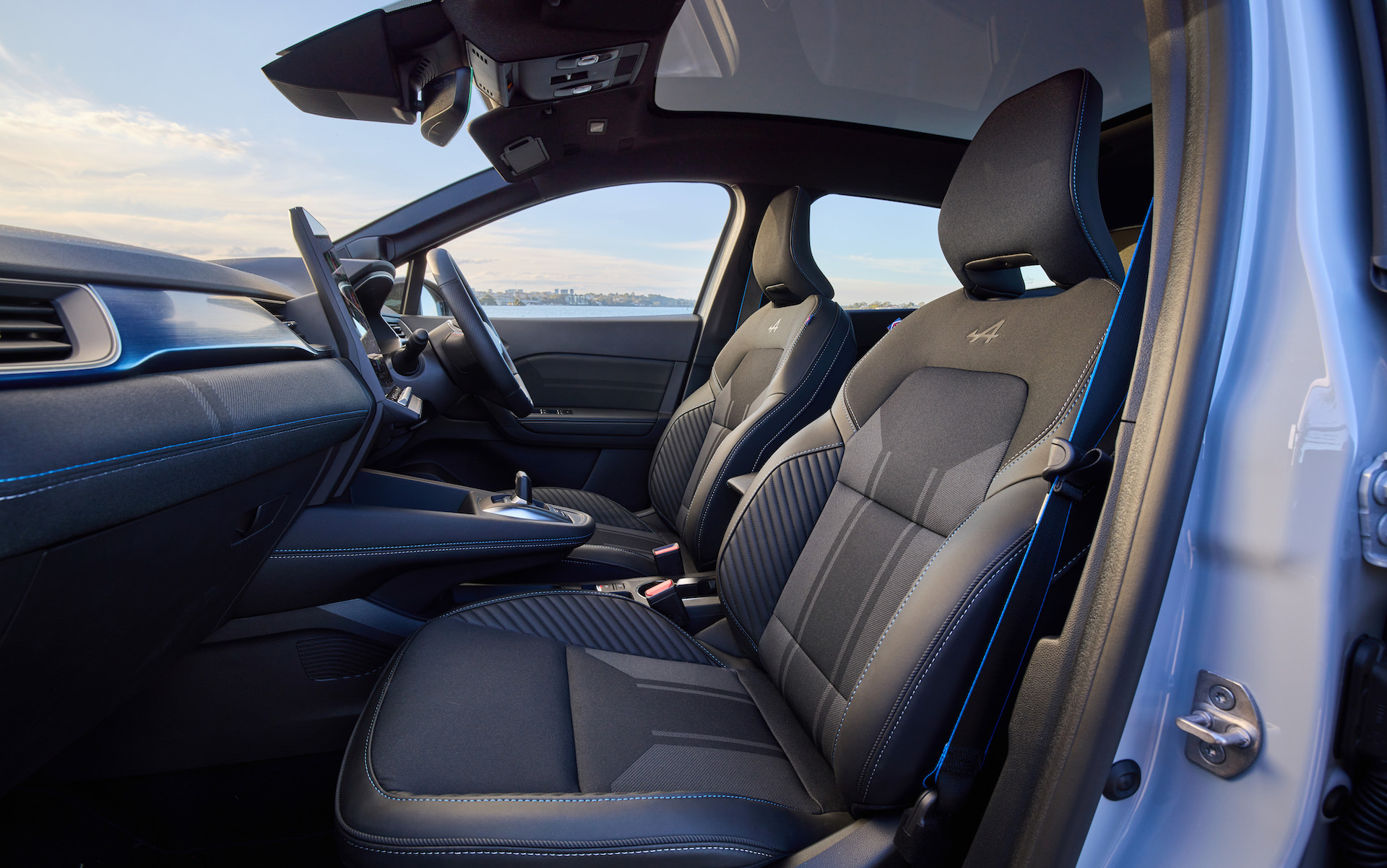
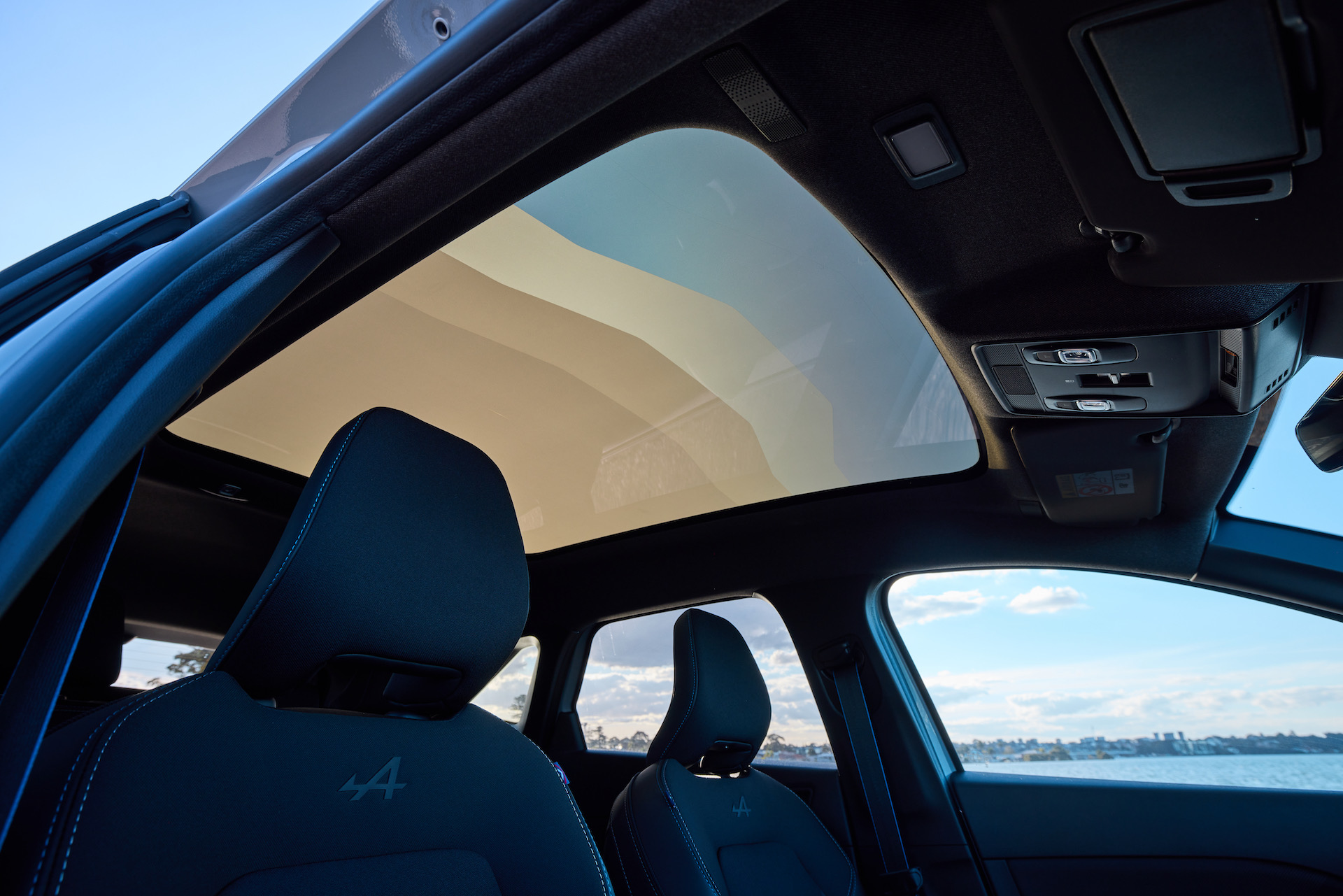
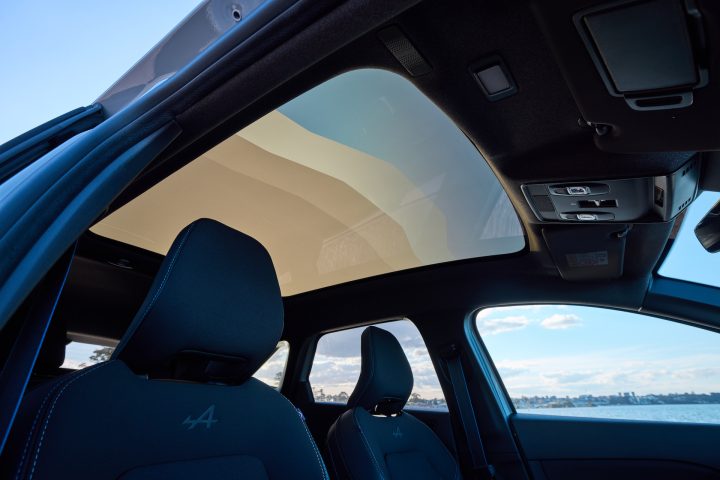
The flagship Esprit Alpine lifts the presentation with unique sports seats, electric seat adjustment for both front, heated front seats, a Harman Kardon nine-speaker stereo, and various Alpine-inspired trim details. It also receives the 360-degree camera, hands-free parking and powered tailgate, as well as a ‘Solarbay’ sunroof that uses Polymer Dispersed Liquid Crystal technology so it can divide sections for adjustable opacity.
2026 Renault Symbioz: Powertrain & handling
Powering the the Techno Mild Hybrid is a 1.3-litre turbo four-cylinder petrol engine producing 104kW and 245Nm. It’s supported by a basic 12-volt mild-hybrid system and sends power to the front wheels through a seven-speed EDC dual-clutch automatic.
Above it sits Renault’s first full hybrid offered in Australia. This combines a naturally aspirated 1.8-litre petrol engine with an electric motor and 1.4kWh battery, producing combined outputs of 116kW and 265Nm. It features a hybrid automatic (four speeds for the petrol engine and two for the electric motor), with front-wheel drive.
Both of these powertrains are developed by Horse Powertrain, which is a joint venture between Renault, Geely, and Saudi Aramco. The company supplies engine systems for Nissan, Mercedes-Benz, and Volvo.

On paper, the benefits of the full hybrid are obvious. Official combined fuel consumption falls from 6.4L/100km in the mild hybrid to 4.7L/100km, while Renault says a total driving range of up to 1000km is possible.
Rather than using a conventional automatic or CVT, Renault employs a multi-mode hybrid transmission that essentially provides separate ratios for the combustion engine and electric motor. There are numerous possible operating combinations, allowing the vehicle to determine how best to blend petrol and electric propulsion.
Around town it works well, frequently moving away using electric power alone and can spend considerable periods with the petrol engine switched off, particularly in slower urban traffic. Transitions between electric and petrol operation are generally smooth, and you can immediately understand why the official fuel consumption is substantially lower than the mild hybrid.

However, keen drivers may actually prefer the cheaper powertrain. Under hard acceleration, the relationship between engine speed and road speed in the full hybrid can sometimes feel disconnected. The petrol engine might increase its revs without an equivalent change in acceleration, giving it some of the characteristics we’ve experienced in various plug-in hybrids.
There’s nothing inherently wrong with that – the transmission is concentrating on efficiency rather than providing a traditional mechanical relationship between engine and wheels. But for somebody who enjoys driving, it can make the powertrain feel less engaging.
The mild-hybrid’s seven-speed dual-clutch transmission provides a more conventional experience. Engine speed rises and falls naturally through the gears and there’s a better sense of connection between accelerator input and what the vehicle is doing. With 245Nm available, it also feels suitably responsive during everyday driving.
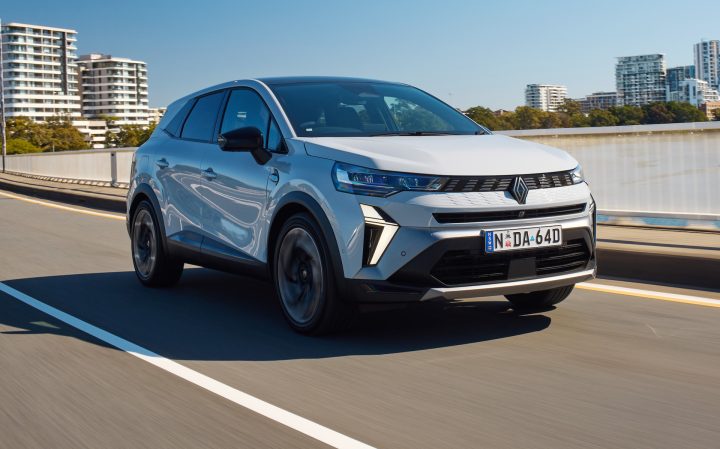
Neither version is particularly fast. Renault claims 0-100km/h in 9.4 seconds for the mild-hybrid and 9.1 seconds for the full hybrid, but we recorded slightly reversed results; 8.79 seconds in the mild and 8.99 seconds in the full hybrid. That was with the battery at around 75 per cent in the full hybrid.
Where the Symbioz does stand out is its chassis dynamics. There’s a distinctly European firmness to the suspension tuning. Some buyers may find it slightly too firm, particularly in the Esprit Alpine with its larger 19-inch wheels and lower-profile 225/45 tyres, but the trade-off is excellent body control.
On poor Australian country roads, where softer suspension setups can start floating and bouncing over repeated undulations, the Symbioz remains settled and composed. It’s controlled through faster corners and changes direction cleanly as well, without body roll, with a nice and responsive steering feel.
It’s not trying to be a sports SUV, but there is an underlying sense of chassis discipline that makes it satisfying to drive. It’s also surprisingly light in weight, with tare stamped at just 1373kg for the top-spec Esprit Alpine (1288kg for the base Techno). We reckon the platform could handle a lot more power, but that’s a better scenario than some rivals out there that offer too much power for the chassis.
2026 Renault Symbioz: First impressions
The Renault Symbioz is a refreshingly well-rounded addition to the small SUV segment. It looks sophisticated, offers plenty of passenger and luggage space, includes excellent infotainment technology and has a properly sorted chassis that feels particularly well suited to Australian country roads. Features such as a sliding rear bench and full Google integration add a level of practicality and innovation that others miss.
Choosing between the two engines isn’t as straightforward as simply spending more for the full hybrid. If fuel economy and urban driving are the priorities, the full hybrid makes a strong case with its 4.7L/100km consumption and ability to spend significant amounts of time running on electric power. However, its unusual transmission take away some of the involvement for driving enthusiasts.
In that respect, we’d actually be tempted by the $36,990 Techno Mild Hybrid. Its dual-clutch transmission feels more conventional and engaging, it’s considerably cheaper, and you actually gain additional boot capacity in the process. Whichever version you choose though, the Symbioz offers something unique in this segment; attractive European design combined with sensible practicality and a genuinely composed driving experience.
2026 Renault Symbioz: Video