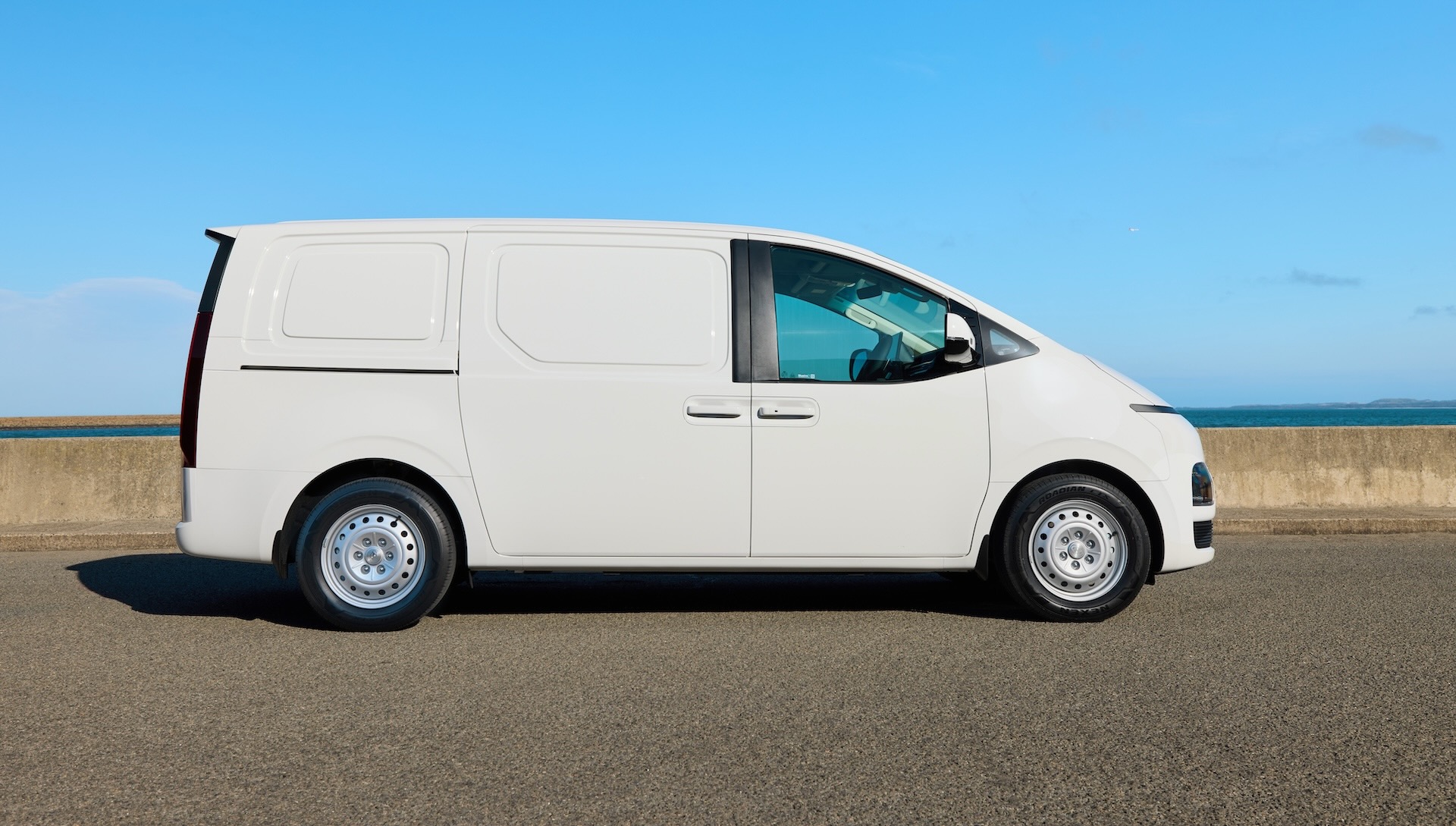
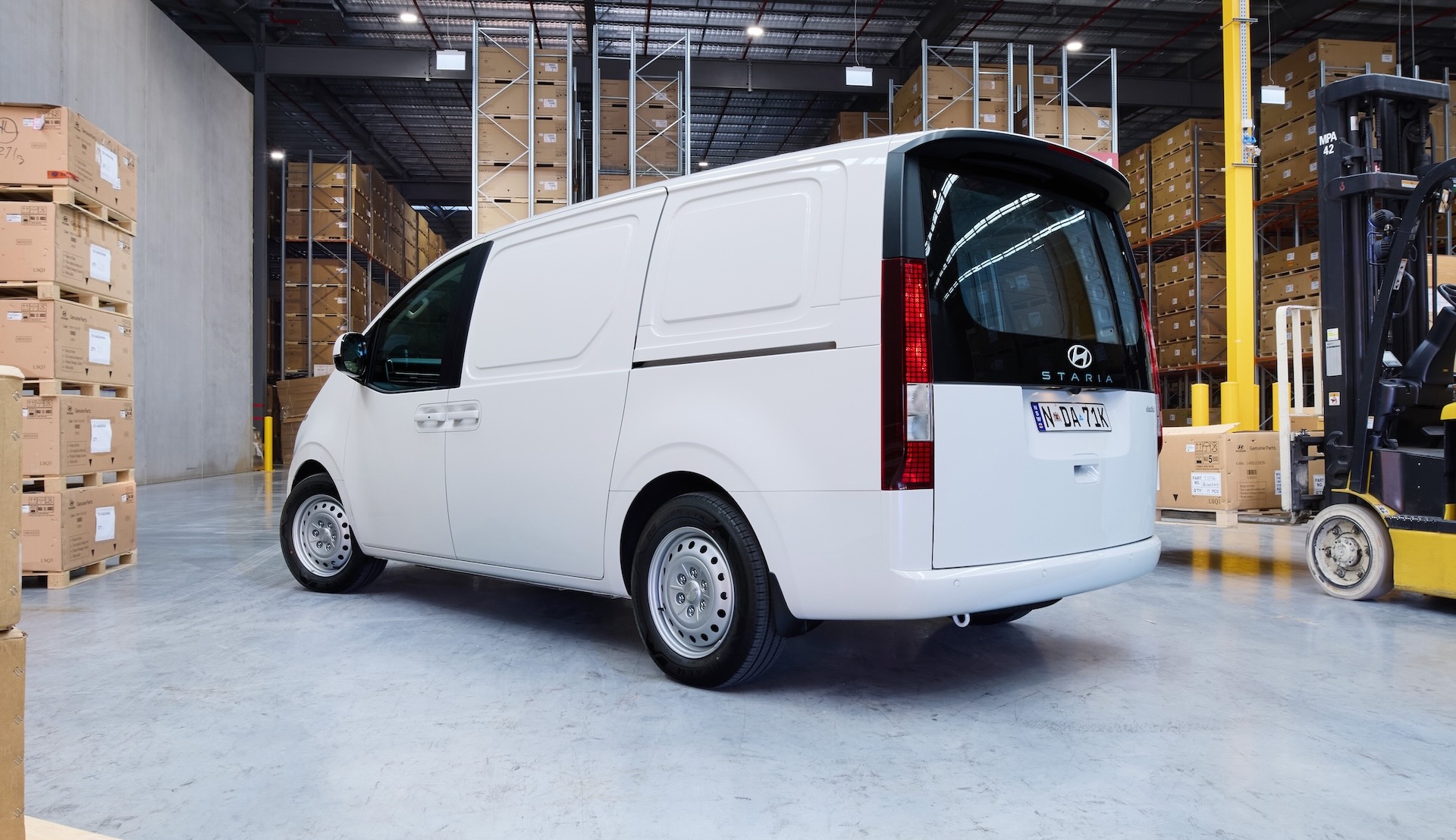
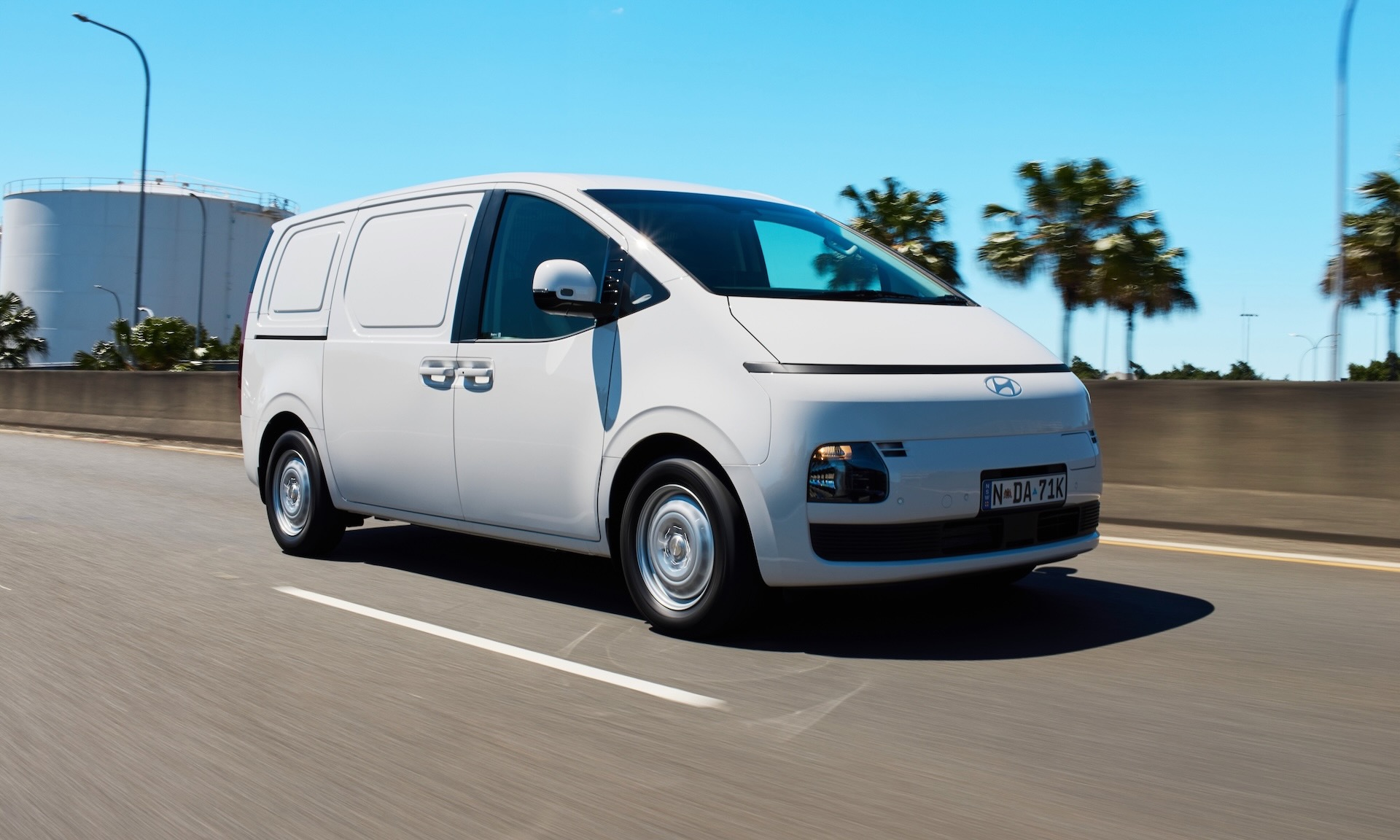
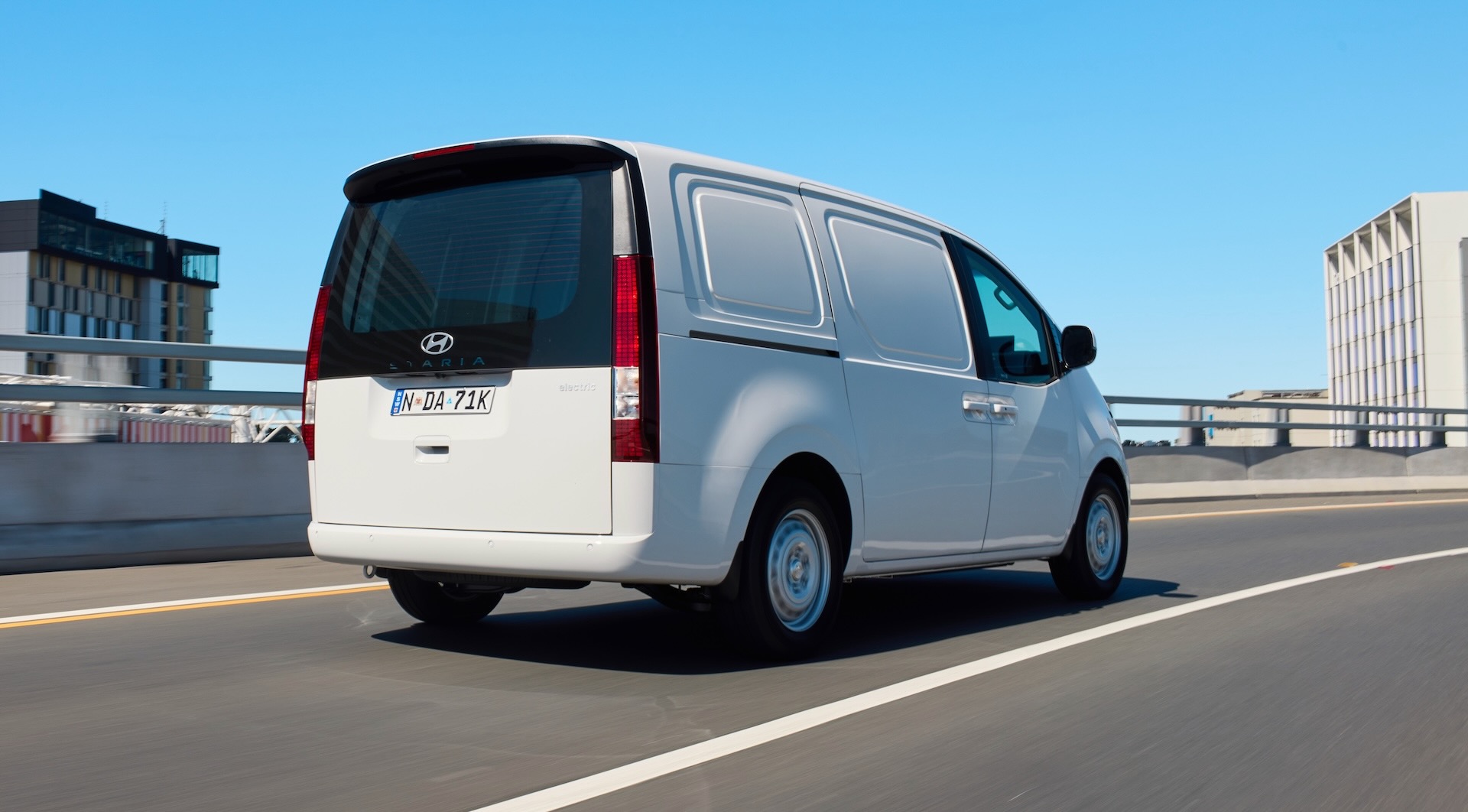
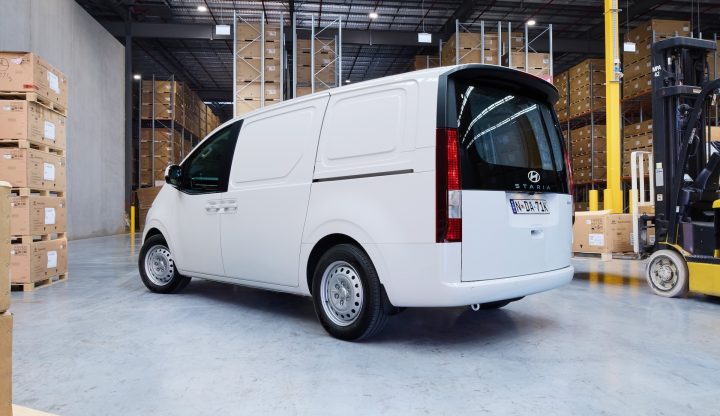
Hyundai has expanded its Staria Load commercial van range adding a fully electric option, joining the existing turbo-diesel and hybrid variants. And unlike some electric commercial vehicles, the new Staria Load Electric doesn’t require buyers to sacrifice valuable cargo space to accommodate its battery and electric drivetrain.
Priced from $70,990 before on-road costs, the electric version is exactly $21,000 more expensive than the equivalent diesel Staria Load. That’s a substantial premium, particularly for businesses where operating costs are a major consideration.
However, with 160kW, an 84kWh battery, up to 450km of driving range and ultra-fast charging capability, there’s plenty to like about the new model. We recently had an opportunity to sample it on Australian roads during the media launch event to see what it’s like.
2027 Hyundai Staria Load Electric: Specifications
Electrical: 84kWh, 800V battery
Output: 160kW / 350Nm
Gearbox: Single-speed auto
Drive type: Front-wheel drive
Tare weight: 2345kgPower-to-weight: 14.65:1 (kg:kW)
Official range: 450km
Claimed 0-100km/h: 8.9 seconds*
Max charging AC/DC: 10.5kW/260kW
Starting price: $70,990
*Figures as tested by Driving Enthusiast on the day. Manufacturers’ claims may be different
2027 Hyundai Staria Load Electric: How much does it cost?
From $70,990 (excluding on-roads), the Staria Load Electric costs exactly $21,000 more than the equivalent $49,990 diesel. To put that difference into perspective, assuming a modest diesel consumption of 10L/100km and a fuel price of $2.80/L, $21,000 would purchase enough diesel to travel approximately 75,000km.
Using the diesel’s official combined consumption figure of 7.0L/100km, that same amount would theoretically cover approximately 107,000km. That’s before considering electricity costs for charging, servicing differences and other ownership expenses, but it illustrates just how substantial the initial premium is.
For businesses with access to inexpensive overnight charging, particularly those covering high annual distances, the electric version could make financial sense over time.
Both Liftback and Twin Swing rear-door configurations are available for the same price.
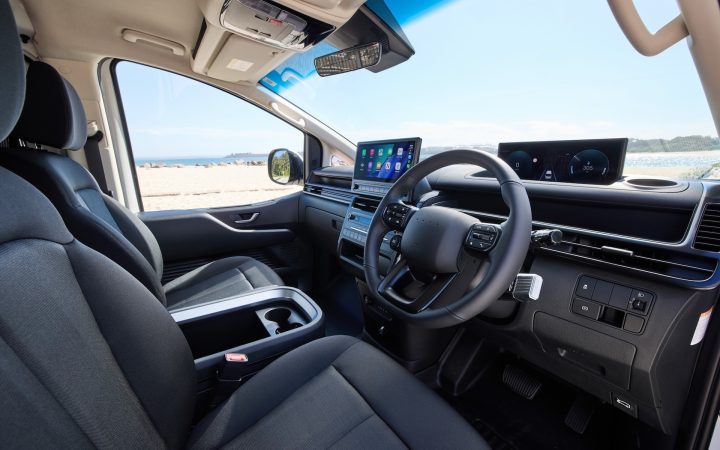
2027 Hyundai Staria Load Electric: Interior & packaging
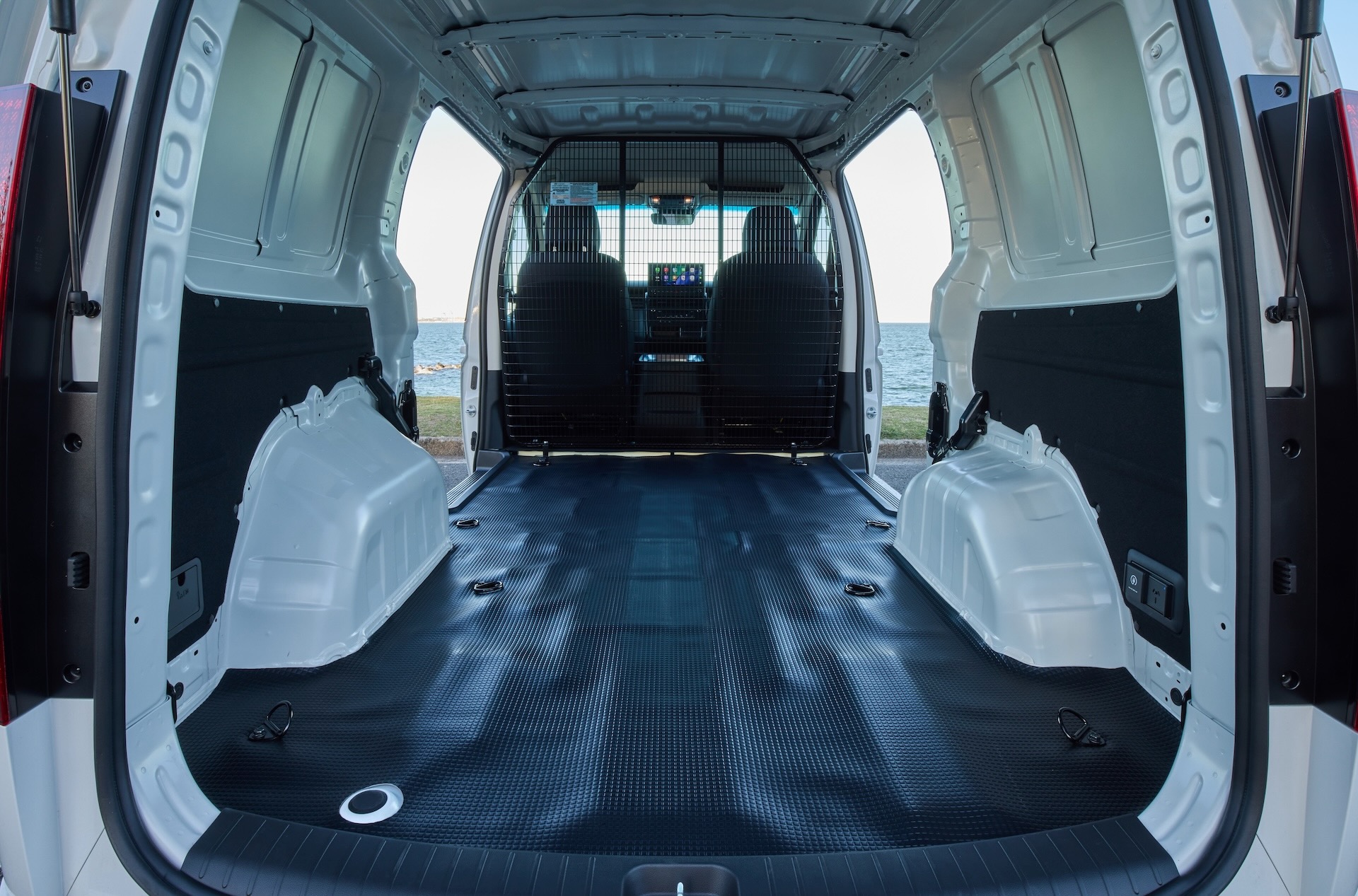
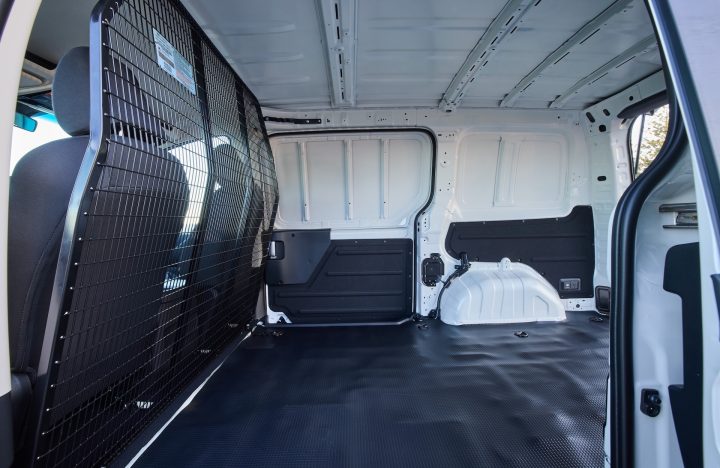
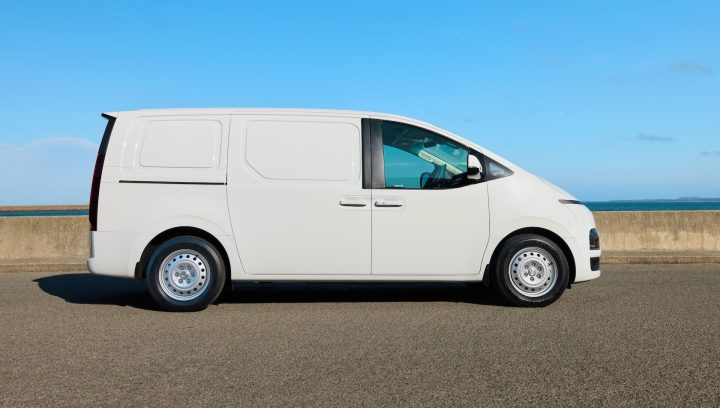
Perhaps the Staria Load Electric’s biggest achievement is that it retains exactly the same cargo capacity as the diesel. There’s 4935 litres of load space, with an internal cargo area measuring 2607mm long, 1640mm wide and 1436mm high.
The electric version also retains the same tie-down hooks and mounting points, meaning existing diesel owners should be able to transfer shelving, storage systems and other accessories without major modifications.
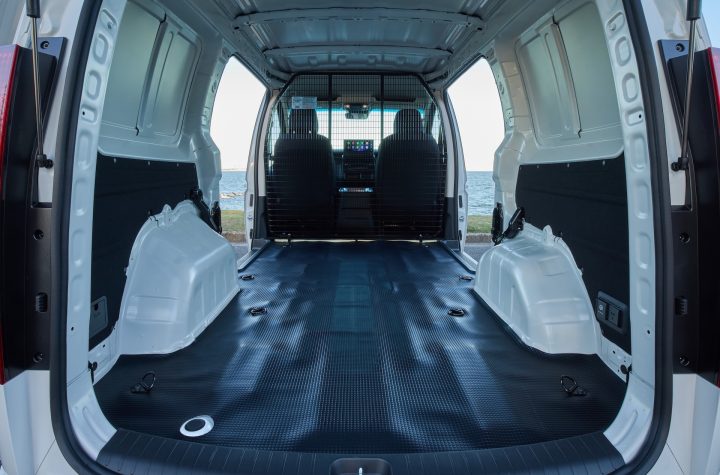
That’s a significant advantage for businesses considering a switch to electric, particularly those operating fleets with established cargo configurations.
Payload capacity is rated at 1005kg, while braked towing capacity is 2000kg, only 500kg less than the diesel. For many commercial applications, that should be more than sufficient. At the full 2000kg tow, considering the 3350kg GVM and 200kg download, it means you have around 805kg of leftover payload (assuming the 2345kg kerb weight).
Compared with the diesel towing 2000kg (even though it can tow 2500kg), it offers 872kg of leftover GVM. Its lighter kerb weight of 1948kg matters, but its GVM is lower, at 3020kg. However, keep in mind you still have more towing capacity available. At 2500kg with a 250kg download, you have 822kg leftover in the diesel, while towing 500kg more. So, obviously the diesel is the pick for heaving towing but it’s good to see the EV is not far behind.
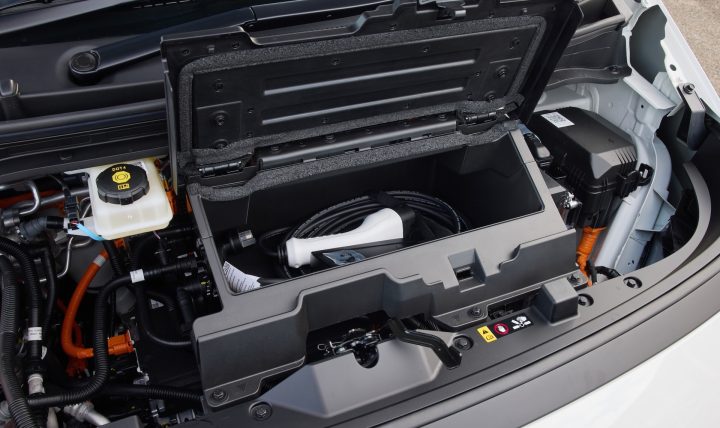
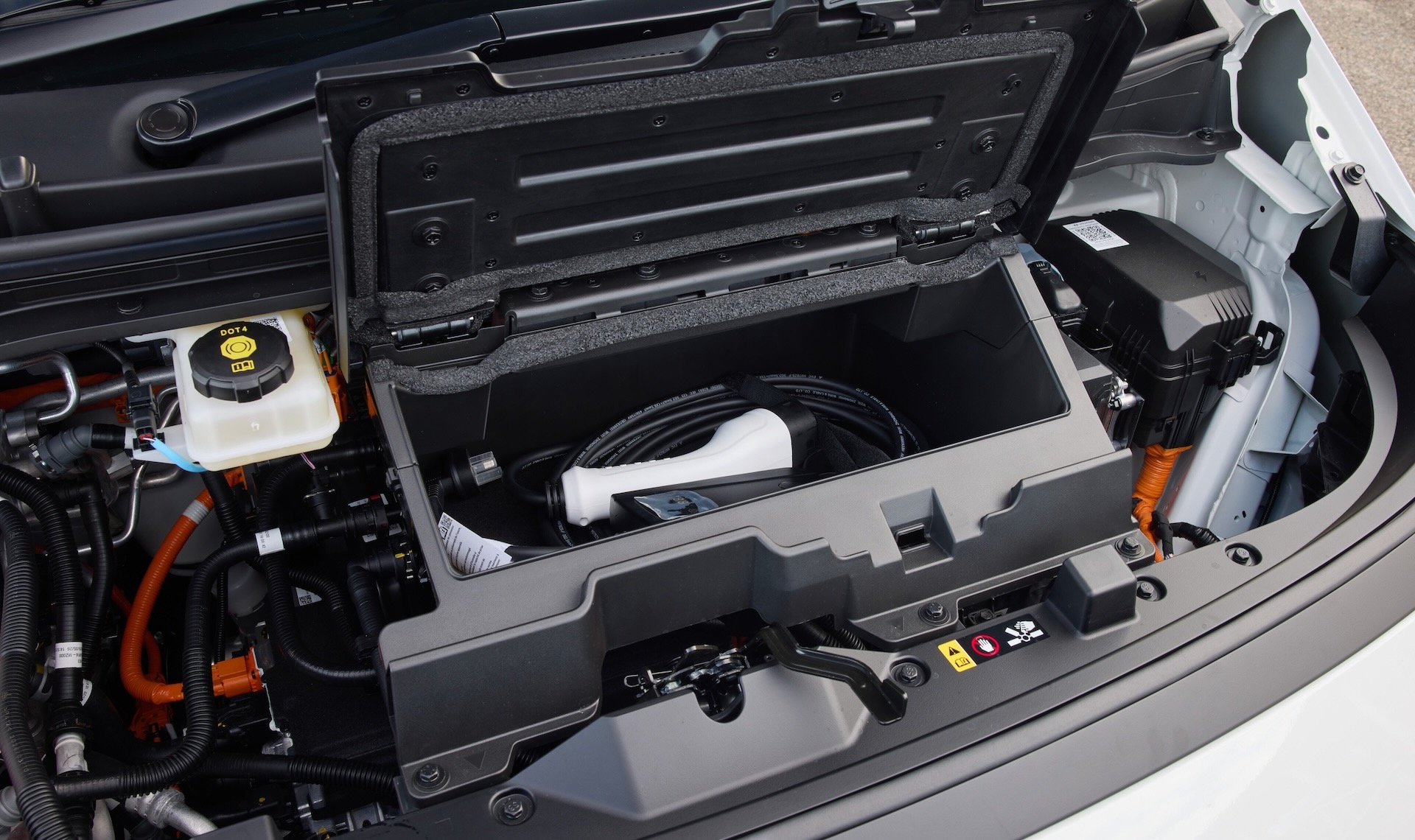
There’s also a 23.9L front storage compartment under the bonnet and an interior vehicle-to-load (V2L) outlet in the cargo area, both not available on the diesel, allowing owners to power tools and other electrical equipment directly from the vehicle’s battery.
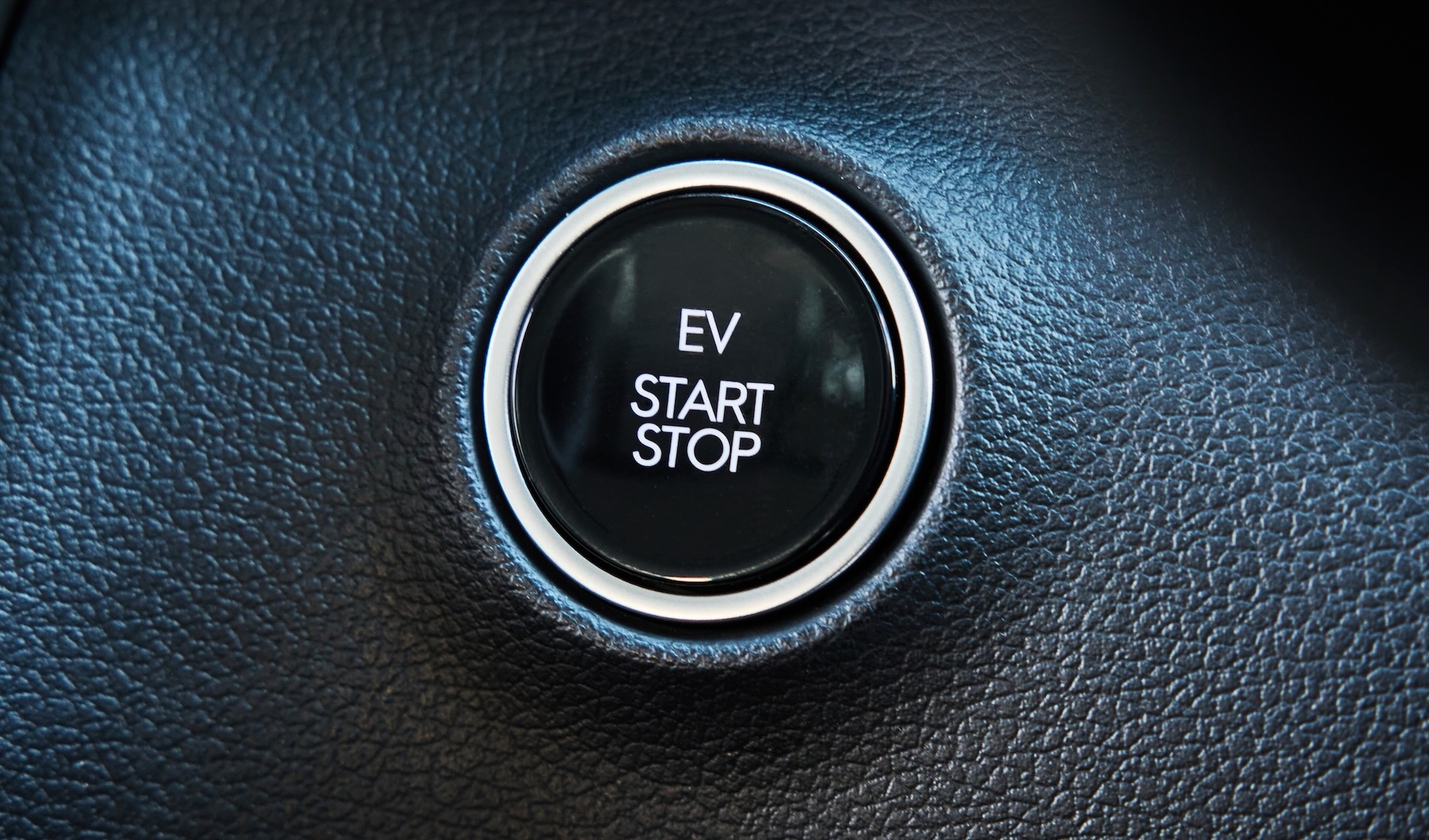
Up front, the Staria Load Electric retains the practical two-seat cabin layout, with good outward visibility and a sensible mix of digital technology and physical controls. It also has a proper start/stop button, so you can leave it ‘running’ if you have to jump out for a minute, unlike many other EVs on the market now which automatically switch off as soon as you leave the seat.
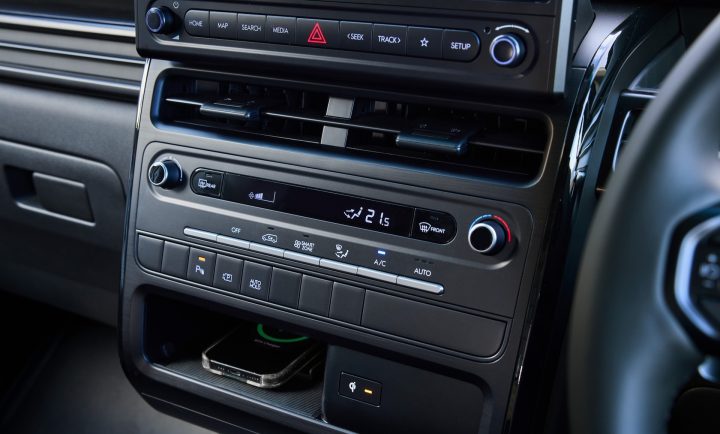
Two 12.3-inch displays provide instrumentation and infotainment functions, while conventional buttons and switches remain for frequently used features. It’s a welcome arrangement that reduces the need to navigate touch-screen menus while driving.
One omission is a standard surround-view camera system. Given the Staria’s substantial dimensions and commercial focus, a 360-degree camera would make manoeuvring in tight loading areas and car parks considerably easier. It should come standard in our view, especially for this price.
2027 Hyundai Staria Load Electric: Powertrain & handling
The Staria Load Electric features a front-mounted electric motor producing 160kW and 350Nm, drawing energy from an 84kWh battery. Hyundai claims up to 450km of driving range under the WLTP test cycle, which should be sufficient for many urban delivery operations and businesses with predictable daily routes.
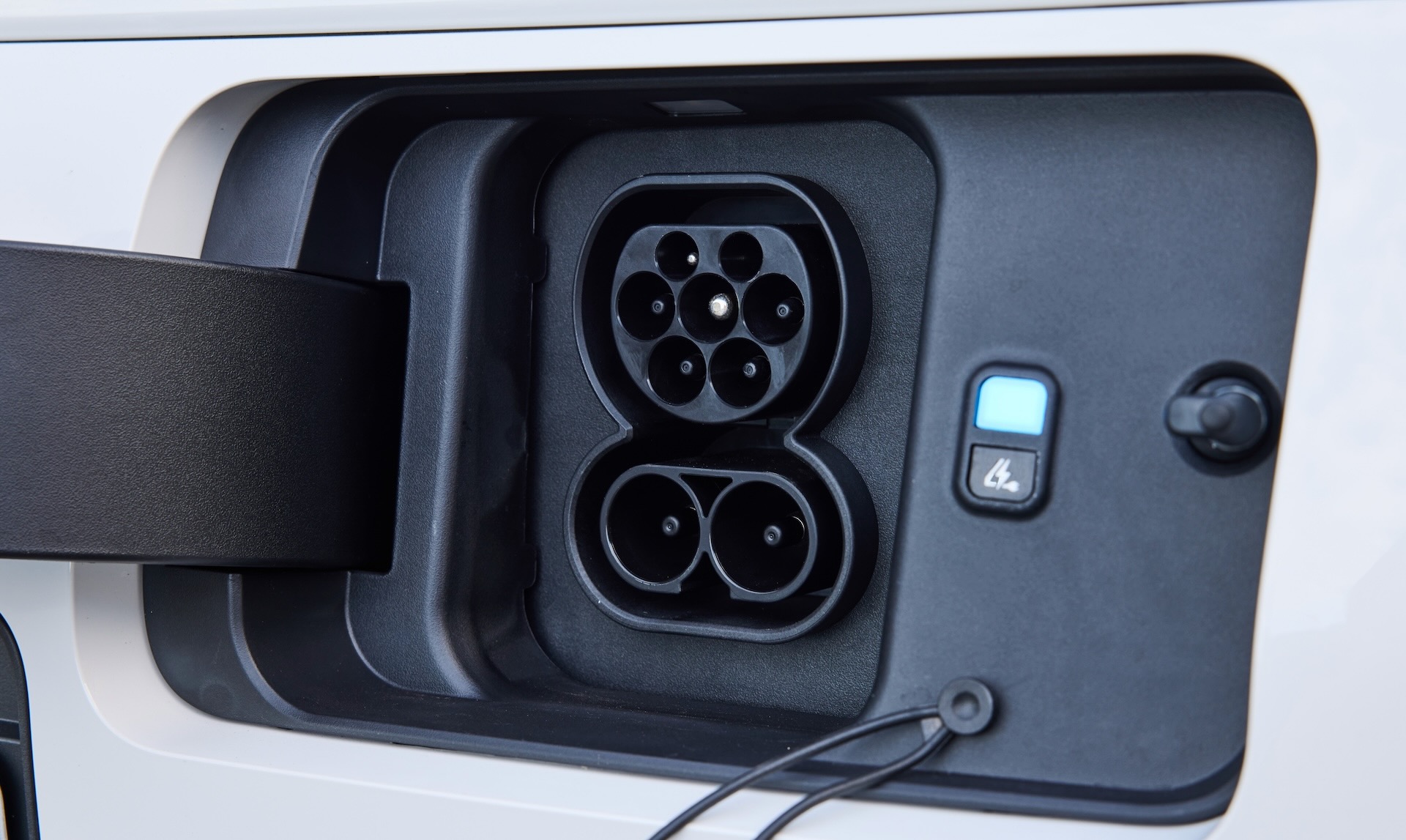
One of its biggest technical advantages over some rivals is its 800V electrical architecture, which supports ultra-fast DC charging. Hyundai quotes a 10–80 per cent charging time of just 20 minutes when using a suitable 350kW charger, although, the vehicle takes in around 260kW maximum.
That’s impressive for a commercial vehicle with an 84kWh battery and could make a meaningful difference for businesses that need to minimise downtime. A battery heating system and heat pump are also included to help maintain efficiency in varying conditions.
Of course, real-world range will depend on payload, driving conditions and accessories, particularly when carrying heavy loads or travelling at highway speeds. However, it is great that Hyundai has managed to base it all on its common E-GMP architecture shared with other Hyundai Group EVs. That should mean less downtime if any issues pop up, as service centres will be familiar with the system and parts.
On the road, the electric powertrain feels noticeably more responsive than the diesel, particularly when accelerating from lower speeds. We recorded 0-100km/h in 8.9 seconds using our Vbox, which is a strong result for a commercial van of this size.
More importantly, the immediate torque delivery makes everyday driving easier. Joining highways, overtaking slower traffic and climbing steep hills require less effort than in the diesel, particularly when the vehicle is carrying additional weight. Our test drive vehicle included a 375kg mass in the back to replicate common shelving and mild tool box setups.
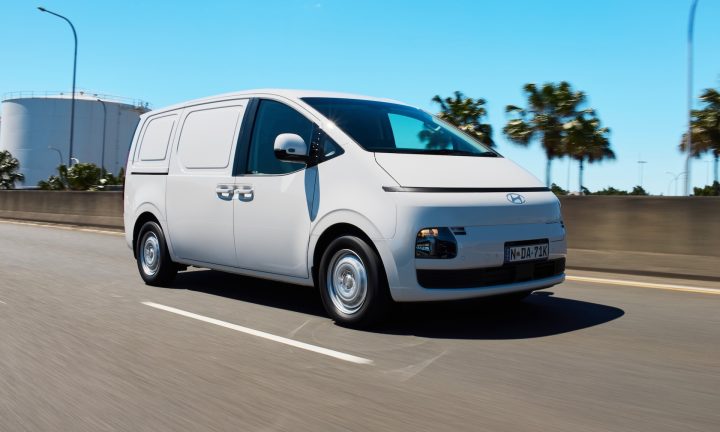
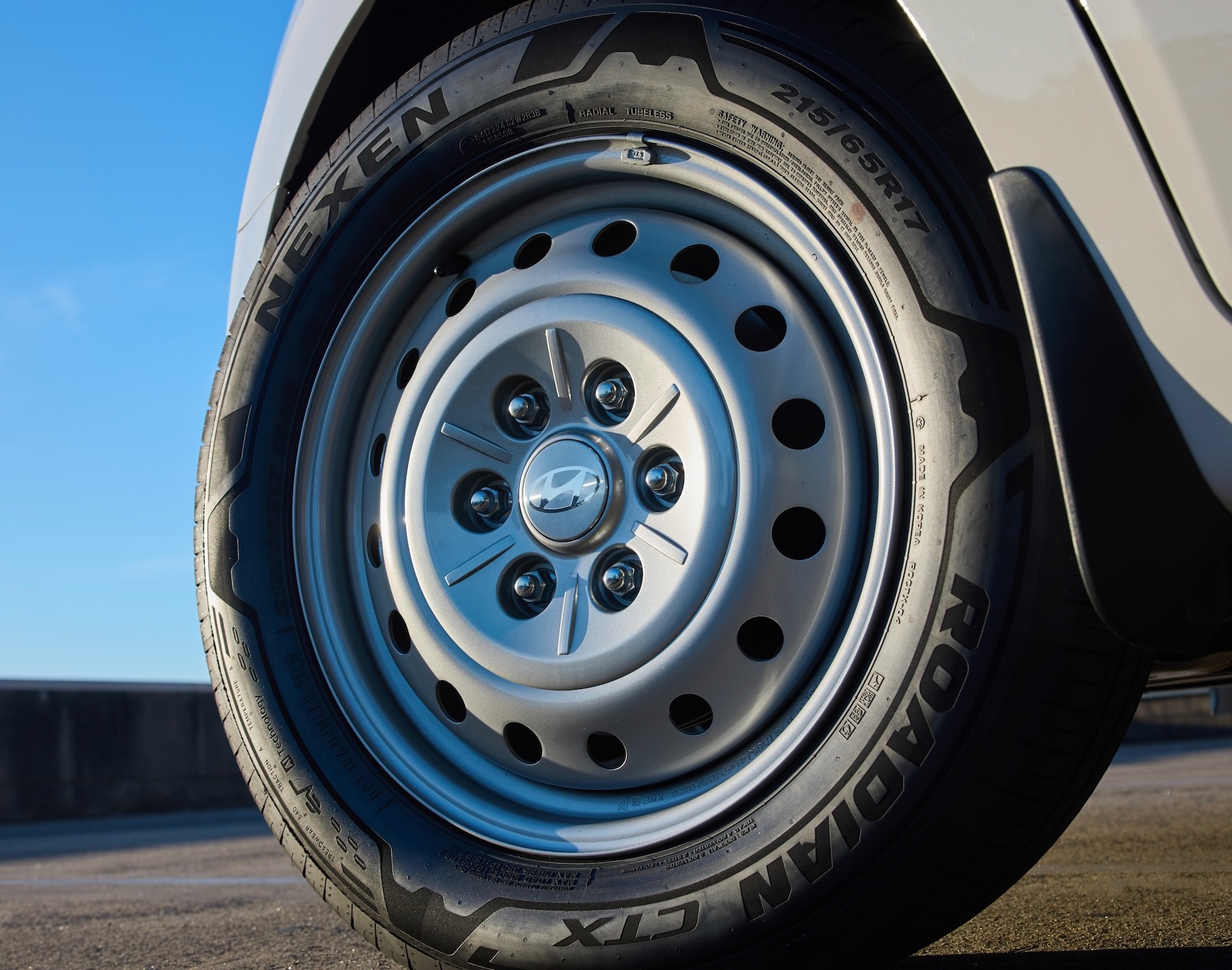
The only notable downside is that all 350Nm is delivered through the front wheels, instantly. The 215/65 Nexen Roadian CTX tyres can start to peel. For example, accelerating firmly from a standing start, particularly on an uphill gradient, can trigger the traction management system.
Fortunately, Hyundai’s traction control calibration is excellent. Rather than allowing excessive wheelspin before intervening, the system responds immediately, managing the available grip smoothly and effectively. However, having wider tyres might improve this but obviously they will cost more to replace.
Another significant difference is the suspension. While the diesel uses a torsion-beam rear arrangement, the electric model features independent rear suspension. This provides a slight improvement in overall driving dynamics, with better composure over uneven surfaces and a more settled feel through corners with bumps.
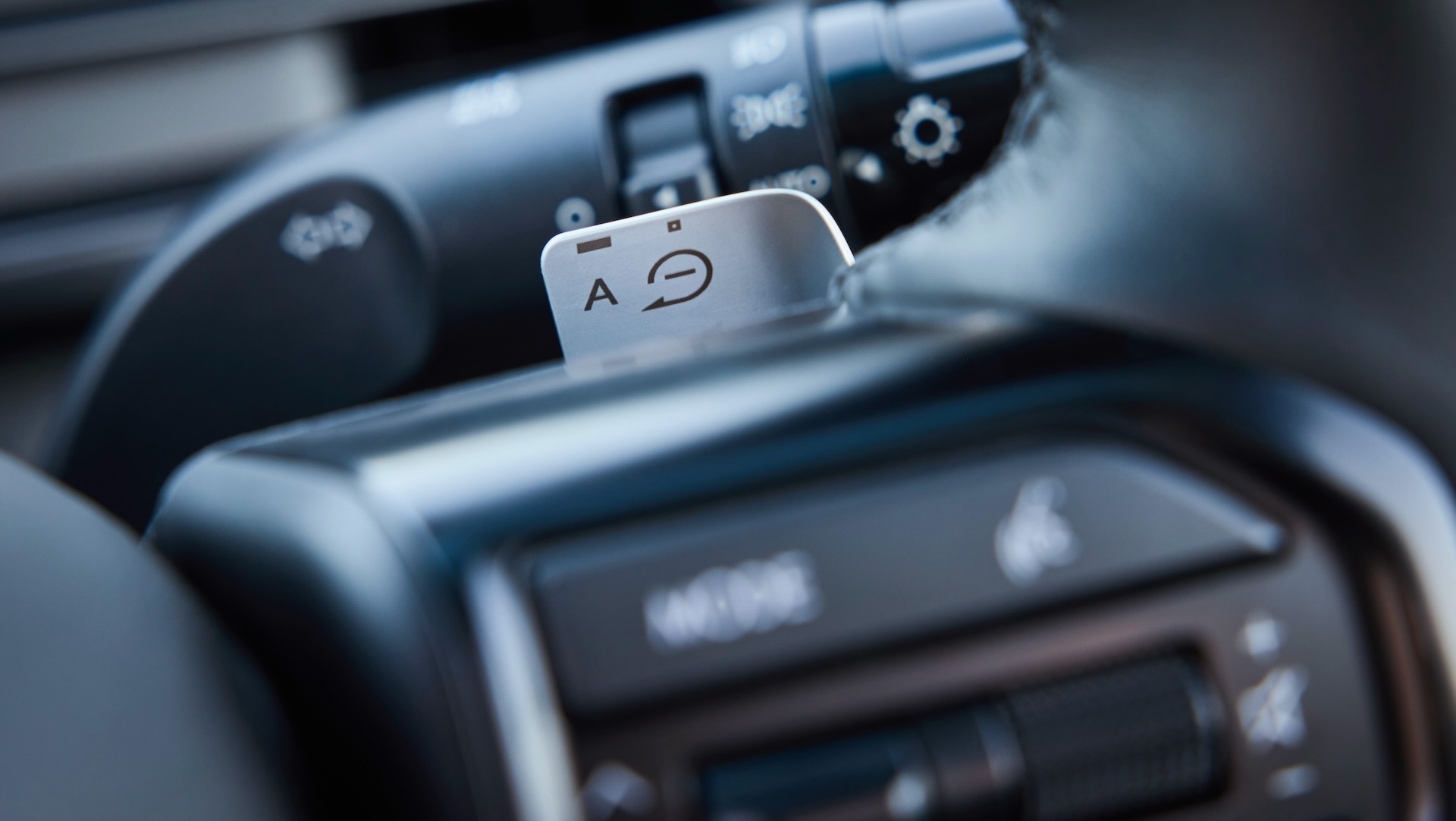
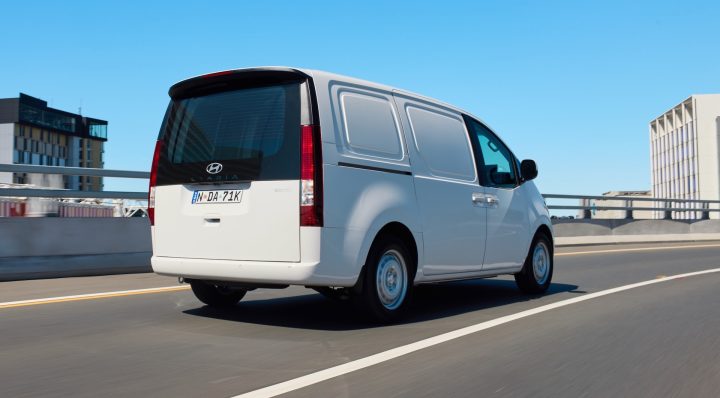
It’s still a large commercial van, of course, so it’s no sports car. But the electric powertrain, adjustable regen modes via paddle shifters, and revised chassis make it surprisingly pleasant and fun to drive. Additional refinement measures include noise-reducing strut-mounted dynamic dampers and a rack-mounted EPS (rather than column-mounted) also help create a quieter driving experience.
2027 Hyundai Staria Load Electric: KFirst impressions
Its biggest obstacle is undoubtedly the price. At $21,000 more than the diesel, the electric version needs to deliver meaningful running-cost savings to justify the investment. For businesses with predictable routes, high annual mileage and access to affordable charging, that could be achievable.
But for others, the diesel remains difficult to overlook, particularly when the price difference alone represents tens of thousands of kilometres worth of fuel. Those frequently towing will also continue to lean toward the diesel with its lower kerb weight and 500kg of extra braked capacity.
2027 Hyundai Staria Load Electric: Video