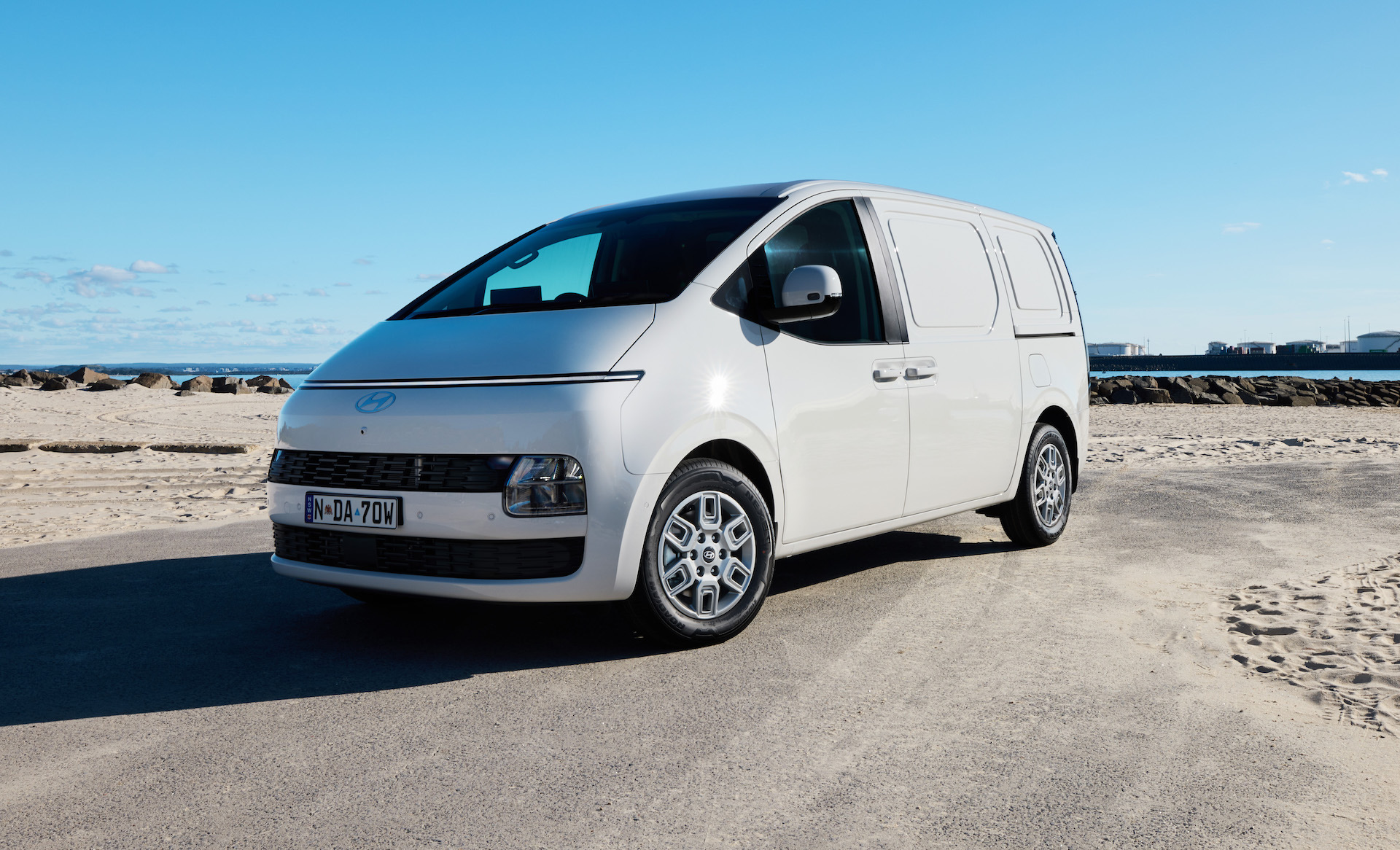
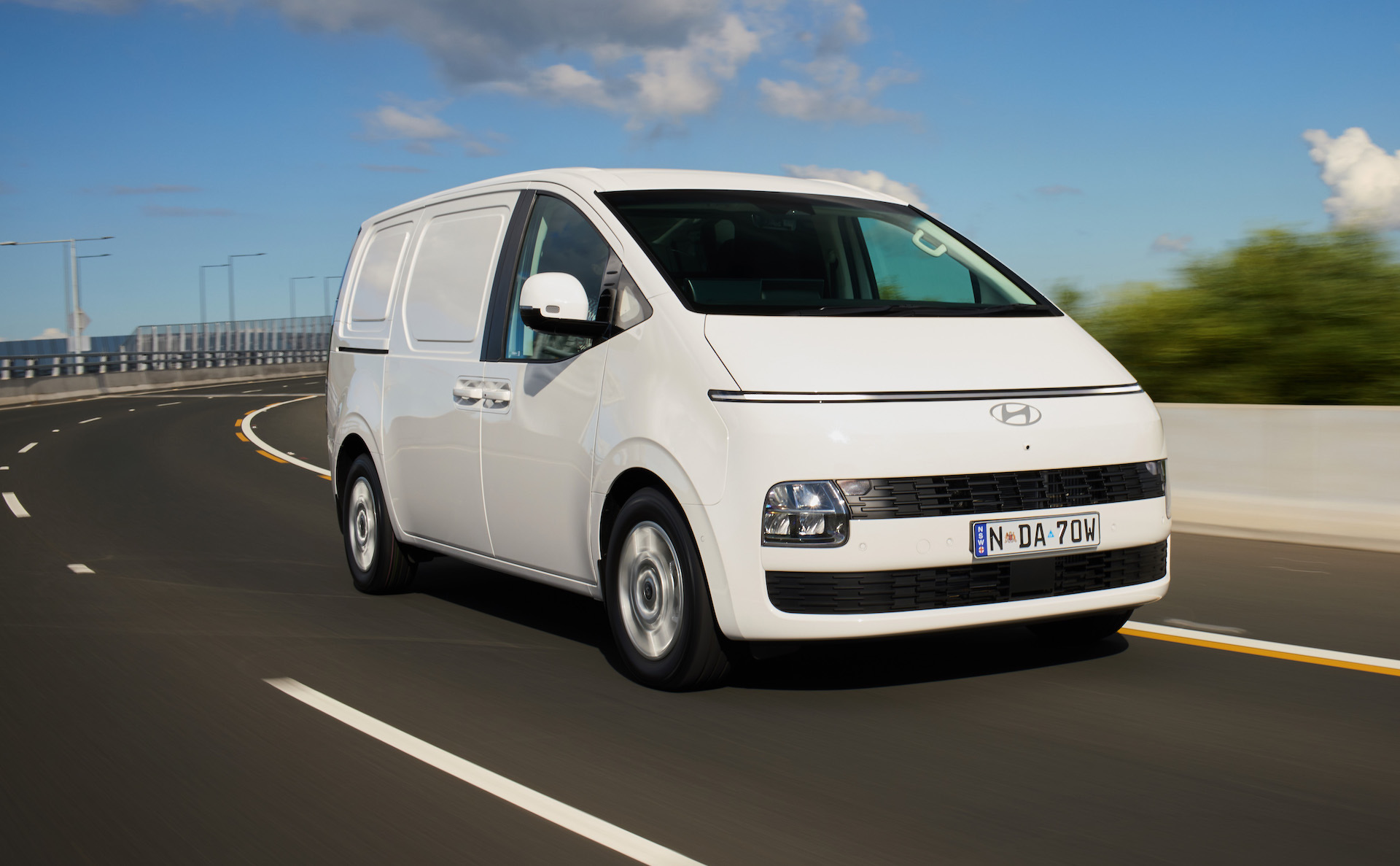
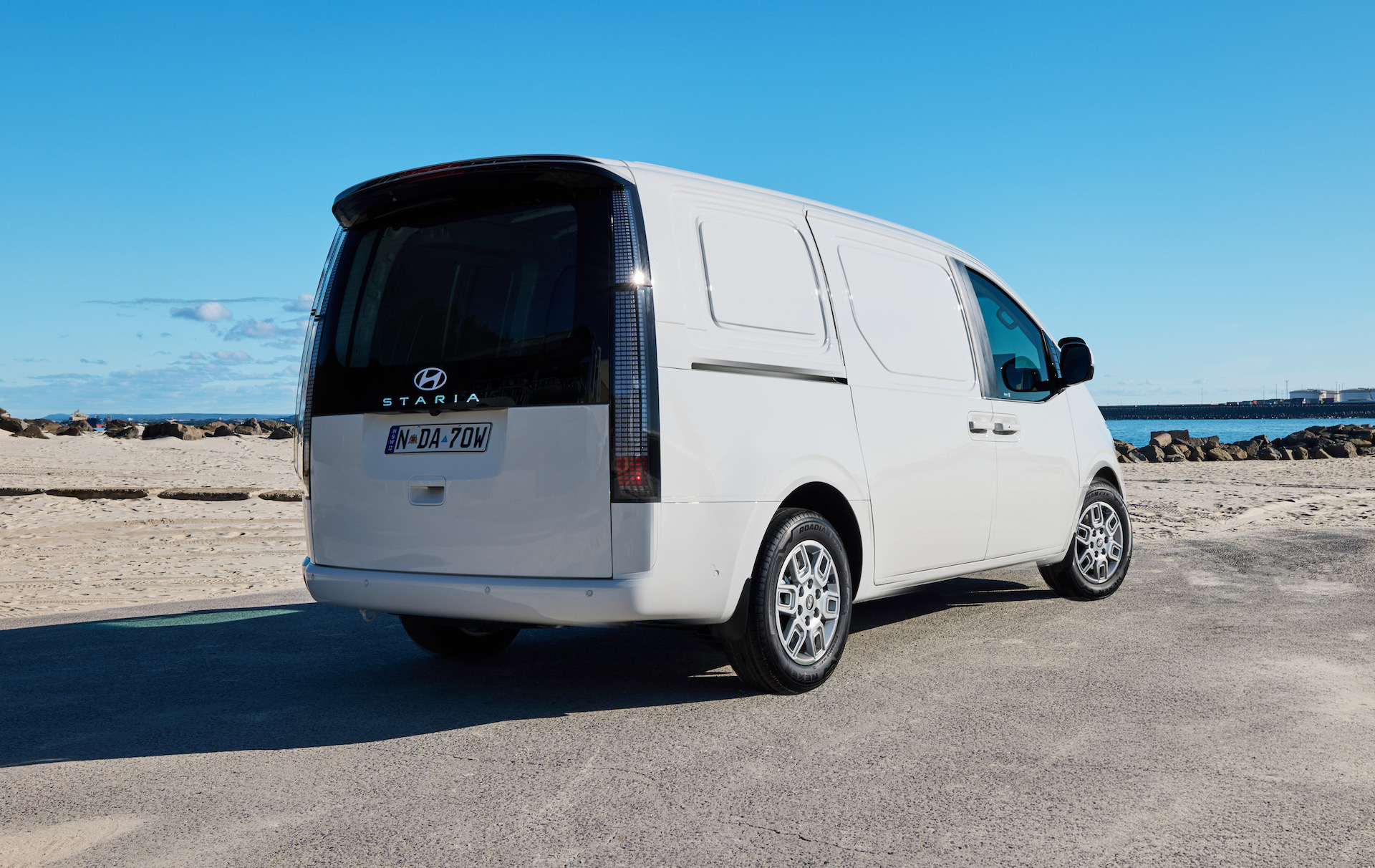
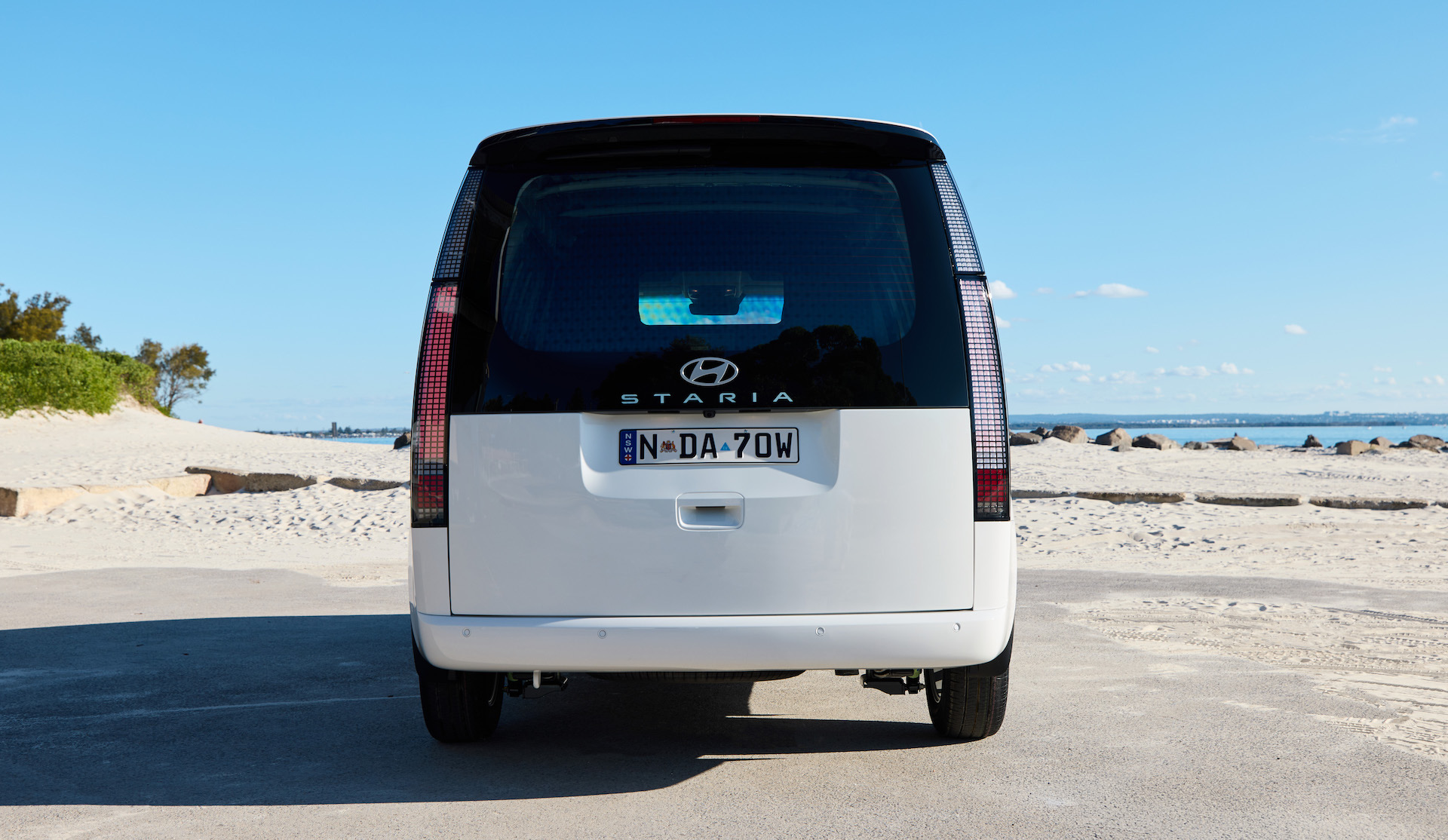
Introducing hybrid power to a segment that has traditionally relied almost exclusively on diesel, the 2027 Hyundai Staria Load Hybrid is a logical move. Especially with current fuel prices. And many delivery vans spend much of their lives in urban traffic where hybrid technology can make the biggest difference.
Beyond the new powertrain, the updated MY2027 Staria Load also benefits from revised styling, upgraded infotainment, and improved connectivity, while retaining the futuristic design that continues to stand out in this class.
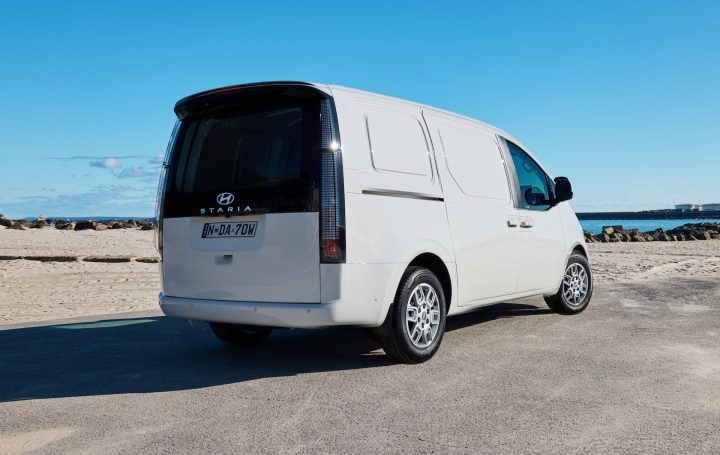
2027 Hyundai Staria Load Hybrid Premium: Specifications
Engine: 1.6-litre turbo-petrol four-cylinder hybrid
Output: 180kW / 304Nm
Gearbox: Six-speed auto
Drive type: Front-wheel drive
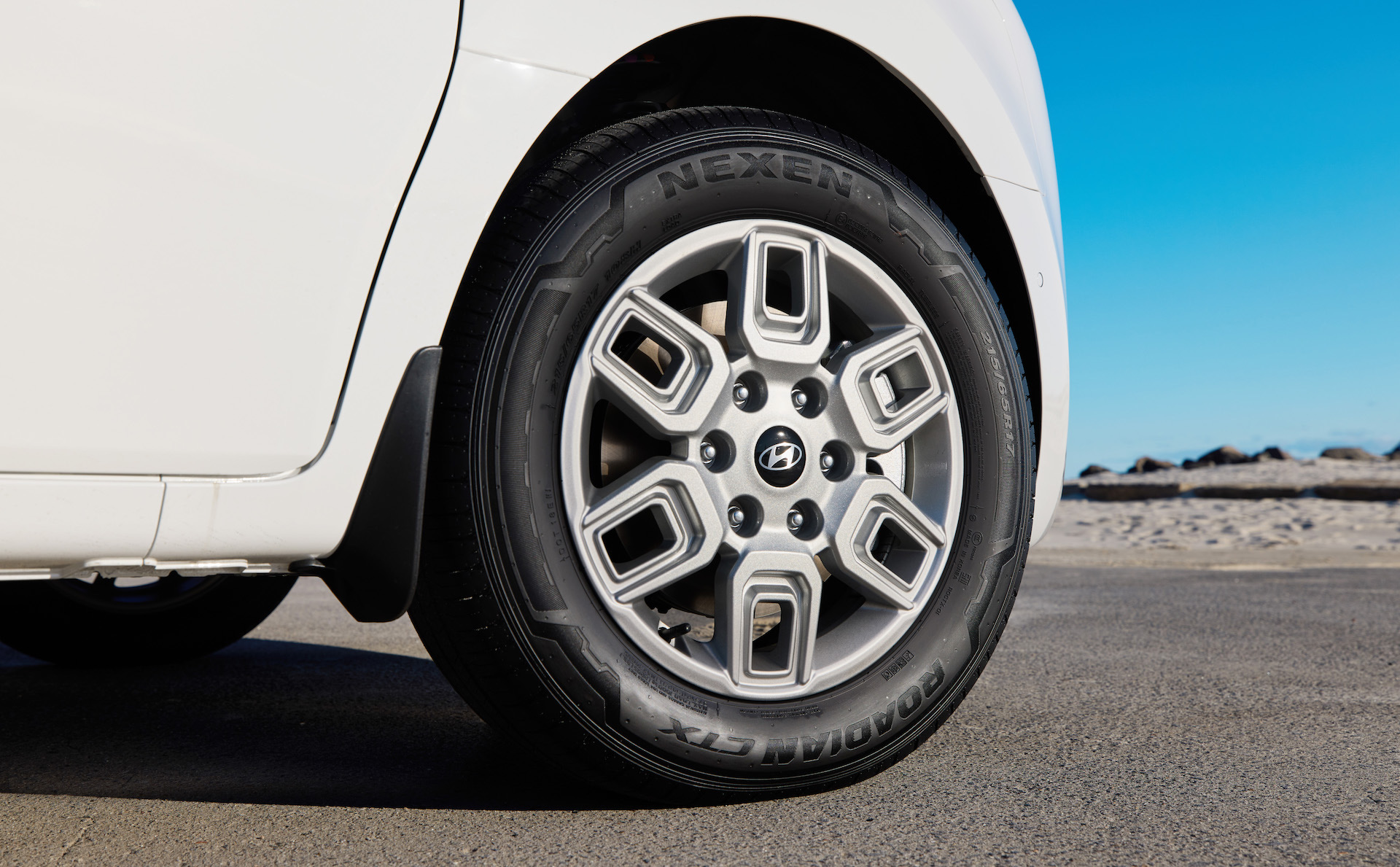
Wheels: F & R: 17×6.5, 215/65
Tare weigh: 2040kgPower-to-weight: 11.33:1 (kg:kW)
Official consumption: 7.0L/100km
Fuel tank/Fuel type: 65L/91 RON
Power efficiency: 25.71kW:L/100km
Cargo volume/payload: 4935L/1039kg
Starting price: $61,240
2027 Hyundai Staria Load Hybrid: How much does it cost?
Three main variants are on sale in Australia, with a fourth, fully electric model joining later in the year. There’s the base model diesel, the base model hybrid, and the flagship hybrid Staria Premium. All are front-wheel drive with a torsion-beam rear end. See below for the price list (excludes on-roads):
MY2027 Staria Load 2.2 CRDi diesel: $49,990
MY2027 Staria Load HEV 1.6 T-GDi Hybrid: $53,490
MY2027 Staria Load Premium HEV 1.6 T-GDi Hybrid: $61,240
MY2027 Staria Load Electric 160kW electric (84kWh battery): TBC
2027 Hyundai Staria Load Hybrid: Interior & packaging
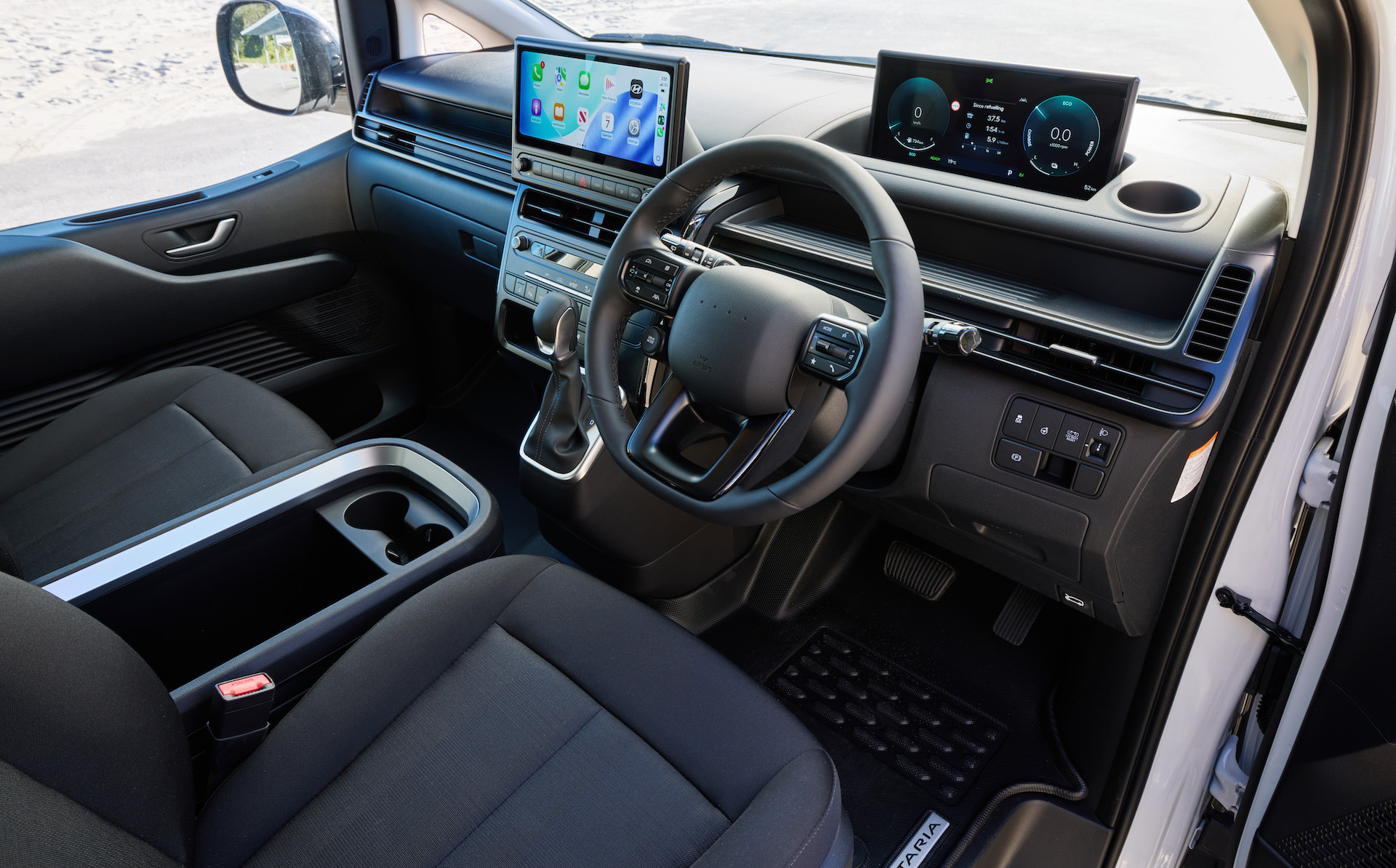
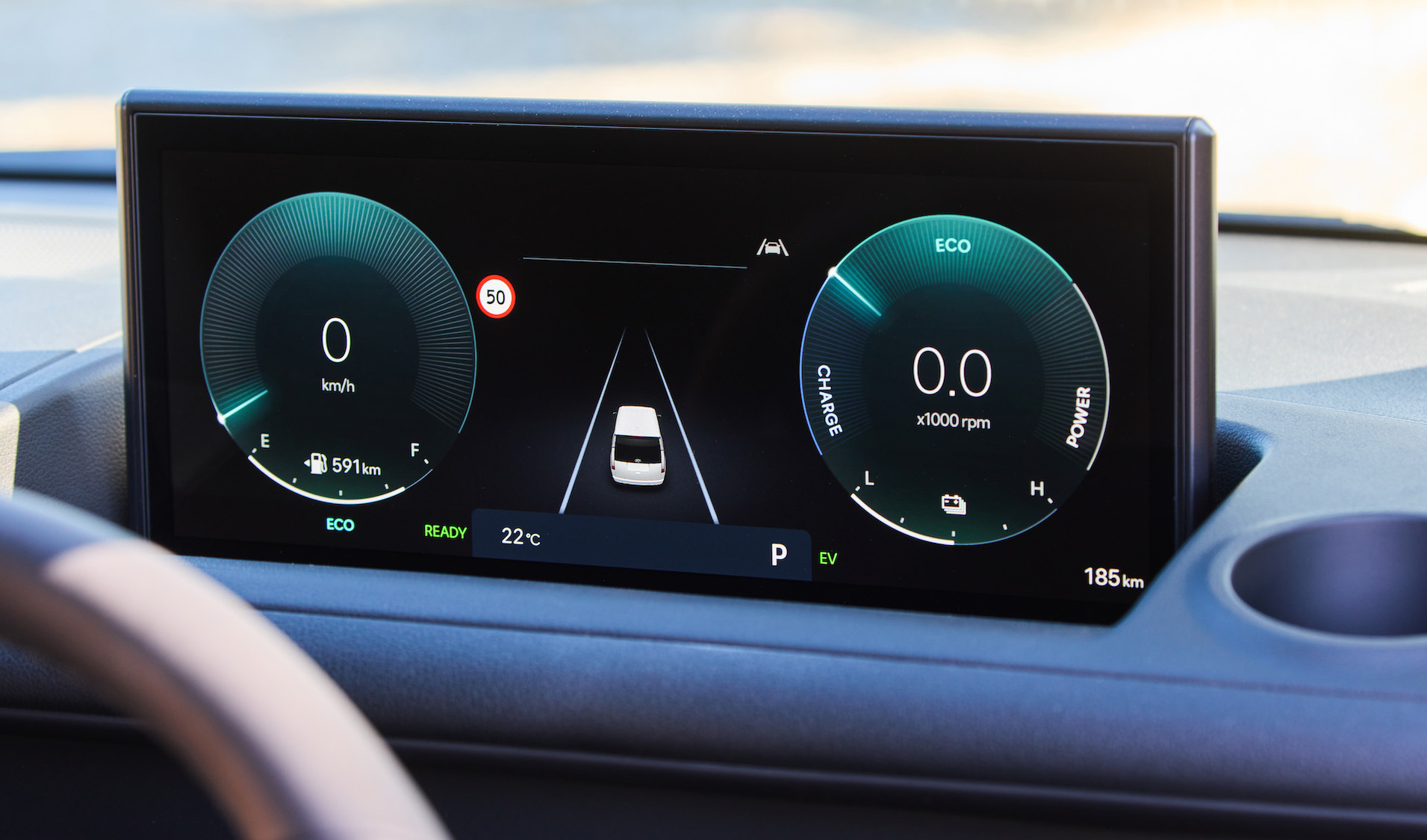
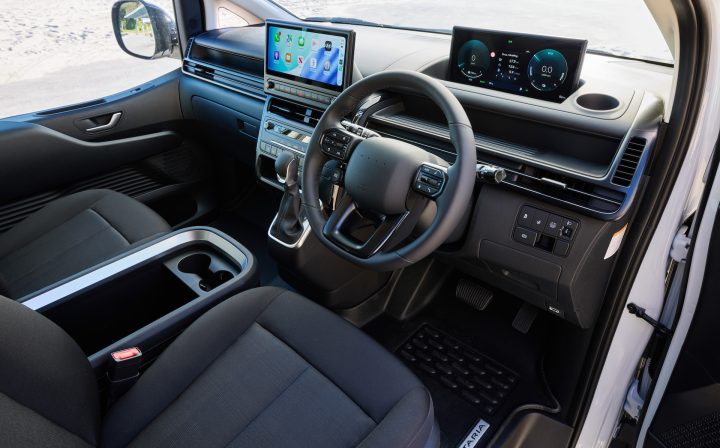
The Staria Load has always offered one of the more modern cabins in the commercial van segment, and the latest update builds on that with Hyundai’s latest Connected Car Navigation Cockpit infotainment system, including a 12.3-inch touch-screen for the dash with Bluelink remote connectivity, and over-the-air software update capability.
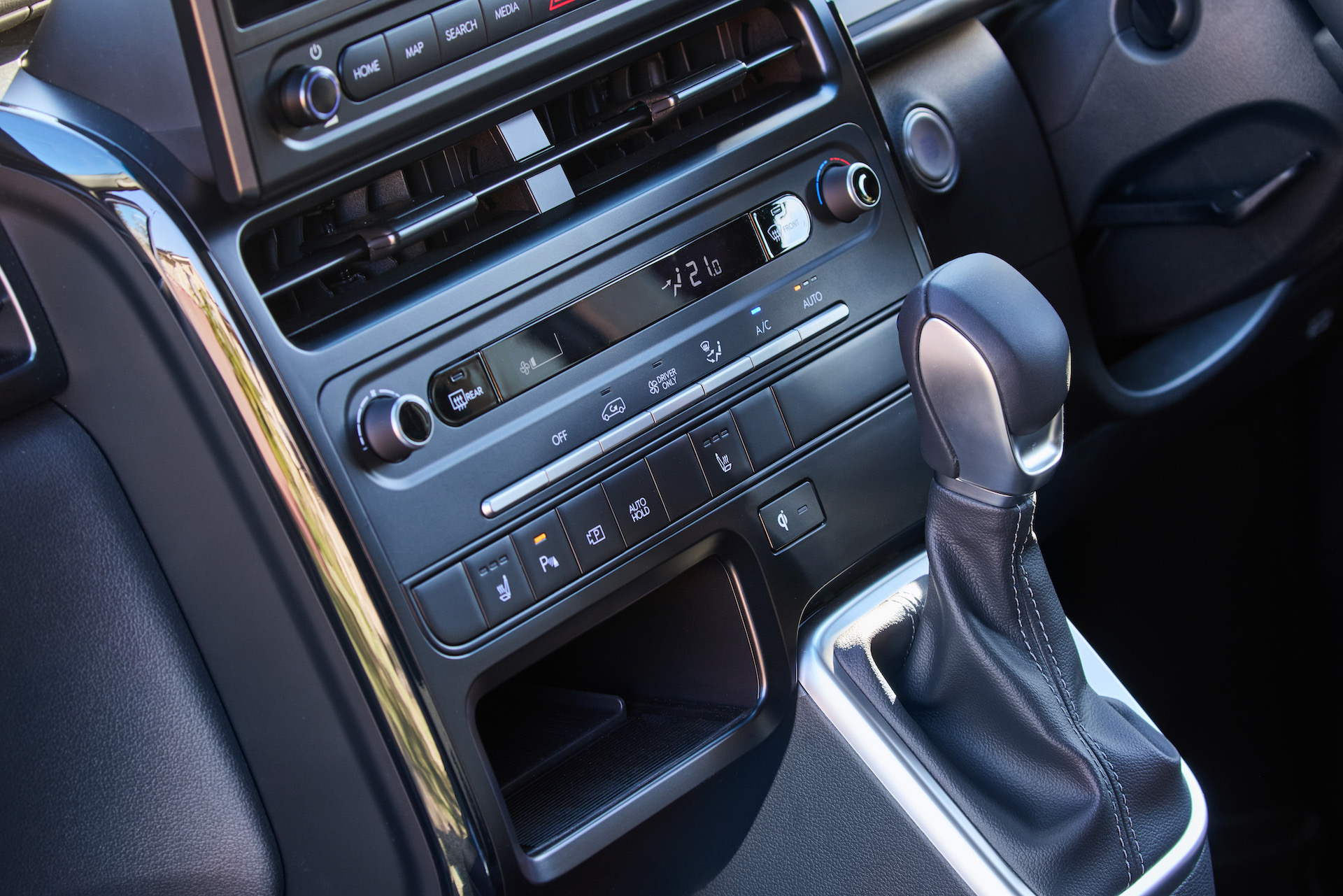
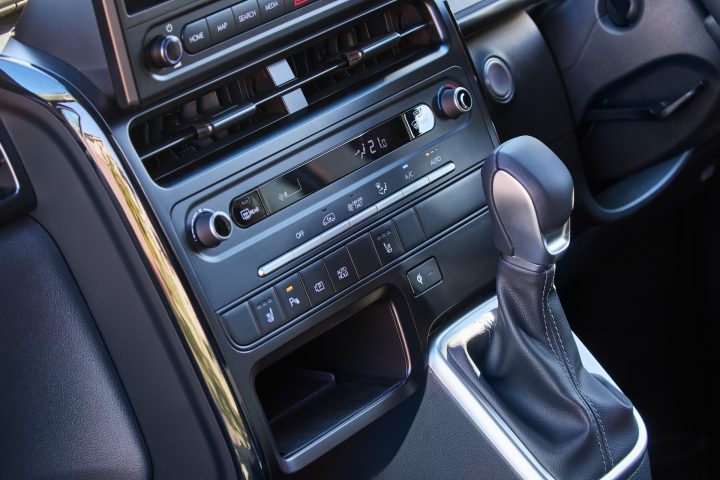
Touch-screen graphics are cleaner, and the interface is slightly more intuitive, with plenty of physical controls making life easy while on the go. A seperate panel continues to make up the climate controls as well, with a volume knob ready to twist. In other words, you don’t have to get used to a new environment or way of living with this.
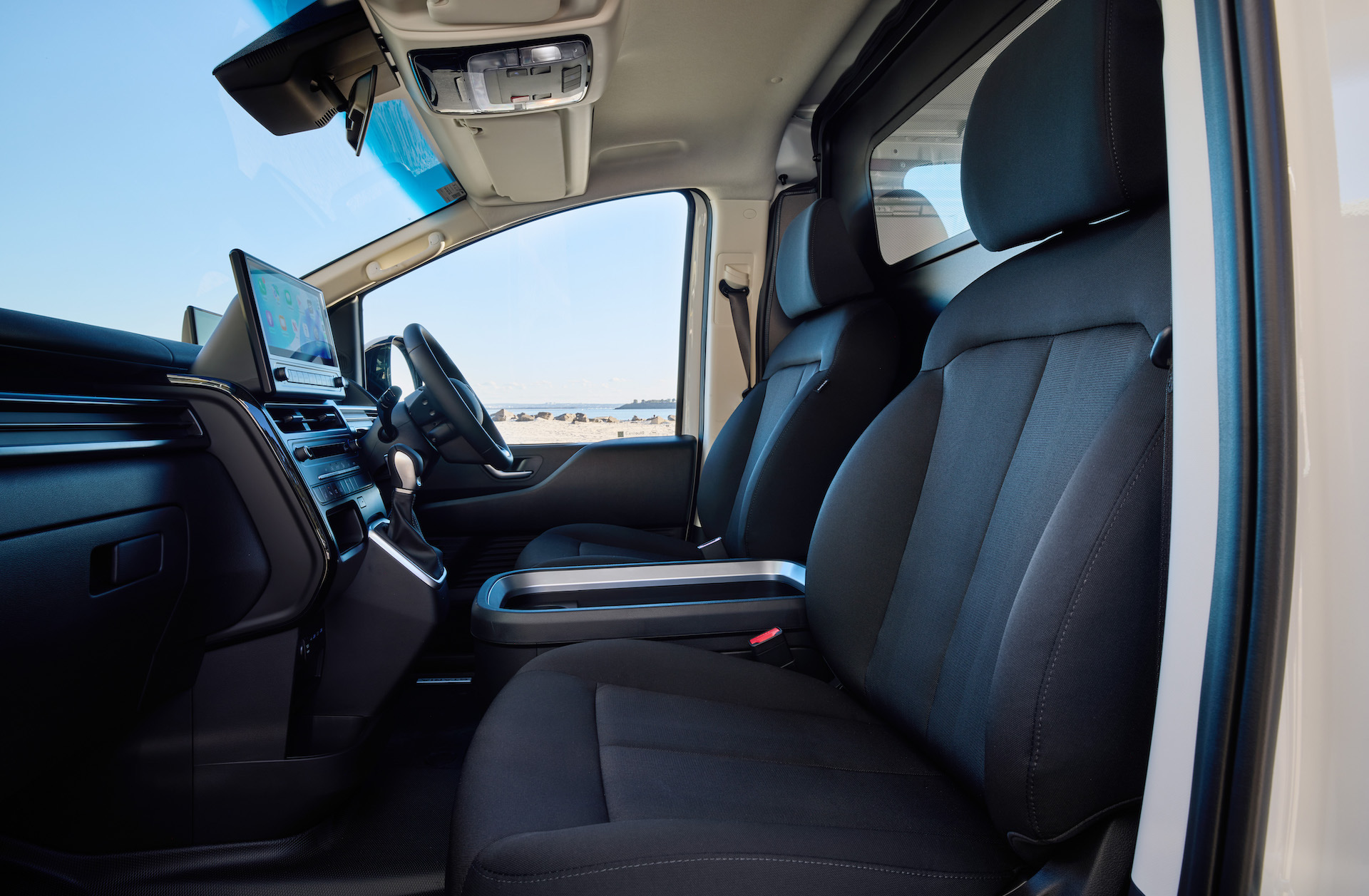
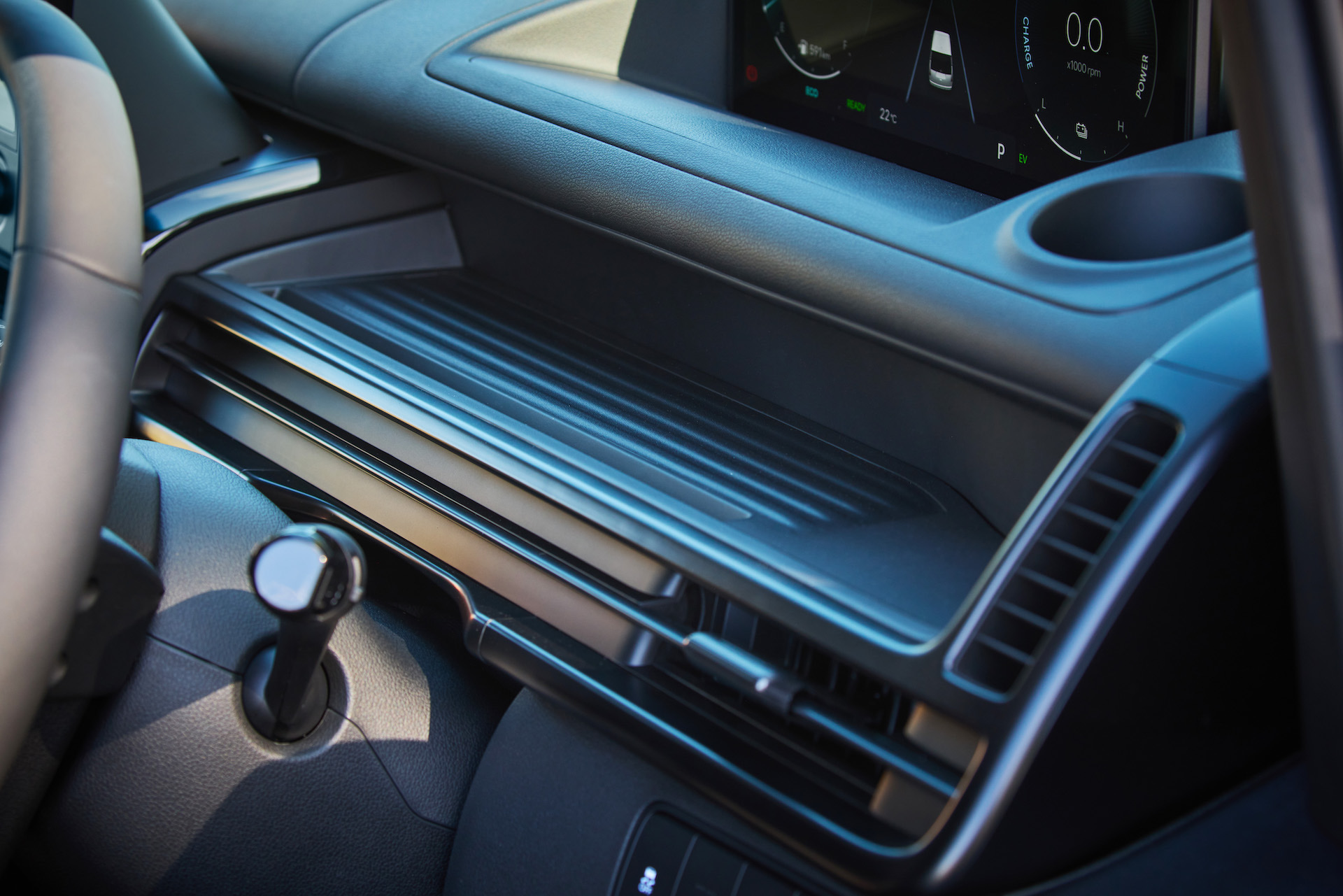
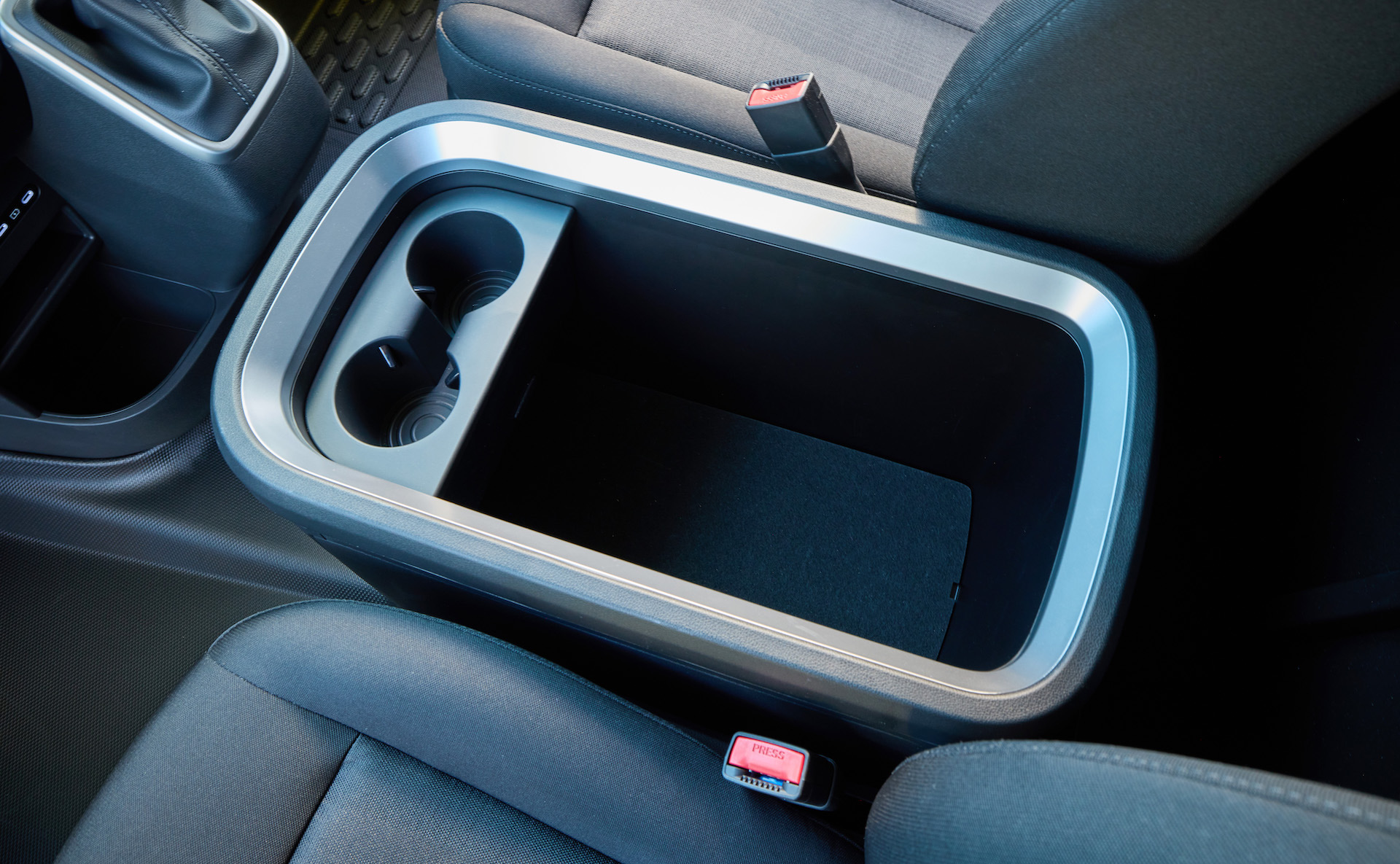
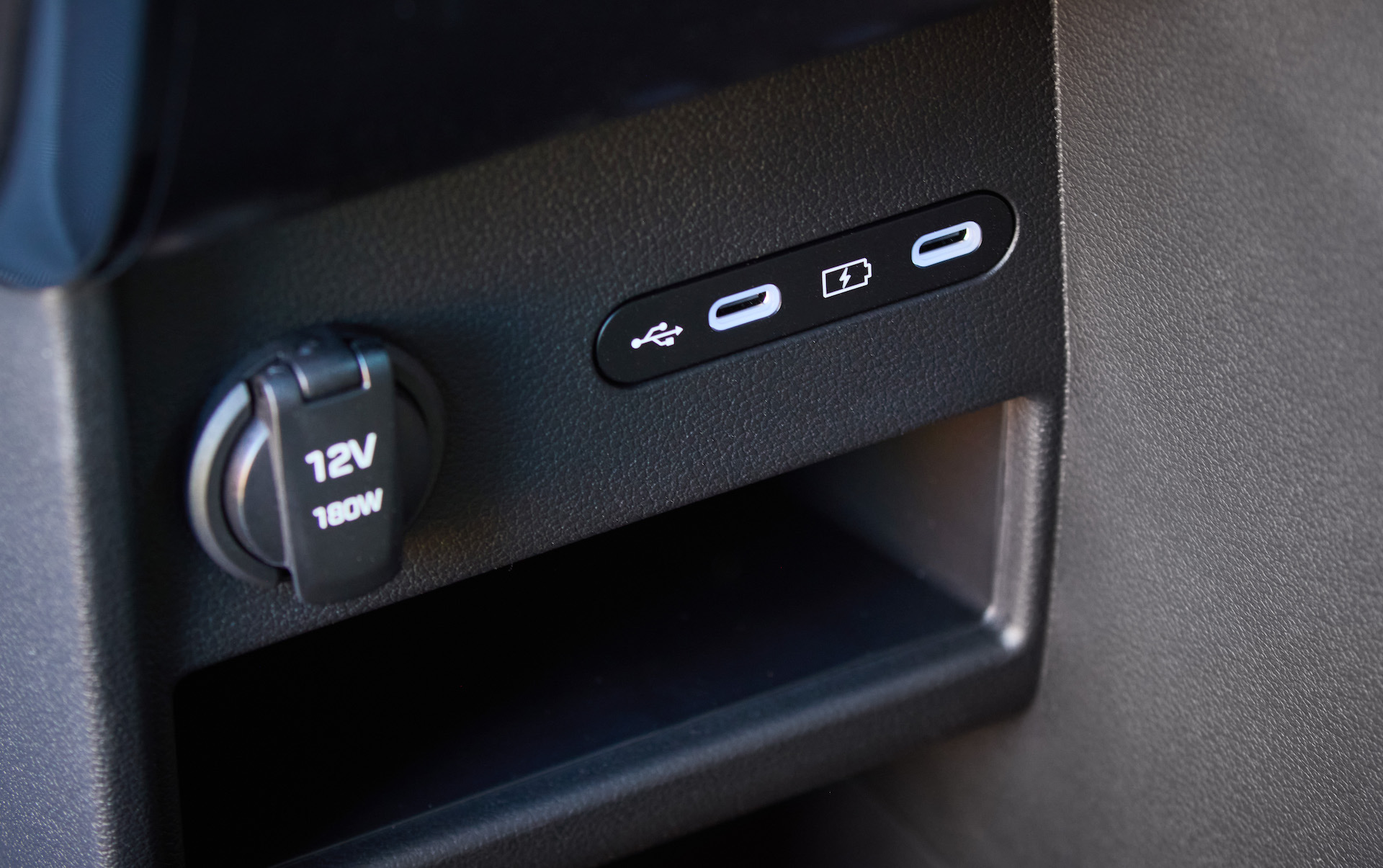
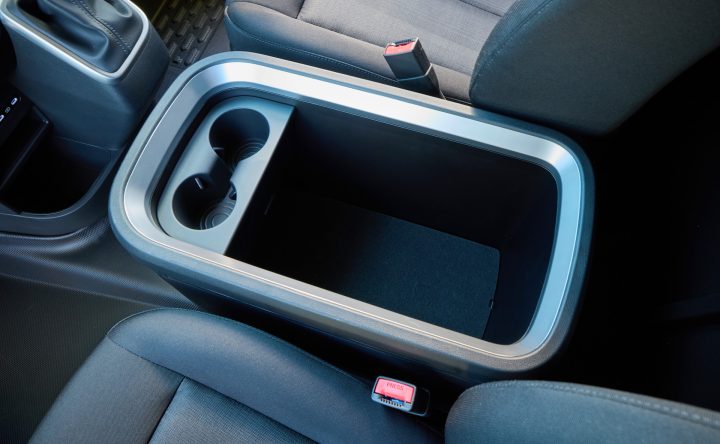
The cabin itself remains practical rather than luxurious, but that’s entirely appropriate for its intended purpose. Storage is plentiful, with a big box in the middle (which would be better with a lid), giant overhead pockets, cup holders for everyone, and more storage in the door cards and at the base of the dash fascia. If you can’t find a spot for your receipts in here, you have too many receipts.
Visibility is excellent, and everything falls easily to hand. For tradespeople and delivery drivers spending long hours behind the wheel, this is a tool that doesn’t require over-thinking. Just get in and drive. Even getting in is easy thanks to a step integrated into the door jam.

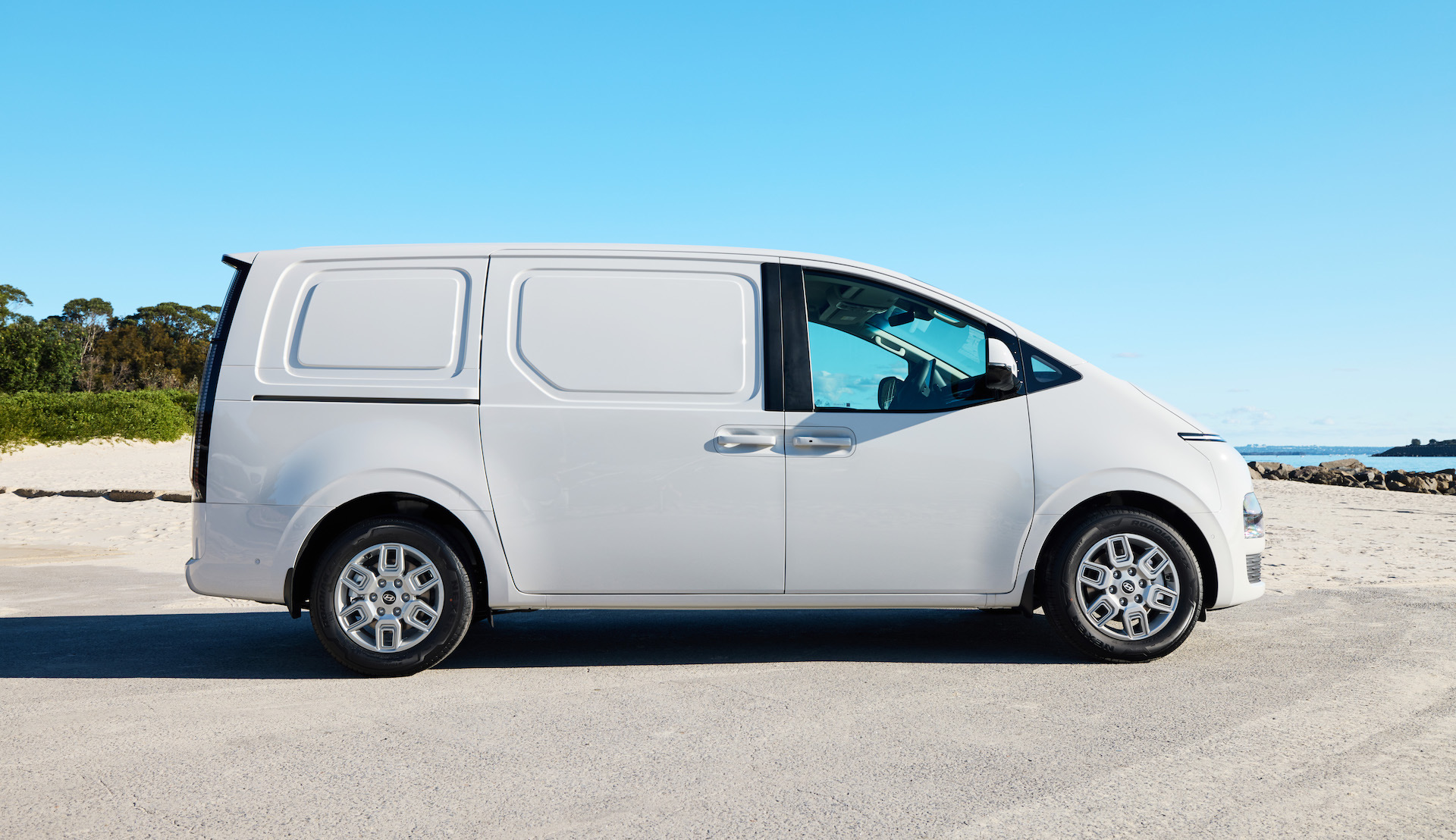
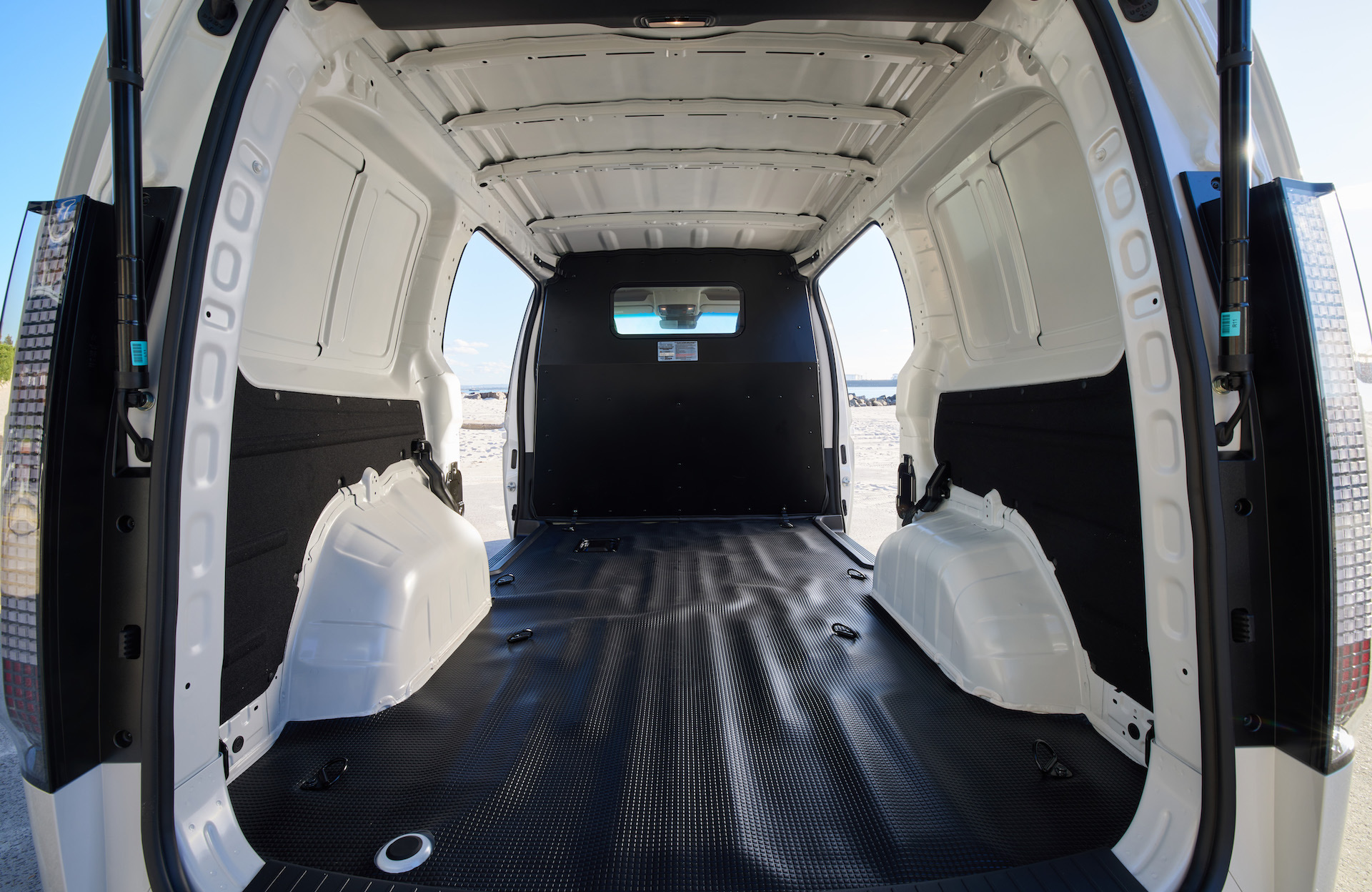
Cargo space is measured at 4935L, and there are tie-down points at the front, middle and back. You also have a number of threaded holes in various parts of the wall so you can set up a custom racking system. Payload is rated at 1039kg for the hybrid and 997kg for the diesel – that’s mainly due to the kerb weight of 2040kg for the hybrid and 2009kg for the diesel.
Weirdly, the hybrid offers a towing capacity of 0kg. Yep, the spec sheet says “0kg”, while the diesel offers a braked capacity of 2500kg and unbraked at 750kg. Hyundai Australia says the hybrid setup is not configured for towing, at least for now. We suspect that might change in the near future.

2027 Hyundai Staria Load Hybrid: Powertrain & handling
The headline act is undoubtedly the new 1.6-litre turbo-petrol hybrid powertrain. Producing a combined 180kW and 304Nm, it strikes a nice balance between outright performance and fuel efficiency. It is more powerful than the 130kW diesel, and offers an official consumption average of 6.5L/100km against the diesel’s 7.0L/100km rating.
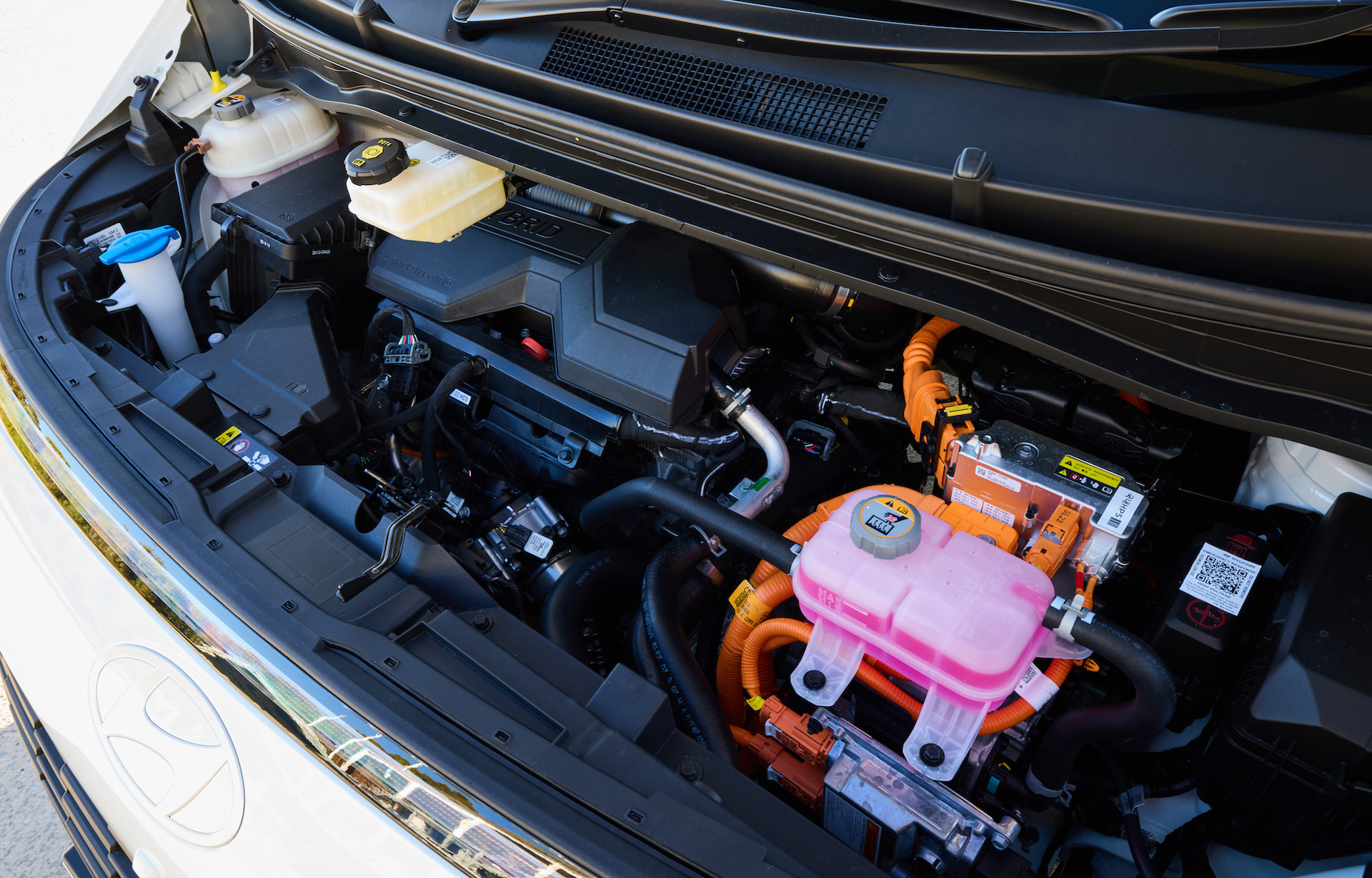
Around town it feels smooth and responsive, with the electric motor helping deliver seamless low-speed acceleration that’s well suited to stop-start urban driving. And it’s here where the hybrid is likely to make the most sense. Unlike the diesel, the hybrid features an on-board battery to supply energy for the electric motor which is integrated between the engine and six-speed torque convertor automatic.
This is the best hybrid integration in our opinion as the electric motor simply supplements a conventional running system; this isn’t overly-complicated like some setups. But that battery needs to charge up, and it primarily does this during deceleration – you can’t plug it in. So if you’re spending most of your driving on the highways it means the battery isn’t doing its best work.

It doesn’t matter if the battery level drops right down, the system will automatically sort itself out. However, this is not the optimum way to run a hybrid. Instead, urban conditions and stop-start traffic situations are its ideal habitat. With the diesel you’re getting a lot more torque, at 430Nm, which is useful for carrying heavy loads, and highway driving is its most efficient environment. Taking that into consideration, you can decide what powertrain suits you best based on your common use case.
During our launch drive, which included wet conditions, the front-wheel drive chassis demonstrated impressive composure. The stability control system intervenes quickly and predictably when required, helping maintain confidence without feeling overly intrusive. Hyundai has also made a series of suspension and refinement improvements for 2027, and the result is a van that feels settled and comfortable over typical Australian roads.
2027 Hyundai Staria Load Hybrid: First impressions
The addition of a hybrid option gives the Staria Load a genuine point of difference in the commercial van market. It combines smooth performance, slightly higher payload capacity over the diesel, and modern connectivity features into a package that should appeal to businesses operating primarily in urban environments.
However, the hybrid’s lack of an official towing rating is going to be difficult to ignore for some buyers, and the higher torque of the diesel will attract those regularly carrying heavy stuff in the back. Even so, it is great to see buyers have an option here, including the upcoming fully electric model to consider later on.
2027 Hyundai Staria Load Hybrid: Video