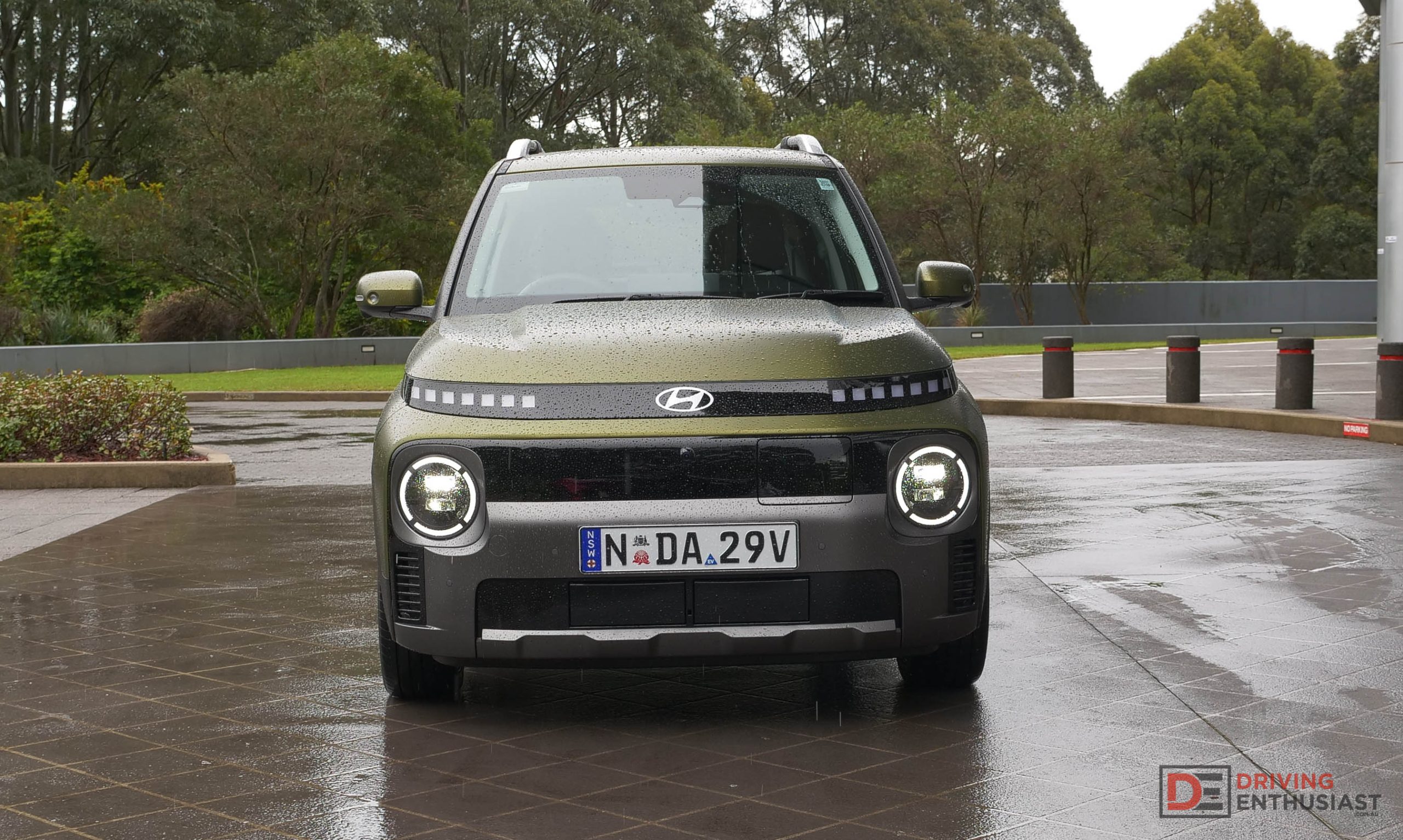
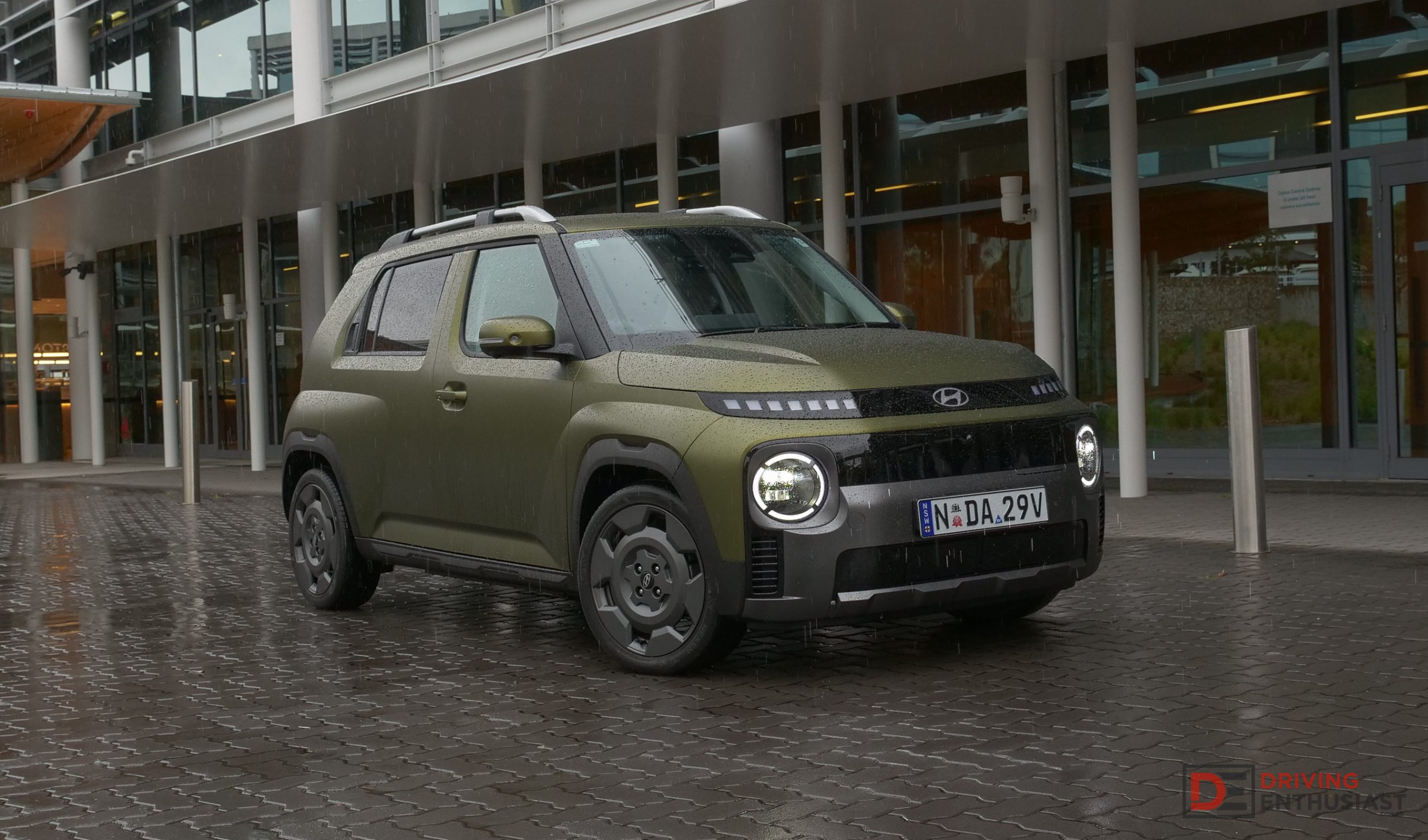
Here’s something a bit different from Hyundai. A bold yet tiny city EV with a face like a robot cherub and the energy of a small puppy that’s got the zoomies. The Inster Cross isn’t the fastest or cheapest EV on the market, nor is it the biggest, but is it the most likeable?
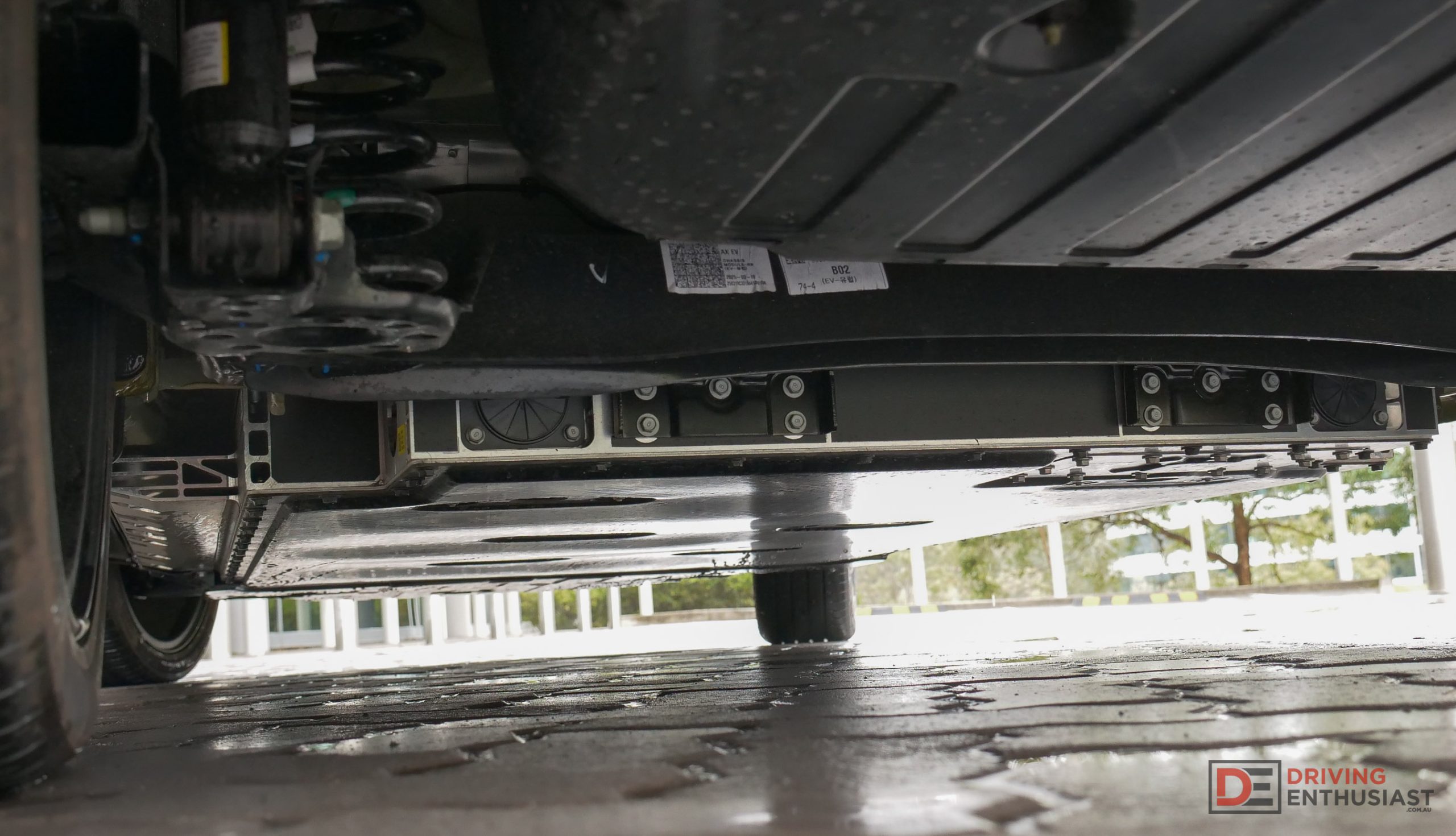
Going small might just be the smartest way to go electric. A lot of larger EVs are thirsty on the battery, but not the Inster Cross, rated at just 15.1kWh/100km (official). Its compact size, small footprint, and 49kWh battery make it easier to live with, cheaper to run, and better suited to city life than the oversized SUVs hogging Australia’s charging stations. It could make a good choice for those looking for a second car for city duties, empty nesters and people who want good visibility, higher ground clearance (144mm) and ease of manoeuvrability, as well as a touch of individuality.
At $45,000 before on-road costs, with a slew of new compact EVs en route to Australia as we speak (like the BYD Atto priced from just $23,990), is it asking a bit too much, lovable though it may be? Here’s our top 5 pros and cons to help you decide.

2025 Hyundai Inster Cross: Pros
1. Tons of character, inside and out
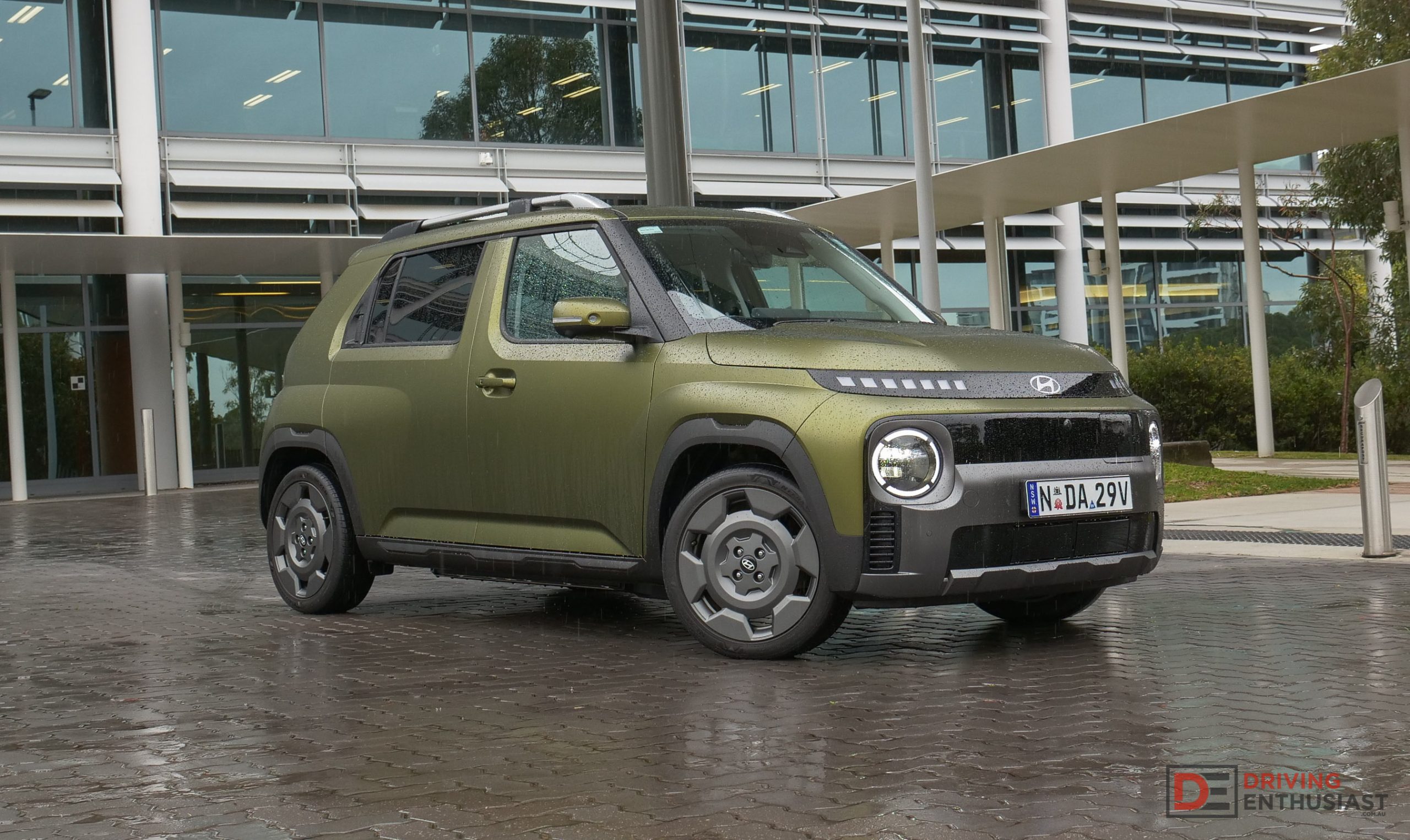
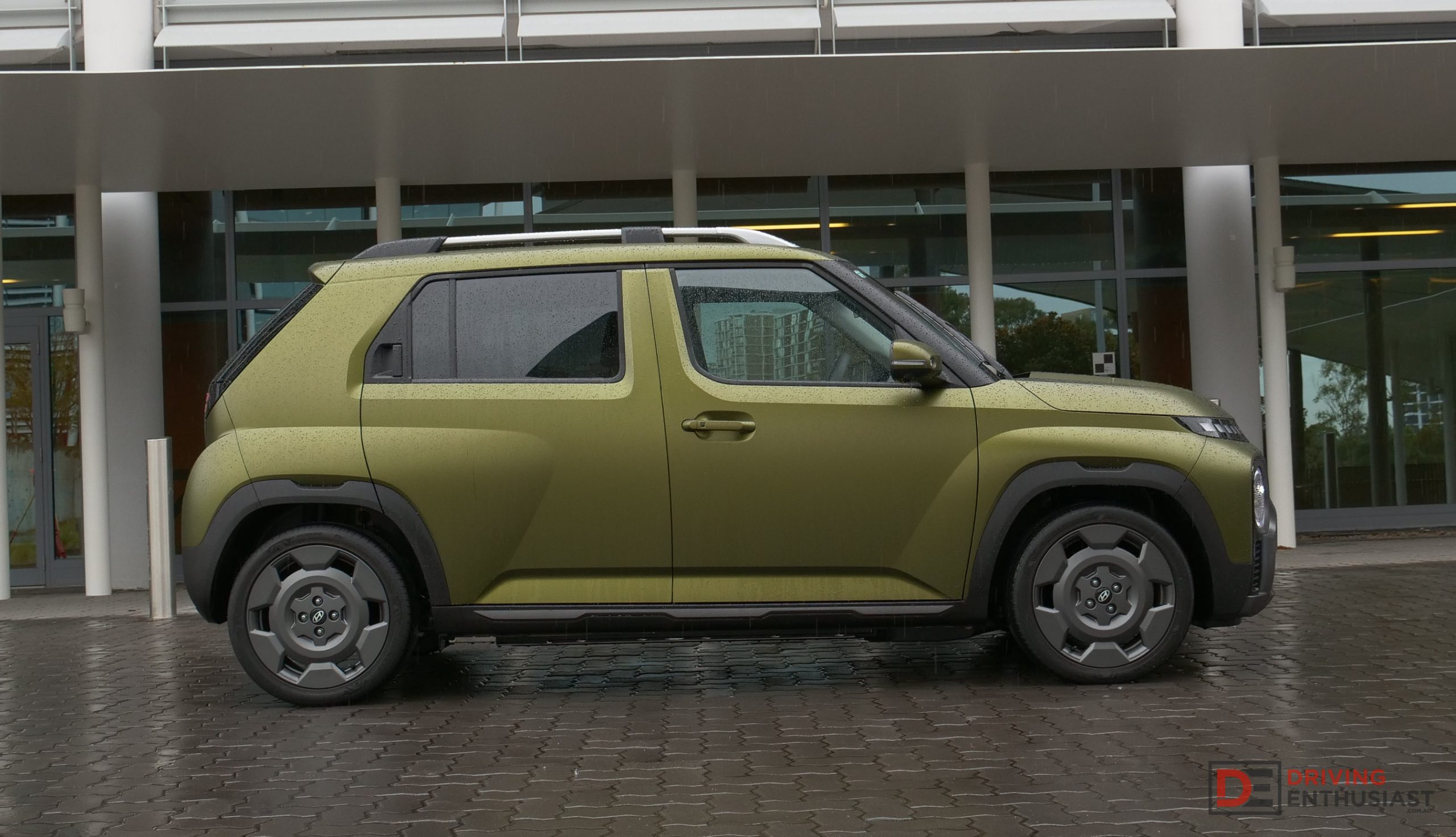
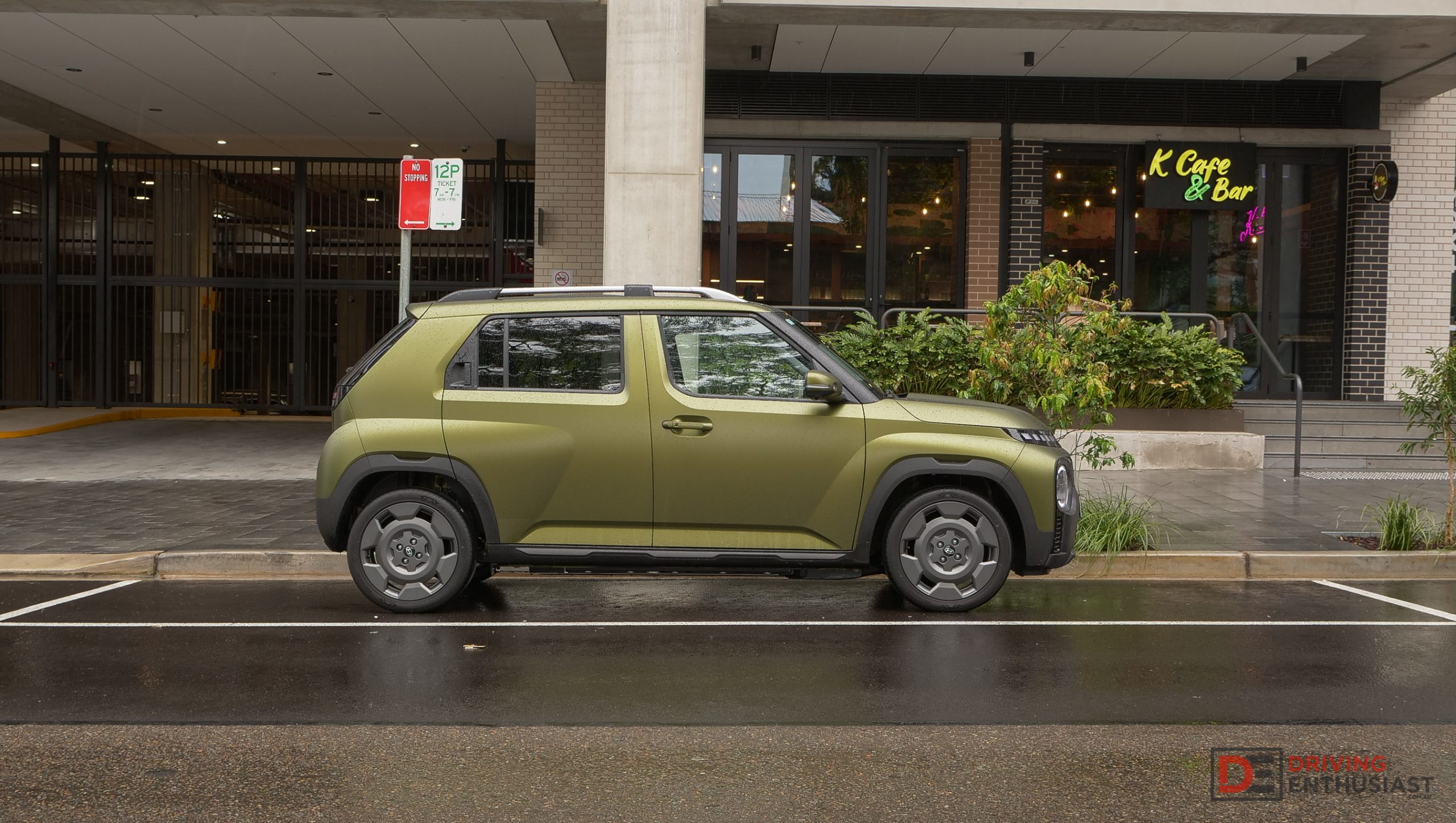
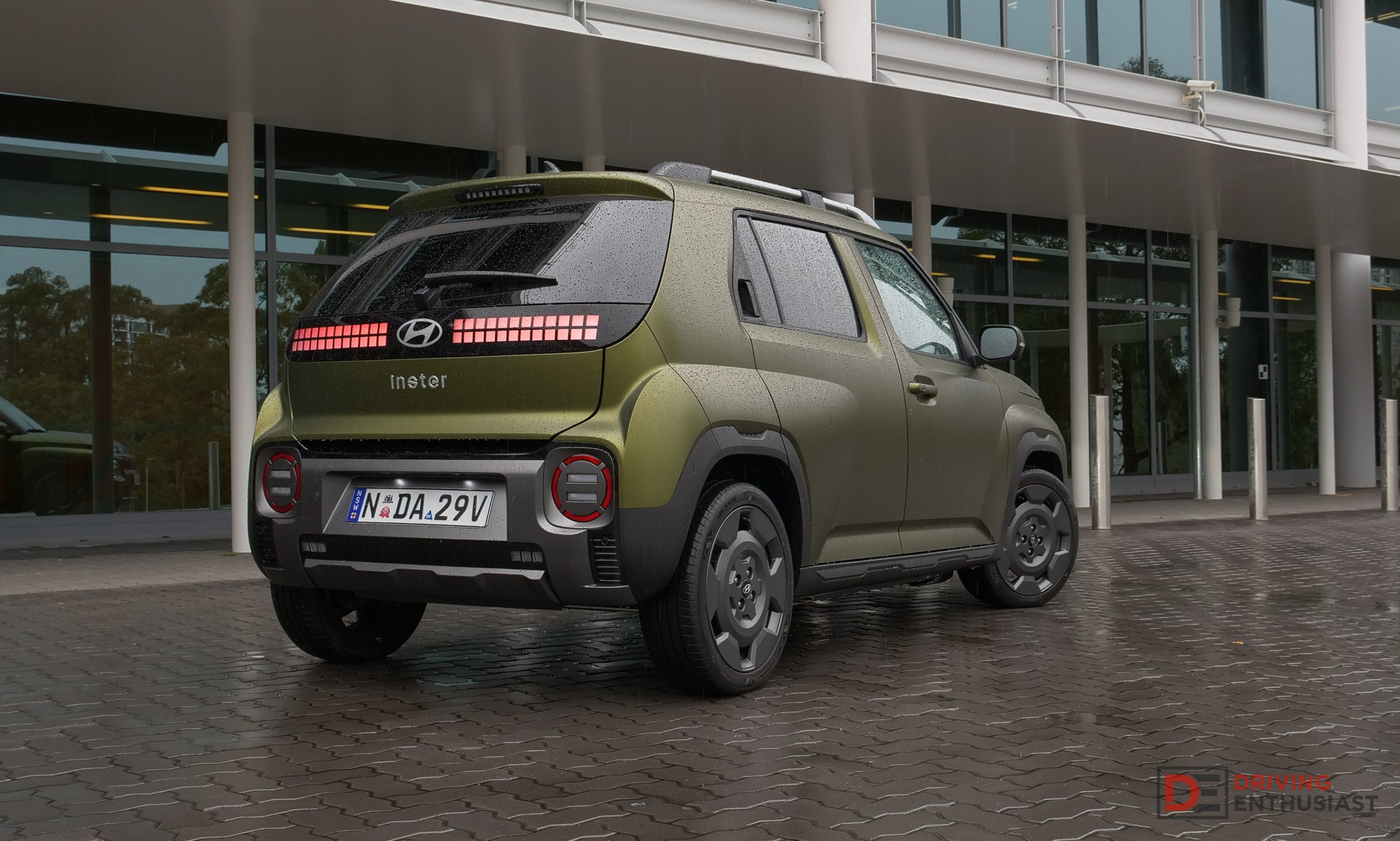
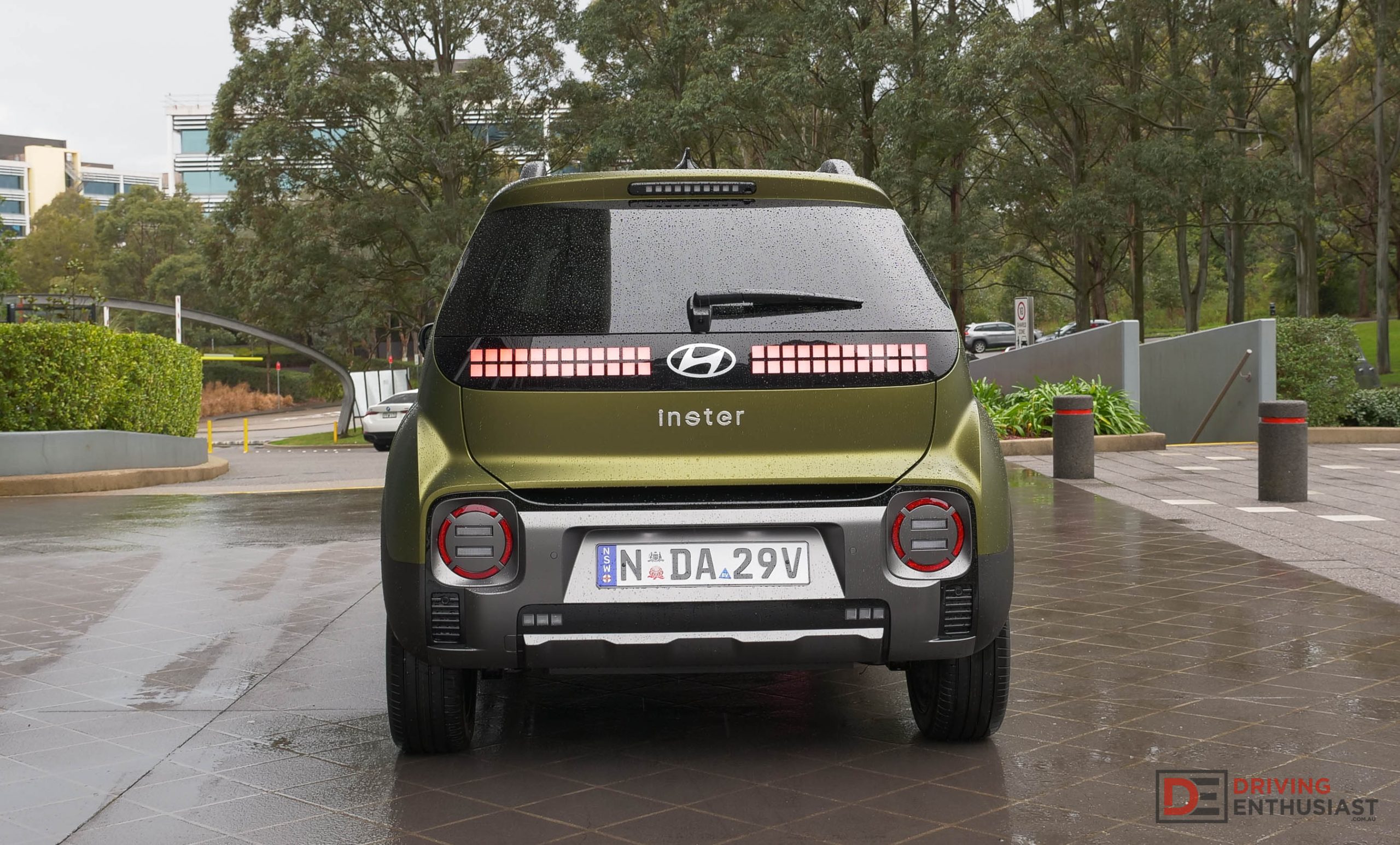
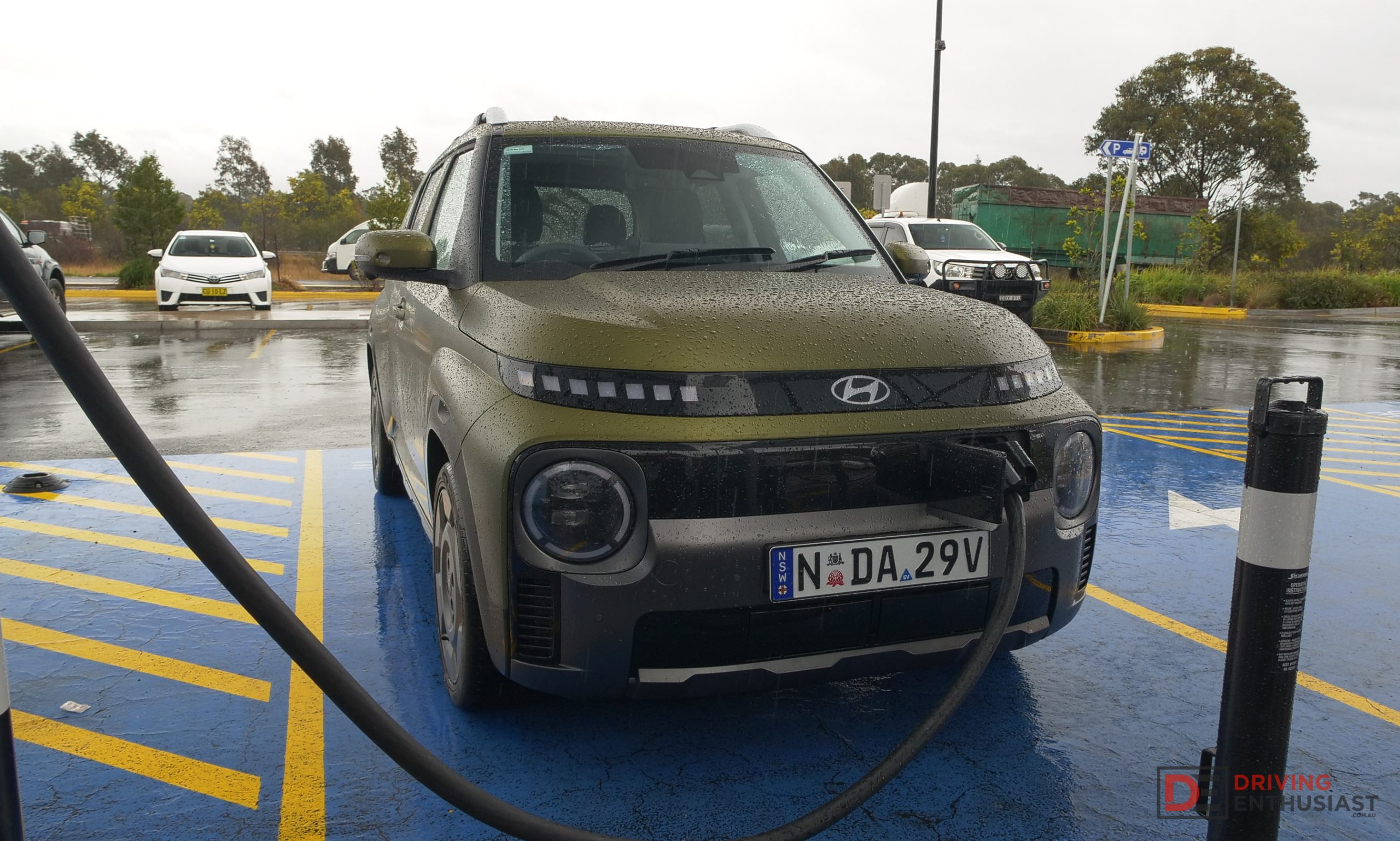
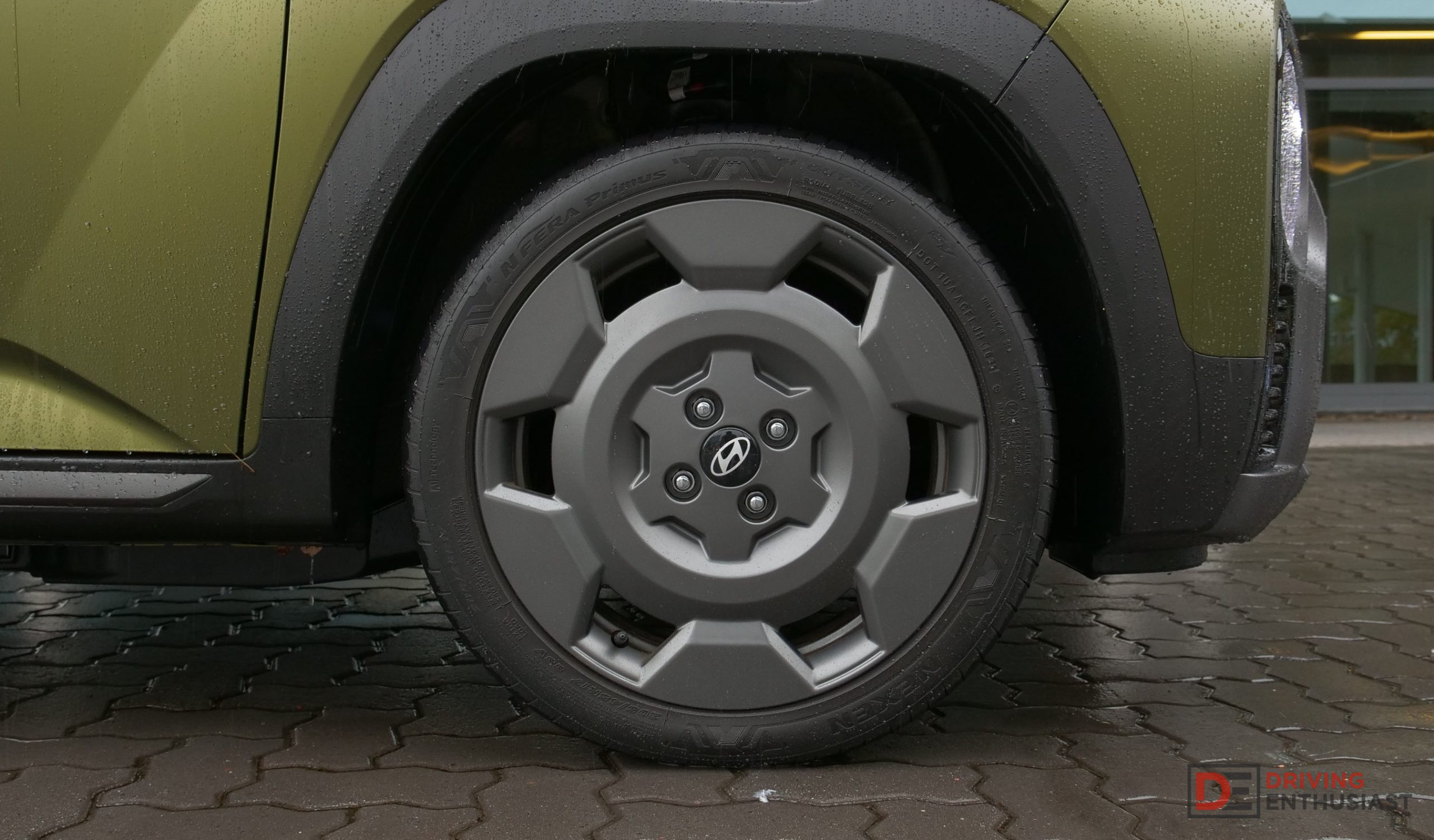
In Amazonas Green with its matt finish ($1000 option), the Inster Cross looks ready for adventure, especially with its chunky, retro-design wheels, roof rails, cladding and front apron. The pixelated array of squares at the front as well as the repeated circular motif in the bumper give it a very cartoonish and endearing character – something missing from a lot of new cars.
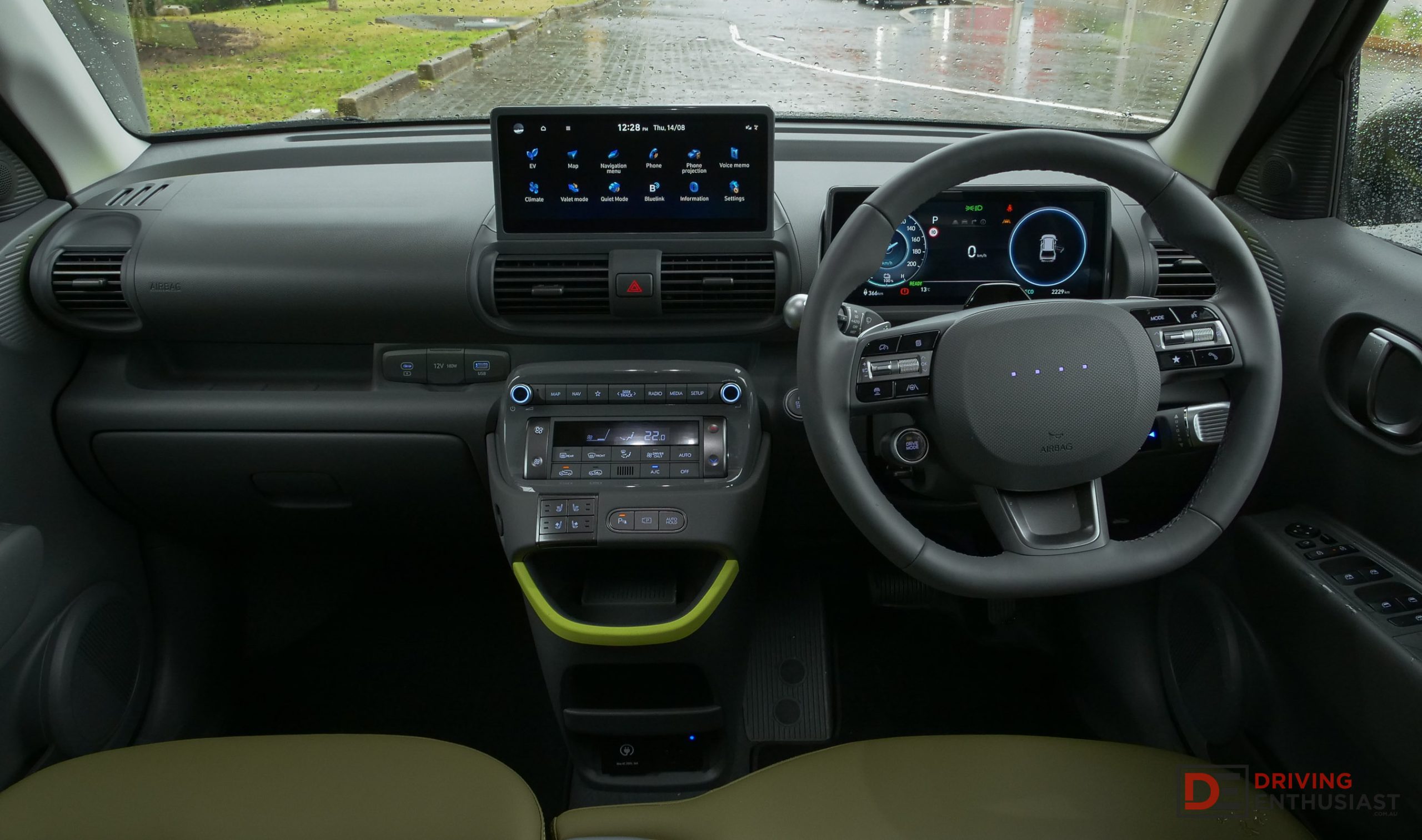
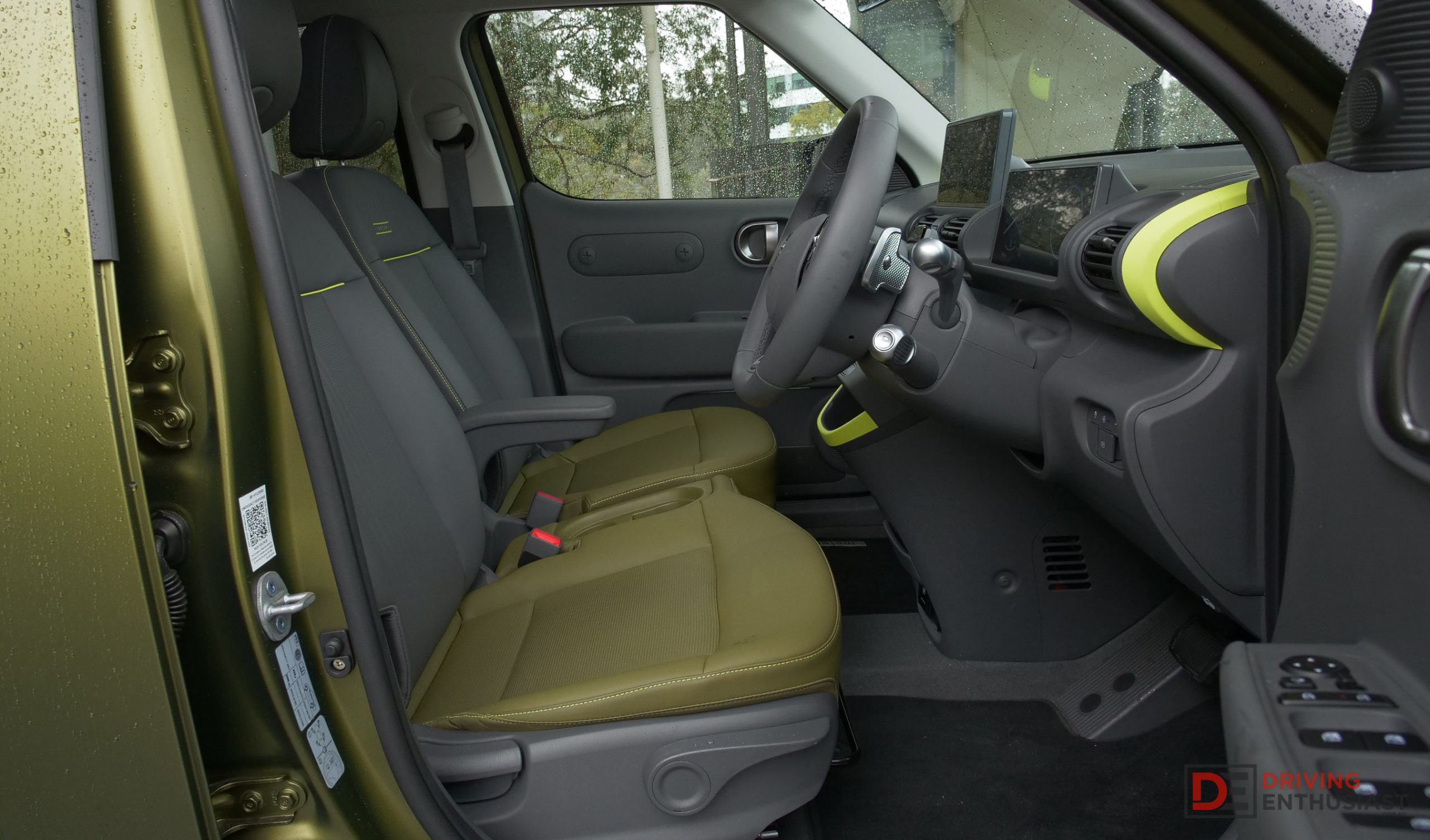
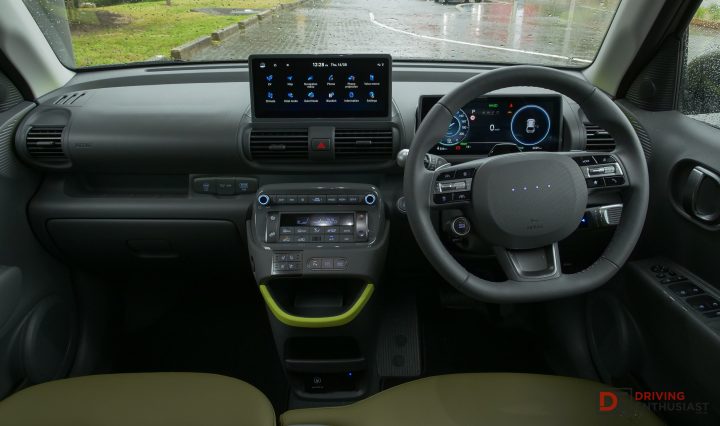
Inside is a similar story. Hyundai’s ergonomic and material game is top-notch lately and, with a few notable exceptions on top of the dash, doors and lower trim pieces, the Inster delivers. Touch points such as column stalks, door handles and regen paddles feel high quality, and there is an excited ‘frog face’ in the centre stack we can’t unsee. Clever touches such as bag hooks, seats that can fold down to form a bed, a sliding second-row do go a long way to justifying this car’s asking price.
2. Decent charge capability; makes EV ownership viable for more people
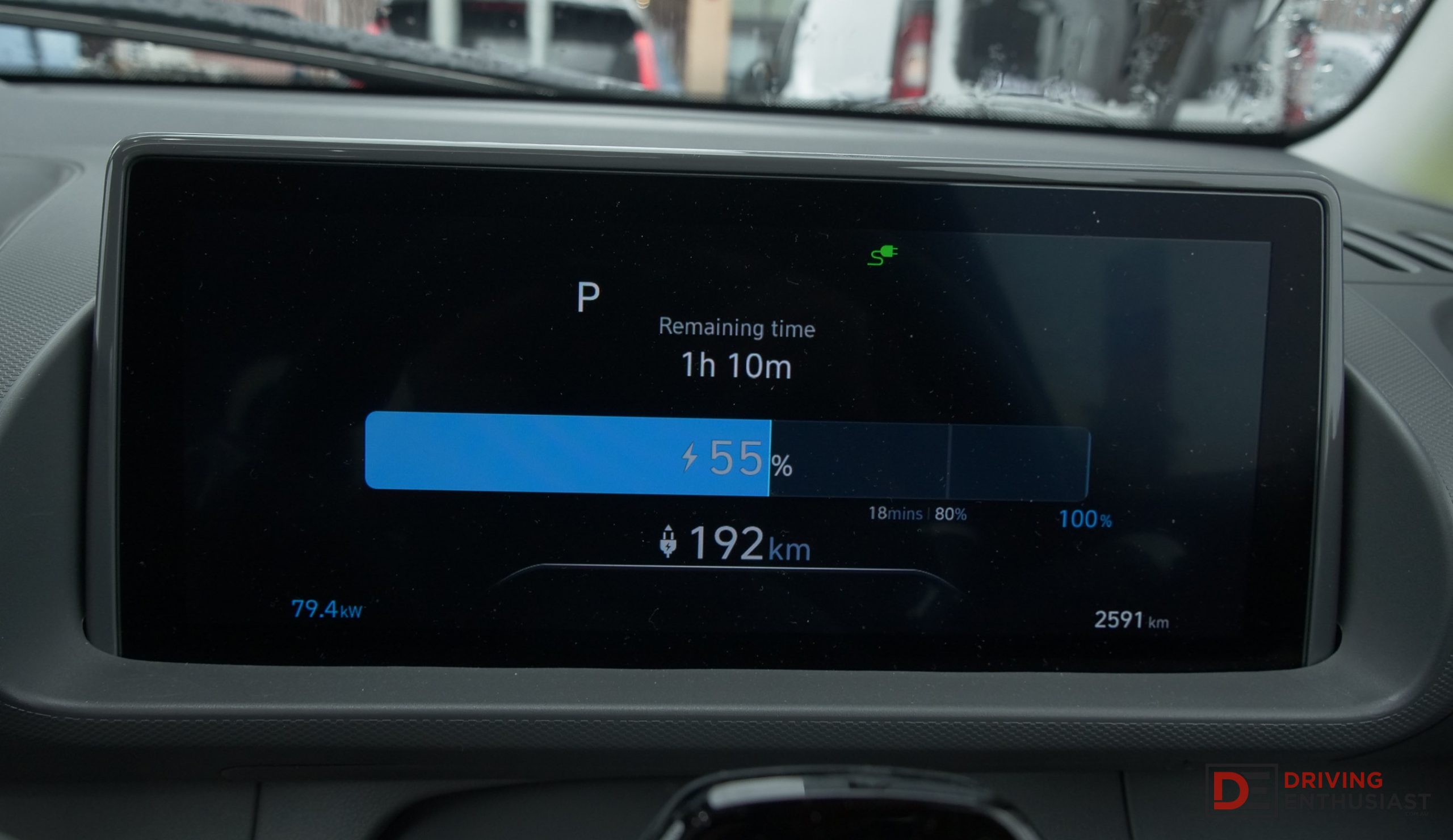
Hyundai has given this little car big-car charging tech. The 120kW DC fast-charge rate is among the best in its class, good for 10–80 per cent in roughly half an hour – quicker than rivals like the BYD Dolphin or MG 4 (in Excite 51 guise), which max out at around 80kW. On 10.5kW AC three-phase, a full charge takes about six hours; even on a 7kW home wallbox, it’s ready overnight. This ease of use makes daily ownership friction-free and means spontaneous weekend trips are eminently doable.
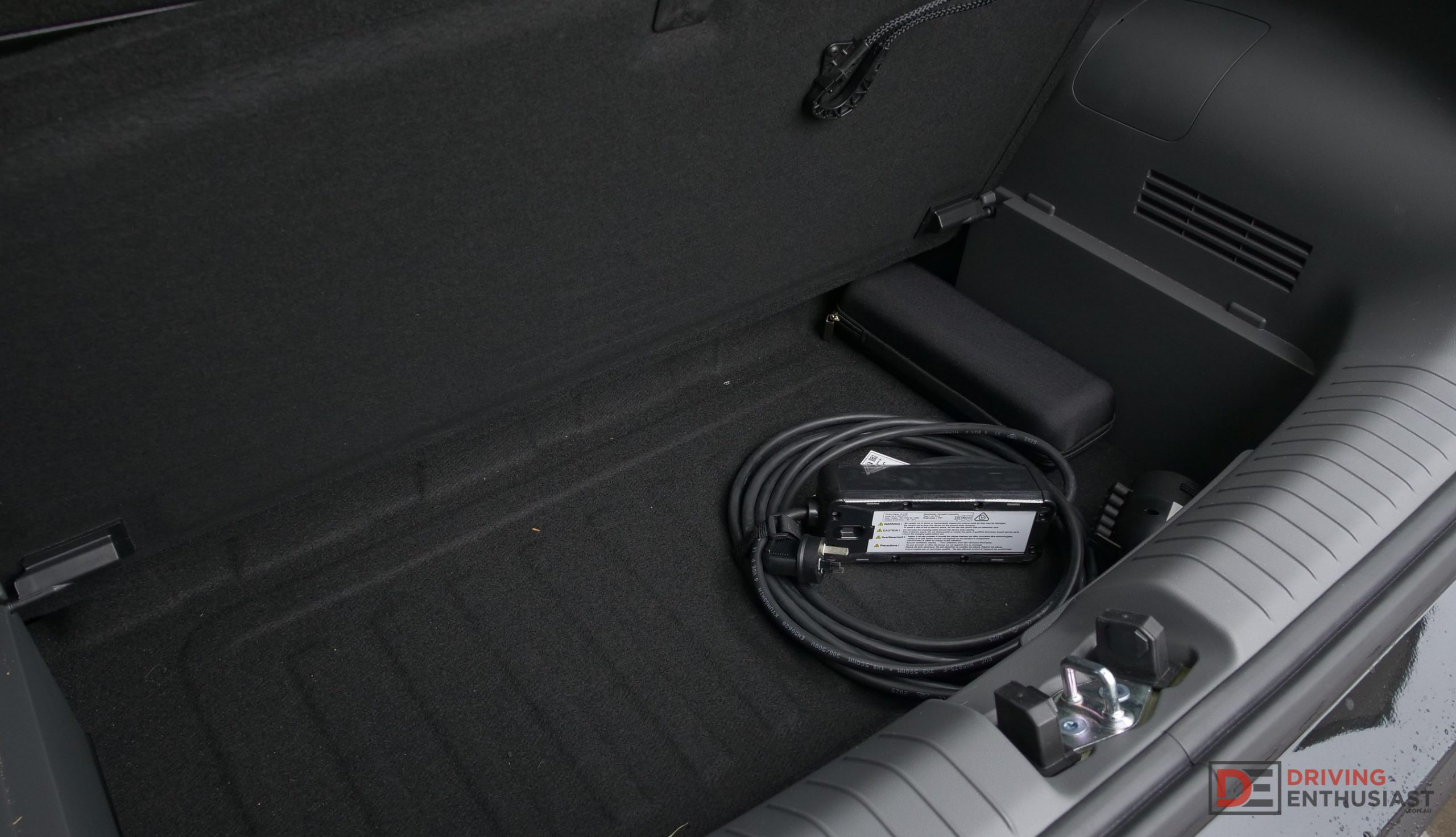
Probably the biggest compliment we can pay the Inster Cross, is that, using it as primary transport and plugging it into the 240V/2.4kW mains (via an extension cord) is workable. Because of the car’s low energy consumption, it puts more km per hour back into the battery than any other EV we’ve ever featured. This means a 7kW wall charger is not an absolute must for every use case, and it eliminates one principal drawback of EV ownership.
Combine that with servicing every 24 months or 30,000km, cheaper registration for 1.5-tonne EVs and fitting in the lowest insurance category, the initial sticker shock of the price quickly evaporates into low running costs. Warranty is five years/unlimited km, with eight years for the high voltage battery.

3. Clever packaging
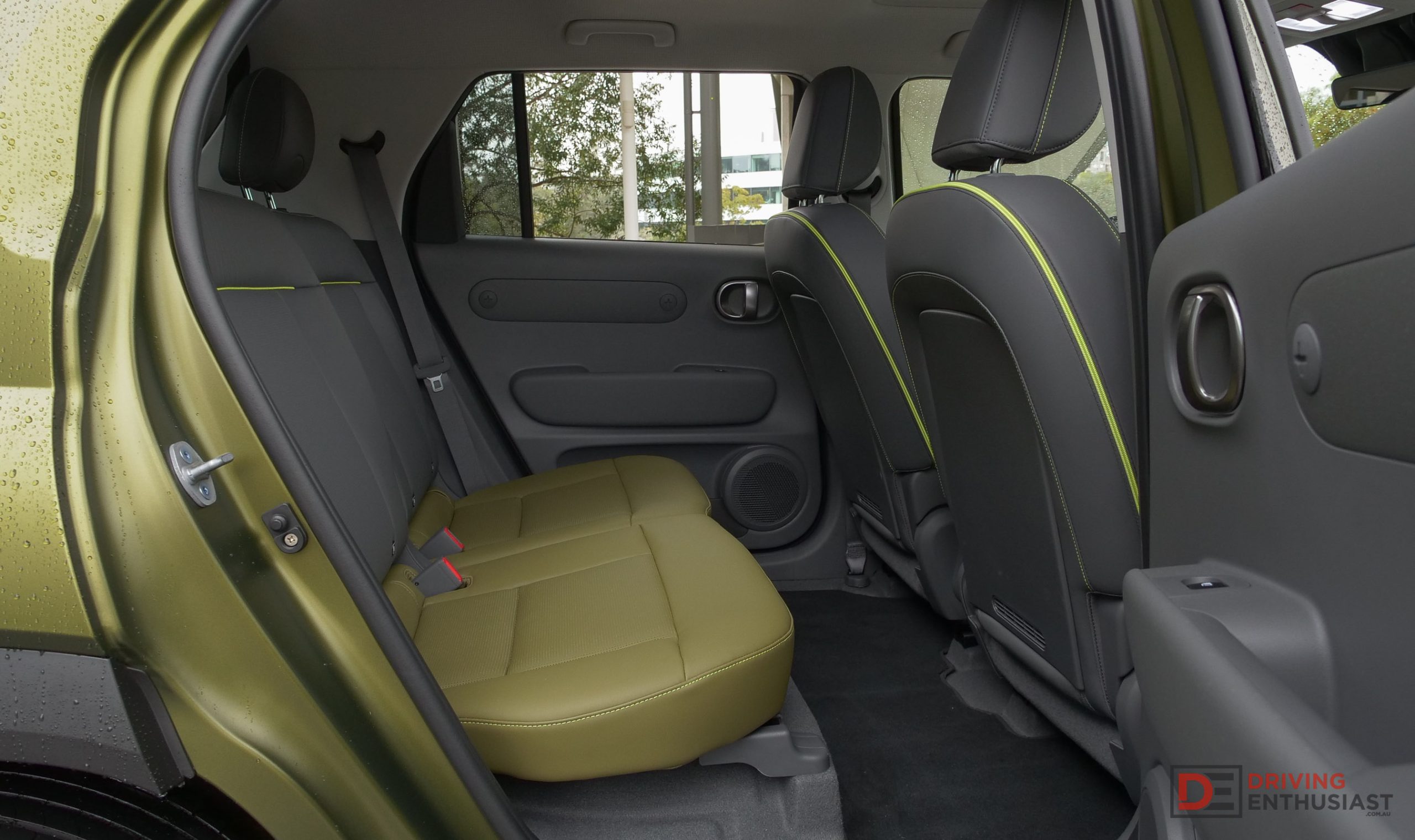
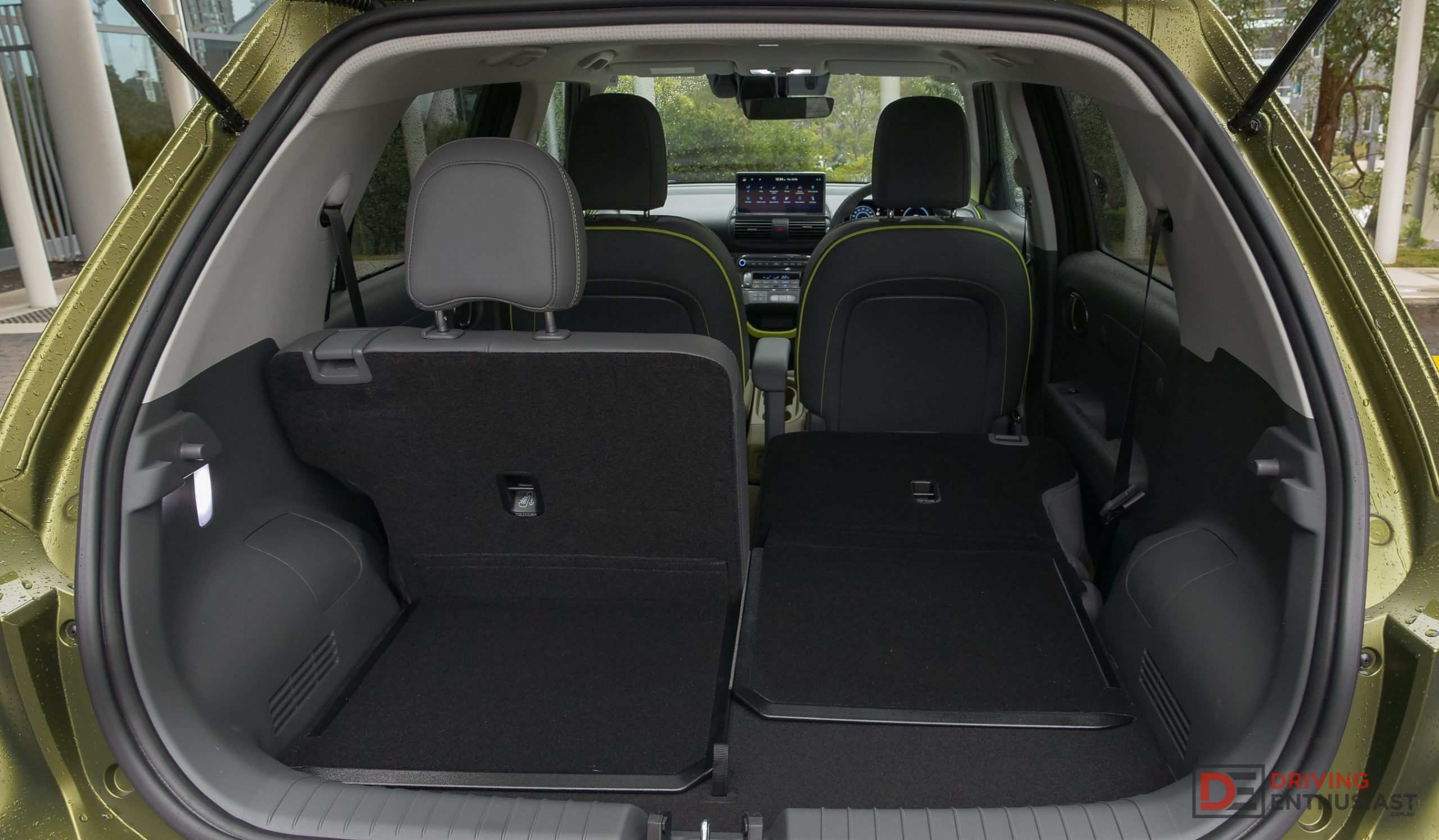
Despite its 3825mm by 1610mm by 1610mm dimensions (giving it the same width as its height), usable interior volume is exceptional. It may be a four seater, but the sliding base of the second row combined with the squared off roofline mean even very tall people will find it surprisingly roomy. Boot space varies between 280 litres to 1059L when the second row and front seat are folded down. To use a well-worn cliché, it is a mini tardis on wheels.
Additional storage is opened up when the Inster Cross is optioned with the roof basket, but this will delete the standard panoramic roof – a delightful feature which makes the cabin feel more open.
While we’re on the subject of packaging, we’d be remiss if we left out the front bench seat and walk-through area – something we haven’t seen since the Citroen C4 Cactus. There’s a fold-down armrest in the centre too. There’s just something about a bench seat which adds to the sense of occasion. Depending on model, there’s either a khaki faux-leather trim or nostalgic houndstooth pattern like you’d find in an old Porsche 911.
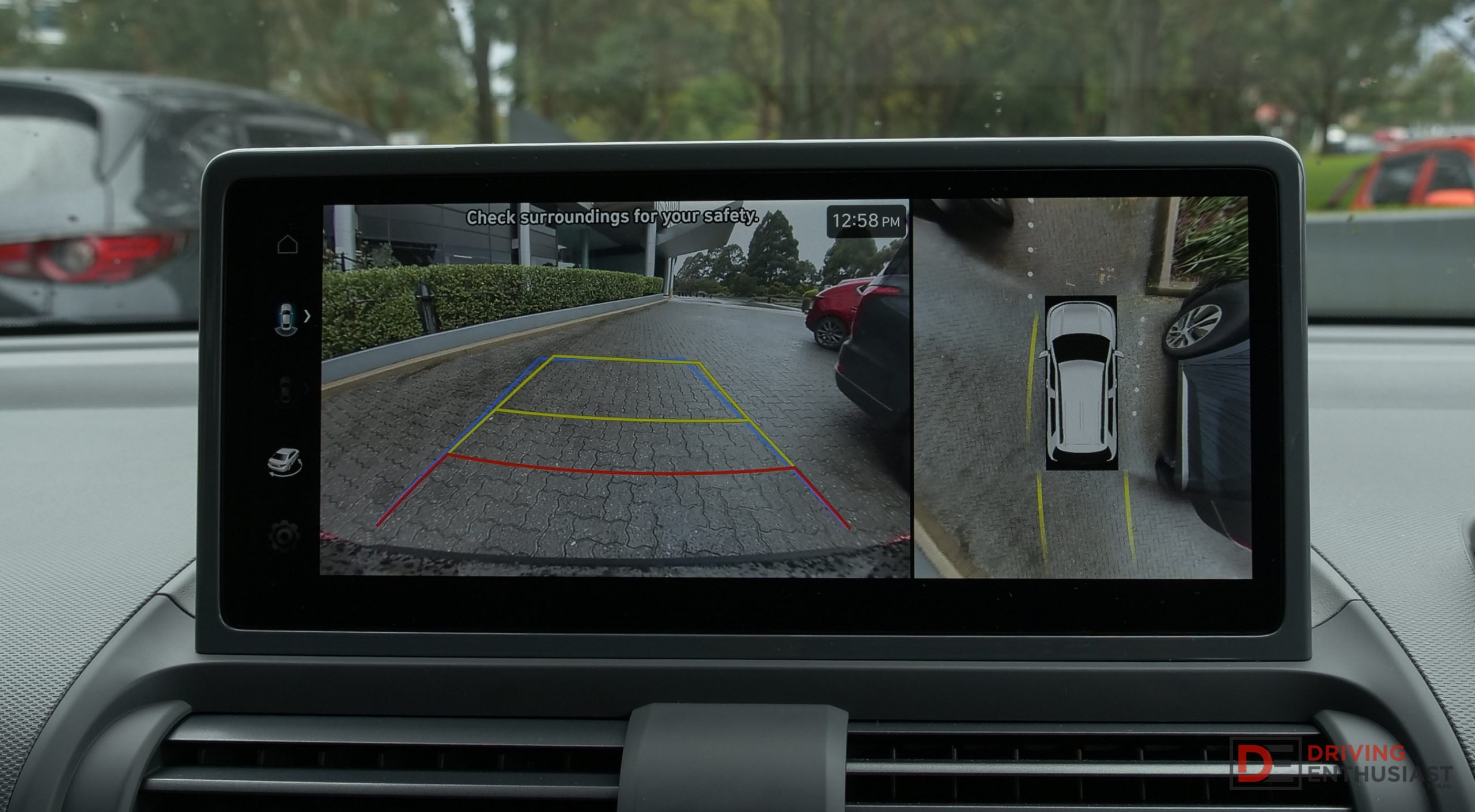
With a turning circle of 10.6 metres between kerbs and a 360-degree camera system, it is also super easy to manoeuvre.

4. Good safety and tech features
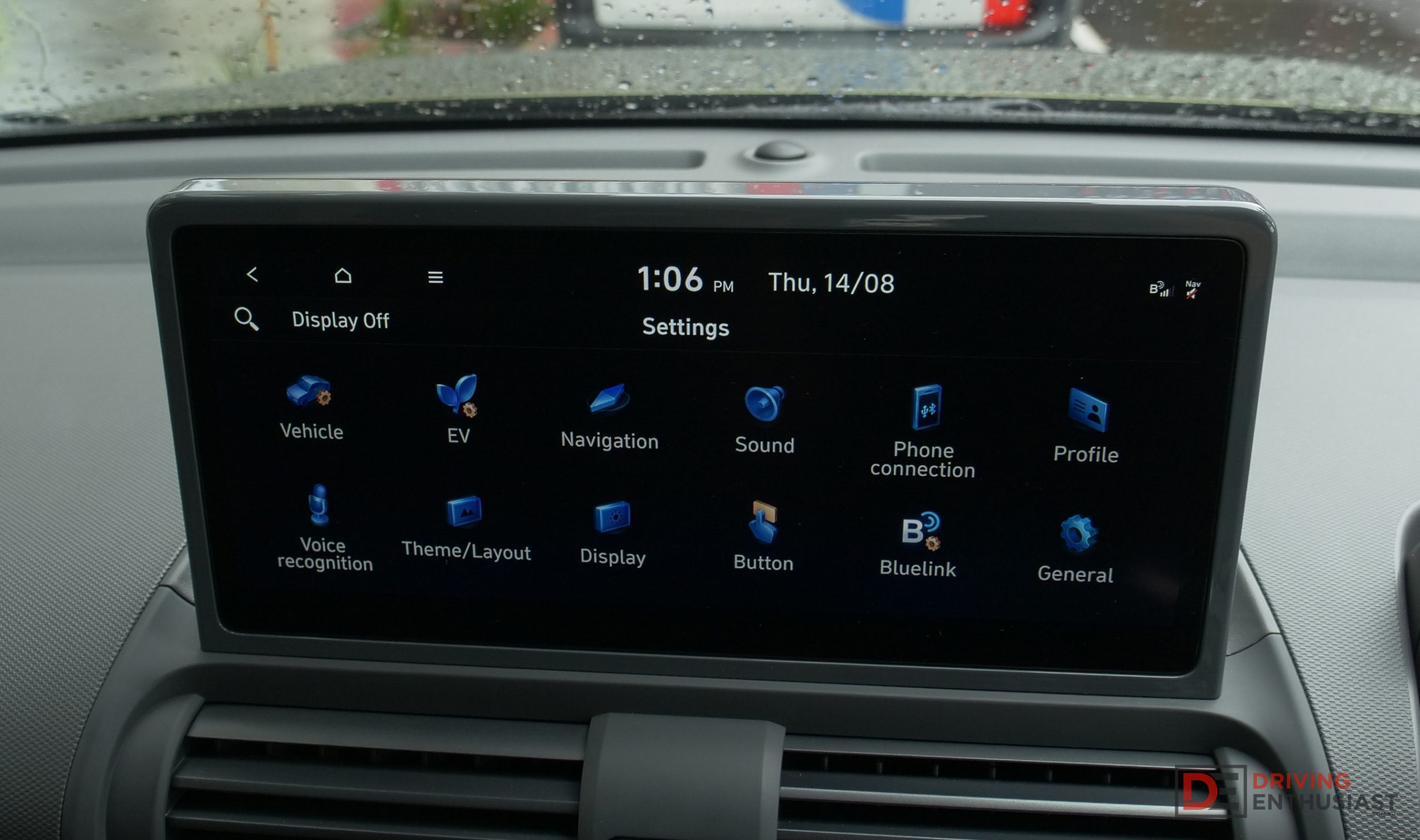
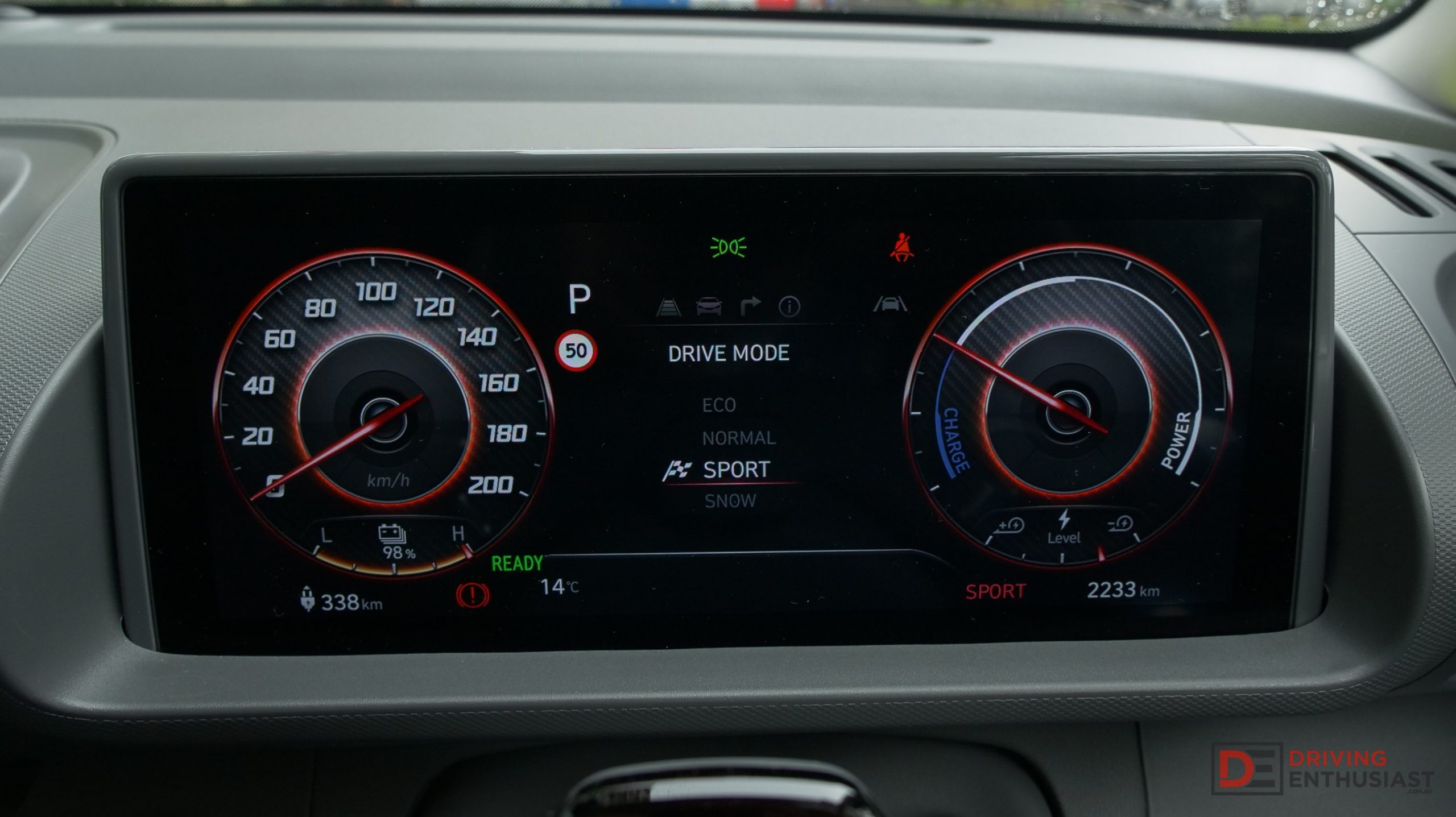
This is one area where the Inster Cross needs a solid showing to offset its price. It certainly does in terms of comfort equipment with heated and cooled seats. It also features twin 10.25-inch screens (infotainment and digital cluster), built-in navigation, Hyundai Bluelink connectivity, and handy features like Vehicle-to-Load (V2L) which lets you power appliances from the car.
On the safety side, Hyundai SmartSense is standard: AEB with pedestrian and cyclist detection, blind-spot monitoring, rear cross-traffic alert, adaptive cruise and the 360-degree camera on the Cross trim. Mercifully, the star/favourites button on the steering wheel makes defeating unwanted safety nannies easy.
There are a few misses (see cons) but fundamentally this car doesn’t feel compromised for its segment.
The interface uses physical buttons alongside the touch-screen, making operation intuitive, even for downsizers who may not want constant “swipe-button” fiddling. However, with no phone cooling, expect your phone to get roasted inside the ‘froggy’s mouth’.

5. Effortless and fun to drive
Minimal steering effort is required, so people with impaired mobility or motor skills will appreciate not having to wrestle the wheel. Lane keep assist works well at further reducing effort here. On the freeway, adaptive cruise control works brilliantly with the lane centring to make it feel more effortless than any small car has a right to.
Surpsingly for such a small car, it feels solid and unperturbed by bumps of any amplitude. This is no doubt attributable to the 1453 kerb weight. For comparison sake, a Kia Picanto Sport on the same platform weighs 976kg.
The 85kW motor is brisk off the line (more-so in normal and sport modes), making it nippy and fleet of foot when it comes to seizing peak hour traffic gaps. Regenerative braking via paddle shifters gives full one-pedal driving, with better refinement than expected. A naughty fact is that when you turn the stability control off, you can get the front tyres spinning in turns, which is yobbo behaviour but very fun. Combined with the tactile pleasure of the controls in the interior (especially the column-mounted shifter and stalks which are metallic and cool-to-the-touch),the Inster Cross offers a quality driving experience with excellent refinement.

2025 Hyundai Inster Cross: Cons
1. It’s too expensive
Hyundai always had modest volume expectations, with 384 units shifted since the car’s launch in May. The harsh reality is that China has an unassailable lead with economy of scale and production costs when it comes to compact EVs, which is why there are other small EVs in the mid-$20ks. But it’s only a problem if you look at it solely from a “metal for your money” proposition.
The BYD Atto 1 launches imminently so we can’t help but draw comparison – despite the different price points. Available data suggests the Inster Cross’s 360km range (WLTP) comfortably exceeds both versions of the Atto 1 (220-310km) and even its larger Atto 2 crossover stablemate (345km). It also exceeds their maximum 85kW maximum DC charge rate by a considerable margin.
To be fair to the Inster Cross, we were even able to get consumption down to 9kWh/100km when we really tried. Without having driven either of its arch rivals, it’s hard to compare the nitty gritty like dynamics and interior quality but they could make the value equation of the Hyundai harder to justify.

2. Performance tapers off – no N model
With a modest 85kW and 147Nm, the emphasis is more on immediacy of power off the line than outright shove. Hyundai quotes a 0-100km/h time of 10.6 seconds, and a top speed of 150km/h – we timed 0-100km/h in 10.10 seconds. Up to 110km/h, it offers decent and dependable response, tapering off noticeably thereafter. Some rivals will offer better outright performance, but it never feels deficient. An Inster N was quickly ruled out at the launch, but we would love one.
The discrepancy between its best city consumption and highway is actually good by EV standards – we saw between 9kWh/100km and 17.5. Most EVs struggle to get below 20 on the freeway so the theoretical delta between city and highway range is 70km or so. This means 250-280km between drinks at sustained freeway speeds, but hyper-miling might yield more.

3. 4-star ANCAP rating
The Hyundai Inster Cross achieved a four-star ANCAP safety rating. That’s good but not great for a $45 000 vehicle. Adult-occupant protection came in at 70 per cent, barely clearing the four-star cut-off. The offset frontal test exposed weaknesses in airbag deployment, with the driver’s head contacting the steering wheel, while the full-width frontal assessment showed marginal chest protection. In the side-impact test the driver’s door opened – a serious demerit – and far-side impact performance was rated weak, earning no points at all.
Those results point to structural and restraint limits rather than missing driver-assist tech, because its Safety Assist and Vulnerable Road User scores (69 and 70 per cent) were respectable.
Interestingly, the BYD Atto 1 received a full five-star rating in the Euro NCAP, which could translate to a similar result here.

4. Only four seats
This is only a deficiency if you routinely transport more than three others around, which doesn’t apply to the majority of new car buyers (except families). Having a front bench as well as a rear one is funky and fits well with the futuristic aesthetic.
Cleverly, up to 958mm of legroom can be yielded from the sliding seat, which means passengers up to 6’4” (193cm) or so should be fine. Don’t expect rear vents, fold down centre armrest or much in the way of storage in the back. There is a USB-C port for rear passengers though.
5. It misses its roof basket 🙁
Although there is a significant WLTP range penalty for the Inster Cross with the Roof Basket (293km), it looks so forlorn without it – like a bully stole it and now it can’t fetch coconuts. This makes us sad, as the roof basket is an adorable accessory which can carry up to 80kg and gives the Inster Cross a more adventurous persona.

2025 Hyundai Inster Cross: Verdict
It’s never going to be a true SUV/off-roader but it just sparks joy, which it needs to do in order to tug at the heartstrings as an emotional purchase, rather than a financially prudent one. On that front, we think it succeeds.
2025 Hyundai Inster Cross: Specifications
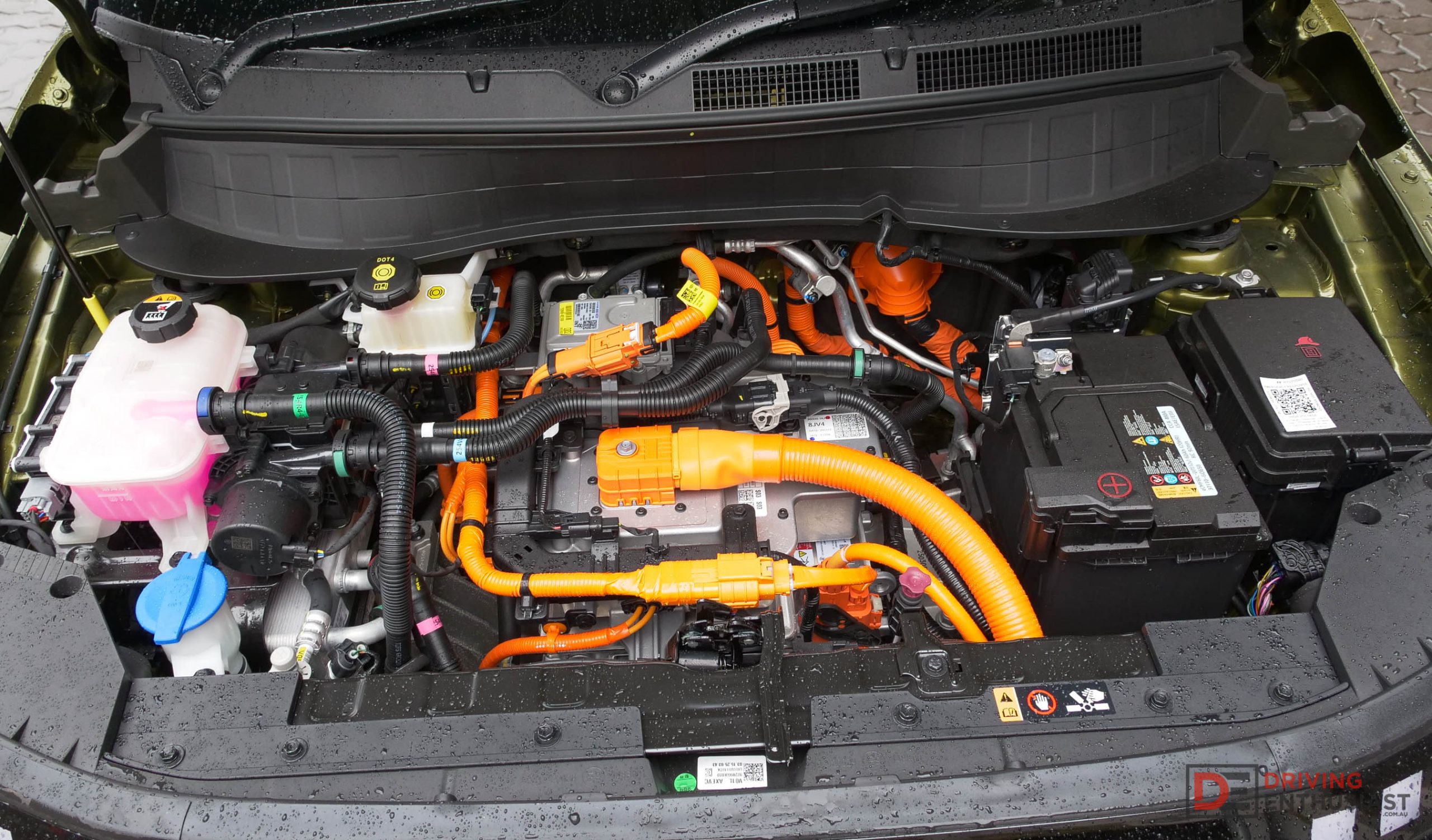
Electrical: 49kWh battery, 1x electric motor
Output: 84.5kW / 147Nm
Gearbox: Single-speed auto
Drive type: Front-wheel drive
Wheels: F & R: 17×6.5, 205/45
ANCAP: Four starsTare weight: 1453kg
Power-to-weight: 17.19:1 (kg:kW)
Official range (WLTP): 360km
Max charge rate AC/DC: 10.5kW/120kW
0-100km/h: 10.10 seconds*
Starting price: $45,000
*Figures as tested by Driving Enthusiast on the day. Manufacturers’ claims may be different
2025 Hyundai Inster Cross: Video