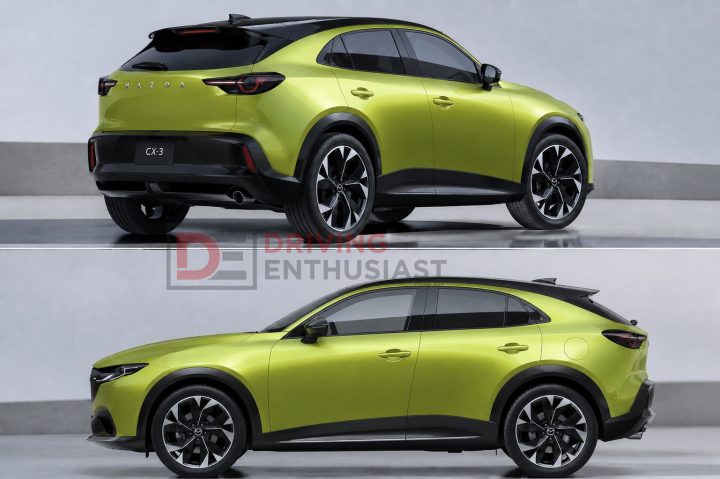
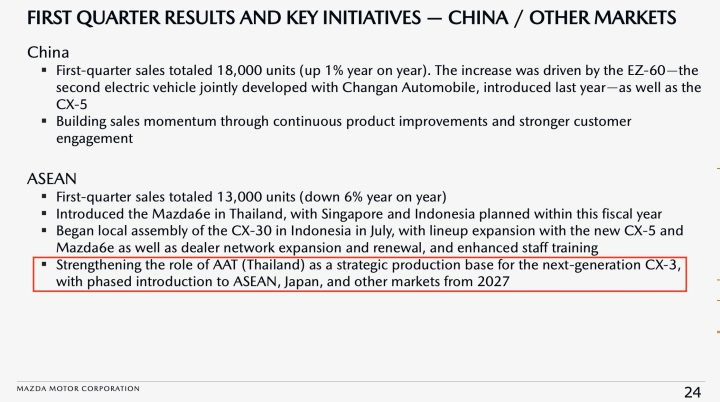
Mazda has officially confirmed a next-generation replacement for its highly successful CX-3 small SUV, with the all-new model scheduled to launch globally in 2027.
An announcement was made in the company’s first quarter financial results presentation, securing the future of a nameplate that has remained largely unchanged since its introduction in 2014. It also dispels industry speculation that the vehicle would be permanently retired following the cessation of its Japanese production earlier in 2026.
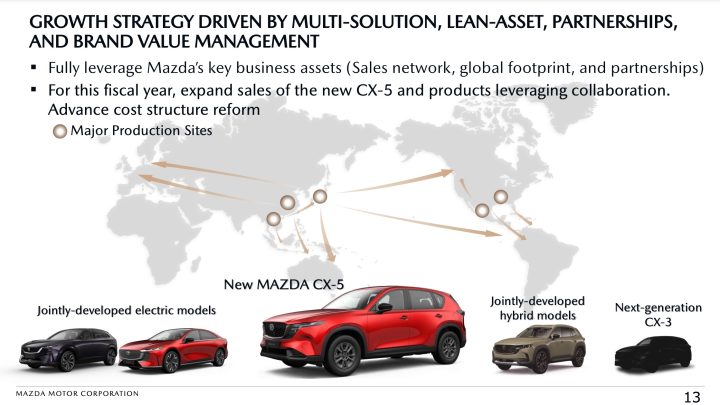
Production for the 2027 model will take place in Thailand, anchoring the facility as a strategic export base for the Australian and broader South-East Asian markets. While Mazda accompanied the announcement with an official teaser silhouette, international media noted the brand’s graphic department simply recycled the outline of a previous-generation CX-5.
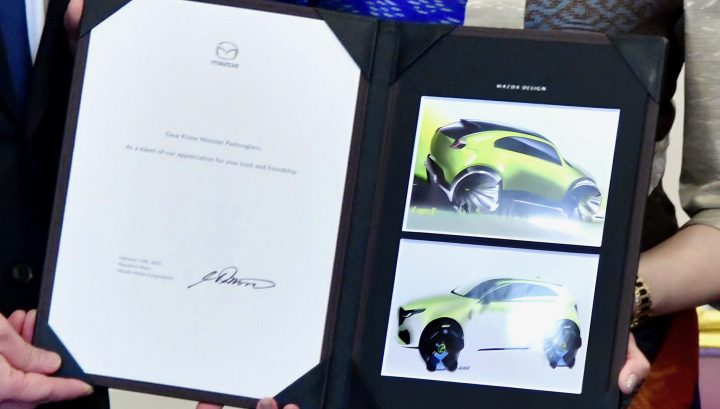
Some sketches were revealed in Thailand in 2025 (above), potentially previewing the new model. We’ve extended on these sketches with AI to see what a production version could look like, purely for visualisation purposes. The actual production version could look totally different, however, we’ve included likely details such as ‘MAZDA’ script across the back, black wheel arches and skirting, and stretched taillights, as per the latest CX-5.
Technical details regarding the new architecture are emerging. The next-generation CX-3 will retain a dedicated Mazda platform rather than adopting hardware from a joint-venture partner. Crucially for the Australian market, the new model will introduce hybrid powertrain options to the range.
This bridges a significant technology gap over the outgoing model’s naturally aspirated 2.0-litre petrol engine, which produces 110kW of power and 195Nm of torque while consuming 6.3L/100km on the combined cycle. Reports also indicate the manufacturer may retain a manual transmission option for entry-level, non-hybrid variants.
The arrival of a completely redesigned CX-3 is critical for Mazda Australia’s sales volume. Despite riding on a 12-year-old platform, the current CX-3 remains a dominant force in the local light SUV segment, outselling newer competitors like the Toyota Yaris Cross, Hyundai Venue, and Kia Stonic.
However, its outright market share has begun to erode as buyers migrate toward larger, cheaper, and electrified Chinese alternatives such as the GWM Haval Jolion and Chery Tiggo 4 Pro.