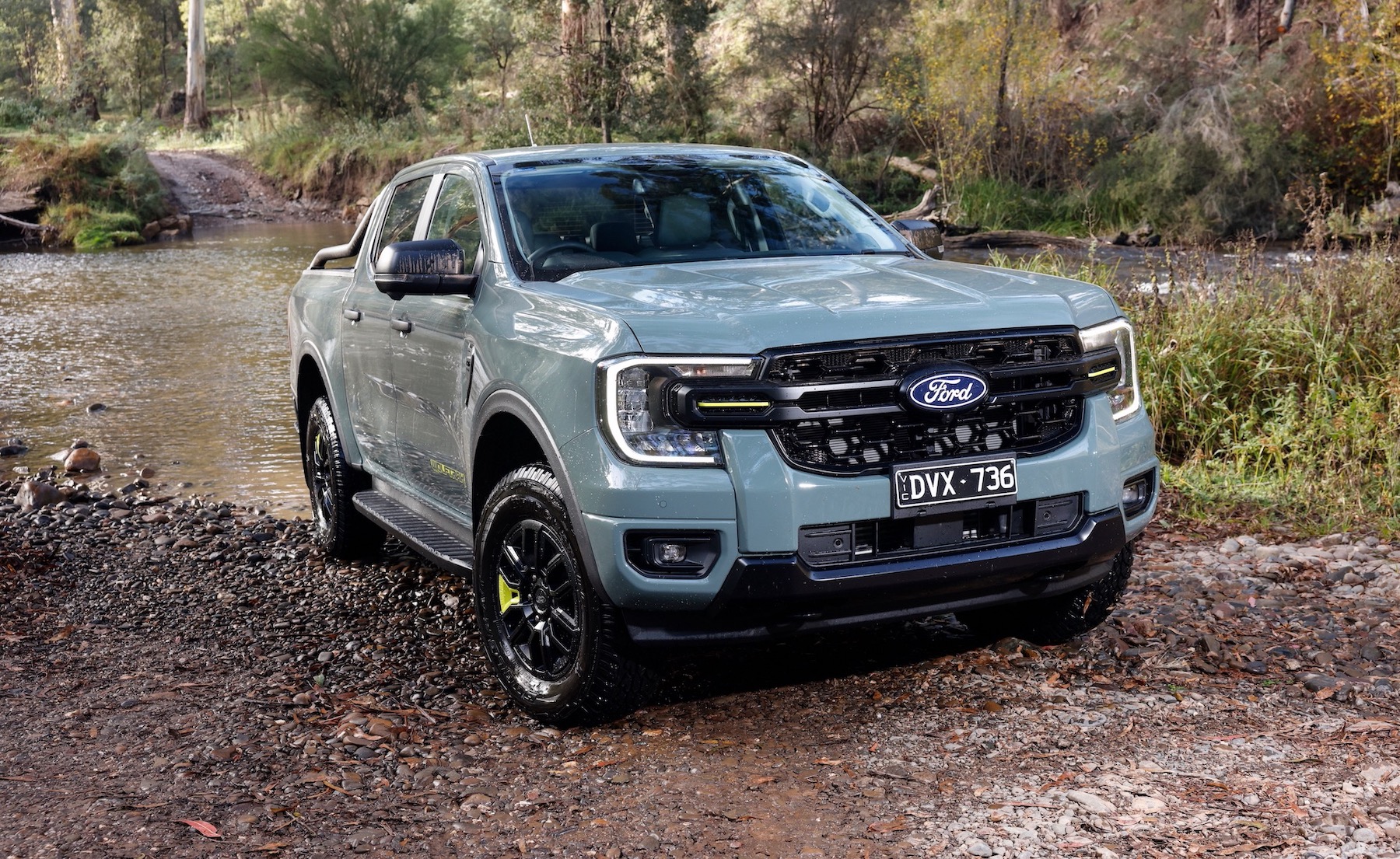
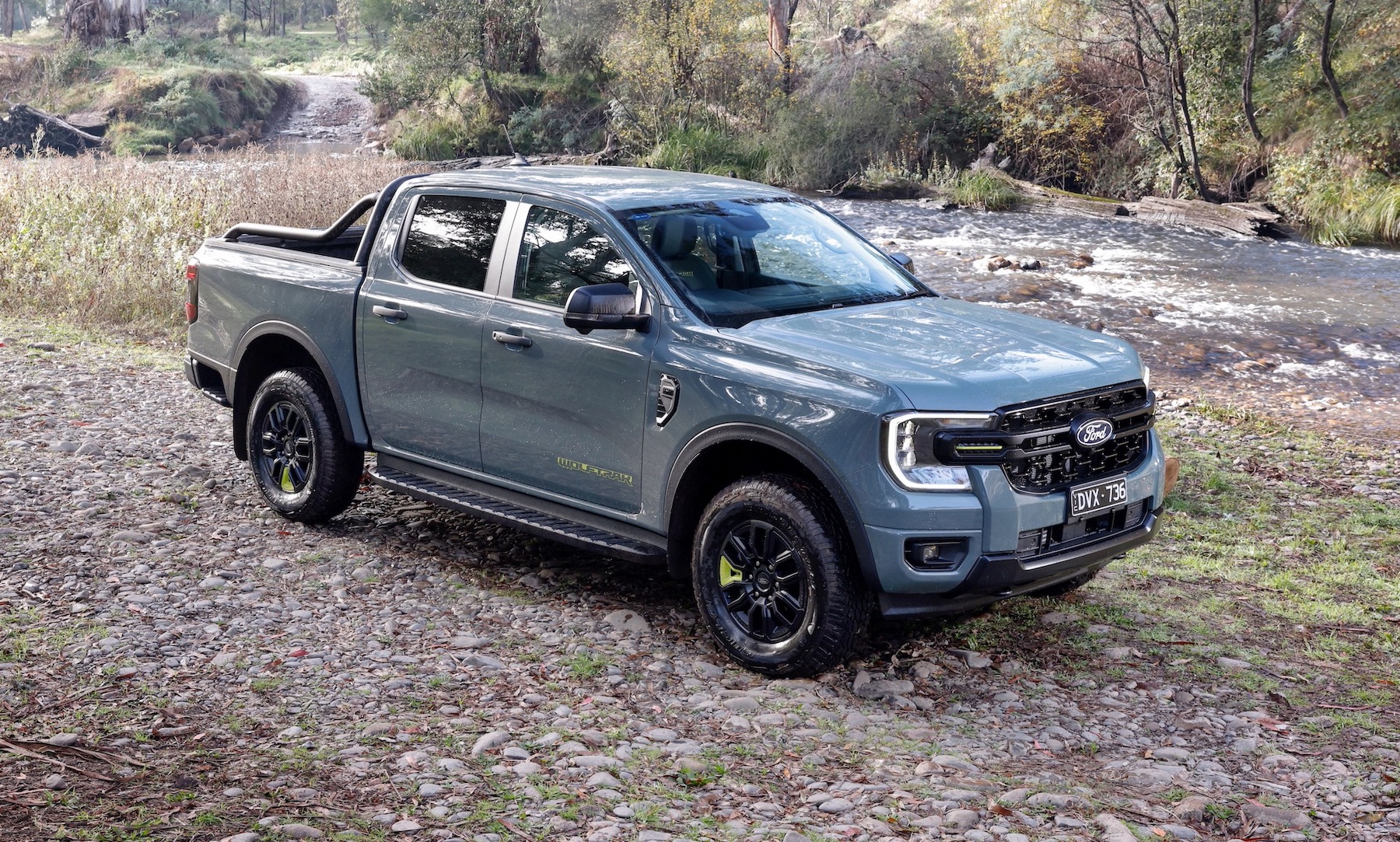
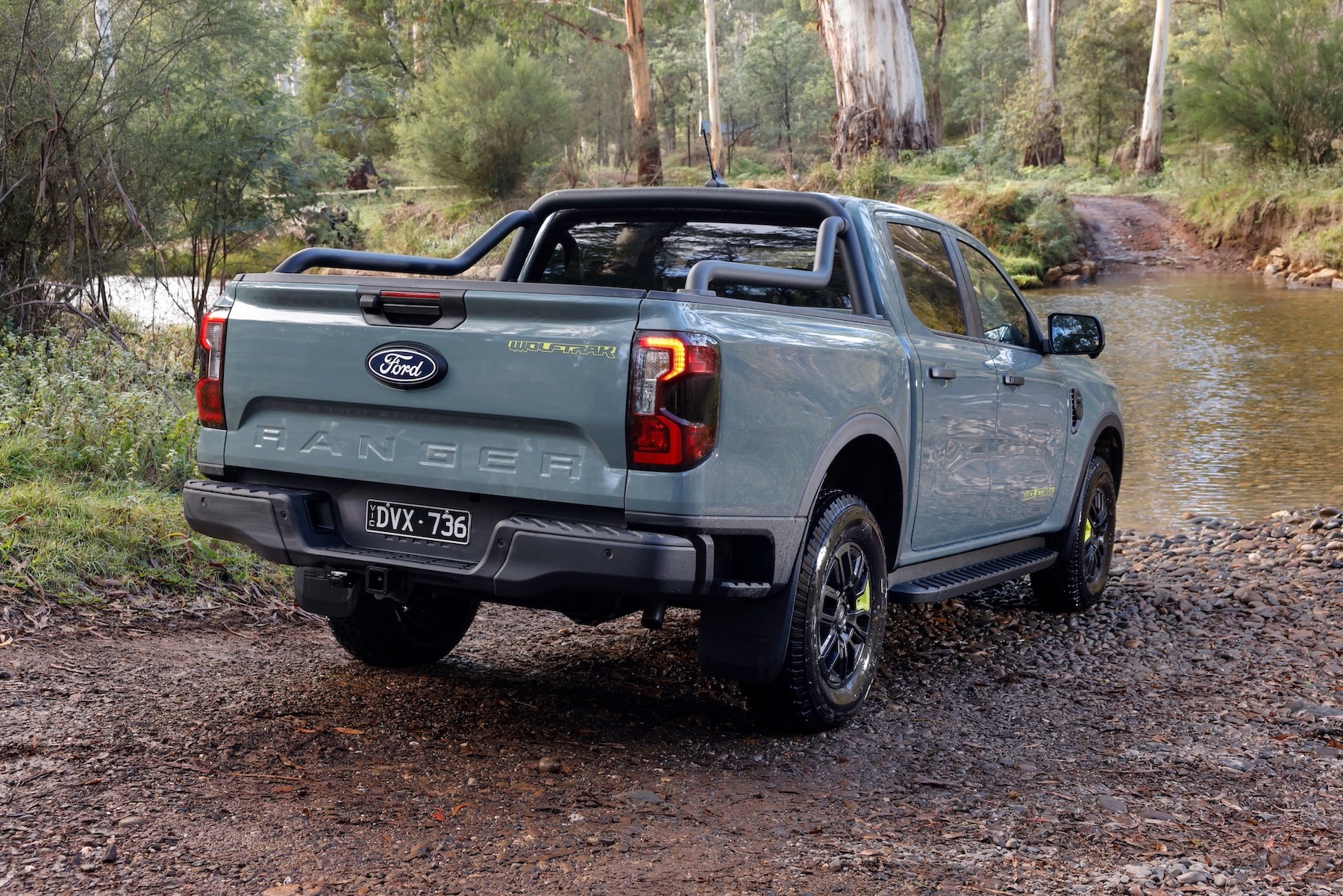
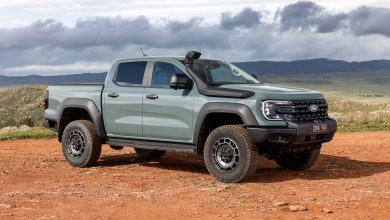
The 2026 Ford Ranger Wolftrak arrives as a more lifestyle-focused addition to Australia’s best-selling ute lineup, slotting between the XLT and Wildtrak while leaning harder into rugged visual appeal and recreational touring capability than those two.
Unlike many competitors developed primarily for global markets and then adapted locally, the Ranger continues to benefit from extensive Australian engineering input. That remains one of its key strengths; it has been designed, tested, and tuned in the same harsh conditions buyers are likely to throw at it, whether that’s corrugated country roads, long-distance highway towing, or everyday suburban duties.

2026 Ford Ranger Wolftrak: Specifications
Engine: 3.0-litre turbo-diesel V6
Output: 184kW@3250rpm / 600Nm@1750-2250rpm
Gearbox: 10-speed auto
Drive type: RWD/4WD
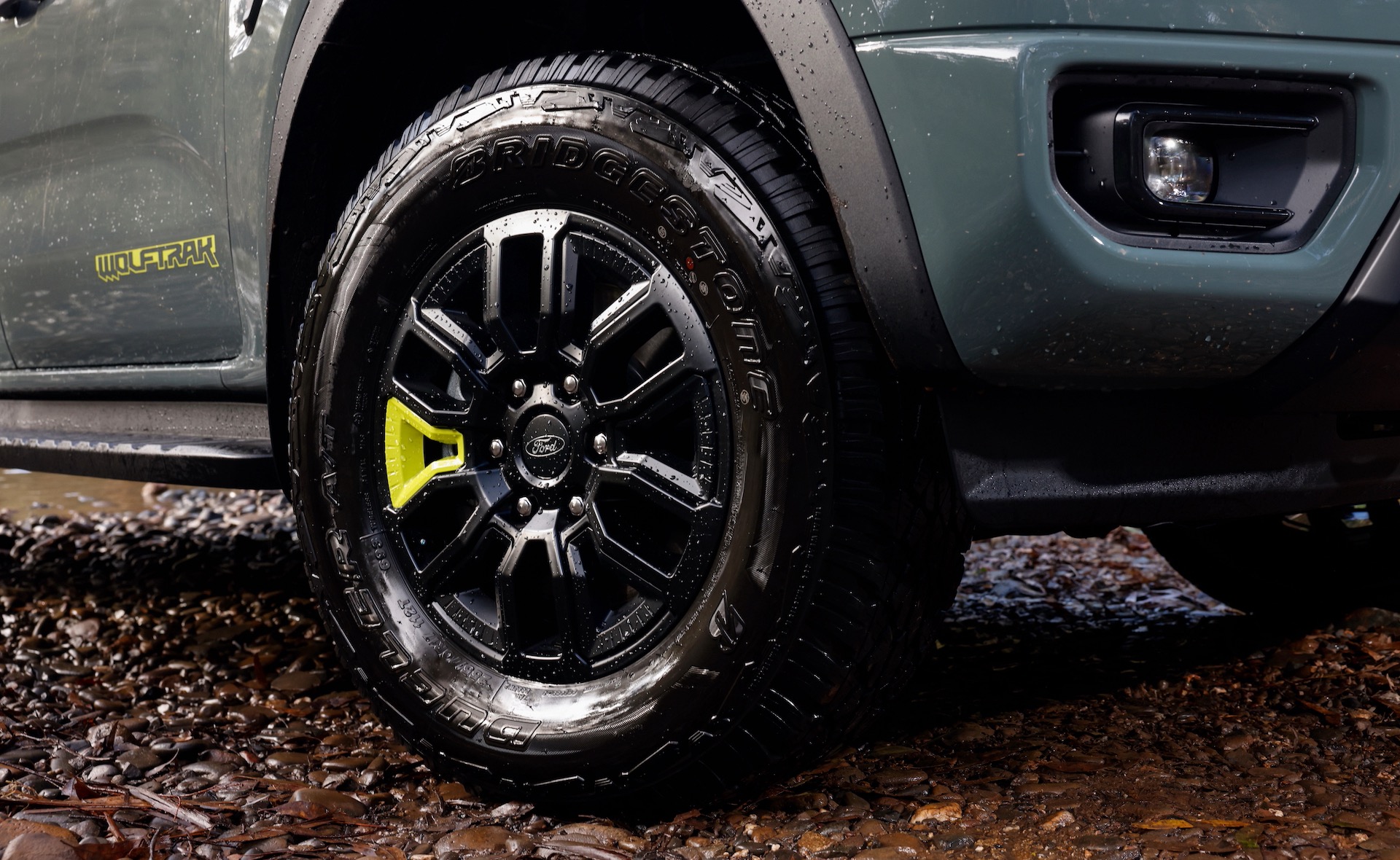
Wheels: F & R: 17×7.5, 255/70
Kerb weight: 2345kg
Official consumption: 8.3L/100km
0-100km/h (tested): 8.97 seconds
Starting price: $70,990
2026 Ford Ranger Wolftrak: How much does it cost?
Prices start from $70,990, excluding on-road costs. However, when Ford initially announced the updated range, prices for this same Wolftrak started from $69,990. So that’s jumped $1000 in just a few months. Is this a sign of things to come as Ford negotiates the upcoming NVES regulations? Will prices just keep rising? Time will tell.
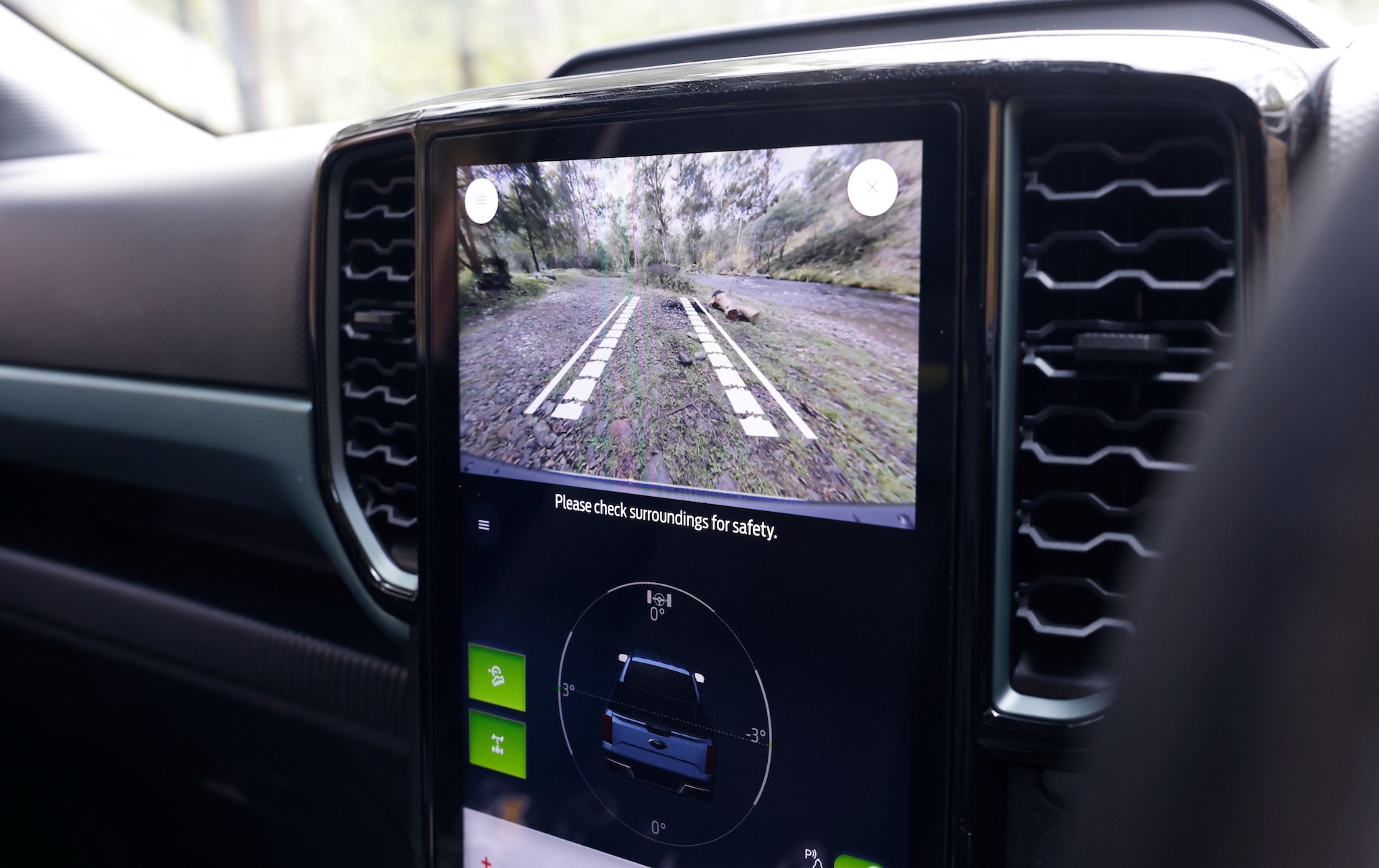
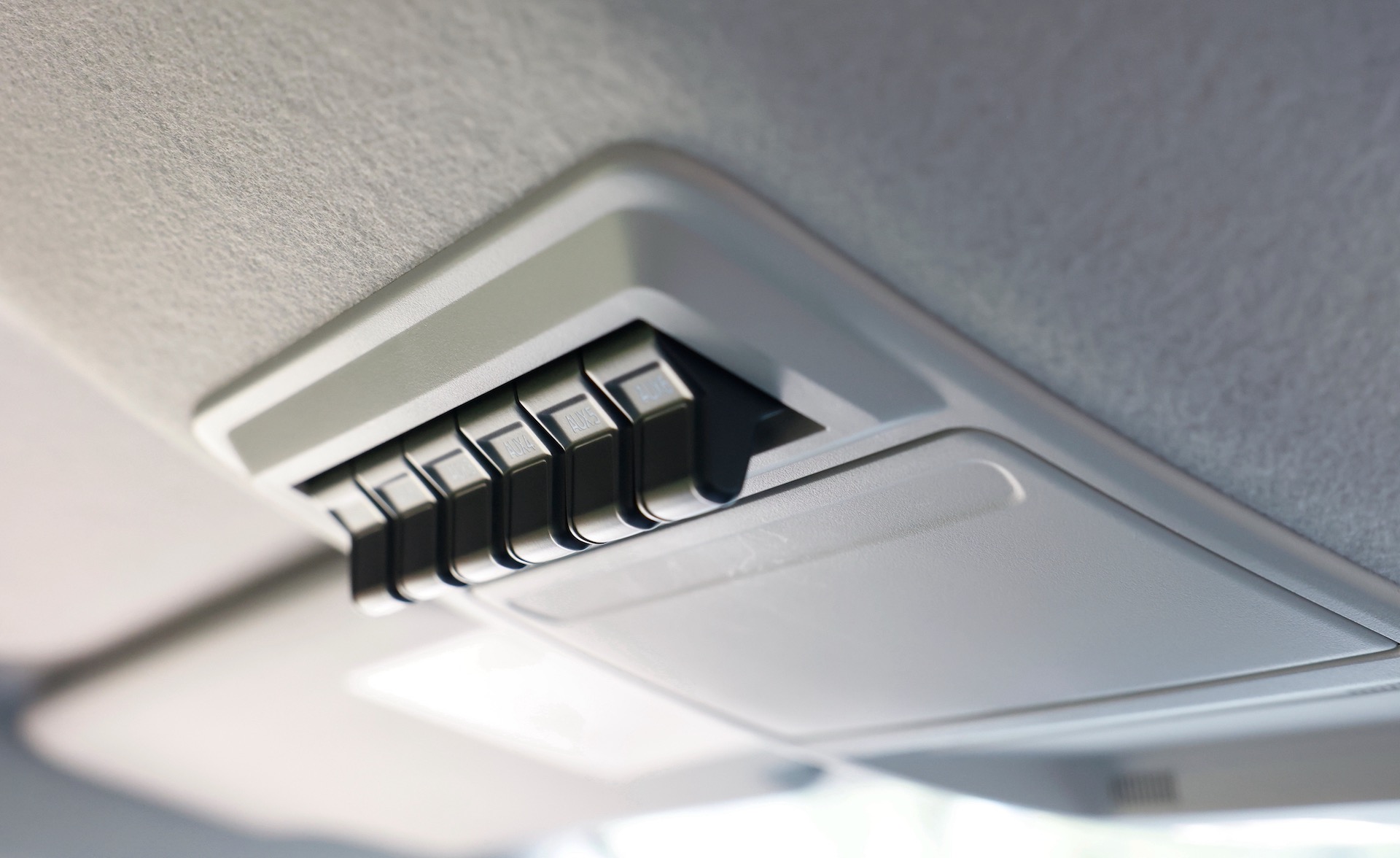
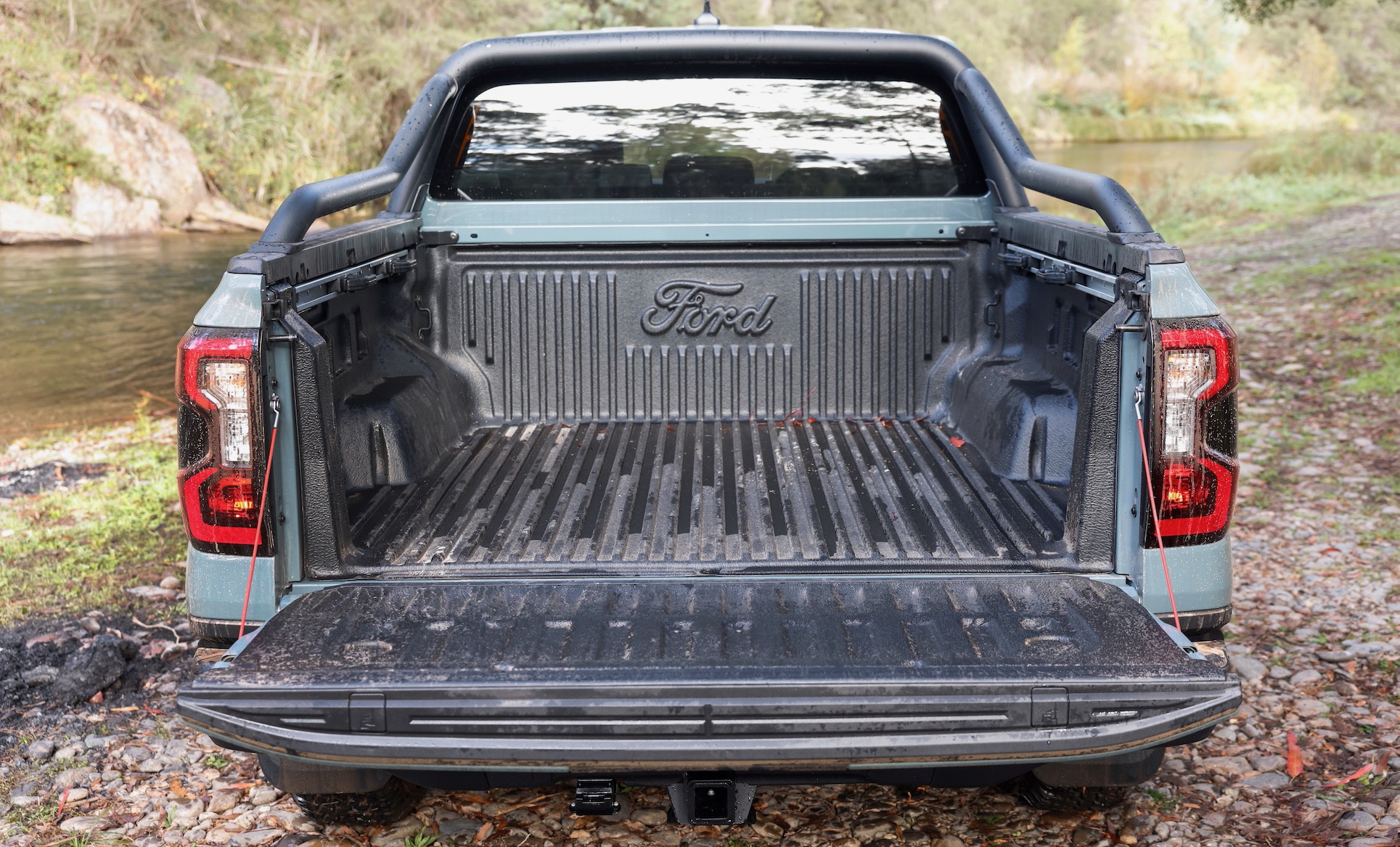
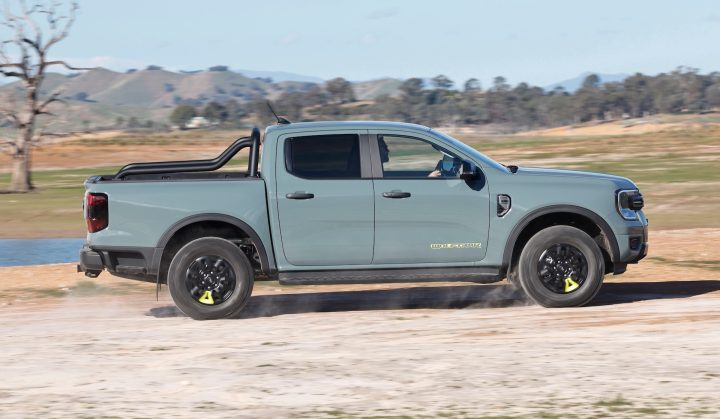
For the Wolftrak specifically, highlight features include the V6 as standard, a range of ‘Zest’ green/yellow highlights inside and out, the Terrain Management system, Cargo Management System (slide-rail tie points on the sidewall), front tow hooks, rubber floor mats, overhead switch bank, and Pro-Trailer Backup Assist with surround-view cameras.

2026 Ford Ranger Wolftrak: Interior & packaging
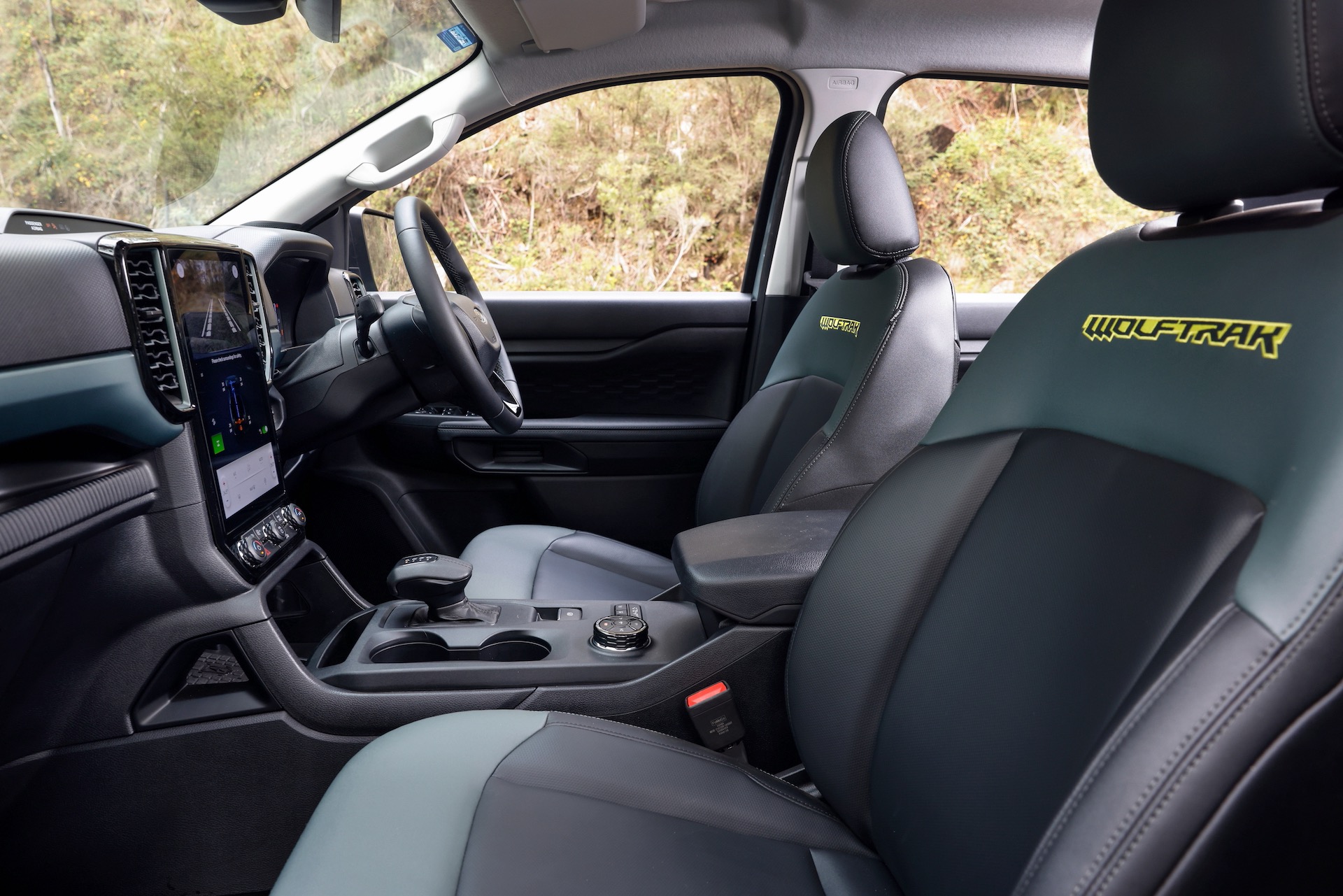
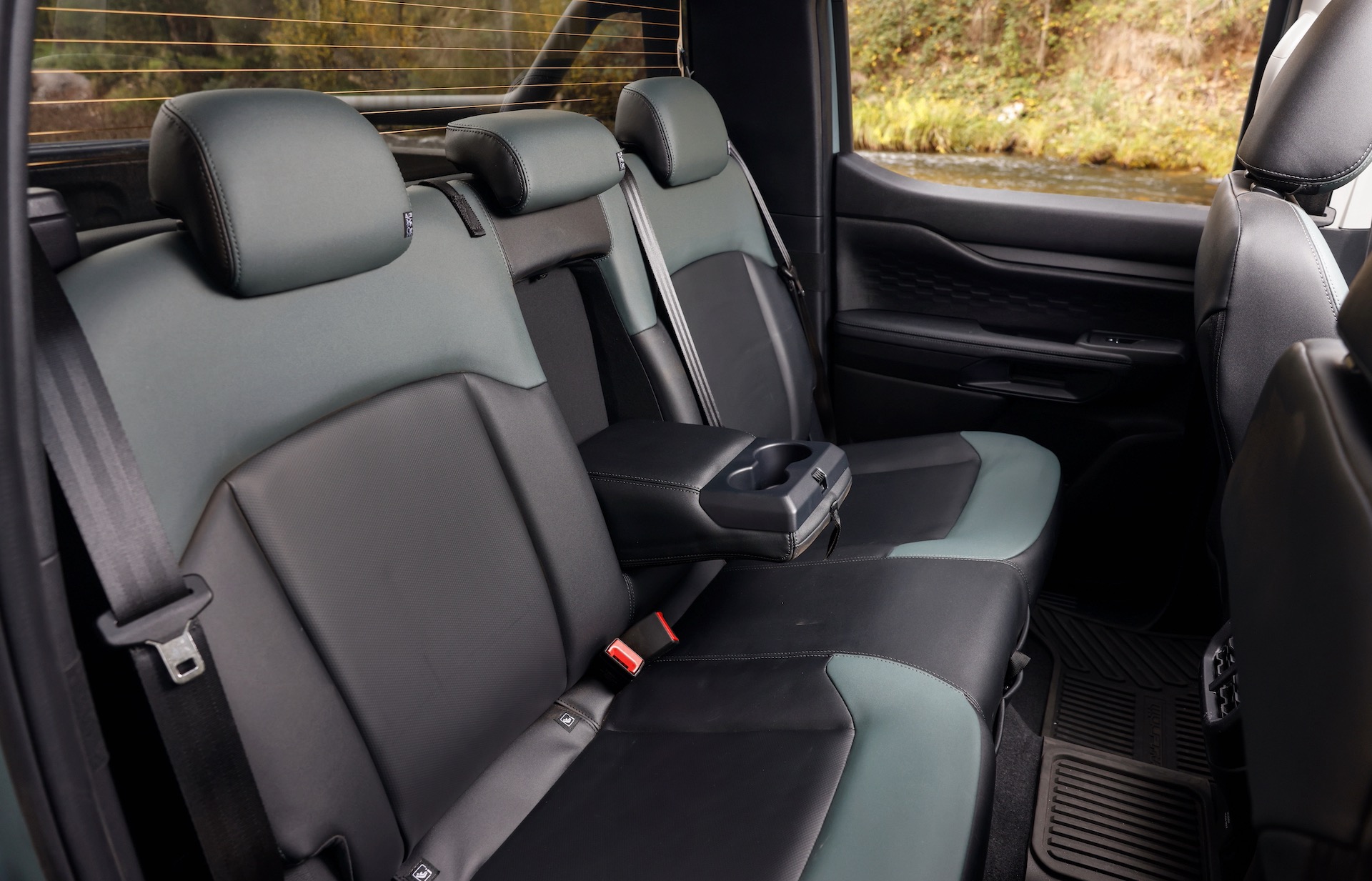
Inside, the Wolftrak blends practicality with a few sporty touches. The green/yellow Zest accents and two-tone green-black seats in the cabin help lift the otherwise familiar Ranger interior, while the embossed Wolftrak vinyl seats reinforce the variant’s rugged positioning.
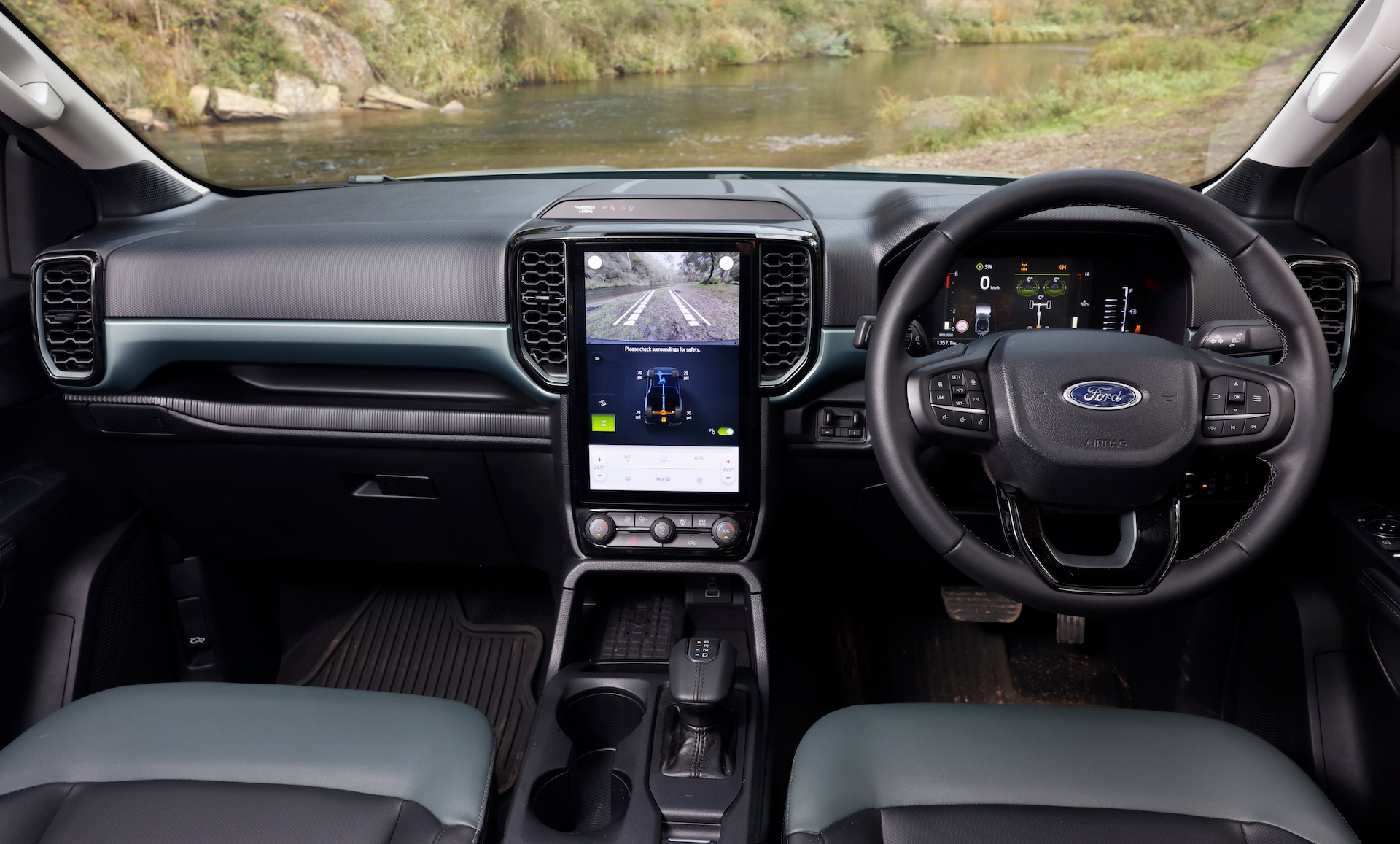
The driving position remains excellent. Like the wider Ranger lineup, it feels more SUV-like than traditional commercial ute, with a relatively low-set seating position yet with good forward visibility thanks to a square and uncluttered dashboard. Long-distance comfort is also strong, helped by supportive seats and a cabin layout that feels ergonomic thanks to plenty of physical buttons and controls.

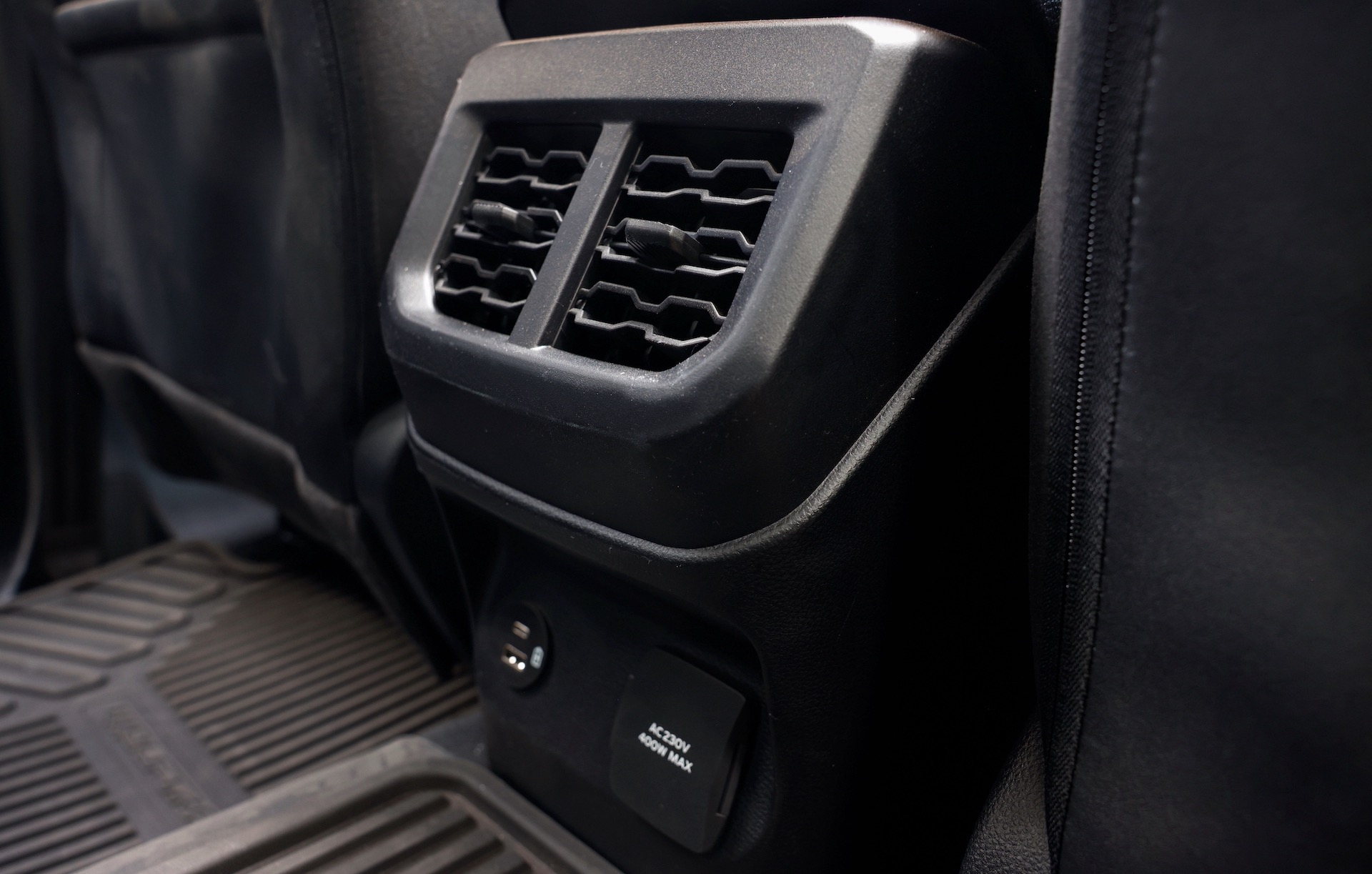
Rear-seat accommodation is still decent, though the segment has moved on quickly. Rivals such as the MG U9 and Foton Tunland now offer noticeably more outright rear cabin space if that’s what you’re after. Even so, the Ranger continues to cover the essentials well, with twin rear air vents, charging ports, and a fold-down centre armrest with cup holders helping improve passenger comfort.
There are some reminders that the Wolftrak is based on a mid-spec variant rather than the flagship grades. Certain materials around the cabin, including sections of the console and plastic centre armrest, feel less premium than what you’ll find in a Wildtrak or Platinum, or even some of the much cheaper rivals from China. At more than $70K, some buyers will also question the omission of features such as power-adjustable front seats, head-up display, and even a tonneau cover, particularly given the increasingly feature-packed competition.
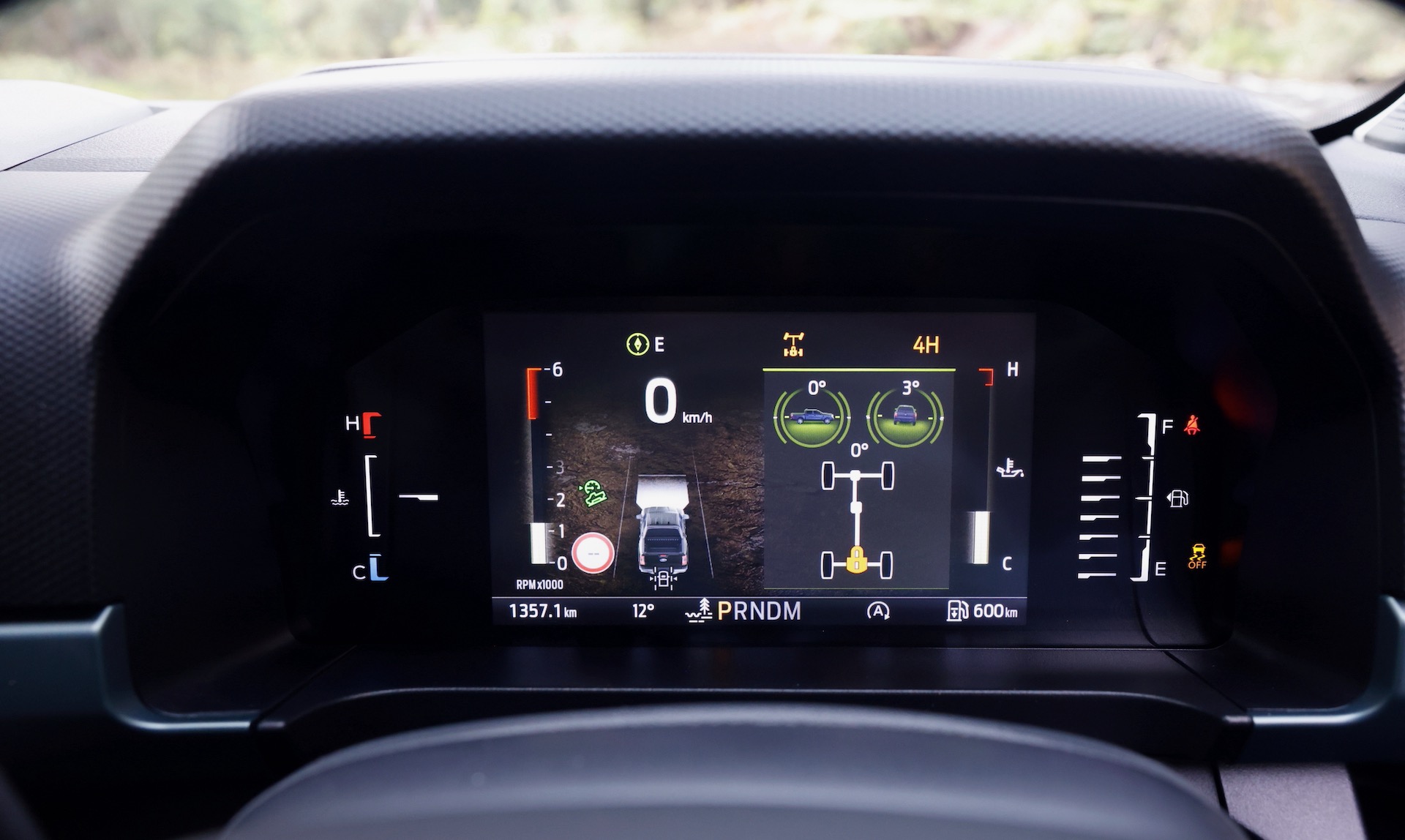
The digital instrument graphics are beginning to show their age as well. The blue-heavy themes and boxy presentation don’t feel quite as modern as some newer rivals which offer more colourful and sophisticated animations and display themes.

2026 Ford Ranger Wolftrak: Powertrain & handling
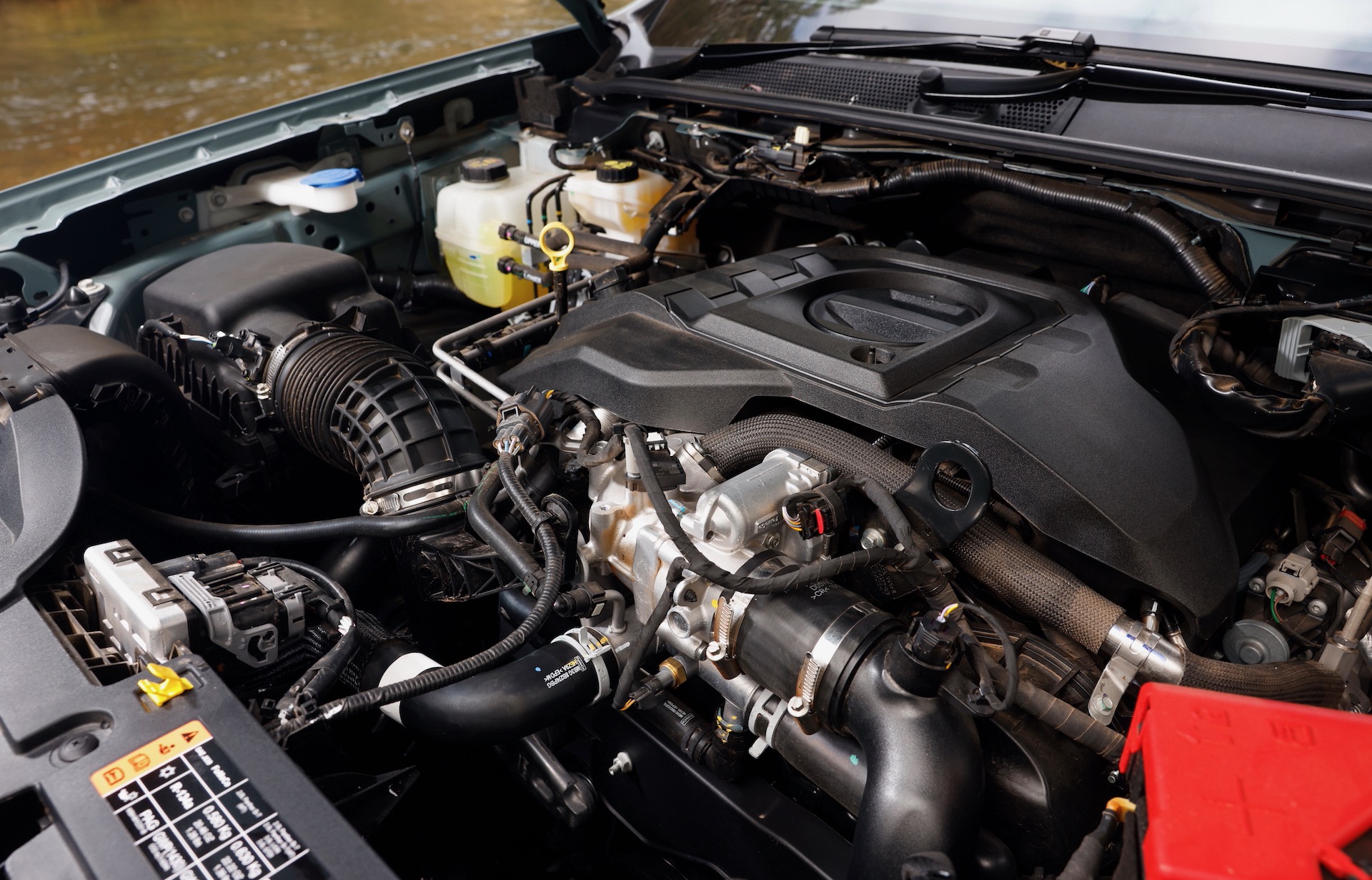
Under the bonnet sits Ford’s well-known 3.0-litre V6 turbo-diesel, producing 184kW and 600Nm. Nothing has changed here, offering an official average consumption rate of 8.3L/100km. With an 80L tank filled right up, it translates to a theoretical average range of 964km, although, expect slightly less than that in the real world. It’s an engine that suits a dual-cab ute extremely well.
Rather than feeling aggressively sporty, the V6 delivers its grunt in a smooth, effortless manner. There’s plenty of low-down torque available, with the peak 600Nm reached from just 1750rpm, and it rarely feels stressed regardless of load or terrain. Performance is respectable, with 0-100km/h clocked in 8.97 seconds (with the air-con on), according to our Vbox. That means it is quicker than all other diesel four-cylinder utes currently on sale, especially when comparing trim-for-trim equivalent.
Matched with the 10-speed automatic, it does hunt around a lot. Actually, it’s not really ‘hunting’ around, it simply changes gear a lot. If you could close your ears you would experience a seamless wave of progression. But when you listen to the engine, you can hear a lot of gear changing going on. In other words, it’s not a bad thing as more ratios means more availability for the ideal speed to match the demands. However, this could put additional stress and heat on the powertrain when towing or carrying heavy loads.
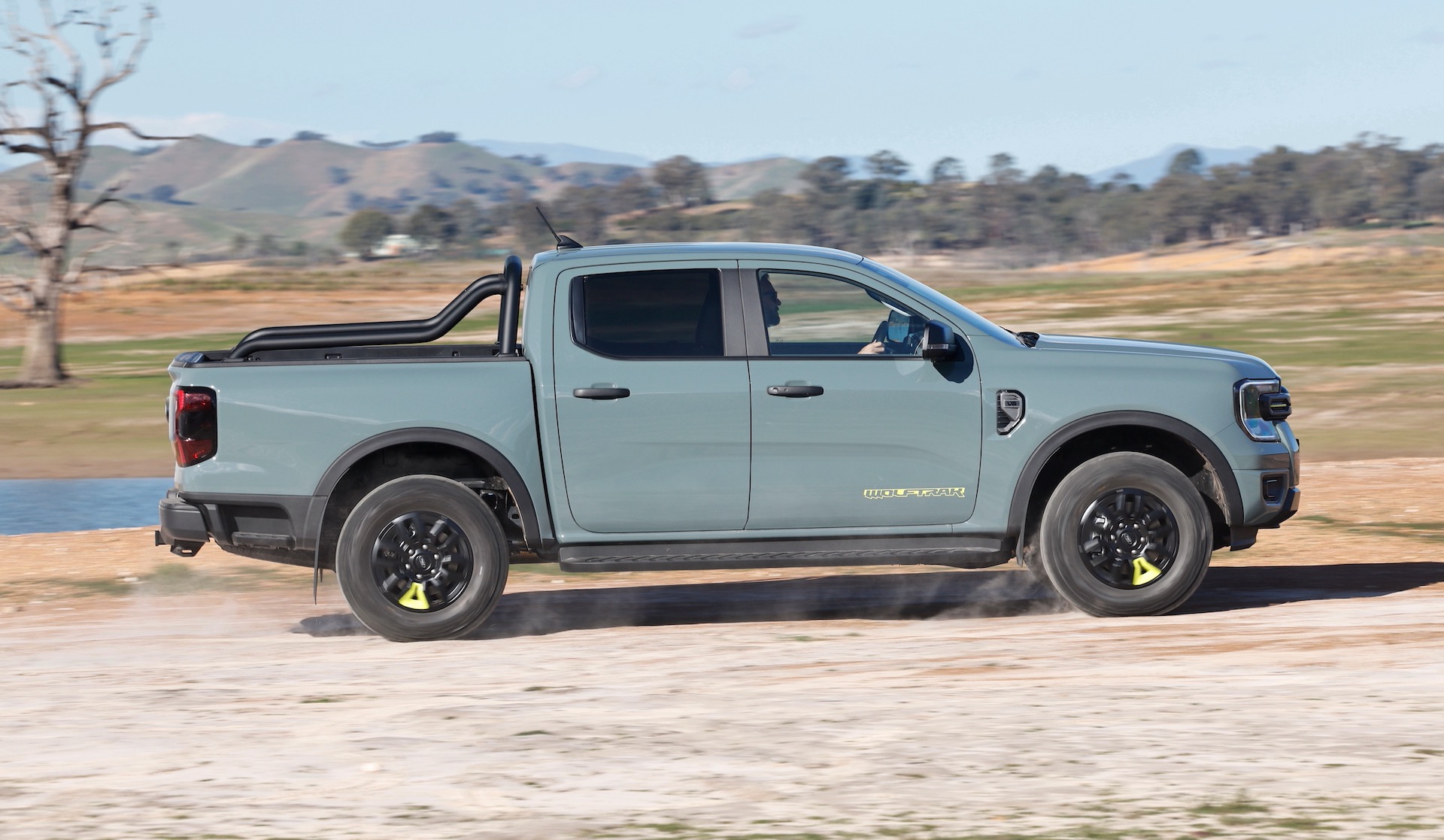
The Wolftrak’s handling package is impressive for the segment. Even fitted with aggressive all-terrain tyres measuring 255/70 (tall sidewalls), it maintains good composure and predictable road manners. Steering is well weighted, body control is tidy, and it feels more planted than many traditional ladder-frame utes.
Ford’s local suspension tuning deserves credit here. The ride manages to strike a pleasant balance between capability and comfort, making it suitable for both recreational use and daily driving. It’s a reminder of that Australian development input.

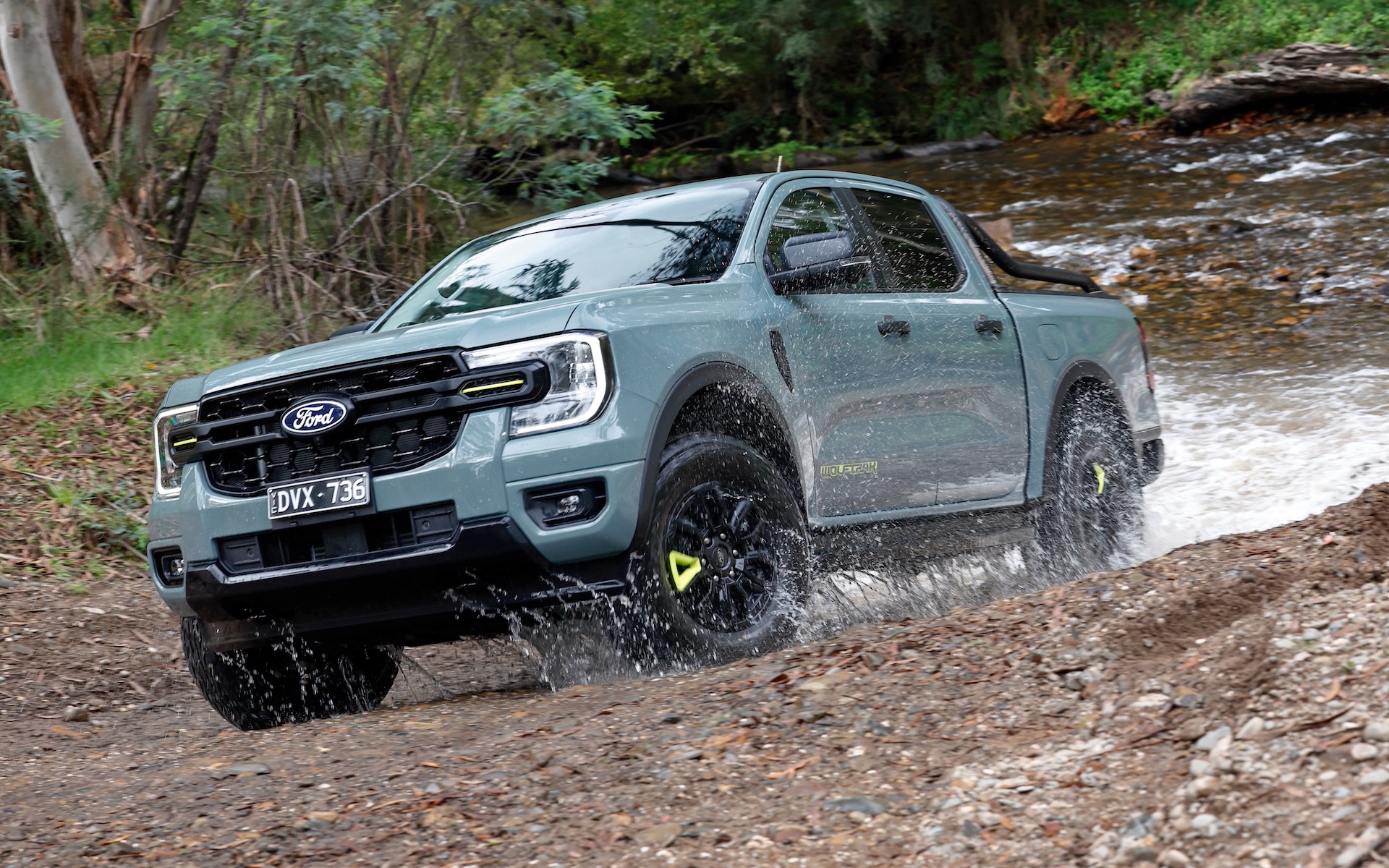
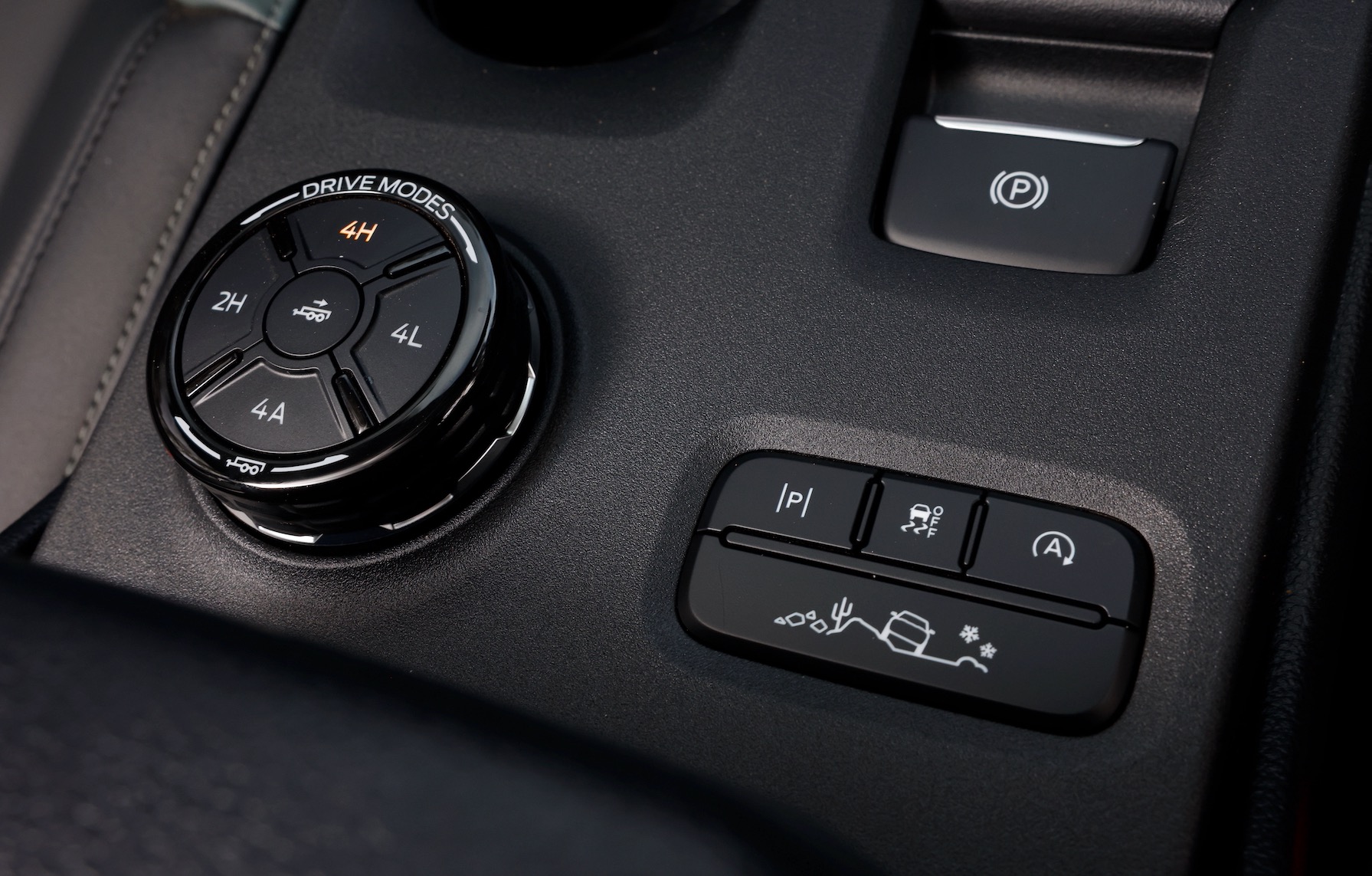
Off-road capability is backed by a full-time 4WD system (2H, 4A, 4H, 4L), with selectable terrain modes, the tow hooks, and a locking rear differential. Ground clearance is stamped at 234mm, which is respectable but not class-leading, with a 30-degree approach and 23-degree departure angle fitting in well with the class standards. Again, stopping short of setting any benchmarks.
In terms of towing and load capacities, the Wolftrak offers a braked towing rating of 3500kg, with a 6400kg GCM and 3350kg GVM. Basically, it means if you hook up a 3500kg trailer, you’ll have 555kg to play with in terms of loading passengers and any cargo. It runs into the GCM first, with 655kg leftover if you only go off the GVM; 3350kg-350kg download-2345kg kerb weight. These figures are good for the class, with many rivals only offering 400kg or much less in some cases, for any passengers and cargo when towing at max load.

2026 Ford Ranger Wolftrak: First impressions
The Ranger Wolftrak succeeds in delivering a tougher, more adventurous take on the already highly capable Ranger formula. The locally developed chassis, smooth V6 diesel, and polished road manners continue to make it one of the better-driving utes in the segment, while the styling tweaks help it stand out visually without going over the top.
Its biggest challenge comes down to value. At more than $70,000, buyers may begin cross-shopping newer rivals that offer more outright equipment and power, superior efficiency, and additional cabin luxury for less money. Some of the interior materials and missing convenience features also feel difficult to ignore at this price point. Still, if you value strong real-world local engineering, healthy driving dynamics (for the class), and a genuinely practical interior, the Wolftrak is a compelling option worth checking out.
2026 Ford Ranger Wolftrak: Video