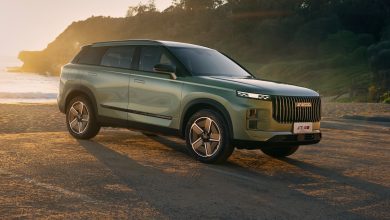
The influx of new brands into Australia shows no signs of slowing, and with it comes an increasing number of electrified SUVs promising big value and even bigger travel range claims. Introducing the Jaecoo J7 SHS-P, a plug-in hybrid mid-size SUV that aims to blend modern design, long-distance capability and sharp pricing into one compelling package.
Sitting as the more affordable entry point into the J7 lineup, the Track variant brings the brand’s ‘Super Hybrid System’ to a wider audience. On paper, it ticks plenty of boxes; over 1000km of combined range, 100km of electric range, and a feature list that looks ultra-competitive for the money.
But as we’ve seen with many newcomers in this space, the real test lies beyond the spec sheet. Does the J7 SHS-P Track genuinely deliver a polished, well-tested, and well-rounded experience? Or does its value-driven approach come with compromises that are harder to overlook once you start living with it?
2026 Jaecoo J7 SHS Track: Specifications
Engine: 1.5-litre turbo-petrol four-cylinder plug-in hybrid
Electrical: 18.4kWh battery, electric motor
Output: 150kW / 310Nm
Gearbox: Dedicated hybrid auto
Drive type: Front-wheel drive
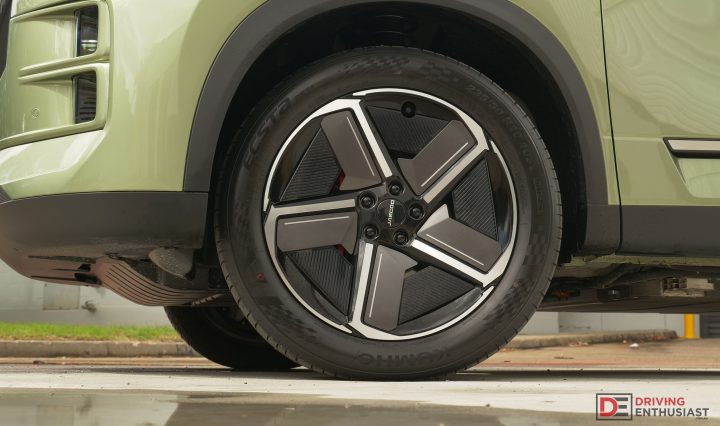
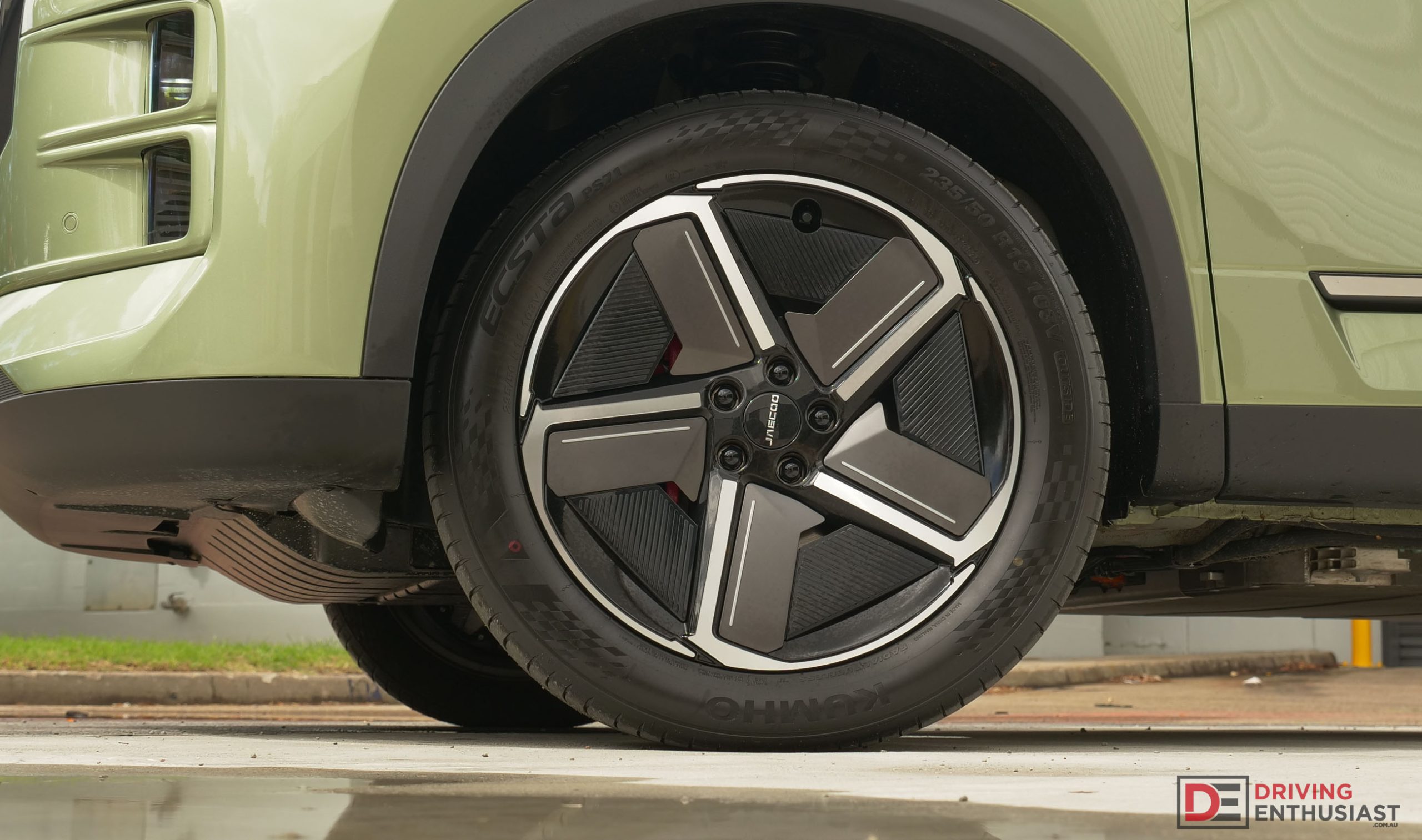
Wheels: F & R: 19×7.5, 235/50
ANCAP: Five stars
Tare weight: 1794kg
Power-to-weight: 11.96:1 (kg:kW)
Official consumption: 1.3L/100kmOur consumption: 5.8L/100km
Fuel tank/Fuel type: 60L/91 RON
Power efficiency: 115.38kW:L/100km
0-60km/h: 3.58 seconds*
0-100km/h: 7.22 seconds*
60-110km/h: 4.62 seconds*
1/4 mile: 15.21 seconds at 155.6km/h*
Max acceleration: 0.895g*
100-0km/h braking: 39.62m in 3.08s*
Max deceleration: -1.295g*
Starting price: $39,990
*Figures as tested by Driving Enthusiast on the day. Manufacturers’ claims may be different
2026 Jaecoo J7 SHS Track: How much does it cost?
The Jaecoo J7 SHS Track lands in Australia with a sharp drive-away price of $39,990, positioning it aggressively within the growing mid-size SUV PHEV segment. That undercuts many established plug-in hybrid rivals by a long shot, including the likes of the Mitsubishi Outlander PHEV starting from $58,990, and Mazda CX-60 P50e from $63,790 – both excluding on-road costs.
The price also aligns narrowly with other new contenders such as the BYD Sealion 6 (from $42,990 before on-road costs), GWM Haval H6 PHEV (from $40,990 drive-away), Chery Tiggo 7 Super Hybrid (from $39,990 drive-away), MG HS Hybrid+ (from $40,990 excluding on-roads), the Geely Starray (from $37,490 excluding on-roads), and the Leapmotor C10 (from $43,888 excluding on-roads).
Where Jaecoo strengthens its case further is in ownership. The J7 is backed by an incredible 8-year, unlimited kilometre warranty, and offers 8 years of capped-price servicing, and 8 years of roadside assistance (if serviced at a Jaecoo centre). Services are required every 12 months or 15,000km, totalling a reasonable $3372 for the SHS Track. The first three services are $299, then the rest are $499, $499, $399, $299, and $779.
There’s also an industry-leading ‘Future Price Promise’ program that offers a guaranteed minimum resale value – a convincing approach that, in one way, directly tackles customer confidence for buyers wary of newer brands. Though, there is no percentage or formula publicly stated on the Jaecoo website. So, it’s worth questioning the dealer before signing the dotted line.
2026 Jaecoo J7 SHS Track: Interior & packaging
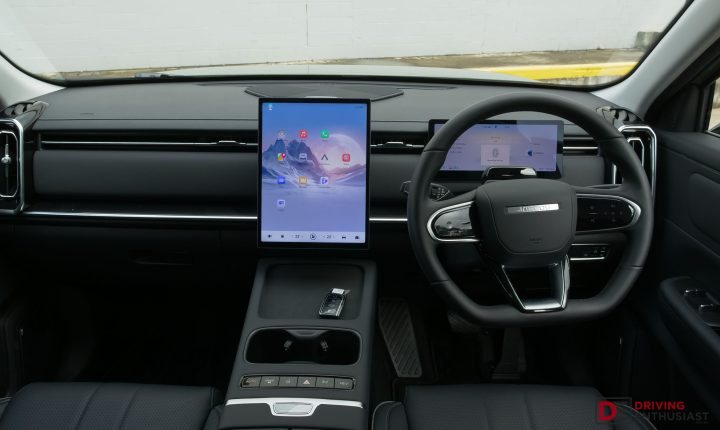
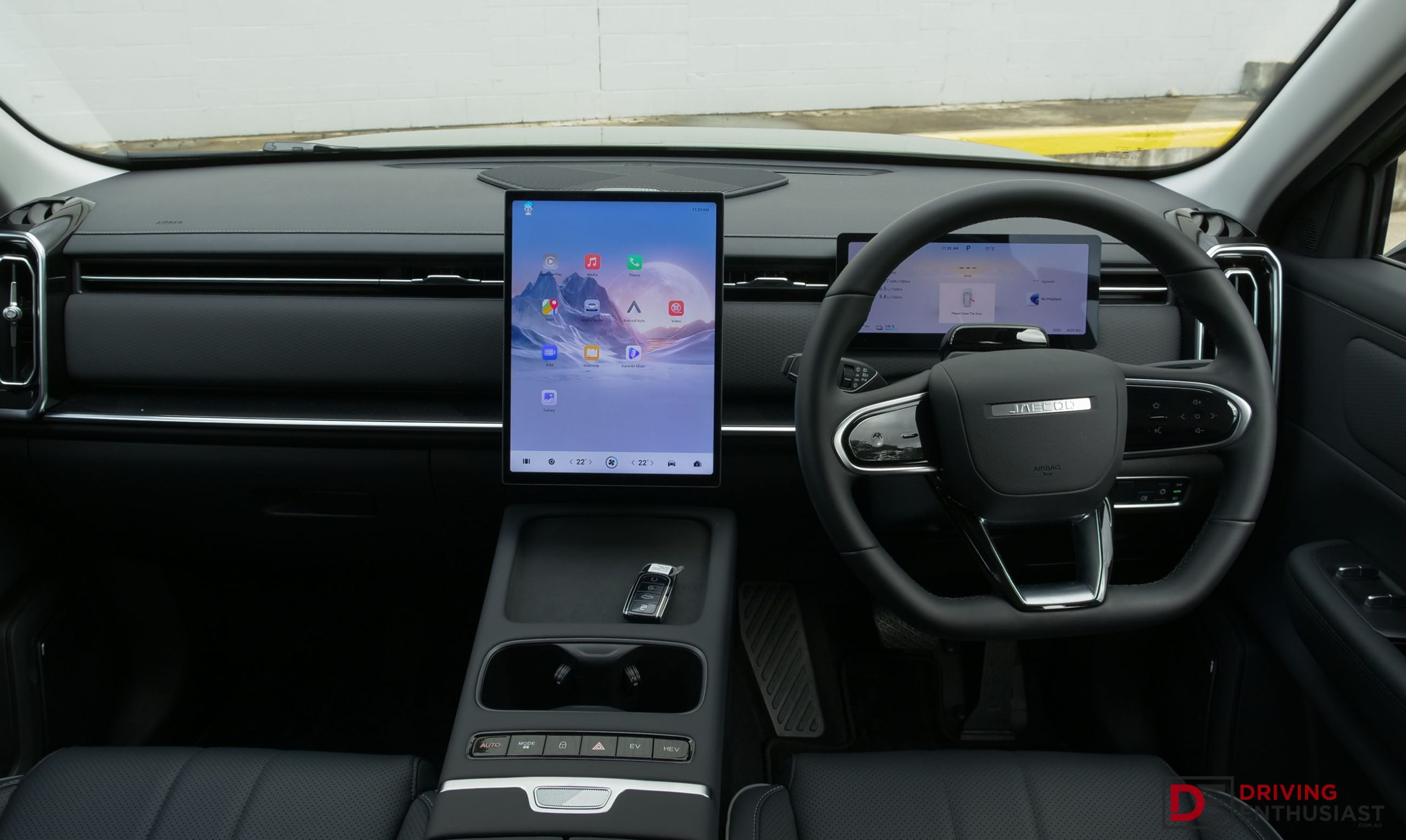
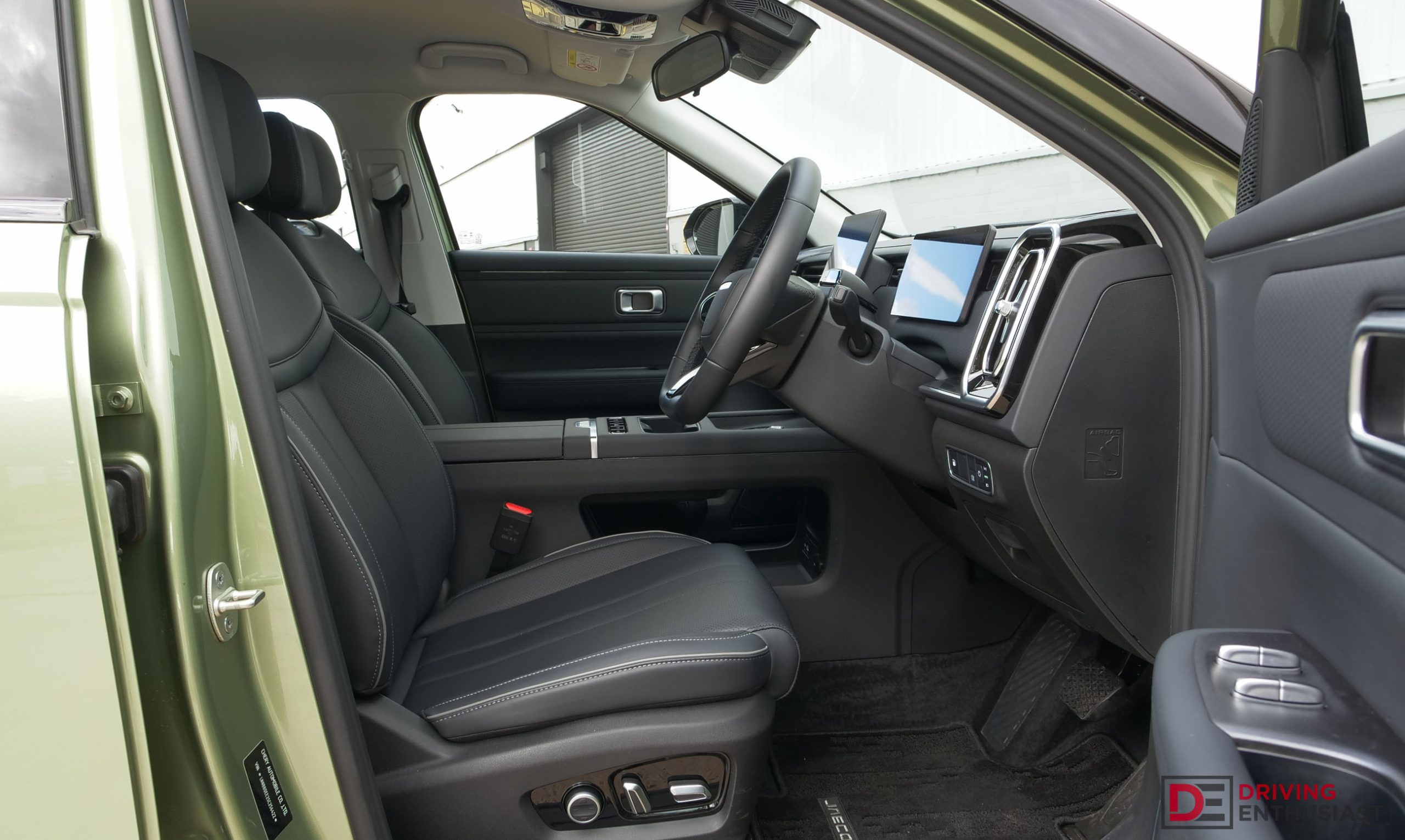
Climb aboard the J7 SHS Track and you’re greeted with a cabin that leans heavily into minimalist design. The layout is clean, linear, and uncluttered, but perhaps a little too restrained in execution. There’s a fine line between minimalism and boring. A single colour palette and uniform textures feel quite plain, lacking the visual richness or contrast that can elevate cabin ambience in some rivals.
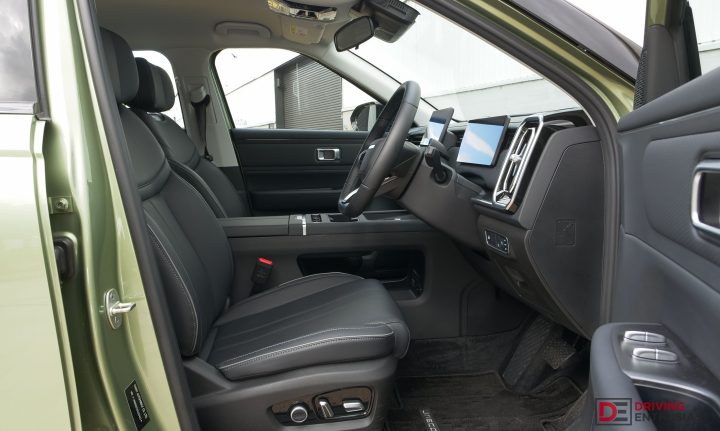
While everything feels solidly put together, the synthetic leather seats feel on the firmer side, affecting long-distance comfort. All variants get a six-way power adjustable driver’s seat with memory, and a four-way passenger seat. Like some Hyundai models, the passenger seat gets easy access controls for the driver on the upper right side of the seat. Both seats are also heated and ventilated.
On the practicality front, the J7 impresses. There’s a generous amount of storage throughout the cabin, including a large open shelf beneath the centre console that proves genuinely useful for stashing bags or larger items. Lots of space is made available by a steering column gear shifter stalk. Thoughtful touches like hooks in the boot and beside the glovebox add to everyday usability.
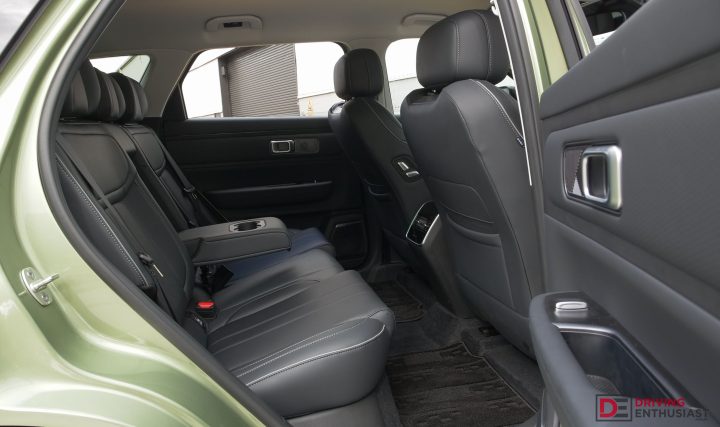
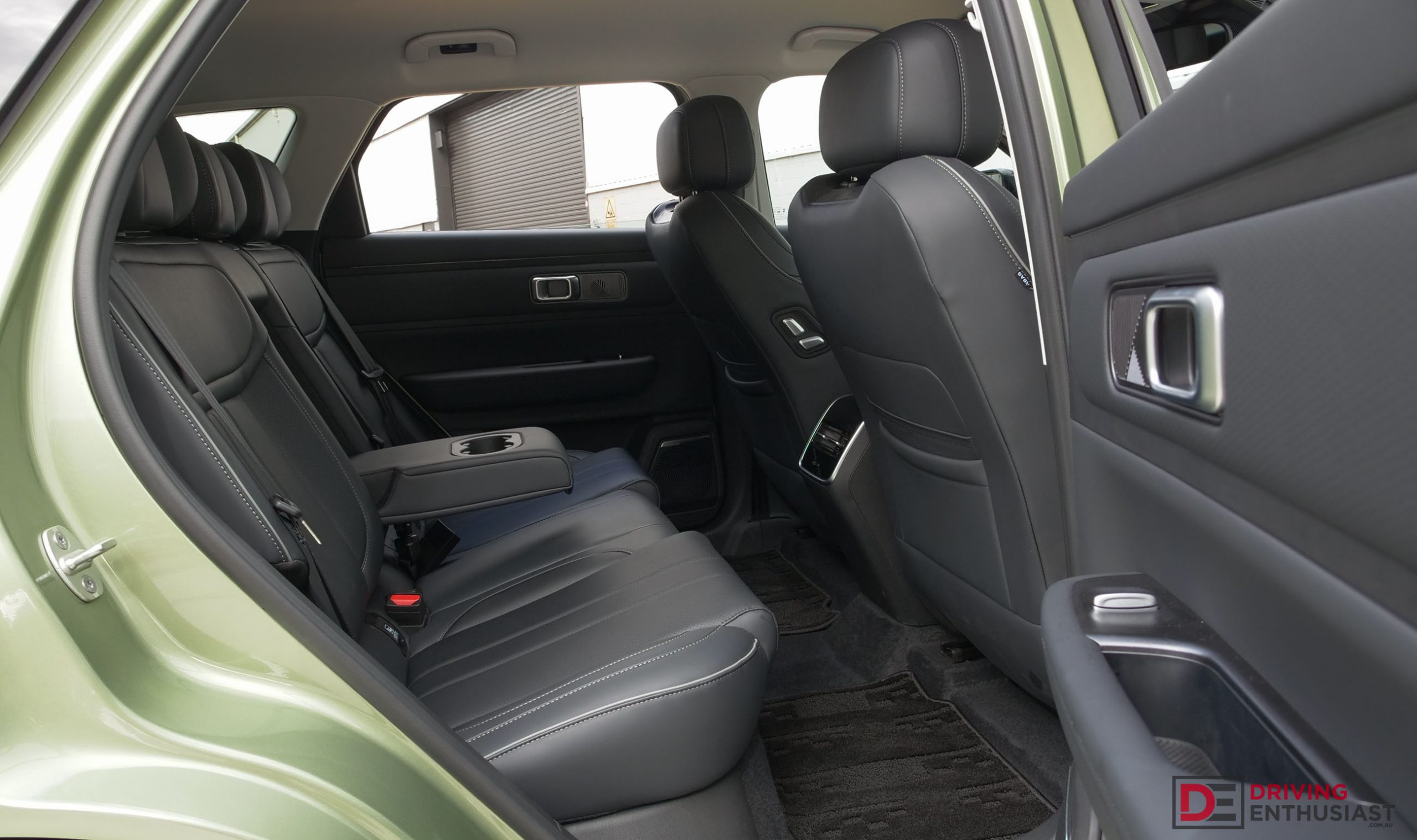
Rear seat accommodation is another highlight. There’s ample legroom, climate vents, USB-A and USB-C ports, and even multiple storage pockets on the backs of the front seats. It’s a very family-friendly space, although the rear bench isn’t adjustable on rails. The upside is that the seats fold flat to create a more usable load area.
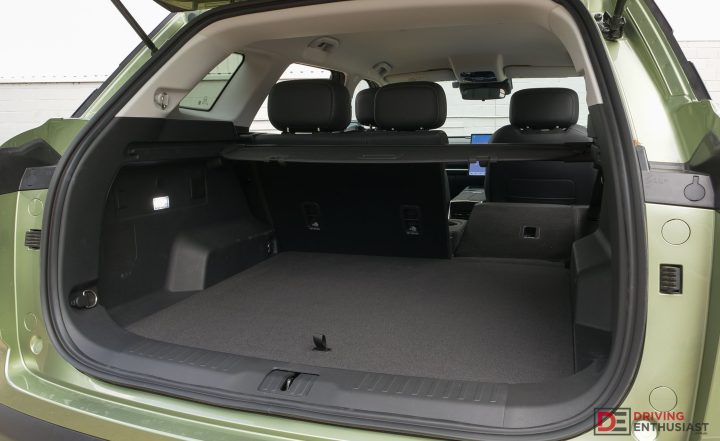
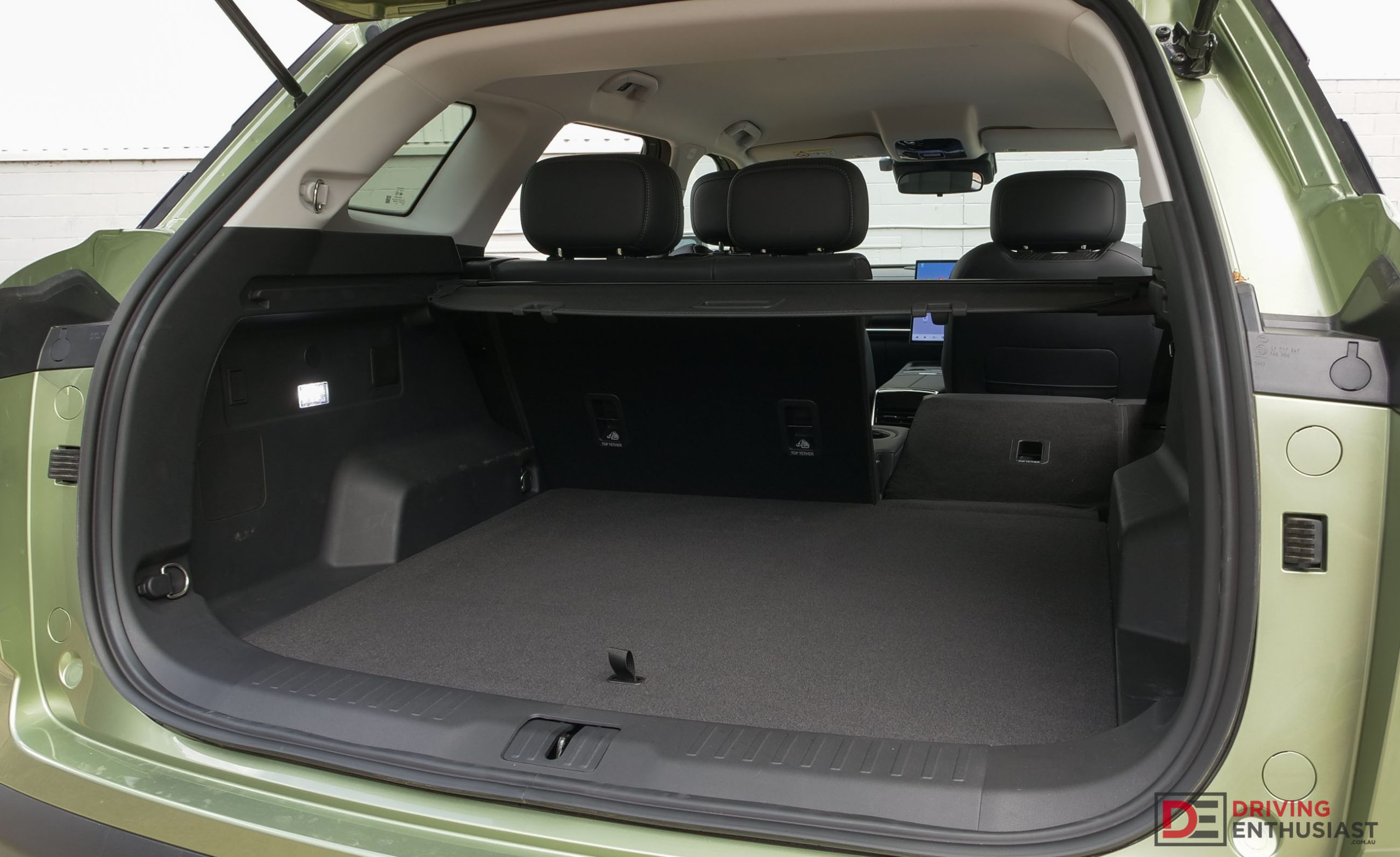
Speaking of the boot, we appreciate how well-lit it is with strong illumination. But it misses out on a 12-volt socket unless you order the Summit spec. Likewise, an electric tailgate is only reserved for the Summit. And there is no handle to easily lift the boot up from closed position. You need to use the contouring of the boot design to lift it. Boot space is rated at 500L to the ceiling, or 1265 litres when the rear seats are folded down.
Technology is headlined by a large 13.2-inch central touch-screen that looks impressive and offers crisp visuals. Summit specs receive an even bigger 14.8-inch screen. The screen dims to an appropriate brightness level (and in a timely fashion) at night, which is a welcome improvement over some newcomer brands on the market. However, usability isn’t perfect.
The screen can be fidgety to operate, particularly when adjusting air conditioning settings via small on-screen arrows that don’t always respond to your finger touch. There is a quick swipe-up climate menu shortcut, but it doesn’t include all key functions, meaning multiple screen presses are often required for frequently adjusted functions. Not ideal while driving. Despite lacking a brand name, the sound system is not too shabby compared to other entry-level systems.
Other features you miss from the Summit include a wireless phone charging pad, head-up display, an 8-speaker Sony sound system, an auto-dimming rear-view mirror, colour selectable ambient interior lighting, a panoramic sunroof, and front fog lights. At least in the Track you score a 360-degree camera, walk-away auto locking, remote car functions, wireless Apple CarPlay and Android Auto, and a 10.25-inch digital instrument cluster.
You get the lot when it comes to safety as well. We can’t see anything omitted. ANCAP has awarded it a 5-star safety rating.
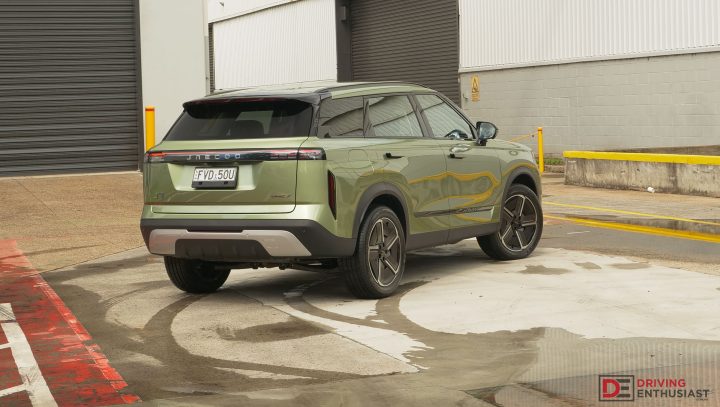
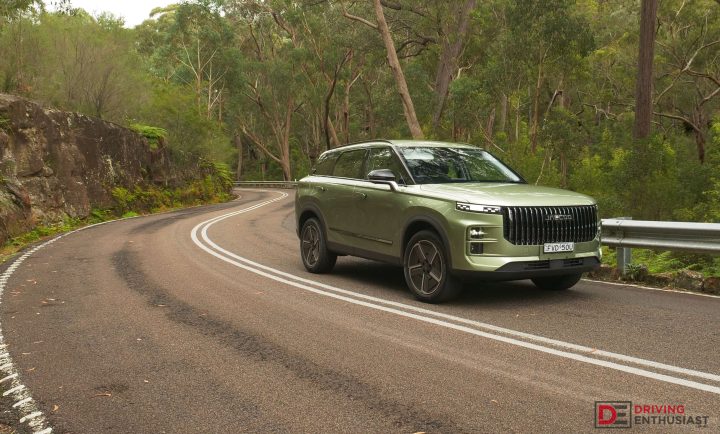
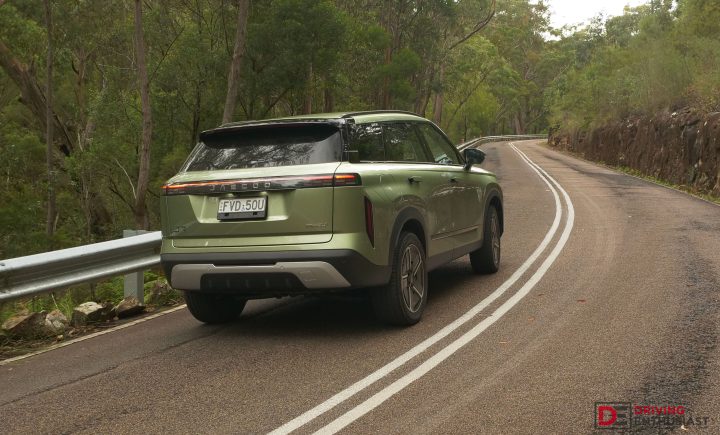
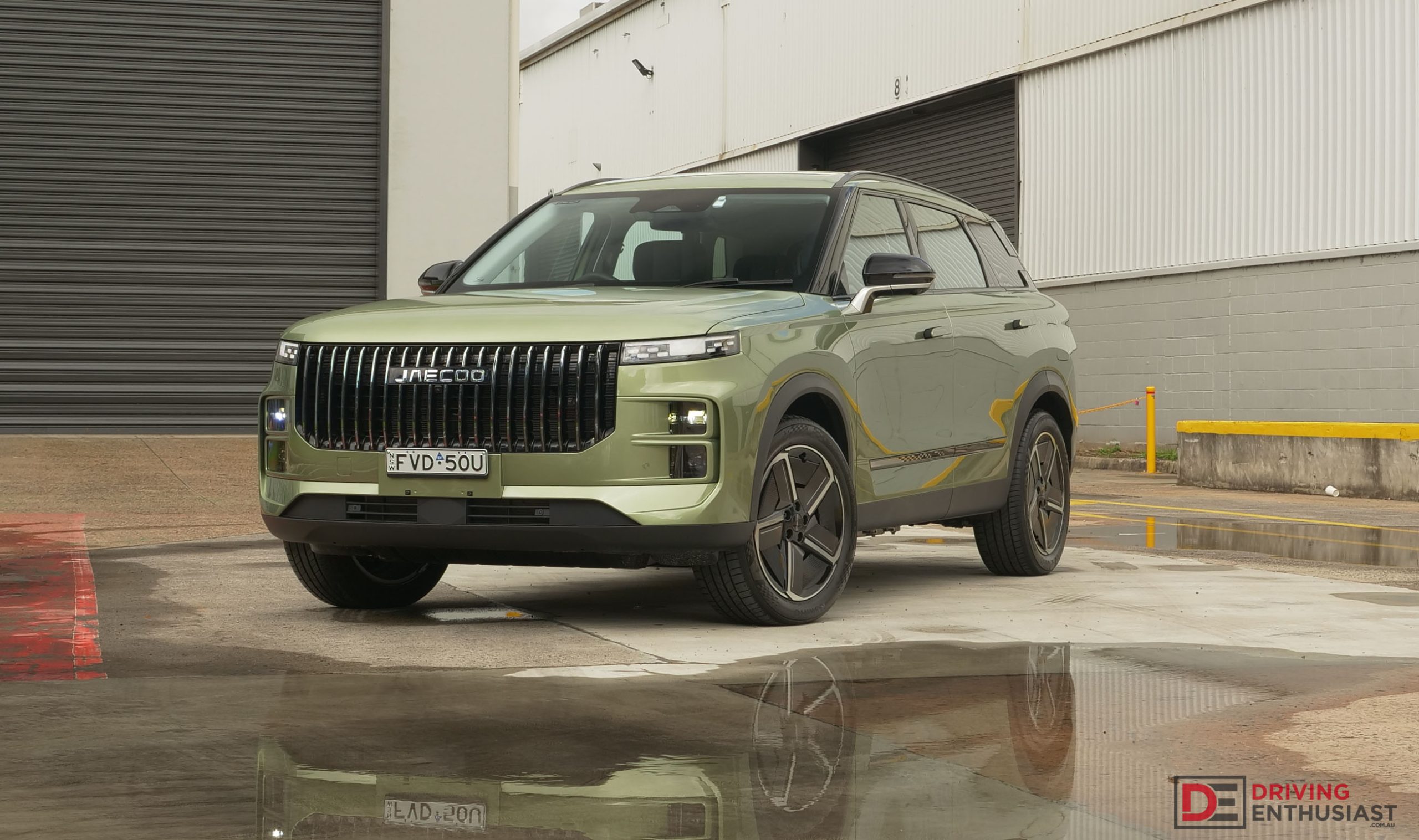
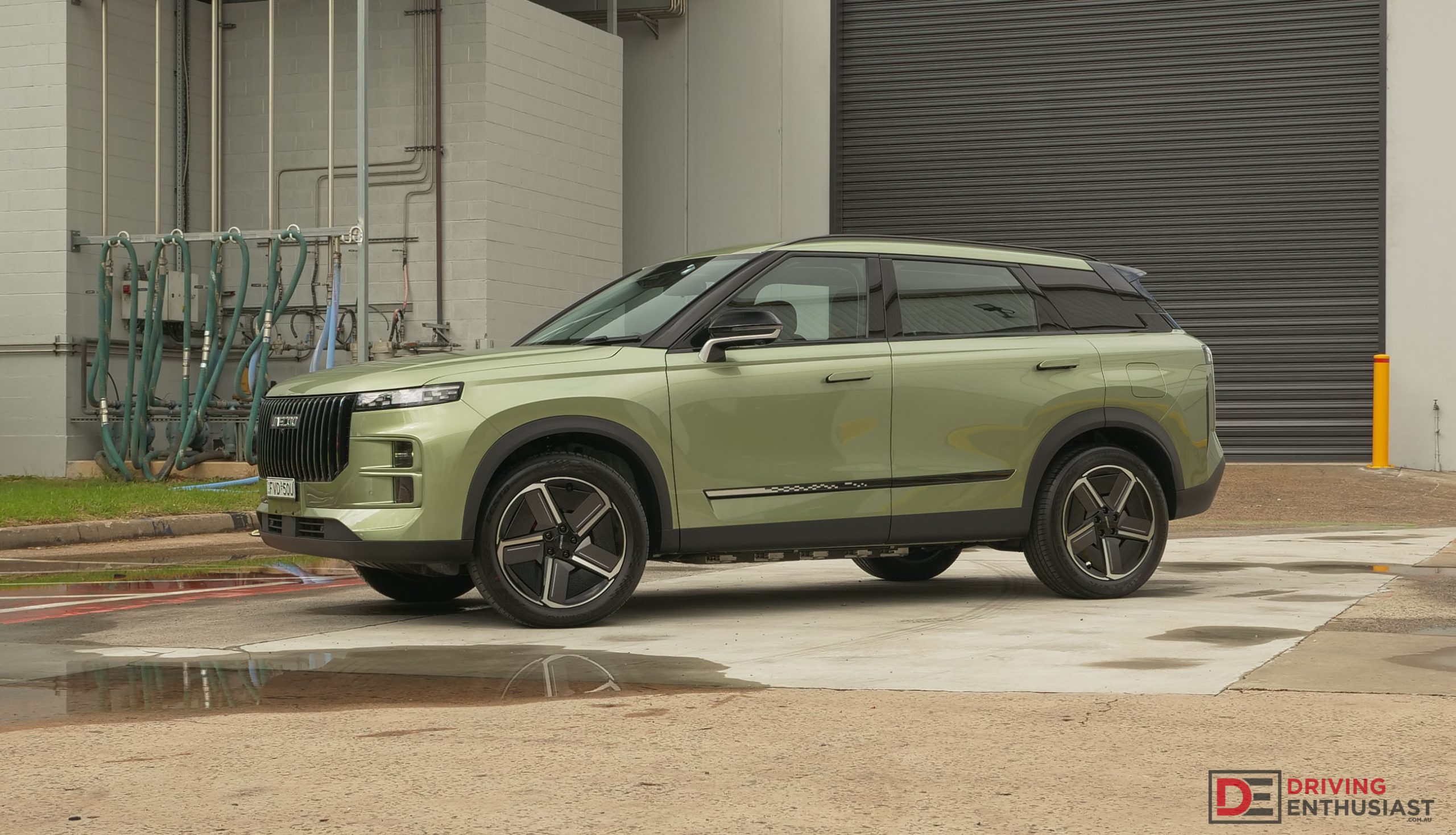
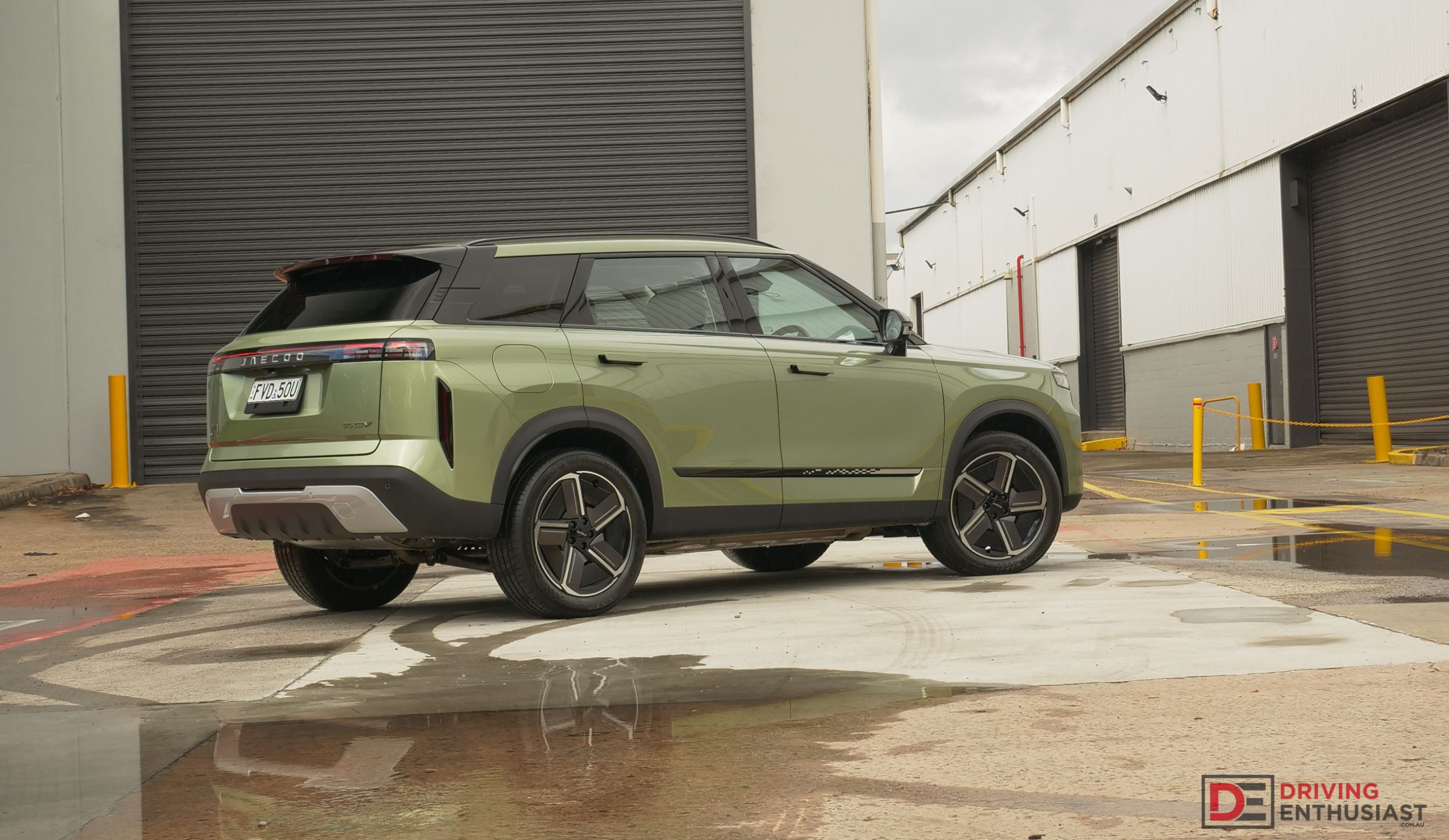
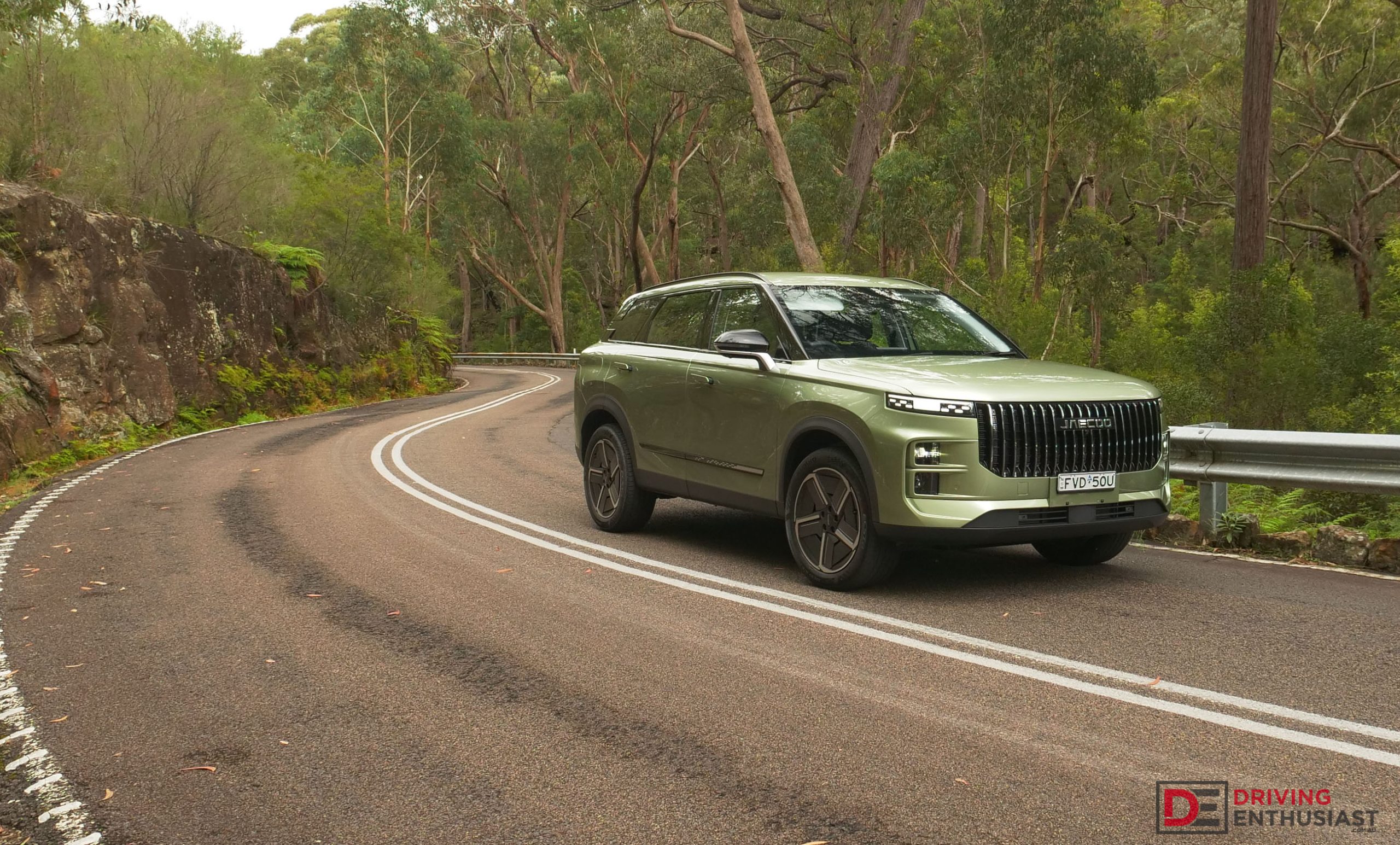
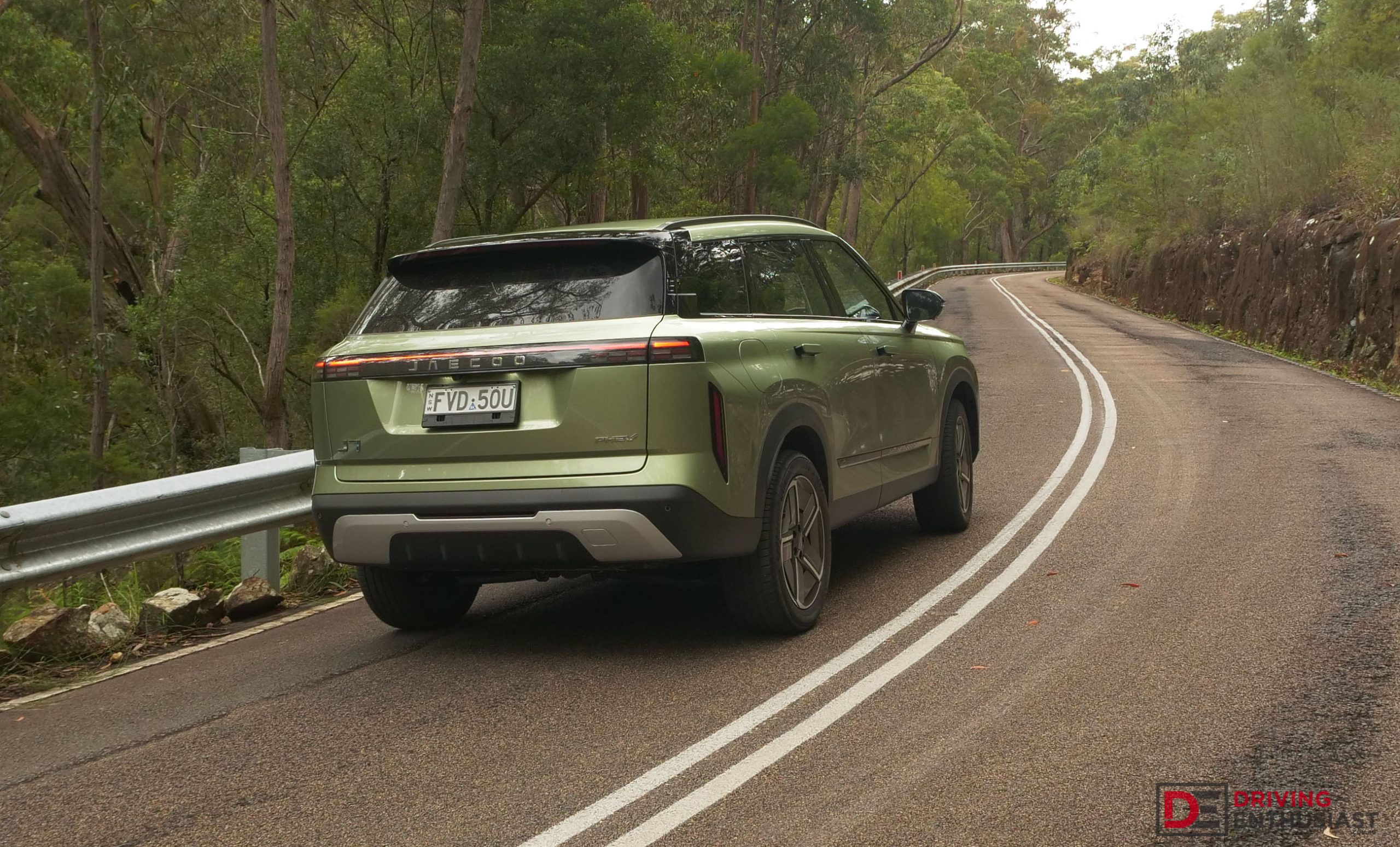
Looking at the J7 from outside, we think the design wins on sophistication vibes. There are lots of linear elements which give off a sensible elegance. For example, the lights are all straight, the chrome grille design is vertical, and a subtle crease up the side leaves an impression of strength and stability.
Gloss black pillars and a rear spoiler emulate a sporty floating roof illusion. Do you see Land Rover influence like us? Contouring is kept smooth and rounded off, supported by a cleanly hidden rear wiper and the adoption of electronically retractable outer door handles. They add a touch of elegance, but feel somewhat clunky in day-to-day use.
2026 Jaecoo J7 SHS Track: Powertrain & handling
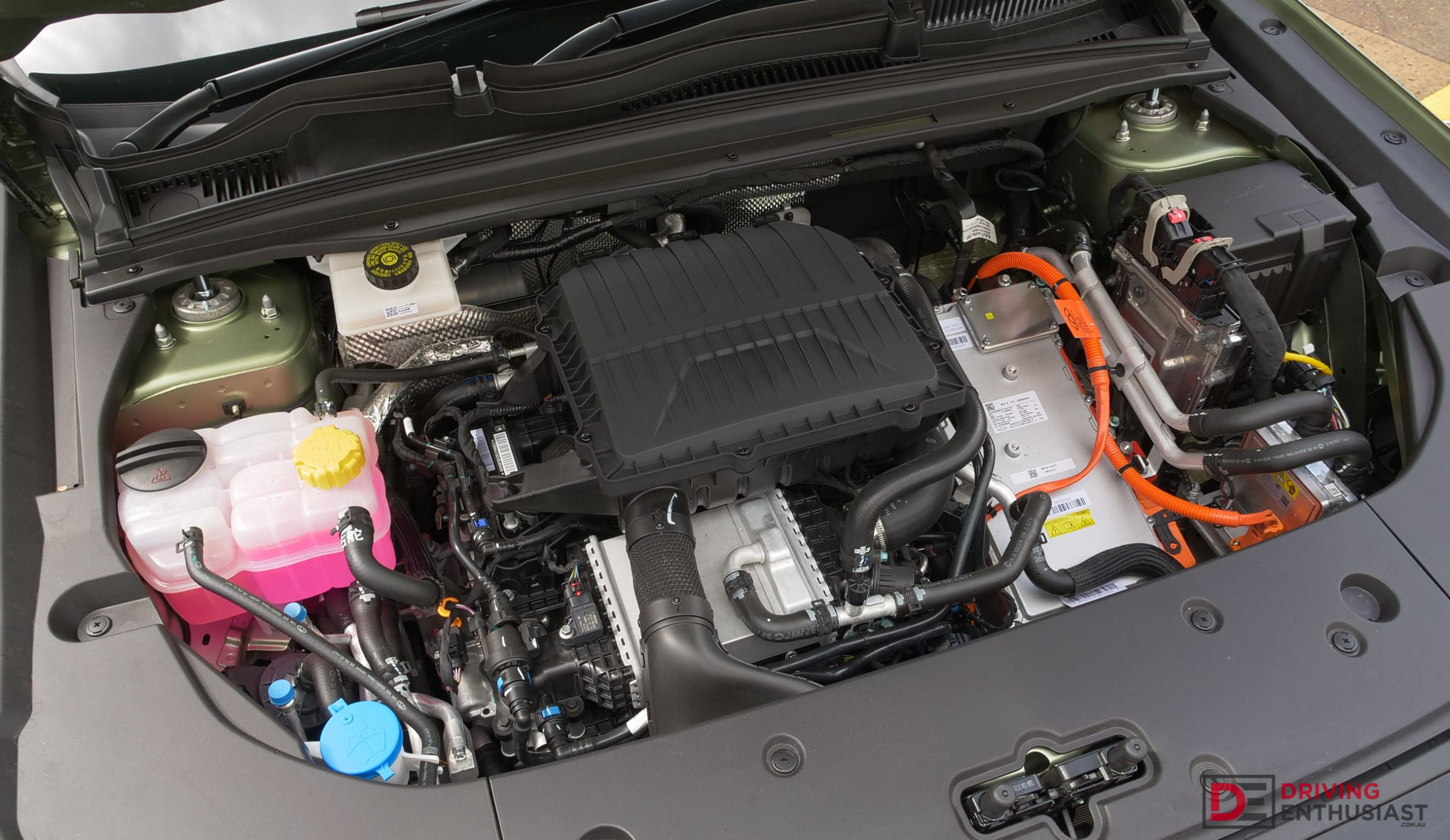
At the heart of the J7 SHS is a 1.5-litre turbo-petrol engine paired with an 18.3kWh battery system to power an electric motor, forming Jaecoo’s “Super Hybrid System”. With 150kW and 310Nm, performance is solid, though not ground-breaking for a PHEV. There’s certainly enough power on tap to move the vehicle along confidently, but it doesn’t have neck-breaking urge we’ve seen from some rival PHEVs. That’s okay though, as the focus is clearly on efficiency and range. Our 0-100km/h sprint was achieved in XX seconds.
Being a PHEV, the J7 can be plugged in and charged to enable it to drive up to 90km (WLTP test cycle) solely on electric power. That’s enough to cover many Australian drivers’ daily commutes and more. If it’s not, the total driving range using petrol as well stretches beyond 1000km. And that figure delivered in our testing. Transitioning between electric and petrol power is harmonious.
One notable feature is the ability to set a minimum battery reserve level, allowing you to manage how much electric charge is retained for later use. However, the system only displays battery percentage rather than an estimated electric range in kilometres – something that we think would be far more useful. Unless we missed it somewhere in the menus.
Officially, the average consumption based on the NEDC ADR 81/02 test is 1.0L/100km, which doesn’t mean much. The test is made of just 20 minutes of driving (13 minutes at low speed and 7 minutes at highway speeds), when the battery is at full capacity. But in the real world, your usage could be zero if you charge up every 90km. During our testing, we started with a full petrol tank and full battery charge; and after 900km, our average was 5.8L/100km. So that is made up of 90km of electric power, then standard hybrid mode for the rest. It’s worth noting it can run on minimum 91 RON petrol, too.
Charging is via a Type 2 AC charger at up to 6.6kW, or a CCS2 DC charging port up to 40kW. Charging takes about 160 minutes to go from 25-100 per cent on a Type 2 AC charger, or 20 minutes from 30-80 per cent on the maximum DC fast charger.
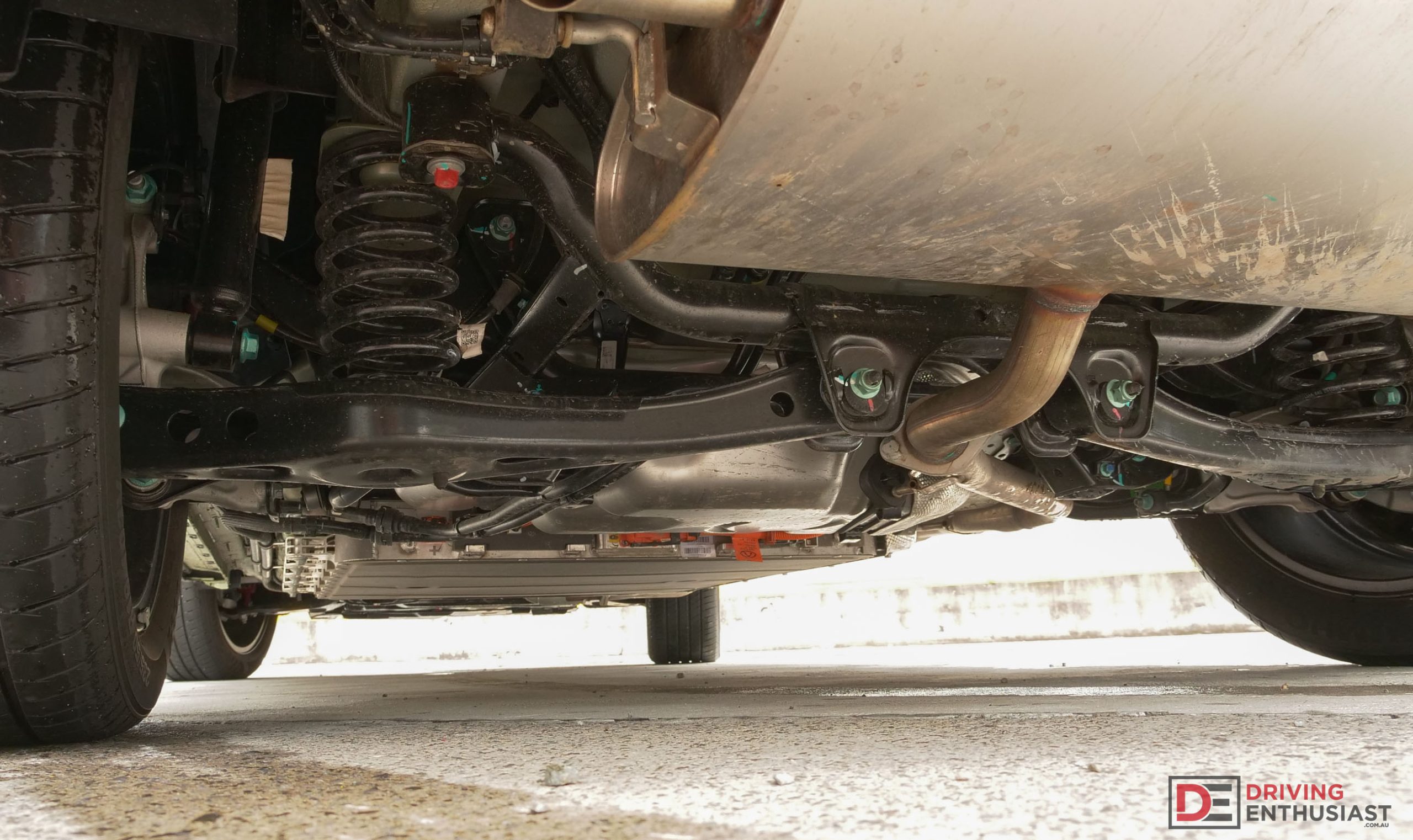
On the road, the Chinese-built mid-sizer delivers a generally comfortable ride. It absorbs smaller imperfections well, making it suitable for daily commuting. But over those larger bumps, the suspension can start to struggle, creating an unsettled track. It goes with Macpherson struts at the front and a multi-link setup at the rear.
Handling is even less convincing due to the steering feel being too loose, particularly at higher speeds as you constantly dance to keep it in the lane. As a result, cornering fast makes the car feel vague and wobbly. It’s not particularly confidence-inspiring when pushed, especially on unpredictable Aussie country roads. It’s fine, just not at the benchmark in this area in this class.
We also found a few quirks in operation. The vehicle requires an unnecessarily firm press on the brake pedal before allowing gear change between drive and reverse. If it’s not depressed enough, it pops into neutral; something that can be annoying when you’re holding up carpark traffic flow. Meanwhile, the driver monitoring system demonstrates over sensitivity, frequently issuing distraction warnings even when attention levels are perfectly fine. Other manufacturers have been able to get this more accurate and less hounding.
Although its looks might have you think otherwise, heavy duties are not the J7’s forte. No spare wheel – not even a space-saving one – and being a front-wheel drive rules out off-road use. The 750kg towing capacity is also poor for this class if you’re planning that kind of thing.
2026 Jaecoo J7 SHS Track: Key attractions/reasons to buy
- Long driving range: The PHEV system delivers a genuinely impressive real-world range of over 1000km, making it ideal for long-distance travel without constant charging. It also offers 90km of electric range, which is okay for this class.
- Strong value proposition: Competitive pricing combined with an industry-best warranty and servicing package enhances ownership appeal.
- Spacious cabin: Excellent legroom, multiple charging ports and thoughtful storage solutions make it practical for families.
- Winning exterior design: Smooth contours, contrasting black elements and LED lighting give it a sophisticated and contemporary look. Did someone say Range Rover inspiration?
- Fast charging: Not all PHEVs offer DC fast-charging. This one supports up to 40kW, which is reasonable, but it means you can top it up from 30-80 per cent in just 20 minutes. That’s also thanks to the smallish battery which also saves weight.
2026 Jaecoo J7 SHS Track: Key considerations before you buy
- Infotainment usability issues: The large centre screen looks great but can be fiddly to operate to the touch, particularly for climate controls.
- Interior lacks visual flair: Some might call it an elegant minimalist design, but we call it plain with limited variation in colours and textures.
- Handling lacks precision: Loose steering and unsettled track over larger bumps reduce confidence on challenging roads.
- Missing some convenience features: No wireless charger, auto-dimming rear-view mirror, electric tailgate, or even a boot grab handle to lift the tailgate.
- Operational quirks: Overly sensitive driver monitoring, heavy brake pedal depression requirement for gear changes, and limited consumption history display.
2026 Jaecoo J7 SHS Track: Video
How does it rate against its rivals
-
Price
-
Interior tech
-
Powertrain performance
-
Ride & handling
-
X-factor (does it stand out in its class?)
Final word
The new Jaecoo J7 SHS Track makes a strong first impression with its sharp pricing, modern styling and impressive driving range. It’s a practical, family-friendly PHEV SUV that delivers glowingly in the areas many buyers prioritise; space, efficiency and value. However, it’s not without its rough edges. The user experience behind the wheel, from infotainment quirks to steering feel and driver assist behaviour, reveals a product that has opportunity for improvement.