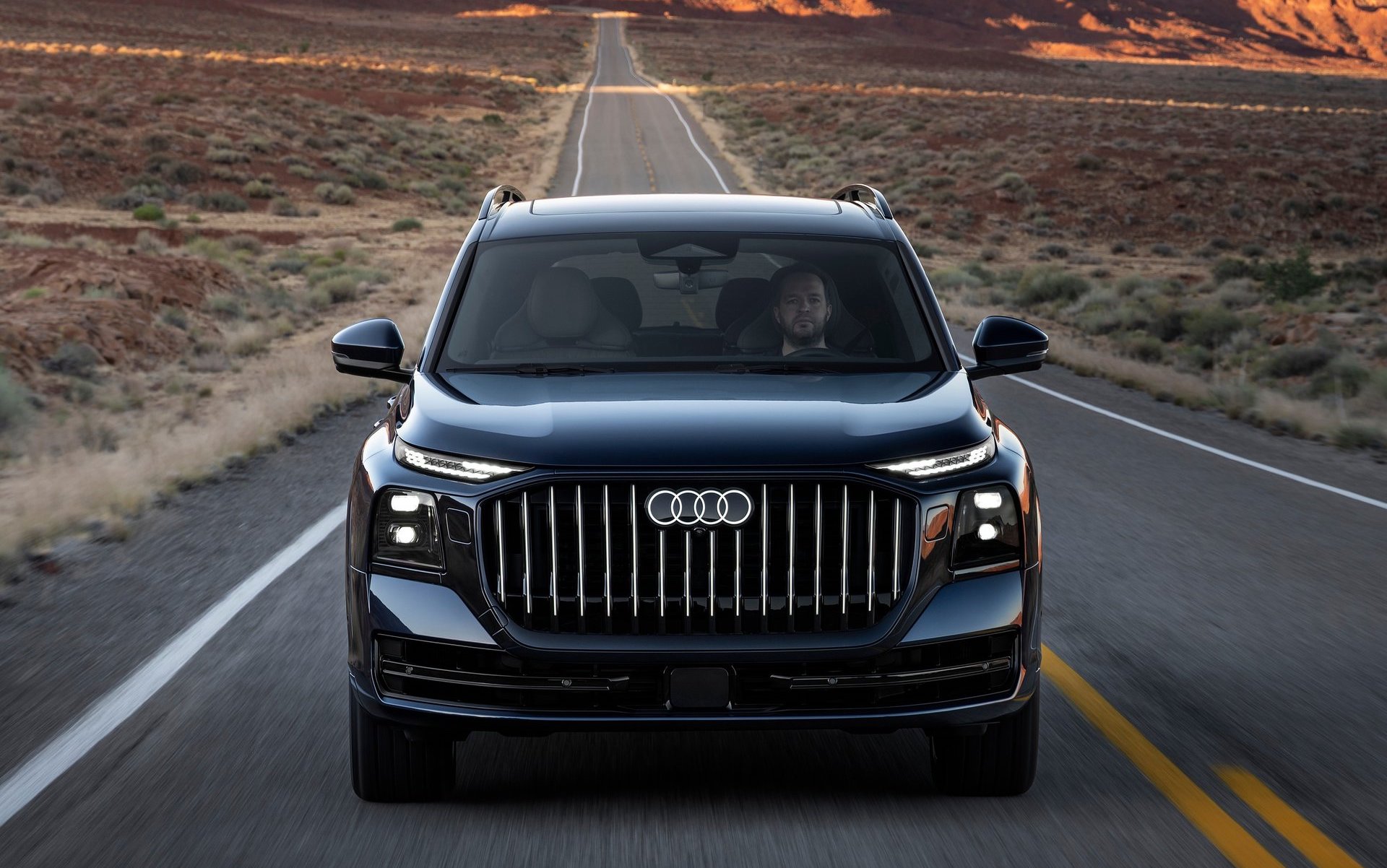
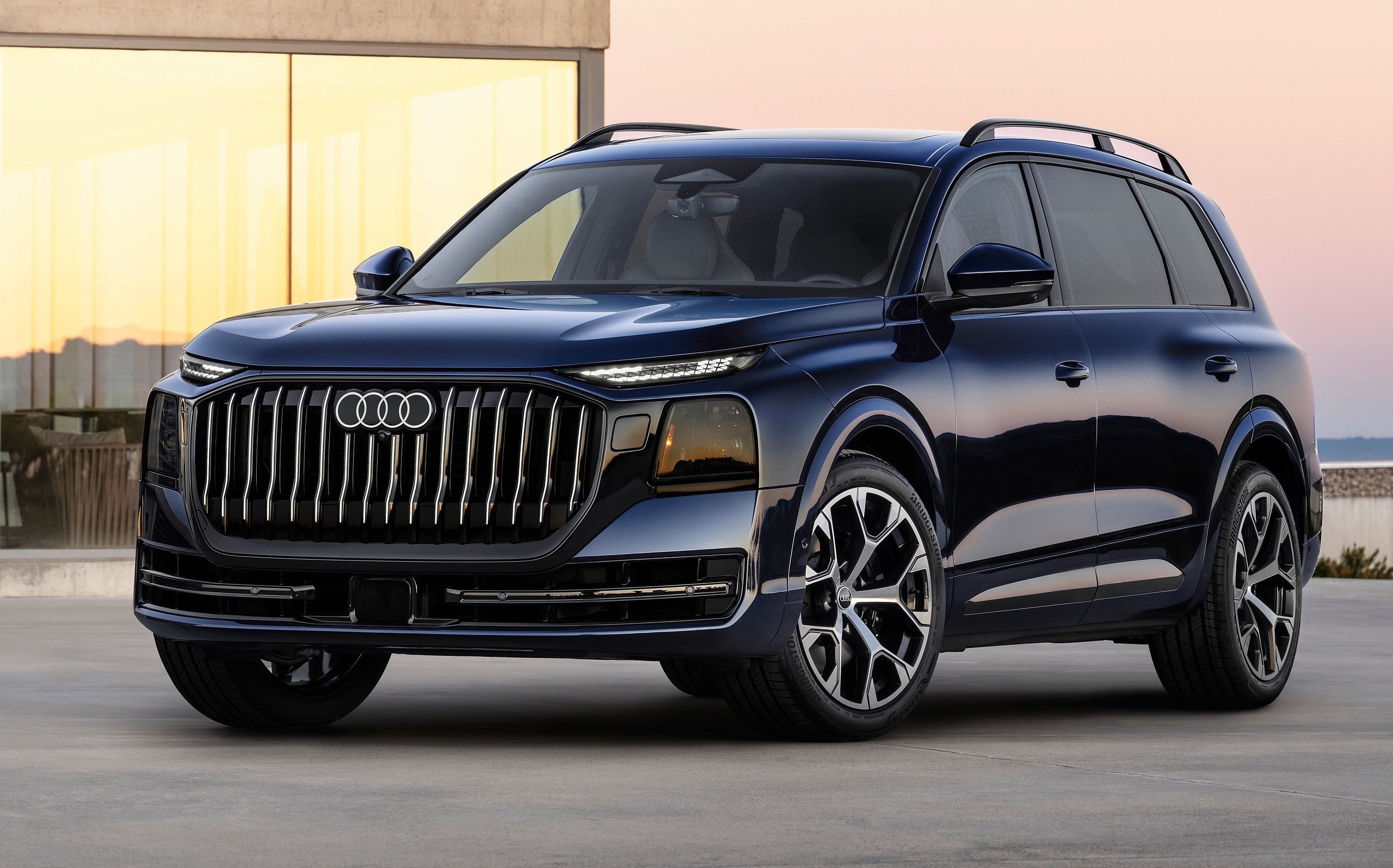
Audi has officially revealed the Q9, establishing a new full-size luxury flagship positioned above the Q7 and Q8 to compete directly against the BMW X7 and Mercedes-Benz GLS.
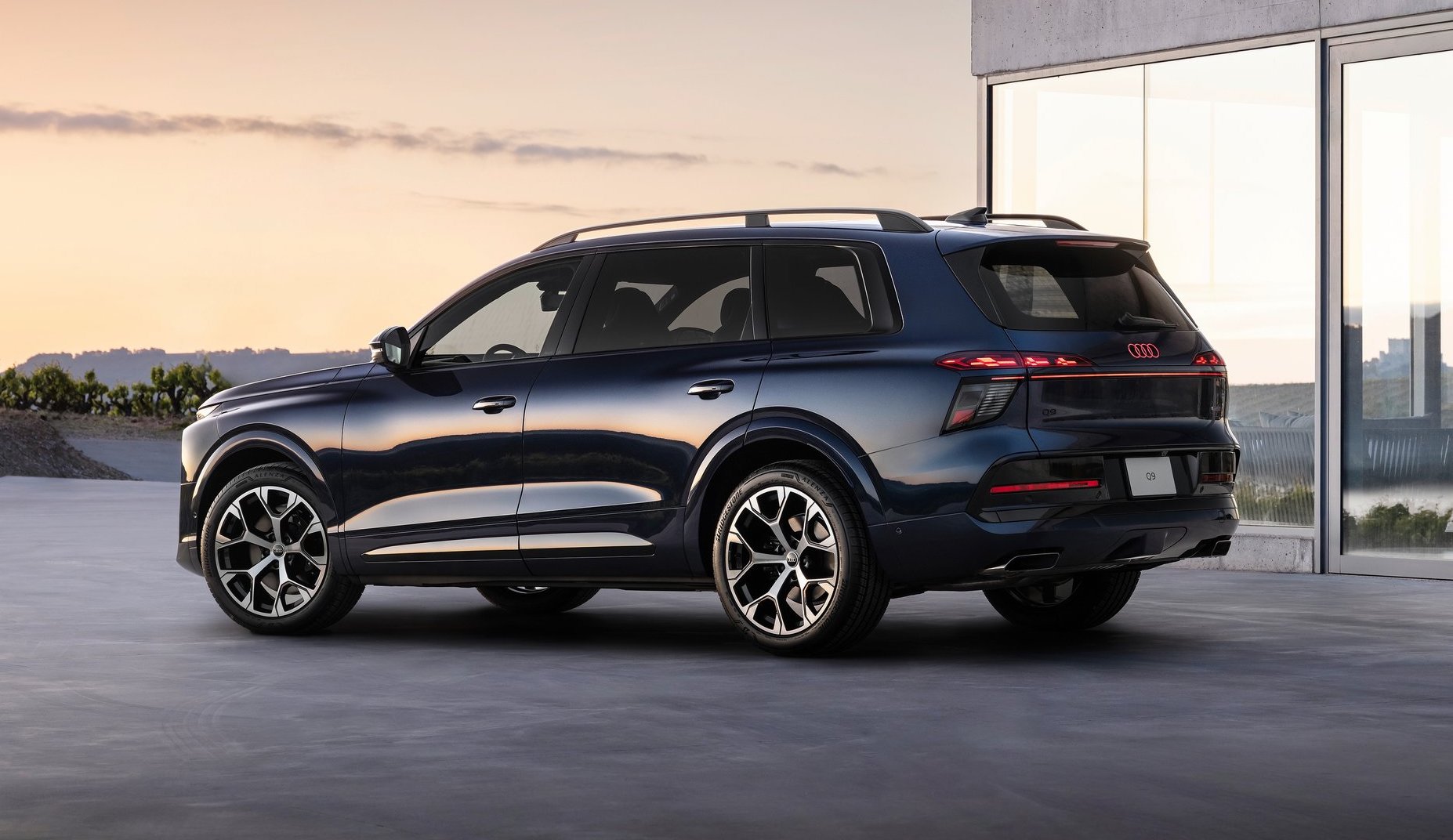
Measuring 5310mm long, 2009mm wide and 1810mm tall, with a 3140mm wheelbase, it is the largest production vehicle the manufacturer has built to date. The model introduces several firsts for the German marque, including obstacle-detecting automatic power doors that feature soft-close functionality, and the brand’s largest panoramic sunroof, which spans more than 1.5 square metres.
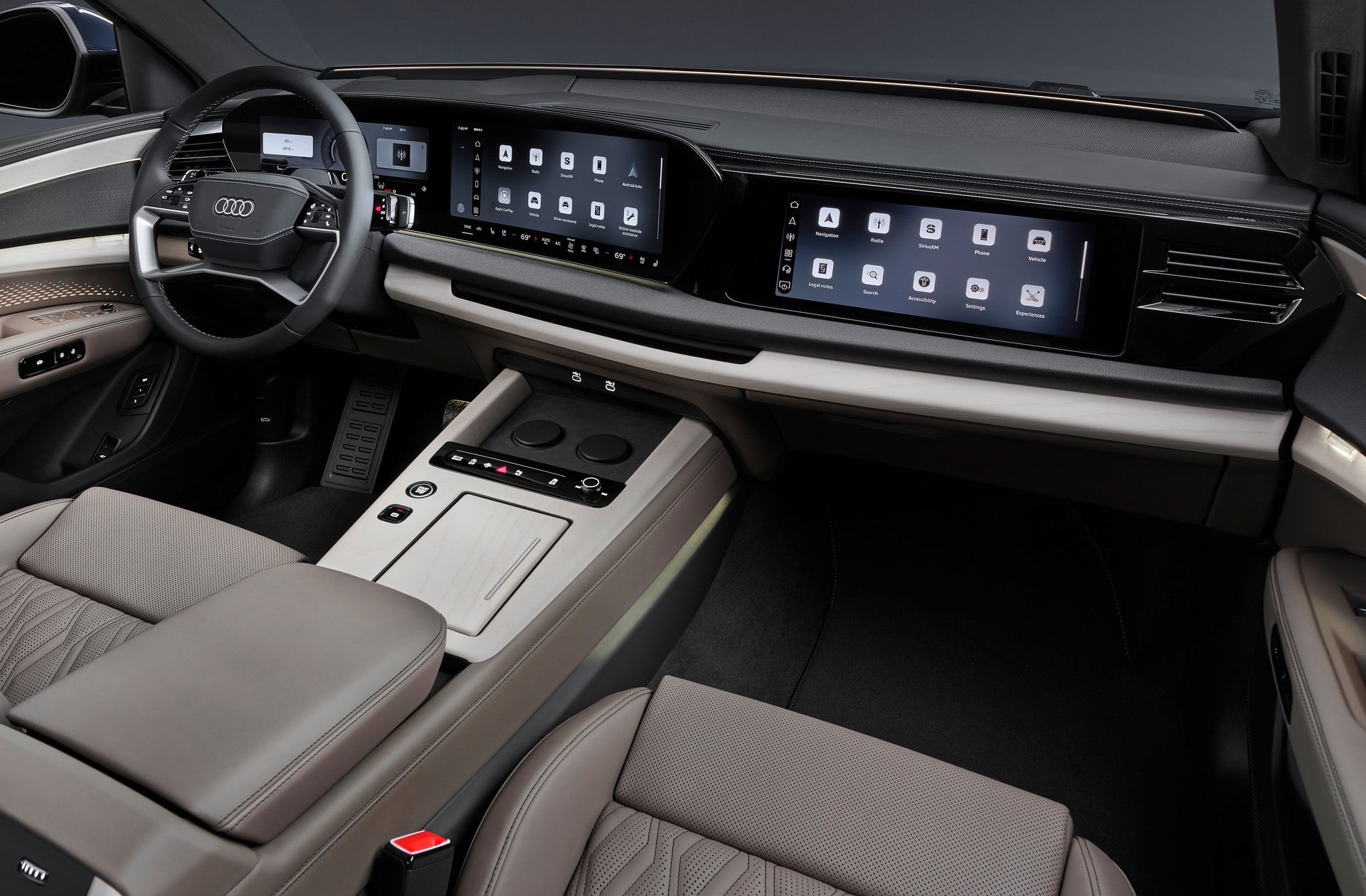
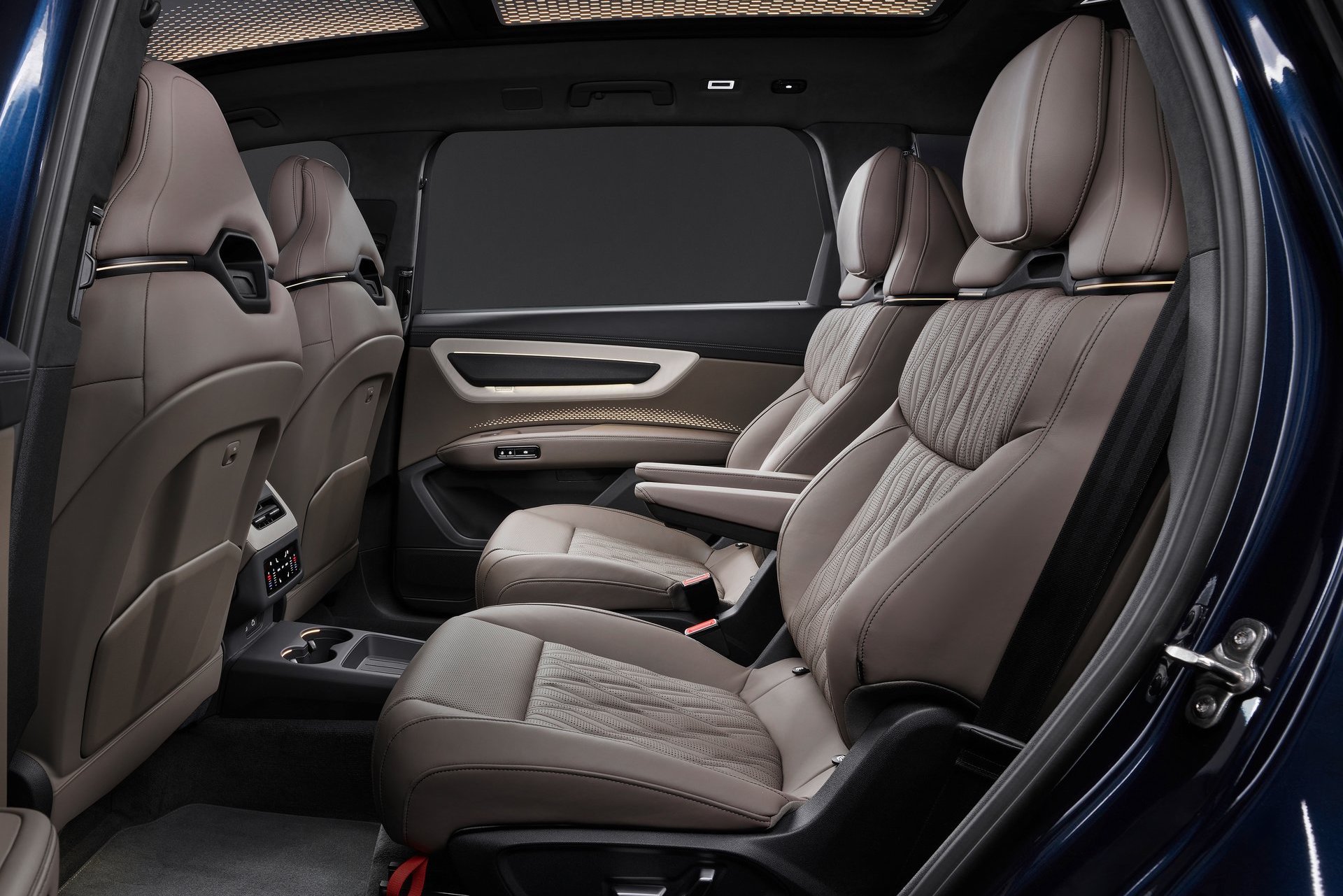
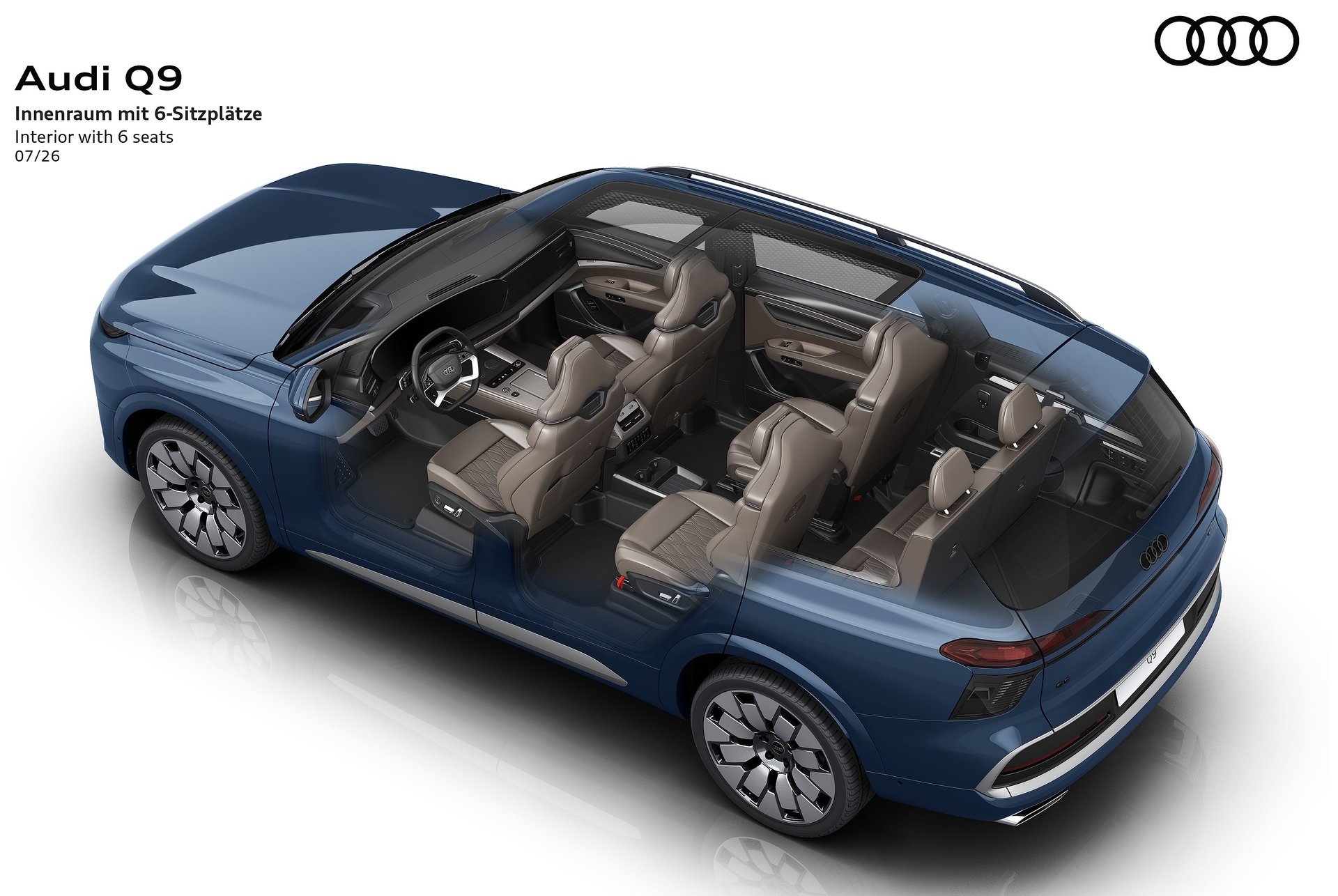
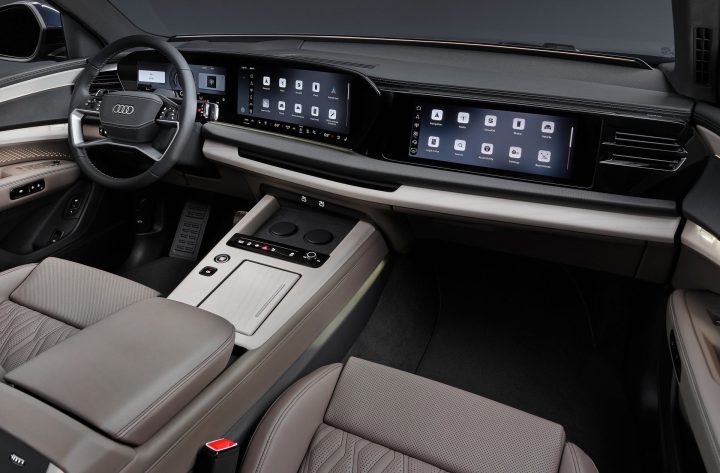
Inside, the cabin is offered with a standard seven-seat layout, alongside an optional six-seat configuration that substitutes the middle bench for two individual power-adjustable chairs. The dashboard is dominated by a curved display comprising an 11.9-inch digital instrument cluster and a 14.5-inch central infotainment screen running Android Automotive OS with ChatGPT integration. A dedicated 12.3-inch passenger display is also fitted as standard.
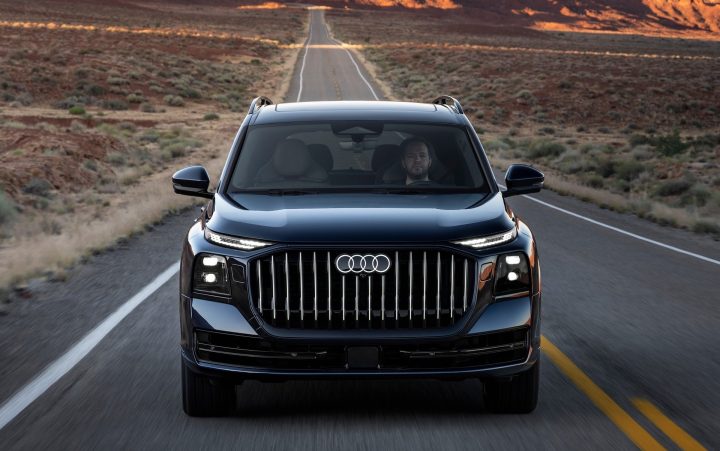
Exterior lighting introduces Digital Matrix LED headlights capable of projecting directional graphics onto the road surface, paired with third-generation curved digital OLED taillights built from ultra-thin glass. There’s also one of the biggest front grilles ever fitted to a production car.
The chassis utilises an adaptive air suspension system paired with progressive steering. All-wheel steering is optionally available to improve low-speed manoeuvrability and high-speed stability, and the Q9 rides on alloy wheels ranging from 20 to 23 inches in diameter, with the larger 22- and 23-inch options featuring acoustic foam inserts to reduce tyre roar. Standard braking hardware includes 400mm front ventilated discs clamped by six-piston calipers, and 350mm rear rotors.
Australian deliveries of the Audi Q9 are expected to commence in the second half of 2027, following its initial European market launch in late 2026. At launch, the core powertrain is a 48-volt mild-hybrid 3.0-litre turbo-diesel V6 producing 220kW of power and 630Nm of torque. Output is routed to a permanent all-wheel drive system via an eight-speed automatic transmission.
A performance-focused SQ9 variant is set to follow, upgrading to a 4.0-litre twin-turbo V8 petrol engine generating 440kW and 800Nm.