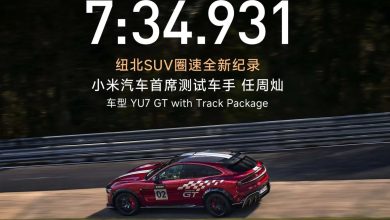
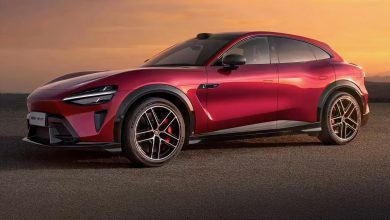
Xiaomi has secured the world’s first fully autonomous lap of the Nurburgring Nordschleife with its YU7 GT electric performance SUV, using the brutal 73-turn German circuit to fast-track its advanced driver-assistance software for mass-market deployment.
The automated vehicle recorded an official lap time of 10:29.483 without any human intervention. While an impressive feat of computational engineering, the software-driven run timed exactly 3 minutes and 7 seconds slower than a professional driver pushing the identical vehicle to its mechanical limits. Earlier tests established a benchmark SUV record of 7:34 for the YU7 GT during development.
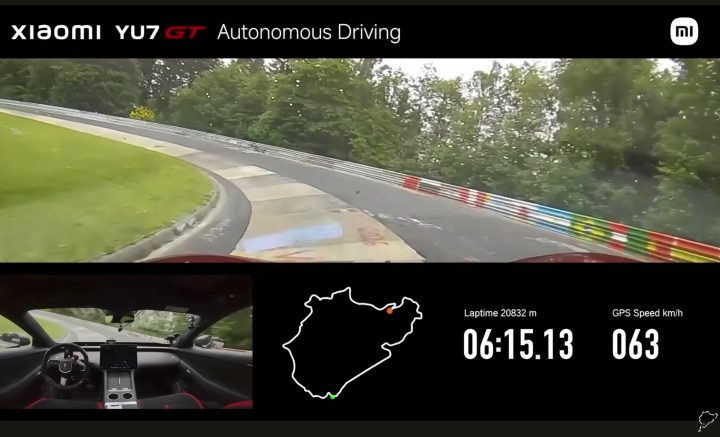
According to Xiaomi executives, the primary goal of the autonomous track program is not simply setting records, but actively validating the brand’s newly deployed XLA software platform under extreme dynamic stress.
By substituting traditional rule-based driver assistance with automated cognitive modelling, the vehicle’s control loops process real-time friction variations and tyre contact patch adjustments. Operating within single-digit millisecond windows, this technology actively mitigates chassis instability during high-velocity cornering.
Xiaomi aims to directly downscale these high-frequency torque distributions and real-time slip angle calculations into consumer over-the-air updates, providing real-time computer-based emergency interventions for sudden hydroplaning or low-friction winter hazards on public roads.
Mechanically, the YU7 GT provides a substantial foundation for this algorithmic testing. The architecture leverages an 897-volt silicon carbide high-voltage platform paired with a 101.7kWh ternary lithium battery pack. This system feeds a proprietary Super Motor V8s EVO setup, generating a staggering peak output of 738kW (1003hp).
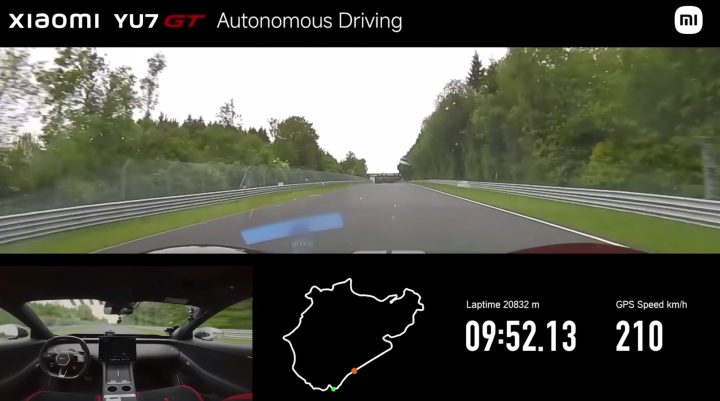
Out on the tarmac, the configuration enables a 0-100km/h sprint in just 2.92 seconds, pushing on to a regulated top speed of 300km/h. To survive continuous high-load track conditions, engineers designed a bespoke cooling layout to mitigate core temperature spikes during rapid energy discharge, ensuring the battery cells don’t overheat under the intense lateral loads of the Nordschleife.
Under standard testing, the vehicle achieves a certified CLTC range of 705km. The advanced electrical architecture also targets common thermal bottlenecks during rapid replenishment, allowing the pack to absorb up to 570km of range in just 15 minutes of DC fast charging.
In its domestic Chinese market, the YU7 GT is currently in active commercial distribution. Pricing commences at 389,900 yuan (approximately AU$81,000) for the entry-level specification, climbing to a fixed price of 429,900 yuan (approximately AU$89,500) for the fully equipped flagship variant. It is not confirmed for Australia, at the time of writing.