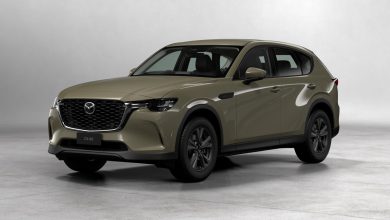
Every so often as a motoring writer, we look forward to reviewing cars we expect to be shite. This was one of those cars, but we came away surprised at how likeable and serene the four-cylinder CX-60 actually is. Before getting in the car, my preconceived notion was that this was the fallback option for those whose credit rating couldn’t stretch to the inline-six powered version.
Riding on an all-new rear-wheel-drive biased ‘Large Product Group’ architecture, the Japanese manufacturer attempted to immediately elevate its status into the premium sphere to battle the BMW X3 and Audi Q5. It brought heavy, complex inline-six engines and high price tags to match. Predictably, this alienated a significant portion of Mazda’s traditional buyer base.
To rectify this and drive volume, Mazda has introduced a mid-life update for 2026, headlined by the integration of a familiar, naturally aspirated 2.5-litre four-cylinder engine. This brings the cost of entry down significantly, with the newly introduced base ‘Pure’ grade acting as the true price leader. . Positioned in the middle of the revised line-up, the G25 Touring attempts to blend the premium underpinnings of the CX-60 with a utilitarian, cost-effective powertrain.
The critical question is whether stripping away the muscular inline-six engine undermines the core proposition of Mazda’s flagship architecture? We test drove the base Pure and top-spec Touring of the G25 range to find out.
2026 Mazda CX-60 G25 Pure: Specifications
Engine: 2.5-litre petrol four-cylinder
Output: 138kW@6000rpm / 250Nm@3000rpm
Gearbox: Eight-speed single-clutch auto
Drive type: Rear-wheel drive
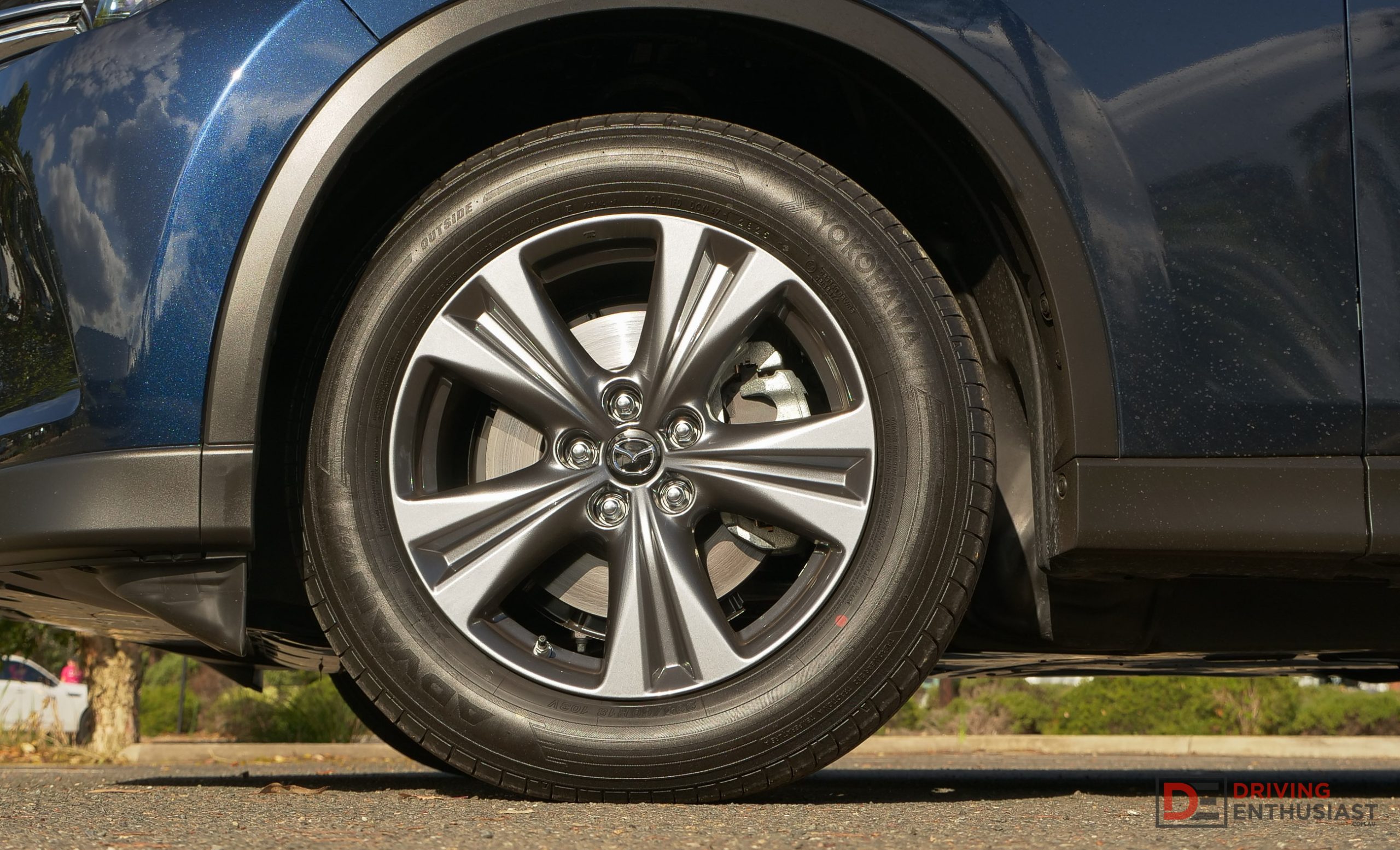
Wheels: F & R: 18×7.5, 235/60
ANCAP: Five stars
Tare weight: 1772kg
Power-to-weight: 12.84:1 (kg:kW)
Official consumption: 7.5L/100km
Our consumption: 8.5L/100km
Fuel tank/Fuel type: 58L/91 RONPower efficiency: 18.4kW:L/100km
0-60km/h: 5.00 seconds*
0-100km/h: 10.29 seconds*
60-110km/h: 6.91 seconds*
1/4 mile: 17.54 seconds at 131.7km/h*
Max acceleration: 0.516g*
100-0km/h braking: 40.61m in 3.20 seconds*
Max deceleration: -1.253g*
Decibel at idle: 43*
Peak decibel at 60-100km/h: 80*
Starting price: $44,740
*Figures as tested by Driving Enthusiast on the day. Manufacturers’ claims may be different
2026 Mazda CX-60 G25: How much does it cost?
The 2026 Mazda CX-60 G25 Pure is priced from $44,740, the mid-spec Evolve starts from $49,740, and the Touring starts from $52,740 (before on-road costs). To contextualise those figures within the showroom, stepping up to the mechanically superior G40e Pure – which utilises the 3.3-litre turbocharged inline-six mild-hybrid powertrain – requires an additional outlay of roughly $6000. This pricing adjustment places the G25 Touring in direct cross-shop territory with high-specification variants of mainstream medium SUVs, such as the Kia Sportage GT-Line and Toyota RAV4, rather than the European metal Mazda originally targeted.
Mazda Australia covers the CX-60 with a five-year, unlimited-kilometre warranty, backed by five years of roadside assistance. Scheduled servicing for the 2.5-litre four-cylinder is required every 12 months or 15,000km, whichever occurs first. Mazda operates a capped-price servicing program. Maintaining the G25 over the first five years or 75,000km will cost approximately $2350, averaging out to roughly $470 per visit. This marginally undercuts the maintenance costs associated with the six-cylinder variants.
2026 Mazda CX-60 G25: Interior & packaging
Standard exterior equipment on the Pure grade includes 18-inch grey metallic alloy wheels, automatic LED headlights with High Beam Control, and power-folding side mirrors. Stepping up the Touring carries over the same features, externally, including the same 18-inch wheels.
Safety hardware is comprehensive, fulfilling the requirements for a five-star ANCAP rating. All G25 variants incorporate adaptive cruise control, lane-keep assist, a blind-spot monitoring system with vehicle exit warning, and front and rear parking sensors. A 360-degree surround-view monitor is included as standard on the Evolve and Touring, along with front cross-traffic alert.
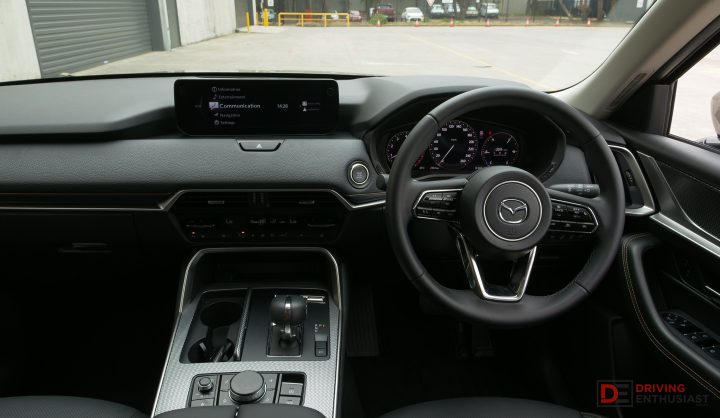
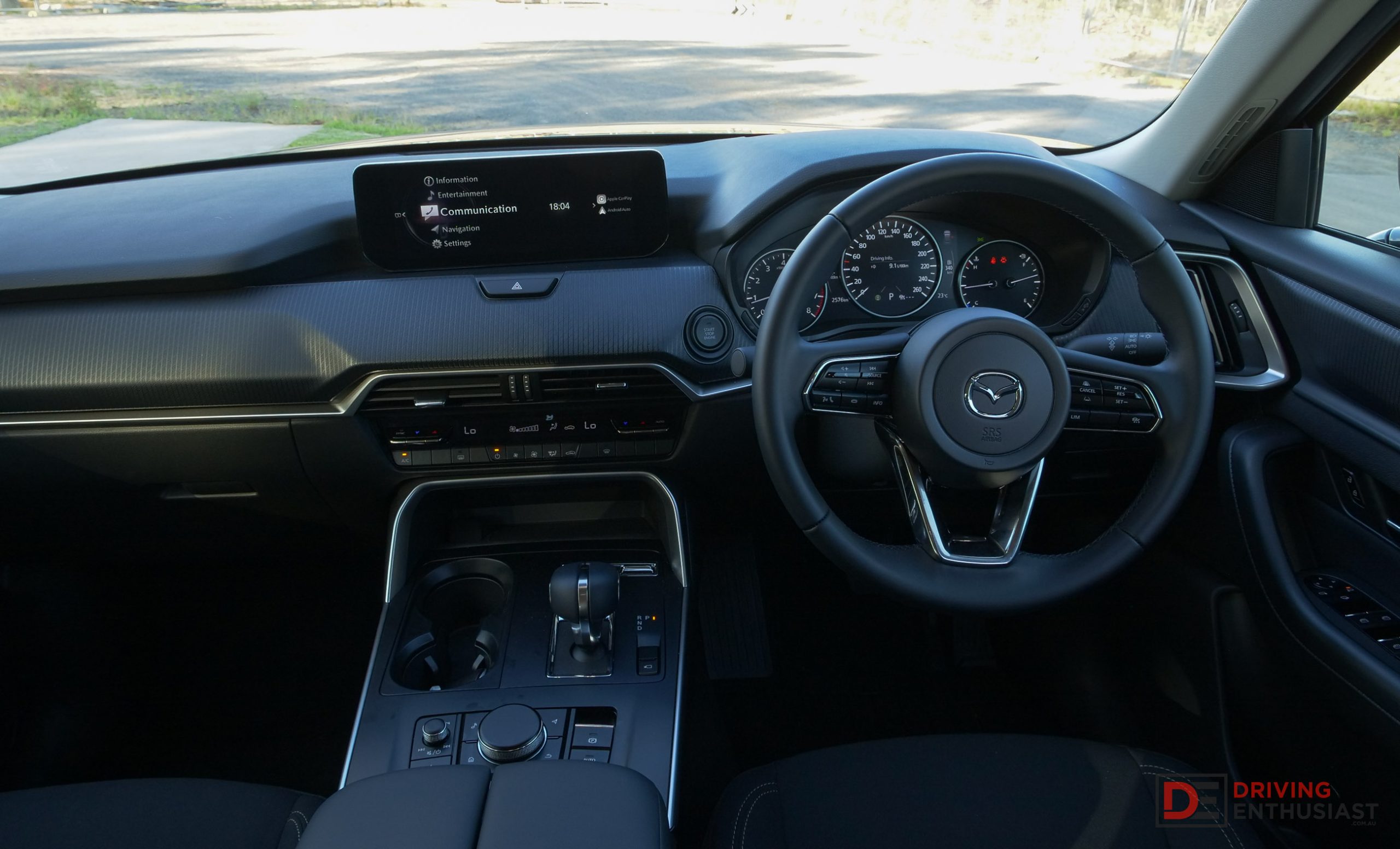
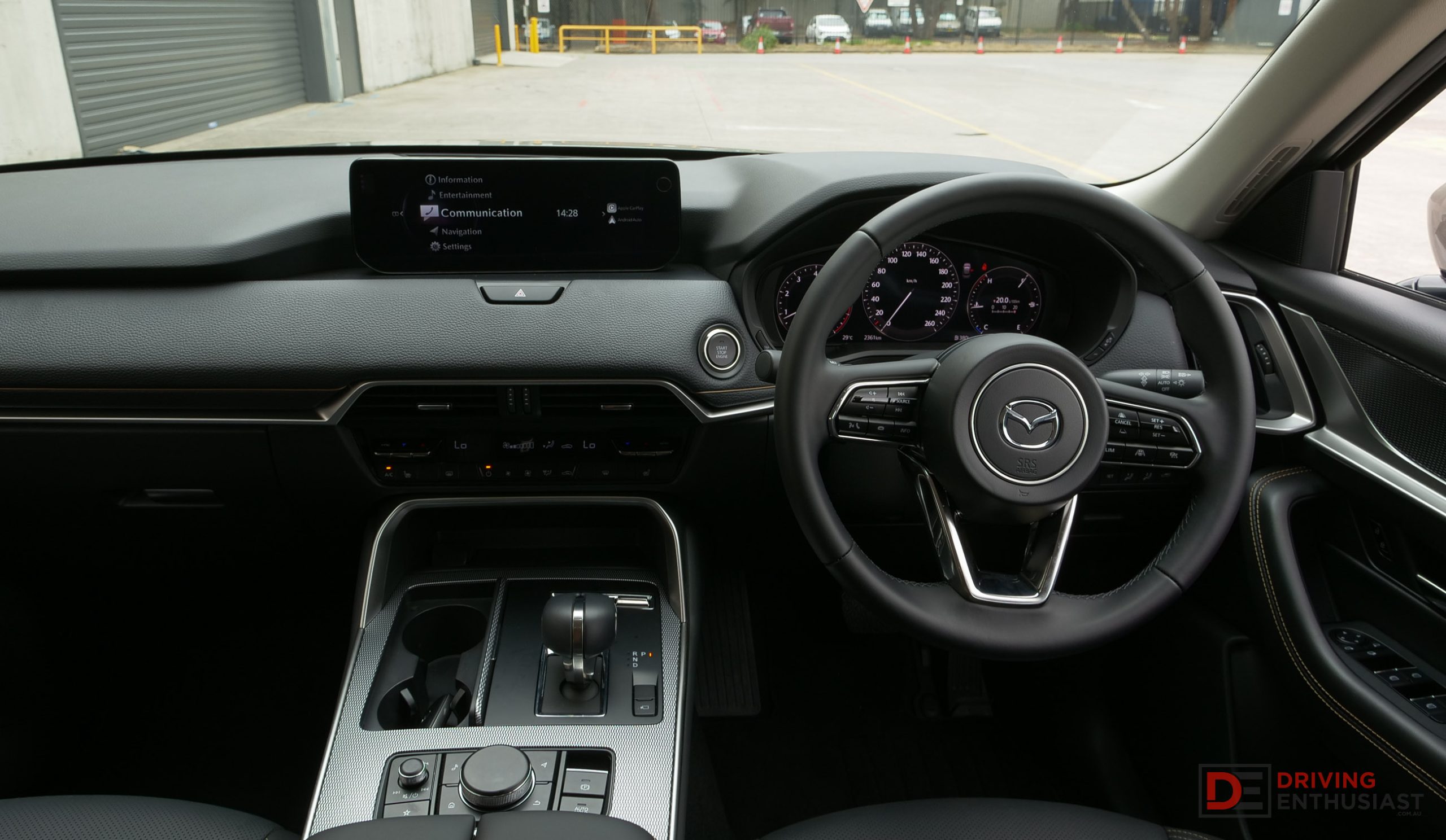
The cabin environment remains the CX-60’s strongest asset, successfully bridging the gap between mainstream and premium segments with an unabashedly Japanese precision. Across the dashboard the architecture is horizontally biased and trimmed in high-quality, soft-touch materials, even in base Pure form.
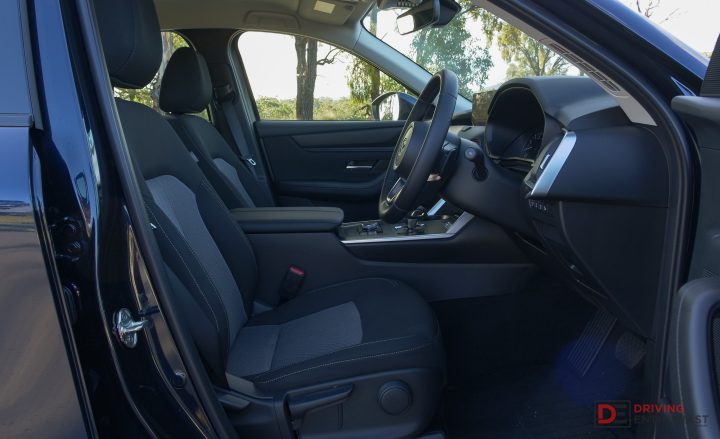
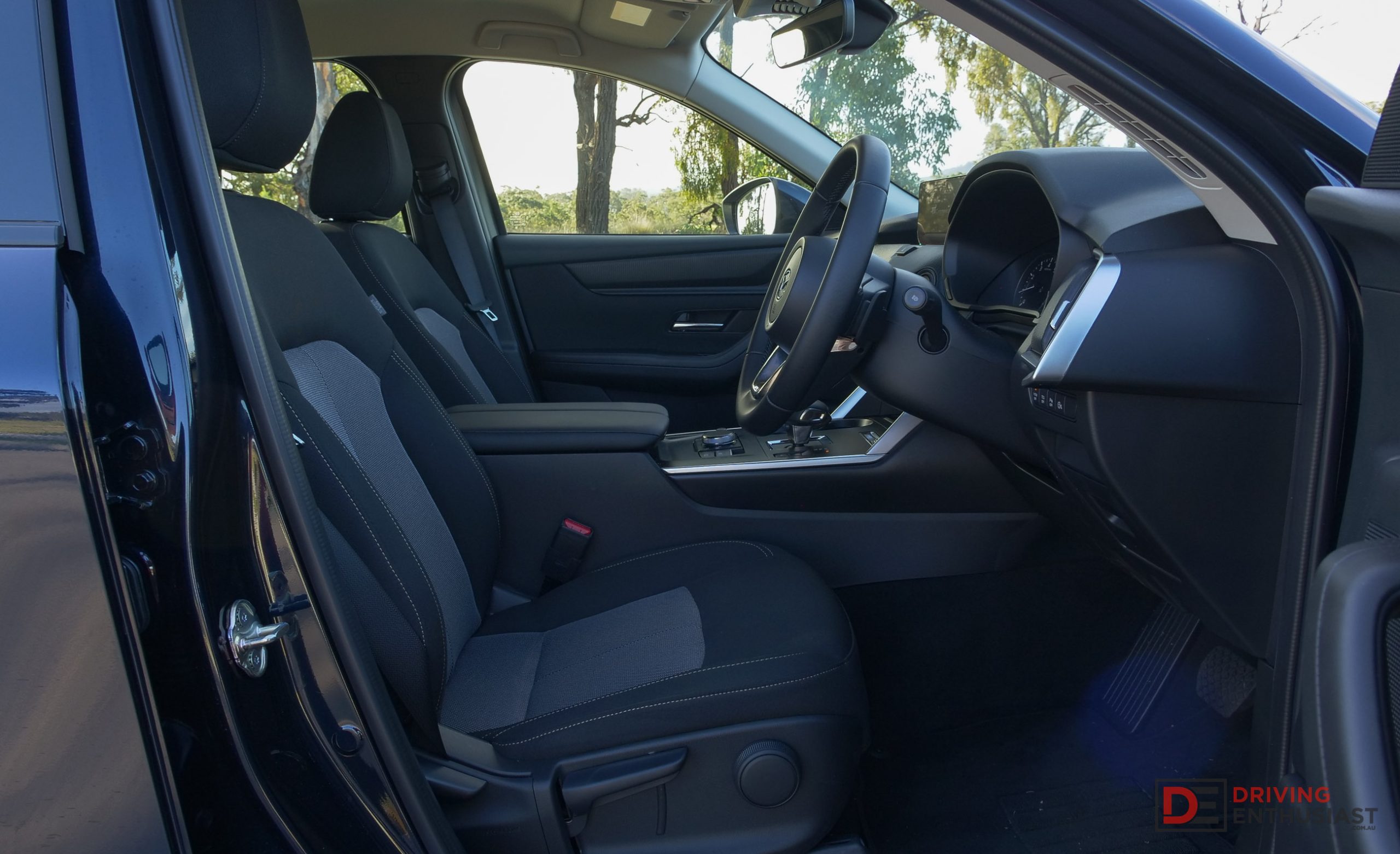
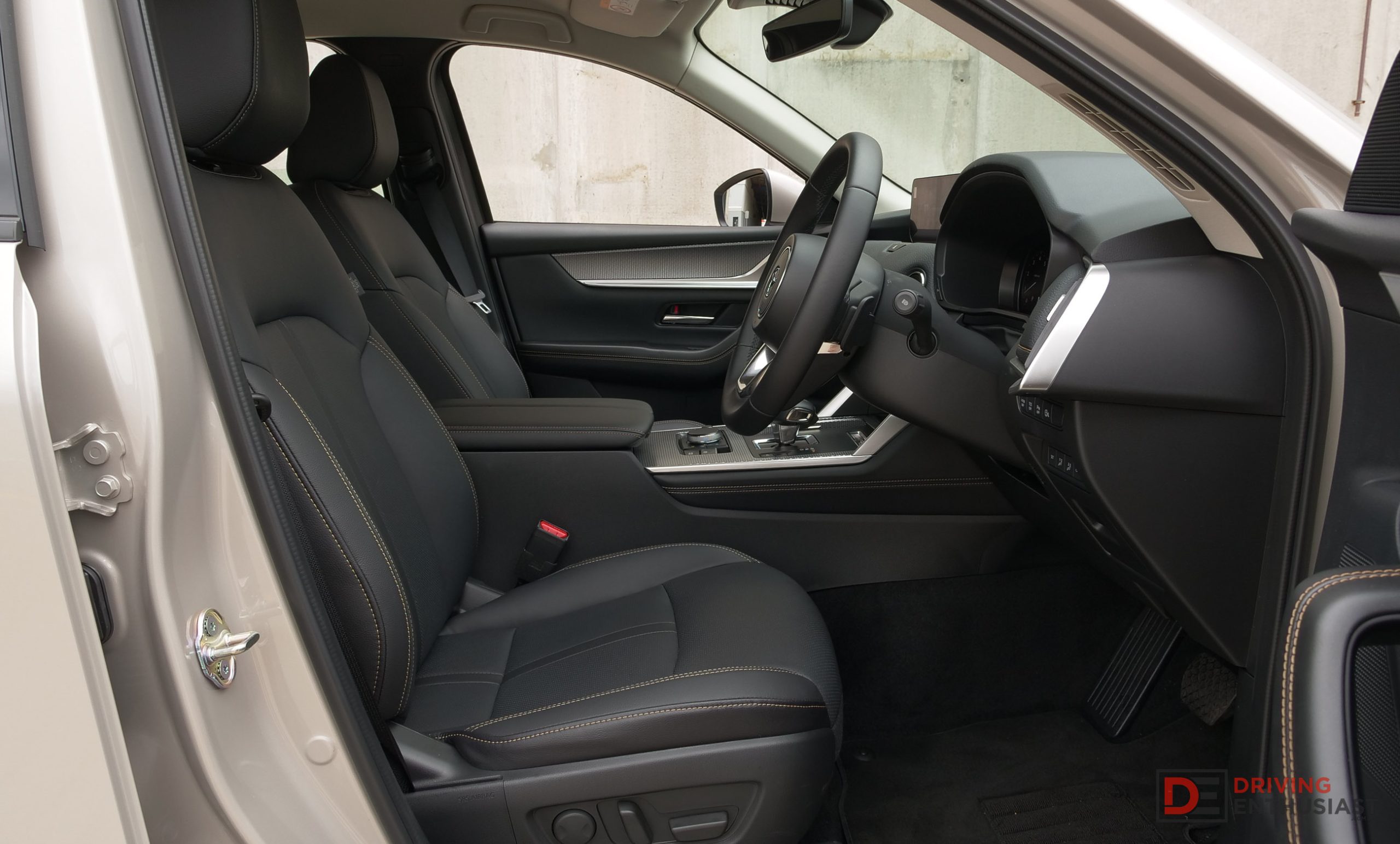
The Touring specification introduces black leather upholstery, replacing the Maztex synthetic material found in lower grades. Both front seats feature power adjustment for the Touring as well, with a memory function retained for the driver, and both include a heating function. Physical switchgear is excellent. Mazda continues to resist the industry trend of integrating climate controls into the primary screen, providing a dedicated bank of tactile climate buttons that operate with a satisfying mechanical action. An overly wide console spoils the packaging party, however.

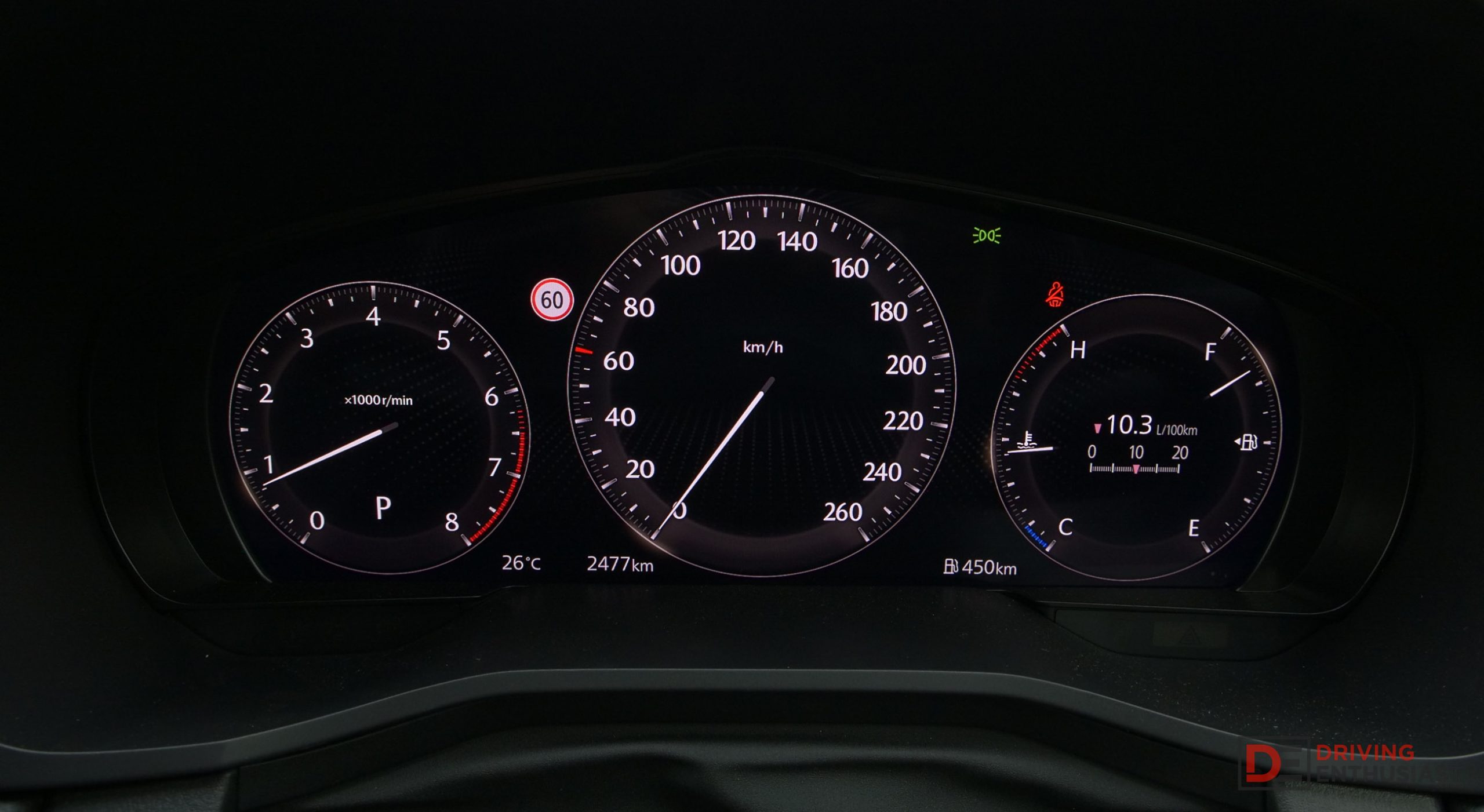
Infotainment is provided by a 10.25-inch widescreen display in all variants. It features wireless Apple CarPlay and Android Auto. Crucially, it is not a touch-screen when the vehicle is in motion. Interaction is managed entirely via a rotary commander dial located on the centre console. While it requires a brief adjustment period for buyers accustomed to touch interfaces, it is fundamentally safer and reduces distraction at highway speeds. Another major highlight is the instrument cluster’s crispness, with a cool animation at startup. Sadly, the manually-adjustable steering wheel mean there there is no Driver Personalisation System as per higher grades.
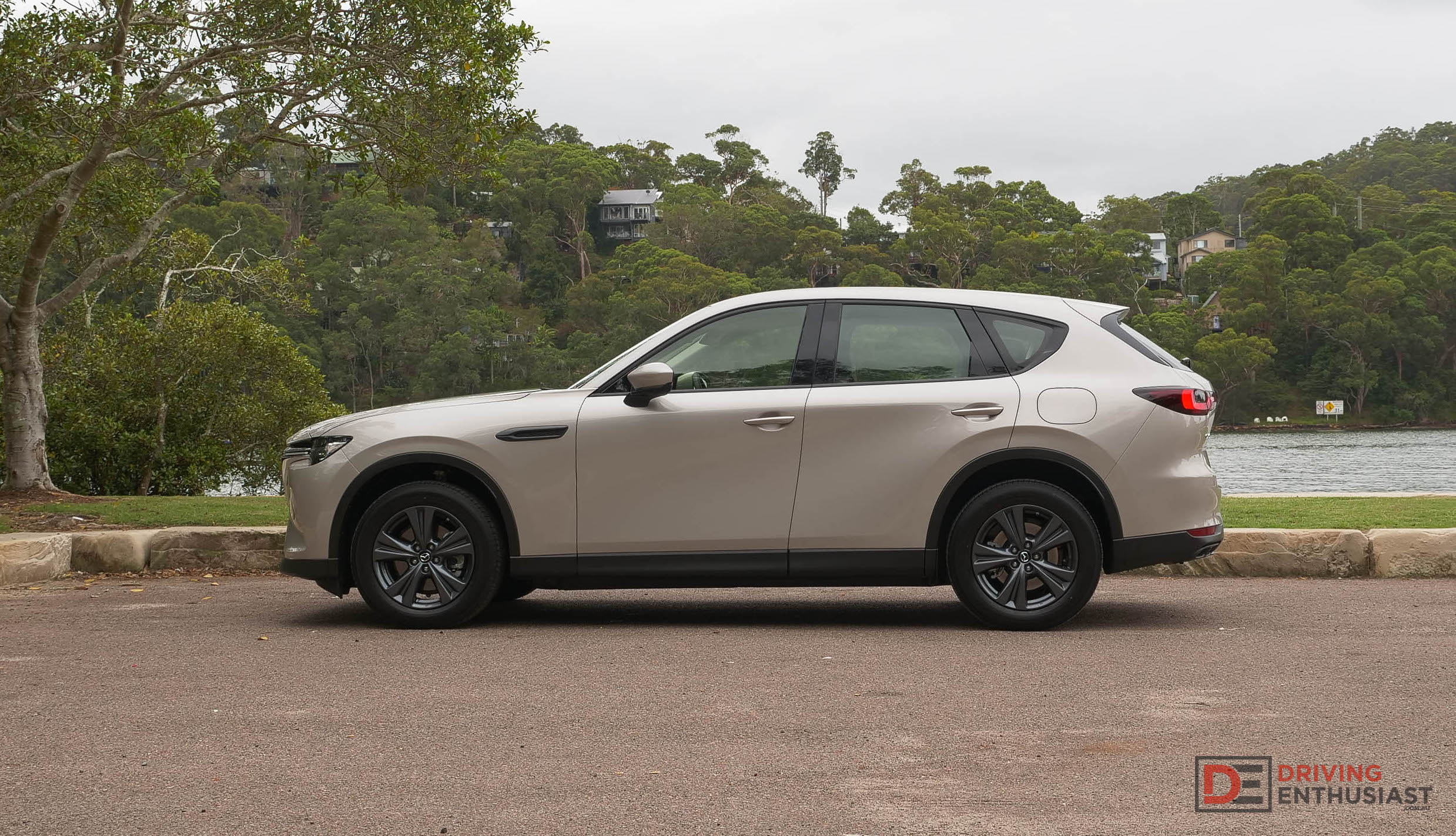
Measuring 4740mm in length on a 2870mm wheelbase, passenger accommodation is highly competitive. Second-row legroom is generous for adults, aided by rear air-conditioning vents and standard USB-C charging ports. Touring passengers are treated to an LED console light.

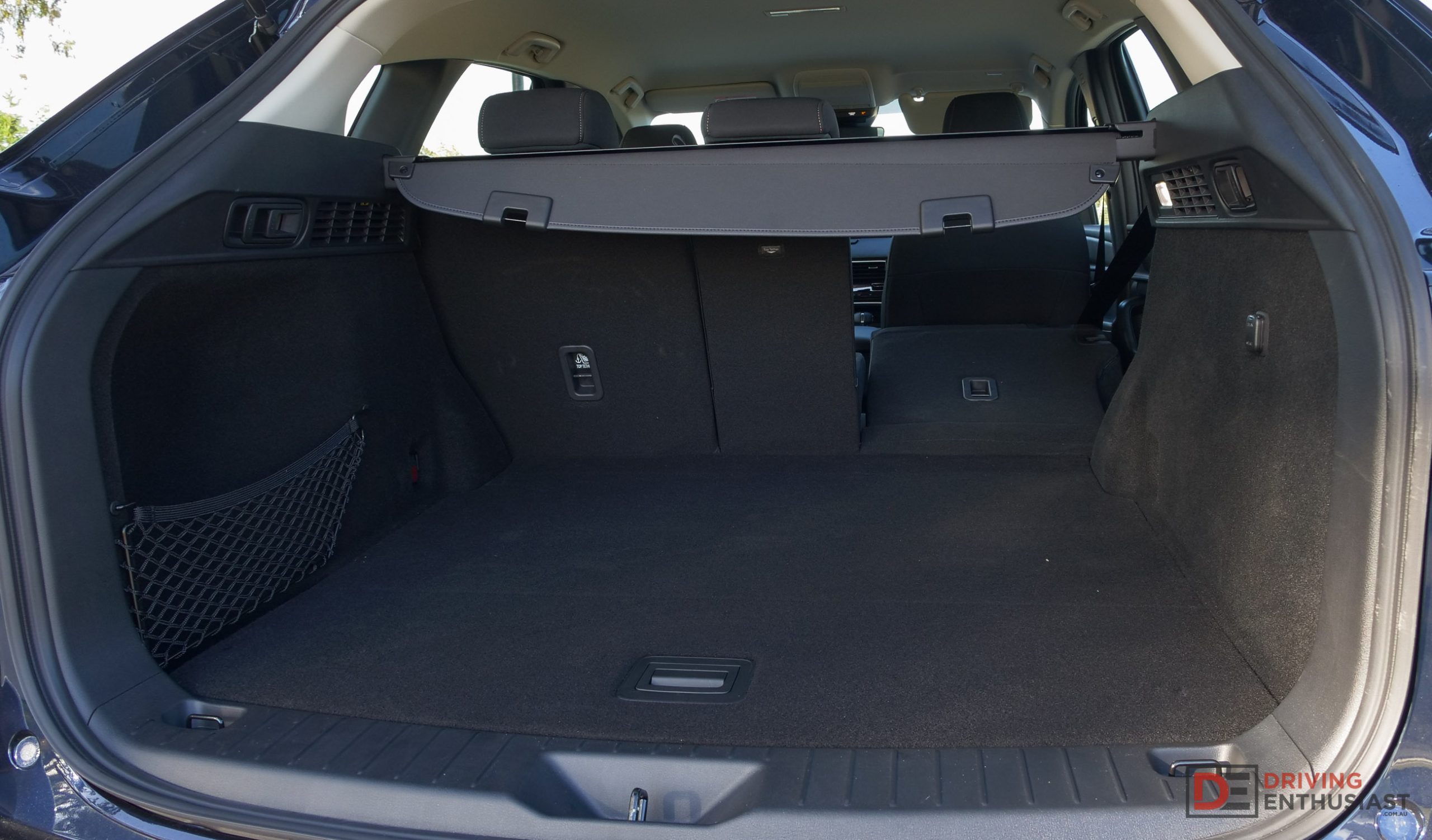
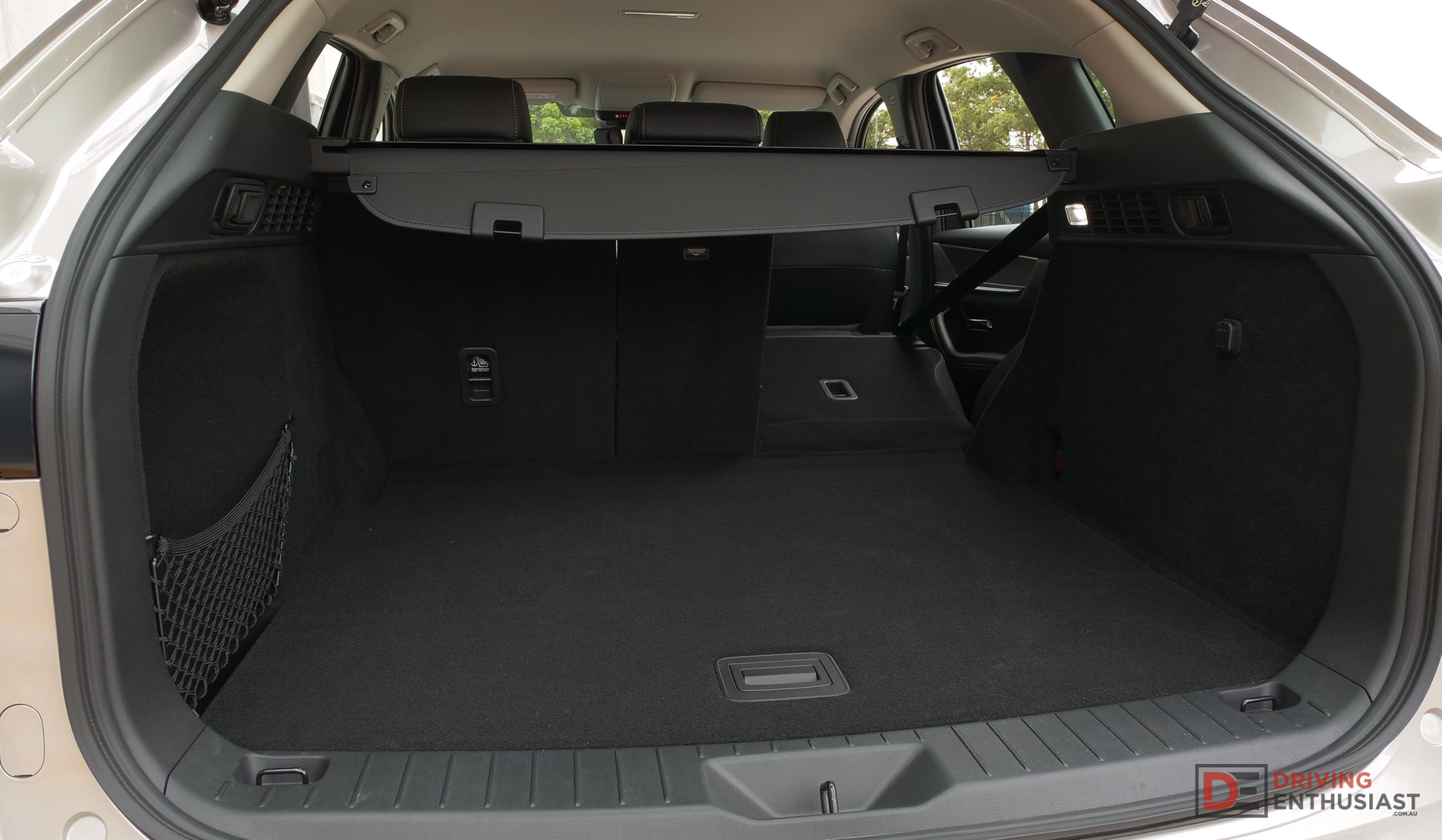
Boot capacity is rated at 477 litres with the rear seats in place, expanding to 1726 litres when folded flat. While the aperture is wide and the floor is completely flat, the 477 figure is noticeably smaller than the 540-plus litres offered by cheaper, front-wheel drive rivals like the Hyundai Tucson. It’s also less than what you get in the common European luxury rivals, such as the Audi Q5 and BMW X3 (both over 520L). This highlights a packaging compromise inherent to the rear-wheel drive platform. Braked towing capacity is down from 2000kg to 1800kg, compared with the 3.3L models.

2026 Mazda CX-60 G25: Powertrain & handling
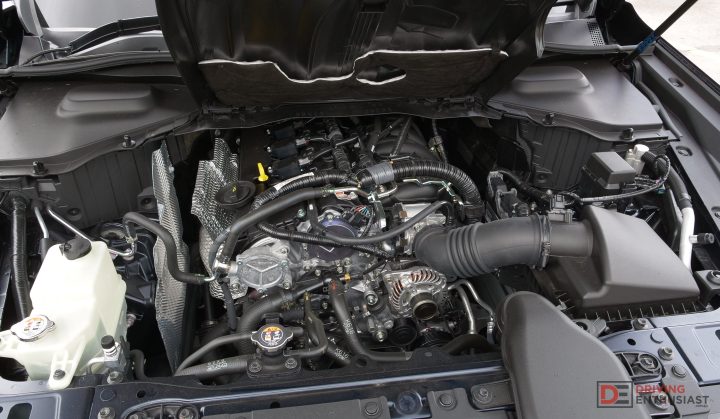
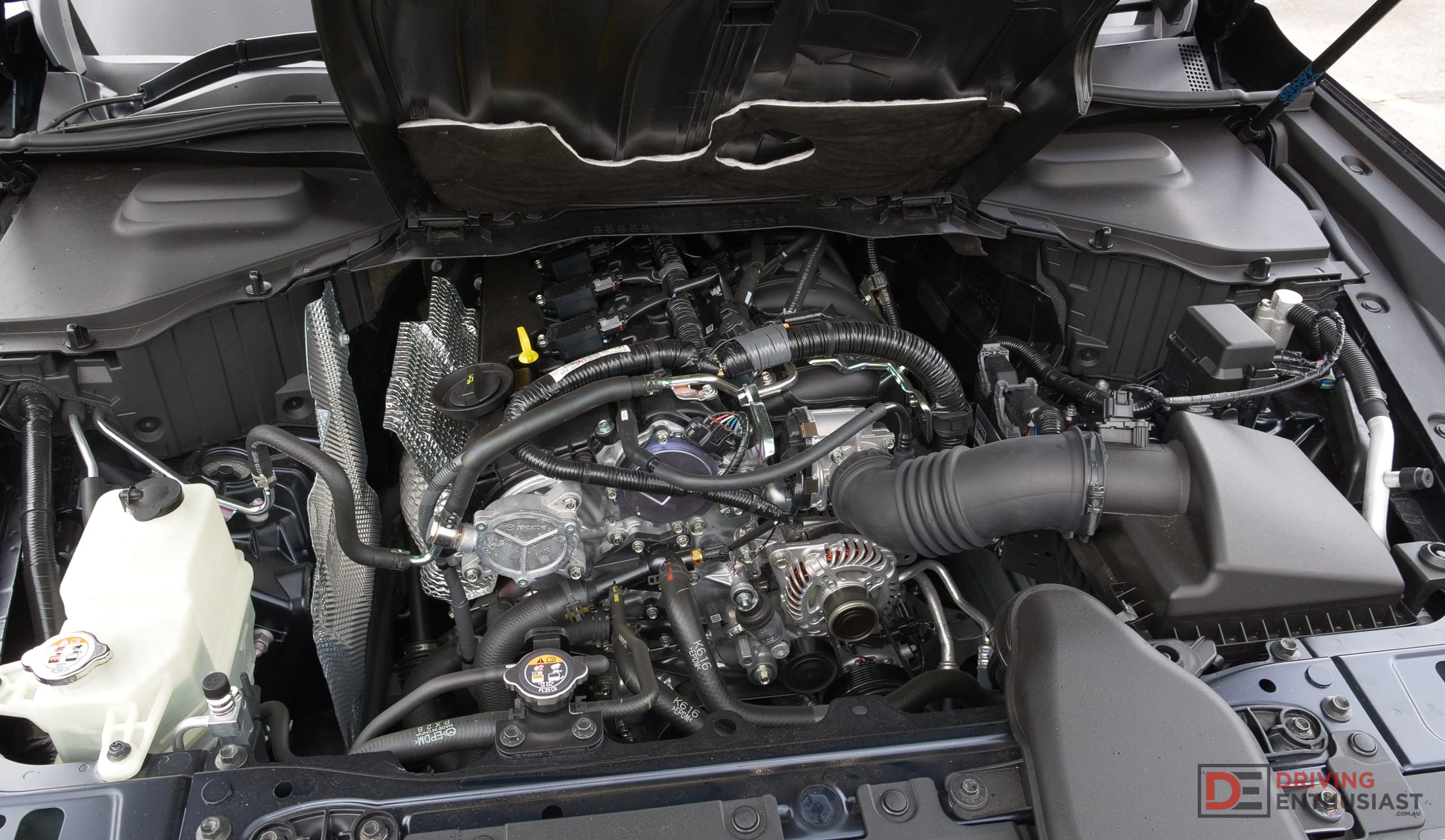
All G25 variants are powered by Mazda’s familiar 2.5-litre ‘Skyactiv-G’ naturally aspirated four-cylinder petrol engine. Output is rated at 138kW at 6000rpm, with 250Nm of torque peaking at 4000rpm. Drive is sent strictly to the rear wheels via an eight-speed multi-clutch automatic transmission, which utilises a wet clutch pack in place of a traditional torque converter.
Juxtaposing the driving experience of the G25 four-cylinder against the G40e six-cylinder reveals two drastically different vehicles. The 3.3-litre turbo six (209kW/450Nm) is effortless. It relies on a massive wave of low-down torque to shift the CX-60’s mass, masking the vehicle’s weight and delivering a genuinely muscular power delivery. The peculiar thing is this has less vibration than the inline-six, despite the inherent smoothness of the inline-six layout.

The 2.5-litre four-cylinder, conversely, has to work hard. Shifting a 1772kg (in lightest Pure form) SUV with only 250Nm of naturally aspirated torque requires heavy throttle applications. It needs to be wrung out past 4000rpm to access its peak output, introducing a coarse, metallic engine note into the cabin. This lacks the low-speed urgency of turbocharged competitors and feels strictly utilitarian.
Even though the eight-speed transmission has received calibration updates for this mid-life refresh, smoothing out the low-speed shudder that plagued early six-cylinder models, it’s still not perfect. When paired with the rev-dependent four-cylinder, the gearbox can occasionally hunt for ratios on steep inclines to keep the engine in its narrow torque band. But the hunting is far less pronounced than we expected.
Where the G25 finds its advantage is in front-axle dynamics. Stripping the heavy inline-six engine and mild-hybrid tech from the nose significantly alters the weight distribution. The front end of the G25 feels immediately lighter and more eager to turn in. Operating as a pure rear-wheel drive vehicle, the steering is communicative and precise.
Mazda has also revised the rear damper rates for this updated model. The suspension remains firm, telegraphing sharp urban imperfections into the cabin, but it has dialled out the unsettled, pogo-stick rebound characteristics of the initial vehicles. It operates as a well-balanced, dynamically capable chassis that is fundamentally crying out for more power.

Mazda claims an ADR combined fuel consumption figure of 7.5L/100km for the G25 powertrain. On test, heavily biased towards urban commuting with occasional highway stints, we recorded an indicated 8.6L/100km in the Touring and 8.5L/100km in the Pure. This higher real-world figure is a direct result of the engine requiring heavier throttle inputs to get the vehicle moving.
All CX-60 G25s are fitted with a 58-litre fuel tank and are capable of running on standard 91 RON unleaded, which could save you some cash in running costs. Based on our tested 8.5-8.6L/100km return, expect a practical touring range of approximately 674-682km between fills.
In terms of performance, we timed 0-100km/h in 10.29 seconds in the Touring. It’s not the quickest premium mid-size SUV, however, not as slow as we were expecting. With this naturally-aspirated formula, power delivery is very linear and predictable.

2026 Mazda CX-60 G25: Key attractions/reasons to buy
- Lower barrier to entry: Adopting the 2.5-litre engine cuts the entry price by thousands, making the CX-60’s premium rear-wheel drive architecture accessible to more buyers.
- Excellent cabin execution: The interior materials, switchgear quality, and physical climate controls provide a genuinely high-grade environment that shames many similarly priced rivals.
- Improved steering agility: Removing the heavy six-cylinder engine from the nose yields a slightly sharper, more communicative turn-in and a better-balanced chassis.
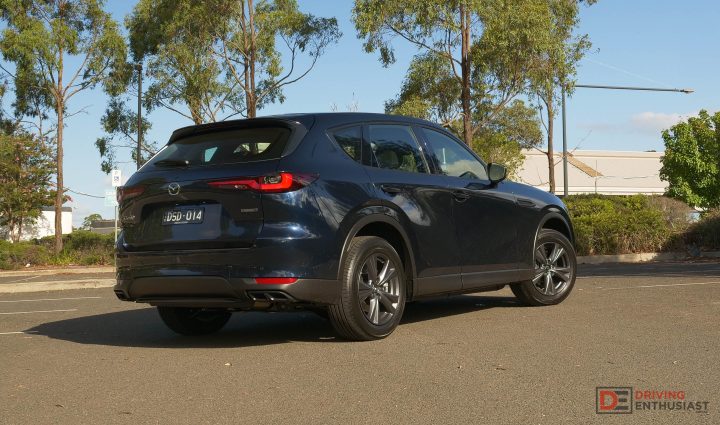
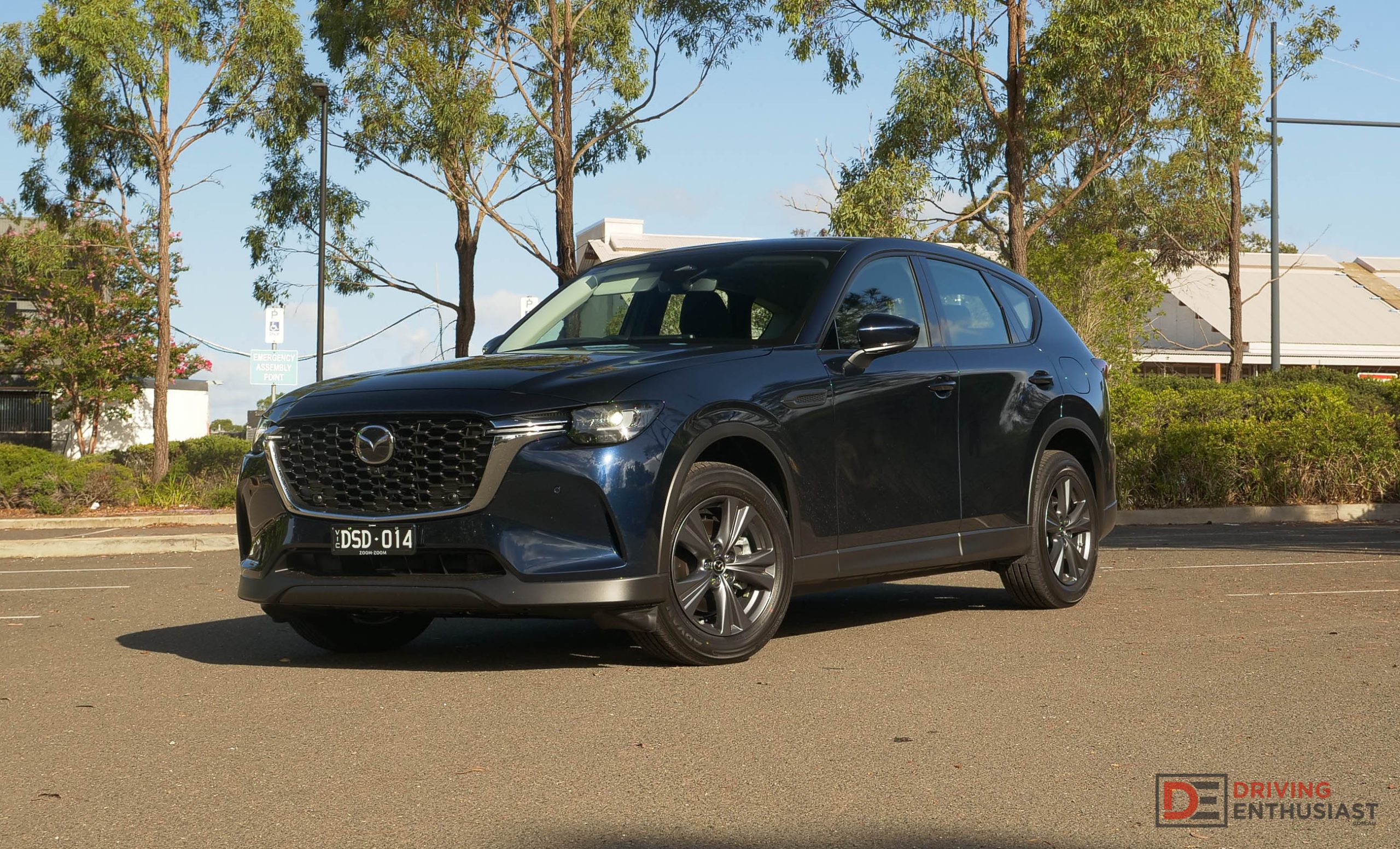
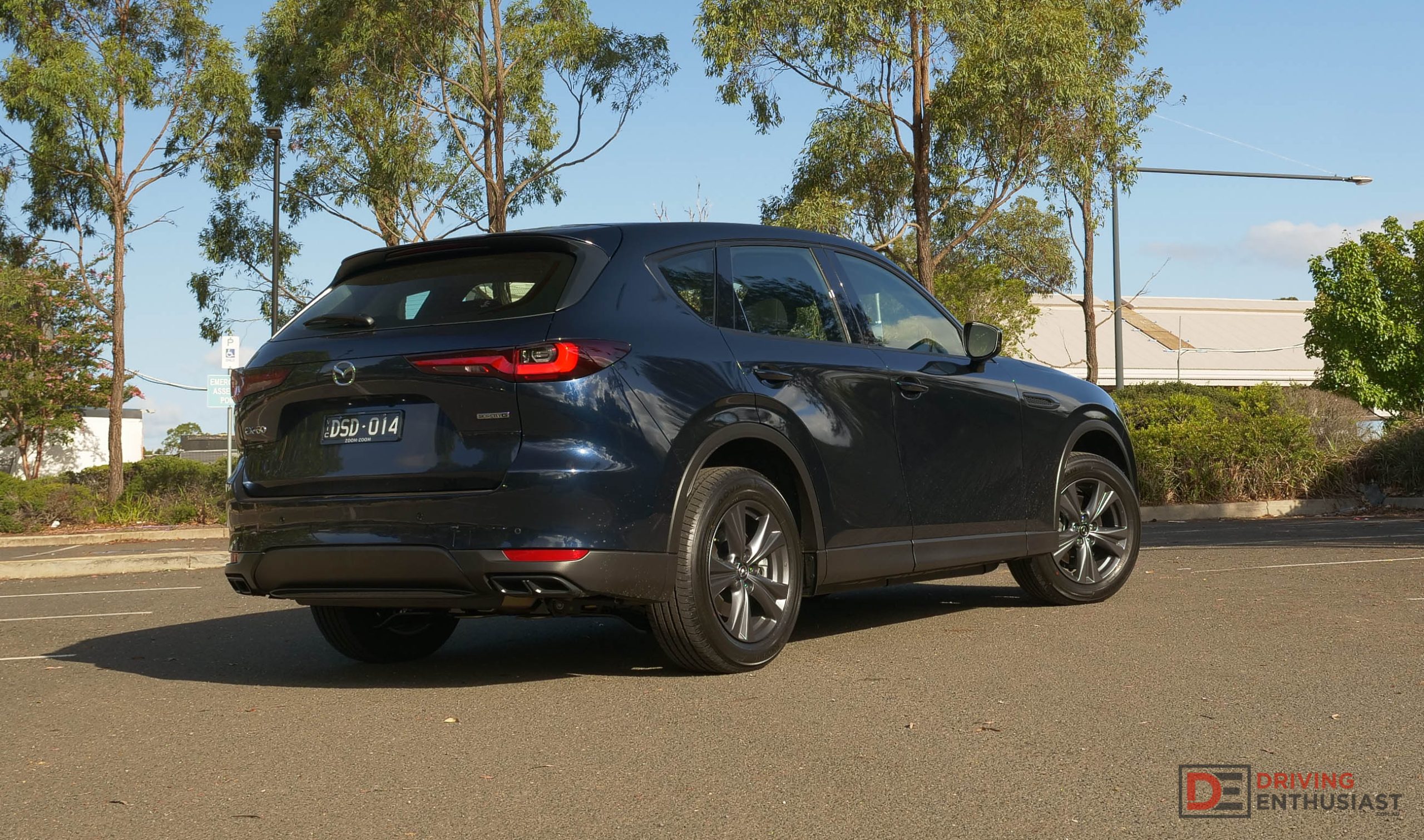
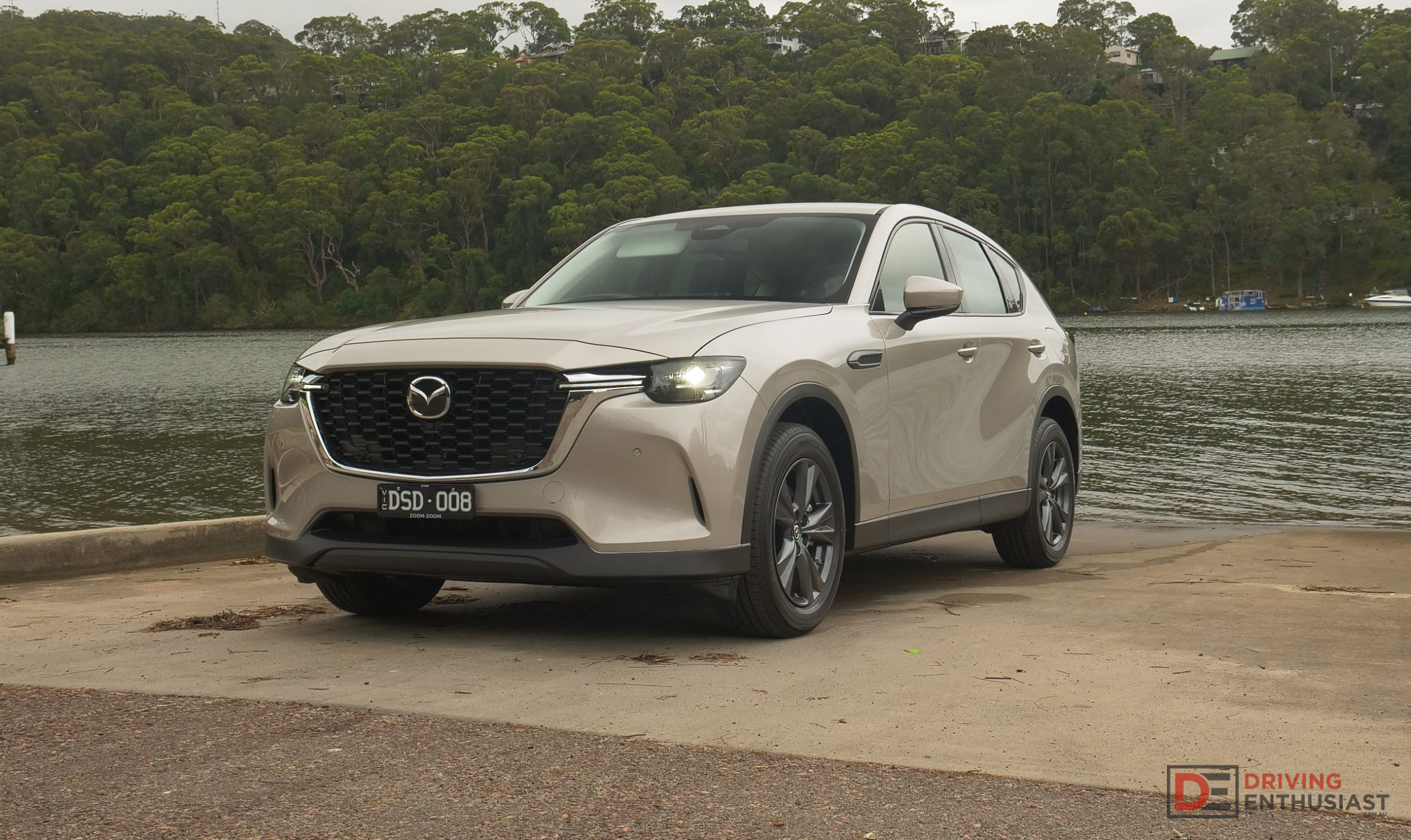
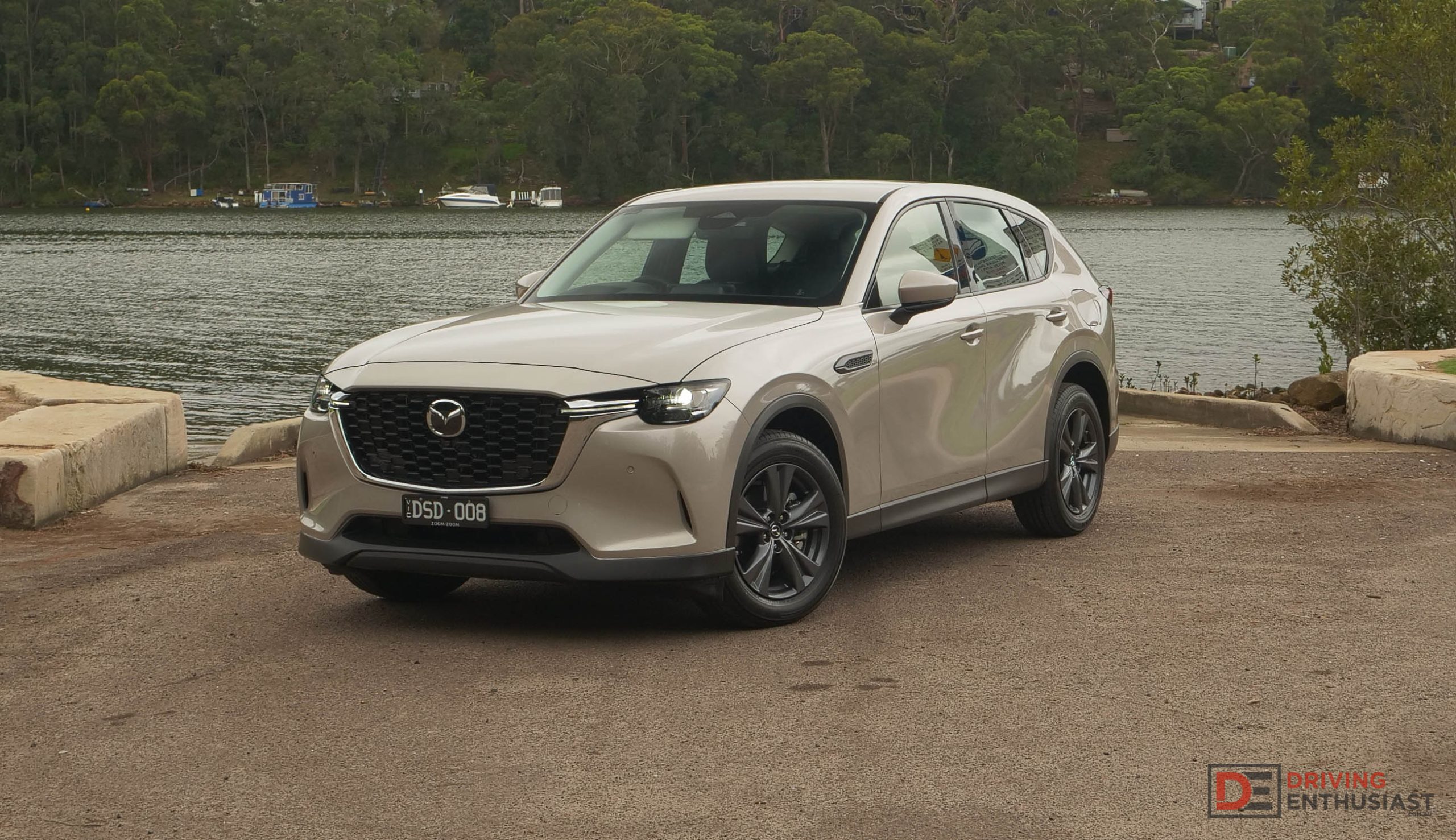
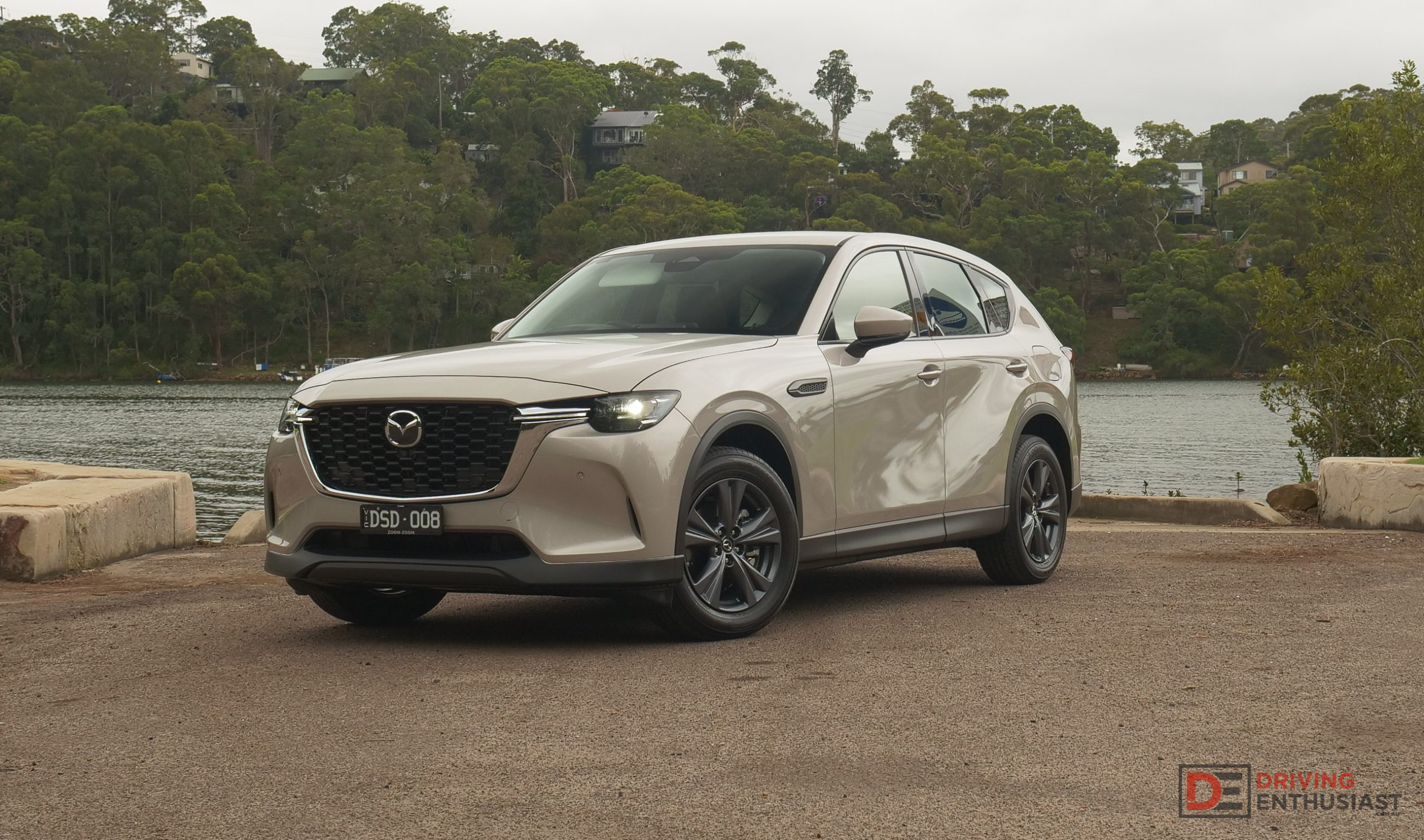
- Design: From any angle, it’s a nice-looking SUV. And with the G25, all variants look the same so it doesn’t matter if you go for the base Pure.
2026 Mazda CX-60 G25: Key considerations before you buy
- Lack of powertrain urgency: With only 250Nm, the four-cylinder engine has to work hard to move the CX-60’s mass, resulting in sluggish acceleration compared with other premium SUV rivals.
- Coarse engine acoustics: Wringing the 2.5-litre engine out past 3000rpm to access peak torque introduces a loud, unrefined engine note into an otherwise quiet cabin.
- Compromised boot capacity: The 477-litre cargo volume is restrictive for a vehicle in the mid-size segment, falling short of cheaper, front-wheel drive alternatives.
- Slight disadvantage in fuel economy: The G25 is officially rated at 7.5L/100km while the 3.3L inline-six is rated at 7.4L/100km. But we reckon in the real world the 3.3L uses less again, as you don’t need to push it as much as this.
2026 Mazda CX-60 G25: Video








How does it rate against its rivals?
-
Price
-
Quality look & feel
-
Interior tech
-
Powertrain performance
-
Ride & handling
-
X-factor (does it stand out in its class?)
Final word
The G25 Touring occupies an interesting middle ground. It retains enough of the CX-60’s premium aspirations to feel special inside, while introducing a more accessible and straightforward powertrain, at a lower price. Unsurprisingly, this is not as brisk as the inline-six options, and compared with other premium mid-size SUVs, but driving refinement and design remain impressive.