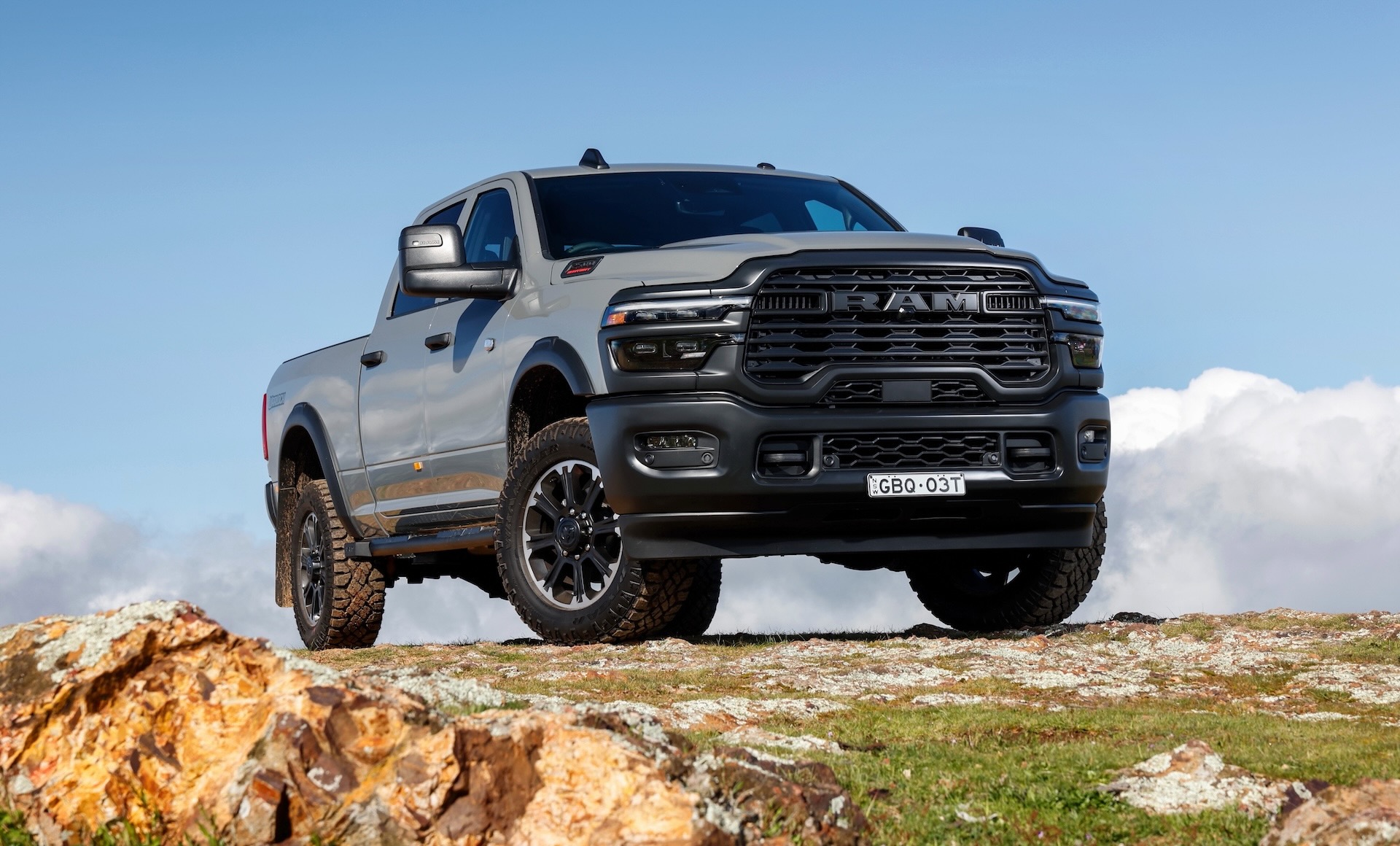
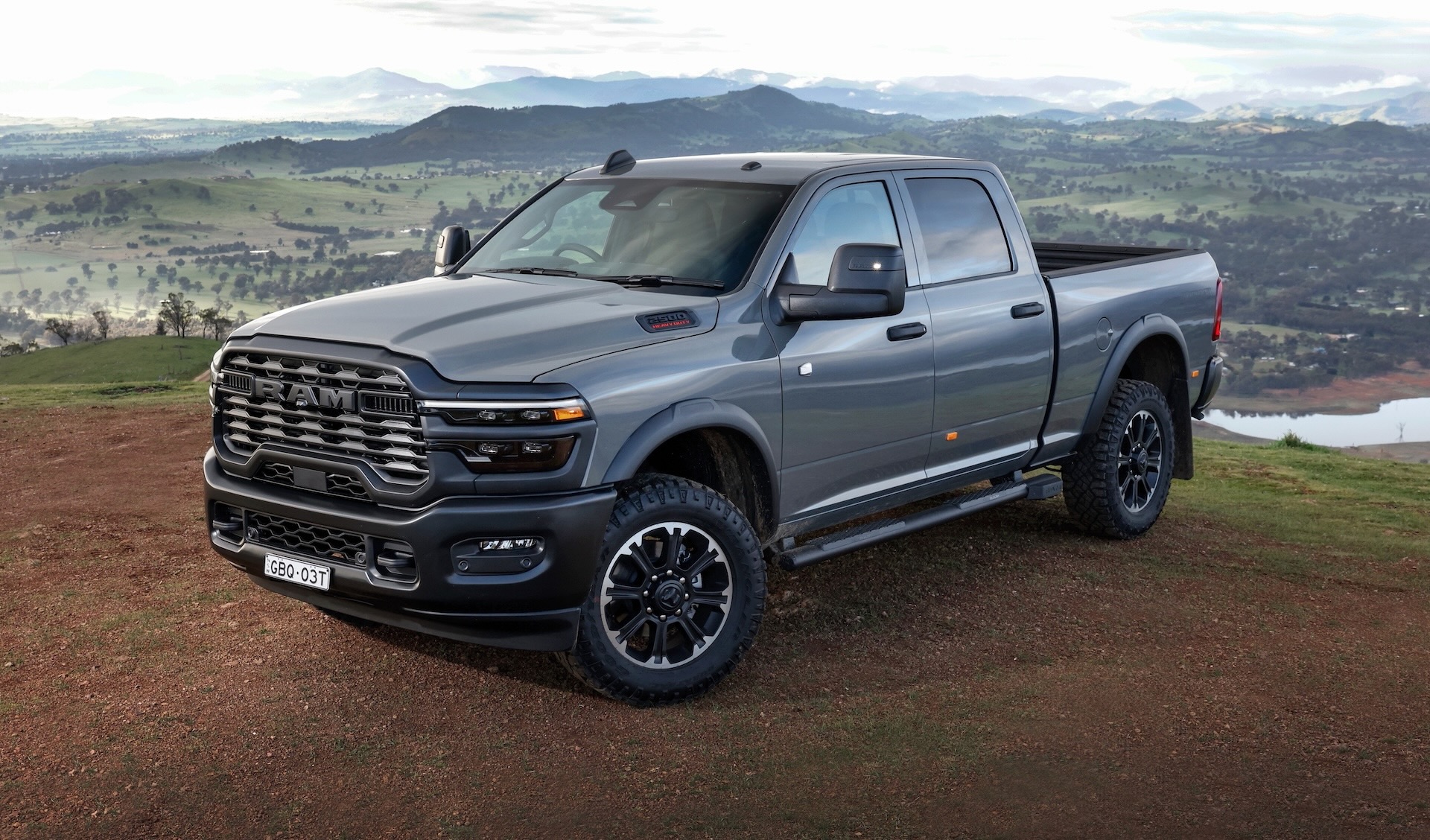
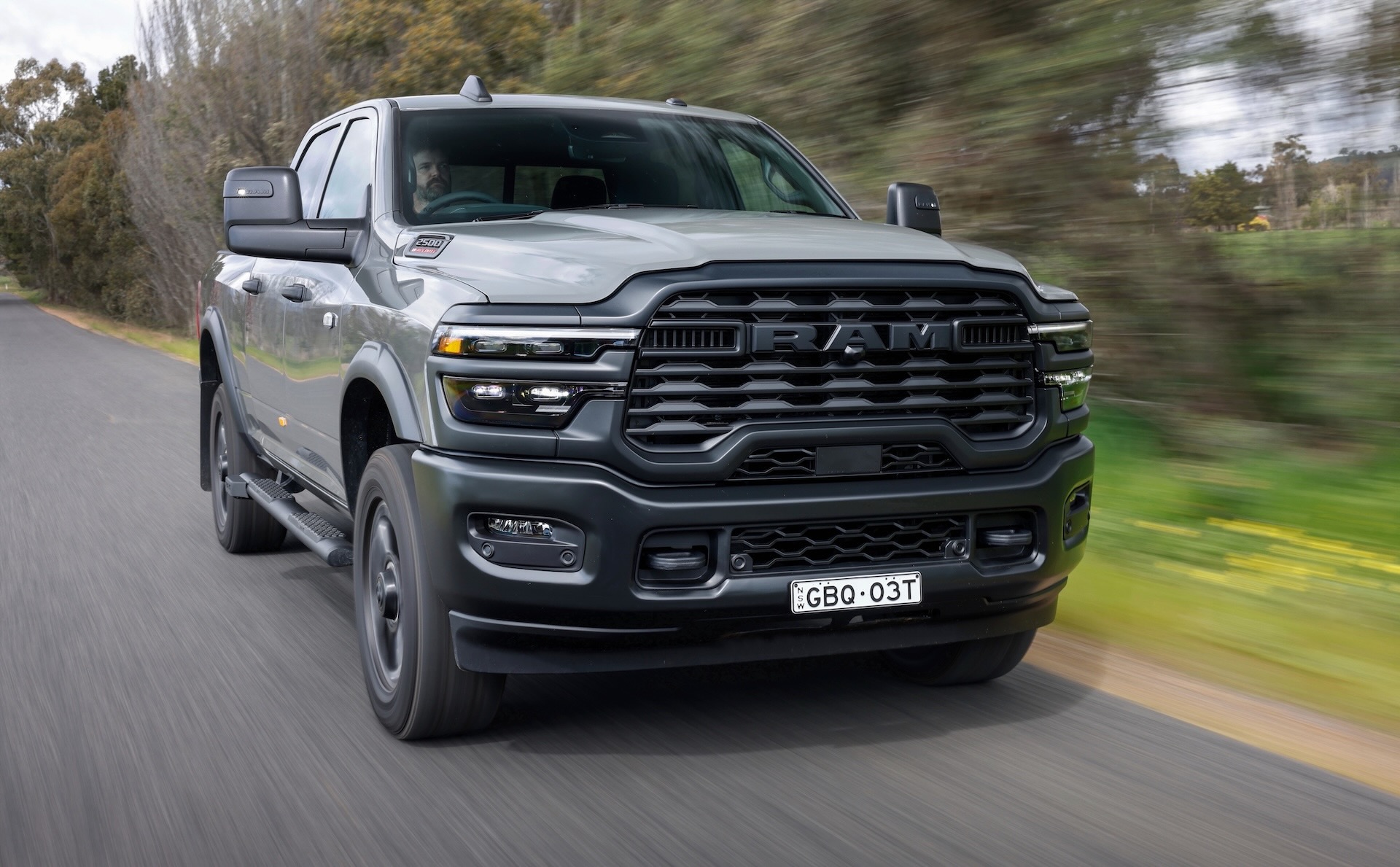
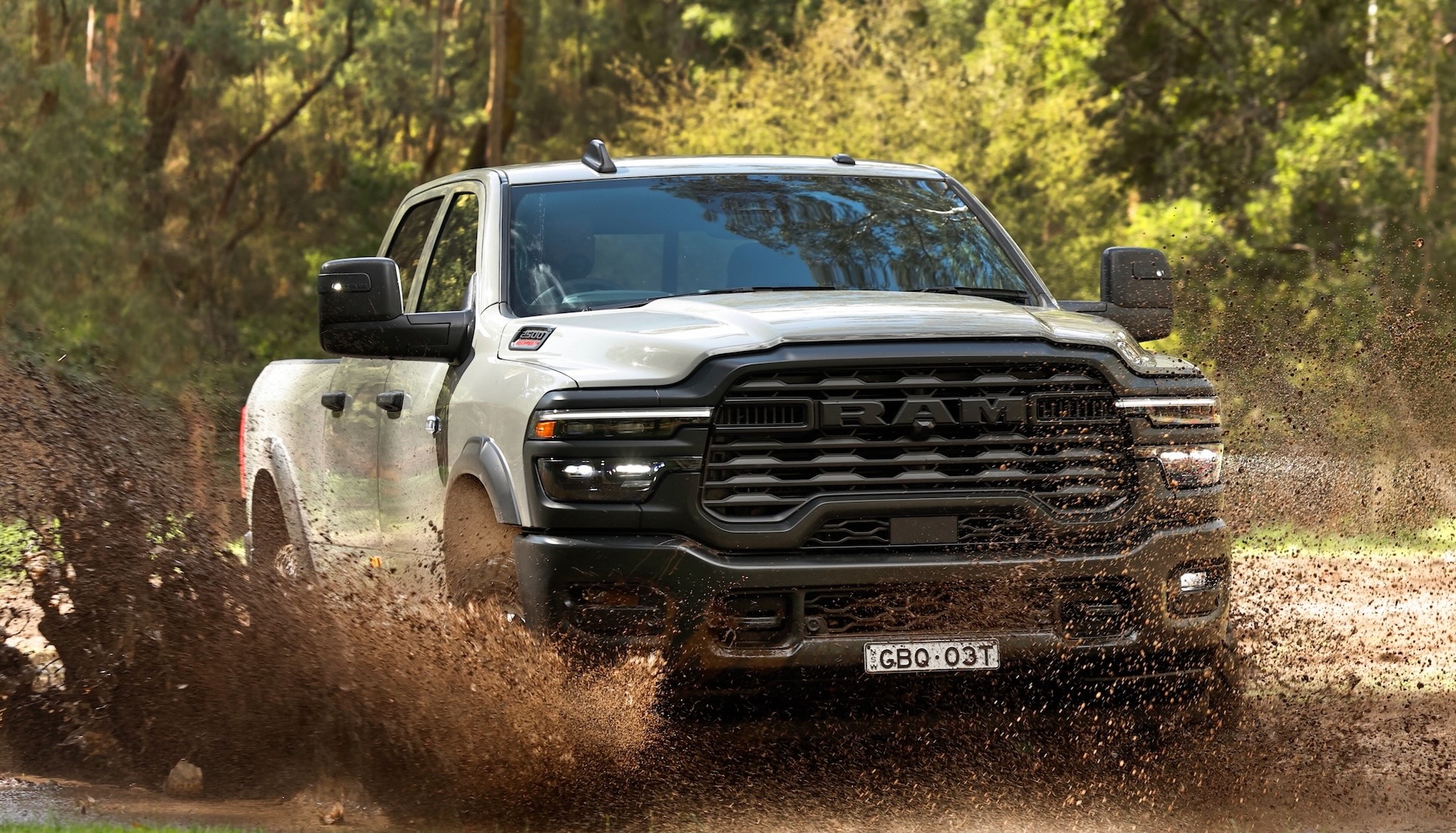
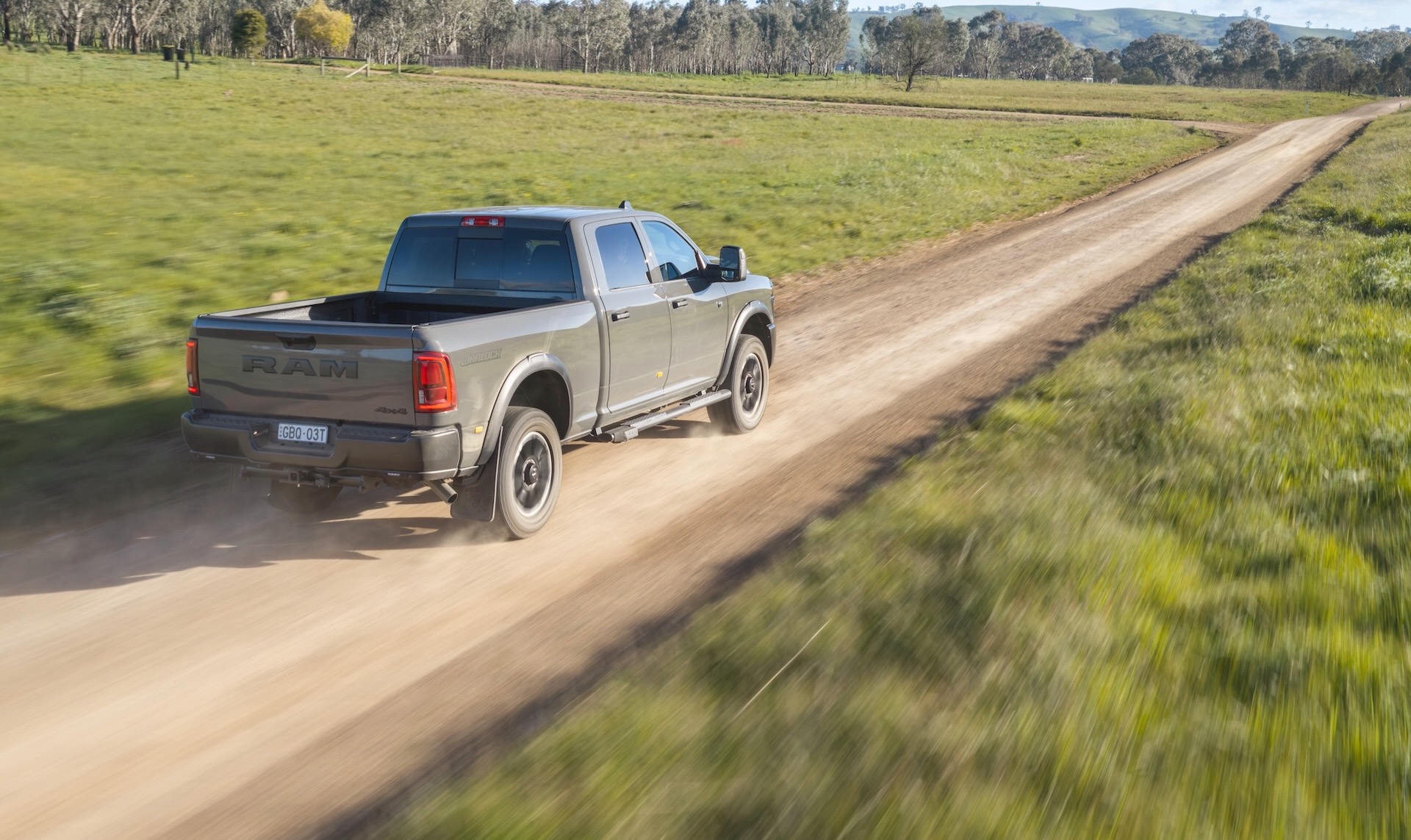
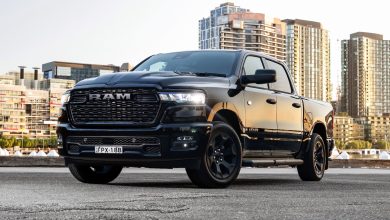
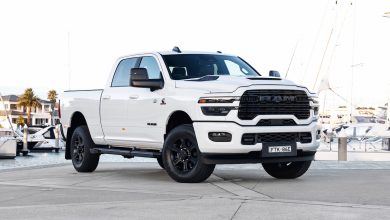
After a two-year absence from the Australian RAM lineup, the HEMI V8 is back. And if there was ever an appropriate vehicle to welcome it home, surely the six-metre-long, 3.2-tonne RAM 2500 is it?
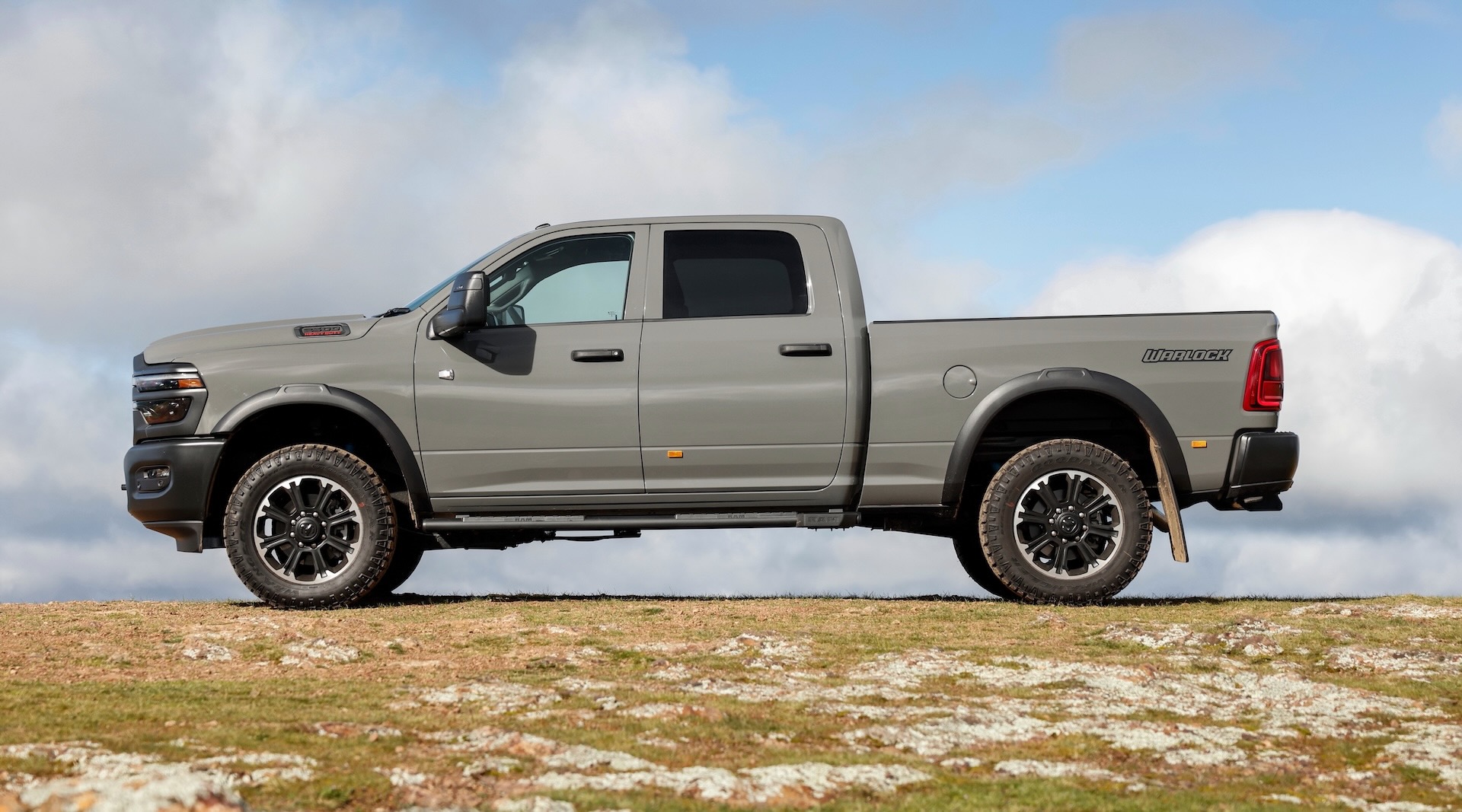
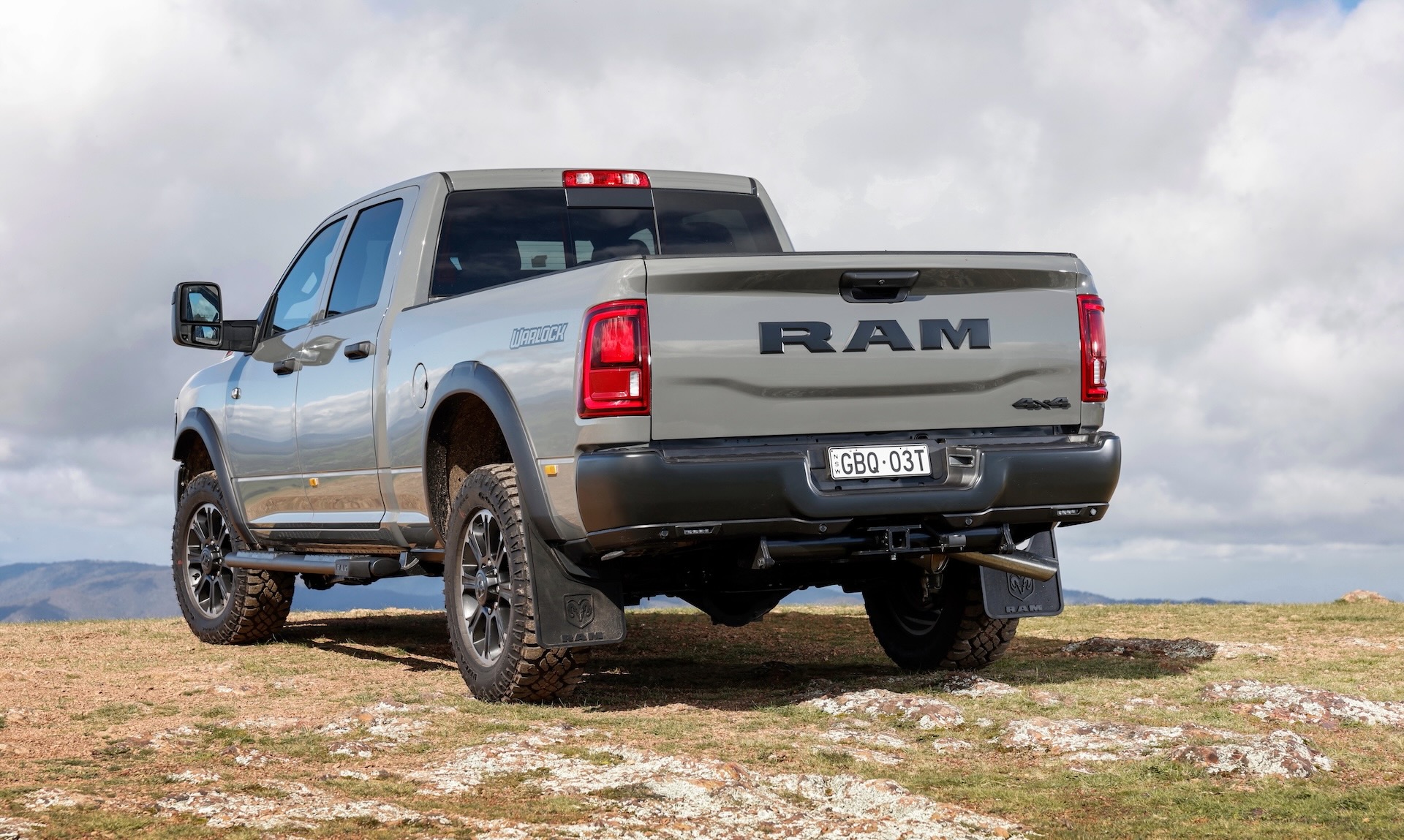
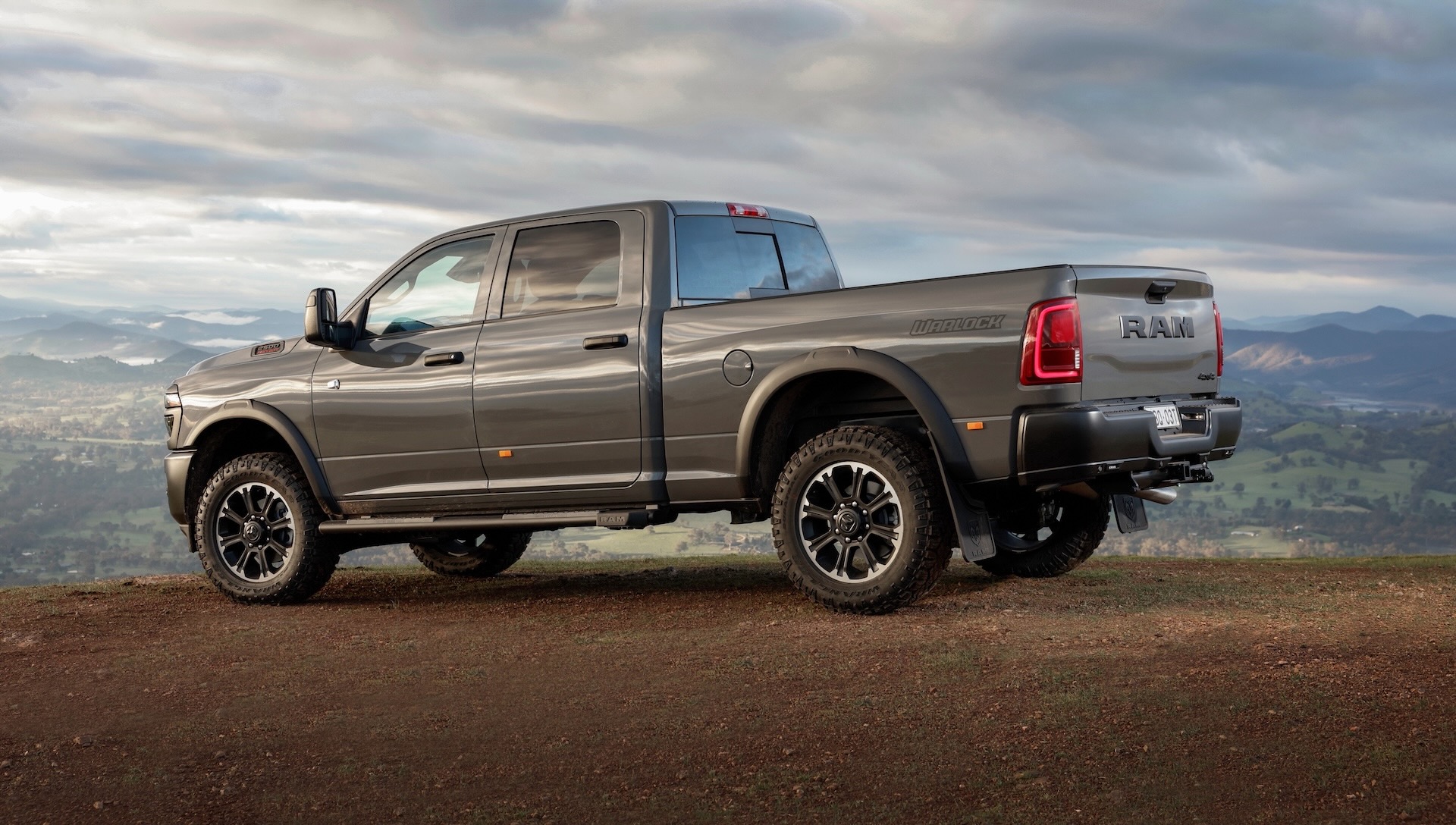
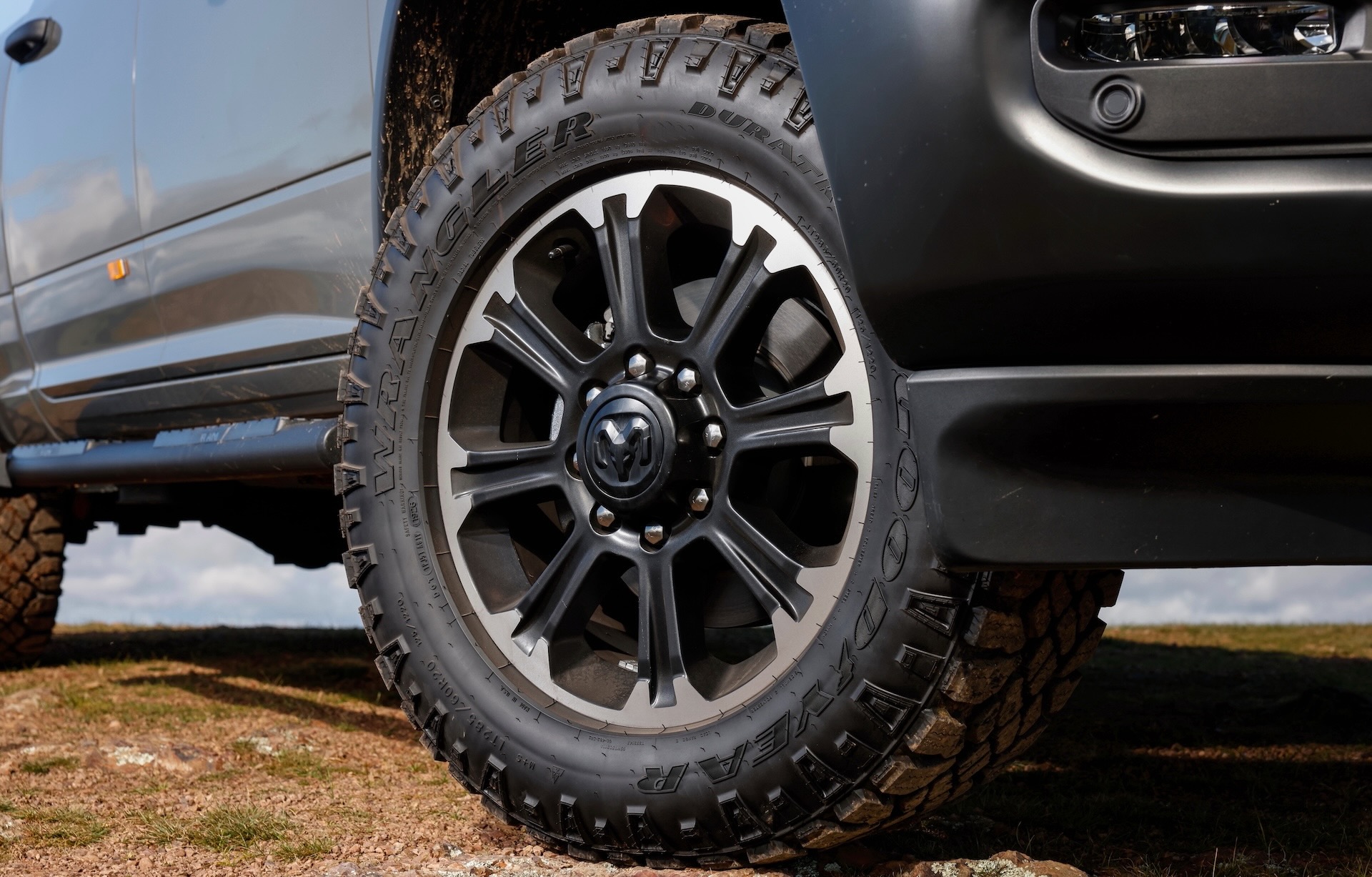
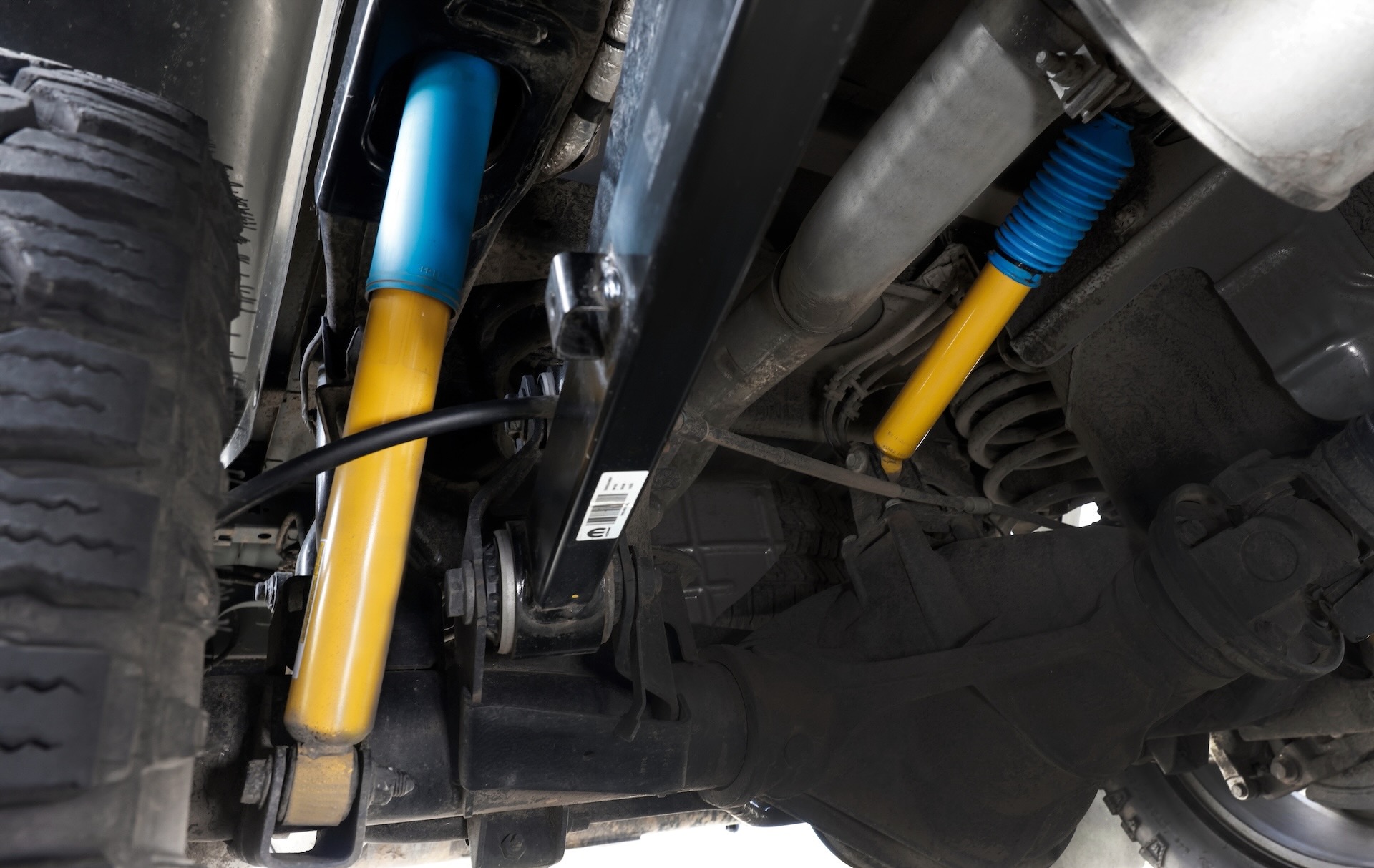
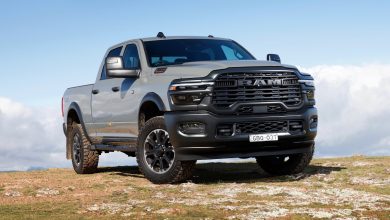
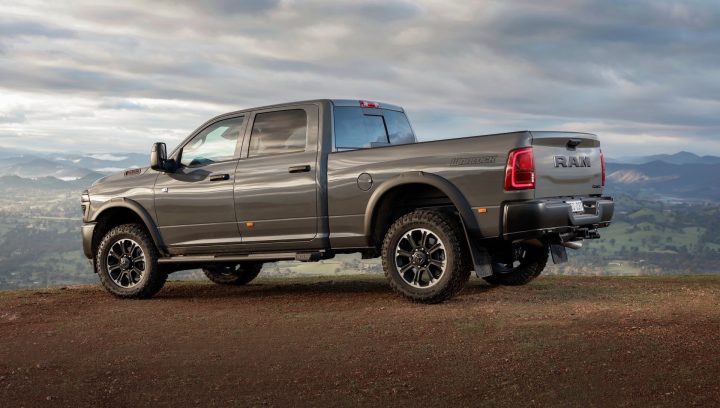
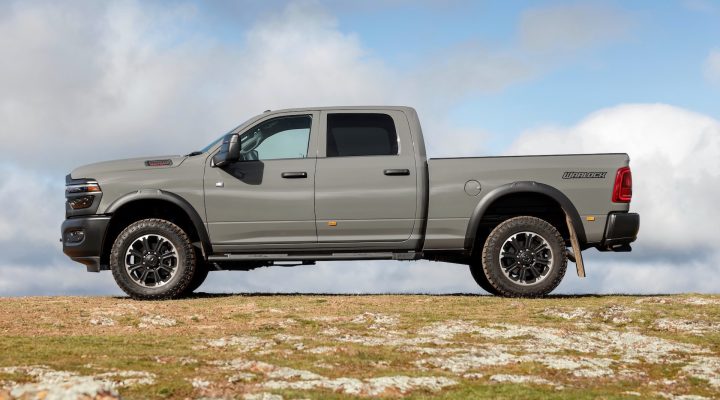
The new 2500 Warlock introduces a 6.4-litre naturally aspirated HEMI V8 as an alternative to the familiar 6.7-litre Cummins turbo-diesel. It’s the first time a petrol V8 has been offered for the 2500 in around 10 years. It’s also the first time the Warlock has been offered locally, combining a more rugged appearance with Bilstein dampers, 20-inch wheels, all-terrain tyres and plenty of black exterior detailing.
2026 RAM 2500 Warlock HEMI V8: Specifications
Engine: 6.4-litre petrol V8
Output: 306kW@5800rpm / 582Nm@4000rpm
Gearbox: Eight-speed auto
Drive type: 2H, 4H, 4L
Wheels: F & R: 20×8.0, 285/60
Kerb weight: 3220kgMax towing/GVM/GCM: 4500kg/4495kg/10,001kg
Power-to-weight: 10.52:1 (kg:kW)
Official consumption: N/A
Fuel tank/Fuel type: 117L/95 RON
0-100km/h: 7.62 seconds*
Starting price: $157,950
*Figures as tested by Driving Enthusiast on the day. Manufacturers’ claims may be different
2026 RAM 2500 Warlock HEMI V8: How much does it cost?
This isn’t a budget special, the RAM 2500 Warlock V8, starting from $157,950 (excluding on-road costs), with metallic paint adding $950. However, it does sit neatly within the RAM lineup, just below the 1500 Limited and well below the $172,950 2500 diesel. But there’s more to the petrol V8 than sound and character. Its significantly lower kerb weight over the diesel creates some interesting advantages for buyers towing at the regular 4500kg limit.
RAM Trucks Australia provides a three-year/100,000km warranty, with scheduled servicing required every 12,000km or 12 months (whatever comes first). That’s less frequent than the 6.7L diesel, which requires services every 12,000km or six months.
2026 RAM 2500 Warlock HEMI V8: Interior & packaging
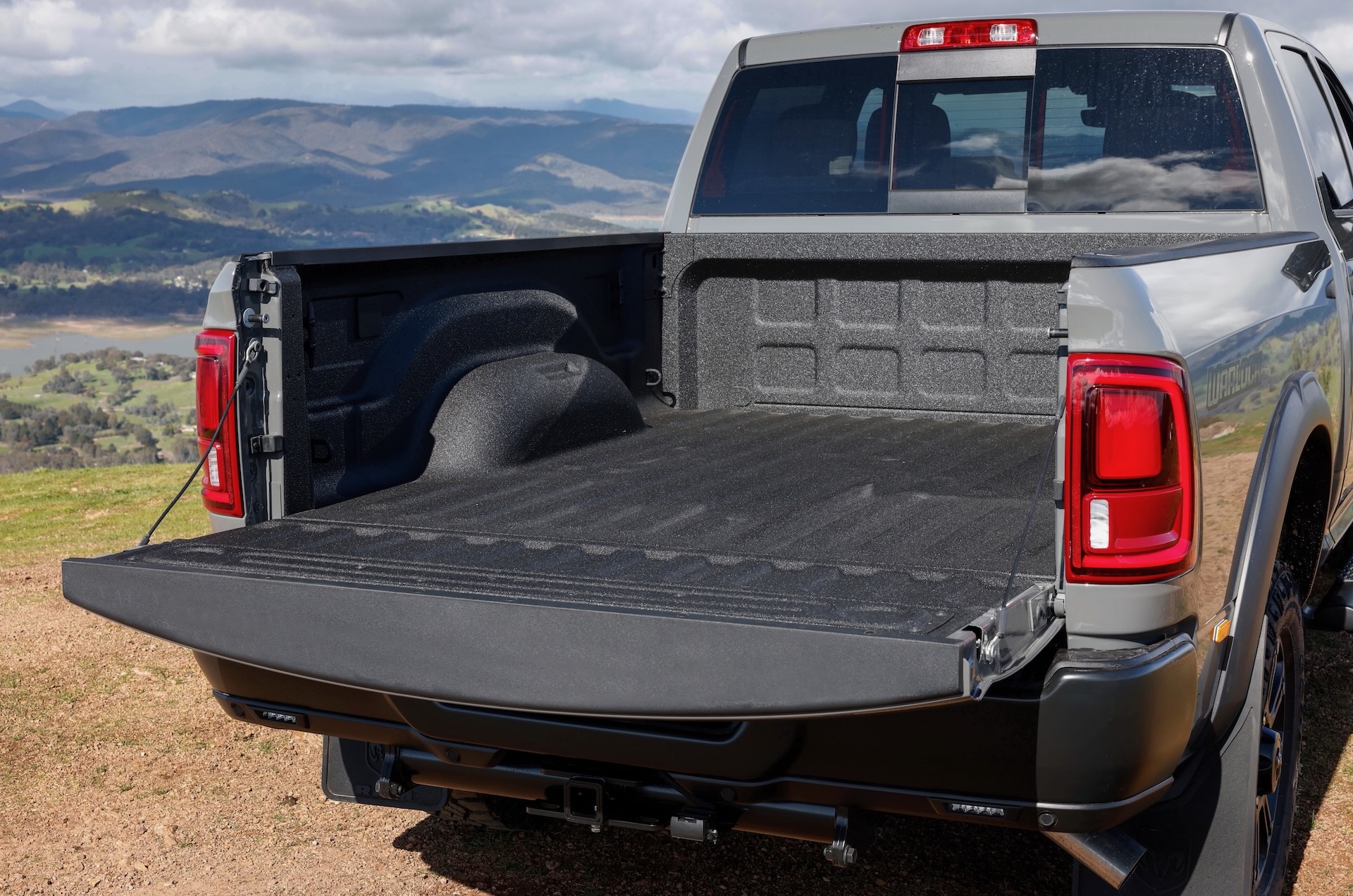
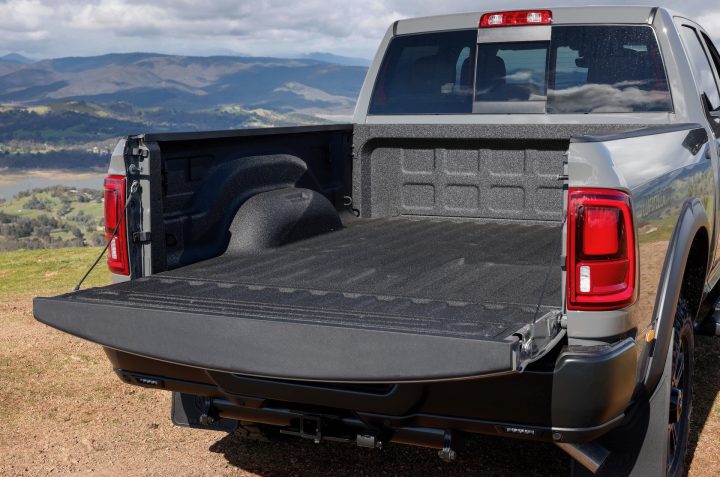
Despite being positioned as the more rugged entry point into the RAM 2500 range, the Warlock doesn’t feel remotely basic. Standard equipment includes 20-inch alloy wheels and all-terrain tyres, Bilstein dampers, LED headlights, spray-in tub-liner, 12-inch infotainment system, adaptive cruise control, autonomous emergency braking, blind-spot monitoring, front and rear parking sensors and rear-view camera, and a towbar receiver with 12-pin wiring.
It’s a shame it doesn’t come with a surround-view camera system, as that could be additional safety and reassurance considering this is going to be doing a lot of towing and reversing heavy loads. Although, the standard rear-view camera does offer two different view modes, including one that directly faces the towball.
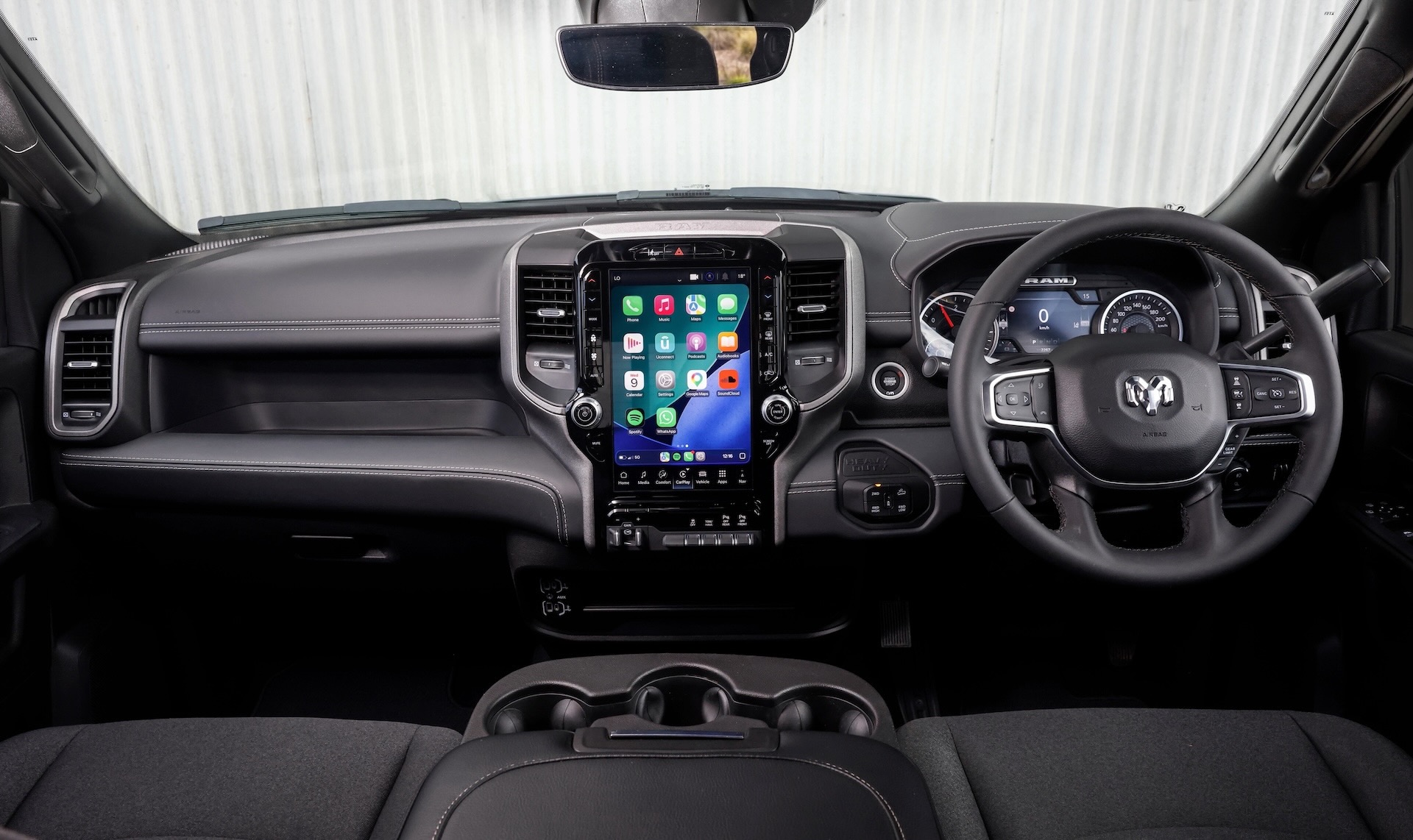
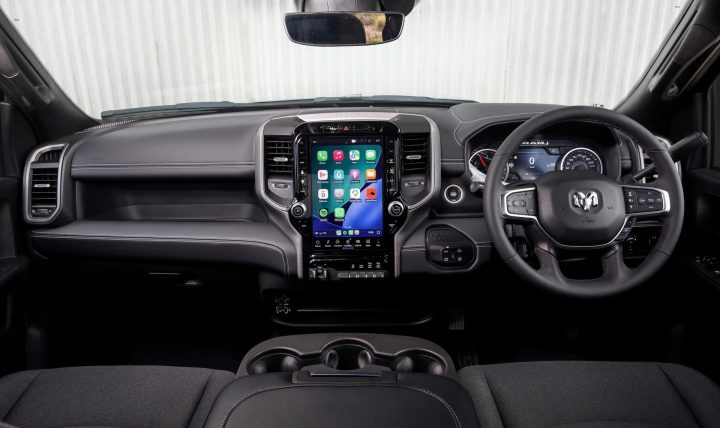
As with other locally converted RAM trucks offered through the official channels, this receives the full premium dashboard rather than some stripped-out commercial interior. Leather and leatherette is draped over the dash with contrast stitching holding it together. The quality is excellent for this type of vehicle, with fit and finish giving off an impressively solid feel, with no obvious squeaks or rattles picked up over the variety of roads encountered during this launch event.
It’s quite a contrast to the tough exterior. Black bumpers, wheel arch flares, side steps and Warlock graphics give it the appearance of a fairly serious workhorse, yet inside it can easily pass for a luxury pickup. The infotainment system is a real highlight. It’s a 12-inch vertical-style touch-screen, and it is, in our opinion, one of the best systems in the business. Largely because RAM hasn’t tried to make the screen responsible for everything.
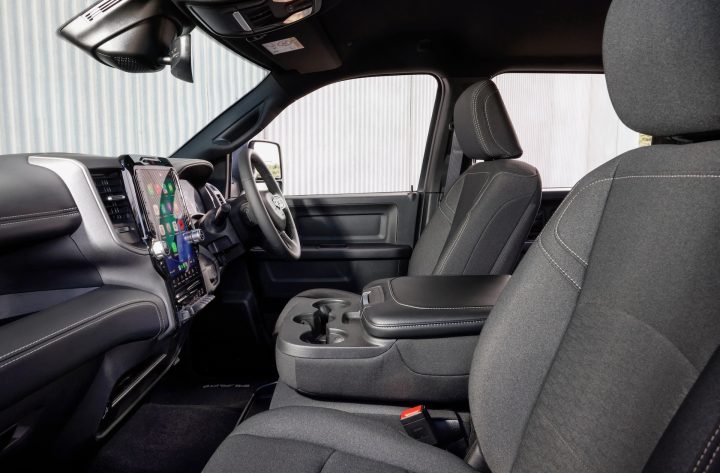
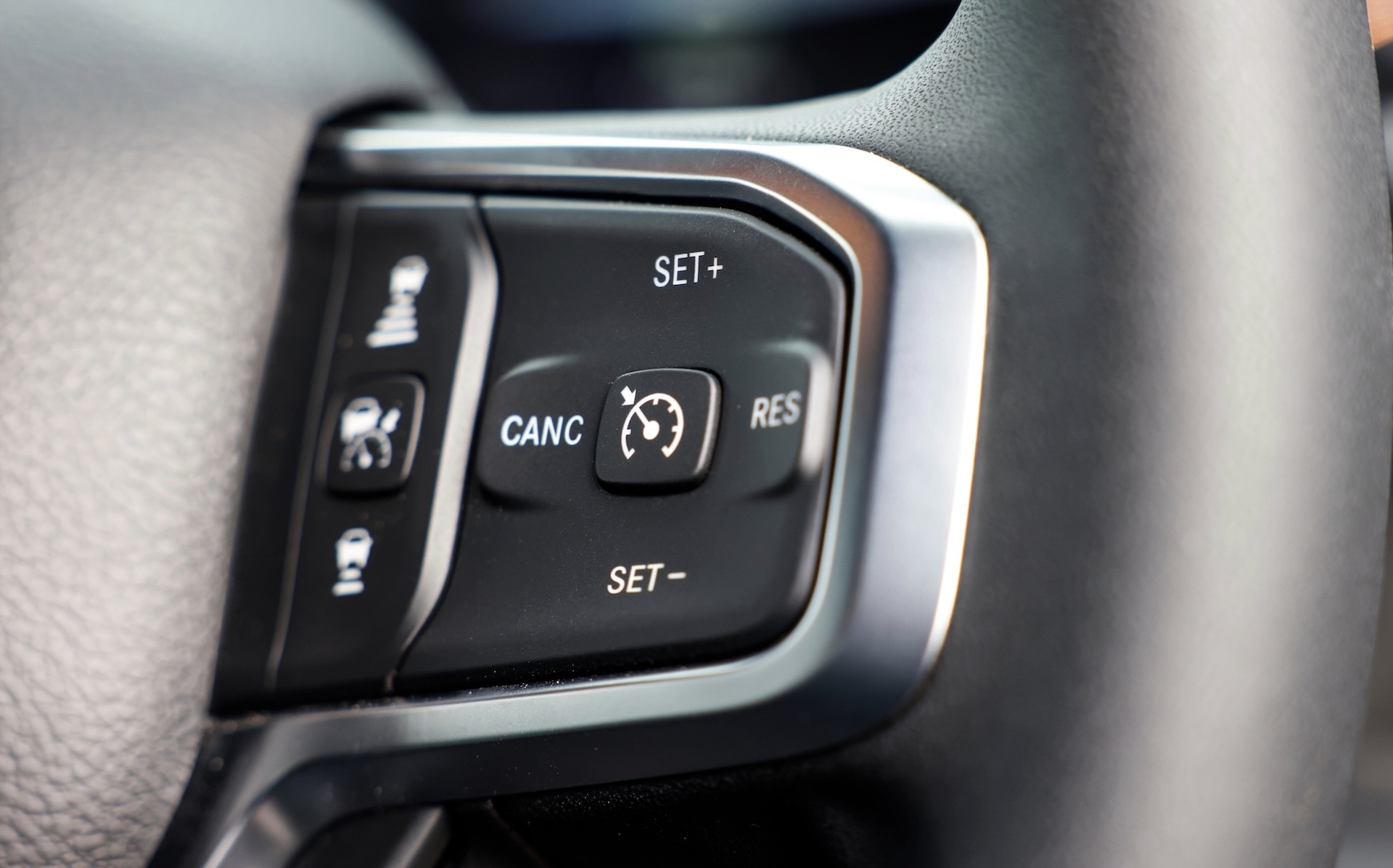
There are plenty of physical controls surrounding it for frequently used functions, while the screen itself uses a straightforward grid-style menu. It’s logical, quick to understand and, importantly, easy to operate while driving. There’s even a stand-alone on/off button for the lane-keep assist, and it remains off on restart (if you have it switched off). Removing user-friendliness is something an increasing number of manufacturers seem to apply in the pursuit of minimalist interior design. Not here. It’s a perfect blend.
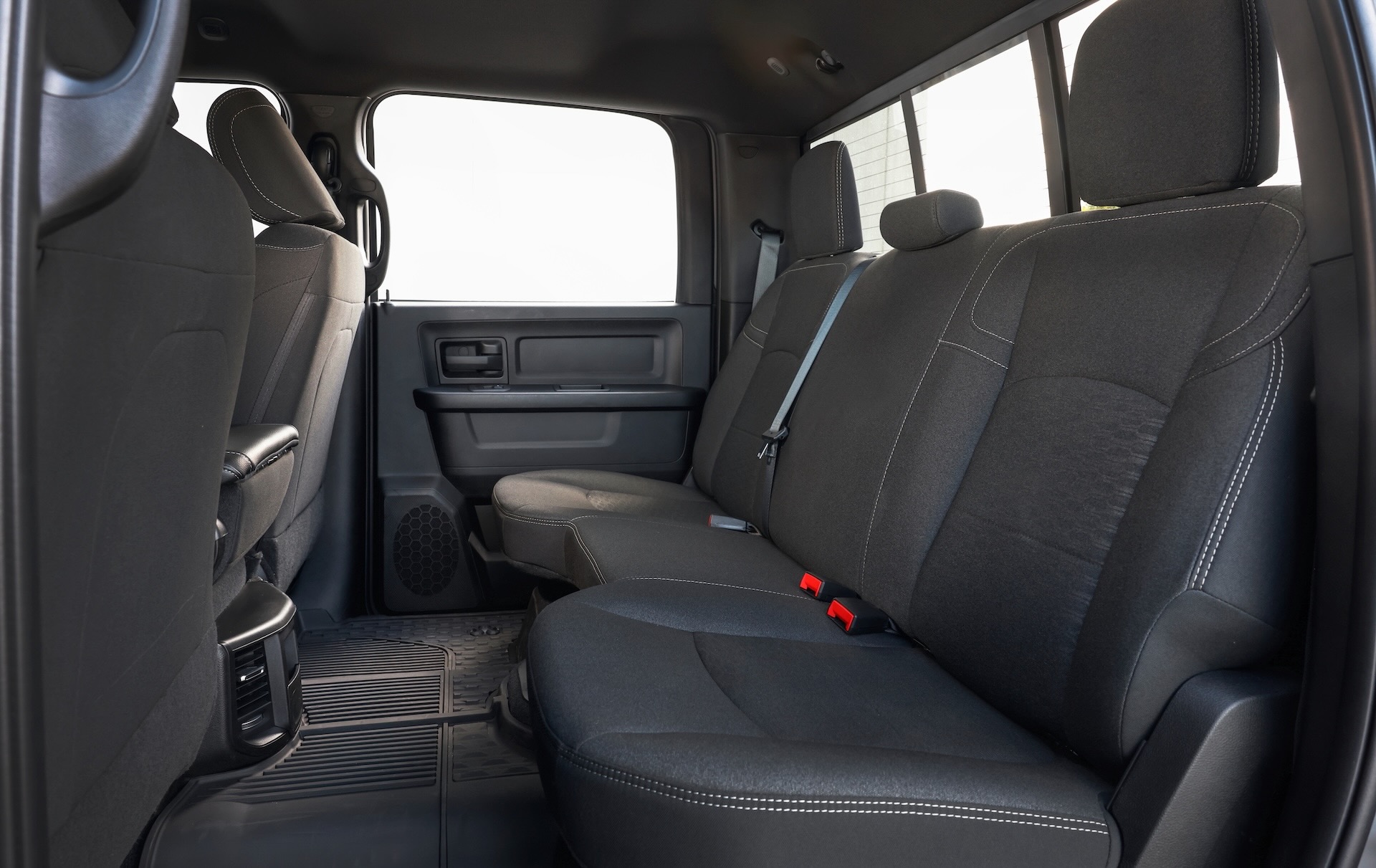
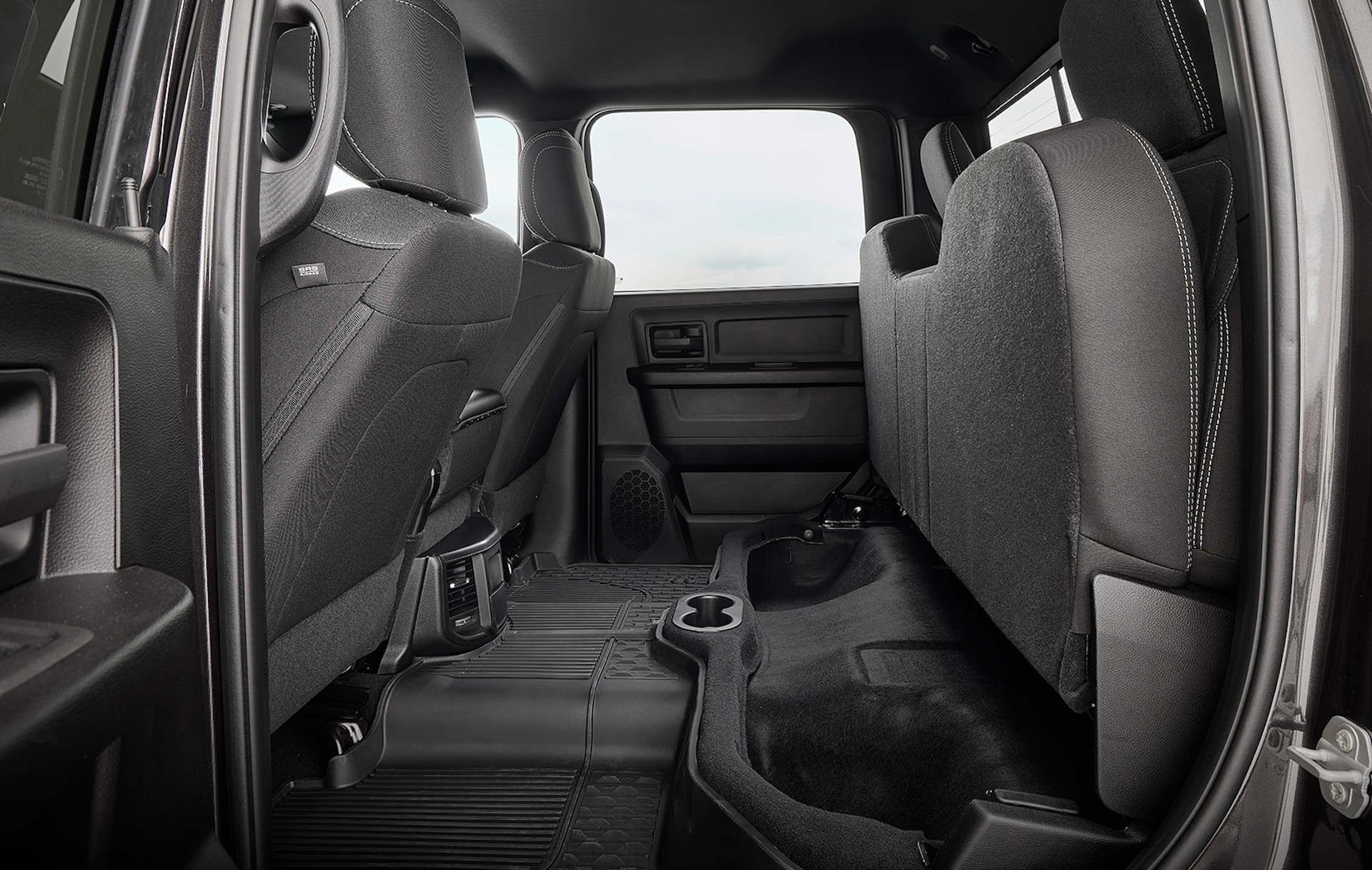
There’s enormous space, as you’d expect from a vehicle measuring 6066mm long and 2220mm wide (excluding mirrors). Interestingly, the Warlock adopts a six-seat configuration, with the centre section between the front occupants functioning as either a large console with storage or an additional seat.
Obviously, those dimensions bring disadvantages as well. A 14.6-metre turning circle and more than 2.2 metres of body width require some forward planning in urban car parks, but anyone shopping for a RAM 2500 presumably understands what they’re getting themselves into and unlikely to use this as a city car.

2026 RAM 2500 Warlock HEMI V8: Powertrain & handling
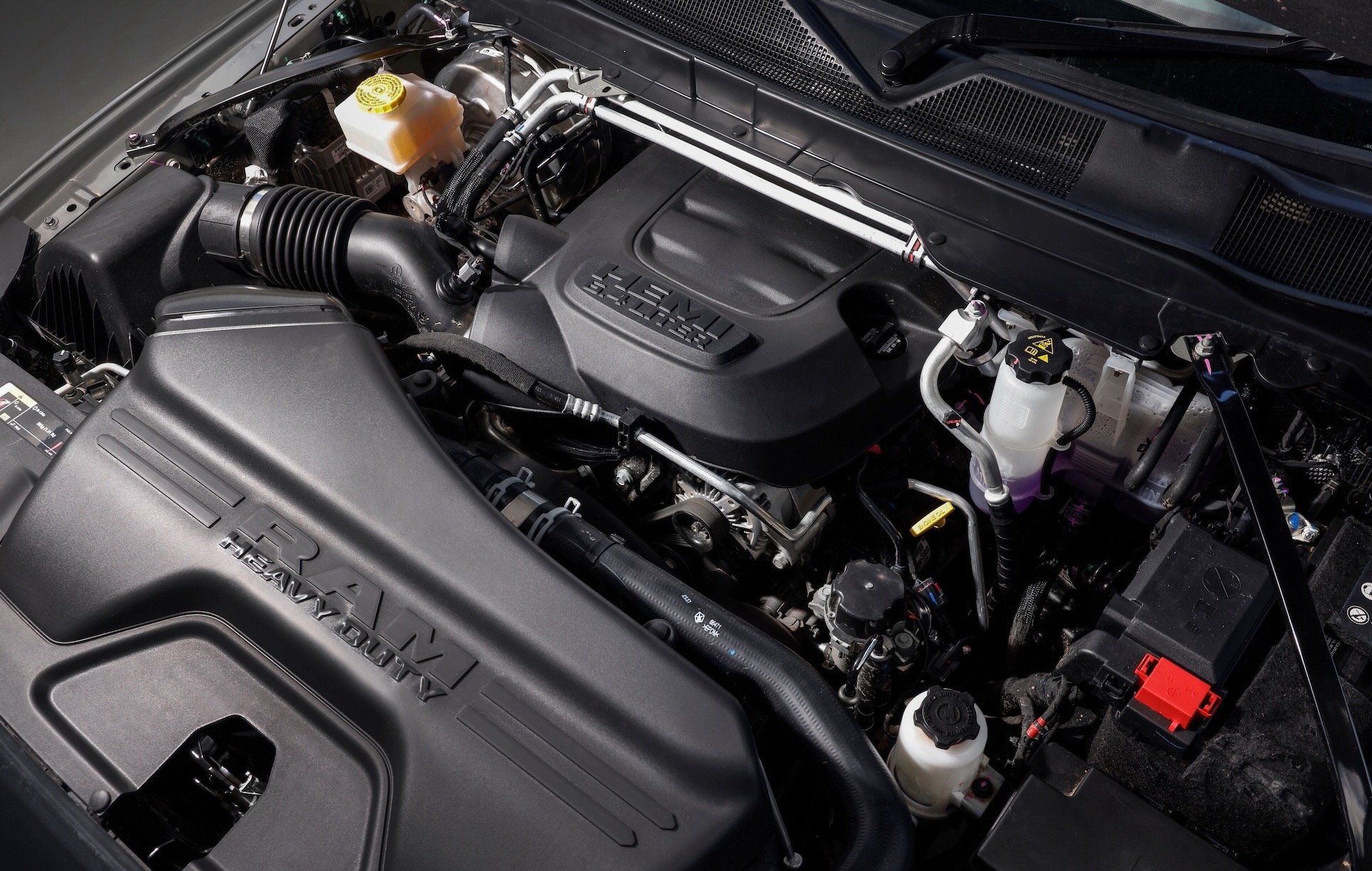
The star of the Warlock is undoubtedly the 6.4-litre naturally aspirated HEMI V8. It produces 306kW at 5600rpm and 582Nm at 4000rpm. Those torque figures might look relatively modest alongside today’s enormous turbo-diesel outputs, but this is an engine that enjoys being revved. And you have to keep in mind this is about 500kg lighter in weight over the diesel (more on that later). We timed 0-100km/h in 7.62 seconds using a Vbox, and we previously recorded a 0-100km/h time of 7.01 seconds in the 6.7L diesel.
A naturally aspirated petrol V8 suits this vehicle. There’s an immediate response when you press the accelerator, accompanied by the deep, unmistakable soundtrack you’d expect from a large American pickup. With so many modern trucks moving towards turbocharged six-cylinder engines, it’s refreshing to experience something so mechanically straightforward.
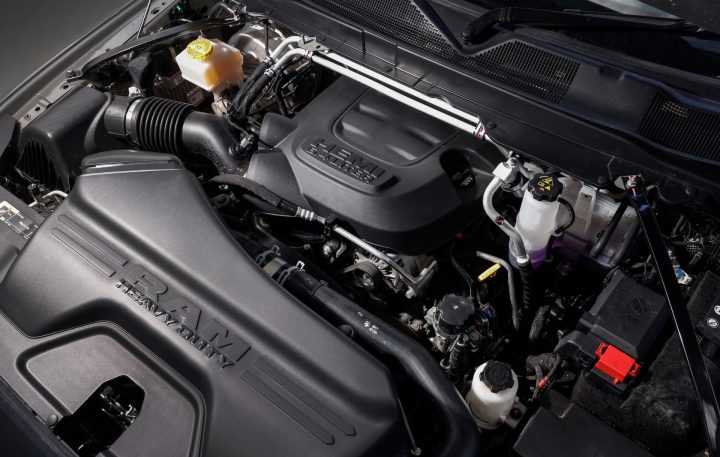
The V8 is paired with an eight-speed automatic based around ZF’s well-proven 8HP architecture. It’s a nicely sorted combination, shifting smoothly during relaxed driving while responding quickly enough when more performance is requested. Fuel economy figures are not available due to this vehicle category, but you get the same 117L fuel tank as the diesel. So you could expect similar or slightly lower range in this, depending on your predominate driving conditions.
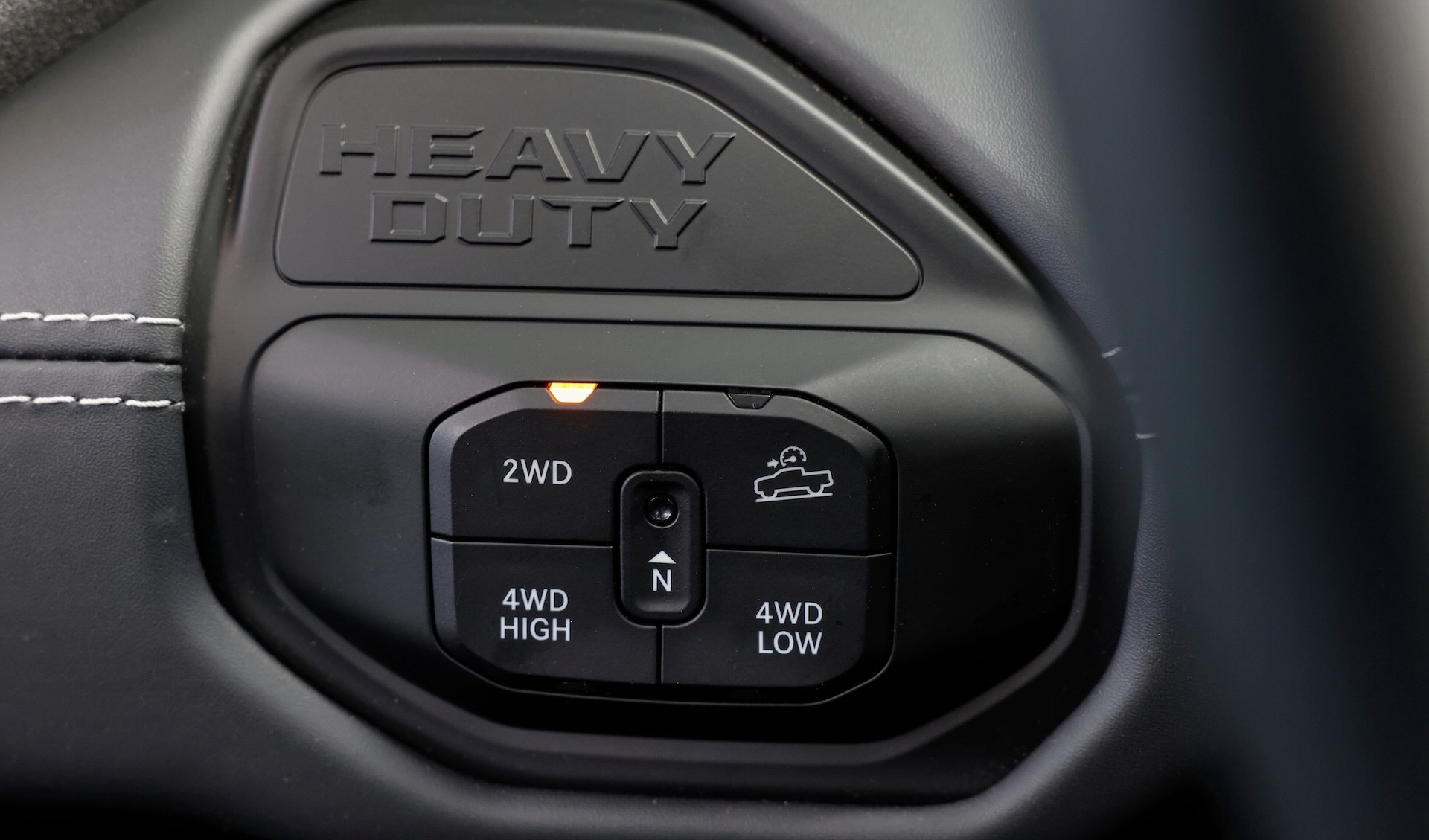
One thing we’d like to see, particularly on a vehicle so heavily focused on towing, is an automatic four-wheel drive mode or AWD mode. This system provides 2WD High, 4WD High and 4WD Low, but no ‘4A’ setting. It does come with a rear diff lock which helps during tough off-road conditions, or even simply if you find yourself in an awkward diagonally-stressed position.
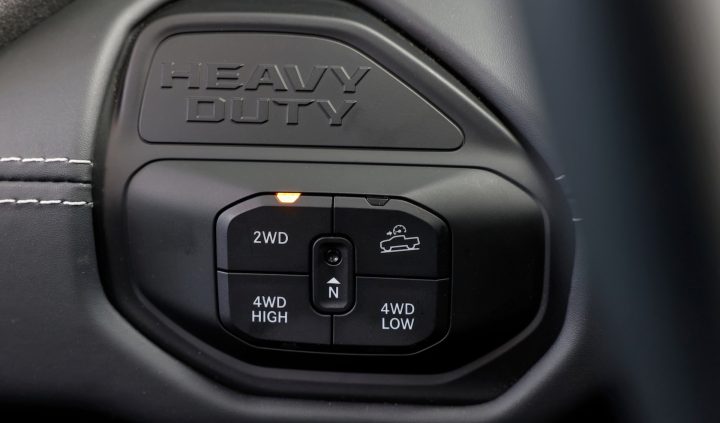
Missing 4A is unlikely to matter during normal dry-road driving, but when towing several tonnes in wet or variable conditions, an automatic mode that can engage the front axle as required would provide an extra layer of reassurance without requiring locked four-wheel drive.
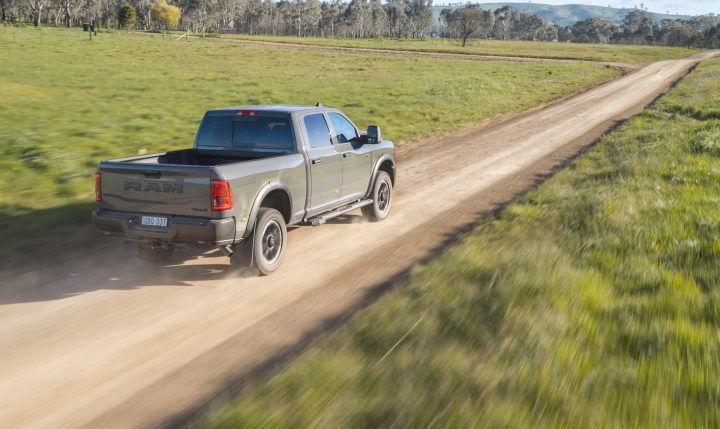
Ride quality is better than what you might expect from something with a 4495kg GVM. The Warlock uses coil springs at the rear rather than traditional leaf springs, while Bilstein off-road dampers are standard. There’s still some firmness over rougher tarmac, particularly with nothing in the tray, but it’s nowhere near as harsh as some of the conventional ‘mid-size’ diesel 4×4 utes.
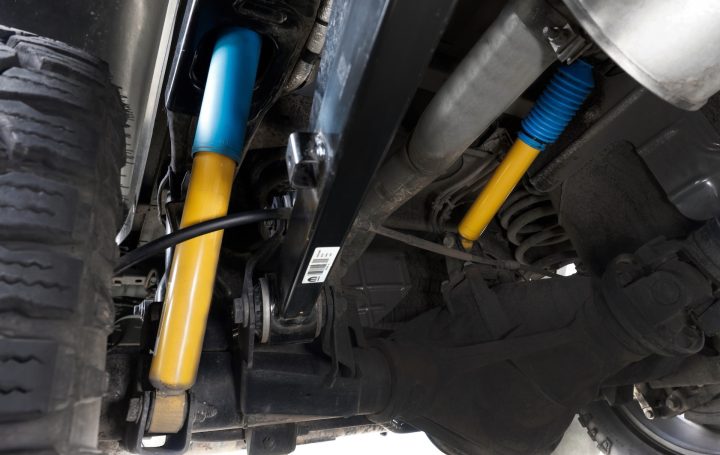
And that’s worth keeping in perspective. The suspension needs to accommodate a 1275kg maximum payload and substantial towing loads. Put some weight over the rear axle and we’d expect it to settle more evenly again. This is also where the lighter HEMI powertrain creates an advantage that isn’t immediately obvious from the brochure.
The petrol Warlock has a 3220kg kerb weight, 4495kg GVM and 10,001kg GCM. With a 4500kg trailer attached, the basic combination of vehicle and trailer comes to 7720kg, leaving 2281kg before reaching GCM. In practice, the GVM becomes the more relevant restriction first. Adding the kerb weight and then allowing approximately 450kg of towball download for a 4500kg trailer leaves around 825kg of vehicle payload capacity for passengers, accessories, luggage and cargo.
That’s a meaningful advantage over the heavier diesel. Based on the specs, the Cummins version weighs around 3710kg while retaining the same 4495kg GVM. Once 450kg of towball load is applied, you’re down to roughly 335kg before reaching GVM in the diesel. So, in theory, this is the better option if you’re towing at or near that 4500kg limit.
Interestingly, the diesel’s 12,750kg GCM is substantially higher. So, for buyers wanting to exploit the RAM’s absolute maximum capability can go considerably further with the genuine gooseneck setup and appropriate air brakes. The Warlock is rated to tow up to 6700kg. It’s here where the diesel might edge ahead – depending on your setup.
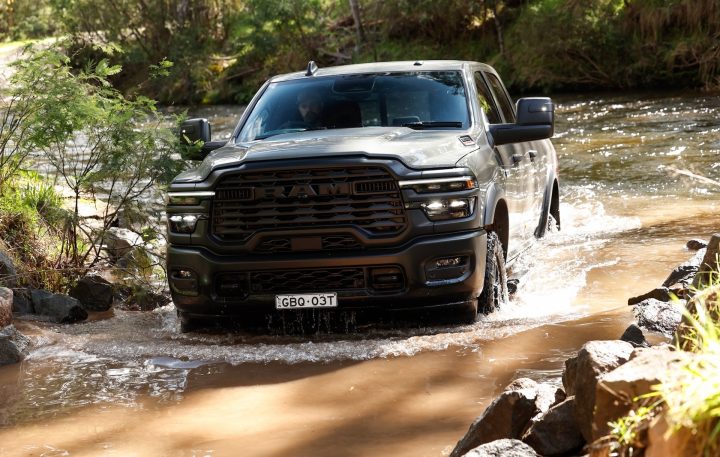
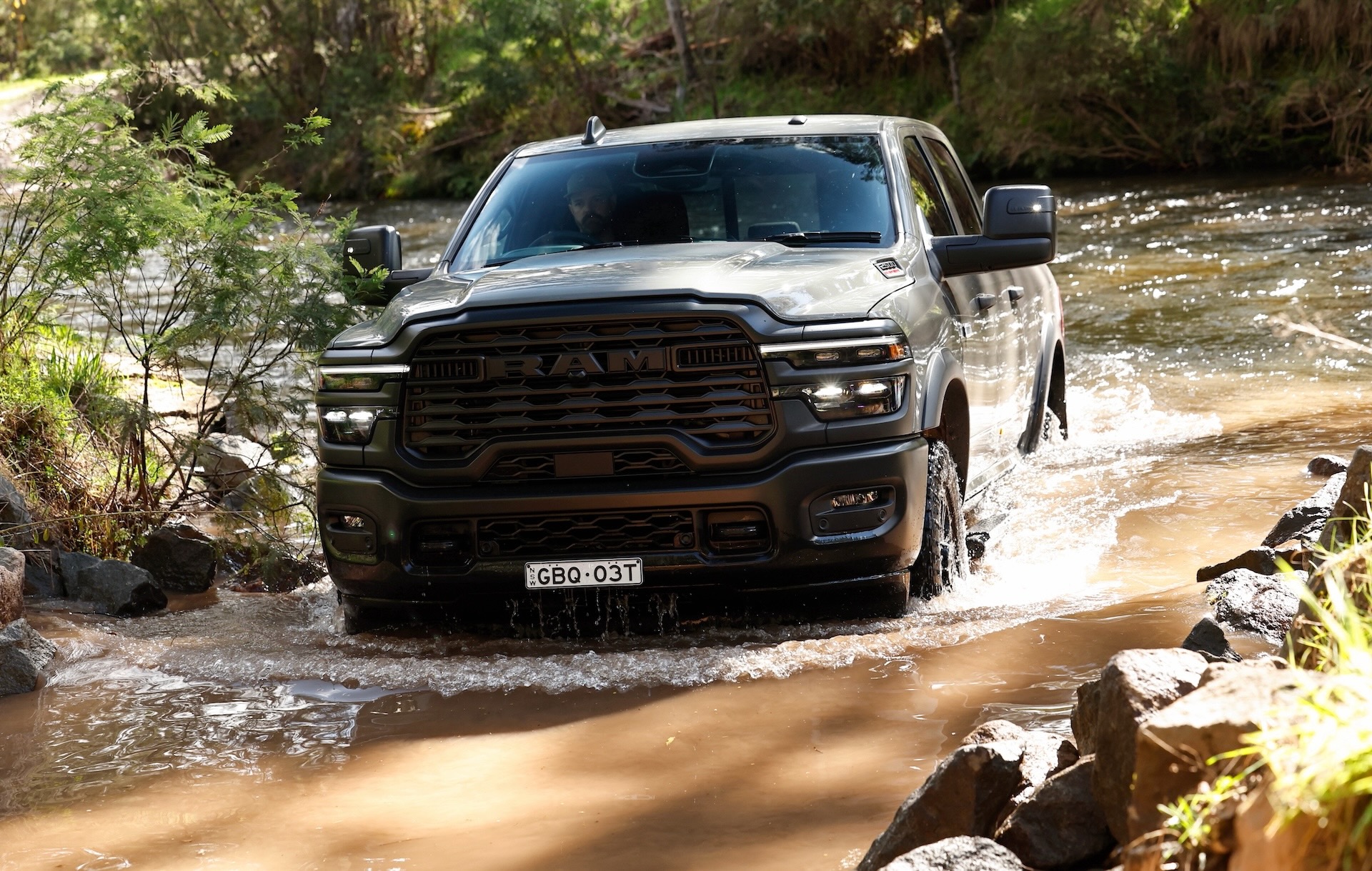
Although a quoted 213mm of ground clearance doesn’t sound particularly impressive, especially for a vehicle of this size, looking underneath the underbody itself, it appears high and clear. That minimum figure is likely being dictated by one relatively low component, such as the differential or other heavy-duty part, rather than representing the clearance available across the entire underside.
Combined with the all-terrain tyres, low-range four-wheel drive and decent approach (22.9°), departure (25.8°), and ramp-over angles (22°), there’s plenty of inherent capability here. Its sheer size will ultimately become the limitation on tight tracks long before a lack of traction does.
2026 RAM 2500 Warlock HEMI V8: Key attractions/reasons to buy
The RAM 2500 Warlock feels like exactly the sort of vehicle that should have a V8. The 6.4-litre HEMI delivers the response, character and soundtrack that seem almost inseparable from the idea of a huge American pickup, while the well-sorted eight-speed automatic makes it an easy powertrain to live with. We’d like an automatic 4WD mode for slippery-road towing, but otherwise it’s a pleasantly straightforward combination.
More importantly, there are practical reasons to consider the petrol beyond simply wanting a V8. Its lower kerb weight leaves more room beneath the 4495kg GVM when towing 4500kg, while the Warlock package adds quality Bilstein suspension and all-terrain tyres without sacrificing the excellent cabin presentation and infotainment found elsewhere in the range.
2026 RAM 2500 Warlock HEMI V8: Video