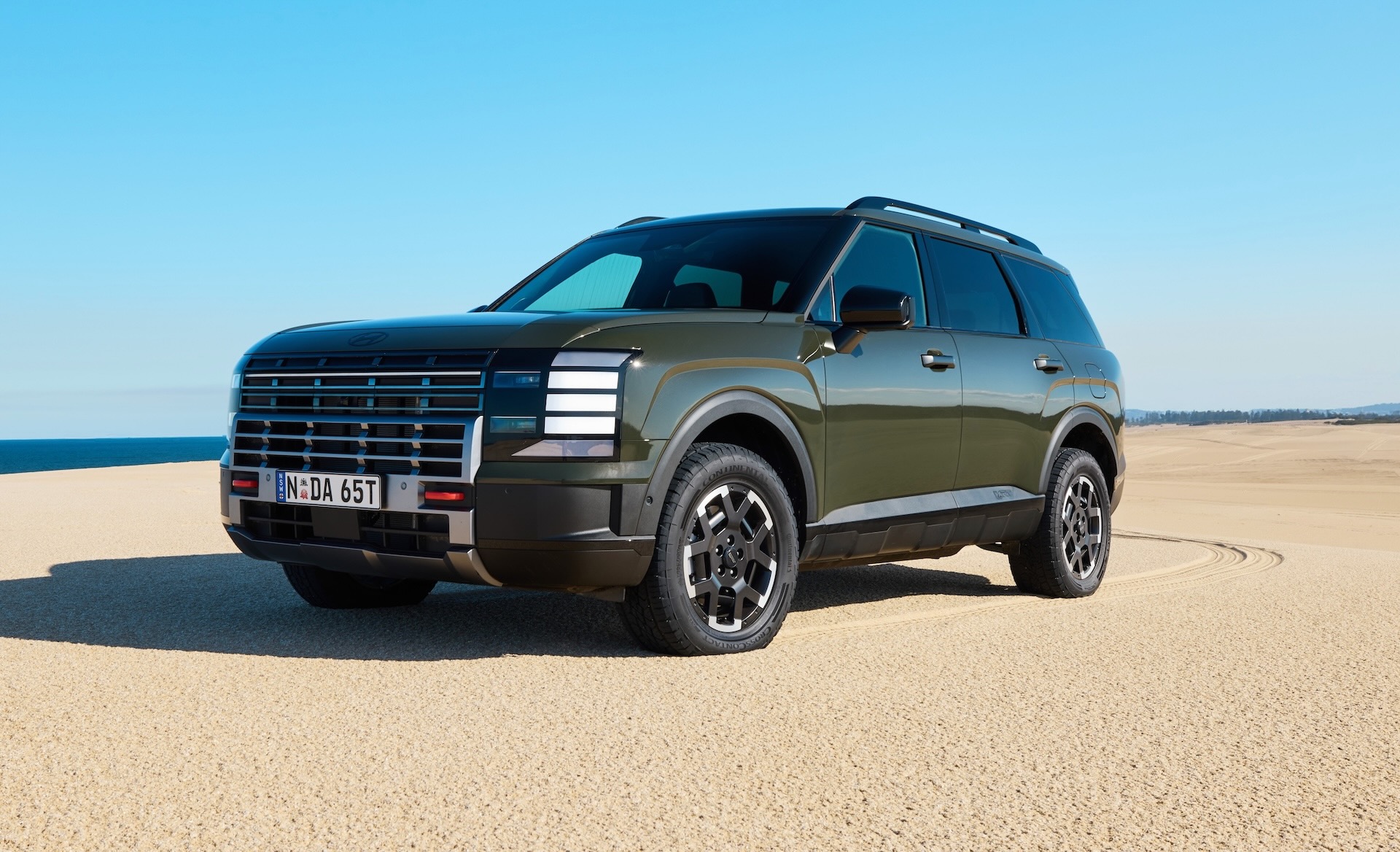
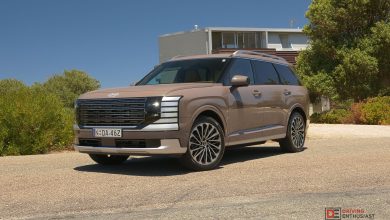
The new Hyundai Palisade is already a big, comfortable and practical family SUV, but the XRT Pro takes it in a noticeably different direction. Rather than simply applying some rugged styling and calling it an adventure model, Hyundai Australia has made meaningful mechanical changes underneath.
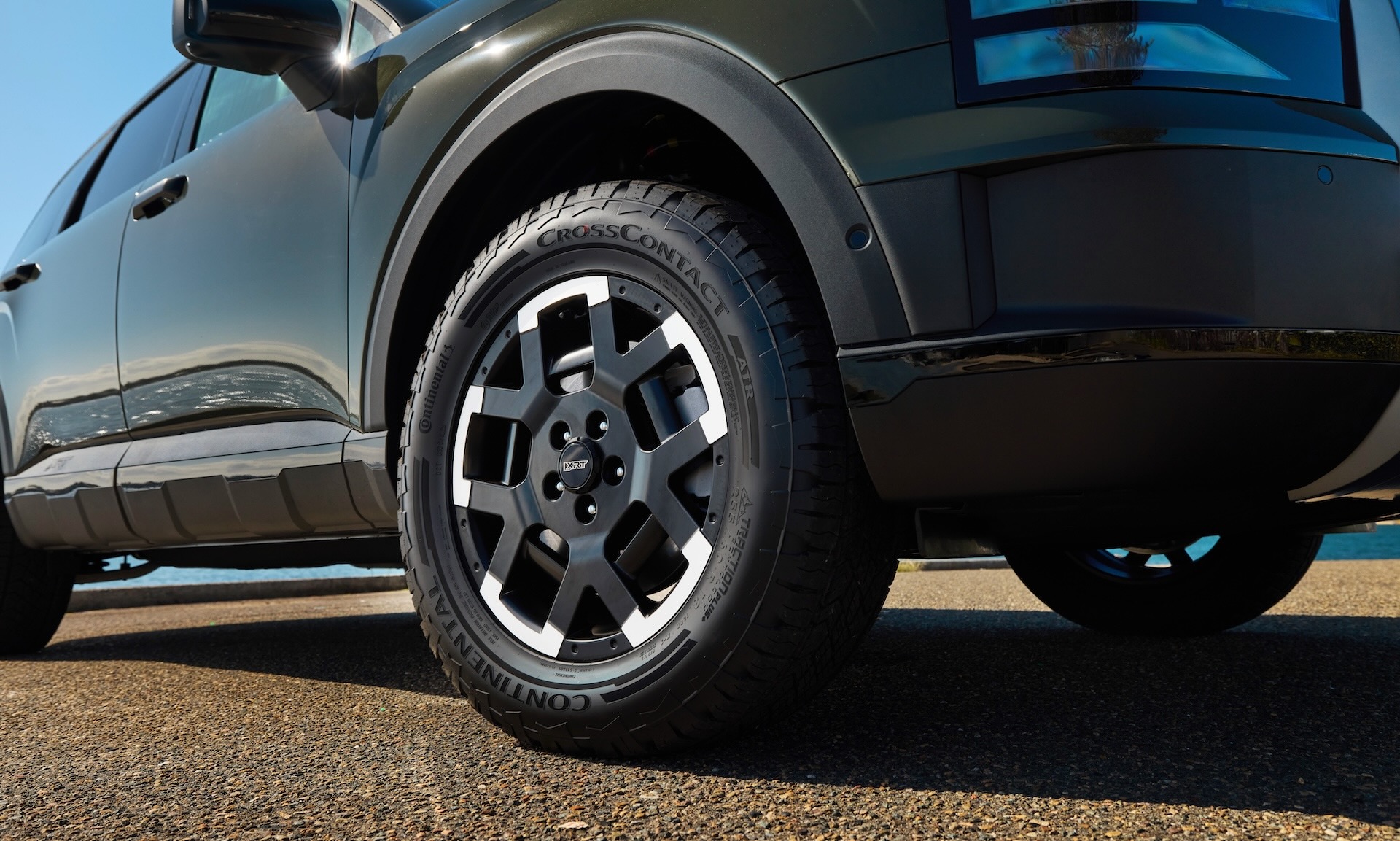
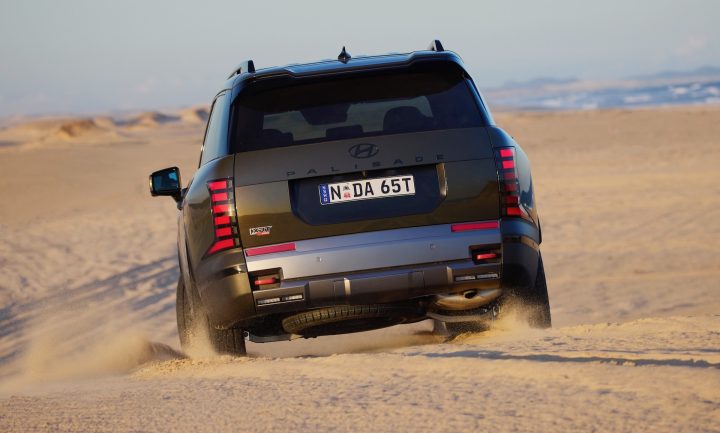
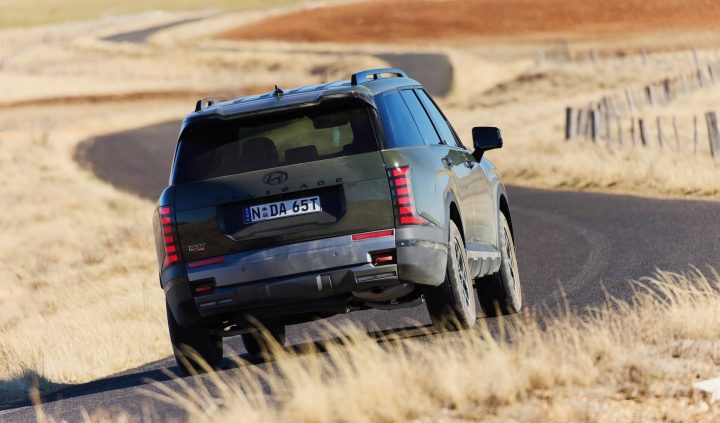
In fact, the XRT Pro gets suspension hardware and geometry that’s different from the regular Palisade, along with a bespoke Australian suspension and steering tune. It sits 25mm higher, with 212mm of ground clearance, and features unique 18-inch wheels wrapped in Continental all-terrain tyres.
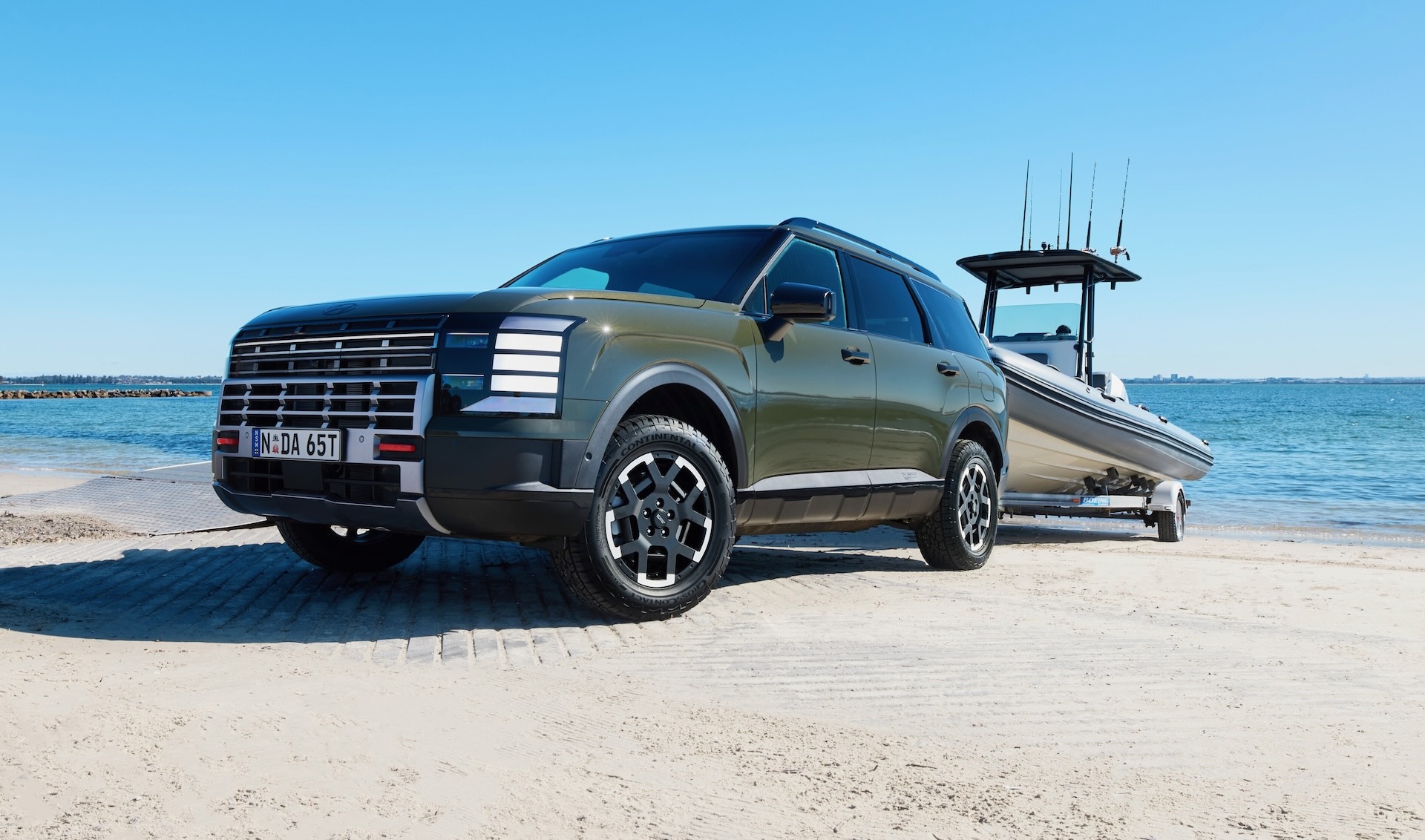
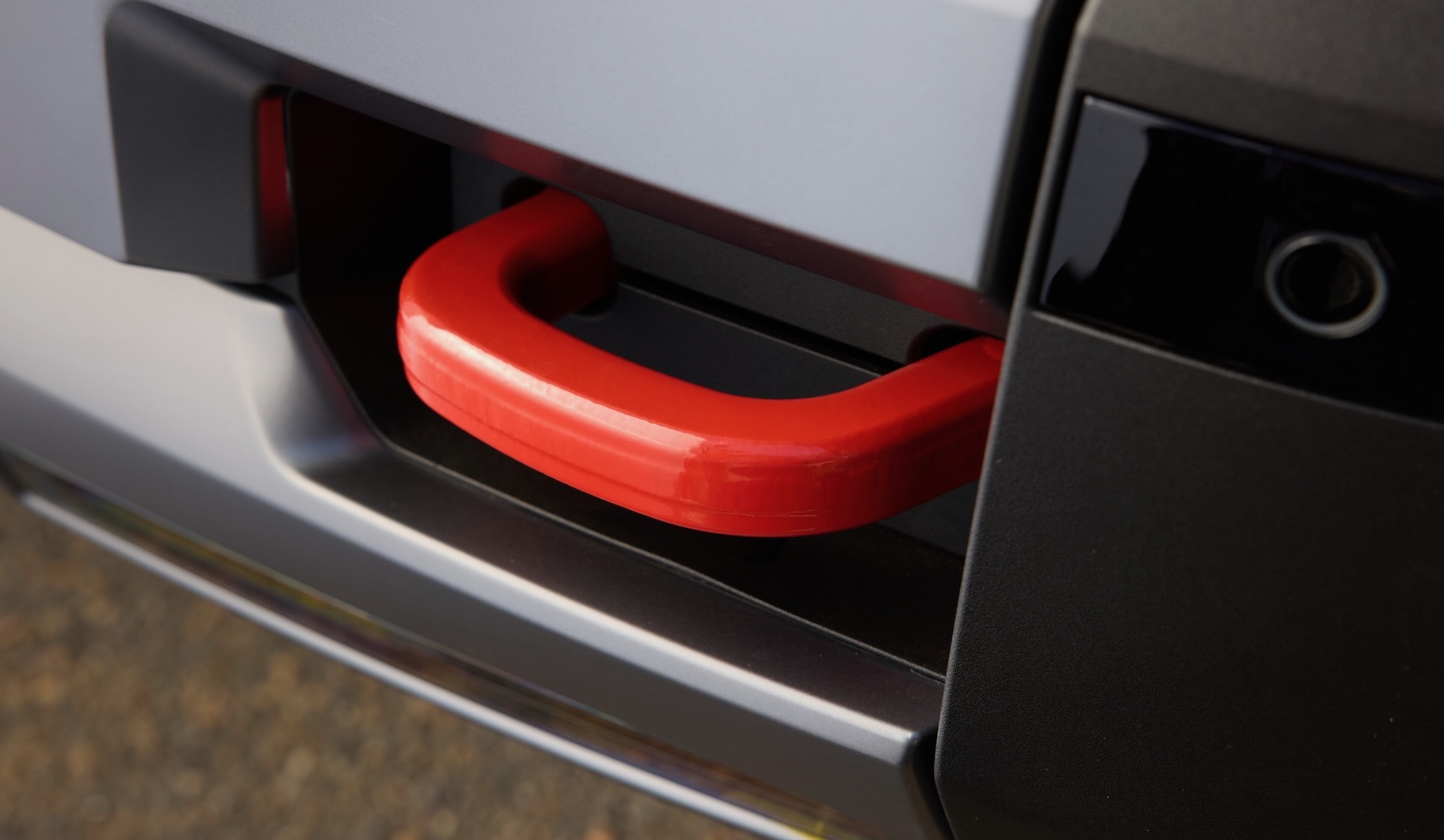
There’s even a factory-fitted towbar and exposed red recovery hooks, so this is more than just an appearance package.
2026 Hyundai Palisade XRT Pro: Specifications
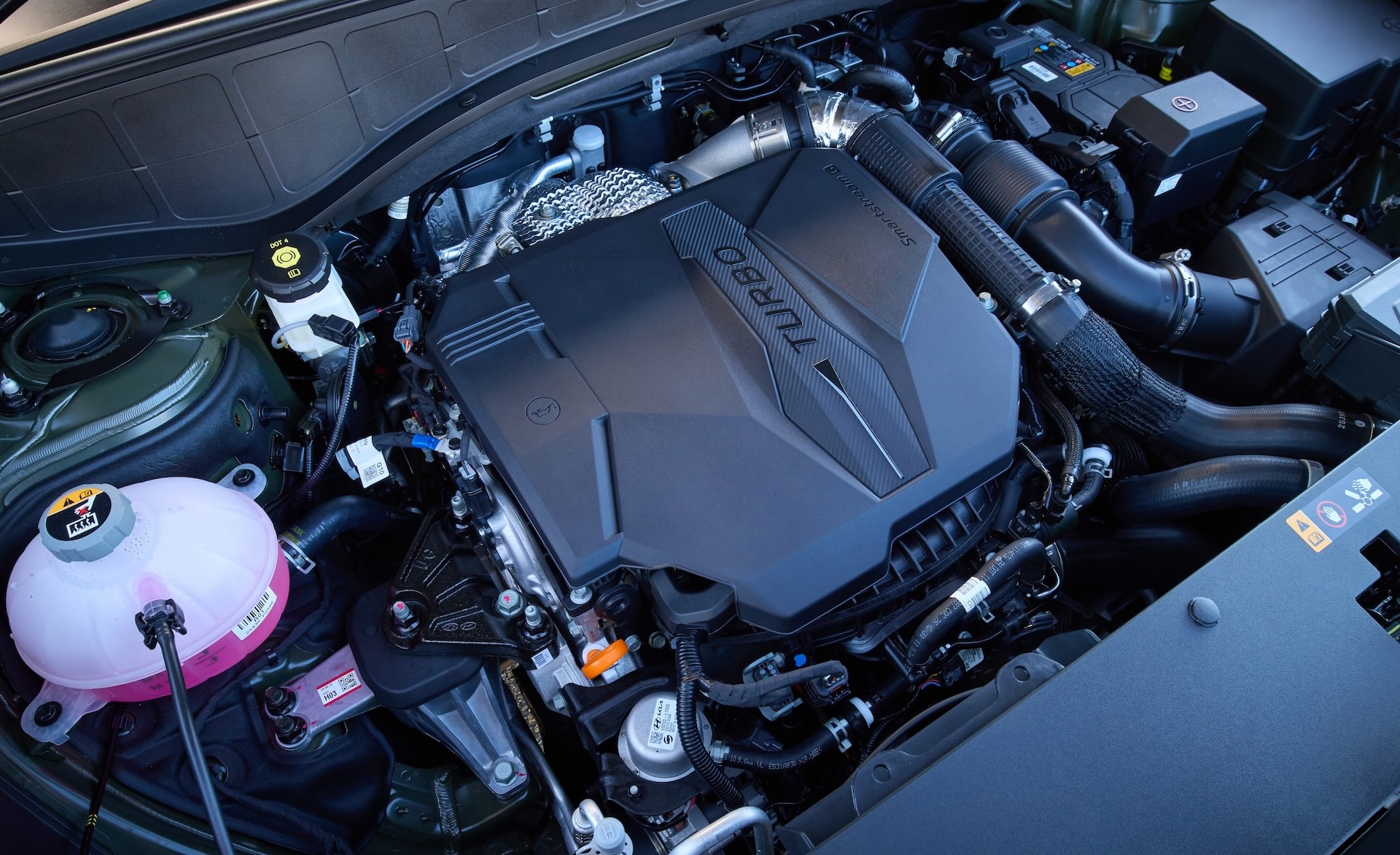
Engine: 2.5-litre turbo-petrol four-cylinder
Output: 207kW@5800rpm / 422Nm@1700-4000rpm
Gearbox: Eight-speed auto
Drive type: All-wheel drive
Wheels: F & R: 18×7.5, 255/60
ANCAP: Not testedTare weight: 2258kg
Power-to-weight: 10.90:1 (kg:kW)
Official consumption: 11.2L/100km
Fuel tank/Fuel type: 72L/91 RON
Power efficiency: 18.48kW:L/100km
0-100km/h: 7.88 seconds*
Starting price: $79,900
*Figures as tested by Driving Enthusiast on the day. Manufacturers’ claims may be different
2026 Hyundai Palisade XRT Pro: How much does it cost?
Prices start from $79,900 (excluding on-road costs), positioning it just above the $76,500 Elite Hybrid and comfortably below the more luxurious Calligraphy Hybrid, which starts from $89,828 in eight-seat form.
That’s an interesting position in the range because the XRT Pro isn’t really intended to be a higher-specification version of the Elite. You’re effectively spending the additional money on capability rather than luxury. But it’s not a poverty pack, either, as all Palisade variants in Australia come comprehensively equipped from the start.
For buyers who will actually use those off-road upgrades, the price makes plenty of sense. Service intervals are every 10,000km or 12 months, and cost $408, $510, $512, $528, $408, $632, $754 for the first seven services as part of the regular scheduled plan.
2026 Hyundai Palisade XRT Pro: Interior & packaging
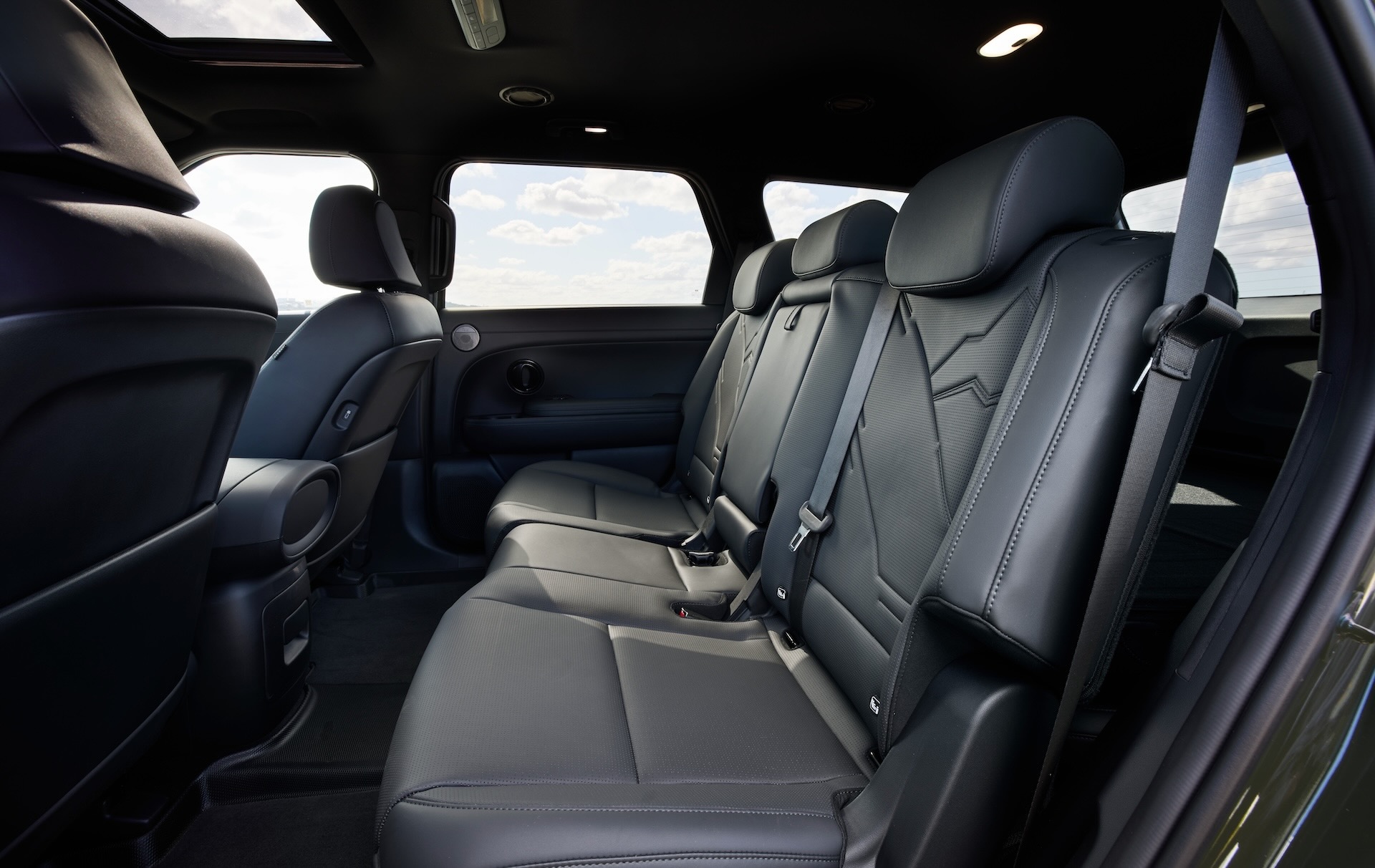
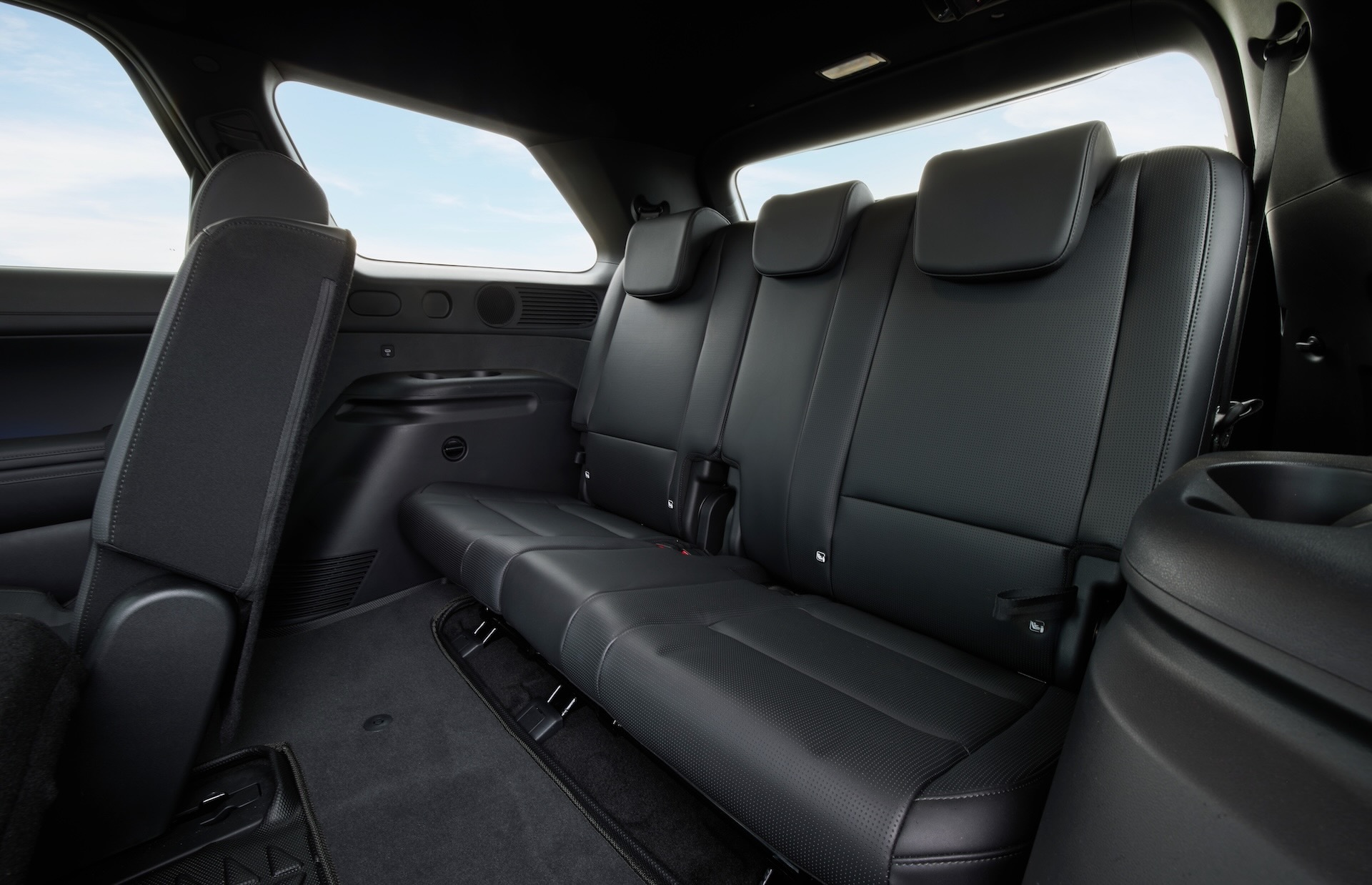
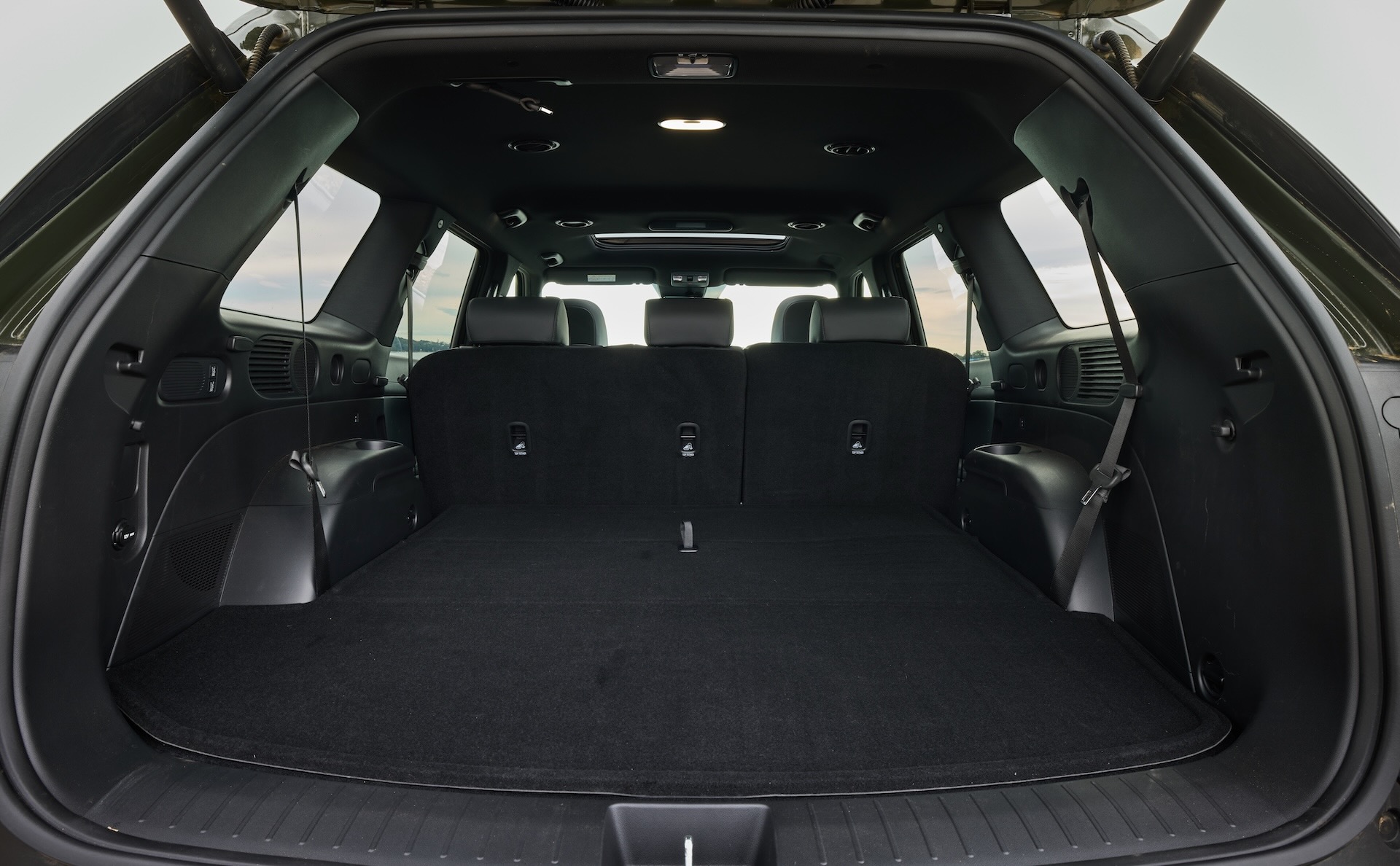
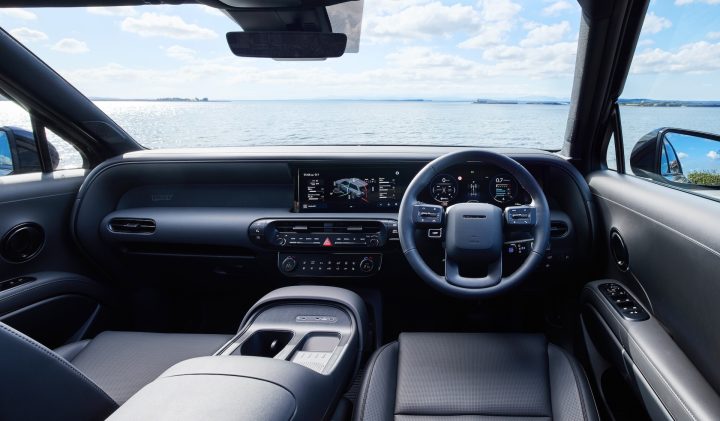
Fortunately, none of that comes at the expense of what makes the regular Palisade so appealing. The XRT Pro retains the eight-seat layout and enormous cabin, with genuinely useful accommodation across all three rows. It’s one of those SUVs where the third row feels like it was actually designed to carry people rather than simply included to satisfy a specification sheet.
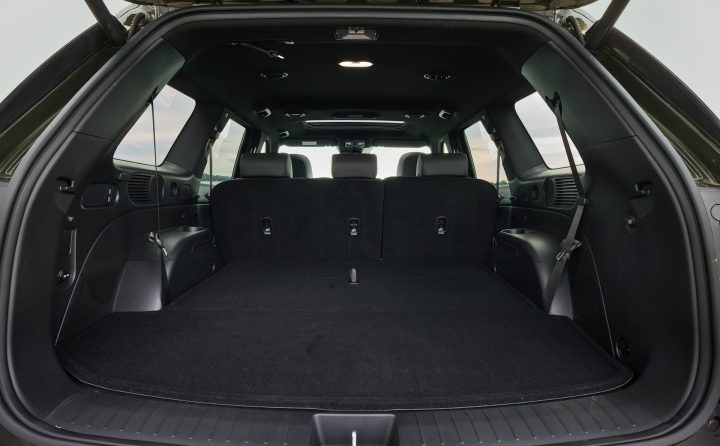
The second row provide plenty of adjustment, with recline and sliding, while the third row also offers recline adjustment. That gives families considerably more flexibility when trying to balance passenger comfort against luggage requirements. And third row legroom is actually decent, provided the second row is not in its rear-most position.
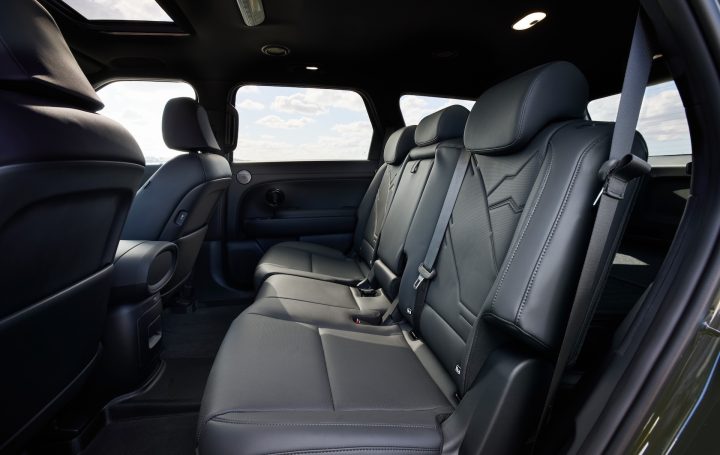
Hyundai has done an excellent job of making the rear of the cabin properly usable. Climate vents are mounted in the ceiling to distribute air throughout all three rows, while USB charging ports are available throughout as well, even in the third row. There are seven USB ports in total.
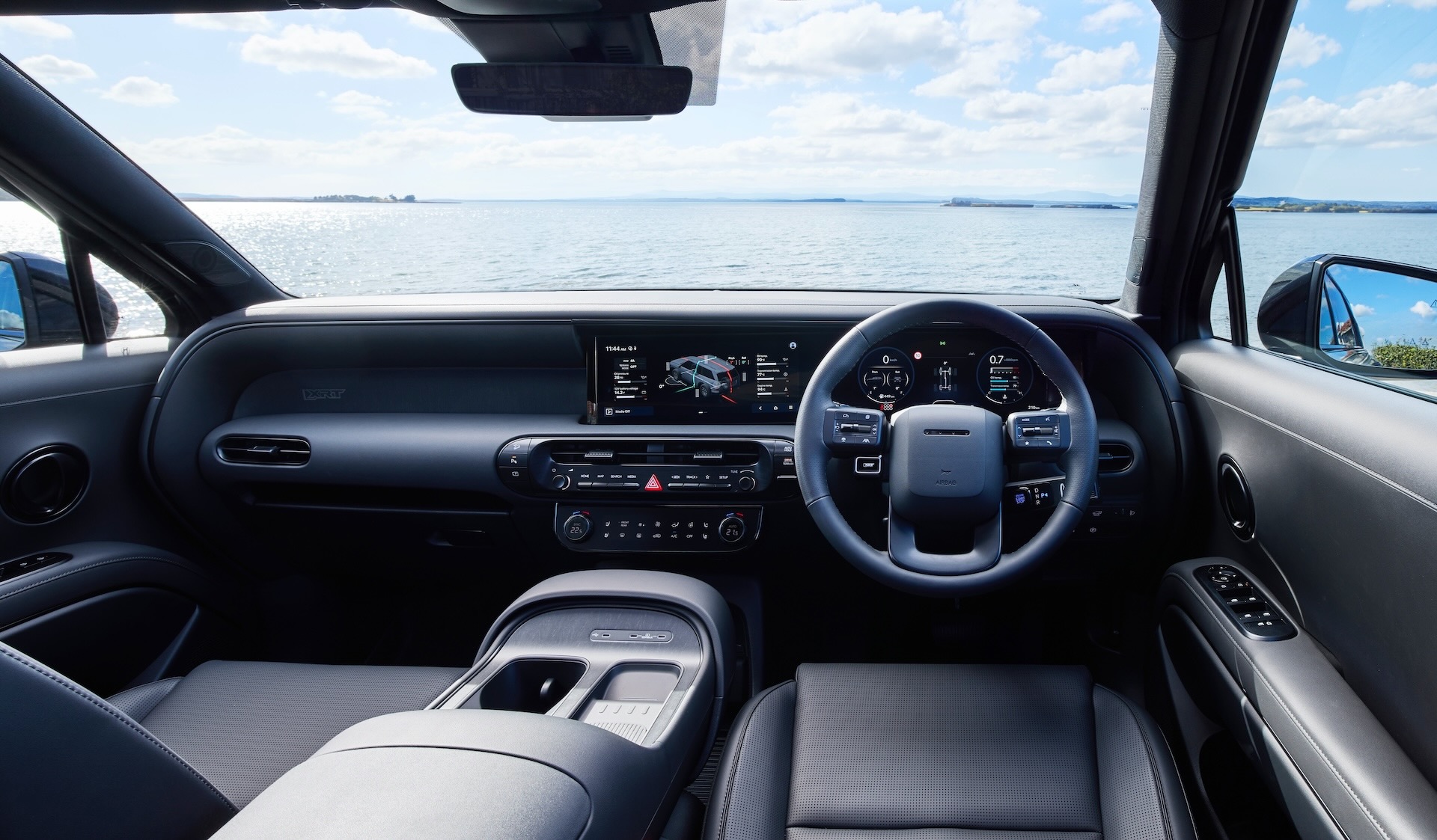
Up front, the XRT Pro retains the Palisade’s twin 12.3-inch digital displays and modern dashboard design. There are plenty of creature comforts too, including heated and ventilated front seats, heated steering wheel, a Bose 14-speaker sound system, surround-view and blind-spot cameras, remote parking and Hyundai’s extensive SmartSense safety suite.
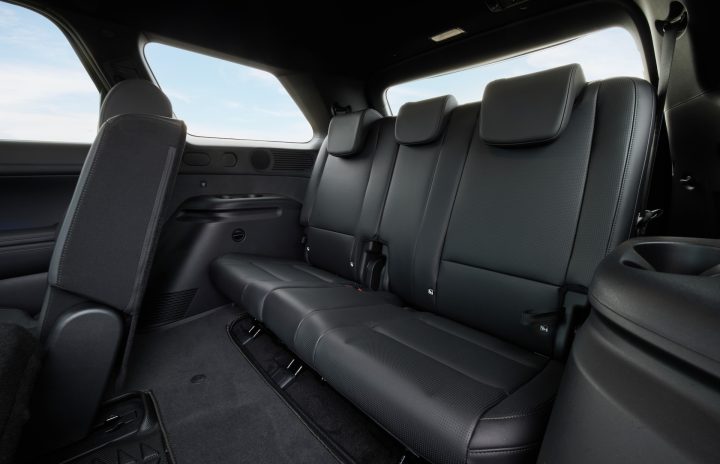
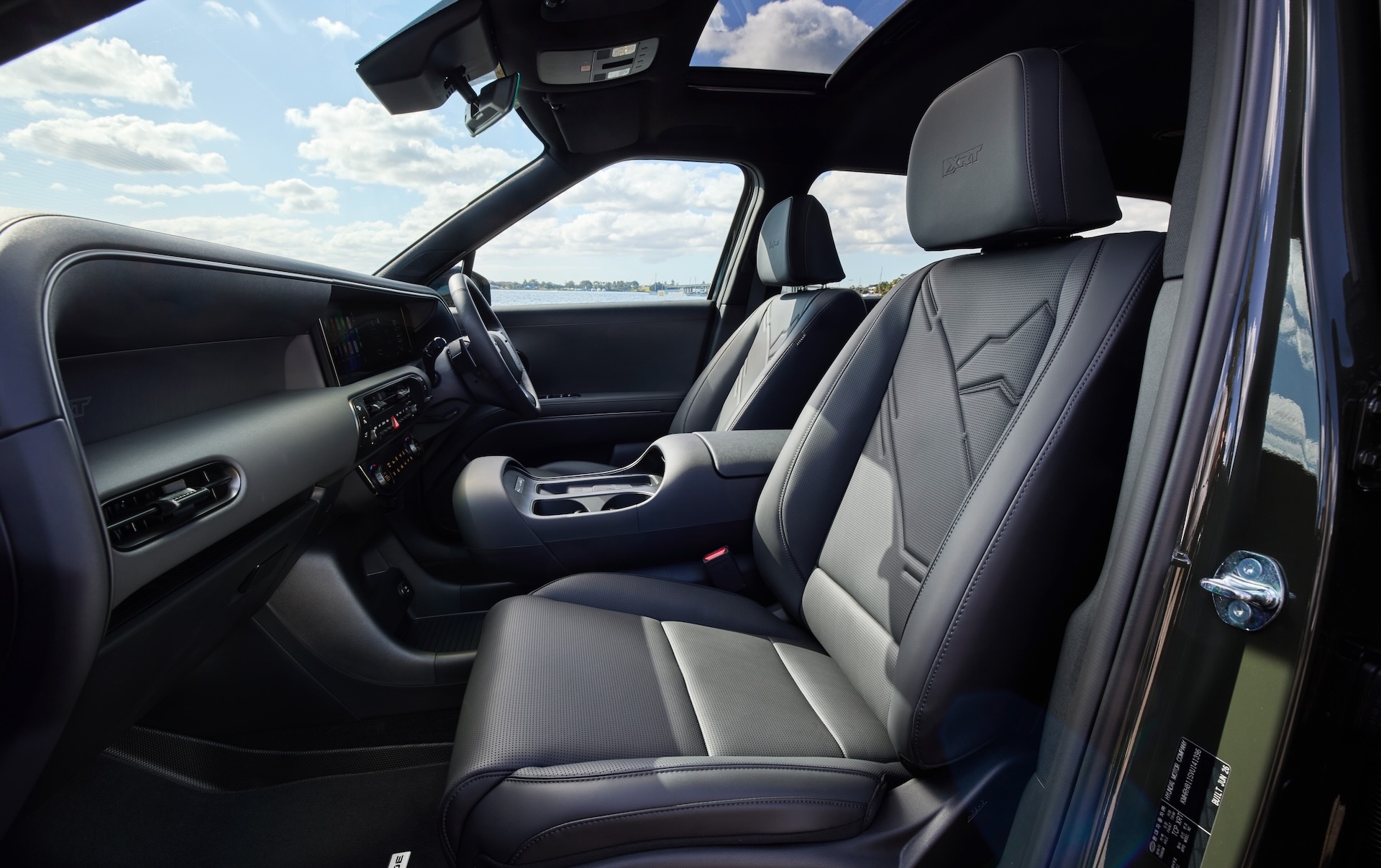
The XRT-specific trim isn’t as luxurious as the Calligraphy, but that’s really the point. Synthetic leather, blacked-out details and specific badging, including a mountainous stitch pattern on the front seats, give it a slightly more functional character that suits its intended purpose.
2026 Hyundai Palisade XRT Pro: Powertrain & handling
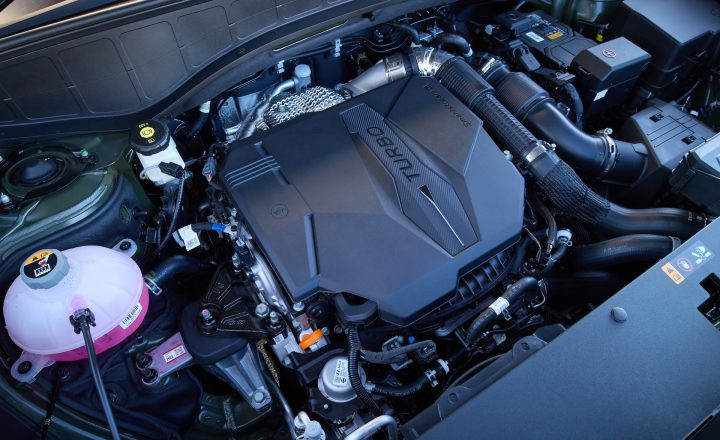
Unlike the rest of the new Palisade range, the XRT Pro doesn’t use Hyundai’s new hybrid powertrain. Instead, it’s the only variant offered with the company’s 2.5-litre turbo-petrol four-cylinder, producing 207kW and 422Nm, connected to an eight-speed torque-converter automatic and on-demand all-wheel drive.
It’s actually refreshing to drive such a straightforward powertrain in today’s market. There’s no complex interaction between petrol and electric motors and no unusual transmission behaviour – just a turbo engine connected to a conventional automatic. And that combo suits the XRT Pro quite well, because you have strong low-end torque thanks to the large-ish capacity (for a four-cylinder) engine, but with the simplicity of a normal automatic for towing and off-roading.
Even so, we’d like to see Hyundai eventually offer the XRT Pro with the hybrid as well. The electrified powertrain develops 245kW and 460Nm, although it is heavier, and judging by the popularity of hybrid versions elsewhere in Hyundai’s large-SUV lineup, there would likely be an audience for it.
There is an important practical reason for the petrol-only configuration, however. The XRT Pro can tow up to 2200kg braked, compared with 2000kg for the Palisade Hybrid, with the conventional powertrain allowing Hyundai to accommodate the additional cooling requirements associated with heavier towing.
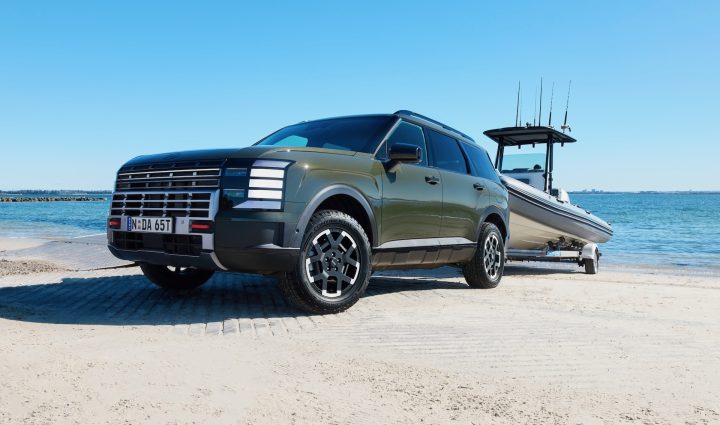
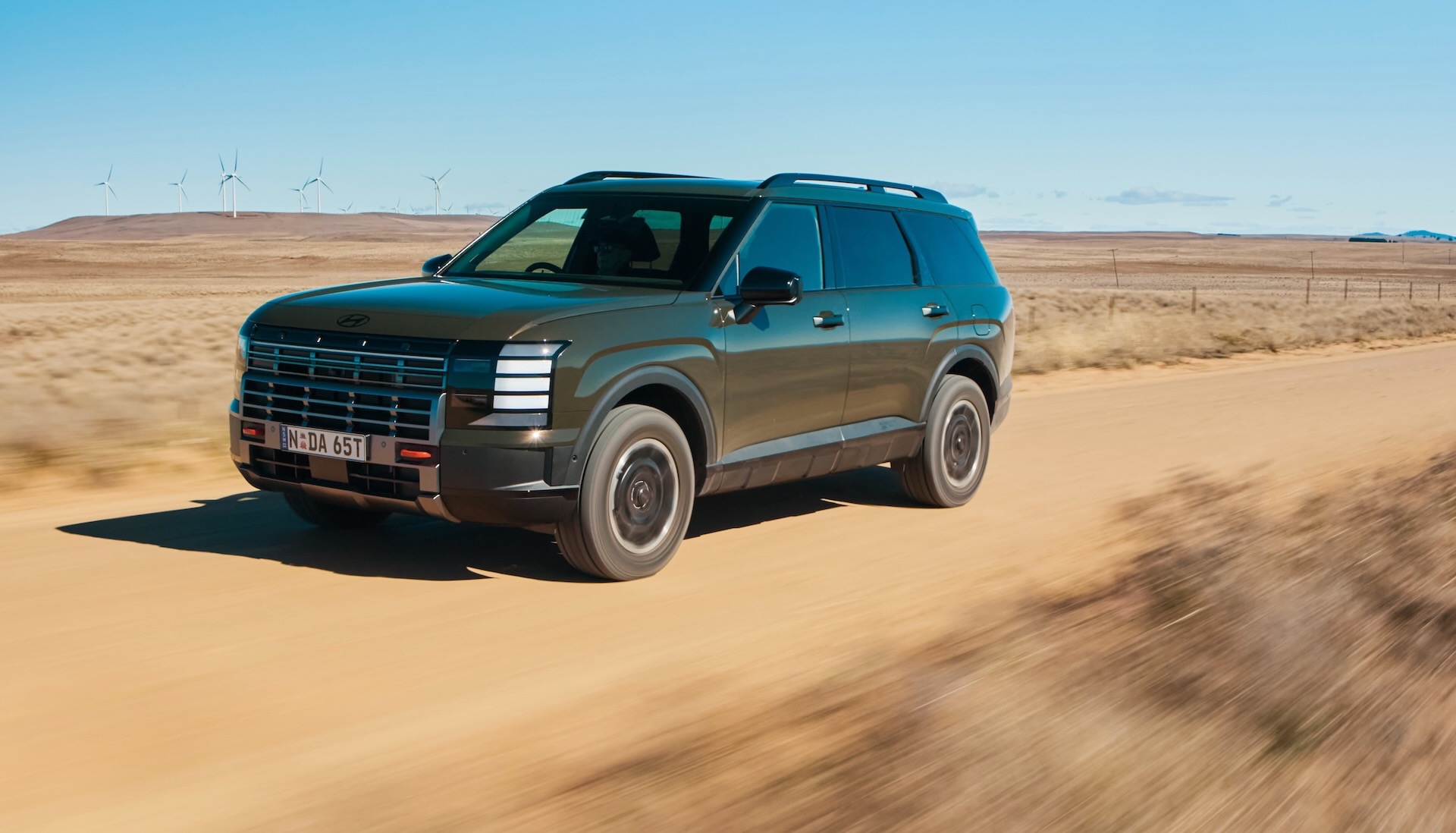
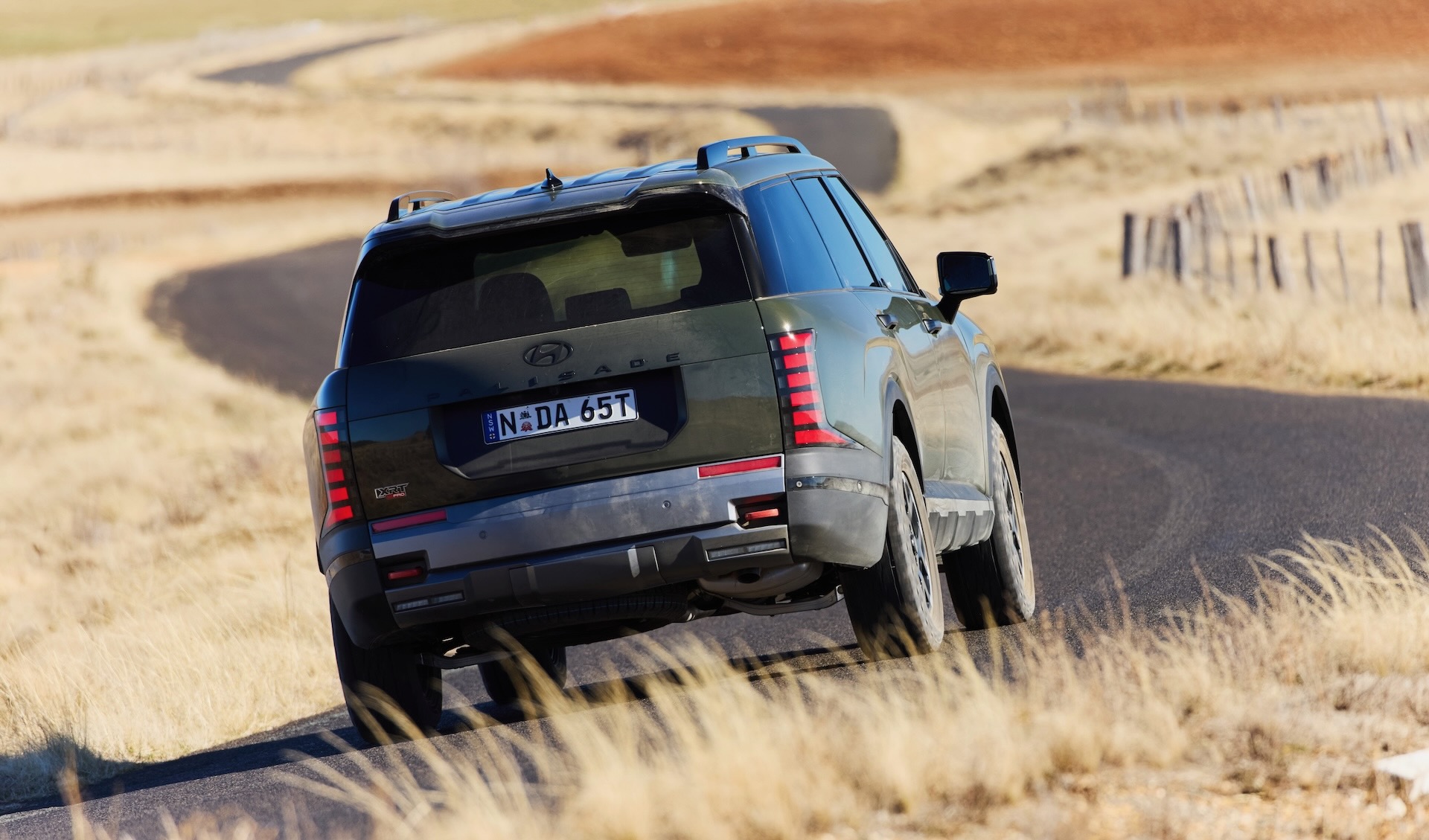
The biggest highlight of the XRT Pro, though, is its suspension. Hyundai’s Australian tuning team has done an excellent job here. The setup absorbs nasty country-road surfaces remarkably well, taking the sting out of potholes, broken edges and large undulations without being excessively soft.
That’s an important distinction. Some SUVs achieve comfort simply by allowing plenty of body movement, which can become tiring when you’re travelling quickly across Australia’s more challenging country roads. The XRT Pro maintains excellent wheel and body control, settling quickly after larger bumps while still providing a comfortable ride.
Those 18-inch wheels and all-terrain tyres help as well. Their generous sidewalls provide another layer of impact absorption over sharp potholes and tarmac connections, while the larger overall tyre diameter brings benefits once you leave the bitumen. And you get a full-size alloy spare with the same tyre, so it’s perfect for big trips.
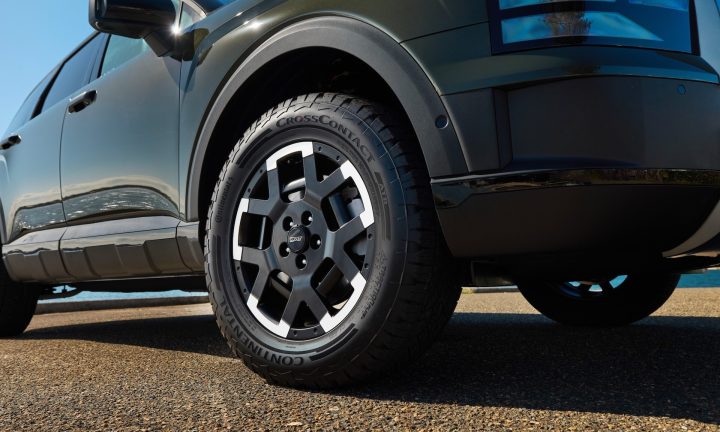
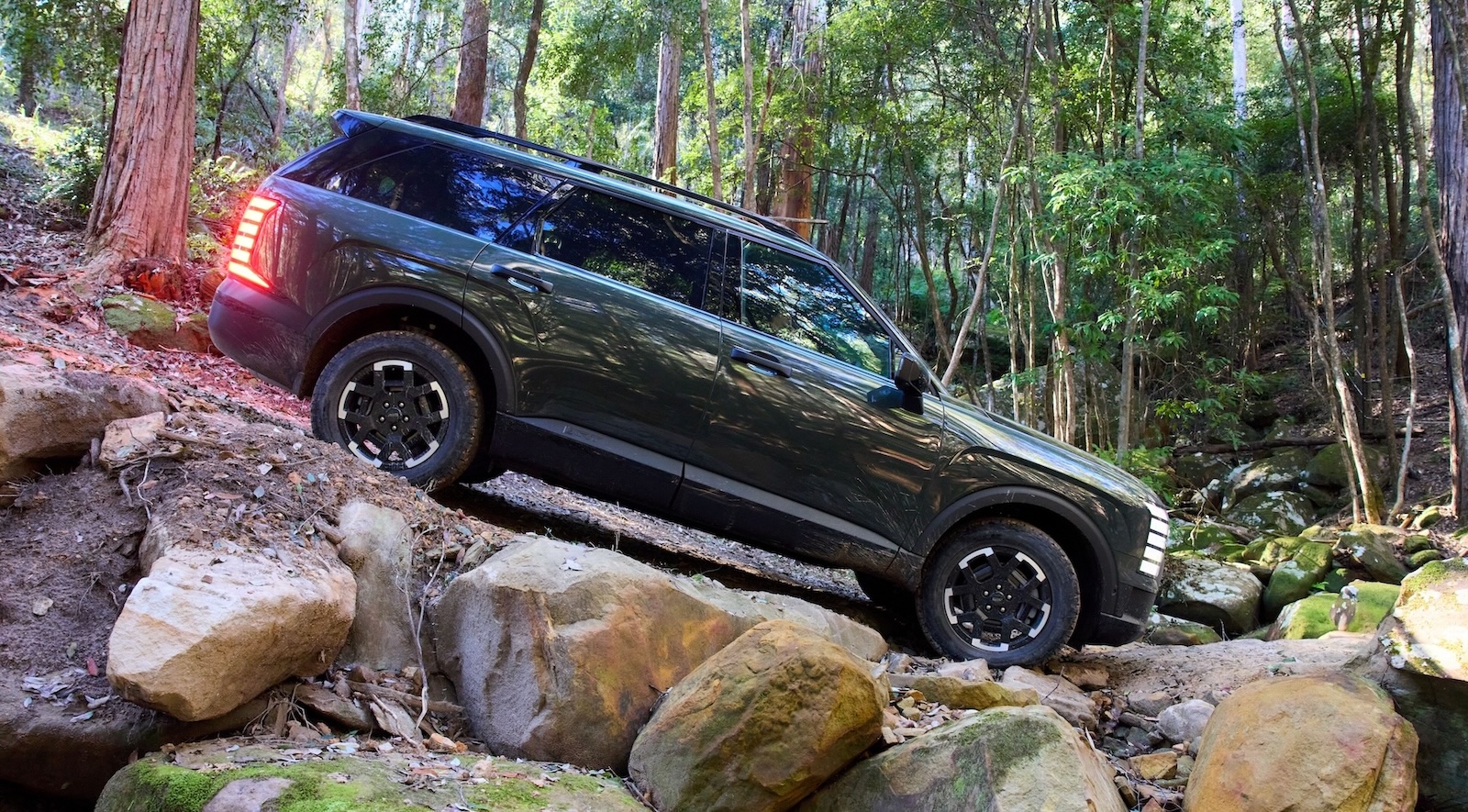
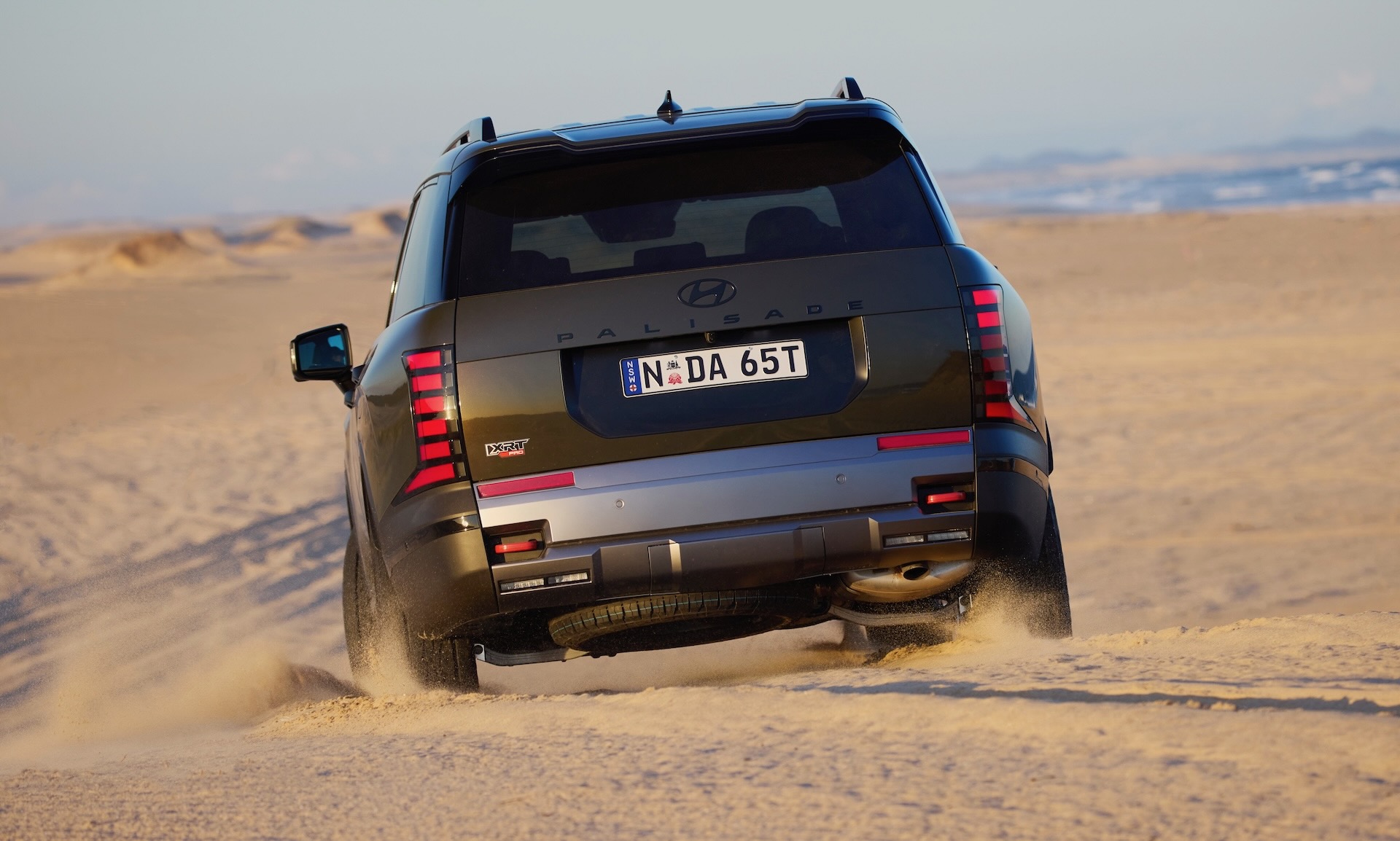
And it’s off road where the XRT Pro is considerably more impressive than its crossover foundations might suggest. Ground clearance jumps from 187mm in other Palisades to 212mm, while the approach, departure and ramp-over angles all improve by between 1-3 degrees. Add in the rear e-LSD, which actively distributes torque towards both rear wheels, and you have yourself a surprisingly eager and capable machine.
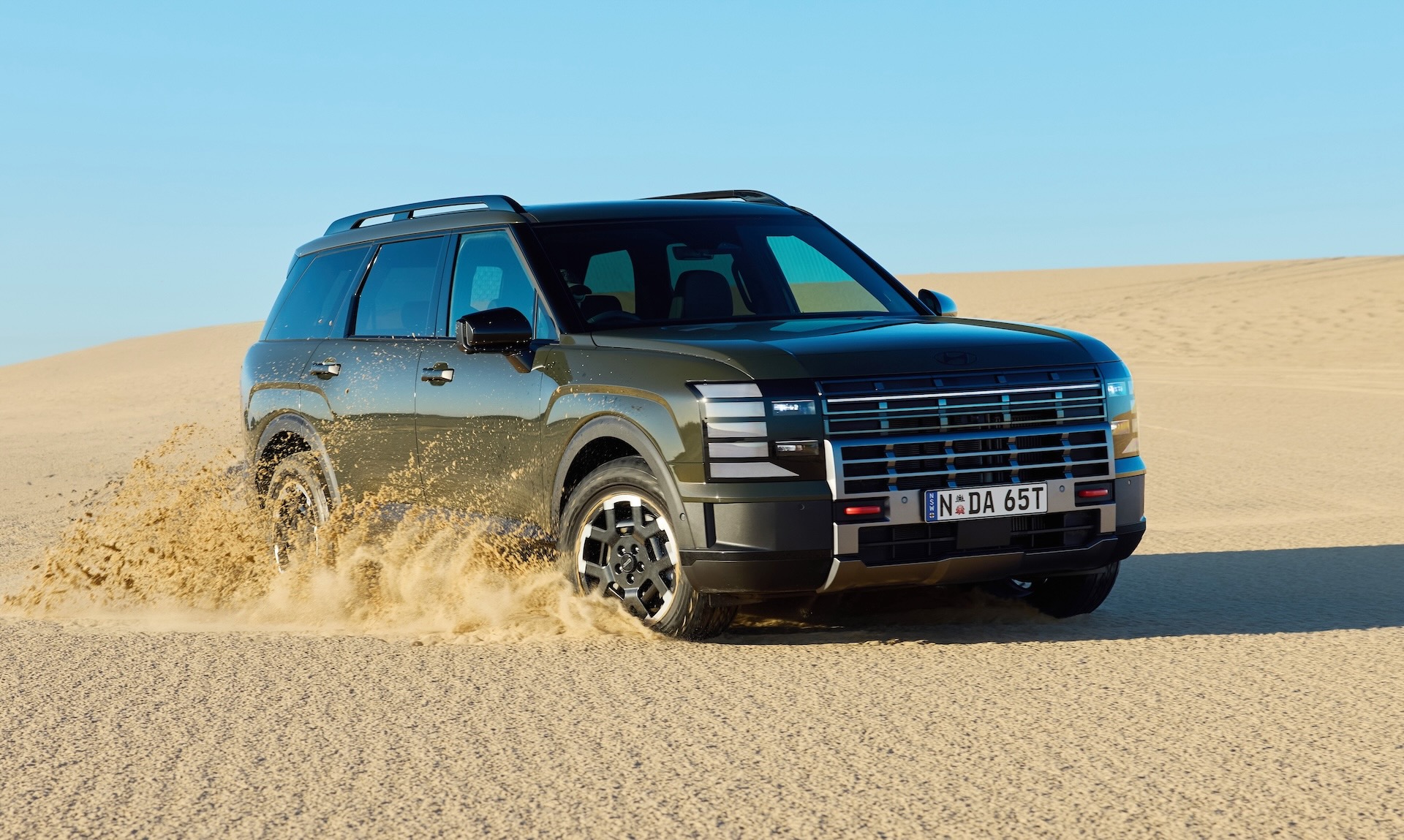
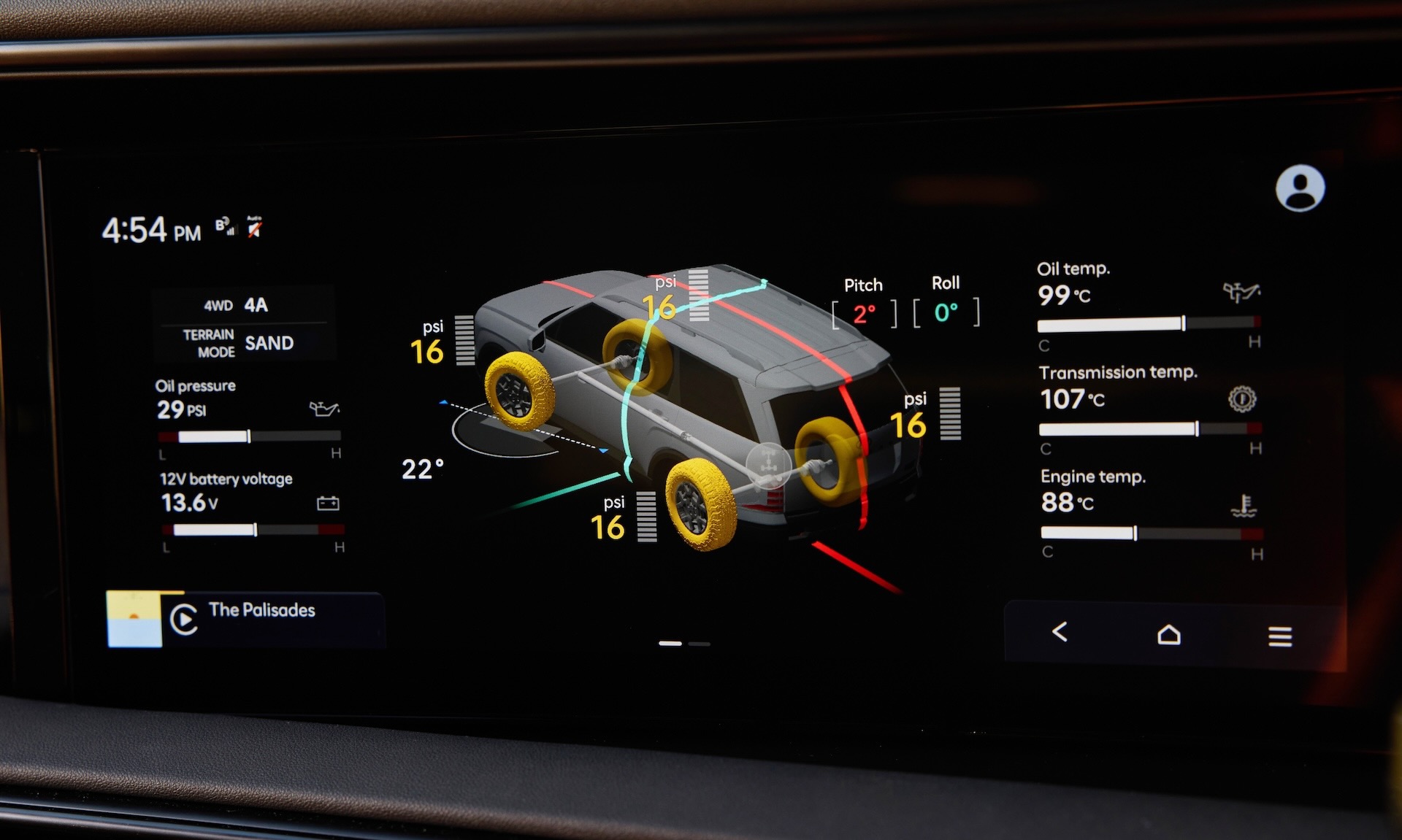
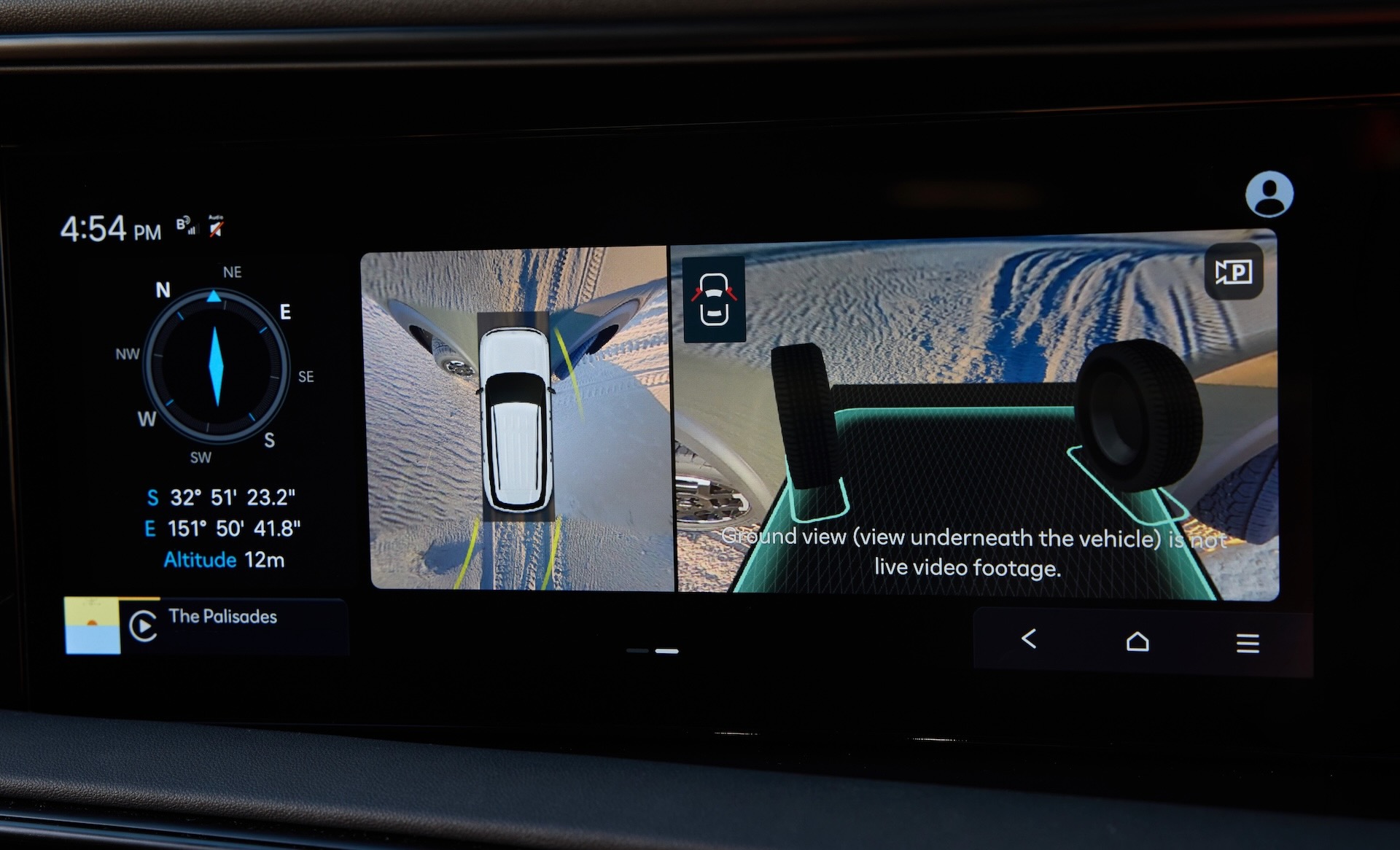
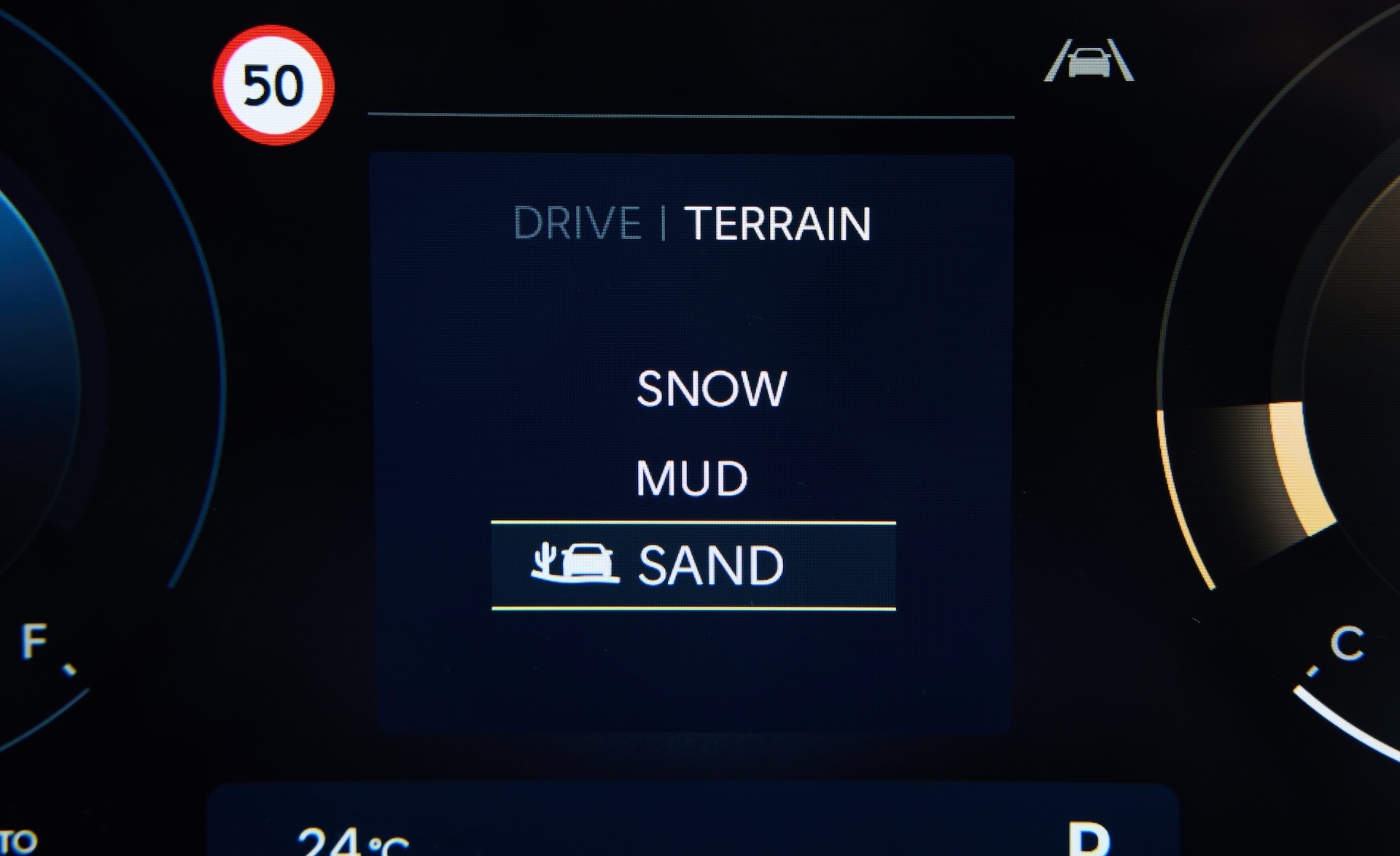
There are dedicated Mud, Sand and Snow terrain modes, along with an off-road information screen when you press the ‘XRT’ button on the steering wheel, displaying useful data including pitch, roll, torque distribution and e-LSD operation. A ground-view camera can also show the trajectory of the front wheels, which becomes genuinely useful when negotiating steep crests or deep tracks and ruts.
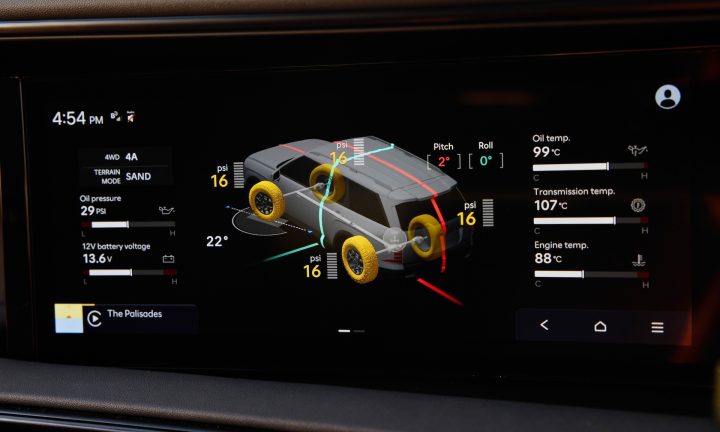
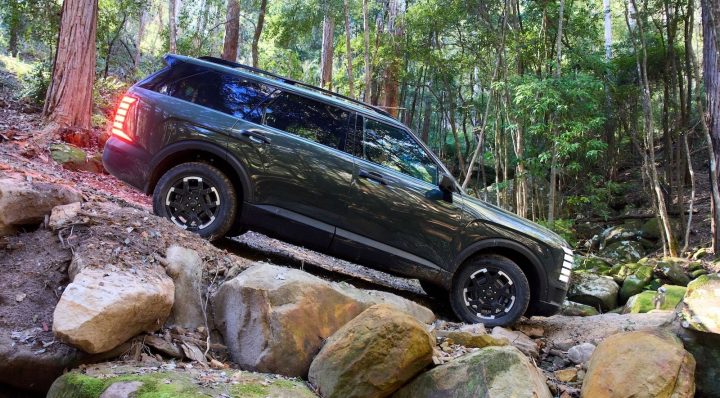
During our launch drive, the Palisade tackled terrain that most owners probably wouldn’t contemplate attempting in a large eight-seat crossover. Obviously, this isn’t a ladder-frame heavy-duty 4×4. It doesn’t have the low-range transfer case, extreme wheel articulation or underbody toughness of something like a LandCruiser or Patrol, and it shouldn’t be treated as one.
But within the crossover SUV world, its capability is exceptional. During our test it didn’t scrub the floor, it didn’t struggle during high articulation, and the traction management system worked proactively to mitigate individual wheelspin while still allowing progress.
Its weakest link is probably the lack of low-range, because it can be difficult to really slow down the vehicle while gently applying constant crawl-speed throttle. This engine is responsive. But again, this is not a hardcore off-roader and isn’t trying to be. Yet it climbs through, over, and across seriously rugged conditions without hassle.
One of its closest conceptual rivals is probably the smaller Subaru Outback Wilderness Apex, although even that requires optional all-terrain tyres to reach its full off-road potential. The Palisade XRT Pro provides its AT tyres straight from the factory while offering considerably more passenger space, with eight seats.
That makes it a particularly interesting option for families who genuinely go camping, explore forestry tracks or regularly travel on rough country roads, but don’t necessarily want the weight and compromises of a traditional ladder-frame 4×4.
2026 Hyundai Palisade XRT Pro: First impressions
It succeeds because Hyundai hasn’t tried to turn its family crossover into something it’s not. This remains a spacious, comfortable eight-seat SUV first and foremost, but the Australian suspension tune, increased clearance, all-terrain tyres and rear e-LSD give it considerably more ability once the bitumen ends. Perhaps more importantly for everyday driving, that suspension setup is superb on Australian country roads, combining excellent bump absorption with impressive body and wheel control.
The petrol-only powertrain will make sense for buyers wanting the full 2200kg towing capacity, and there’s something pleasantly straightforward about the 2.5T and conventional eight-speed automatic. We’d still like to see a hybrid XRT Pro eventually, at least as an option, as it would benefit families prioritising fuel economy over maximum towing.
As it stands, this is one of the most convincing attempts we’ve seen at adding genuine off-road capability to a crossover/monocoque SUV without sacrificing the comfort and practicality that made the original vehicle appealing. Let’s hope there are more XRT Pro models on the way. Tucson XRT Pro has a nice ring to it…
2026 Hyundai Palisade XRT Pro: Video