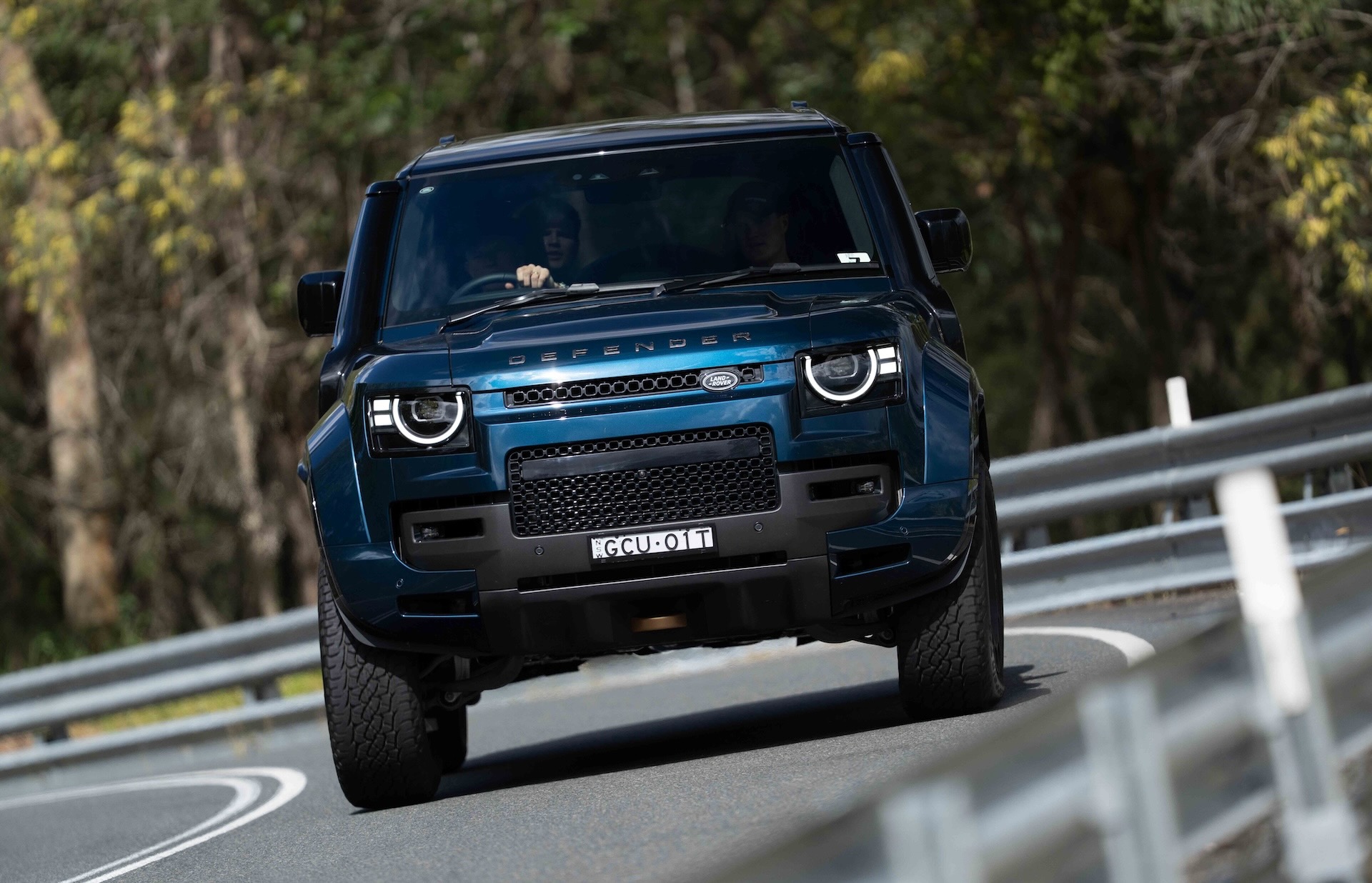
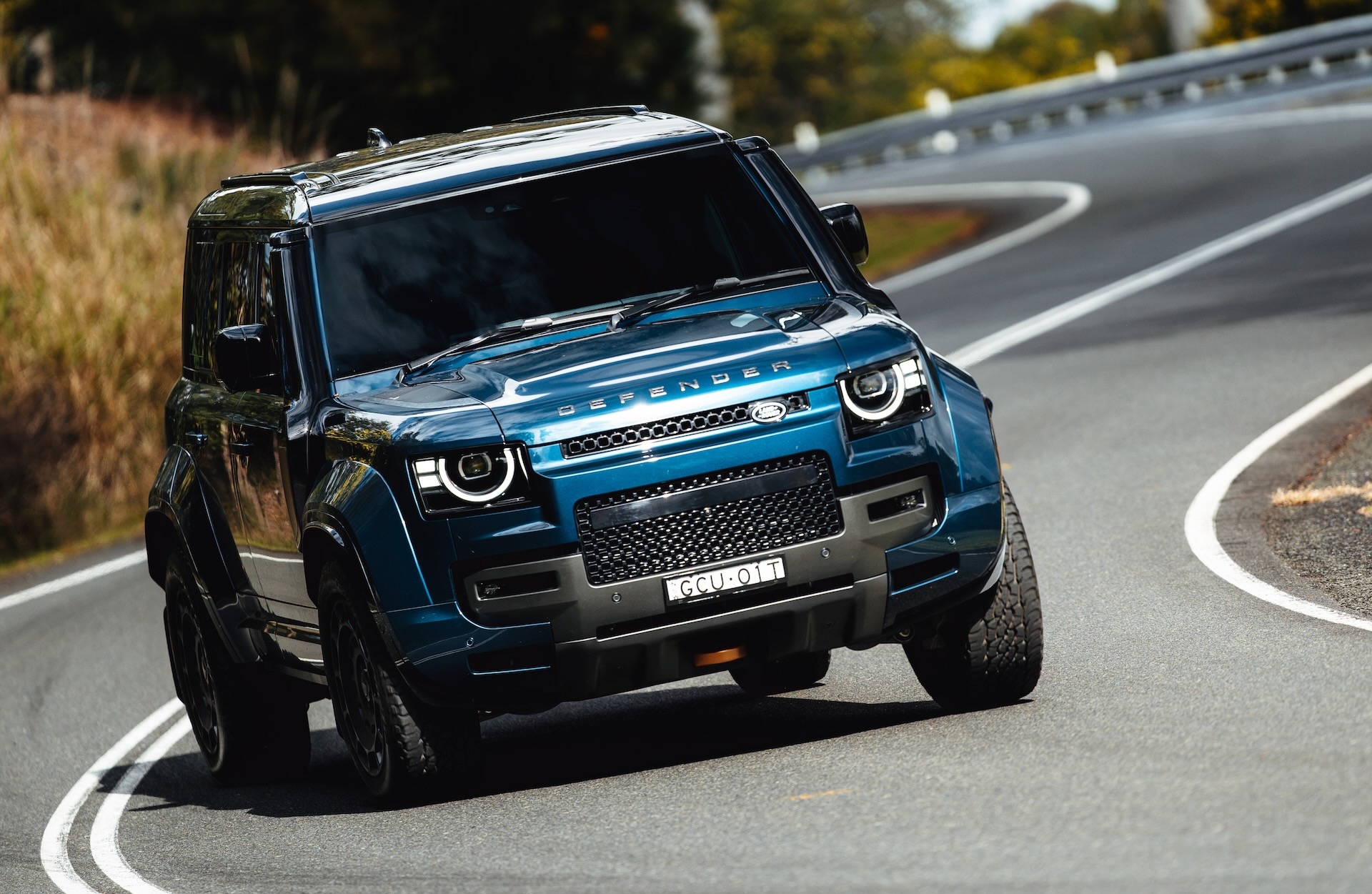
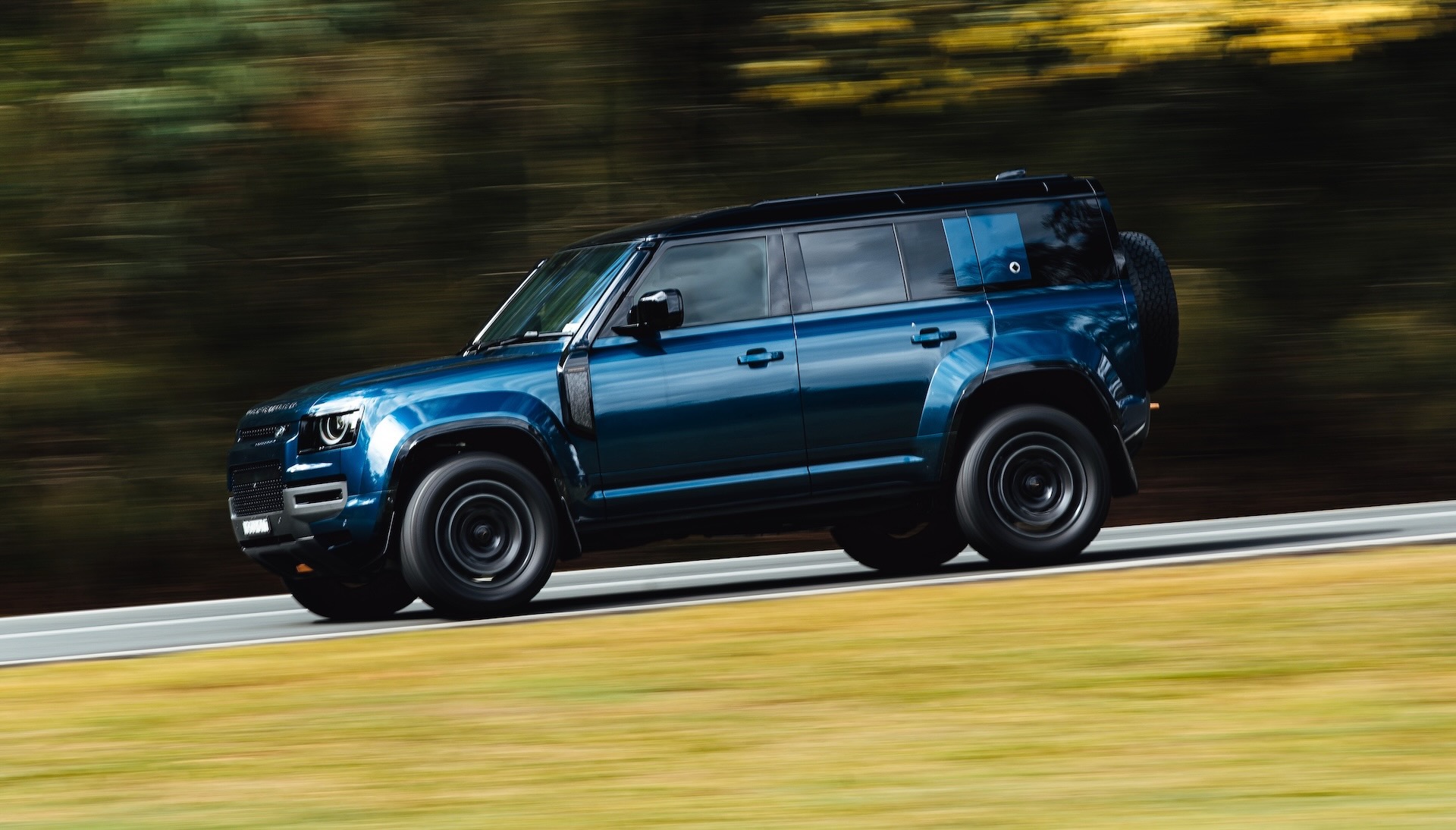
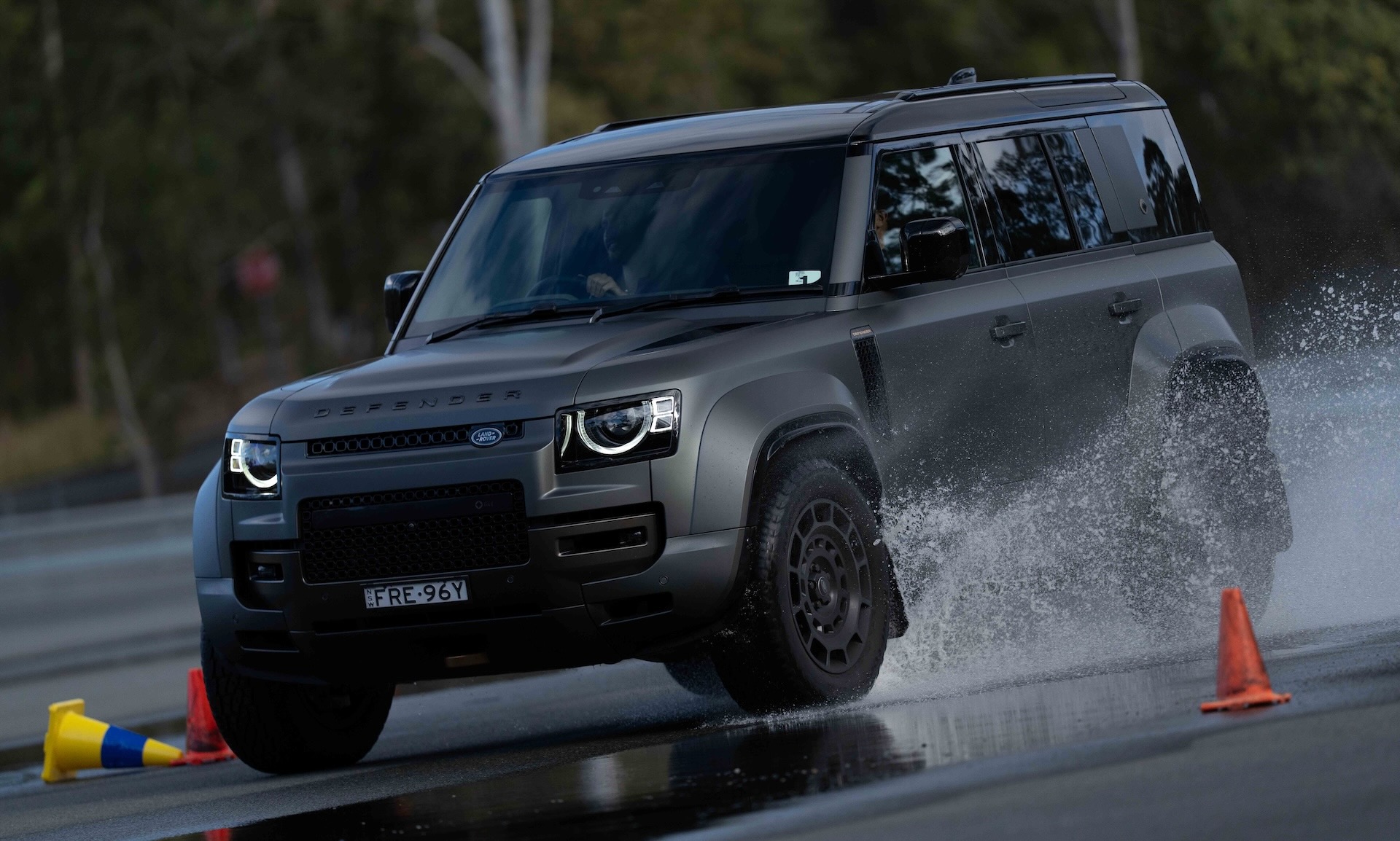
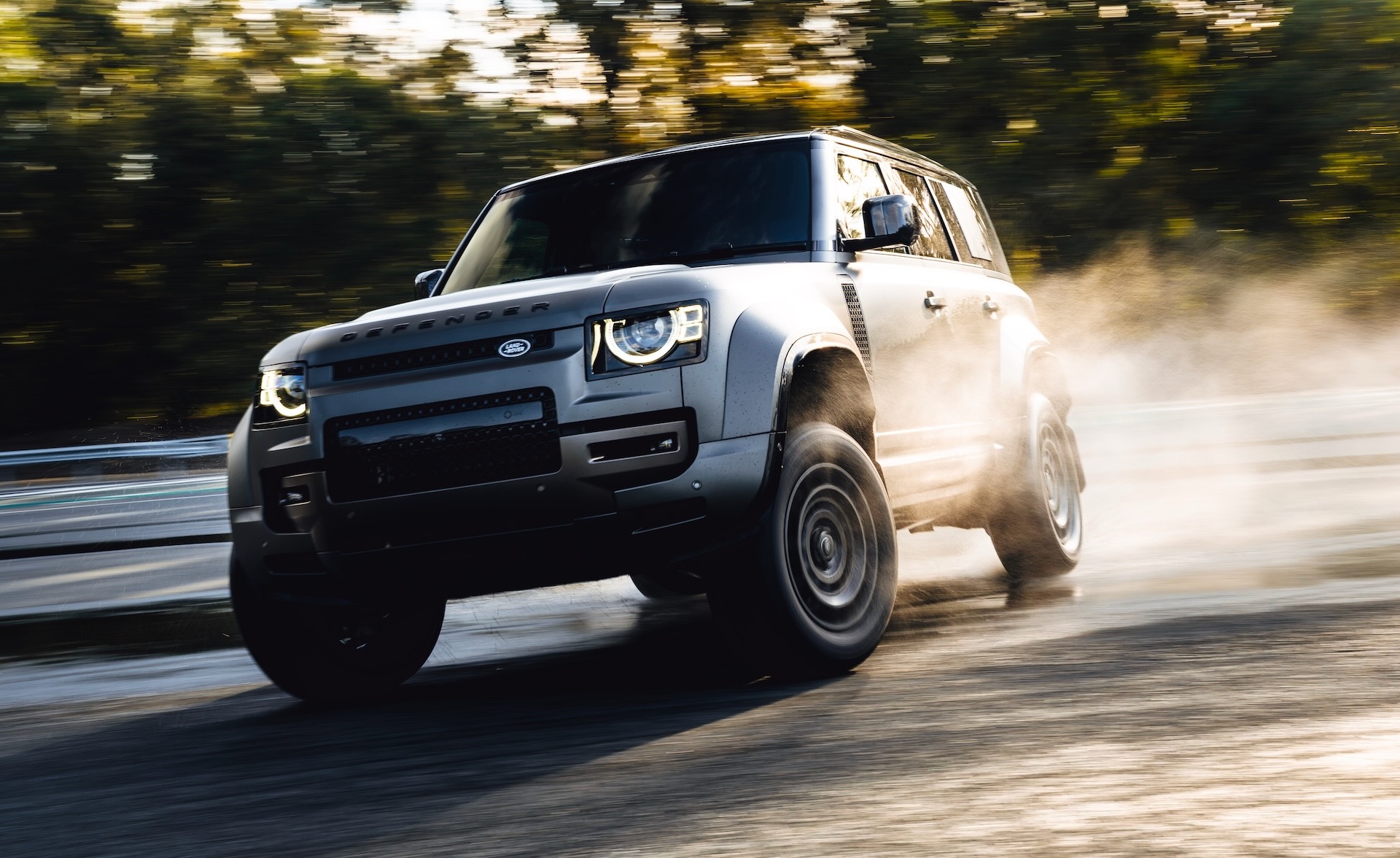
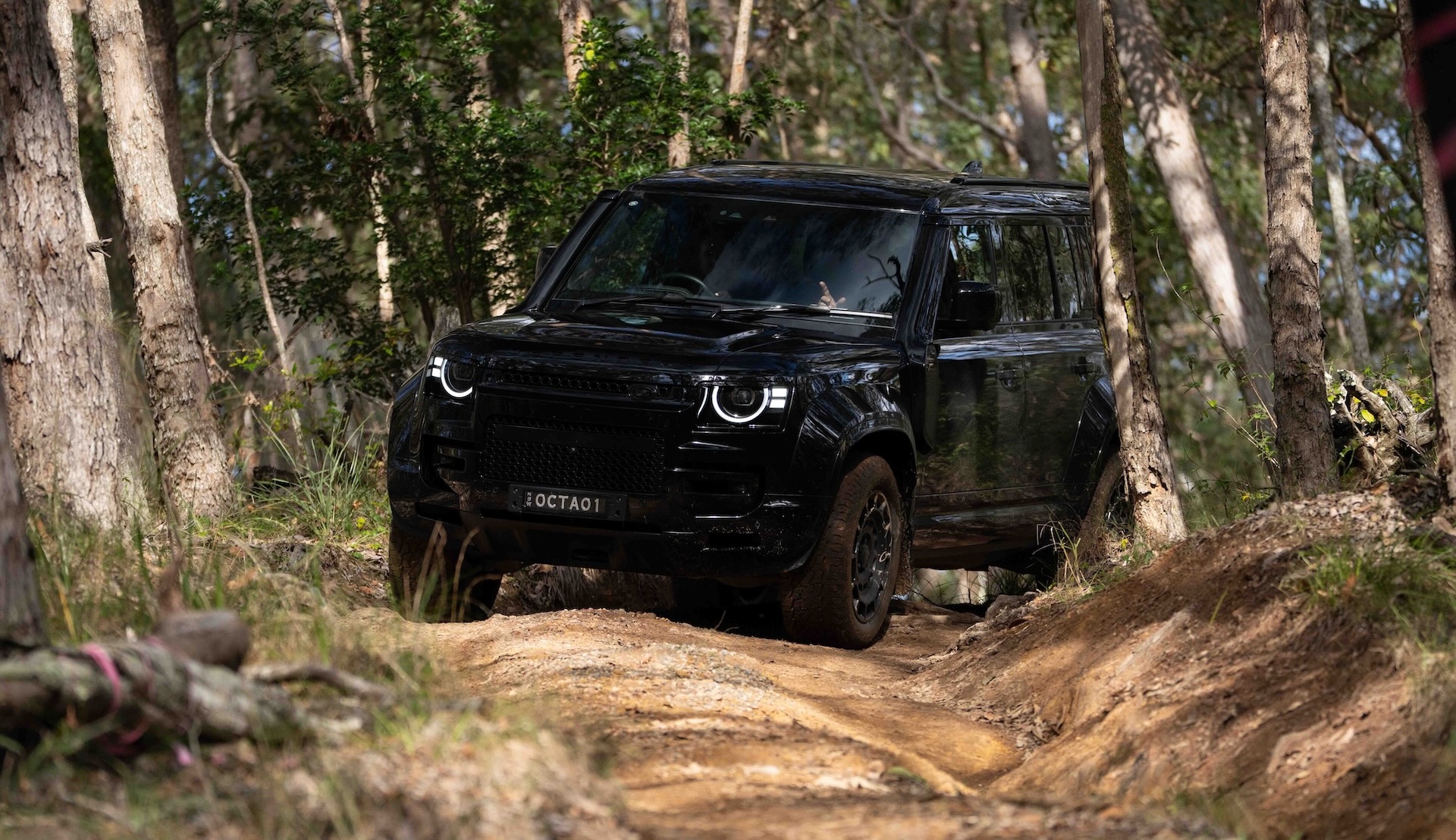
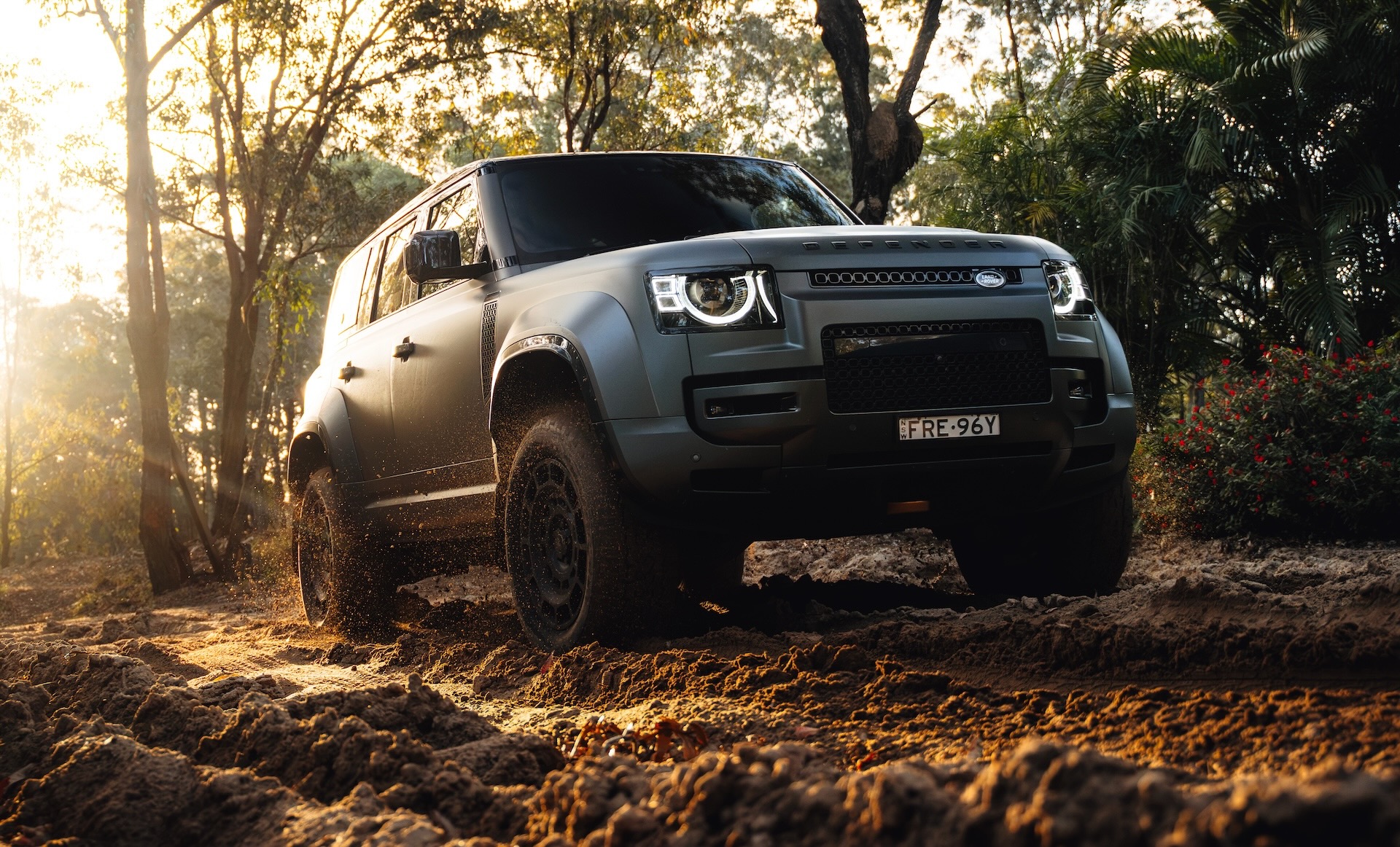
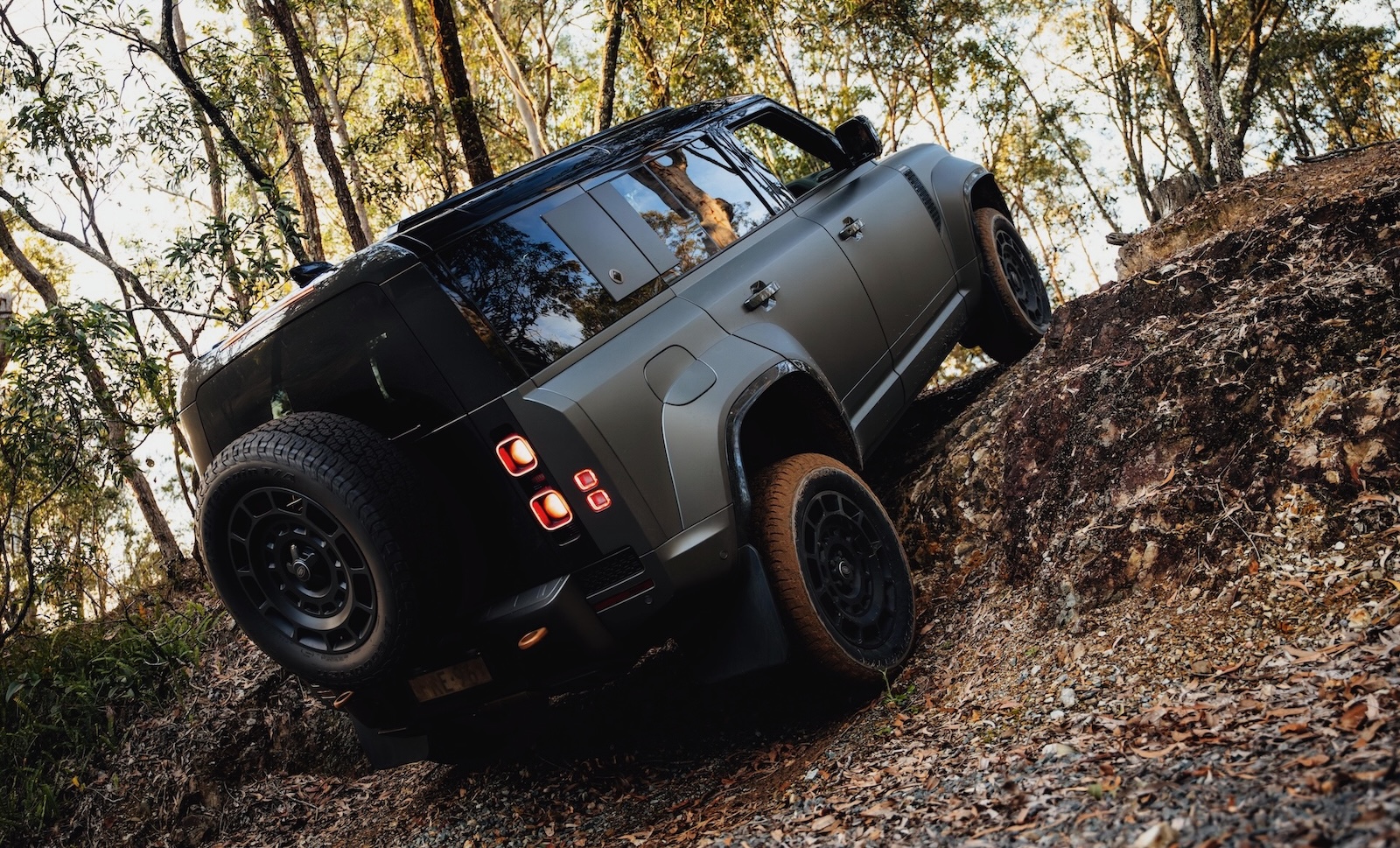
We had a short drive of the beastly Land Rover Defender OCTA at the Mt Cotton Driver Training Centre in Queensland, covering both sealed and off-road sections. It was actually an ideal environment, because its ability to completely change character between surfaces is arguably more impressive than its outright performance.
This isn’t simply a Defender with a bigger engine. Land Rover has raised the body by 28mm, widened its stance by 68mm and extensively revised the suspension, steering and braking hardware. Central to it all is the 6D Dynamics suspension system, which uses hydraulically interconnected dampers to control pitch and roll while still allowing substantial wheel articulation off road.
2026 Land Rover Defender OCTA: Specifications
Engine: 4.4-litre twin-turbo V8
Output: 467kW@6000rpm / 750Nm@1800-5900rpm
Gearbox: Eight-speed auto
Drive type: Four-wheel drive
Wheels: F & R: 22×9.0, 275/50Kerb weight: 2510kg
Power-to-weight: 5.37:1 (kg:kW)
Official consumption: 13.1L/100km
Fuel tank/Fuel type: 90L/95 RON
0-100km/h (claimed): 4.0 seconds
Starting price: $305,200
2018 xxx: How much does it cost?
You certainly pay for that breadth of capability. The Defender OCTA was originally announced in Australia from $291,542 before on-road costs, while the initial Edition One started from $317,592. So, realistically, we’re talking about a circa-$300,000 Defender, depending on options.
That’s an extraordinary amount of money, and there are faster performance SUVs and considerably cheaper serious 4x4s. The OCTA’s appeal is that it essentially tries to do both jobs at once, while still providing the luxury and everyday practicality expected at this price.
2026 Land Rover Defender OCTA: Interior & packaging
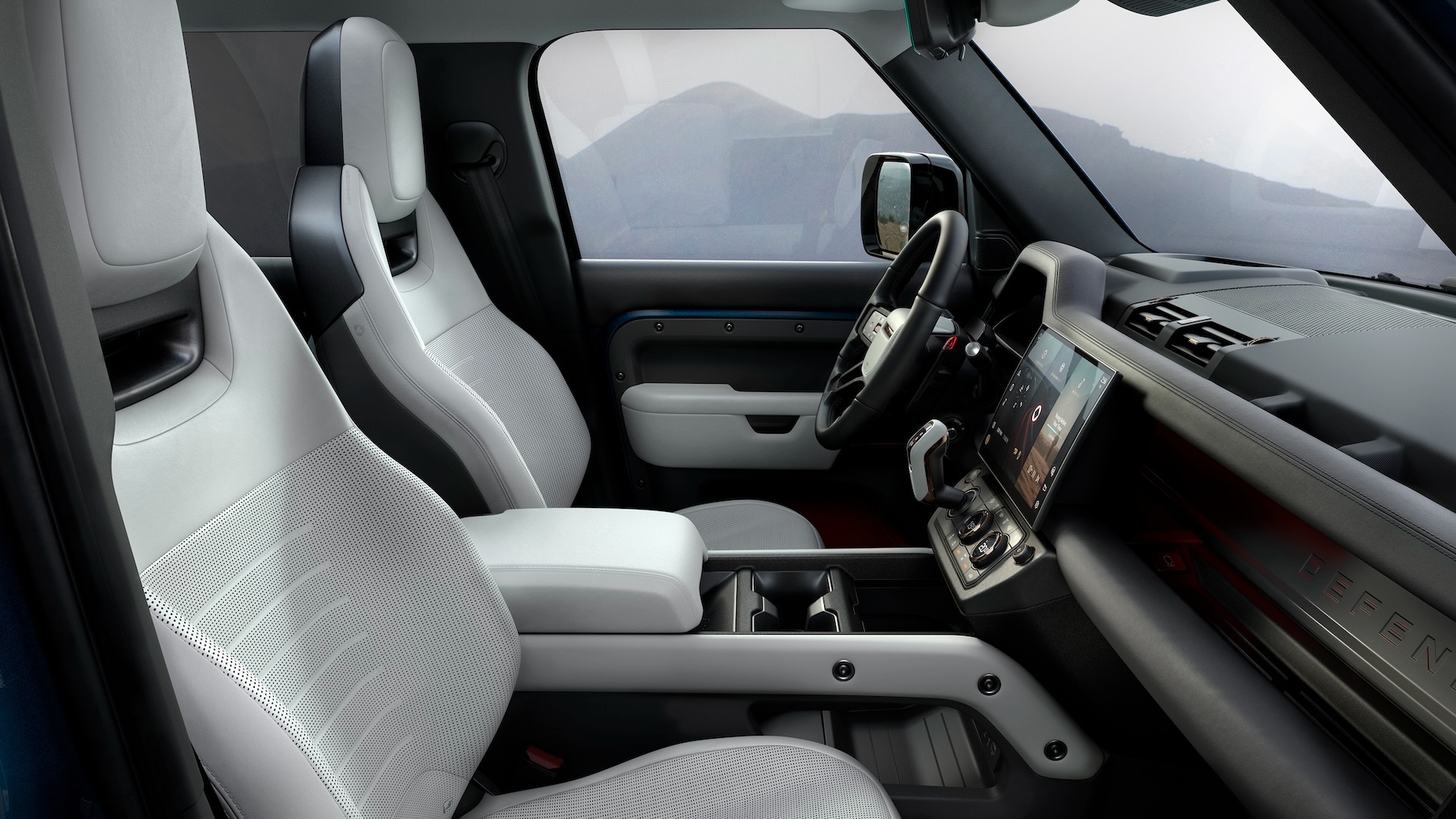
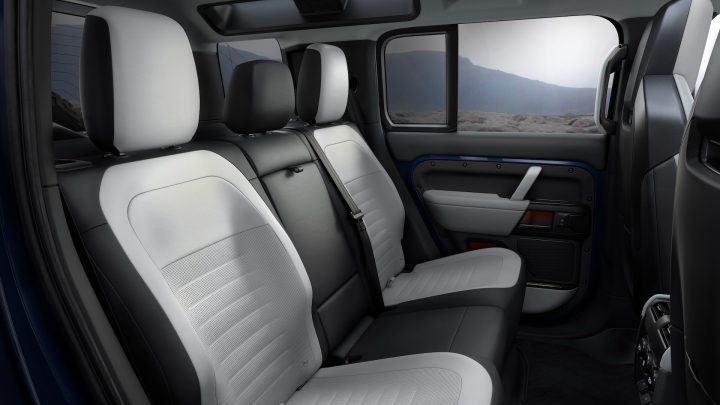
The cabin retains the practical, upright layout of the Defender 110, but with enough unique details to remind you that this is the flagship. The biggest highlight for me is the front seats. In fact, they might be the best seats I’ve ever experienced in a production car.
Land Rover has developed unique Performance Seats with integrated head restraints and substantially increased lateral support. They hold you securely during aggressive driving and when you’re being thrown around off road, yet remain extremely comfortable. And they are covered in a grippy suede-like fabric that is simply not seen in cheaper imitations.
Otherwise, the familiar Defender fundamentals remain. There’s excellent passenger space, plenty of storage and good visibility for such a substantial vehicle. The relatively rugged cabin presentation (in design) also feels appropriate for something that, despite its enormous price, remains genuinely designed to tackle serious terrain.
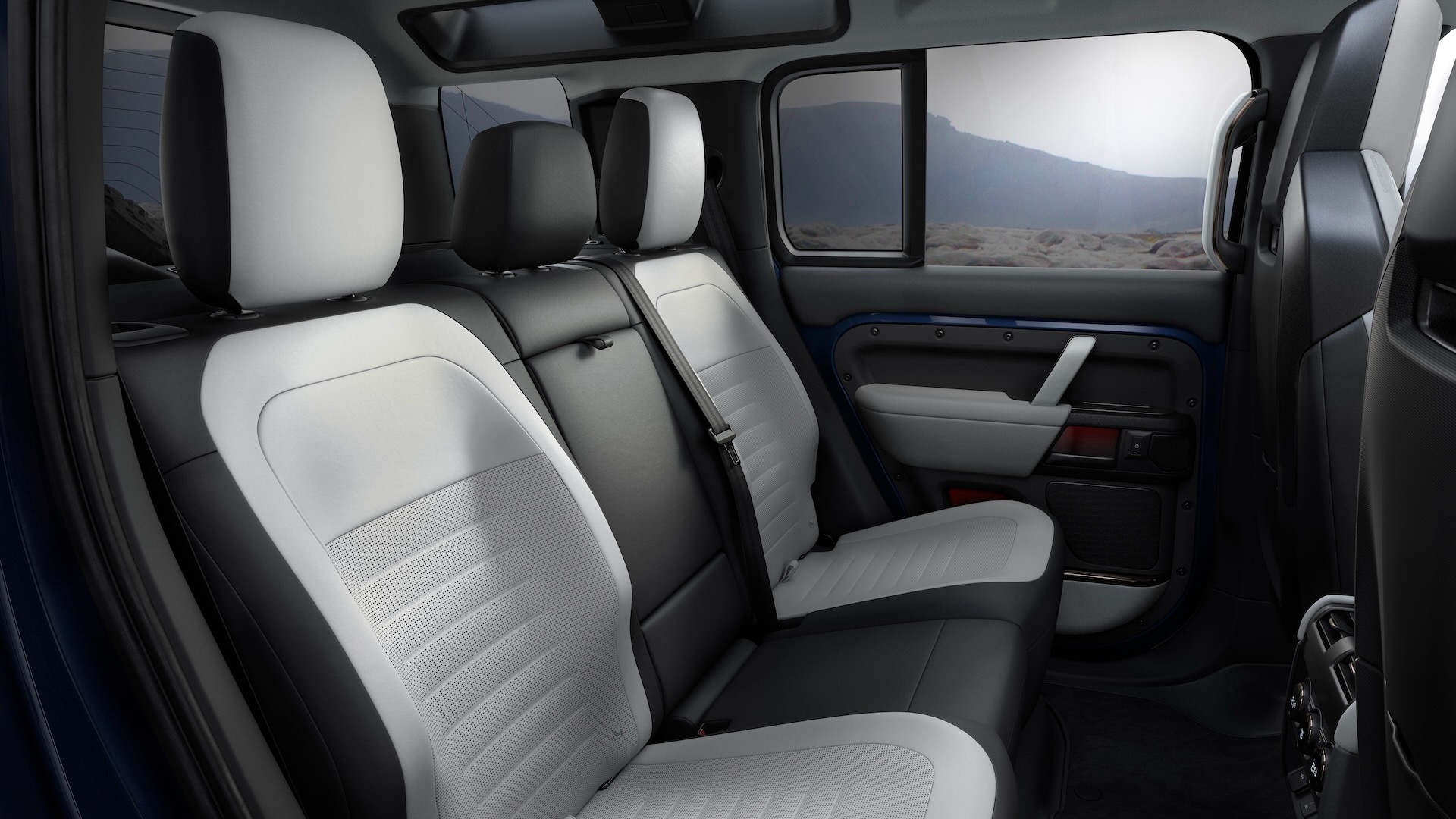
No compromises to be found in terms of rear-seat accommodation, either. Passengers are treated to their own climate control, charging options, and some lovely seat contouring that almost matches the front. Even boot space is essentially untouched, with 972L available, expanding to a whopping 2277L with the rear seats folded.
2026 Land Rover Defender OCTA: Powertrain & handling
And then there’s the engine. It’s a BMW-sourced 4.4-litre twin-turboc mild-hybrid V8, developing an incredible 467kW and 750Nm, with up to 800Nm available during Dynamic Launch Mode. It’s paired with an eight-speed automatic and retains high- and low-range gearing. Land Rover claims 0-100km/h in just 4.0 seconds.
Yep, performance is absolutely brutal. Did we mention it has low-range and does 0-100km/h in 4.0 seconds. There are not many vehicles on the market right not that have proper low range and can do the dash in 4.0 seconds or less. In fact, I think this is the quickest. This isn’t light in weight, either. Nope, it tips in at 2510kg, providing a power-to-weight ratio of 186kW:1000kg. That’s about the same as the base 2026 Porsche 911 (190kW:1000kg).
There’s something wonderfully absurd about sitting this high above the ground in a Defender and experiencing acceleration normally associated with a serious sports car. And the sound is nothing short of addictive. Yes, it doesn’t have the sheer theatre in terms of barks and crackles of the old 5.0L supercharged JLR unit. Instead, this produces a deep, bellowing rumble that soon turns into a gargling roar as the revs climb.
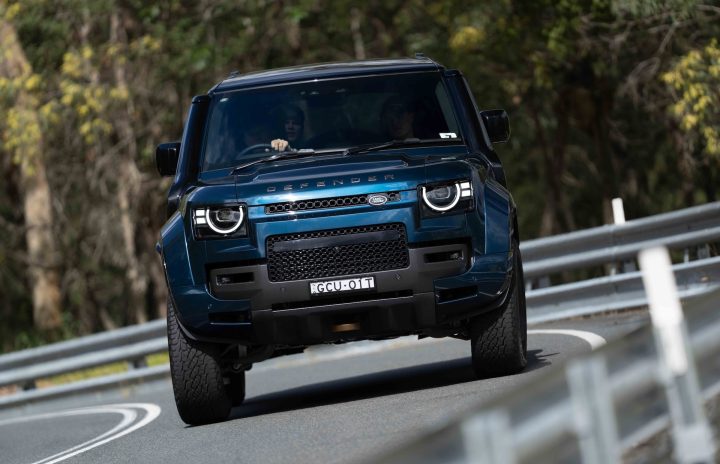
And the engine loves to rev to 7000rpm. Again, for something with low range and all-terrain tyres, a 7000rpm screaming V8 is an ultra rare experience these days. It’s at these revs where the Defender transforms into an exotic, almost-scary-fast SUV, with massive G-force as the nose rises while charging for the horizon. Totally nuts.
But the engine isn’t actually the most impressive part of the OCTA. It’s the chassis. Select Dynamic mode and the suspension dramatically tightens its control over the body. Steering and throttle responses sharpen and the OCTA becomes a surprisingly-fun tarmac weapon, disguising its enormous size and weight remarkably well.
The limiting factor on our test vehicle was the 33-inch Goodyear all-terrain tyres. With 467kW available, they simply don’t provide enough sealed-road grip to exploit everything the chassis can deliver. During our test the stability control was regularly stepping in under even relatively light throttle while cornering. However, this is not designed to be a track car. But, it’s good to know the vehicle can save the day even if you can’t.

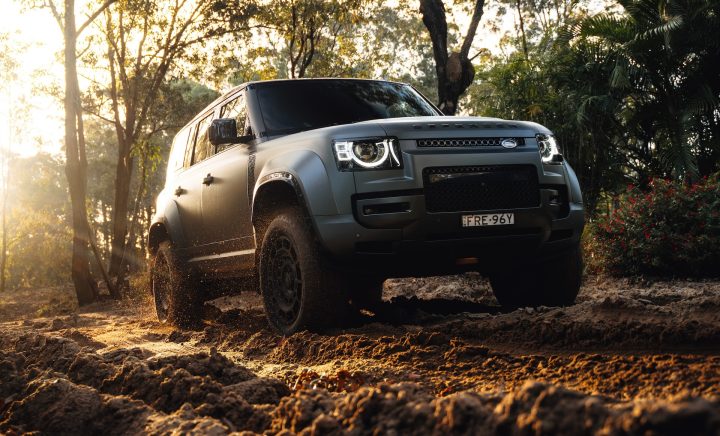
In OCTA Mode, which demonstrates just how clever the suspension is, rather than maintaining the tight body control of Dynamic mode, it allows considerably more movement and suspension flex. The drivetrain also adopts a strongly rear-biased torque distribution (around 20:80 front-to-rear), allowing you to throw the vehicle’s weight around and steer it with the throttle on loose surfaces.
It’s huge fun, but that extra suspension movement also has a practical purpose. On rough terrain the wheels can articulate substantially more, helping keep the tyres in contact with the ground rather than trying to hold the body completely flat.
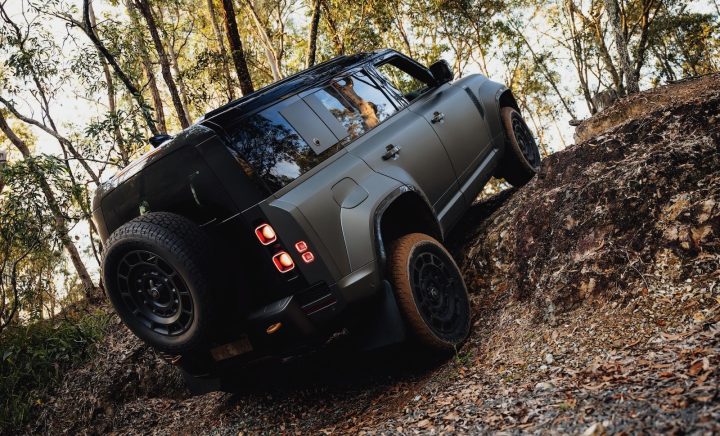
At slower speeds, the OCTA is almost unstoppable. It sits higher than a regular Defender and the huge tyre circumference helps it roll through deep ruts and over chunky obstacles, while the adaptive drivetrain constantly works out where traction is available. Land Rover has also revised the bumpers for better clearance and says the OCTA can wade through water up to one metre deep.
We tackled some steep and heavily rutted sections at Mt Cotton and the OCTA simply worked its way through like it didn’t even matter. That’s ultimately what makes it so impressive. Plenty of SUVs are fast and plenty of dedicated 4x4s are exceptional off road. Very few can switch between those disciplines so convincingly.
2026 Land Rover Defender OCTA: First impressions
The Defender OCTA is one of those rare vehicles where the engineering is more impressive than the headline performance figures. Yes, the 467kW twin-turbo V8 is brutally fast, but it’s the 6D Dynamics suspension that really defines the experience. Dynamic mode somehow turns this huge 4×4 into a serious tarmac performer, while OCTA Mode unlocks impressive wheel articulation to attack rough terrain.
At around $300,000, the OCTA is obviously an extravagant proposition. But there aren’t many production vehicles that can offer this level of performance, luxury and genuine off-road ability in the same package. After experiencing both sides of its personality at Mt Cotton, it’s the sheer breadth of capability that leaves the biggest impression.
2026 Land Rover Defender OCTA: Video