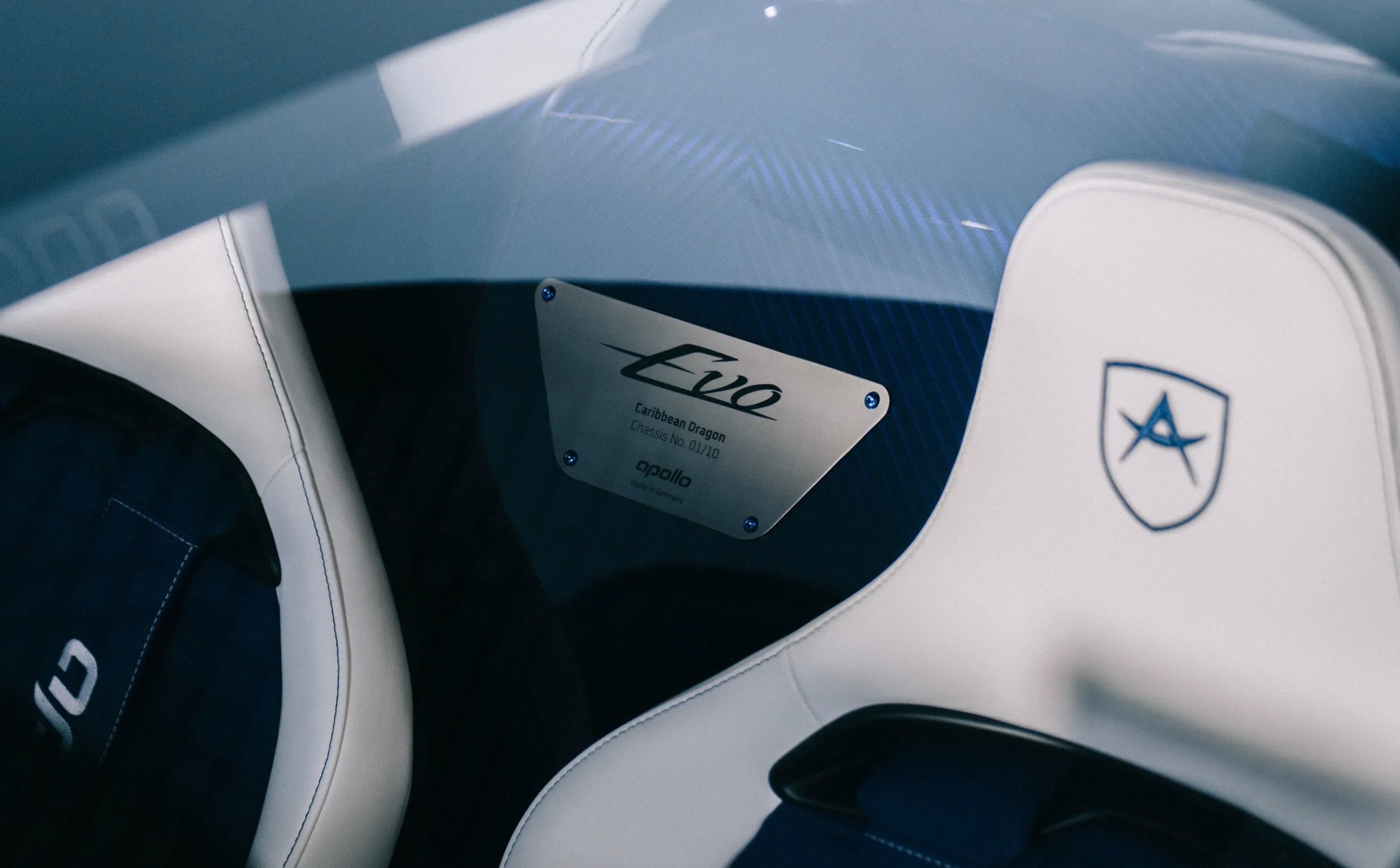
German boutique manufacturer Apollo Automobil has revealed the first customer-specification Project Evo at the 2026 Goodwood Festival of Speed. Dubbed the ‘Caribbean Dragon’, the track-only hypercar is the first of a strictly limited 10-unit global production run, succeeding the Apollo Intensa Emozione (IE).
Propulsion comes via a 6.3-litre naturally aspirated V12 engine. Sourced from Ferrari and heavily re-engineered by German motorsport specialists HWA AG, the unit produces 588kW of power and 765Nm of torque. Power is sent exclusively to the rear wheels through a six-speed sequential transmission.

The Evo features a dry weight of just 1300kg, built around a newly-developed carbon fibre monocoque that integrates carbon front and rear subframes. According to Apollo, the revised tub is 15 per cent stiffer and 10 per cent lighter than the architecture utilised in the outgoing IE. This yields a claimed 0-100km/h sprint time of 2.7 seconds and a 335km/h top speed.
Aerodynamic packaging heavily dictates the exterior design, with the bodywork reportedly generating 1350kg of downforce at speed – exceeding the vehicle’s own dry mass. The exterior shell comprises over 75 individual carbon fibre elements. For this specific ‘Caribbean Dragon’ commission, the Pearl White and Ocean Blue paintwork required a specialised eight-layer application process that consumed more than 1000 labour hours to complete.
At the rear, the Evo utilises a complex, 3D-printed titanium exhaust system named ‘Dragon Skin’. The single-piece component takes 123 hours to manufacture and features a raw titanium finish engineered to thermally discolour into deep blue hues after sustained high-temperature track use.
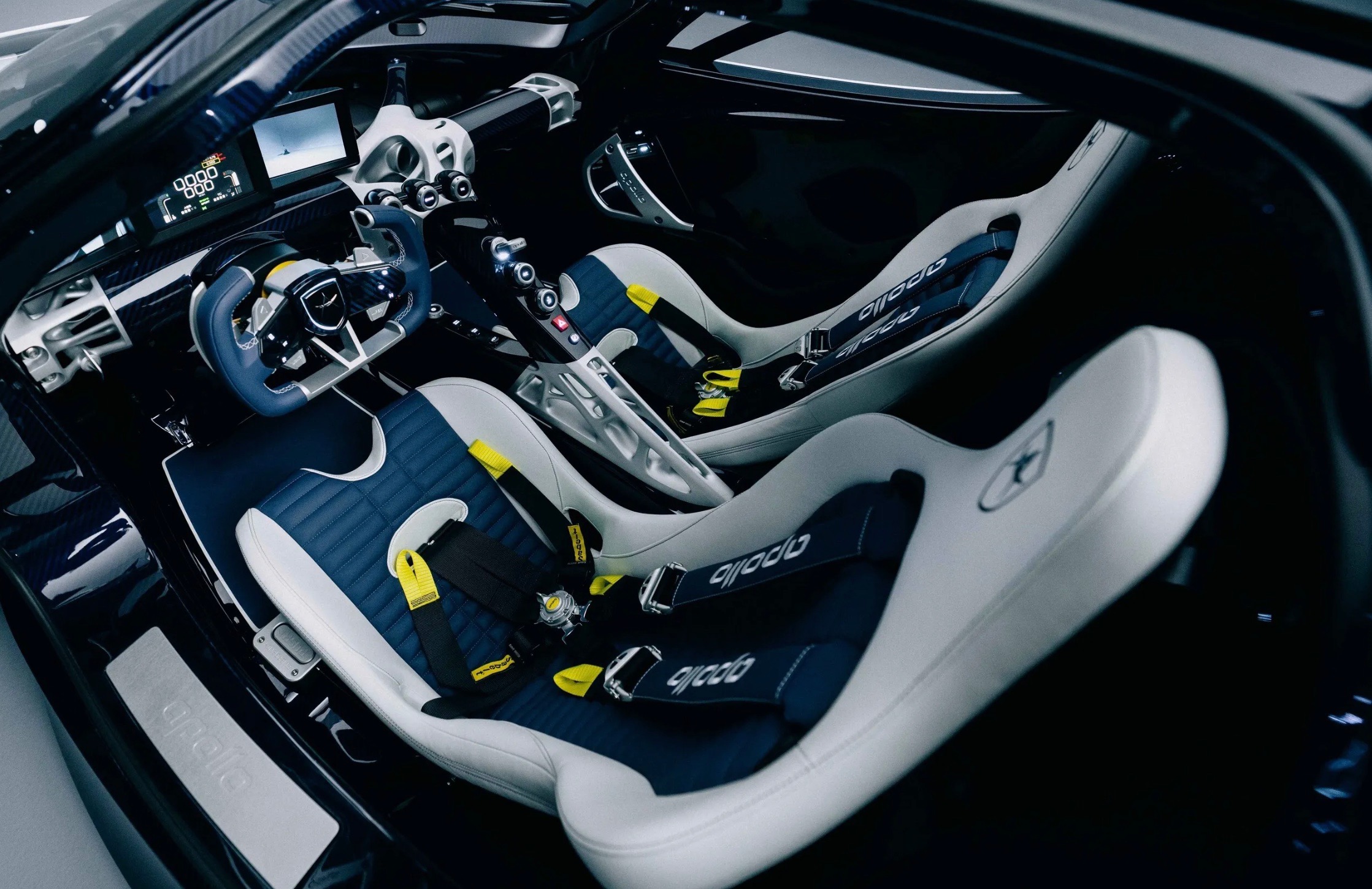
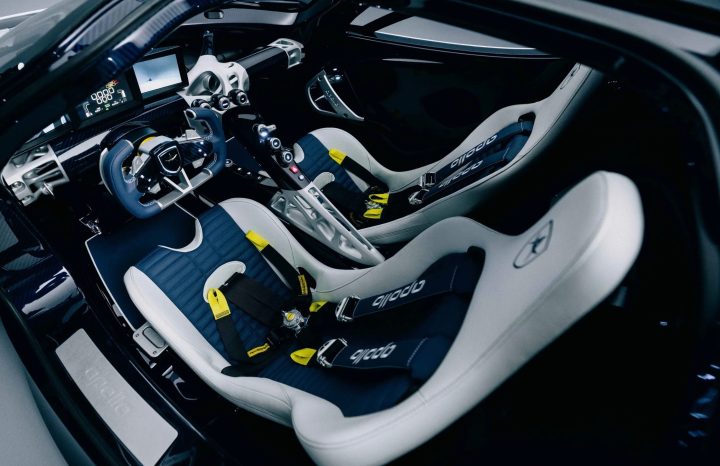
Chassis hardware includes carbon-ceramic brakes housed within forged aluminium wheels, staggered 20-inch front and 21-inch rear wheels, and Michelin Pilot Sport Cup 2 tyres. Inside, the cabin features topology-optimised, 3D-printed aluminium components and a solid-milled aluminium steering wheel, set against exposed blue-tinted carbon fibre.
Pricing for the Apollo Project Evo begins at €3 million (approximately AU$4.9 million) before local taxes, with the manufacturer confirming none of the 10 units are homologated for public road use.