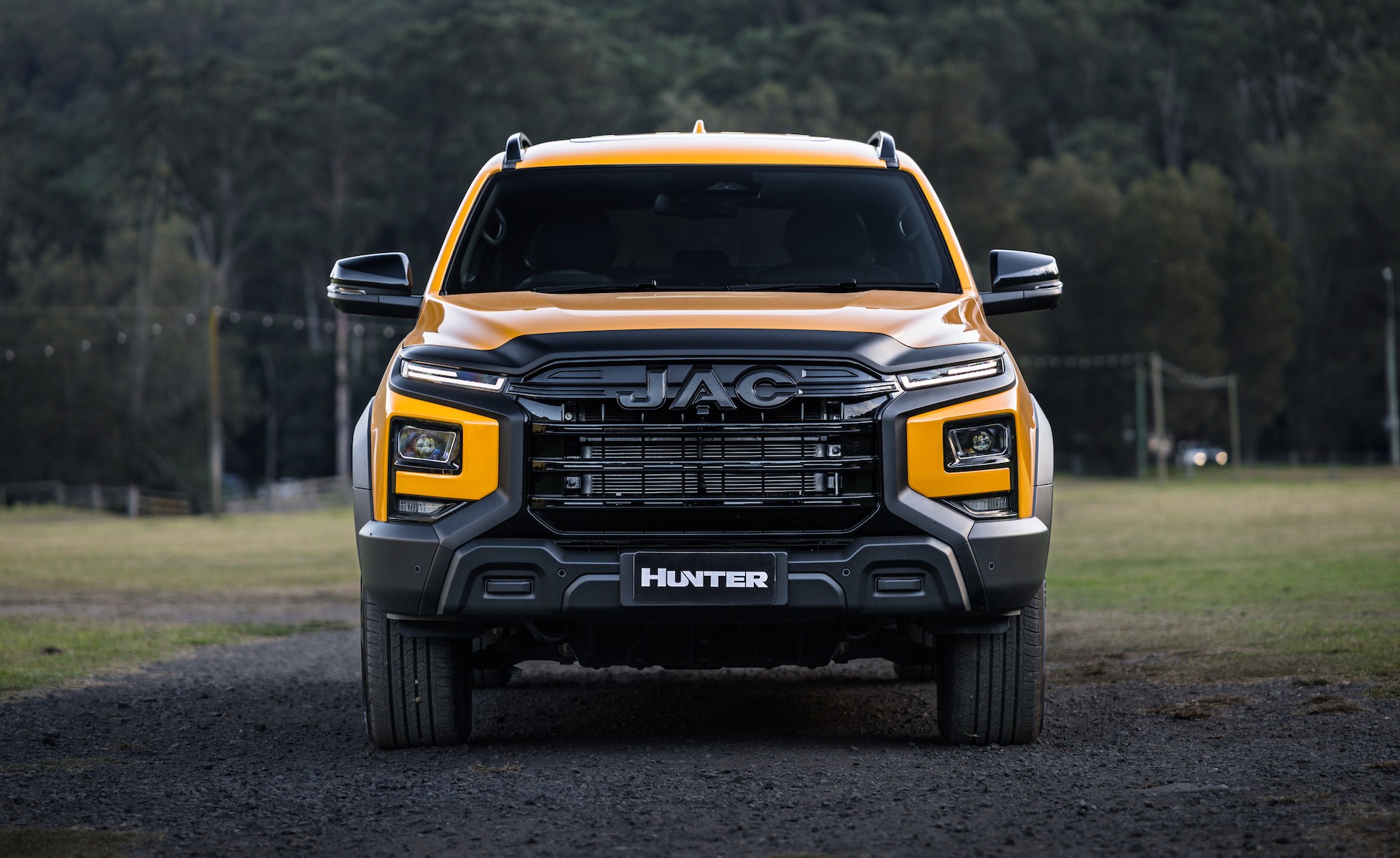
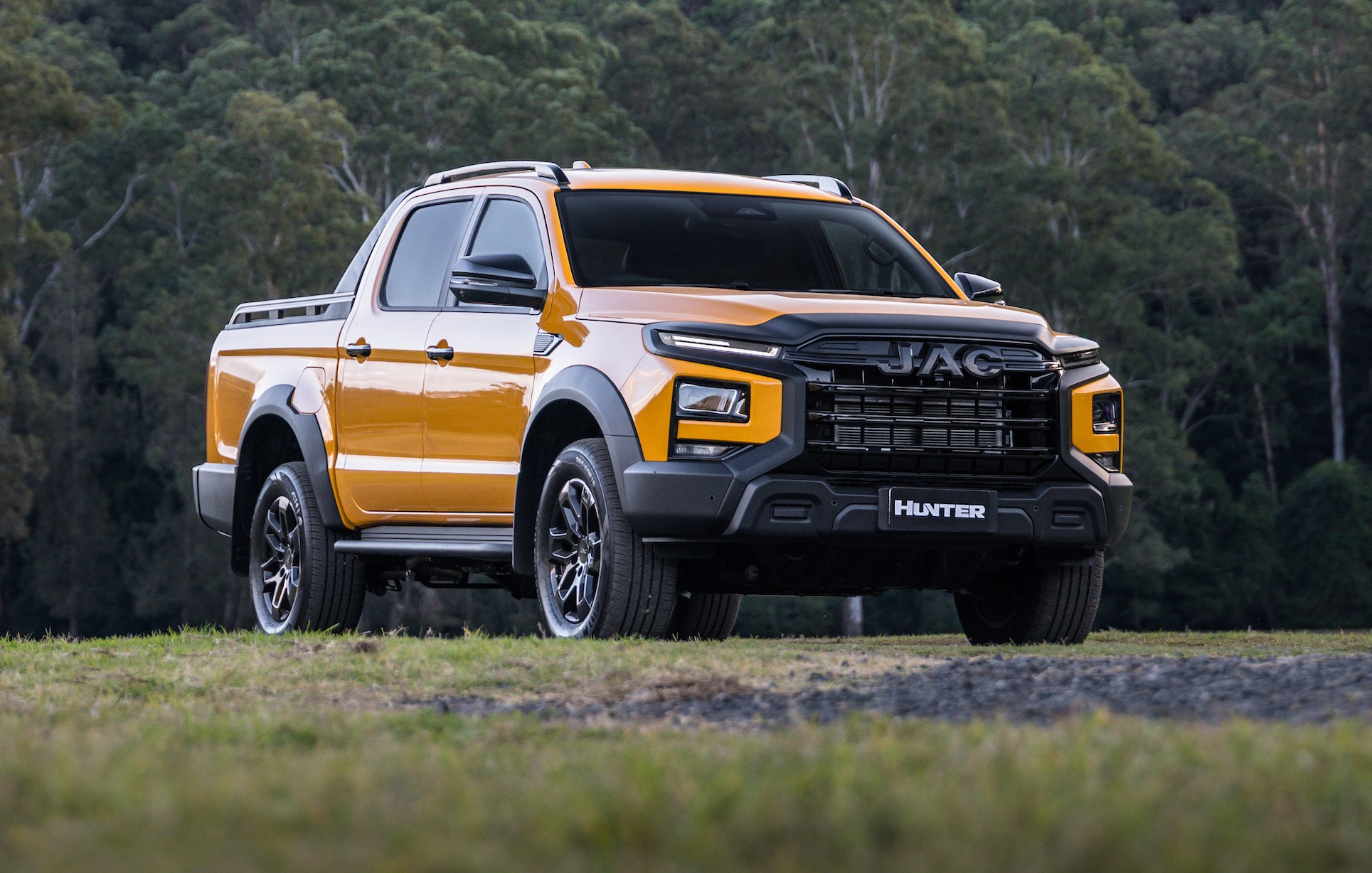
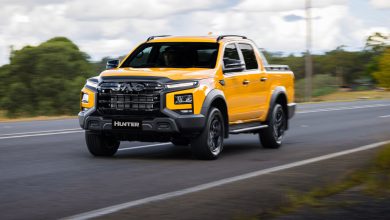
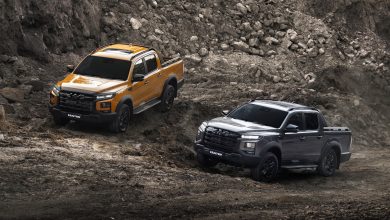
Entering the market with segment-busting on-paper specs, the new JAC Hunter PHEV is one of the more interesting left-field entries into Australia’s dual-cab ute market, mainly because of how aggressively it is positioned on value and capability. At under $50,000, it immediately undercuts everything offering plug-in hybrid technology in this segment, and that alone will get attention from both fleets and private buyers.
This review comes on the back of a brief first drive in some pre-production samples as part of a media event, apparently about 70% representative of final showroom specification. So the impressions here should be treated as an early snapshot rather than a definitive verdict, particularly in areas like suspension calibration, refinement and final tuning.
Still, even at this early stage, the core formula is clear. The Hunter PHEV seems to be designed less as a lifestyle-focused dual-cab ute and more as a workhorse first, electrified efficiency second, and tech showcase third. That positioning alone already sets it apart from some of the more road-biased plug-in hybrid utes arriving in Australia.

2026 JAC Hunter: Specifications
Engine: 2.0-litre turbo four-cylinder plug-in hybrid
Output: 360kW
Gearbox: Four-speed hybrid auto
Drive type: Four-wheel drive
ANCAP: Five starsKerb weight (approx.): 2550kg
Power-to-weight: 7.08:1 (kg:kW)
Official consumption: 1.6L/100km
Fuel tank/Fuel type: 77L/91 RON
0-100km/h: 8.43 seconds*
Starting price: $50,000
*Figures as tested by Driving Enthusiast on the day. Manufacturers’ claims may be different
2026 JAC Hunter: How much does it cost?
The full price list is yet to be confirmed but JAC Australia has said it will start from “under $50,000” for the entry model. We know there will be at least two variants (maybe more) as these pre-production examples were labelled as ‘Hunter X’ models. That price places it as the cheapest PHEV 4×4 ute currently on sale in Australia.

2026 JAC Hunter: Interior & packaging
Inside, the Hunter PHEV largely carries over the cabin architecture from the JAC T9, which means a familiar layout if you’ve seen or driven that model before. The design is functional and straightforward rather than flashy. Material quality is acceptable for the price point, though it doesn’t push beyond the fundamentals.
The driving position is upright and commanding, as expected in a dual-cab ute, and it’s great to see rack and reach adjustment from the steering column. Visibility is generally strong. However, out the back, the rear windscreen seems oddly small. So, with the rear headrests up, the view isn’t as wide and open as some rivals. Not to worry too much though as there is a comprehensive surround-view camera system available (variants to offer this are yet to be confirmed).
Climate control is single-zone, which is one of the more obvious cost-cutting measures in the cabin. It works, but it does feel slightly basic when some competitors are starting to offer dual-zone setups even in mid-range variants. In fairness, the rest of the cabin doesn’t pretend to be something it isn’t, so this doesn’t come as a surprise.

Rear seat packaging is where the Hunter shows a mixed result. Space is slightly tighter than key rivals such as the MG U9 and Foton Tunland V7, particularly in leg and shoulder room. However, the slightly more compact footprint could actually work in its favour for urban buyers, making it easier to park and manoeuvre in tight shopping centre environments. Although, the regular JAC T9 is 5.33m long, which means it only just fits in standardised car park spaces (like most utes).
There are some thoughtful touches in the rear, including twin air vents (a positive at this price), USB and Aussie socket charging points, and layered seatback storage pockets. It’s not class-leading in rear comfort, but it is clearly designed with real-world family usability in mind rather than pure spec-sheet positioning.

2026 JAC Hunter: Powertrain & handling
The Hunter PHEV combines a 2.0-litre turbocharged petrol engine with dual electric motors and a 31.2kWh LFP battery, producing a claimed 360kW of system output. On paper, that places it at the top of the current plug-in hybrid ute segment in Australia.
However, real-world impressions from this pre-production drive were more measured. With the battery sitting around 20% state of charge during testing, our Vbox revealed a 0–100km/h time of 8.43 seconds, which is only just quicker than many of the diesel 4CYL offerings in this class. It’s worth noting this may improve significantly with a fuller battery and final calibration, but at this stage it doesn’t yet feel like a performance leader.
Where the Hunter does feel more convincing is in its fundamental capability focus. With a 3500kg braked towing capacity and 915kg payload, it sits firmly in the ‘proper ute’ category rather than the softer lifestyle end of the market. This is an important distinction, because some plug-in hybrid rivals tend to sacrifice towing capability for efficiency gains. The Hunter doesn’t appear to make that compromise.
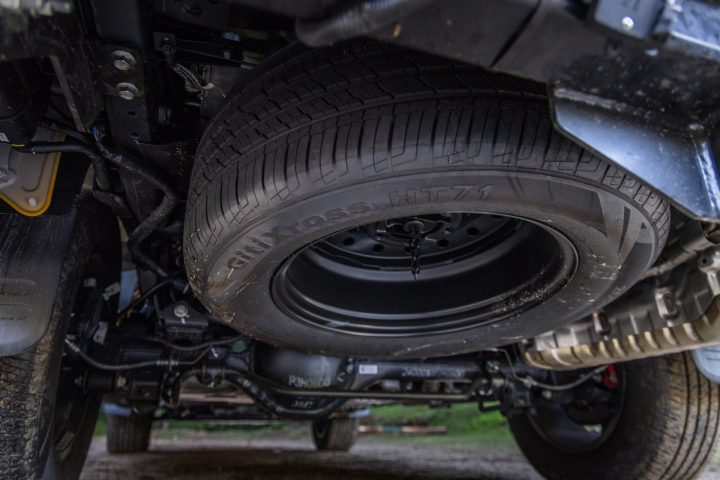
Under the skin, the hardware is traditional in layout, with a live rear axle setup with coil springs that will appeal to buyers who prioritise load carrying and durability over car-like refinement. That said, it does mean the ride quality has a firmer, more commercial edge to it. On rough country-road surfaces during this first drive, the suspension tuning felt a bit jittery, unsettled and stiff at times (like some rivals), though it’s difficult to fully judge given the pre-production calibration status.
This firmness, however, is likely a deliberate trade-off. It could support payload stability and towing confidence – we’ll have to wait and see with a full road test. JAC has conducted around 50,000km in Australian testing, too. So it should be capable of withstanding our harsh conditions.
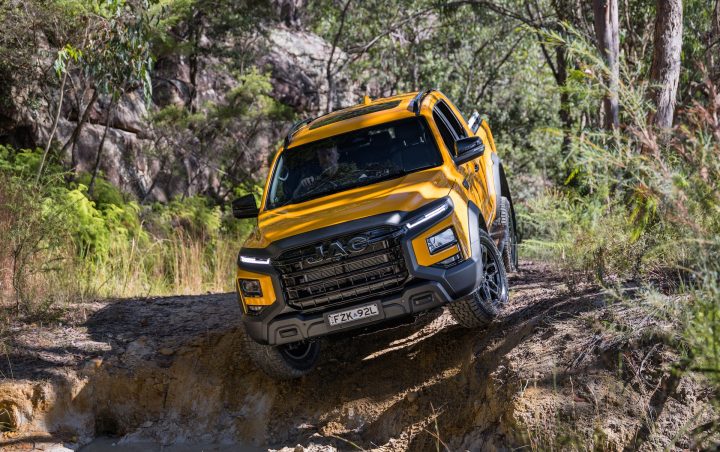
Steering and general dynamics are predictable rather than engaging, which again feels appropriate for the segment. This is not intended to be a sporty ute, and it doesn’t attempt to be. Instead, it aims for stability under load and ease of control. The steering is pretty light and ‘basic’, lacking the communication seen in some rivals. But, again, does it matter for this segment and at this price point?
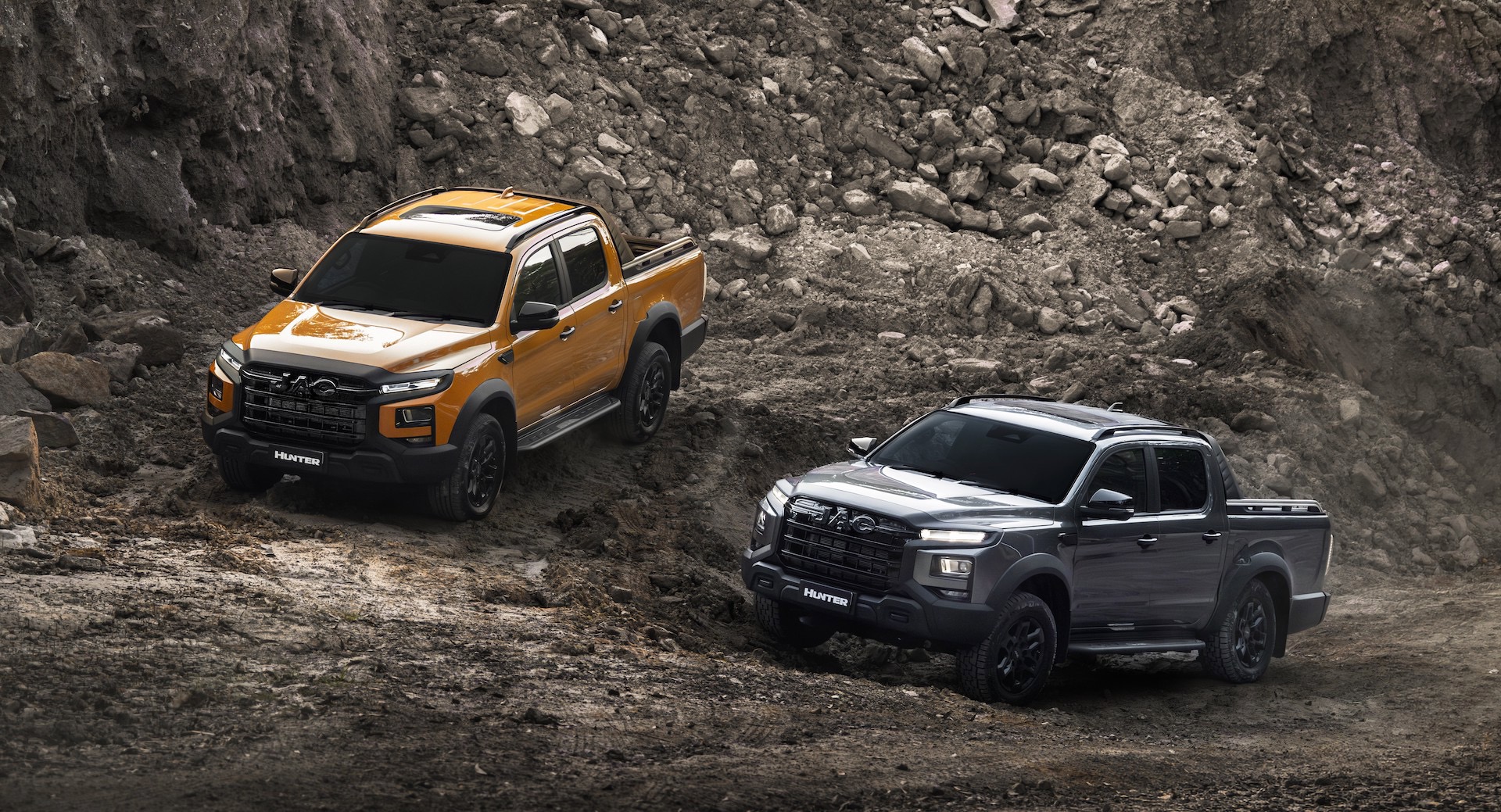
One area of concern for us at this stage is tyre specification. The standard-fit Giti tyres are cheaper than some premium alternatives, but lack road feel and off-road grip. Potentially optional Scorpion all-terrains, as showcased here in test form, would likely suit the vehicle far better for buyers intending to explore off-road use or towing in variable conditions.

Speaking of which, the JAC Hunter will be available with front and rear diff locks. This means it should perform very well off road. We did some hill climbs on wet mud and it drove up without issue. Even with the diff locks open. However, vehicles designated for off-road testing were fitted with the Scorpion all-terrains. So it will be interesting to see how it performs with the diff locks and with the standard road tyres. But first impressions, off-road performance is very good. You’ve got a 28-degree approach angle and 30-degree departure angle, both at the class standards. The 220mm of ground clearance is less of a standout.
A claimed 100km electric-only range means many users could realistically complete daily commuting without using fuel at all, provided charging habits and availability align. This is one of the strongest arguments for the PHEV format in a ute like this, particularly for fleet and trade applications.

2026 JAC Hunter: First impressions
Overall, the JAC Hunter PHEV makes a very strong first impression on value alone. At under $50,000, it immediately resets expectations for plug-in hybrid utes in Australia, while still delivering serious capability on paper with 3500kg towing and 915kg payload. Add in the ability to cover around 100km on electric power, available diff locks, and practical interior for the price, and it should be appealing for many buyers in this class.
That said, this early pre-production drive also makes it clear there’s still calibration work to be done. The 8.43-second 0–100km/h result on a depleted battery suggests real-world performance is currently well behind the headline 360kW claim, and ride refinement is still on the firm, slightly unsettled side. Also, JAC is a relatively new brand in Australia. Servicing, parts and support network, and long-term reliability history are comparative unknowns at this stage. These factors would make us hesitate before buying.
2026 JAC Hunter: Video