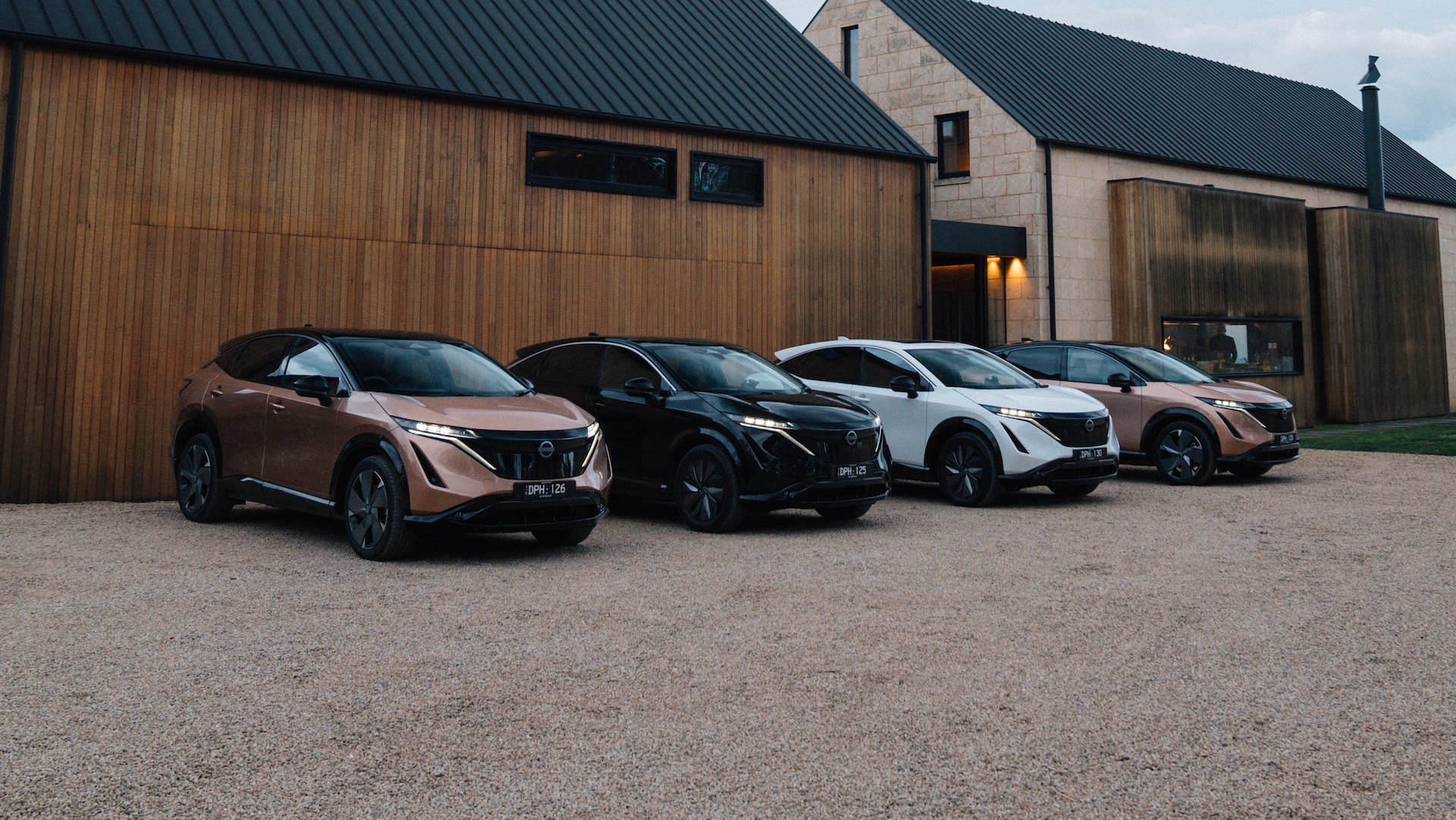
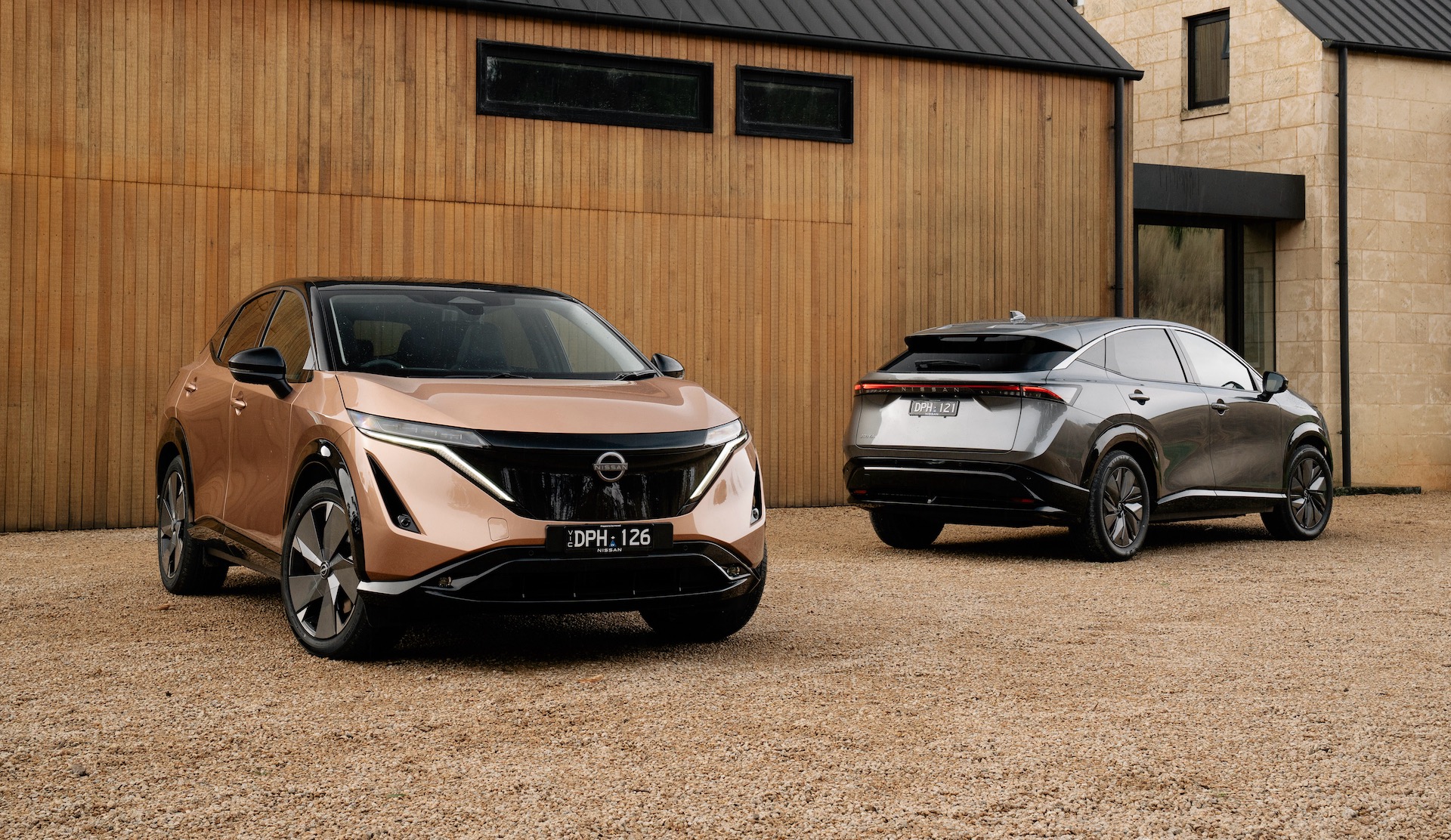
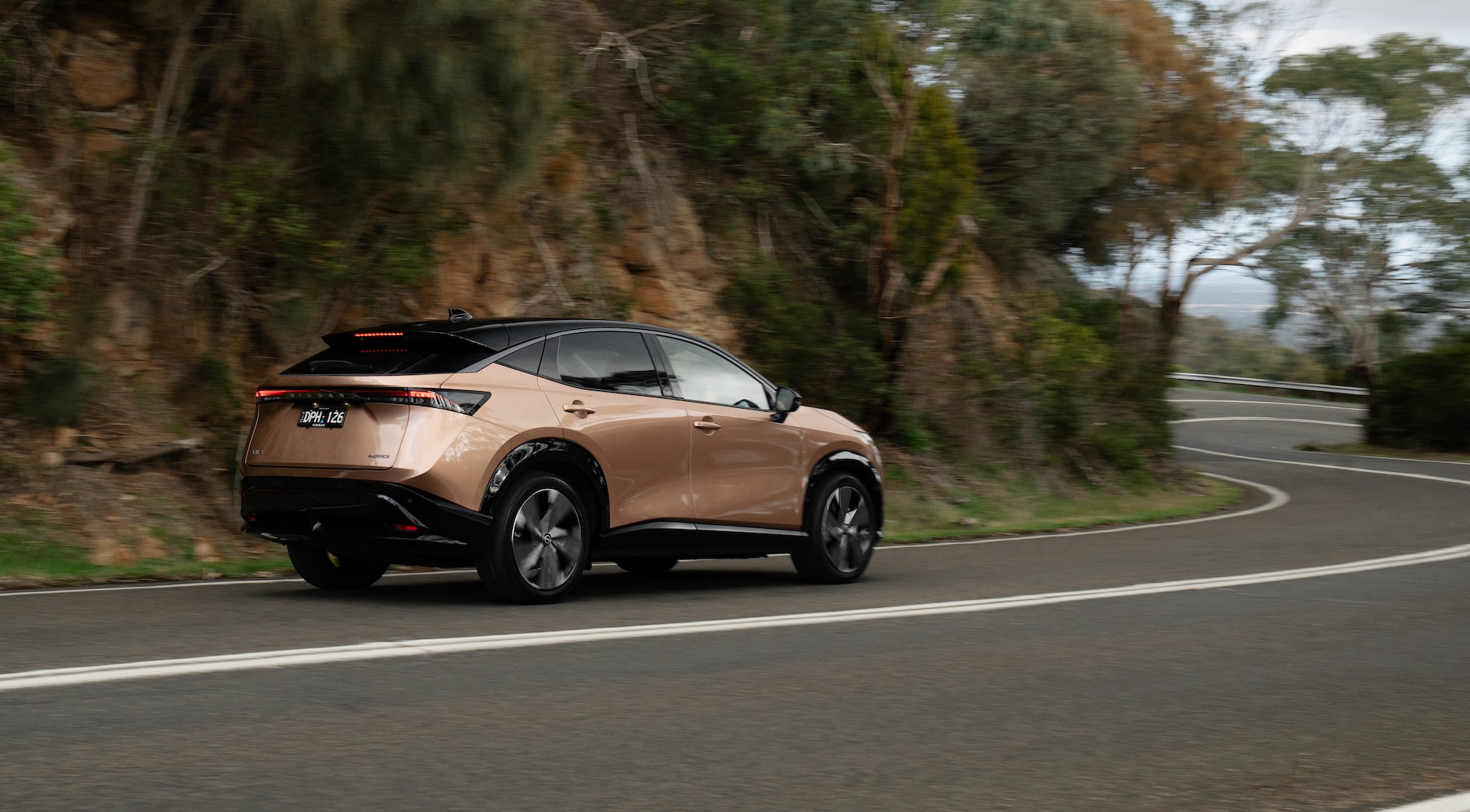
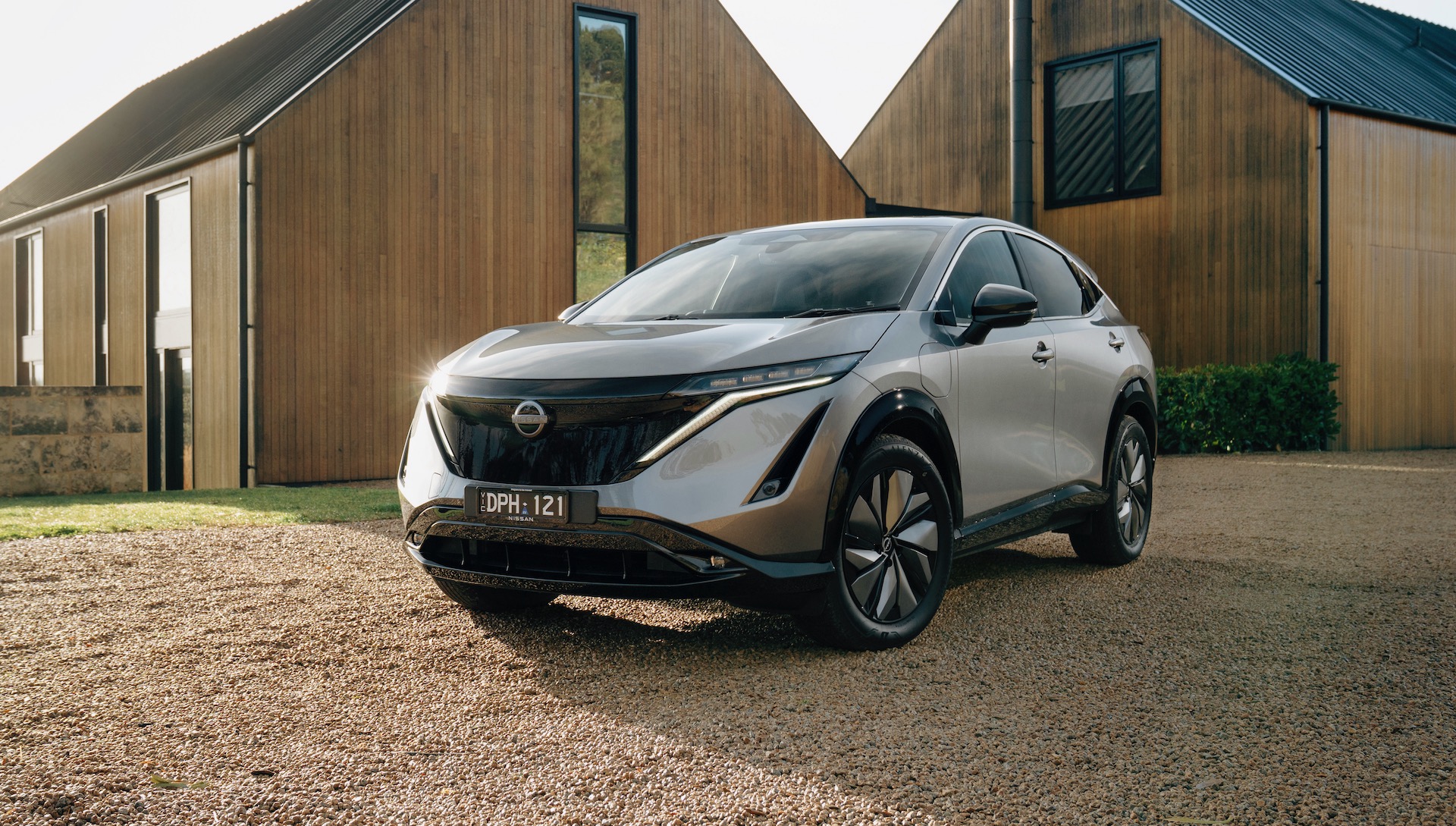
Nissan was early to the EV party with the LEAF, but since then its presence in Australia’s electric vehicle market has been relatively quiet. That changes with the arrival of the Ariya; a new mid-size electric SUV designed to put Nissan back in the conversation.
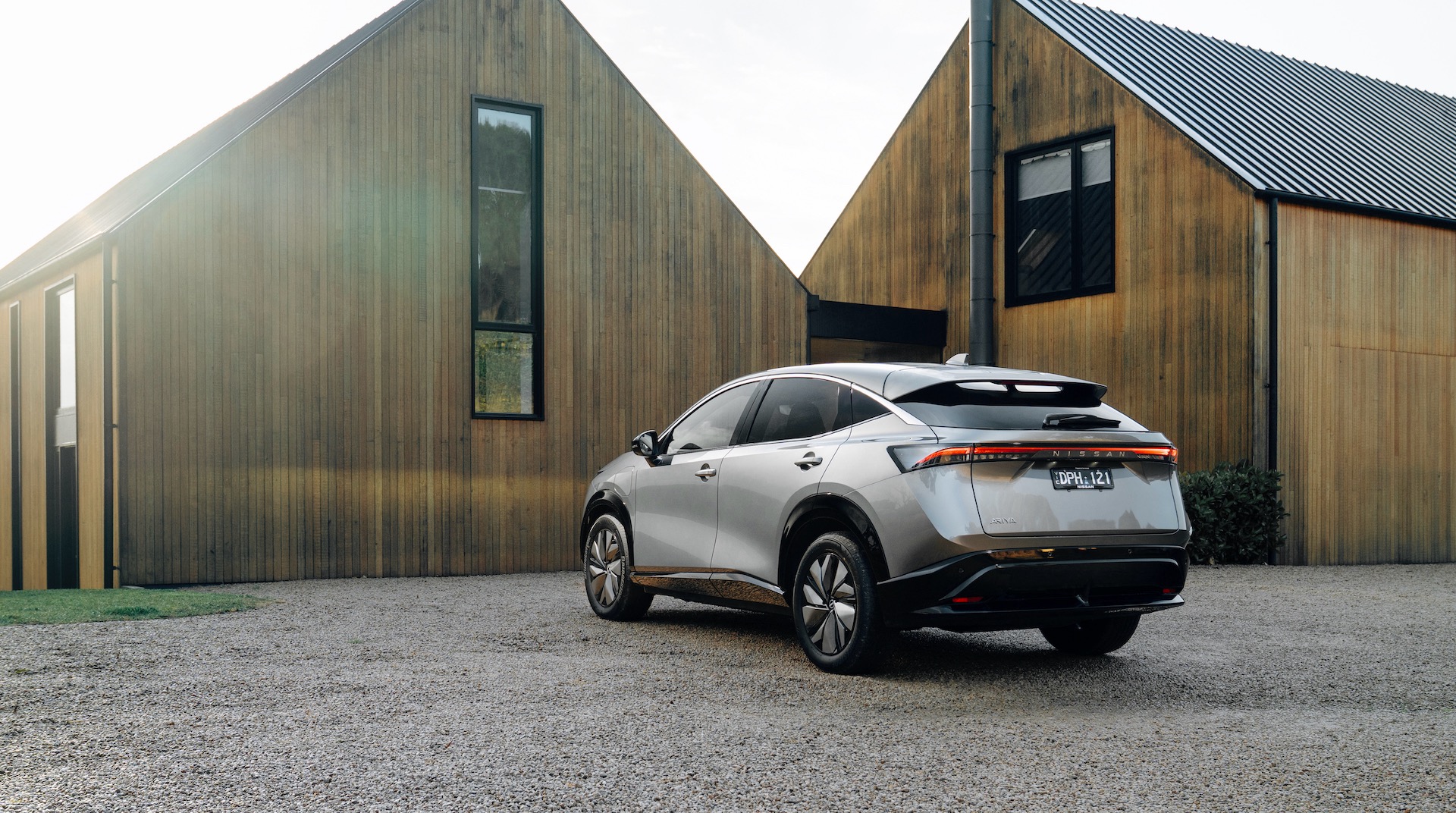
Positioned against popular rivals like the Tesla Model Y and BYD Sealion 7, the Ariya brings sharp, futuristic styling with hints of Japanese decor inside. However, while it might look the part, the numbers on paper and the pricing structure present challenges.
We attended the national media launch for a first preview and test drive, and we can see the Ariya will need more than sharp design to carve out a space in an increasingly competitive segment.

2025 Nissan Ariya Evolve e-4orce: Specifications
Battery: 87kWh lithium-ion
Output: 290kW / 600Nm
Gearbox: Single-speed auto
Drive type: Four-wheel drive
Wheels: F & R: 20×8.0, 255/45
Kerb weight: 2222kg
Power-to-weight: 7.66:1 (kg:kW)
Official range (WLTP): 487km
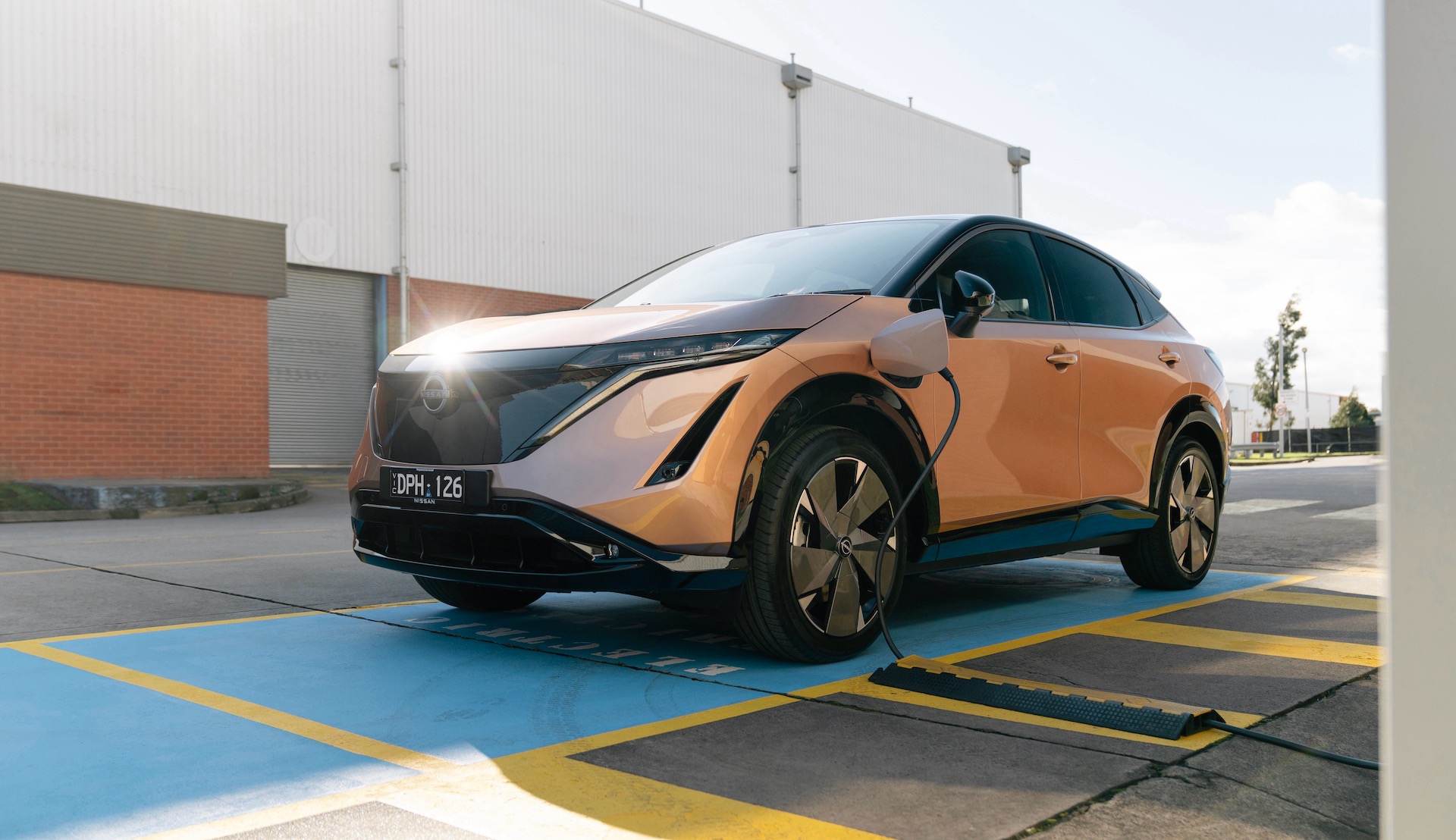
Max charging AC/DC: 7.4kW/130kW
0-100km/h: 5.46 seconds*
Starting price: $71,840
*Figures as tested by Driving Enthusiast on the day. Manufacturers’ claims may be different
2025 Nissan Ariya: How much does it cost?
Four main variants are being introduced in Australia, from the Engage, Advance, Advance+, to the top Evolve e-4orce. All feature a single electric motor with front-wheel drive except the top Evolve, which uses a twin-motor setup providing all-wheel drive. Prices start from the following (excluding on-roads):
- Nissan Ariya ENGAGE 63kWh battery, 160kW FWD, 385km range: $55,840
- Nissan Ariya ADVANCE 63kWh battery, 160kW FWD, 385km range: $59,840
- Nissan Ariya ADVANCE+ 87kWh battery, 178kW FWD, 504km range: $63,840
- Nissan Ariya EVOLVE e-4ORCE 87kWh battery, 290kW AWD, 487km range: $71,840
Let’s take one of its main rivals as an example, against the top-spec Ariya Evolve. The Tesla Model Y Long Range AWD features a smaller battery (79kWh), so it’s lighter, yet it provides a significantly longer range (600km vs 487km in this Ariya). It’s also heaps more powerful, at 378kW compared with the Nissan’s 290kW output. And prices start from $68,900. A similar comparison can be drawn using the BYD Sealion 7 Performance (from $63,990).

2025 Nissan Ariya: Interior & packaging
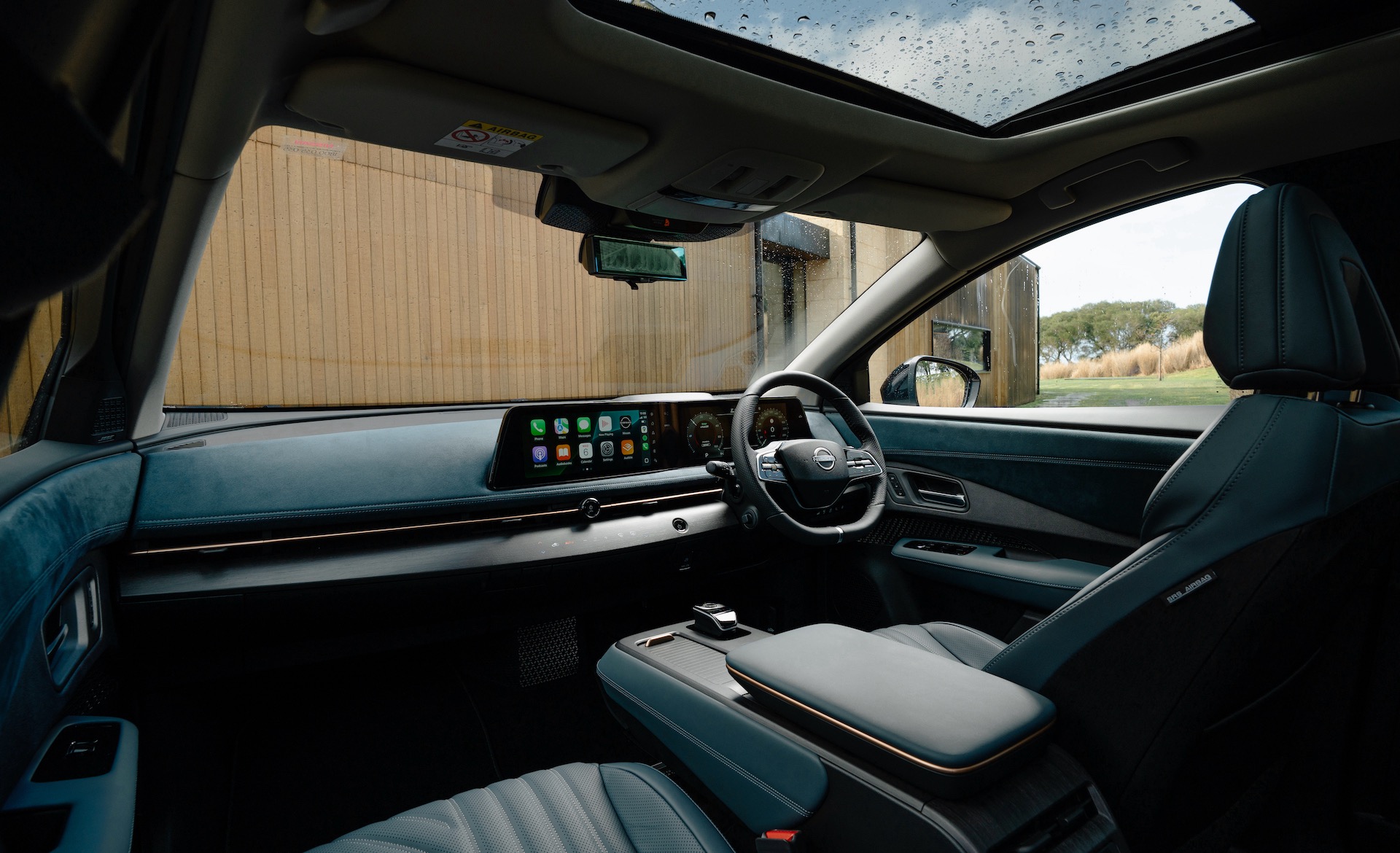
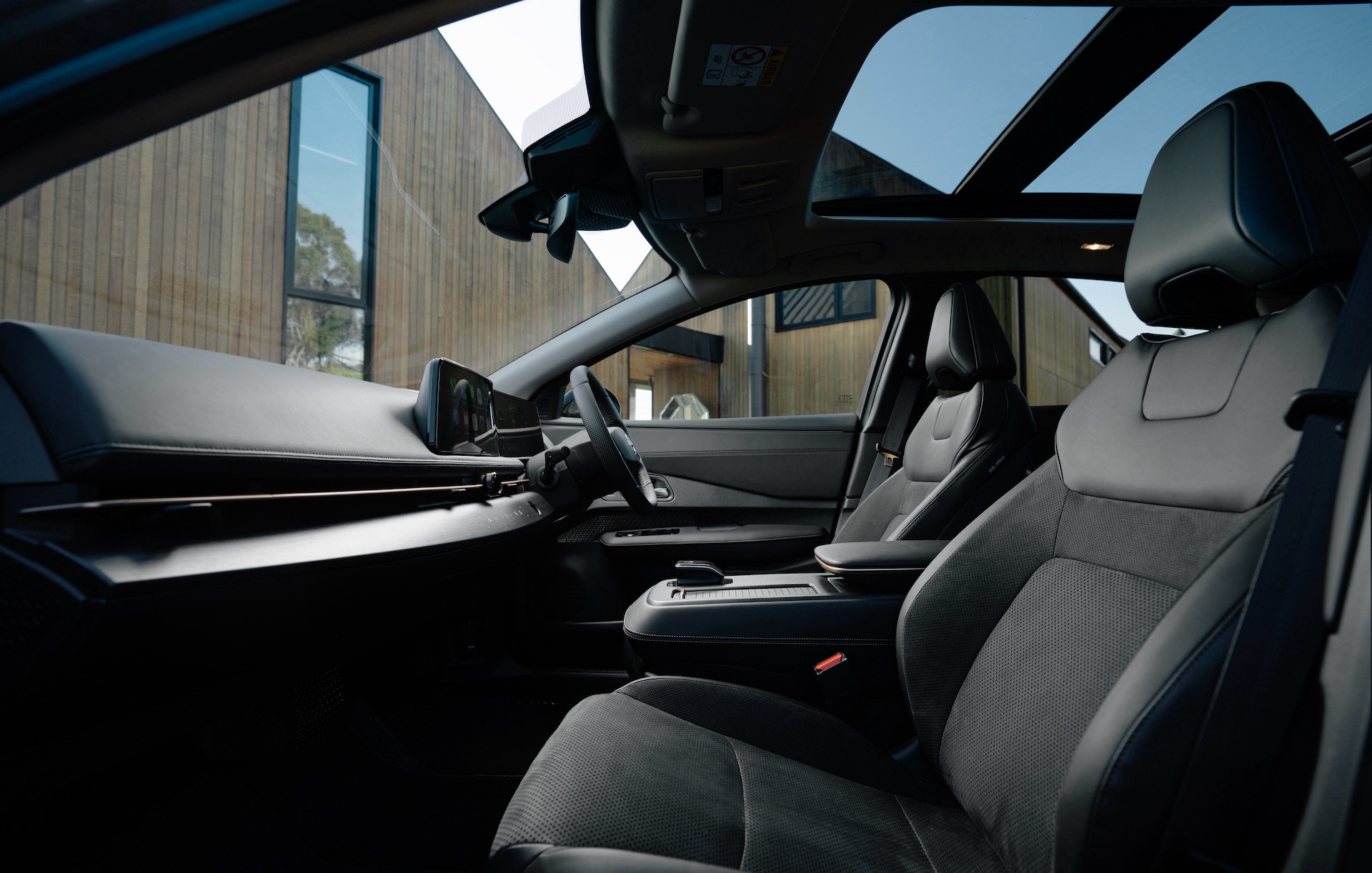
The Ariya’s cabin is one of its strongest selling points. Nissan has taken a minimalist approach, giving the interior a calming, lounge-like atmosphere. The flat floor, reduced centre console, and soft ambient ‘Andon’ lighting create a sense of space that feels more premium than you might expect from Nissan.
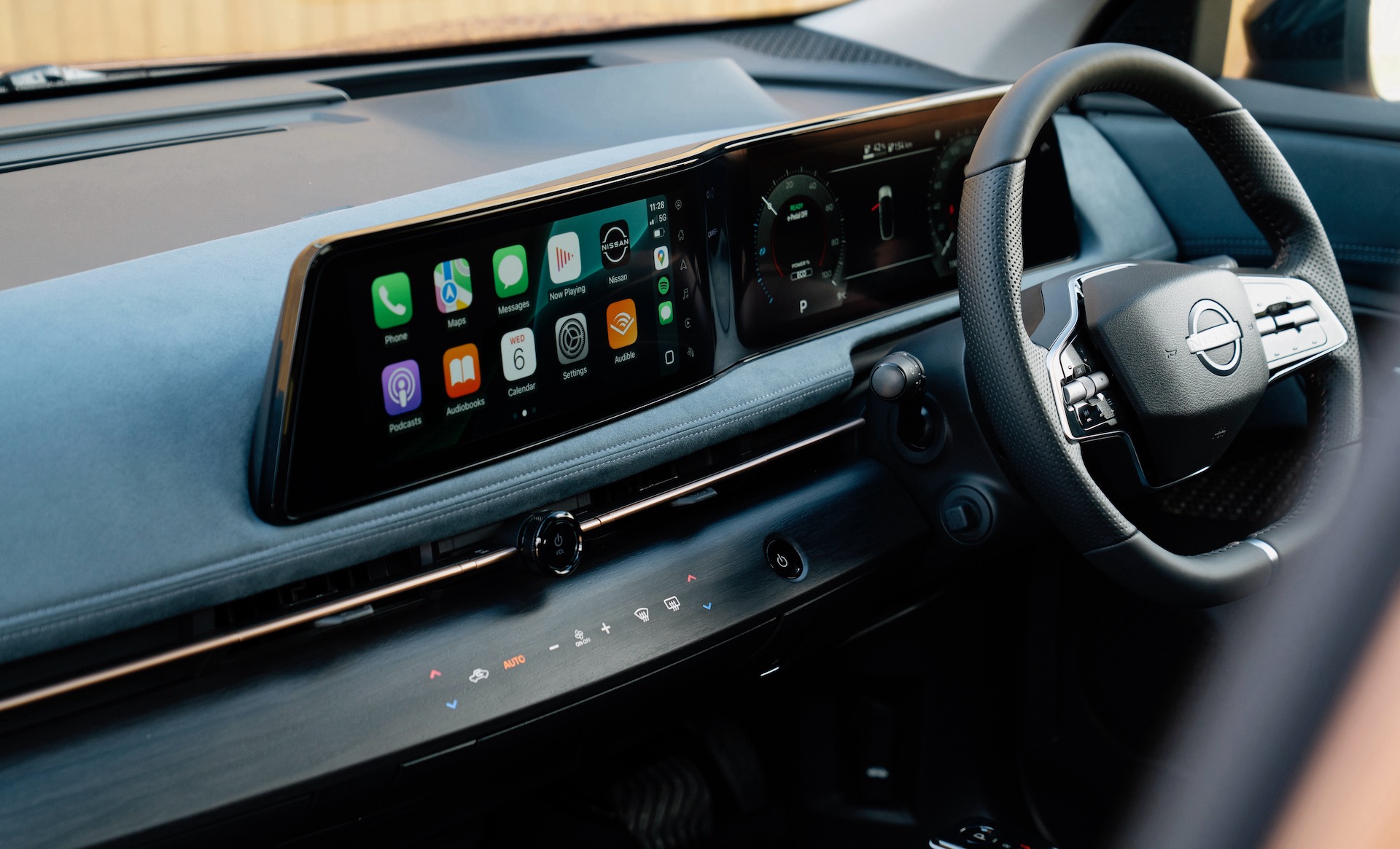
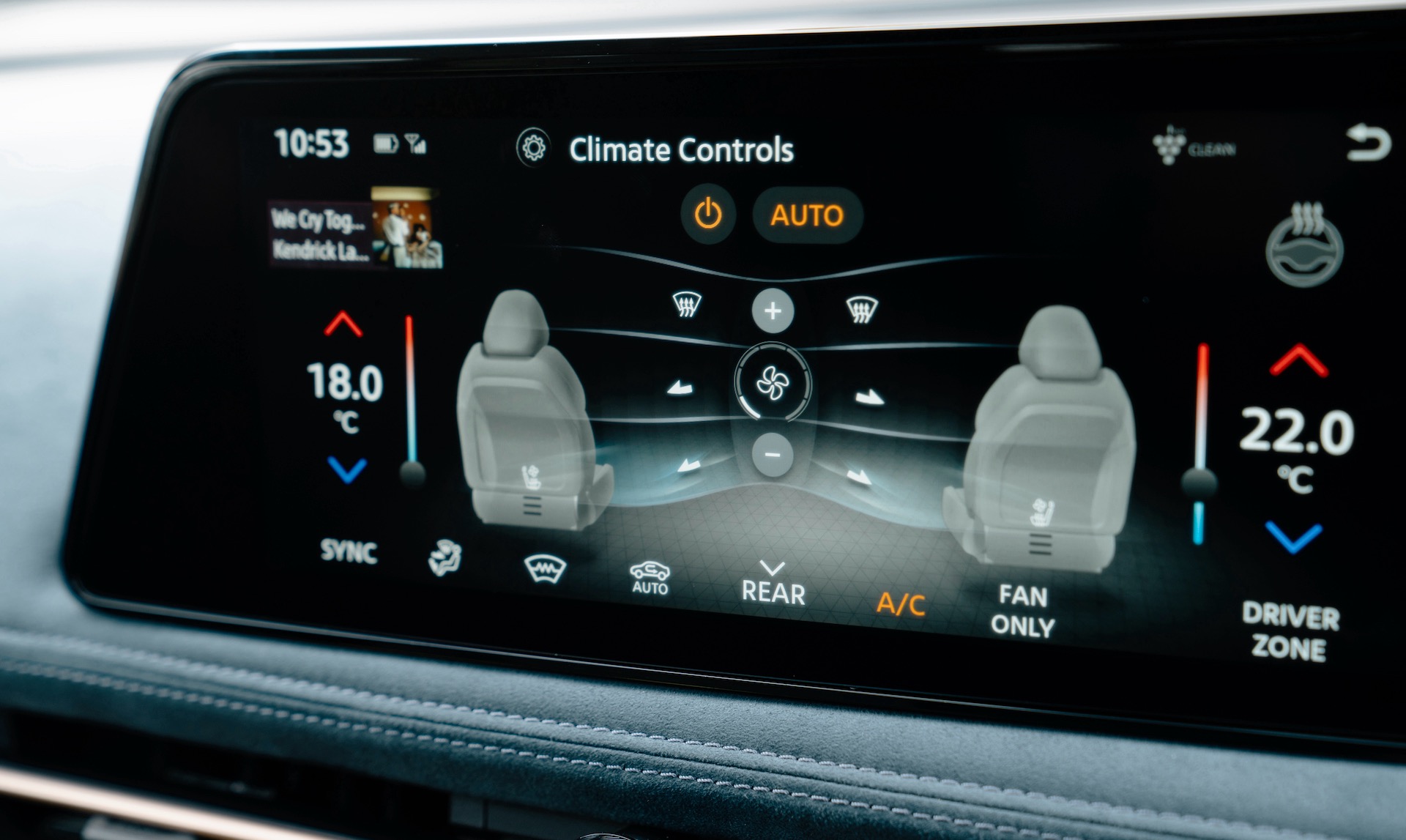
Dual 12.3-inch displays dominate the dash, blending the digital cluster and infotainment screen into a single curved unit, with the infotainment bending out uniquely towards the driver. The graphics are ok and the system is easy to use, with wireless Apple CarPlay and wired Android Auto, but some rivals offer either a larger screen and/or sharper graphics.

You get a wireless phone charger as standard which is hidden under the bulky centre console. Strangely, storage is lacking despite appearing like there is heaps of space in that console. Also, the lack of a centre fixture running down the middle means wide-open space, but there isn’t anything you can do with that space; it’s not like there’s a three-seater bench in the front that requires middle-seat legroom. It’d be better with a tray or something in our view.
Nissan has integrated haptic touch buttons into the wood-look dash trim, which light up when the vehicle is on. They look slick, though in practice they’re not quite as intuitive as physical controls. On that note, there aren’t many physical controls to begin with, as per current trends (annoying in my opinion).
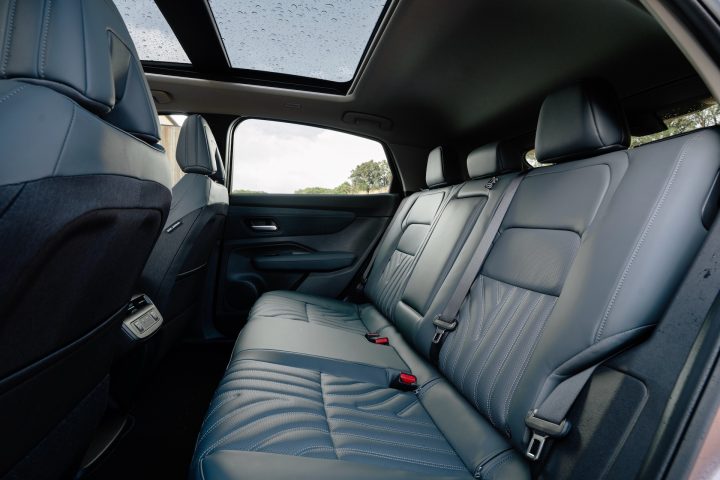
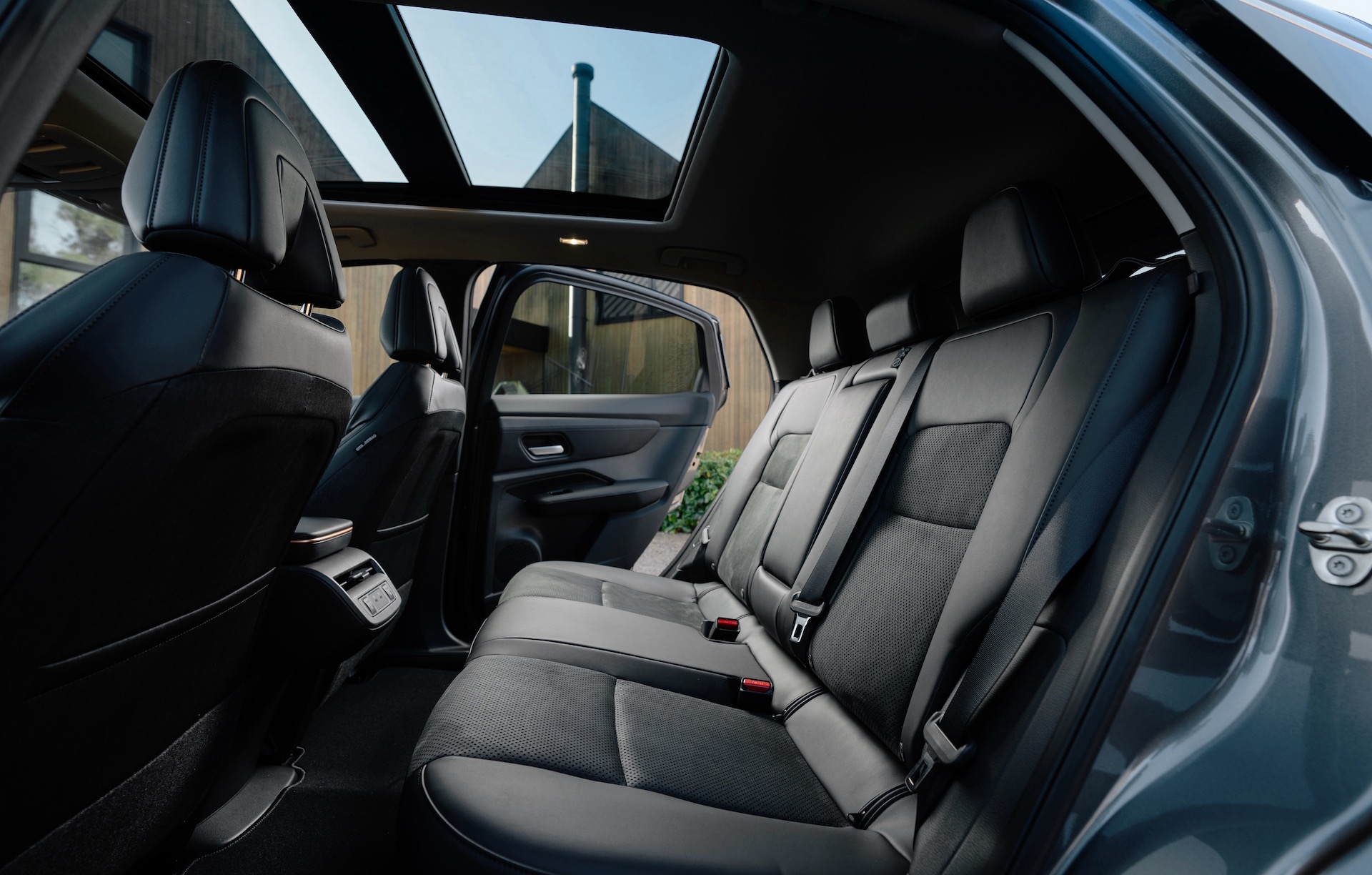
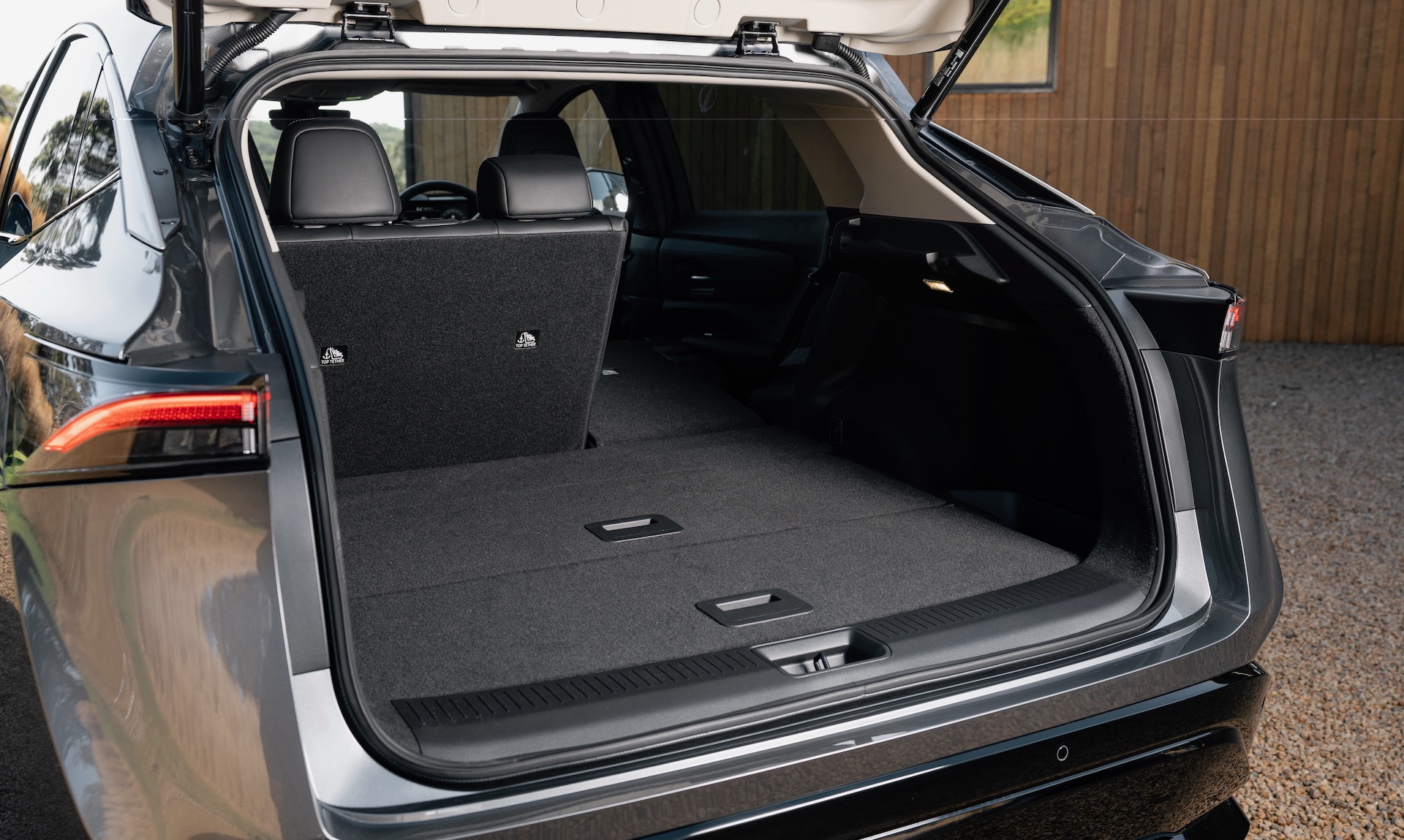
Passenger comfort is decent. The seats are supportive and offer heating depending on trim level, and the panoramic glass roof in higher grades helps amplify the airy feel. The second row provides generous legroom thanks to the longish wheelbase, but width isn’t above average and neither is headroom. In the back, the boot offers 408L and expands to 1280L, which, again, doesn’t stand out against its key rivals.
Build quality feels solid with no rattles or concerns at all, and there’s a pleasant mix of soft-touch materials and subtle design cues inspired by Japanese craftsmanship making it look and feel like a premium product.

2025 Nissan Ariya: Powertrain & handling
Buyers can choose from two battery sizes; a 63kWh unit with up to 385km of WLTP range, or an 87kWh option stretching to 504km in FWD form. On paper, those figures don’t set new benchmarks – especially compared with rivals like the Model Y, which offer more range for less money.
The entry Ariya produces 160kW and 300Nm, which is adequate but not thrilling, delivering a 0–100km/h claim of 8.0 seconds. Moving up to the 178kW Advance+ with the bigger battery sees the sprint covered in a claimed 8.1 seconds. It’s slightly slower because the bigger battery is heavier.

At the top-spec Evolve with its dual-motor e-4ORCE setup with 290kW and 600Nm, Nissan claims 0-100km/h in 5.6 second, and we timed it in 5.46 seconds with a Vbox during this test. Even so, it is far from competitive on outright performance if that’s important to you. Still, it is much quicker than any petrol-powered SUV in this class.
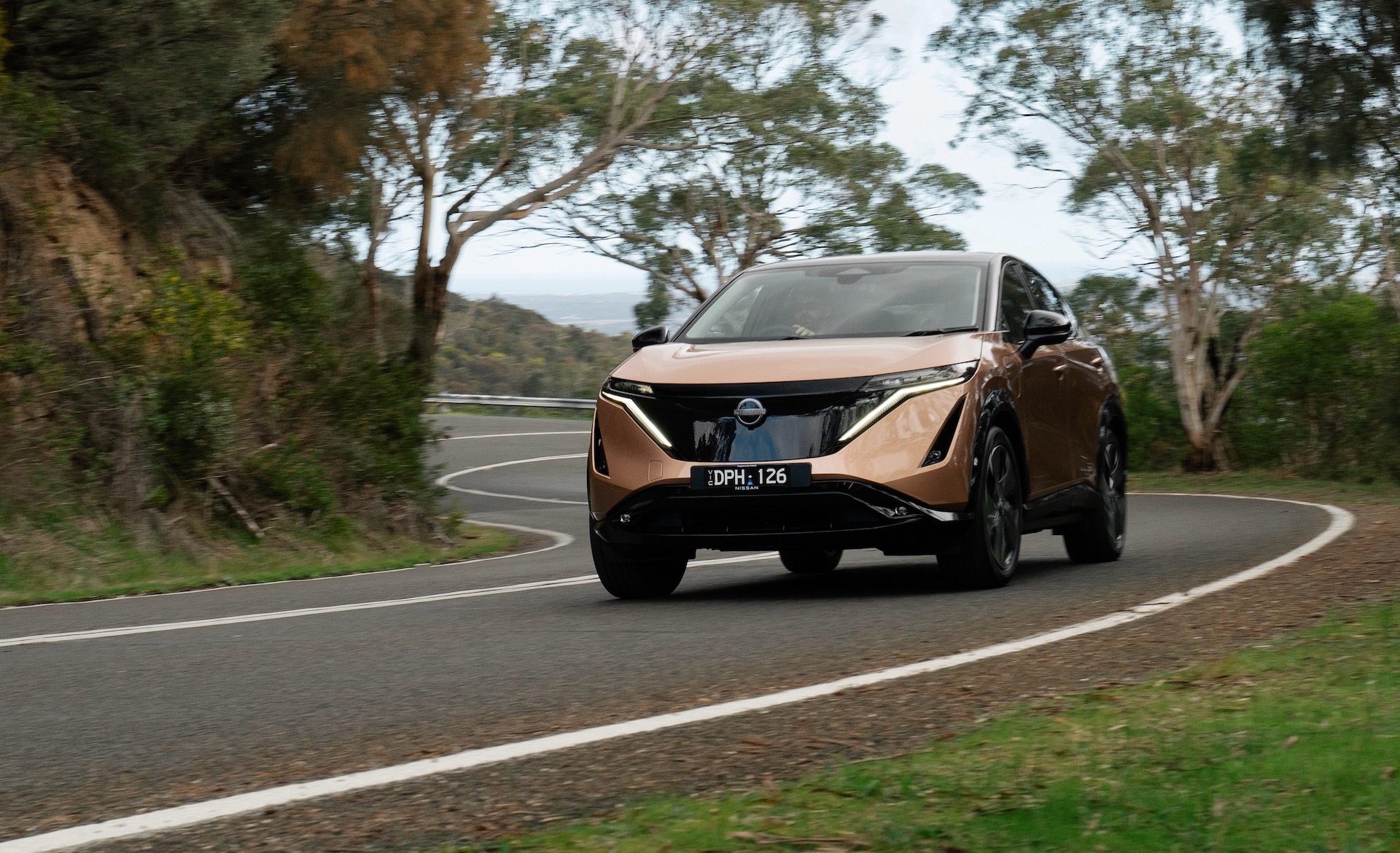
On the road, the Ariya feels secure and easy to drive. The steering is communicative and precise, while the suspension tune keeps things comfortable most of the time. In the top-spec Evolve with its 20-inch wheels, the ride is firmer than expected, particularly along country roads. It isn’t harsh, but it doesn’t isolate rougher roads as well as the more comfort-focused competitors.
Charging speeds of up to 130kW DC mean a 10–80 per cent charge in around 35 minutes, which is reasonable but again not segment-leading. AC charging tops out at 22kW when optioned (Advance+ only – standard for Evolve), or 7.4kW as standard. The 22kW setup will be handy for those with three-phase home chargers.

2025 Nissan Ariya: First impressions
As far as we’re concerned, the most attractive element of this new EV is the fact that Nissan has been around in Australia for over 50 years. That (likely) means there are solid communication chains with the factory overseas and there should be a good parts supply and network available, compared with any of the newer brands out there.
Nissan also offers a 10-year/300,000km warranty, setting the industry standard, along with an 8-year/160,000km battery range warranty.
Aside from those traits, it’s a solid package with good build quality and a distinctive design, powered by a system that already seems out of date in terms of range, power and performance. The price is also a jagged pill compared with its main rivals.
2025 Nissan Ariya: First impressions