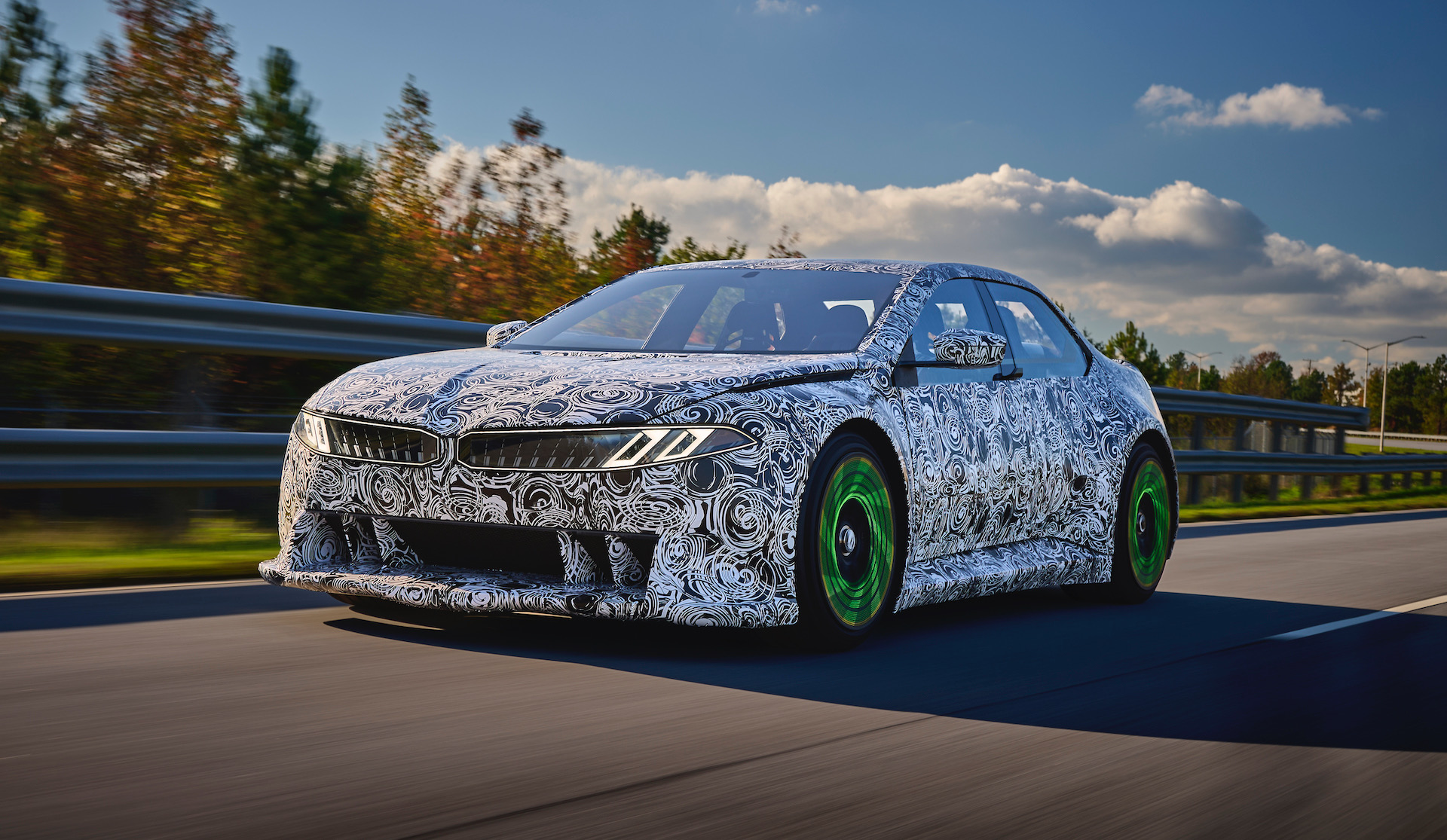
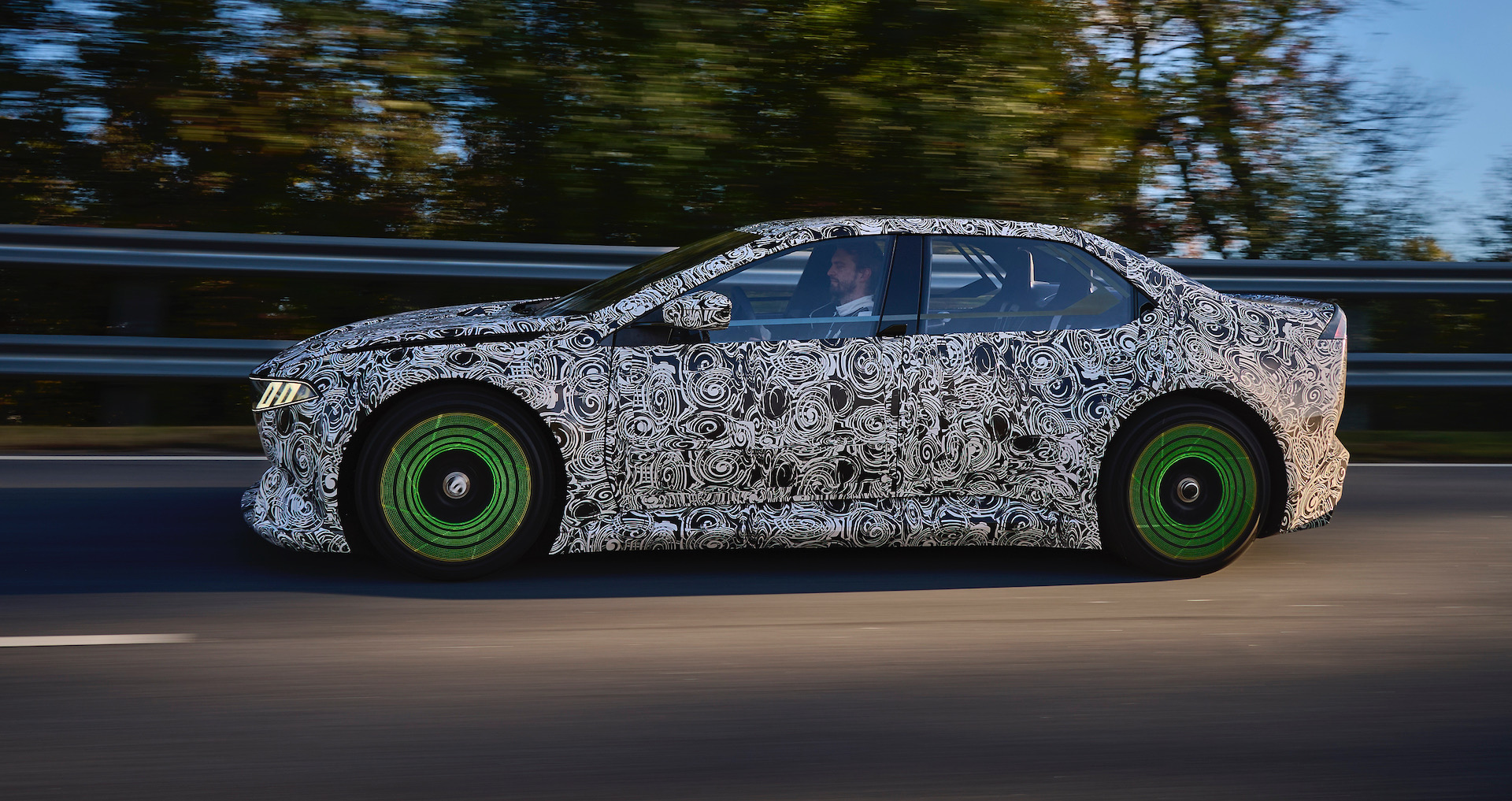
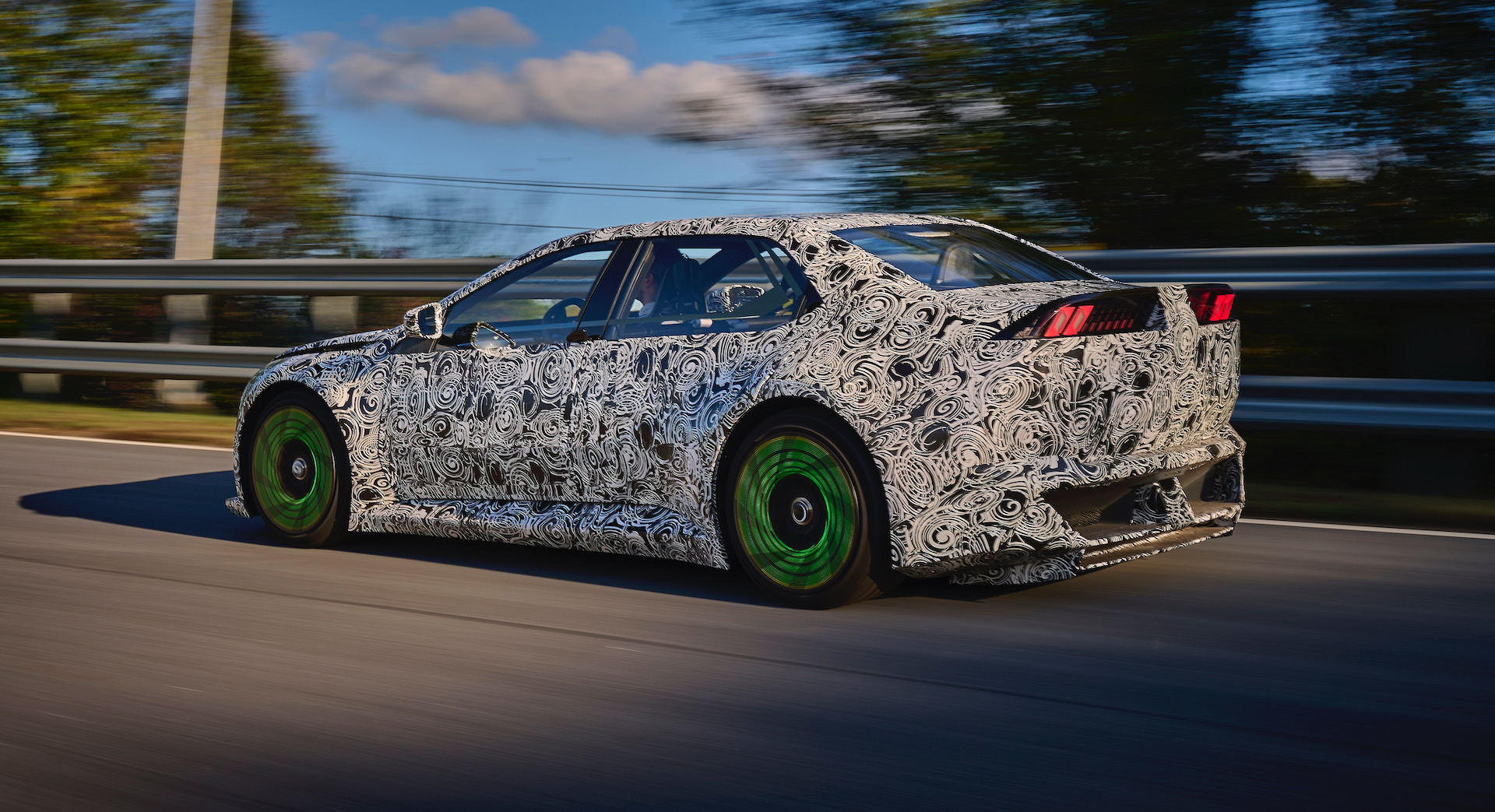
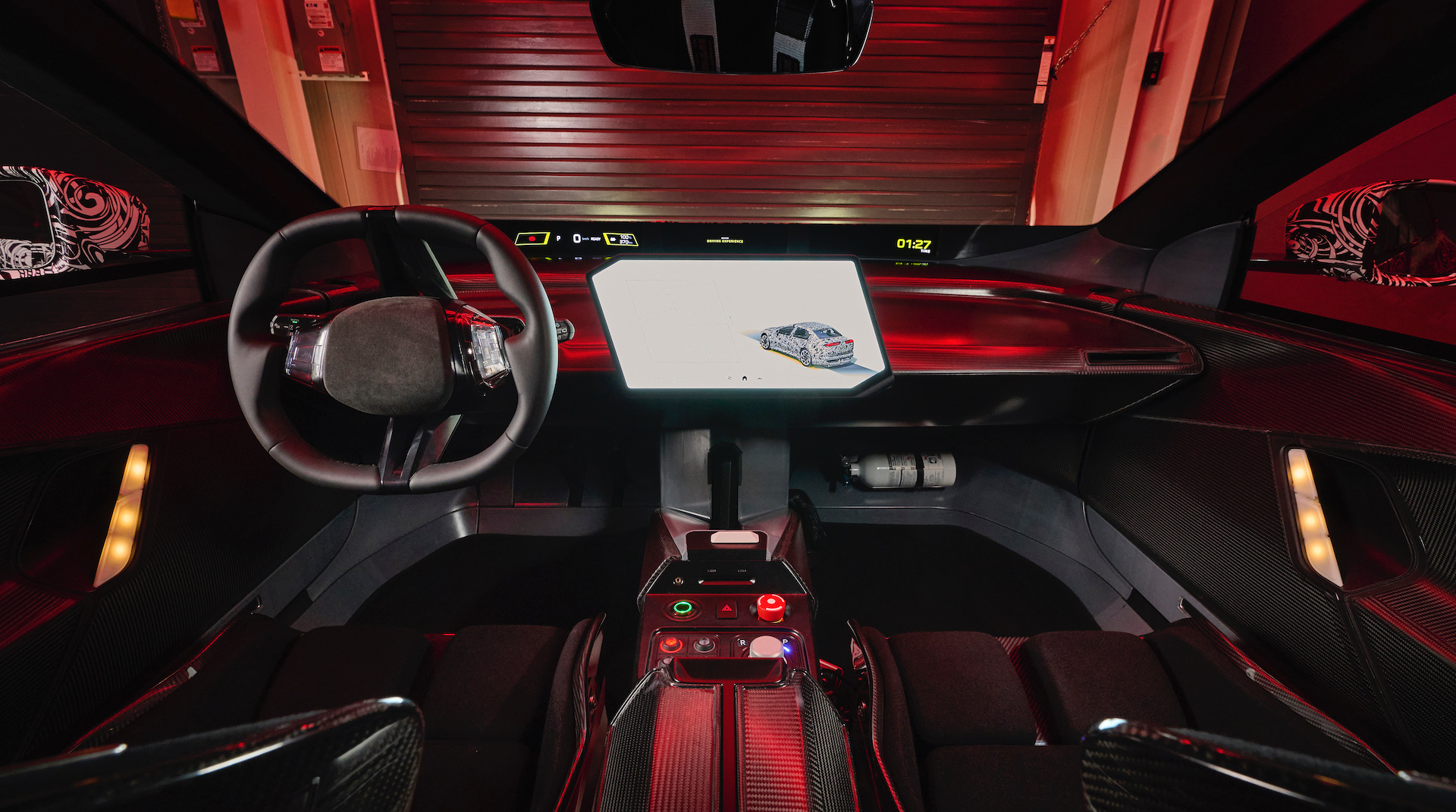
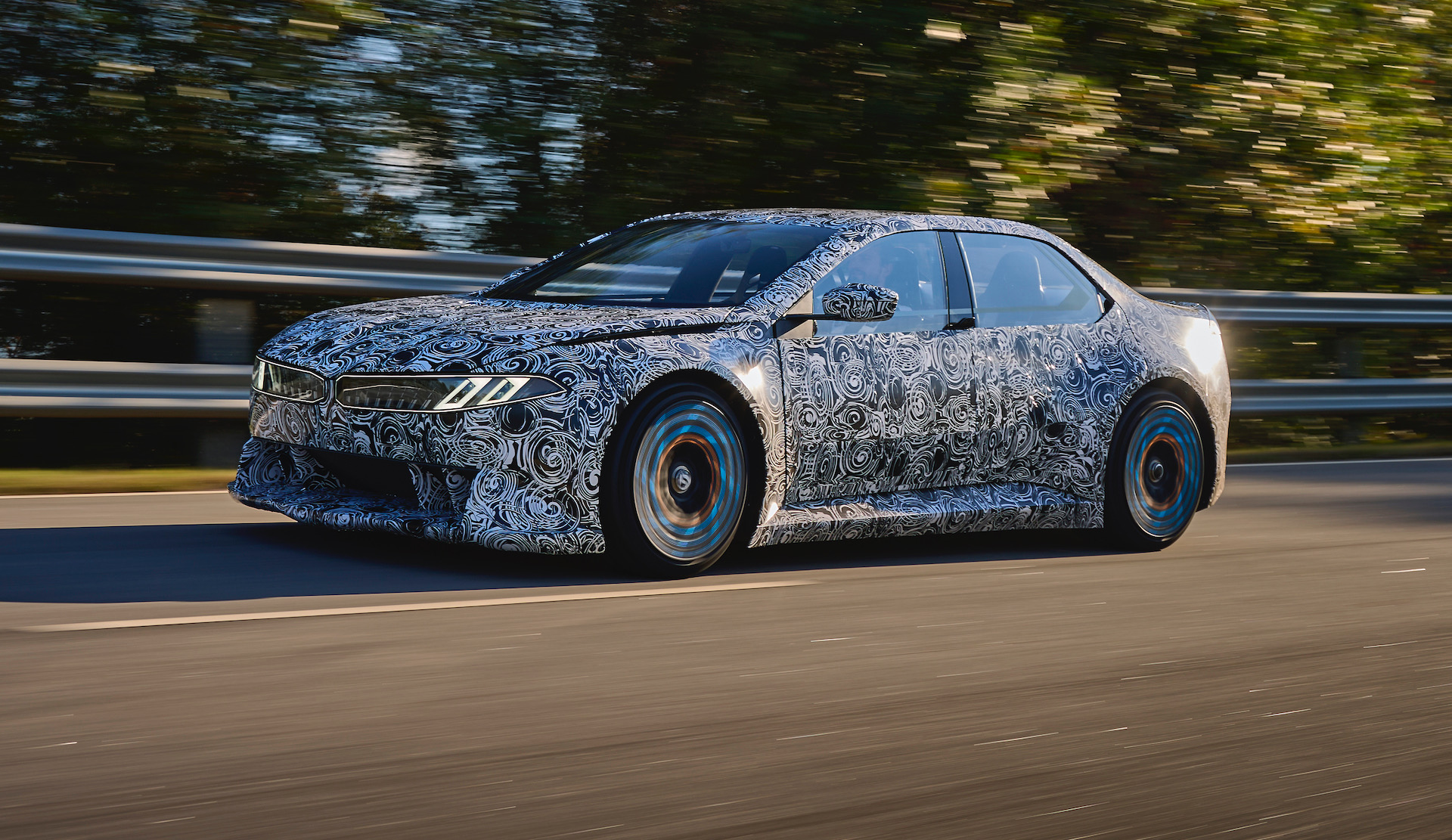
BMW has released some details showcasing its new ‘Heart of Joy’ technology, using a special Vision Driving Experience concept based on the Neue Klasse platform. Testing of the of computer systems and platform has begun at BMW’s Performance Driving Centre in Spartanburg, USA.
Firstly, BMW wants to make it clear that there is no production model in the works. However, the Heart of Joy Vision vehicle adopts the upcoming Neue Klasse platform that will be featured on a number of showroom models going forward.

Instead, the prototype is a rolling lab that engineers are using to develop and fine-tune driving dynamics with a new four-computer control unit, managing the drivetrain, charging, regeneration, and steering all at once. BMW says the computer system is 10 times faster than previous systems.
Designed in-house, the Heart of Joy prototype uses electric motors that produce 18,000Nm, which is a massive amount of torque. For reference, a very powerful twin-turbo V8 of today generates around 800-900Nm. Why so much torque? BMW explains:
“The reasoning behind this is that if the control system can deal with an explosion of power of this magnitude, it will be able to handle the demands of everyday driving with ease.”

Energy recuperation is also handled by the four-computer system and promises a 25 per cent increase in efficiency. Aside from featuring one pedal driving style functionality, the brake regeneration serves as the main braking mechanism. BMW says drivers can expect the system to be utilised around 98 per cent of the time, with the friction brakes only really needed during emergency situations. Frank Weber, member of the board of management of BMW AG, responsible for development, said:
“The Heart of Joy enables us to take driving pleasure not just to the next level, but another one beyond that. In addition, we are further increasing efficiency, and therefore boosting range, as in future the driver will brake almost exclusively using energy regeneration. This is Efficient Dynamics squared.”
These new control units will go into production in future BMW models, with three other computers working functions such as climate control, interior and lighting, and comfort-focused systems. Speaking about how the concept drives, BMW said:
“The car generates impressive traction and can be threaded through corners with exceptional precision. Fewer control inputs are required and the car’s line can be maintained with greater precision and stability. This helps the car to develop consistent, reproducible cornering behaviour and allows it to be steered more intuitively and smoothly.”
BMW will be showcasing the Vision Driving Experience concept at the upcoming Auto Shanghai 2025 event, starting on April 13.