The shift toward electrified vehicles continues to reshape the premium SUV landscape, and Lexus has been steadily expanding its plug-in hybrid offerings as part of that transition. The NX450h+ F Sport represents the upper end of that effort – a model designed to blend efficiency, performance and everyday usability in a luxury medium SUV package.
With a powerful dual-motor setup, meaningful electric-only driving range and a well-appointed interior, the NX450h+ F Sport sets out to be the complete package. But in a segment filled with increasingly dynamic and efficient PHEV rivals, it faces the task of proving the refinement that sets it apart from the others.
2026 Lexus NX 450h+ F Sport: Specifications
Engine: 2.5-litre four-cylinder plug-in hybrid
Electrical: 18.1kWh battery, 87km range
Output (combined): 227kW
Gearbox: CVT auto
Drive type: All-wheel drive
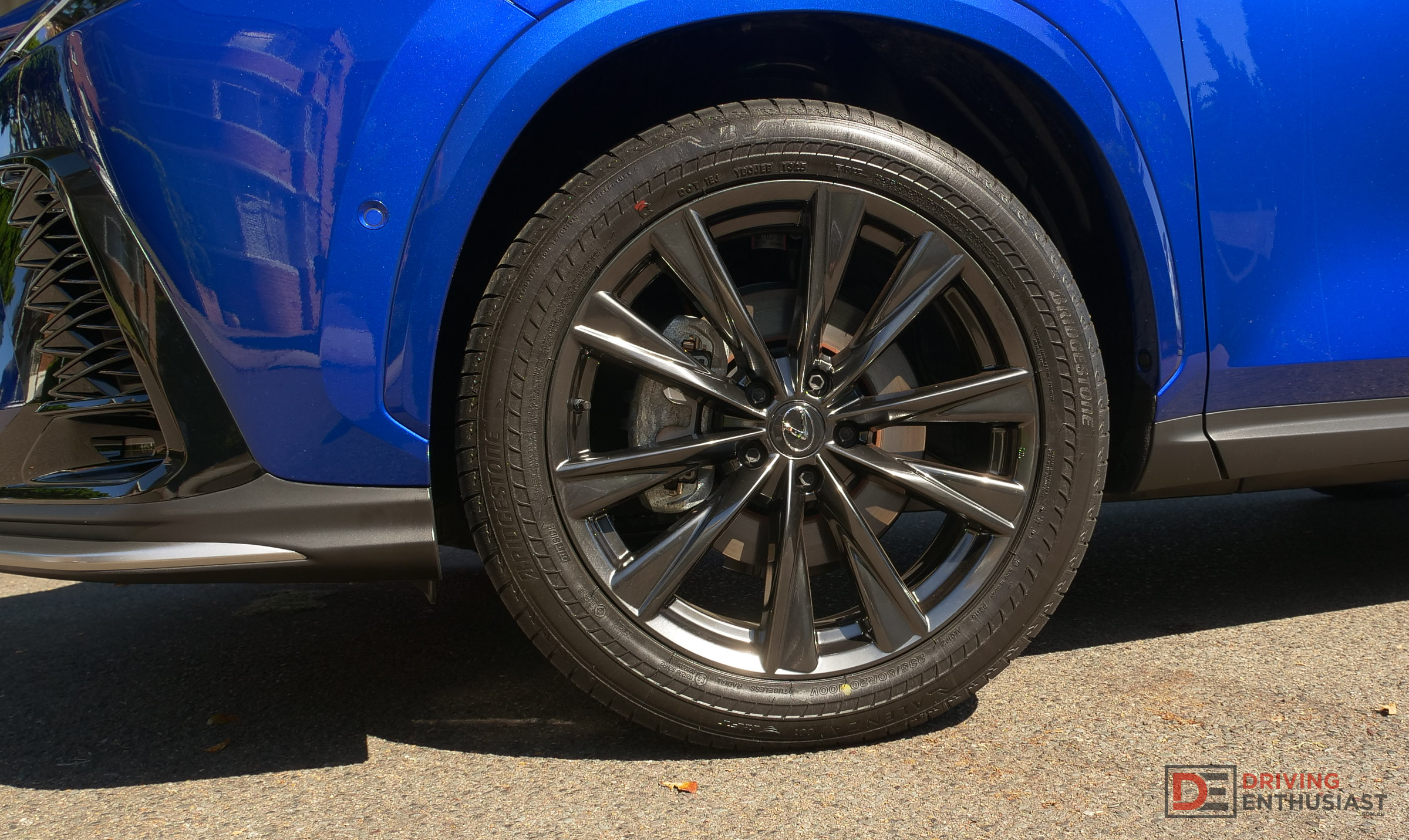
Wheels: F & R: 20×7.5, 235/50
ANCAP: Five stars
Tare weight: 2035kg
Power-to-weight: 8.96:1 (kg:kW)
Official consumption: 1.3L/100km
Our consumption: 5.8L/100kmFuel tank/Fuel type: 55L/95 RON
Power efficiency: 174.6kW:L/100km
0-60km/h: 3.11 seconds*
0-100km/h: 6.21 seconds*
60-110km/h: 3.99 seconds*
1/4 mile: 14.39 seconds at 160.6km/h*
Max acceleration: 0.639g*
100-0km/h braking: 40.73m in 3.18 seconds*
Max deceleration: -1.081g*
Starting price: $96,000
*Figures as tested by Driving Enthusiast on the day. Manufacturers’ claims may be different
2026 Lexus NX 450h+ F Sport: How much does it cost?
The NX450h+ F Sport sits at the very top of the Lexus NX range in Australia, priced from $96,000 before on-road costs. That places it firmly in premium territory for a mid-size SUV, and notably higher than most mainstream plug-in hybrid alternatives of this size.
Looking across the medium SUV PHEV segment, there’s now a surprisingly wide spread of pricing. At the more accessible end, models like the BYD Sealion 6 Premium Extended Range asks for $52,990, the GWM Haval H6 Ultra PHEV retails for $50,990, and the Skoda Kodiaq Select PHEV is priced at $63,490, all excluding on-roads.
In the luxury segment, the Mazda CX-60 P50e Azami retails for $81,990, the BMW X3 xDrive30e starts from $106,900, and the Mercedes-Benz GLC 350e starts from $99,900 (excluding on-roads). The NX starts to look like relatively good value in a premium context. So, the NX450h+ F Sport lands in a bit of a middle ground. It’s significantly more expensive than the mainstream PHEV SUVs that most Australians are buying, yet still more attainable than many European luxury alternatives.
Lexus backs the NX with a 5-year, unlimited kilometre warranty, with servicing intervals set at 12 months or 15,000km. Servicing costs are reasonable for a premium brand. The first five services are all capped at $645. But its premium branding stands out from the rest with Lexus’s Encore program that offers leading customer service, loan cars, car detailing, lifestyle benefits and more.
2026 Lexus NX 450h+ F Sport: Interior & packaging
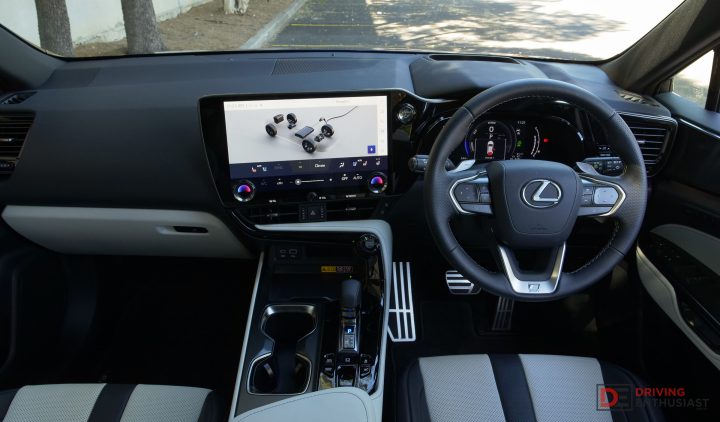
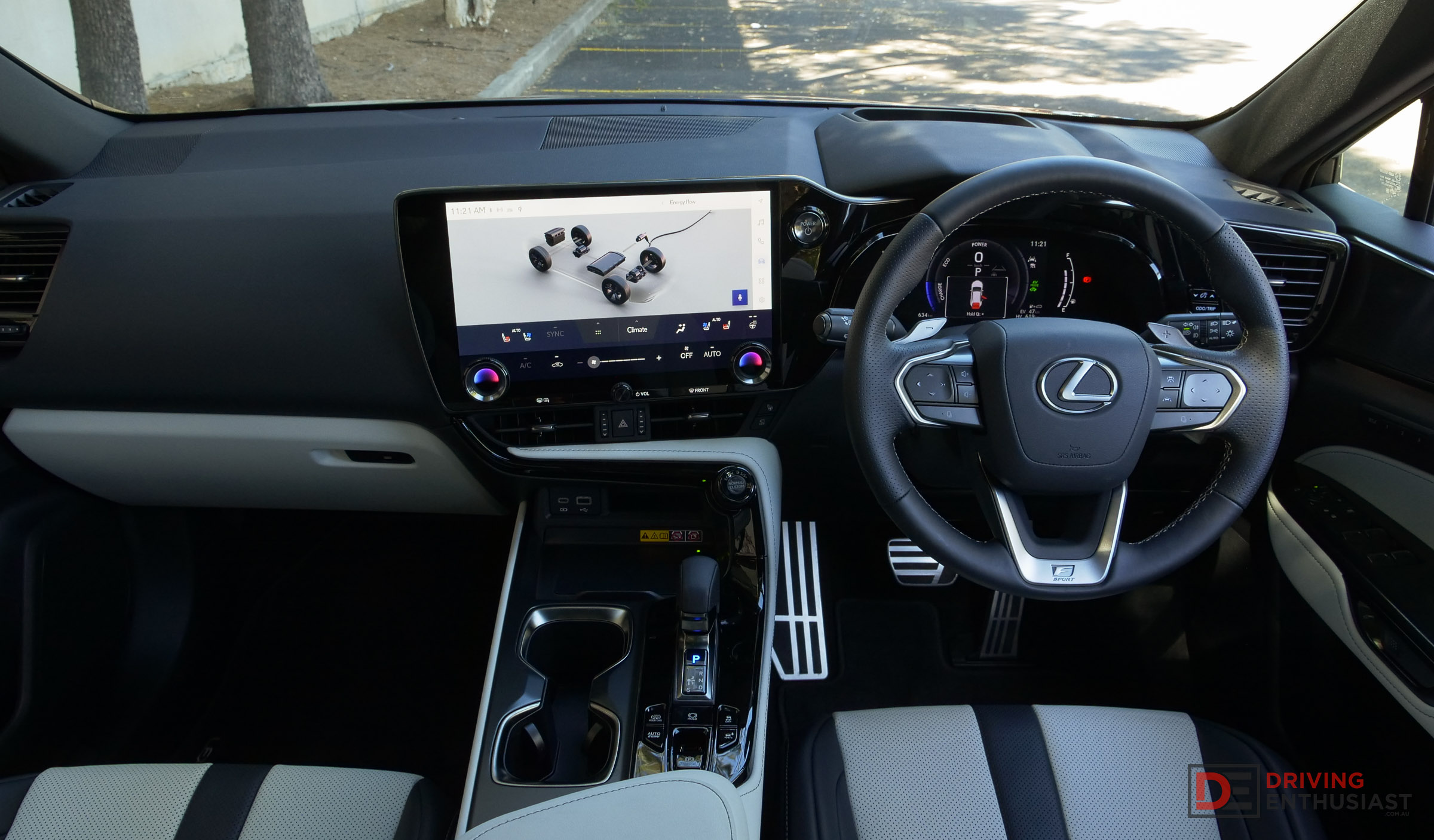
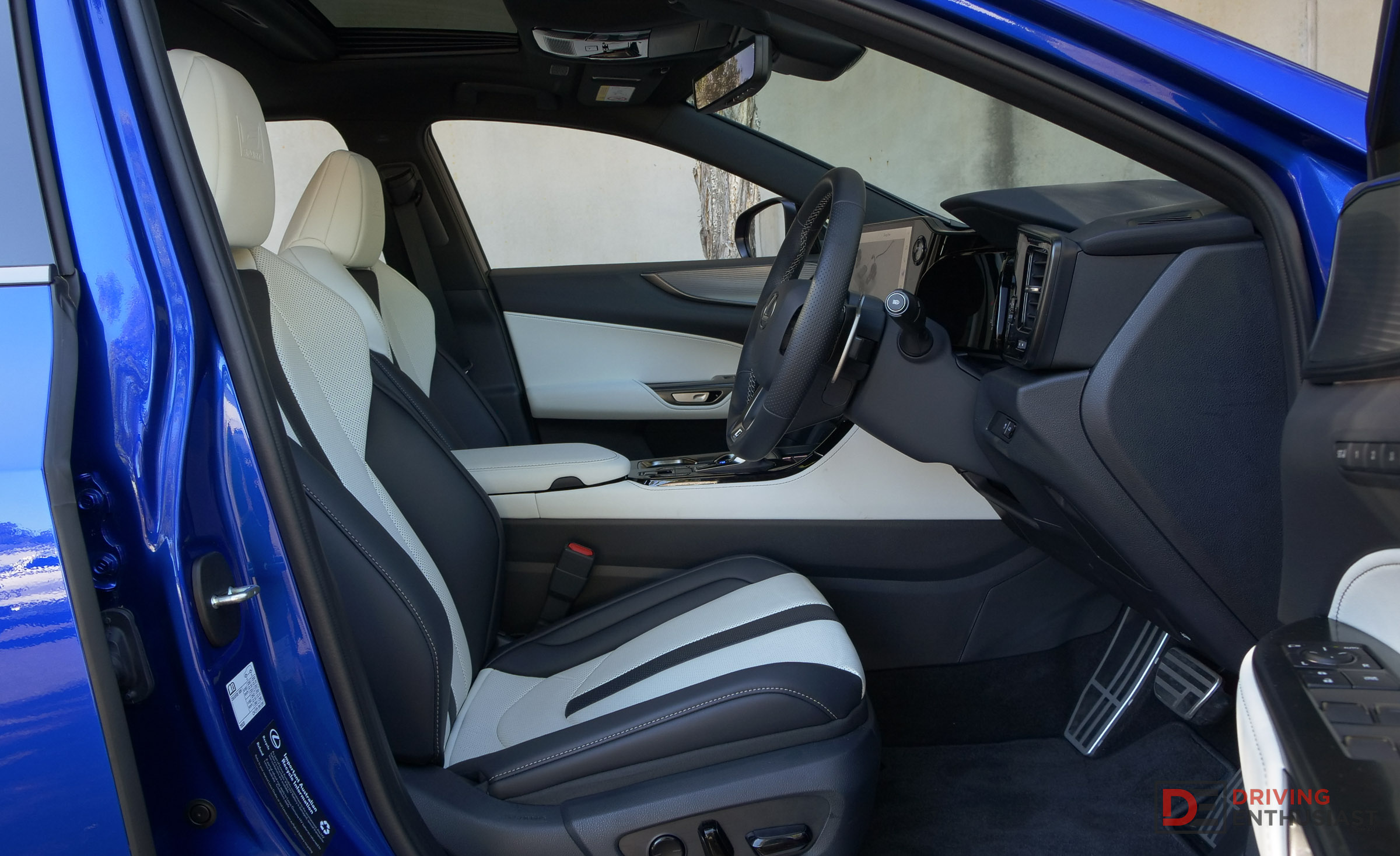
A sense of modern luxury is immediately presented from the outset with quieter and gentler electronic door openers, replacing the usual mechanical latches. Inside, the dual-tone black and hazel interior our test car showcases adds a layer of visual richness, complemented by plush leather trim and soft-touch materials across most surfaces. You can also opt for white, black or red interior colours. The F Sport gains rich aluminium ornamentation. It feels premium where it matters, particularly around key touchpoints like the seats, door trims and centre console.
But look a little closer and some familiar elements from the broader Toyota family start to show through. The digital instrument cluster, for example, is centred around a large circular display that feels more functional than inspiring. Customisation options are limited, and it lacks visual flair; especially for a Lexus F Sport model. Older F Sport models like the RC and IS had a cool sliding gauge, for example.
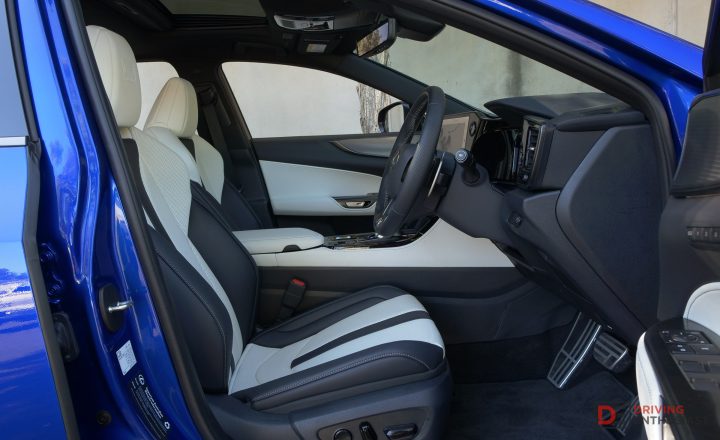
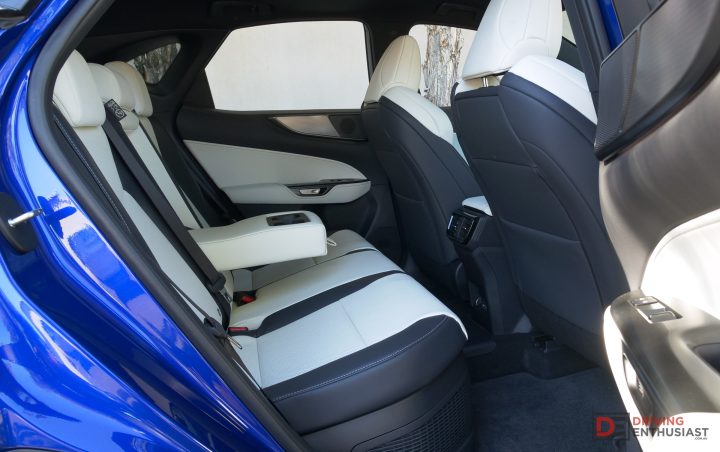
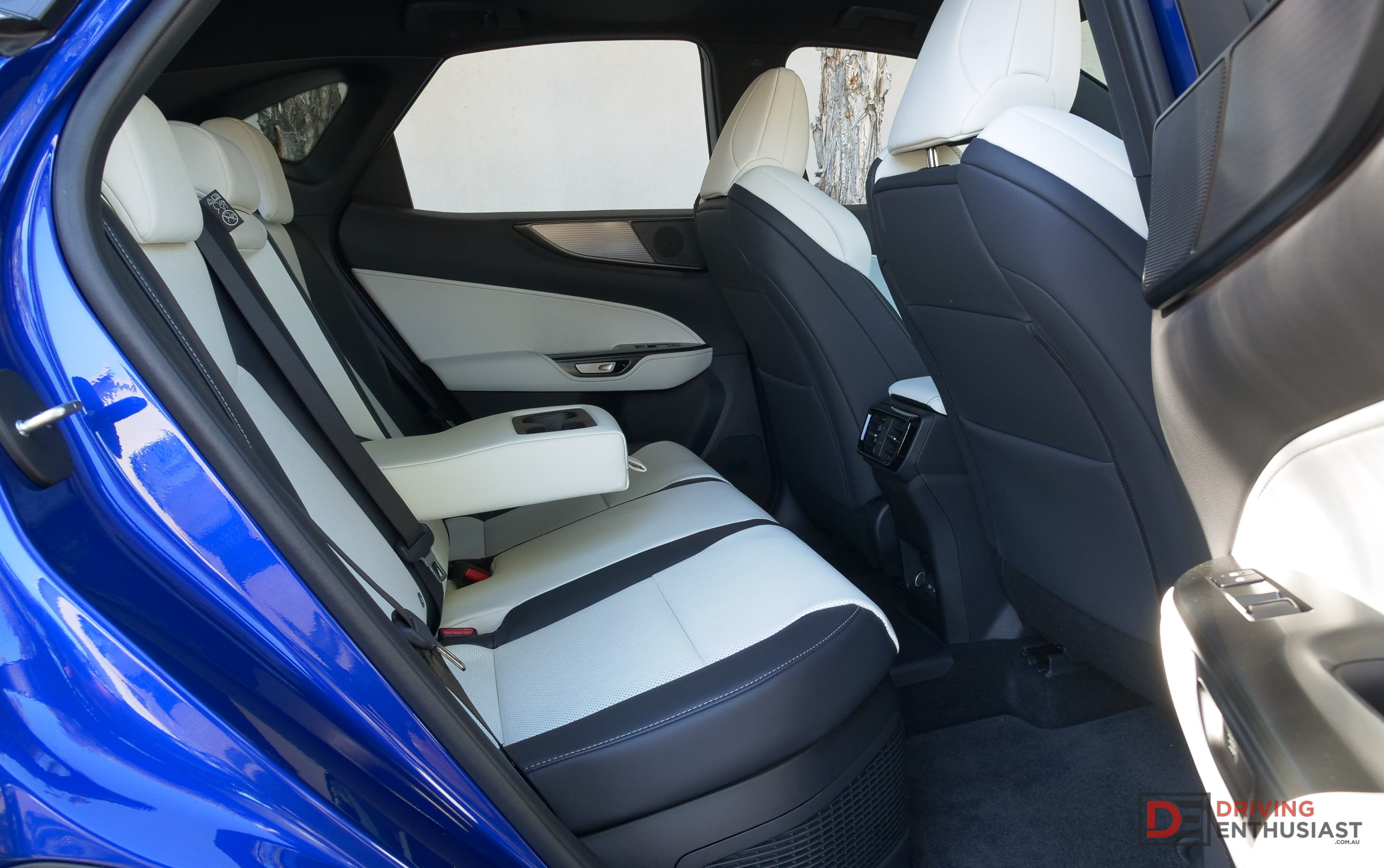
That said, comfort is a clear strength. The front seats are exceptionally supportive, offering a wide range of electric adjustments, along with heating and ventilation. The steering wheel is also heated and electrically adjustable, adding to the sense of tailored ergonomics. Rear passengers are well catered for too, with heated outboard seats, air vents, and generous legroom.
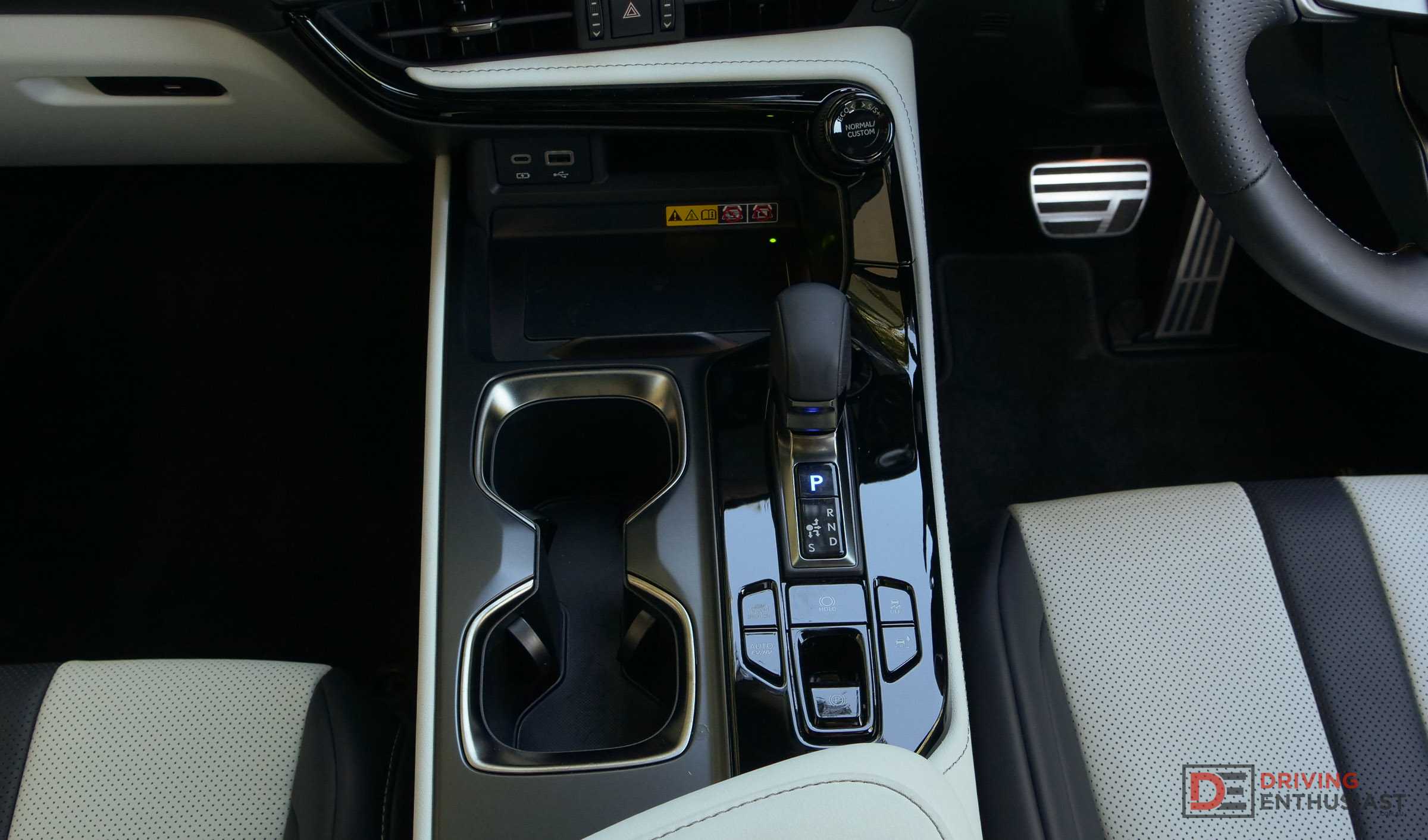
Practicality is thoughtful. The centre console opens from both sides; a small, but useful touch. And there’s a clever sliding wireless charging pad that reveals additional storage underneath. Door bins and cup holders are a good size, and overall usability is strong.
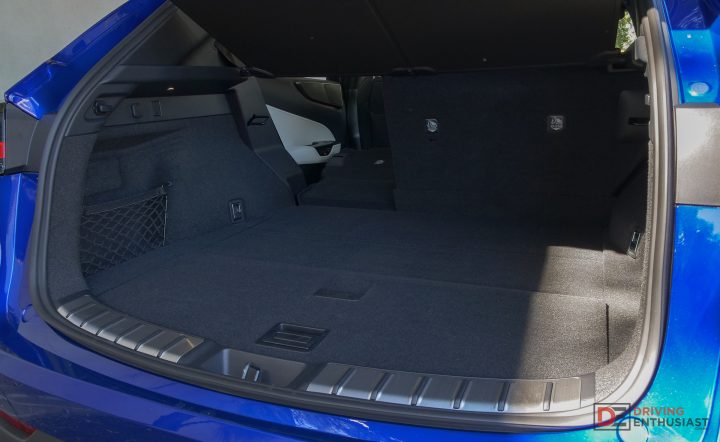
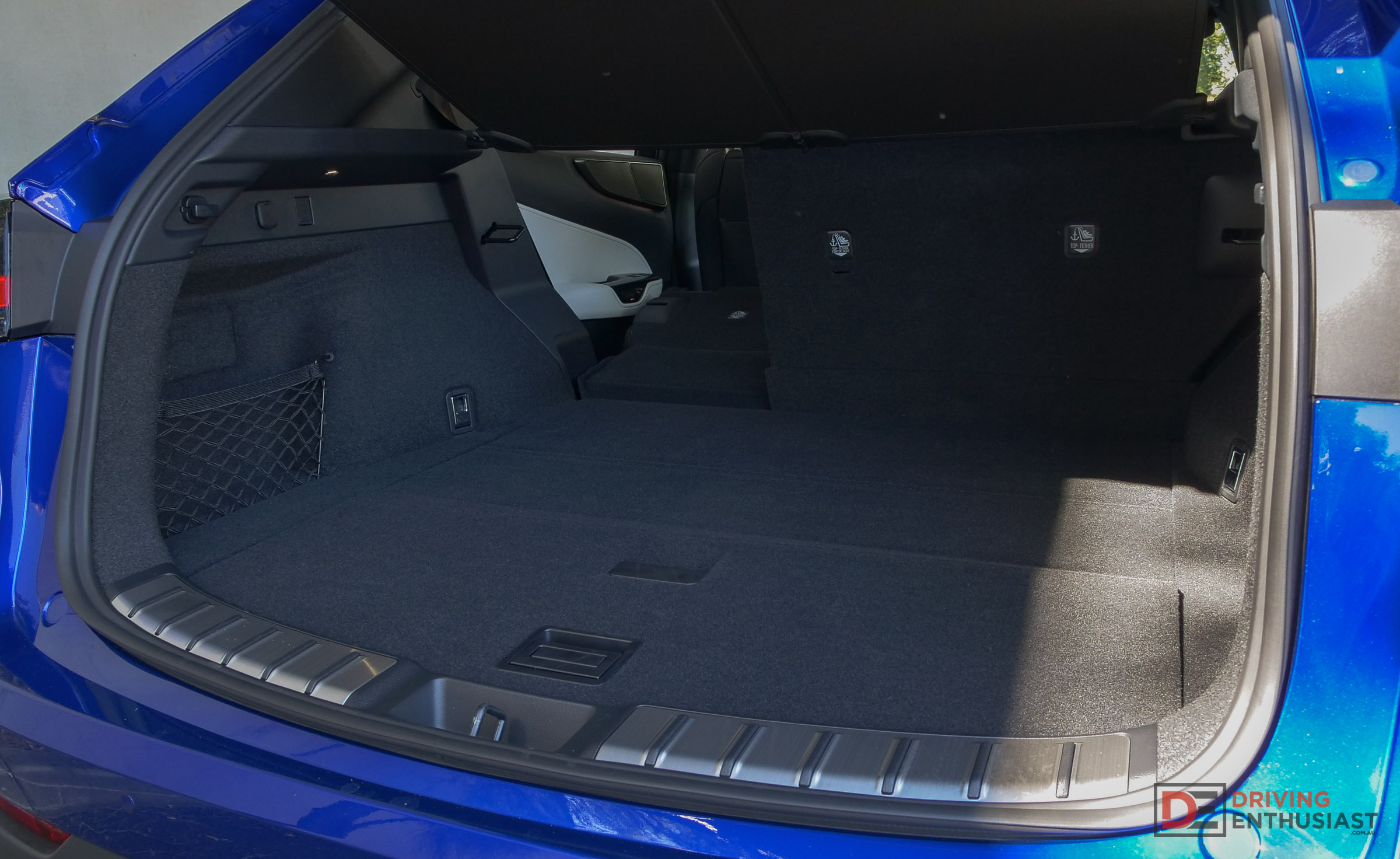
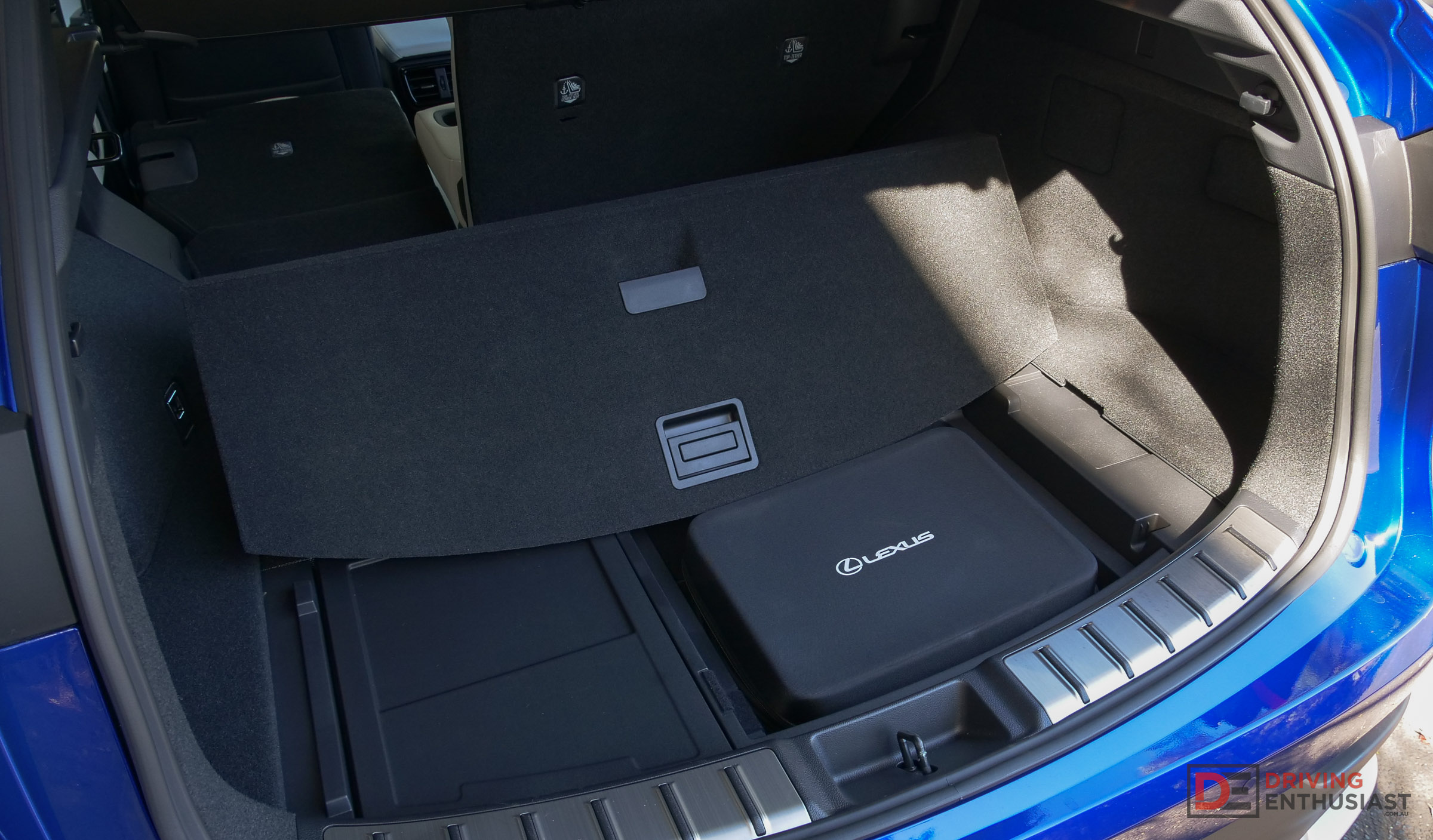
Boot space is respectable for the segment, with 520 litres. But with the rear seats folded down you only have 1141L – most rivals offer more than this. Notably, its volume is not diminished by opting for the PHEV. It’s a practical layout that includes side netting for securing smaller items and additional underfloor storage that spans part of the boot width.
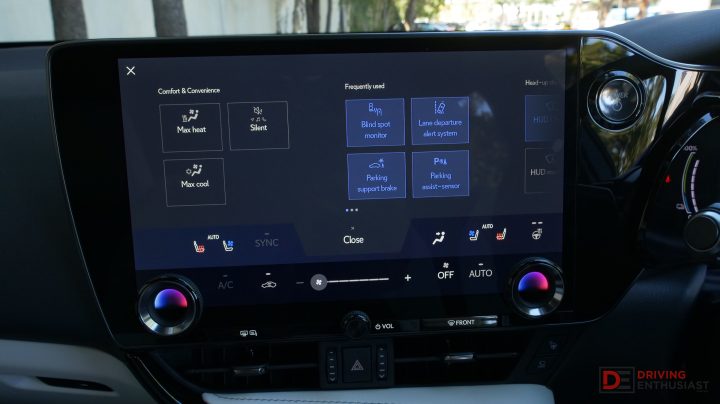
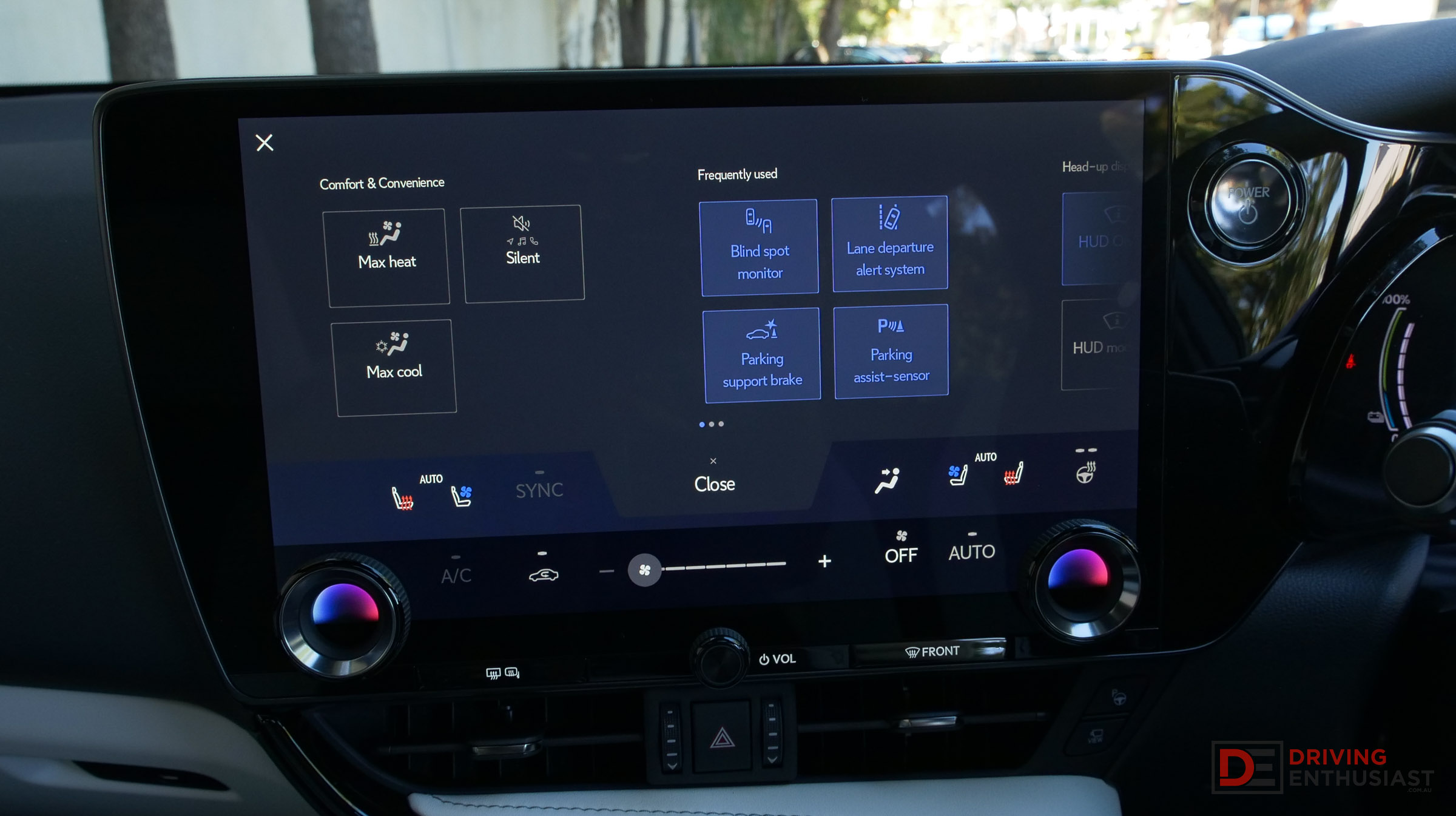
A huge 14-inch central touch-screen dominates the dashboard, offering crisp graphics and intuitive operation. One of the best design elements is the permanently accessible climate control strip at the bottom of the screen, ensuring key functions are never buried in menus. Complementing this are two physical rotary dials for temperature adjustment, which feel premium and are fast to use on the move. Of course, you get wireless app connect, sat-nav, and digital radio.
Other notable features include colour customisable interior illumination, a humidity sensor, head-up display, a smart key card, a digital rear-view mirror, and touch sensitive steering wheel controls that display their function in the dash when you hover your finger on each button – a bit fiddly until you get used to it.
On the safety front, nothing is left out. You get adaptive cruise, safe exit and vehicle approach assist that links up to deactivate the electric door handles, lane departure and tracing assist, front and rear cross-traffic alert, Lexus Connected Services telematics, 360-degree cameras, and parking assist, all contributing to its 5-star ANCAP safety rating.
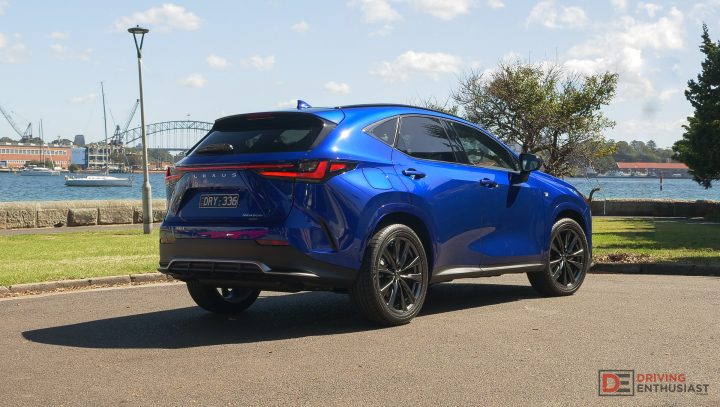
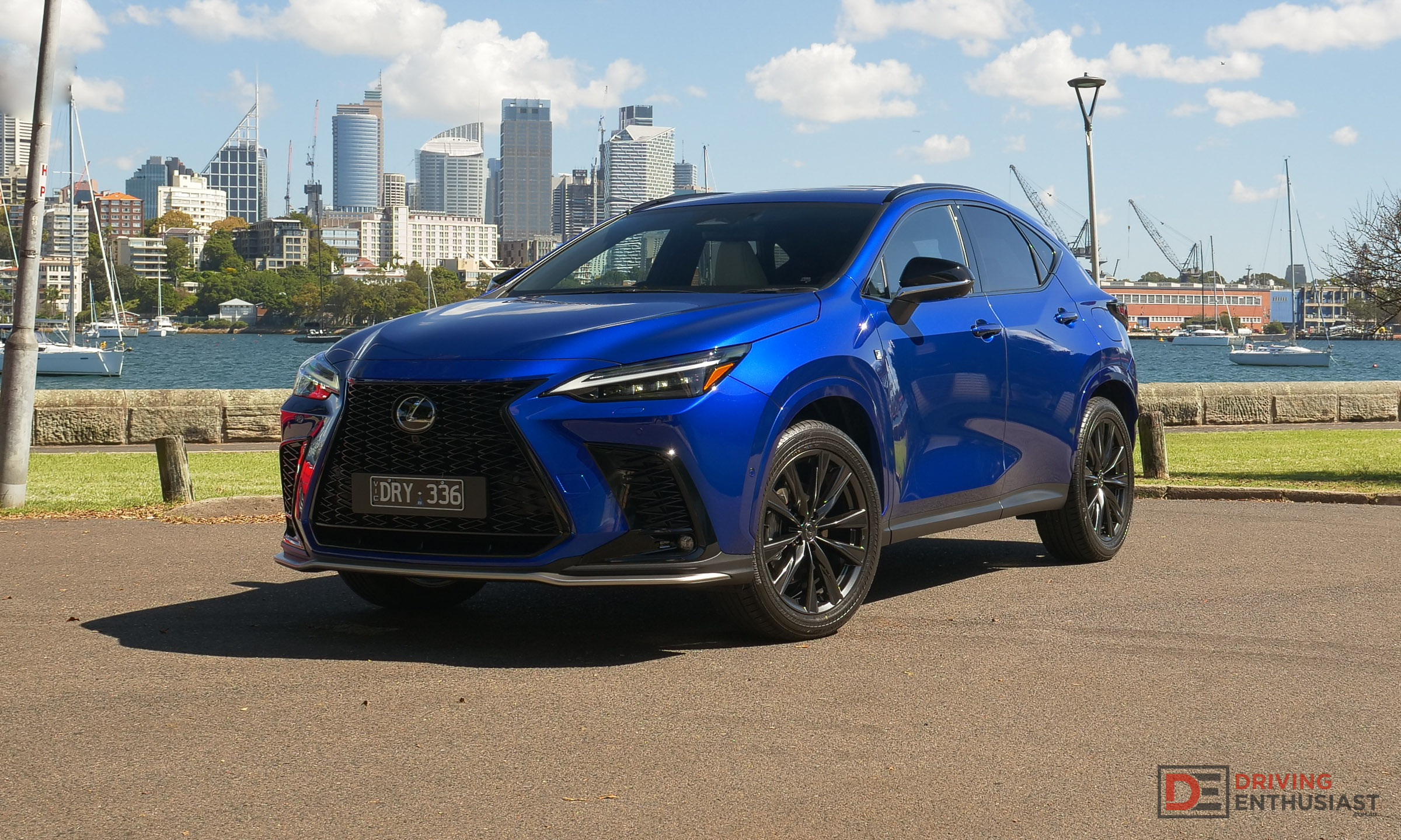
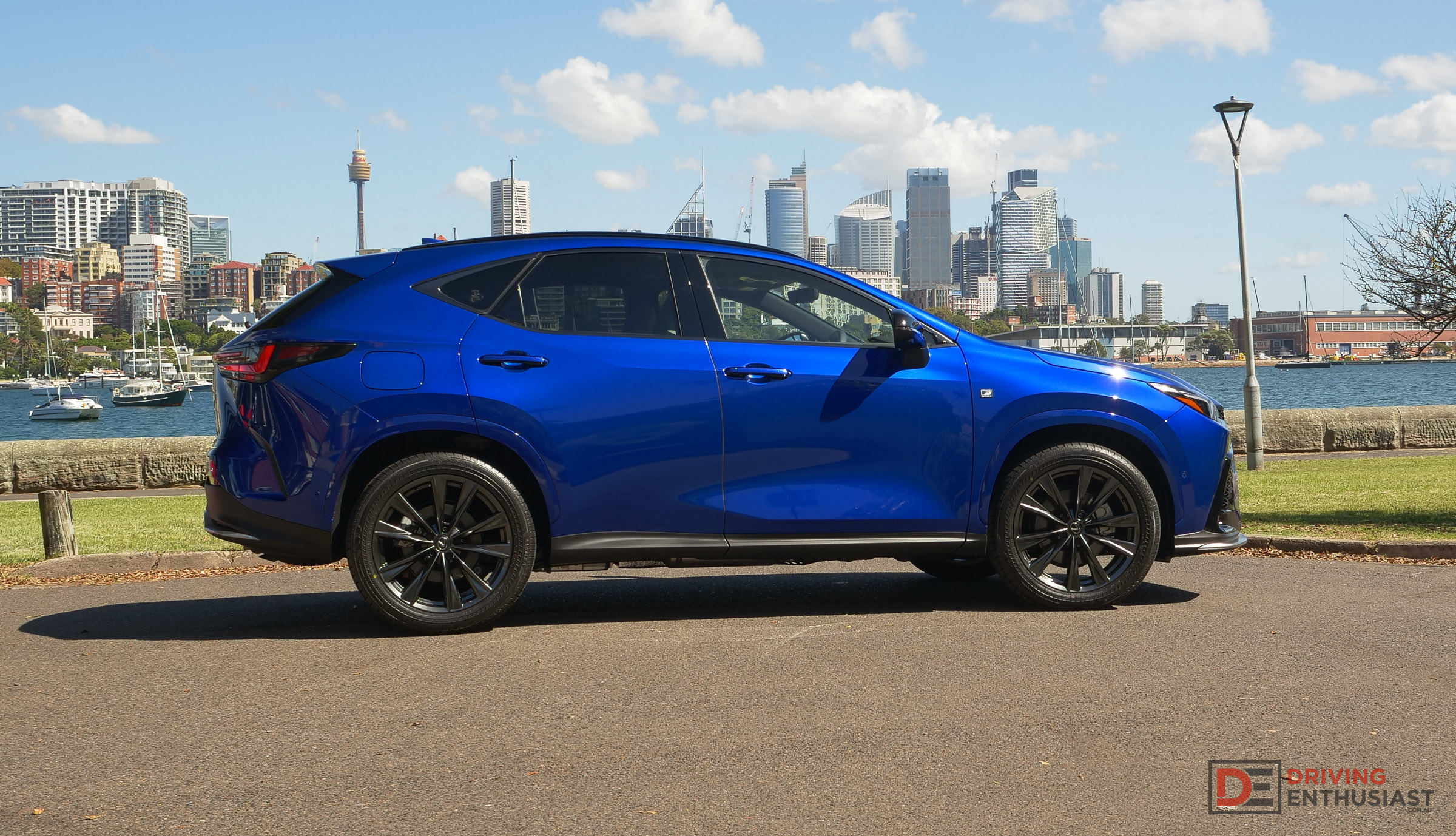
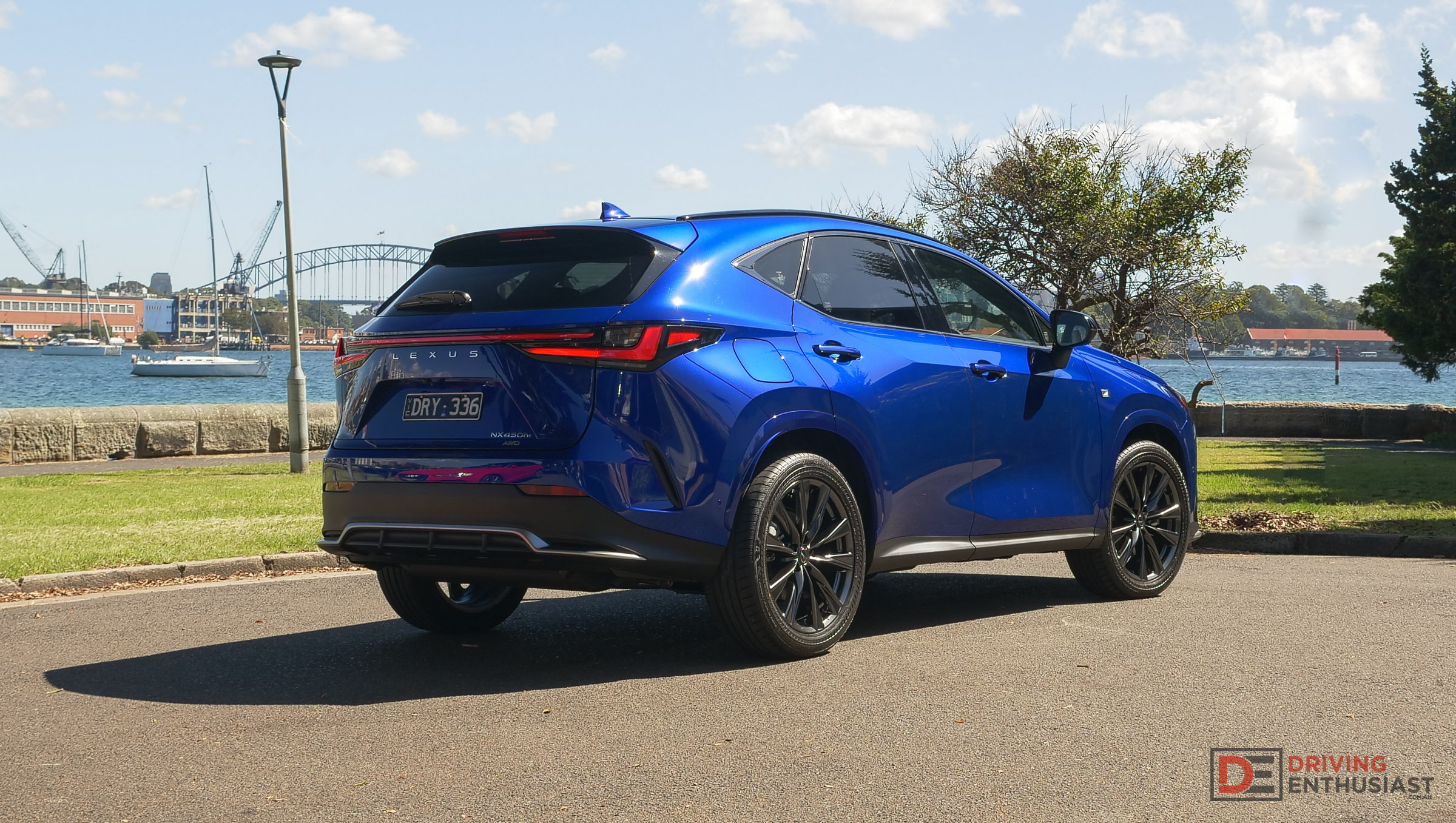
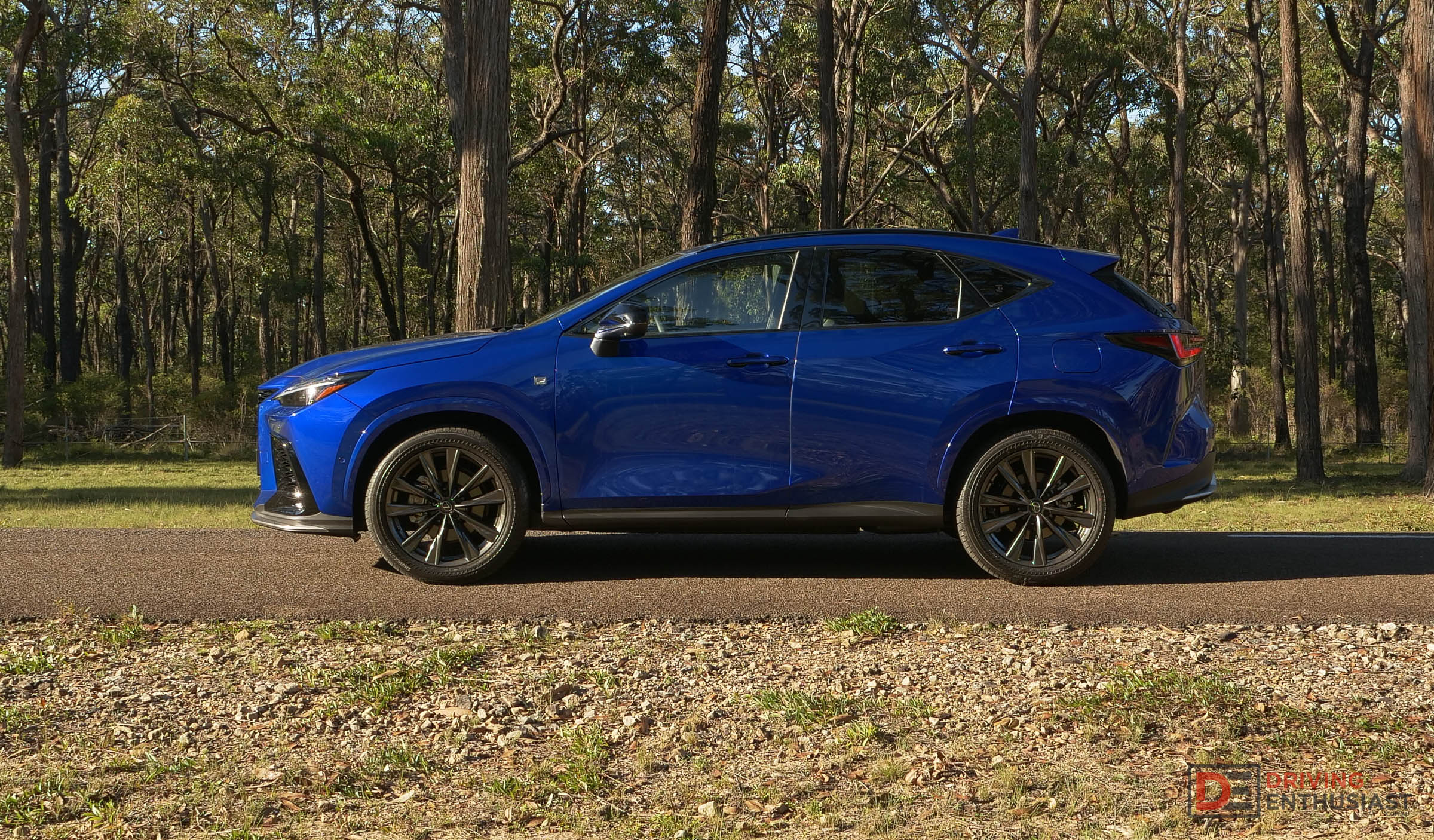
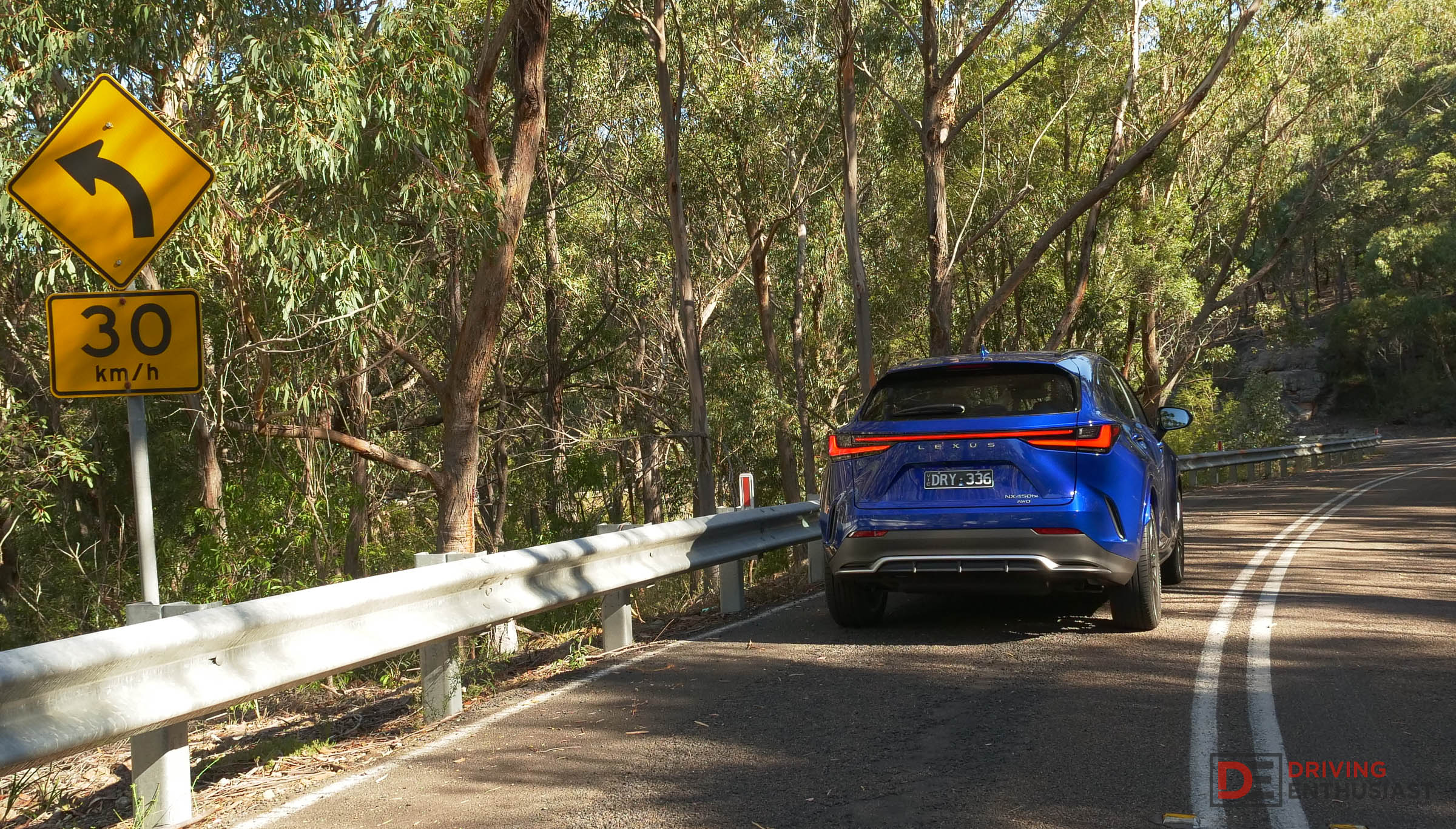
From the outside, shadows casted by specially shaped contours, and sharp LED lighting shapes boost the NX’s sleek look. The one-piece rear combination light is striking and gives aerodynamic purpose with its 3D design. Being an F Sport, you also get extra sporty looks with 20-inch alloy wheels and super-gloss black metallic trimming and skirting.
2026 Lexus NX 450h+ F Sport: Powertrain & handling
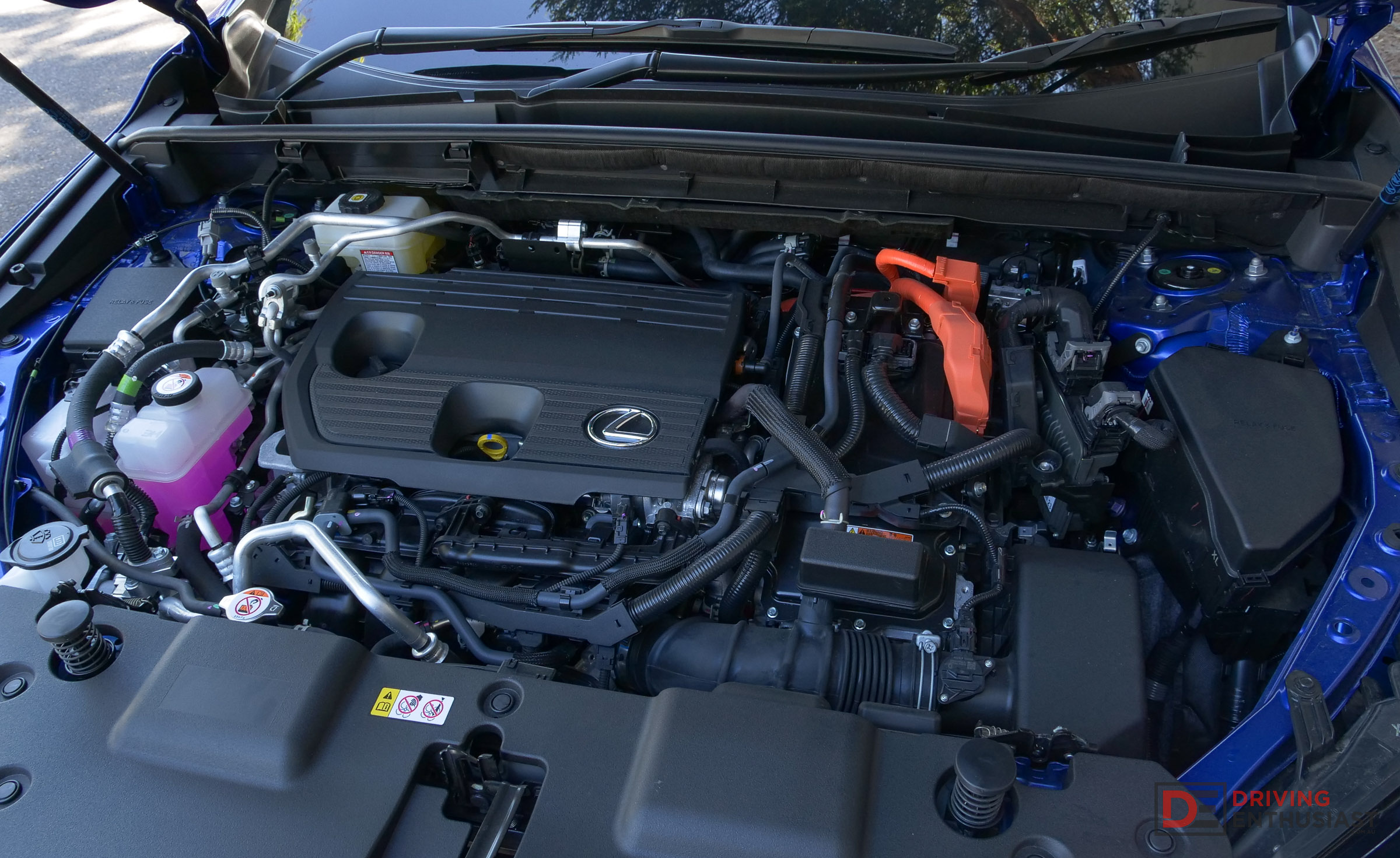
Under the bonnet, the NX450h+ F Sport combines a naturally aspirated 2.5-litre petrol engine with dual electric motors and an 18.1kWh lithium-ion battery, producing 227kW together. It’s all paired with an on-demand all-wheel drive system that can variably distribute torque between the front and rear axles.
On paper, the numbers are impressive. Lexus claims 0-100km/h can be performed in 6.3 seconds. Our tests with a Vbox clocked it in 6.21 seconds. In practice, performance certainly feels strong. Instant torque from the electric motors delivers brisk acceleration off the line, almost justifying the lack of a turbocharger. And the transition between electric and petrol power is seamless. When driving in a civilised manner it’s still quick, smooth, and calm in the way it builds momentum.
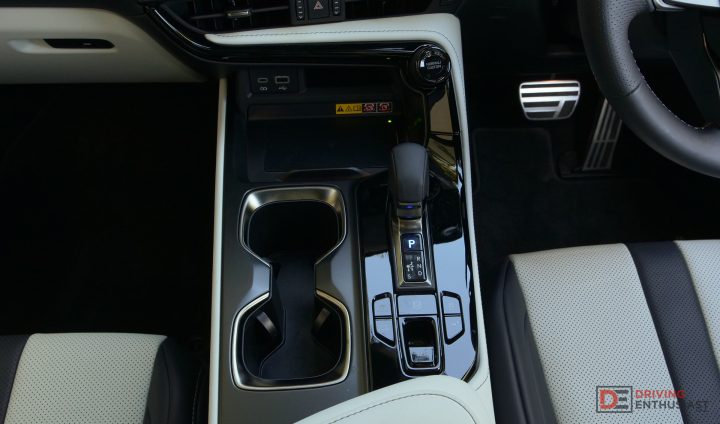
But here’s where the character of the drivetrain becomes a talking point. Despite the strong outputs, the experience leans heavily toward convention, smoothness and economy rather than engagement. The constantly variable transmission (CVT) introduces a familiar drone under load; and while it’s effective at delivering efficiency, it doesn’t inspire much enthusiasm. Add to that, the four-cylinder engine sound certainly doesn’t have any sporty note. It’s very much a purpose rather than pleasure execution – competent, quiet, and predictable, but lacking any sense of thrill.
Drive modes include Eco, Normal, Sport S, Sport S+ and EV, allowing you to tailor the experience depending on conditions. In EV mode, the NX can travel fully on electric power alone, making it ideal for urban commuting. Unlike standard hybrids, there is enough power from the electric side to accelerate with ease – we timed 0-100km/h in 10.03 seconds in electric mode. Lexus claims up to 87km of electric-only range, though it will travel less distance at freeway speeds.
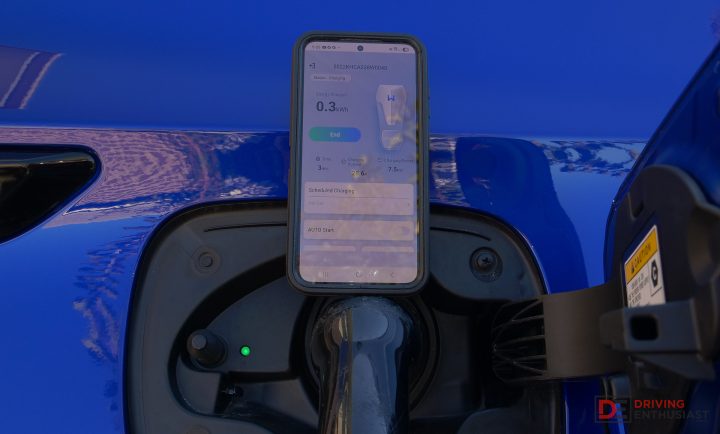
Which makes fuel efficiency a strong point for the NX450h+. The official average consumption is 1.3L/100km, which is a rather arbitrary figure from an ADR 81/02 test made up of just 20 minutes of driving (13 minutes at low speed and 7 minutes at highway speeds), when the battery is fully charged. In reality, your consumption can be zero if you can charge every 87km or so. Otherwise, if you don’t charge it at all and use it as a standard hybrid, your fuel consumption is likely to hover around 6L/100km. We recorded an average of 5.8L/100km when not charged, which is impressive for a vehicle with this level of performance. But it does require premium 95 RON petrol.
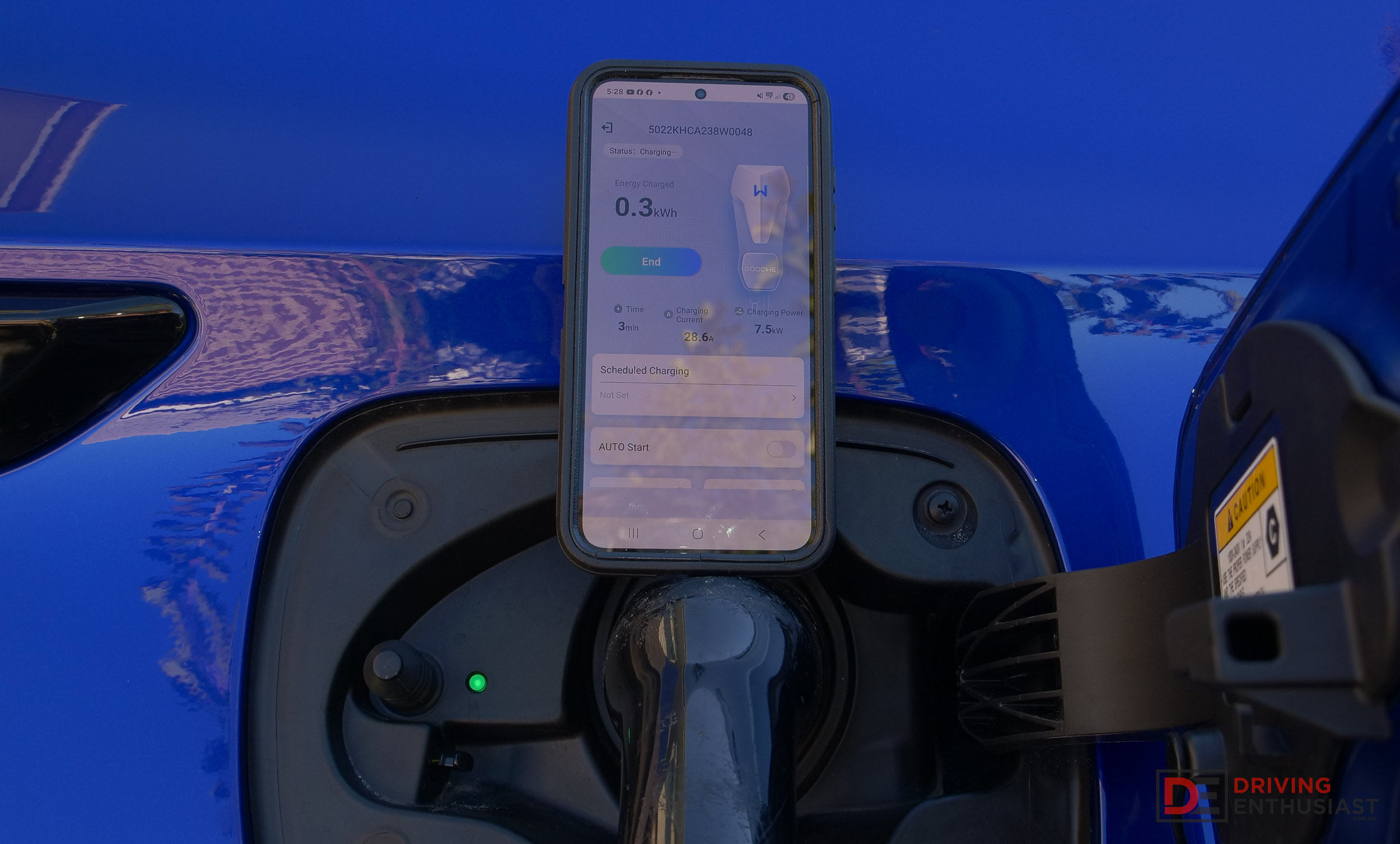
Charging is achieved via an AC Type 2 charger at up to 6.6kW. Some PHEVs offer high-speed DC charging now. On a depleted battery charging will take about 7.5 hours on an AC Type 2 charger or 2.5 hours on public charging outlet from its maximum charging current of 32 amps.
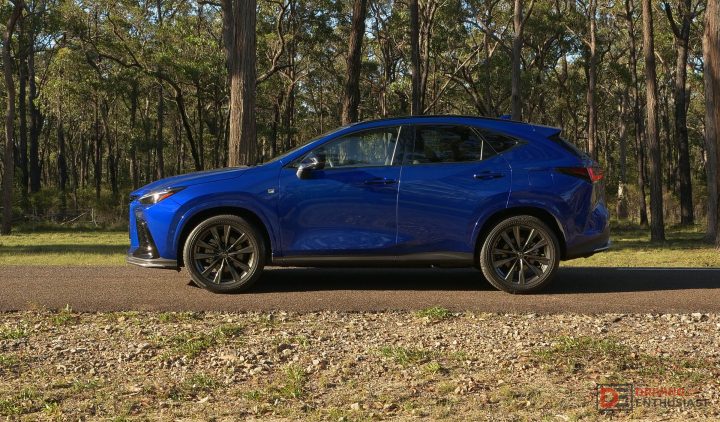
Once you’re charged up and rolling along, you’ll find the suspension absorbs imperfections well, making it an excellent long-distance cruiser. Front and rear performance dampers and adaptive variable suspension are fitted to F Sport models. This means it can adapt to desired characteristics; it can be sharp and engaging when you explore the different driving modes, or more relaxing and smooth.
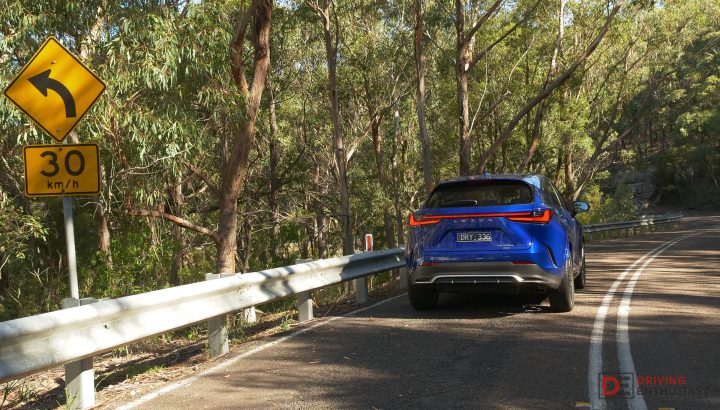
Compared to non-F Sport NX models, it is not as soft. Taking on corners aggressively reveals weaker grip levels from the economy-biased tyres. They are the first to start squealing in the equation. But the on-demand four-wheel drive inspires confidence in slippery conditions.
Heavy duties are not where the NX shines. A low 190mm ground clearance gives limitations for off road use, and a 1000kg towing capacity is low compared with some.
2026 Lexus NX 450h+ F Sport: Key attractions/reasons to buy
- Strong plug-in hybrid efficiency: The ability to drive on electric power for shorter commutes, combined with low fuel consumption when you don’t get a chance to charge, gives comparable efficiency.
- Smooth and refined performance: Instant electric torque and seamless power delivery create a relaxed and effortless driving experience.
- Ride quality suited to all circumstances: Variable dampers offer soft suspension tuning for comfort, as well as a stiffened ride for sporty moments.
- Premium interior touches: Plush materials, comfortable seating and thoughtful features like the dual-opening centre console and sliding wireless charger enhance usability.
- User-friendly infotainment: Large, crisp display with intuitive controls and always-accessible climate functions improve day-to-day convenience.
2026 Lexus NX 450h+ F Sport: Key considerations before you buy
- Limited driving engagement: Despite decent performance figures, the powertrain lacks excitement and feels more functional than fun.
- Instrument cluster lacks flair: Limited customisation and a basic layout feel underwhelming for a flagship model.
- Audio system lacks bass depth: The Mark Levinson system is clear but doesn’t deliver the punch some buyers may expect.
- Dressed up Toyota: Arguably, many Lexus models like the NX feel more and more related to Toyota, which may stifle their luxury appeal.
2026 Lexus NX 450h+ F Sport: Key considerations before you buy
How does it rate against its rivals?
-
Price
-
Quality look & feel
-
Interior tech
-
Powertrain performance
-
X-factor (does it stand out in its class?)
Final word
This is a technically impressive and efficient luxury SUV that delivers exactly what many buyers want in this segment; smooth performance, strong economy, and a comfortable, well-appointed cabin. But it also raises a question about what buyers expect from a Lexus. While it excels in refinement, build quality and usability, it doesn’t quite deliver the emotional engagement or dynamic flair that its F Sport badge might suggest.