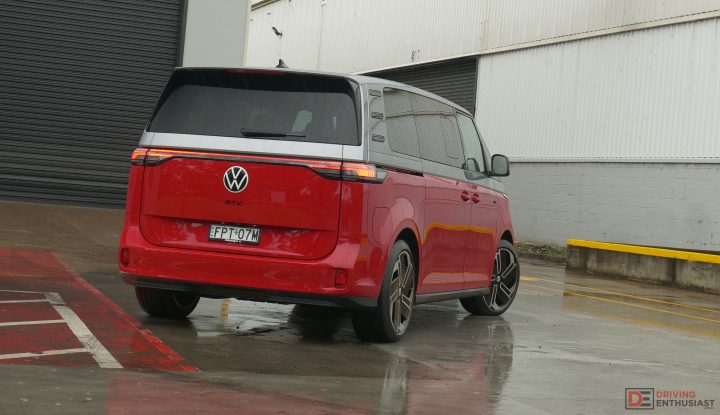
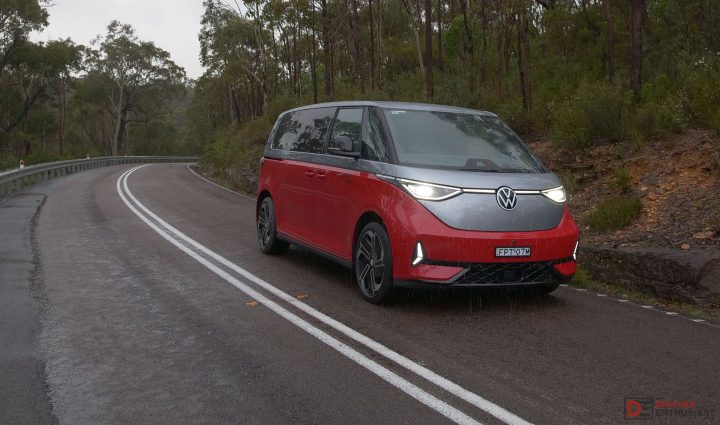
Nostalgia is a hell of a drug. For decades – as far back as 2001, actually – Volkswagen was threatening to bring back the Kombi to many a rapturous motor show attendee. It seemed every five years or so they trotted out a new take on the concept, only to chicken out on production. With the advent of the electrified MEB platform, they finally had a technical basis to do it justice and the overall execution is uncannily faithful to the 2001 Microbus concept.
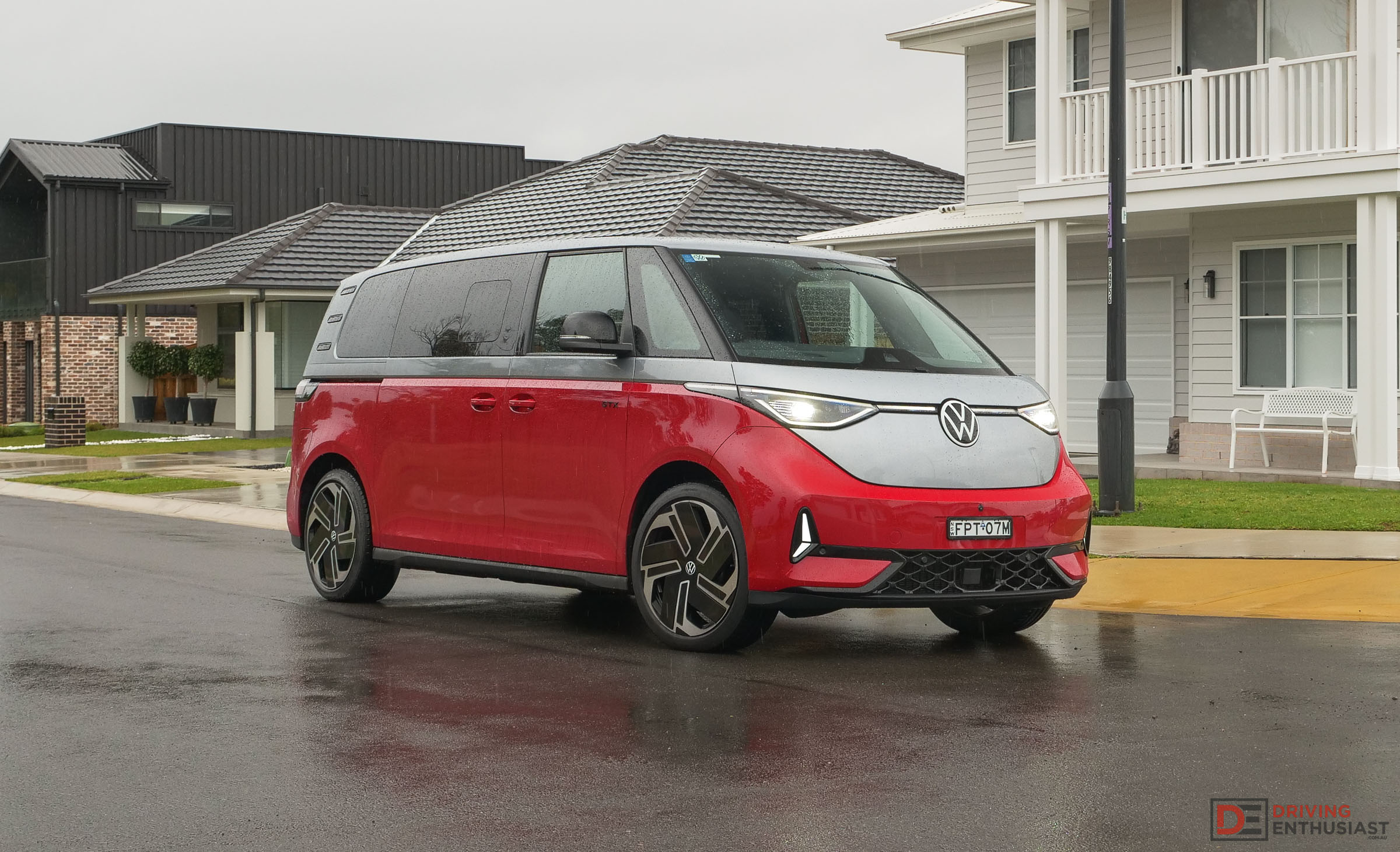
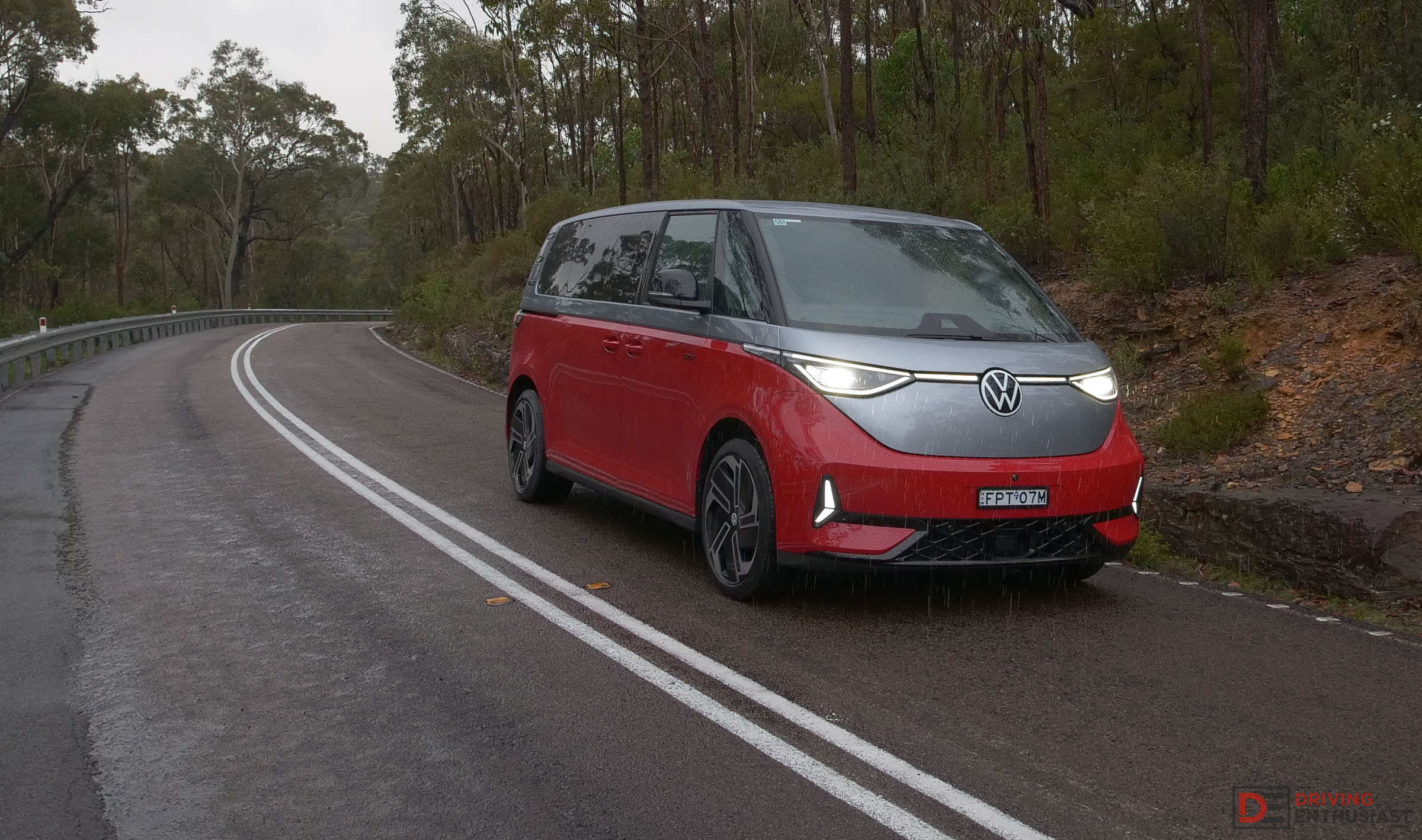
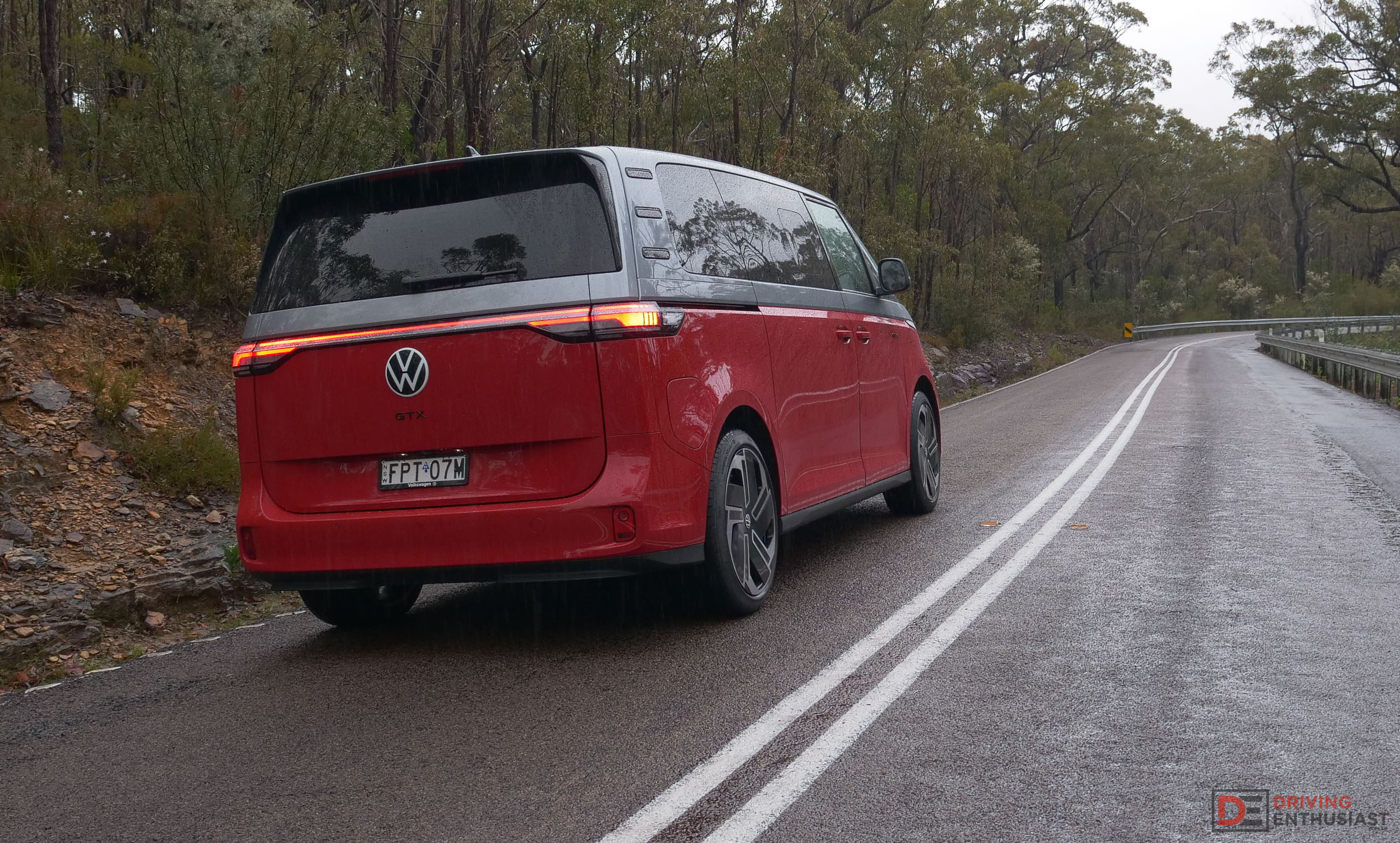
There’s no doubting it turns heads and evokes joy and excitement from passers-by, but with a nearly three-tonne kerb weight and $100k-plus price tag, does the 2026 Volkswagen ID.Buzz GTX faithfully capture the egalitarian spirit of the original?
2026 Volkswagen ID. Buzz GTX: Specifications
Electrical: 91kWh battery, 2x electric motors
Output: 250kW / 590Nm
Gearbox: Single-speed auto
Drive type: All-wheel drive
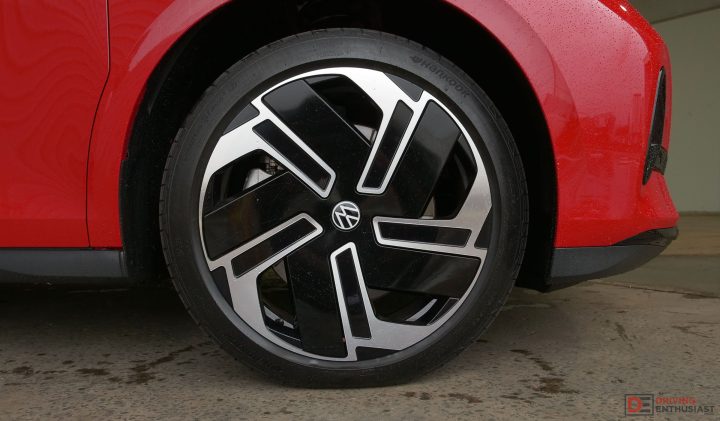
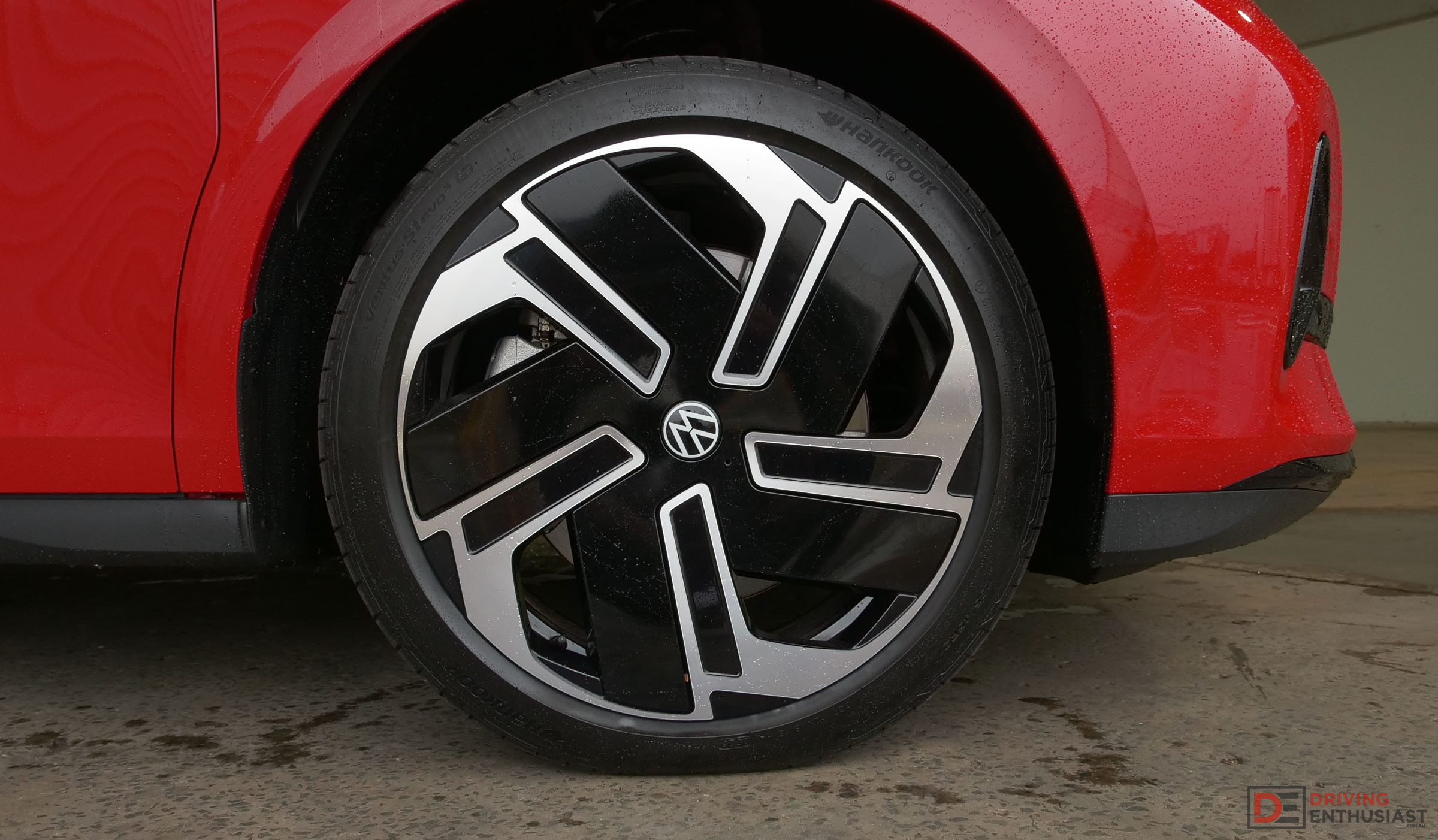
Wheels: F: 21×8.5, 235/45 R: 21×10, 265/40
ANCAP: Five stars
Tare weight: 2846kg
Power-to-weight: 11.3:1 (kg:kW)
Official range (WLTP): 450kmMax charging AC/DC: 11kW/200kW
0-60km/h: 2.87 seconds*
0-100km/h: 6.13 seconds*
60-110km/h: 4.35 seconds*
1/4 mile: 14.42 seconds at 156.1km/h*
Max acceleration: 0.667g*
100-0km/h braking (in wet): 44.91m in 3.52s*
Max deceleration: -1.026g*
Starting price: $104,990*Figures as tested by Driving Enthusiast on the day. Manufacturers’ claims may be different
2026 Volkswagen ID. Buzz GTX: How much does it cost?
In Australia, the 2026 ID. Buzz GTX LWB is listed at $104,990 before on-road costs. Volkswagen doesn’t publish a single national drive-away figure for every state and territory, so you’ll need to confirm a drive-away quote based on your location and any applicable offers at the time. As tested here, you’re paying a premium not just for the GTX badge, but also for the dual-motor AWD hardware and the extra stuff inside.
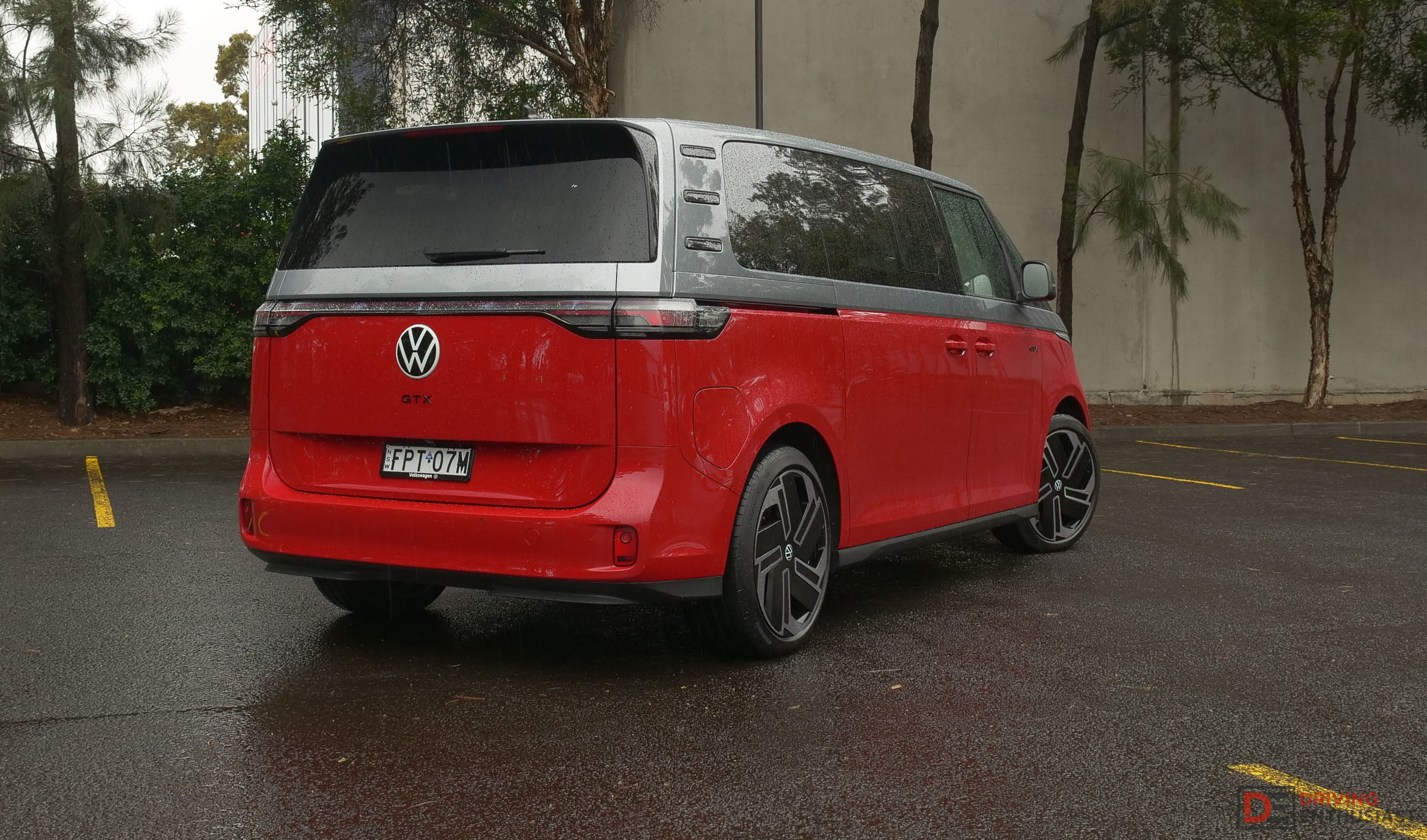
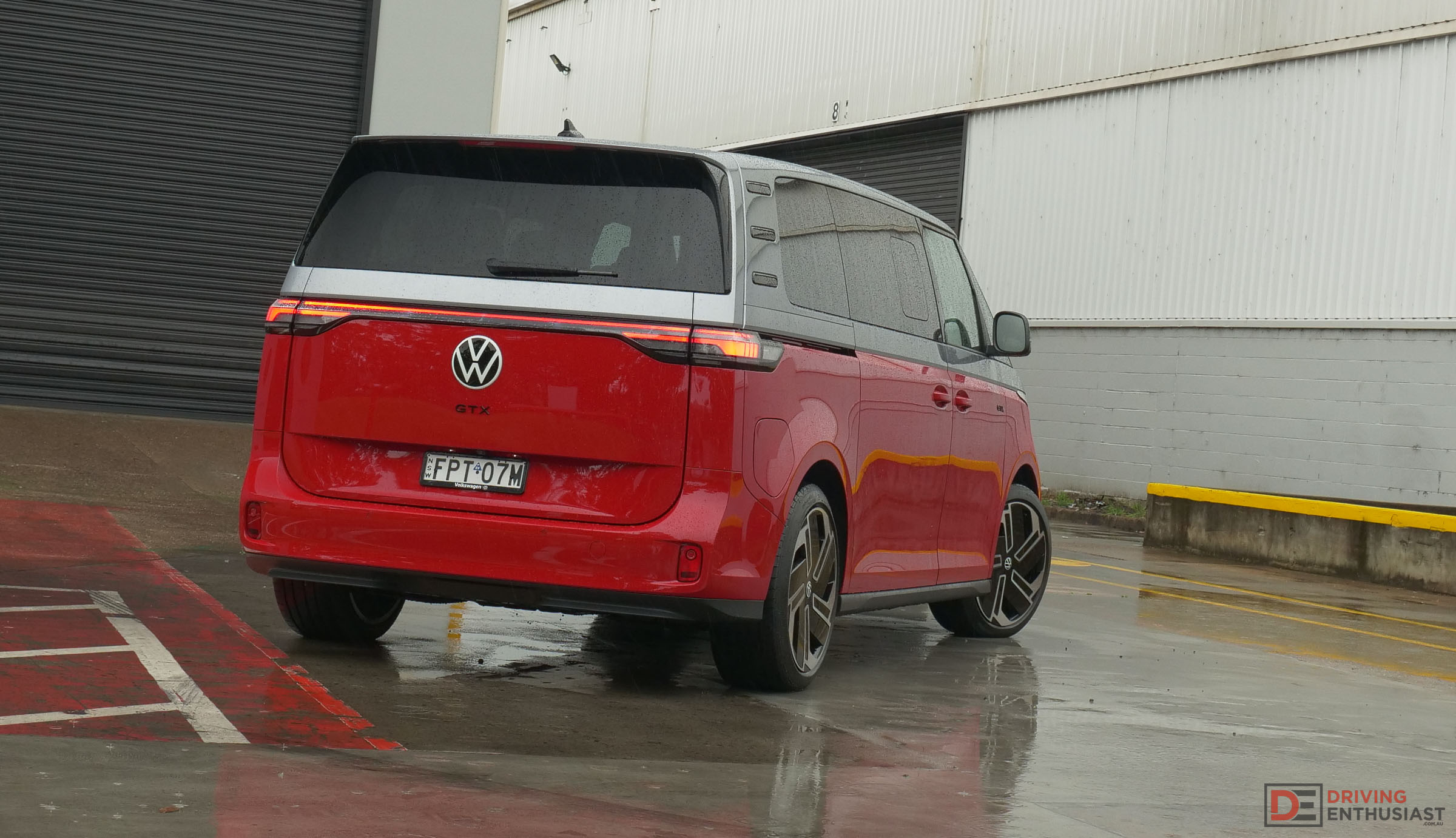
First seen as a variant of the ID.3, Volkswagen positions the GTX as the sporty ID. Buzz, with a badge that is evocative of the brand’s GTI heritage. Standard fitment includes a panoramic roof with smart glass, head-up display, Harman Kardon audio (13 speakers with a subwoofer), tri-zone climate control, power front seats with memory, matrix LED headlights, and a long list of active safety tech. It rides on 21-inch ‘Townsville’ wheels as standard (with staggered widths front and rear), which look very purposeful and sporty.
As far as ownership is concerned, Volkswagen backs the vehicle with a five-year, unlimited-kilometre warranty, while the 91kWh high-voltage battery is covered for eight years/160,000km. Roadside assist is included for the first 12 months, and can be extended when servicing is kept within the VW dealer network.
Servicing intervals are every 24 months or 30,000km (whichever comes first). Volkswagen also offers pre-paid Care Plans for the ID. Buzz; six years ($1450) covering the first three services, eight years ($1850) covering four services, and 10 years ($2250) covering five services at time of writing.
2026 Volkswagen ID. Buzz GTX: Interior & packaging
The ID. Buzz GTX is the long-wheelbase (LWB) seven-seater, and it’s a big boy. It measures 4962mm long, 1985mm wide, and 1924mm tall, on a 3239mm wheelbase. The turning circle is 11.8 metres, which is a reminder that while the Buzz looks friendly, it still occupies a lot of road and car park space. Even so, the tall seating position and expansive glass give it outstanding visibility and a fun ‘milk float’ feeling, giving every drive a sense of occasion.
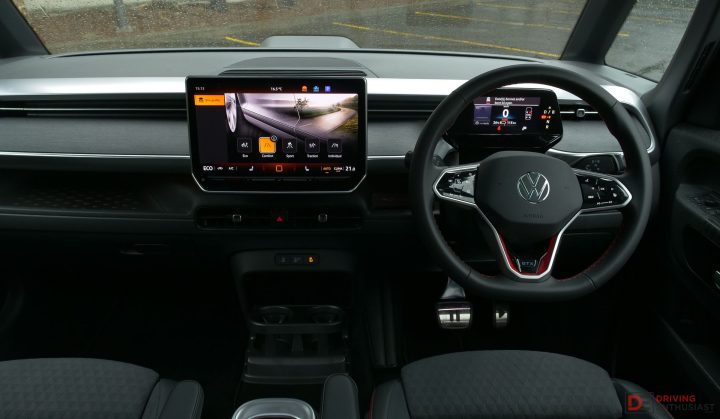
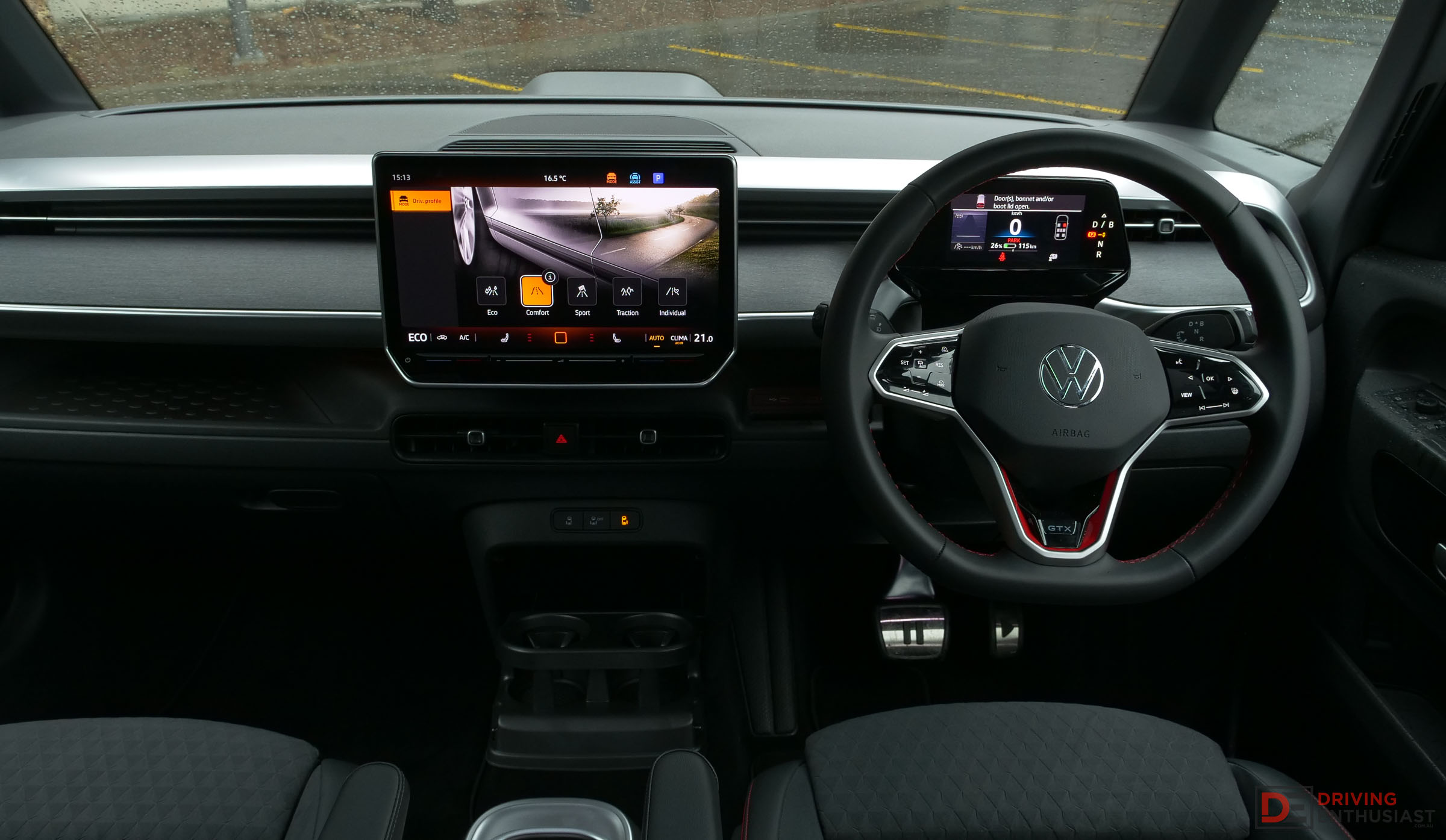
Volkswagen’s minimalist cabin philosophy is immediately apparent from the moment you climb aboard. There’s a ‘clean’ visual theme that relies heavily on the central touch-screen, with many functions pushed into digital menus rather than physical switches. It looks neat, and it contributes to that airy, modern lounge-room feel – but it also means ergonomics can be a weak point. The capacitive steering wheel buttons are the main culprit. They’re too easy to bump – repeatedly triggering the steering wheel heating by accident was a regular occurrence for us. It also has to be said that the hard plastics on the dash betray the car’s commercial origins.
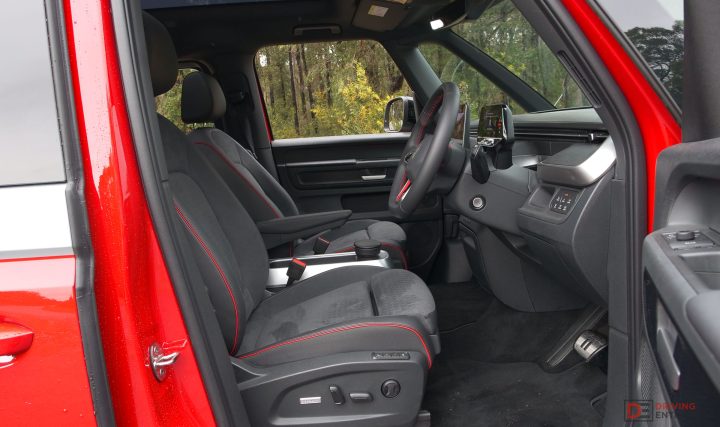
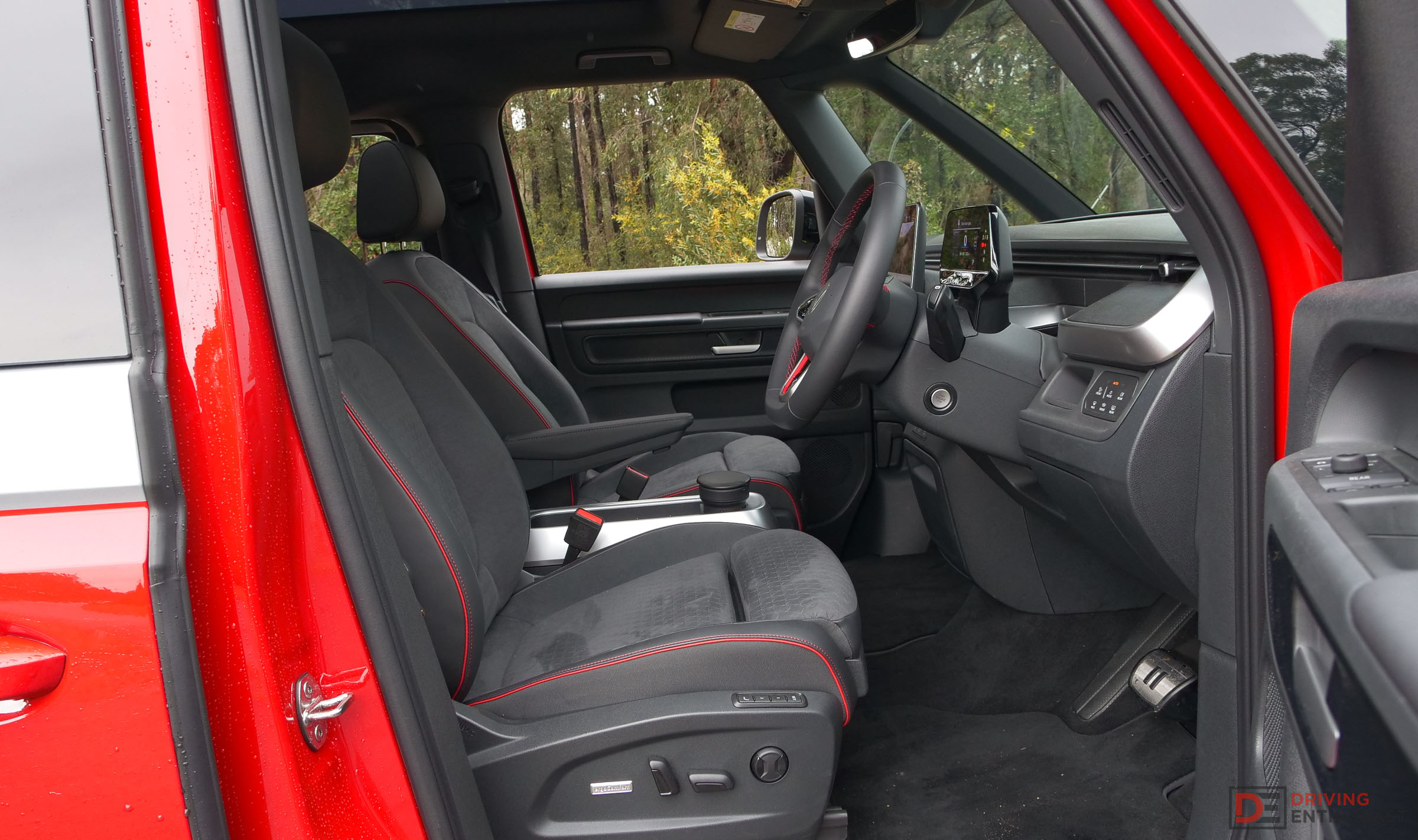
Material choices are a mixed bag. There’s a sense that VW has prioritised design cohesion over plushness, so you’ll find harder plastics in places you’ll touch regularly (like the doors), even though the dash and trim presentation are nicely resolved. The GTX-specific ArtVelour ECO microfleece upholstery with red stitching adds some personality, and the overall cabin concept still feels carefully thought through – just not consistently premium in the way some buyers might expect at this price point.
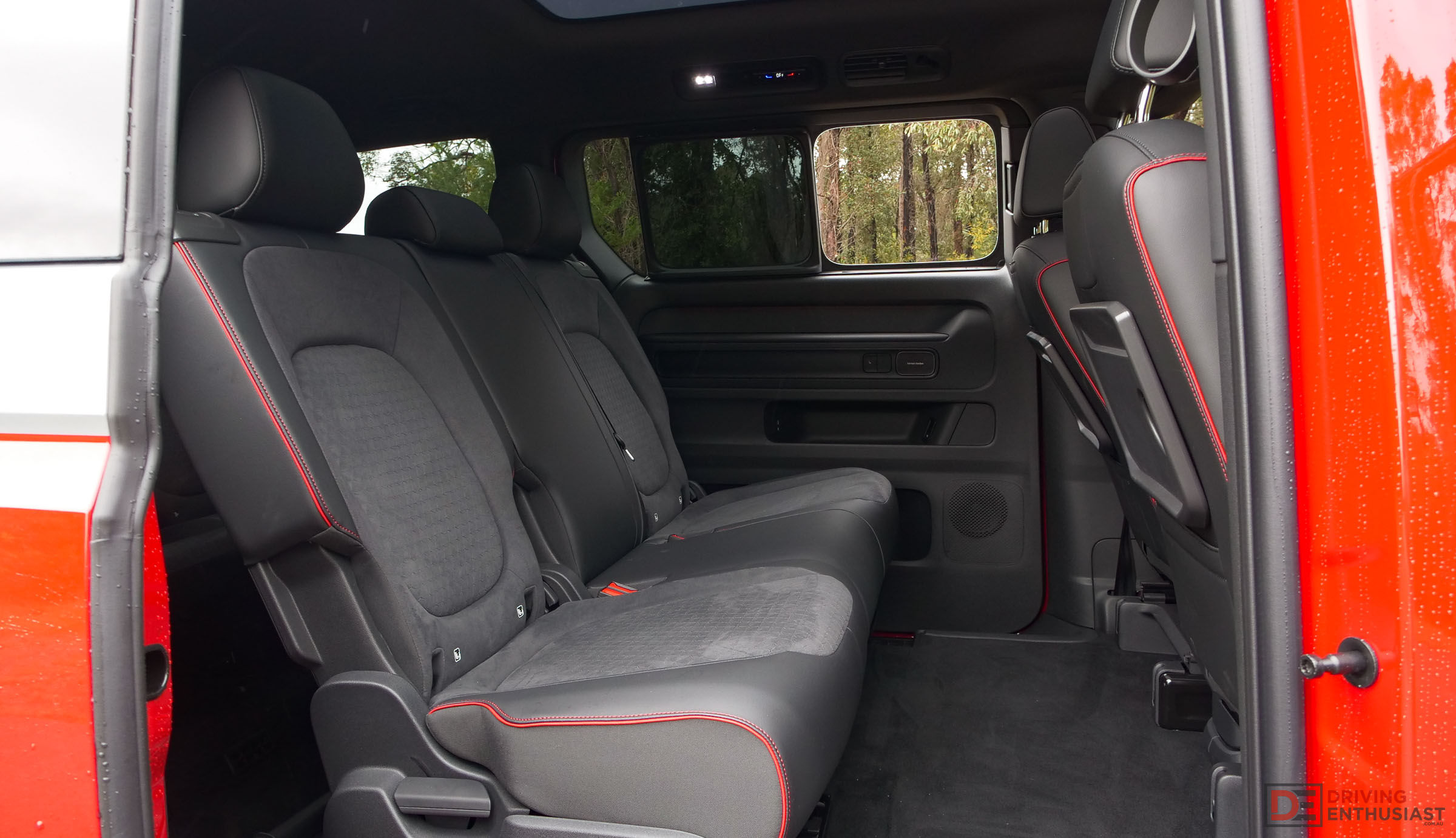
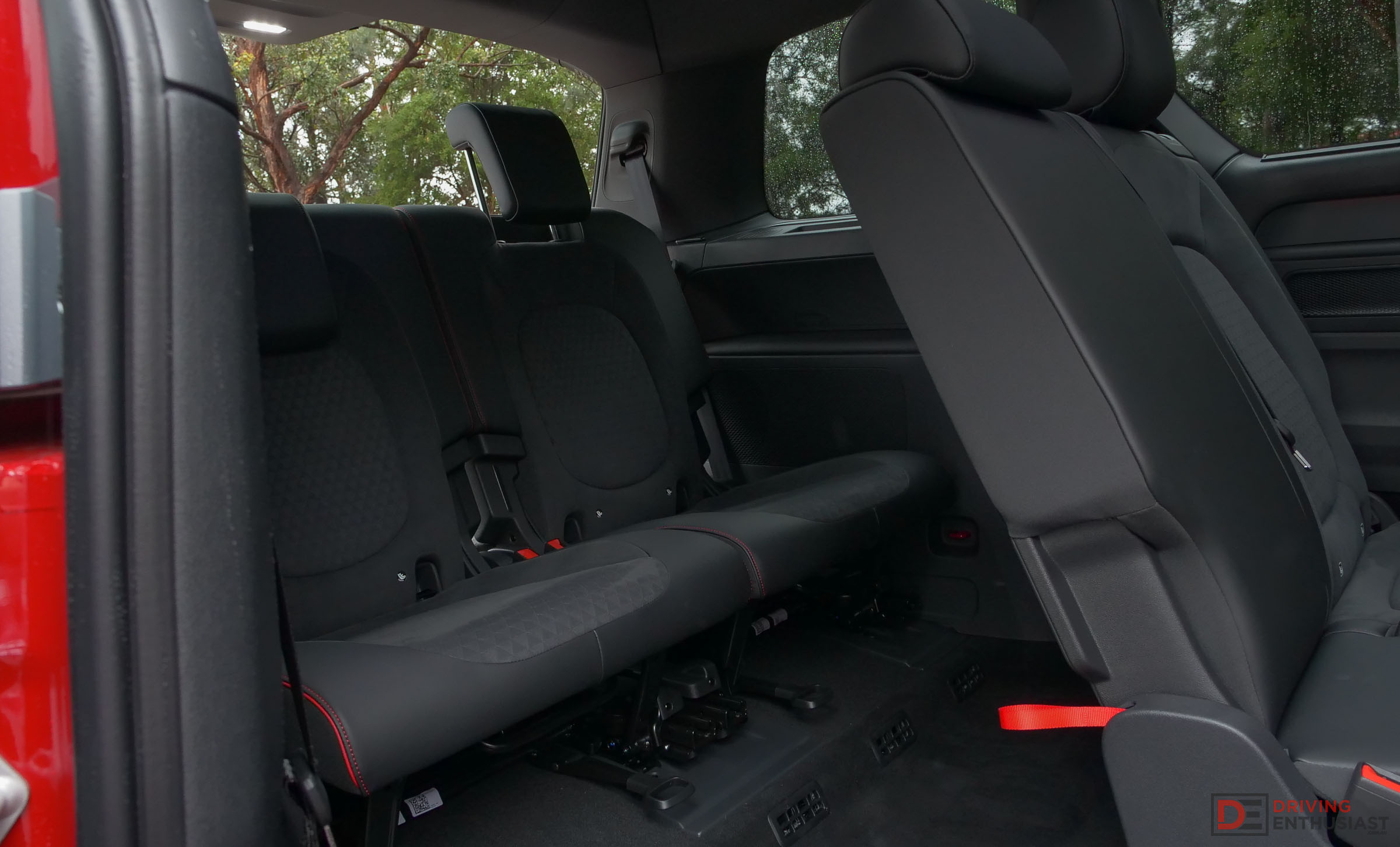
Packaging is where the ID. Buzz makes the strongest case for itself. Space for occupants in all rows is generous, helped by the boxy silhouette and that long wheelbase. The sliding door openings are 948mm wide and 1162mm tall, and the tailgate opening is 1275mm wide and 1096mm tall, which makes loading people and gear so effortless and highlights the packaging efficiency inherent to an EV platform.
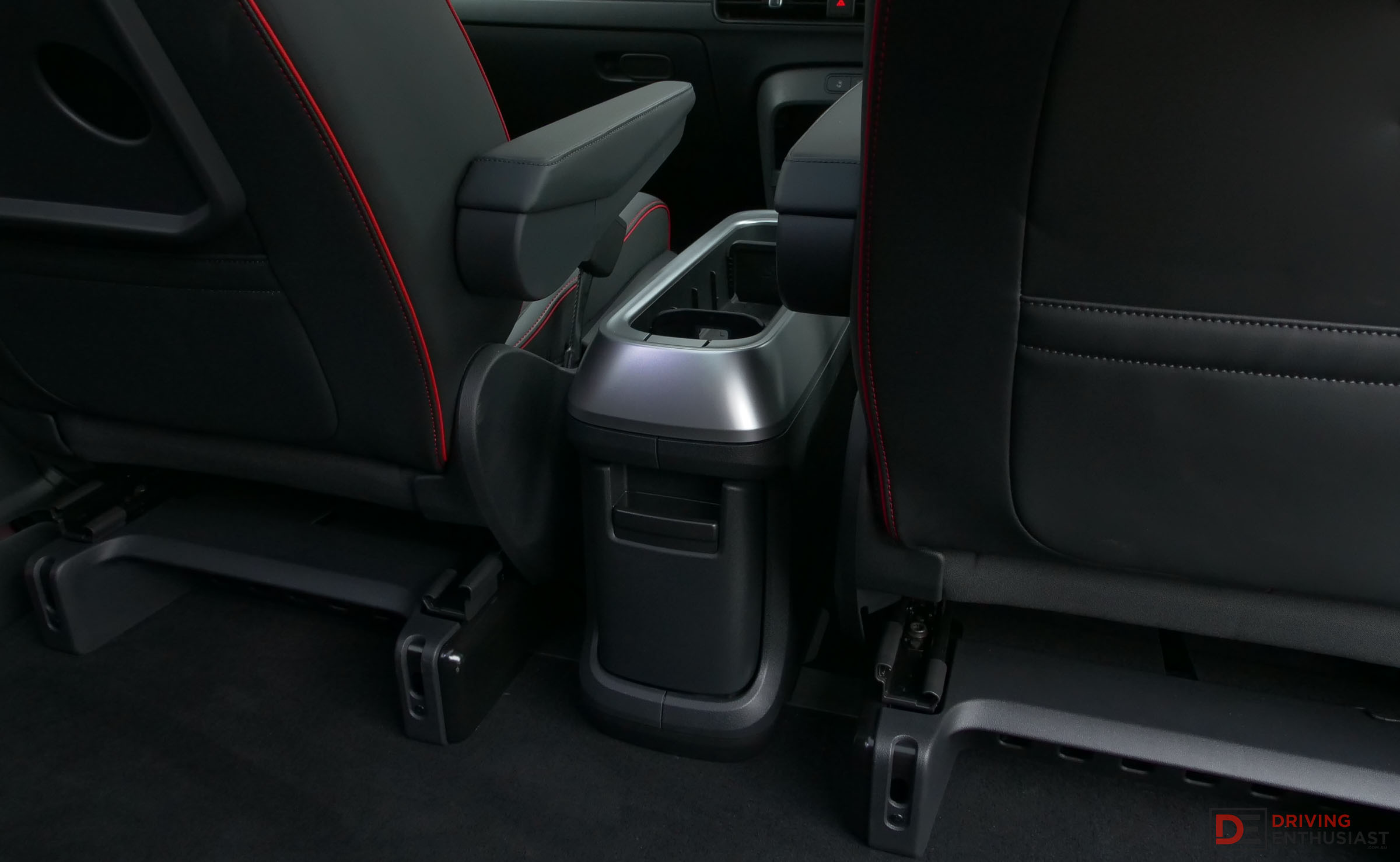
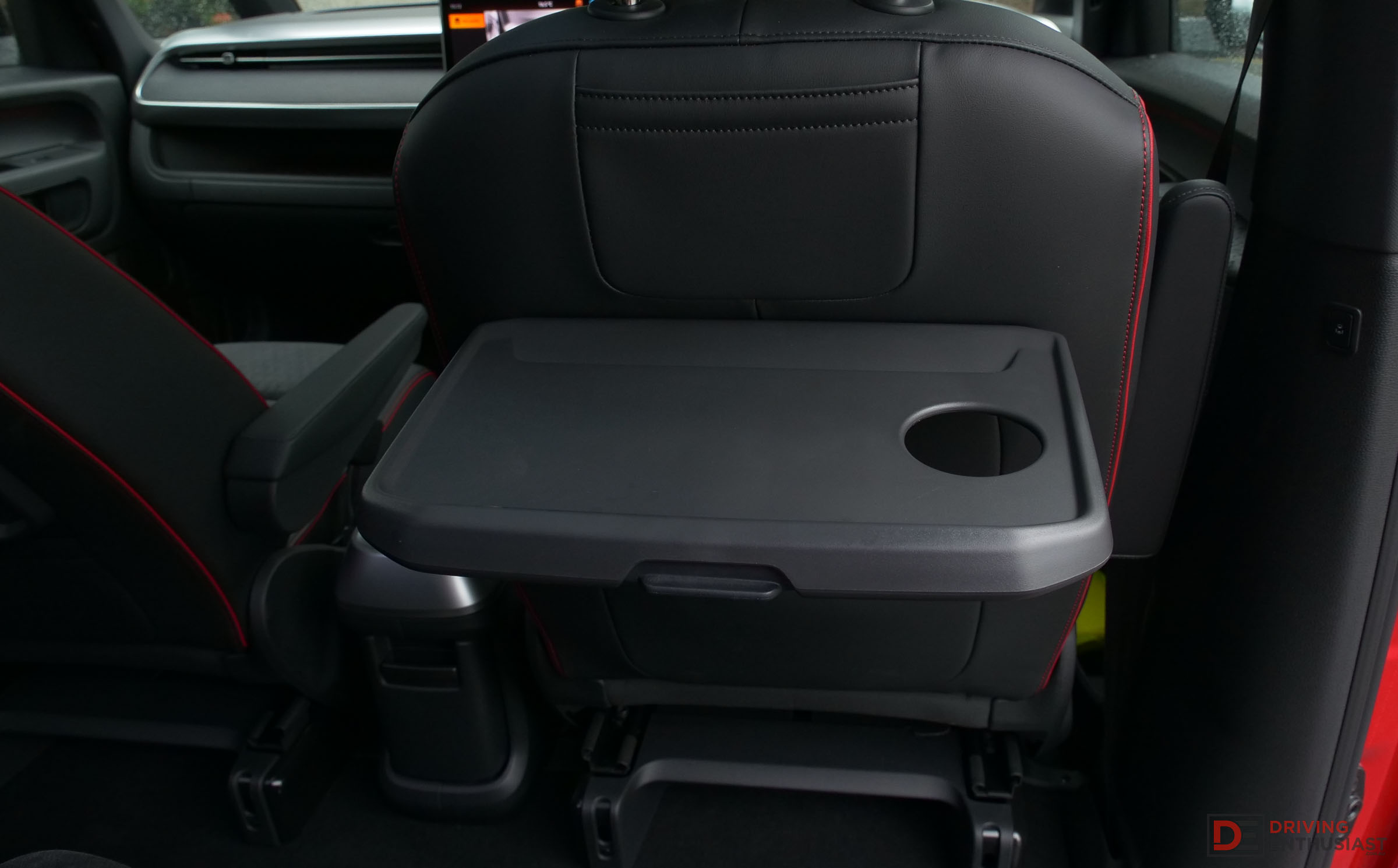
If you have kids, there’s ISOFIX and top-tether points for the second row and third row in the LWB. Up front, Volkswagen’s “Buzz Box” removable centre console can shift back and forth, and we especially like the phone storage solution, which sits neatly in its slot and subtly makes you feel less inclined to constantly reach for your smartphone. It will get hot, however.
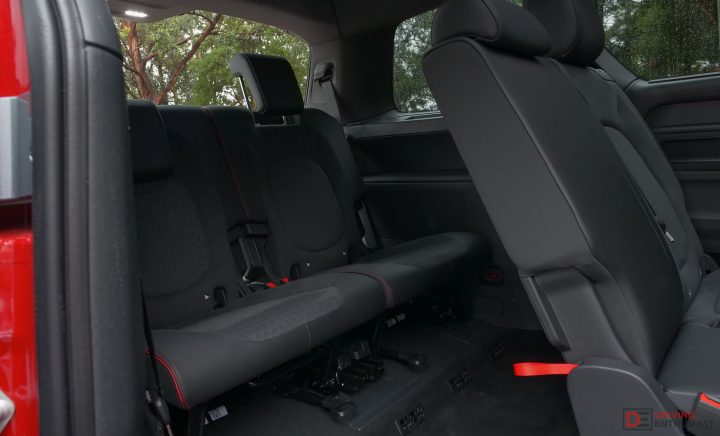
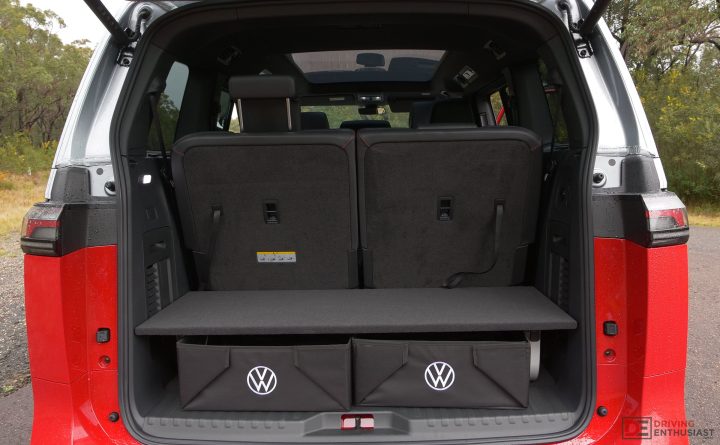
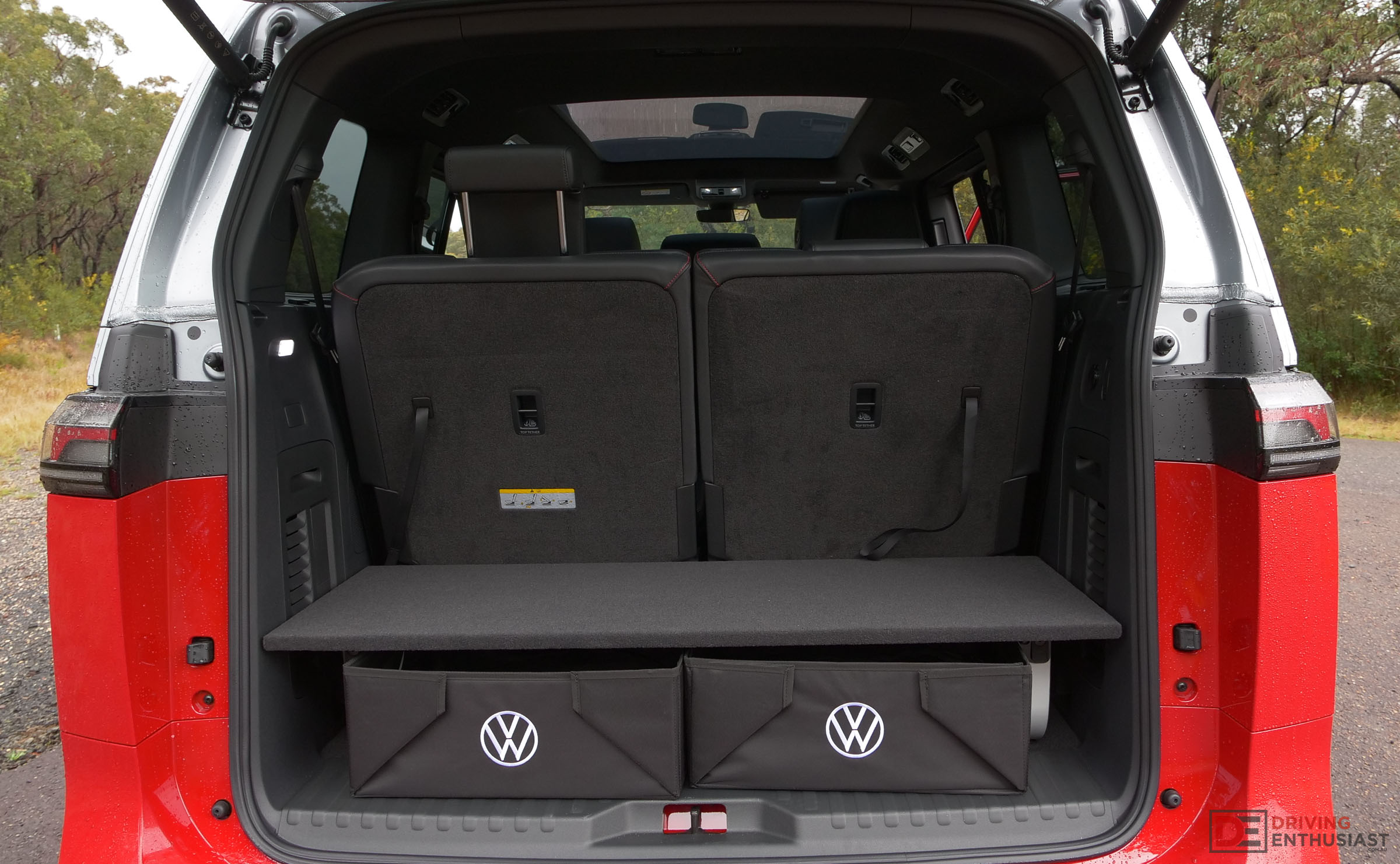
Boot space is not particularly impressive for this style of vehicle, with an official capacity of 306L with all three rows up. That expands to 1340L with the third row down, and 2469L with both rear rows down. Some buyers might be disappointed to see you can’t fully adjust all three rows, as with other people-movers that have rails extending further along the floor.
How safe is the 2026 VW ID. Buzz? Safety equipment is extensive, with features including AEB with pedestrian and cyclist monitoring, adaptive cruise with stop/go, lane assist, blind-spot style support via Side Assist functions, surround-view camera, and proactive occupant protection. Airbag coverage includes front, side and curtain airbags plus a centre airbag. It’s worth noting that ANCAP assessed the ID. Buzz passenger version in 2022. It scored five stars.
2026 Volkswagen ID. Buzz GTX: Powertrain & handling
This is where things start to get a bit iffy. I am of the firm belief that once you get past a certain size and weight with an electric vehicle, the power consumption penalty becomes prohibitive and you reach the law of diminishing returns.
Luckily, the 2846kg behemoth sports a 0.285Cd drag coefficient, which helps a little bit. Still, official consumption of 21.2kWh/100km is optimistic, with 23kWh/100km achieved on test. At highway speeds, it can climb as high as 27kWh/100km – which illustrates my initial point.
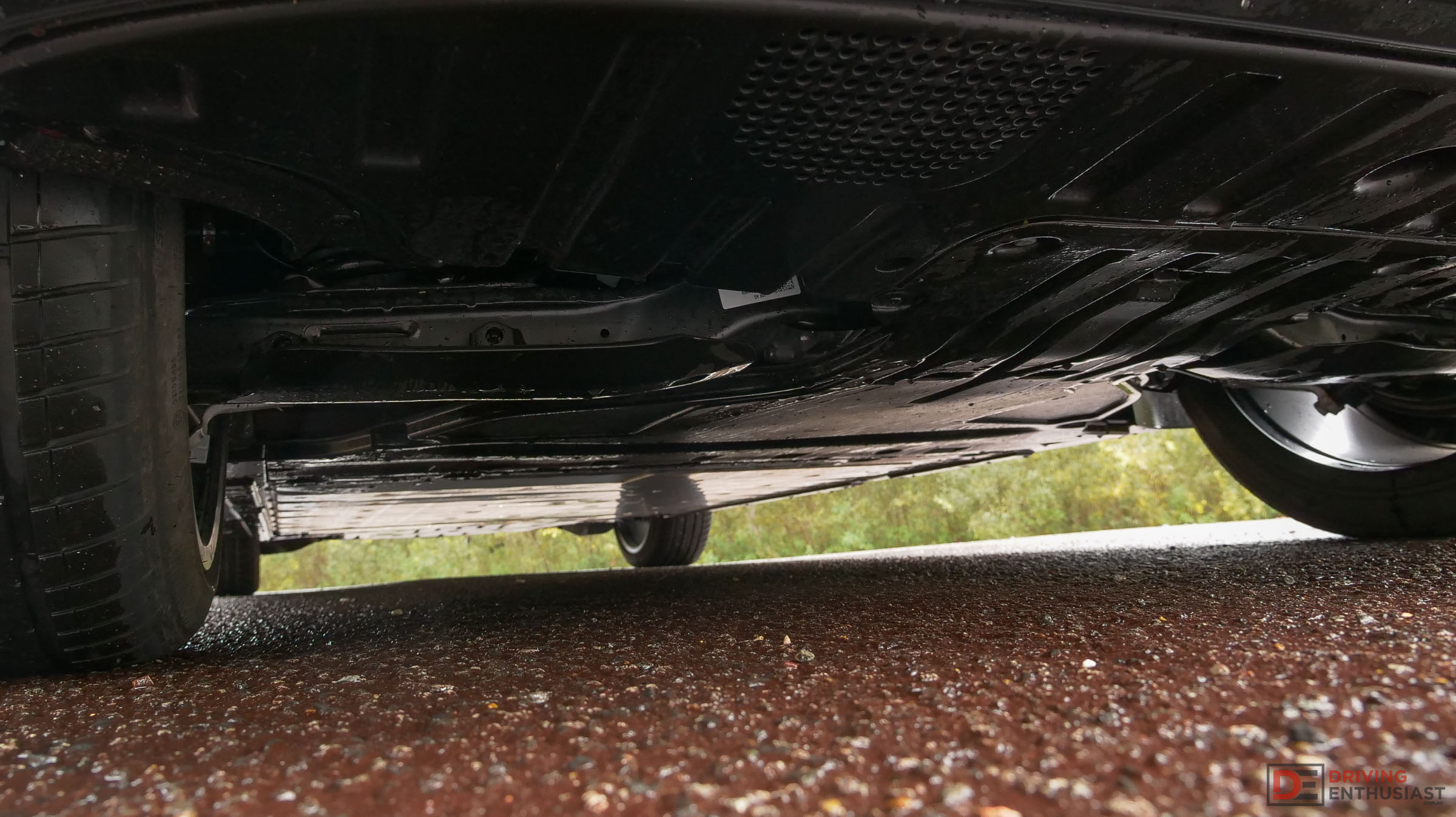
Consider this; the battery pack weighs 558kg according to VW, which, by our calculations, works out to be about 154Wh/kg of usable specific energy. Considering solid state batteries are just around the corner promising double the power density, a lighter battery pack could be used, bringing weight down closer to 2.5 tonnes, which would make the car exponentially more efficient. Until then, the quoted 450km range only applies for intercity jaunts, not long distances where you see around 300-350km if you’re not blasting the air-con, laying the boot in.
Aside from that, it is an extremely pleasurable driving experience. The steering is precise and connected to a capable chassis with oodles of AWD grip, and while it is very heavy, the heft is concentrated within the wheelbase and towards the centre for low polar moment of inertia.
Less confidence inspiring are the brakes. Although it uses discs at the front, rear drums are a head-scratching inclusion and require early and considered input to pull the thing up. Shifting to B mode instead of Drive by default goes a long way to addressing this, with re-gen somewhat compensating for that deficiency.
Nevertheless, this is a vehicle that doesn’t encourage you to hustle it – much like its air-cooled grandfather. It is best enjoyed as a fun scenic box that puts a different spin on every journey, with adults and kids alike grinning and pointing with excitement as the electric retro bus silently wafts past.
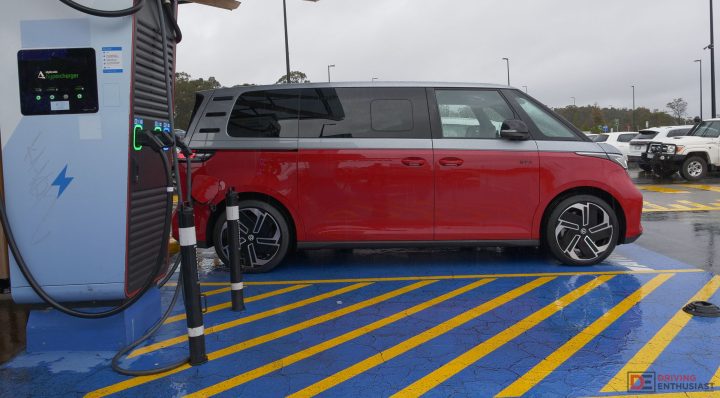
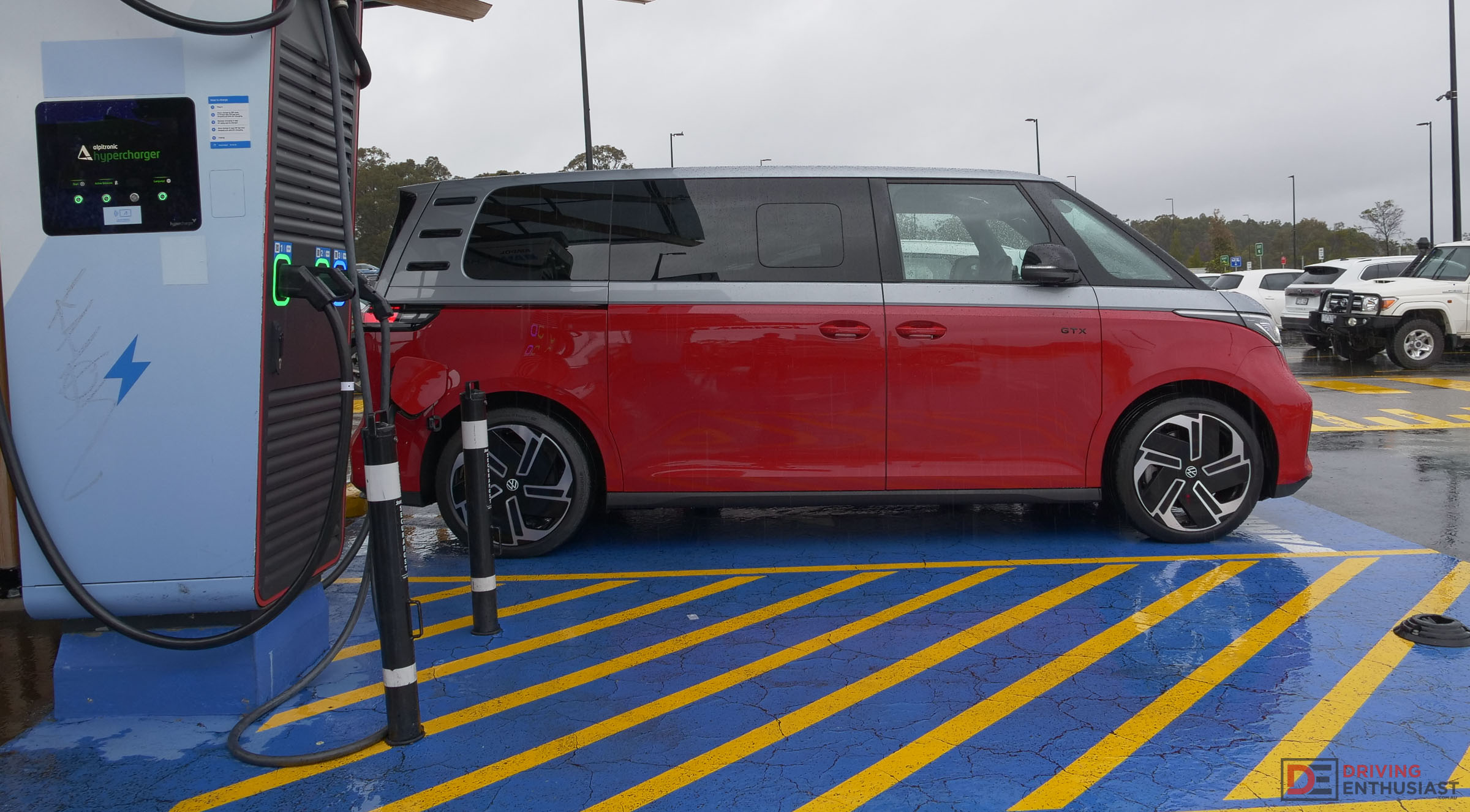
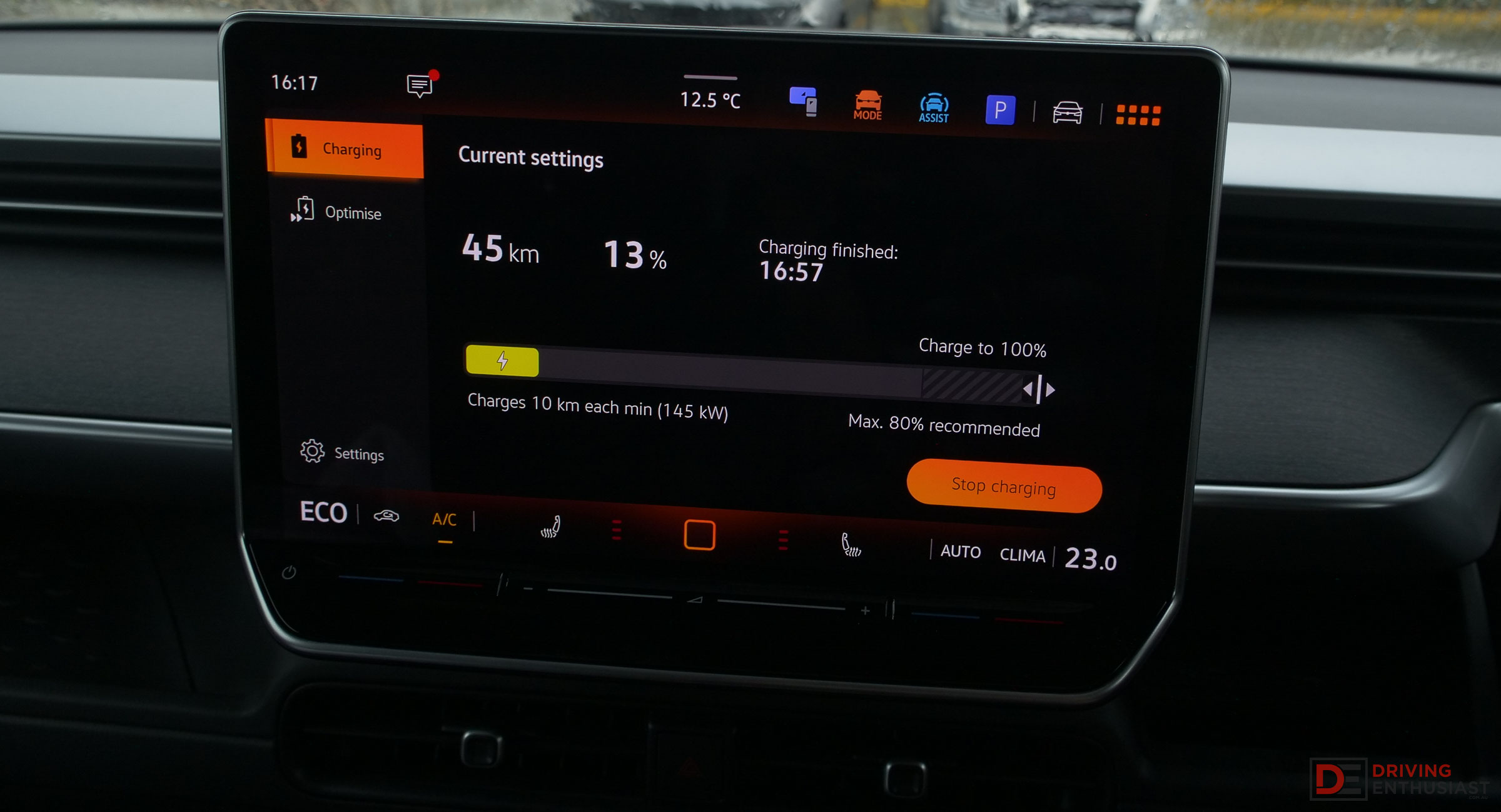
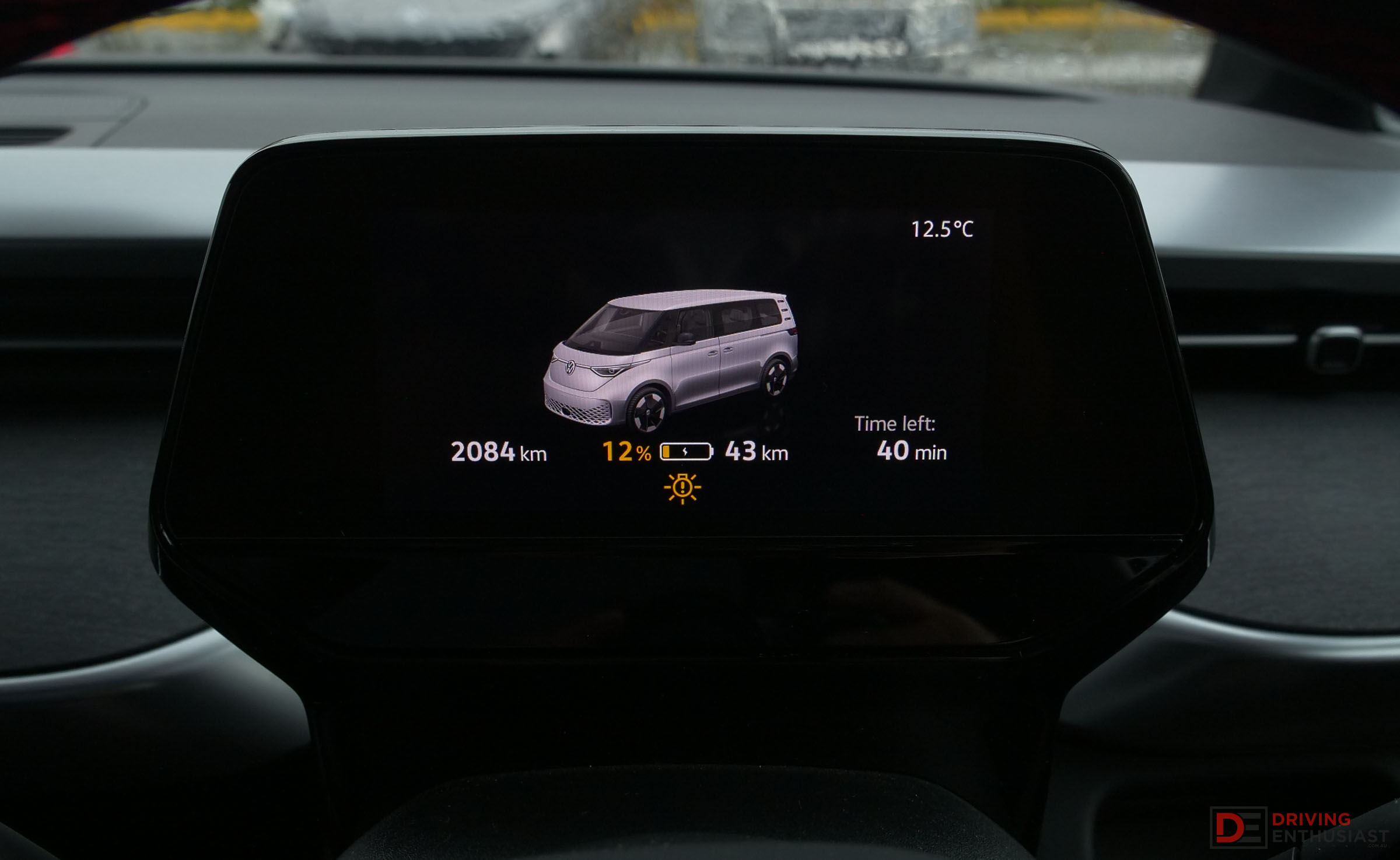
Regarding charging, the maximum charge rate with AC power is 11kW, or up to 200kW with a DC fast-charger. Both figures are reasonable for a modern EV, albeit not class-leading – some can take in 350kW.
2026 Volkswagen ID. Buzz GTX: Key attractions/reasons to buy
- Real-world space and visibility: The LWB packaging, big glasshouse, and easy access make it a genuinely practical seven-seater.
- Calm, predictable road manners: Steering and chassis tuning make it easy to place and surprisingly composed for its size. Excellent AWD grip as well, even in the wet.
- Distinctive design with clever touches: The minimalist cabin concept and details like the Buzz Box phone slot give it day-to-day personality.
2026 Volkswagen ID. Buzz GTX: Key considerations before you buy
- Brake feel and confidence: Rear drum brakes on a $100k vehicle? Regen obviously helps, but still, we’d expect better from a German-made product.
- Efficiency and range versus weight: While official figures are decent on paper, the vehicle’s 2846kg kerb weight makes consumption a constant consideration.
- Ergonomics and touch controls: Capacitive steering wheel buttons and screen-reliant controls add avoidable frustration.
2026 Volkswagen ID. Buzz GTX: Video
How does it rate against its rivals?
-
Price
-
Quality look & feel
-
Interior tech
-
Powertrain performance
-
Ride & handling
-
X-factor (does it stand out in its class?)
Final word
This is an interesting vehicle in many ways; it looks cool, it’s relatively quick for a people-mover, it can attack corners like a smaller, nimbler vehicle, and it presents typical German build quality. But it is very heavy, expensive, and has a few quirks that require second thought. Definitely worth taking for a test drive, though. It’ll put a smile on your face at the very least.