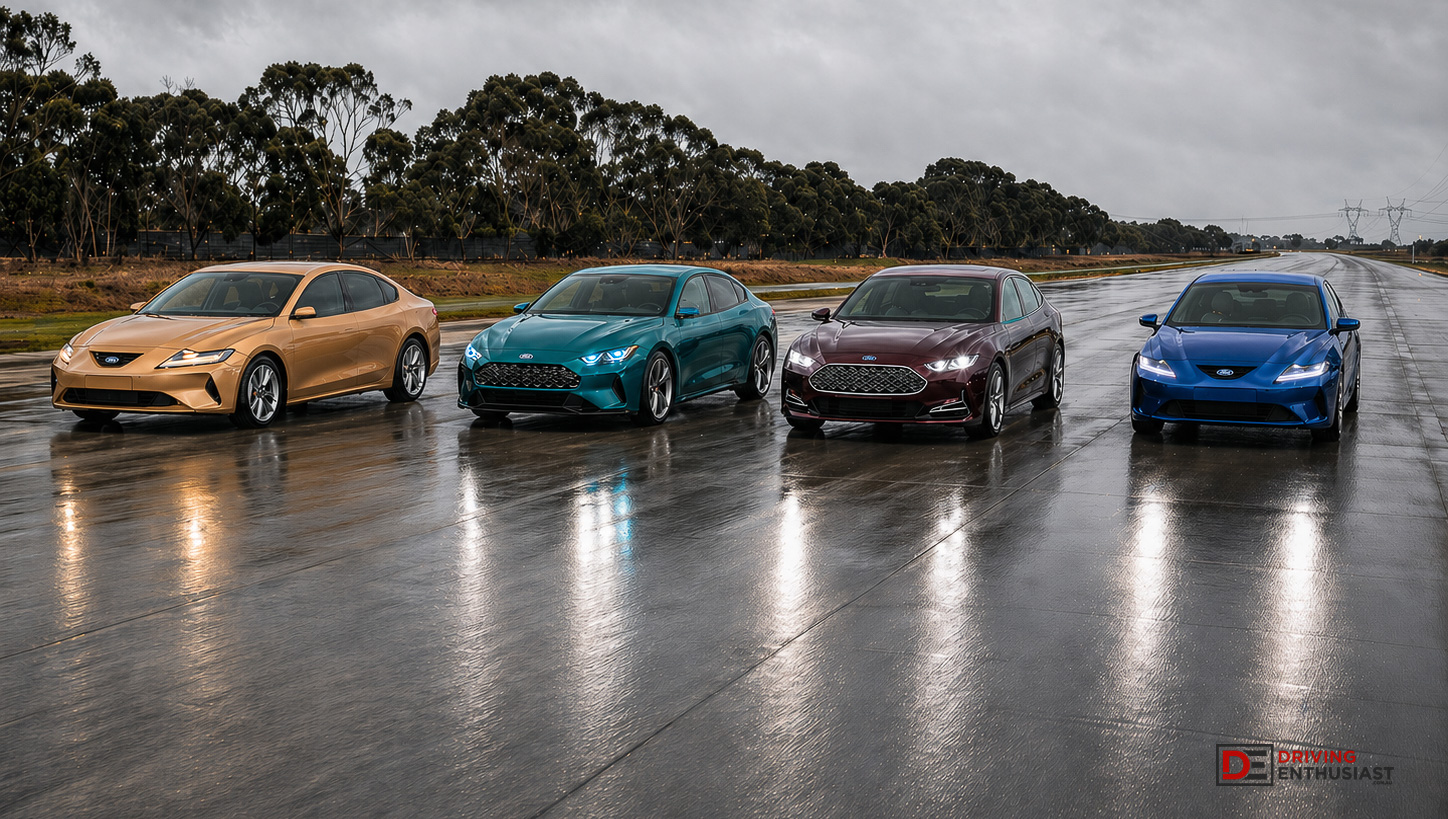
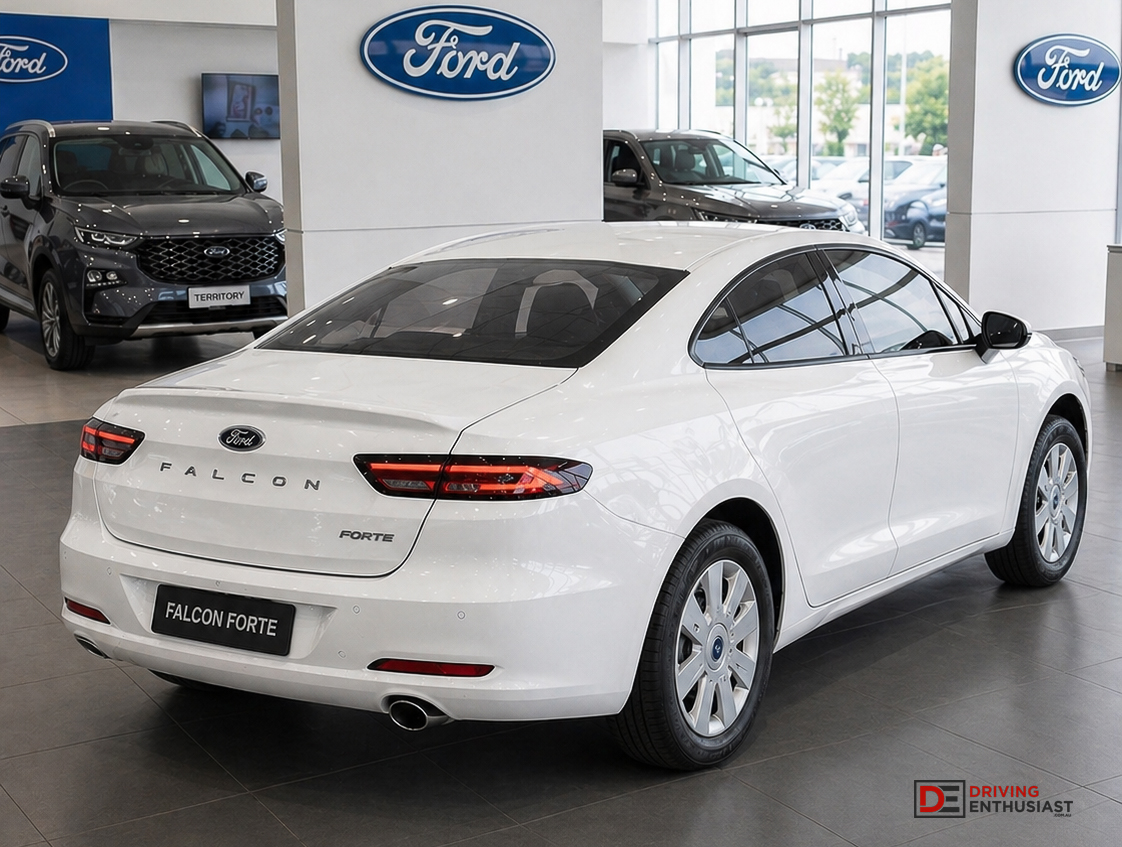
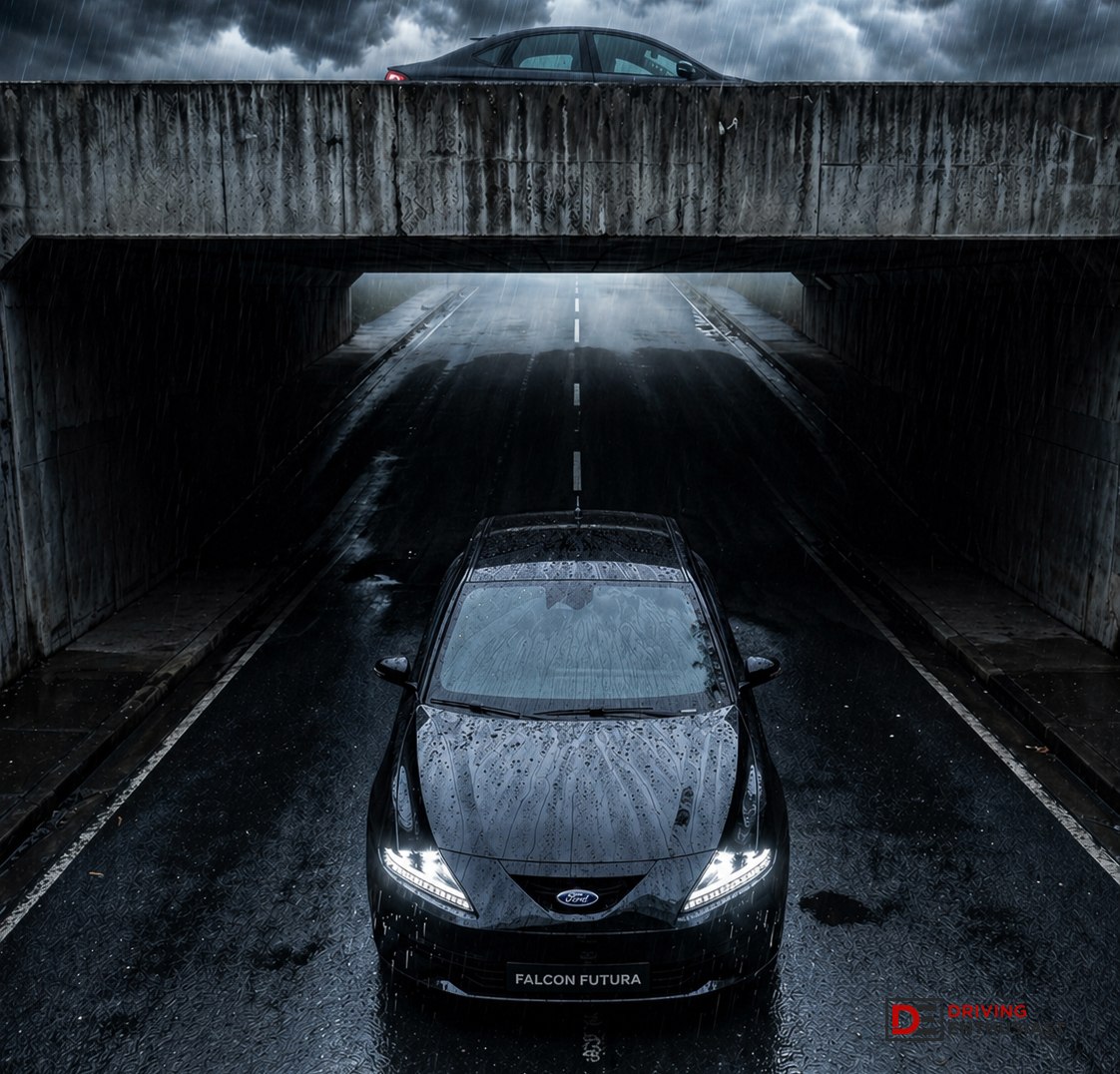
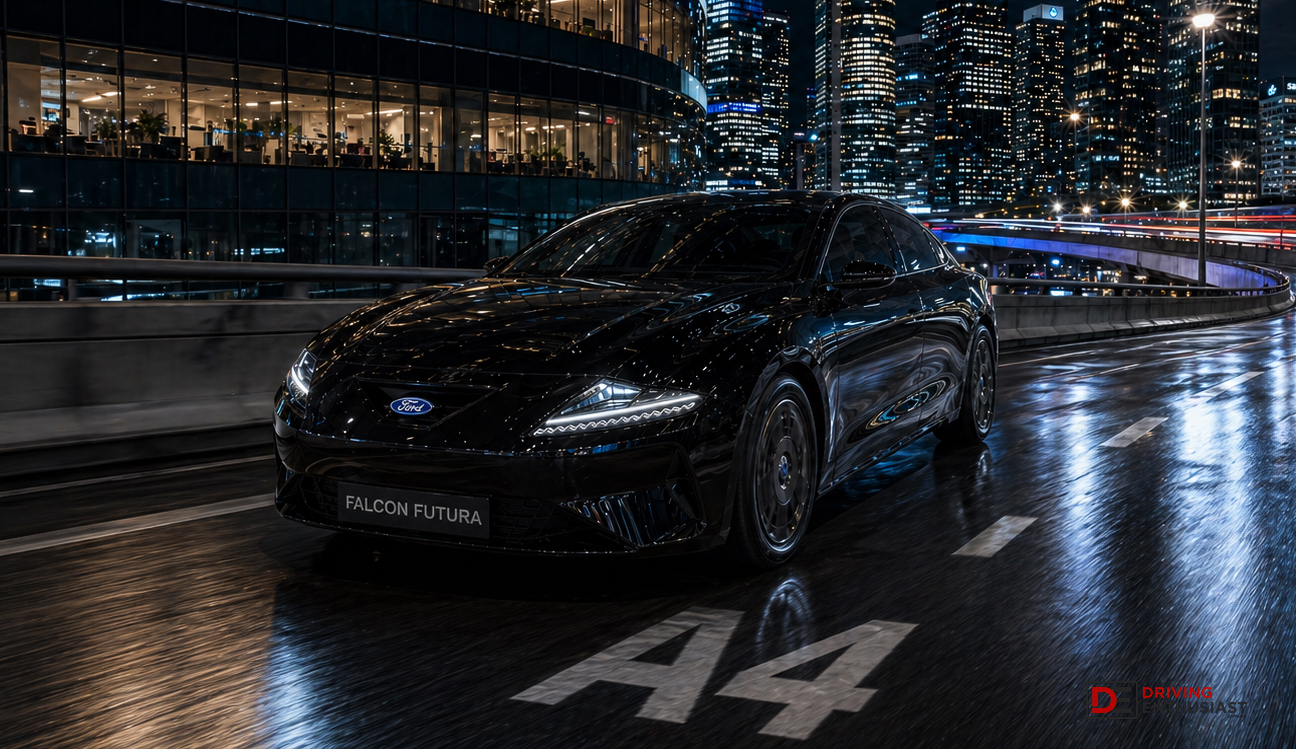
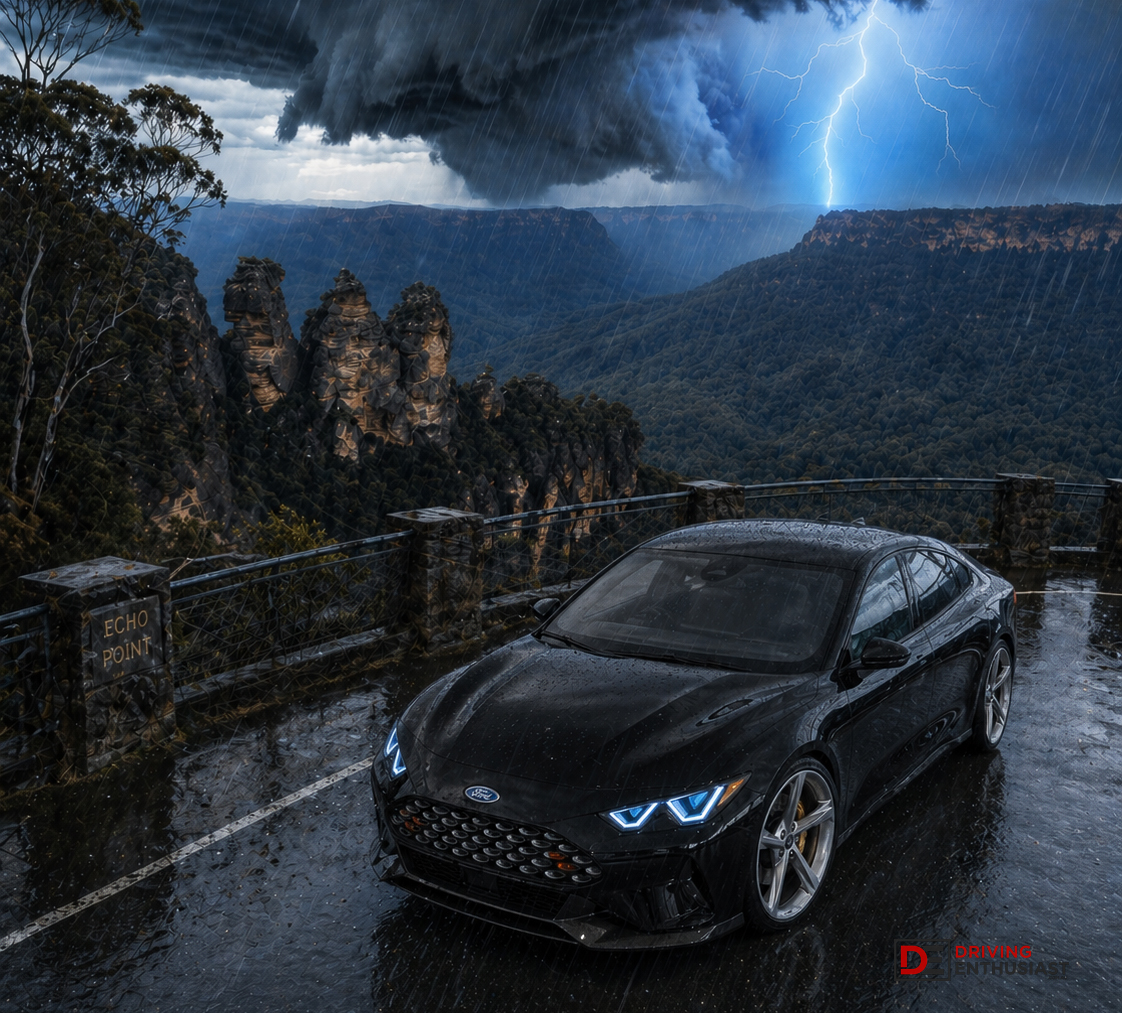
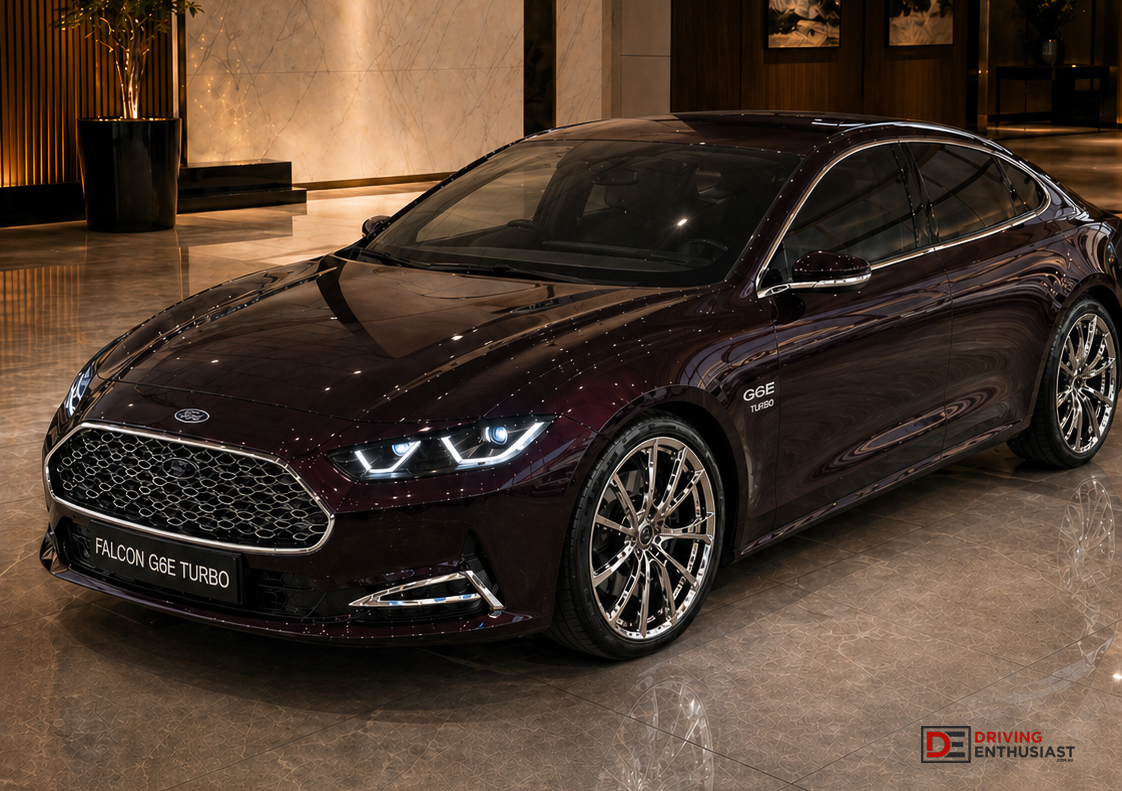
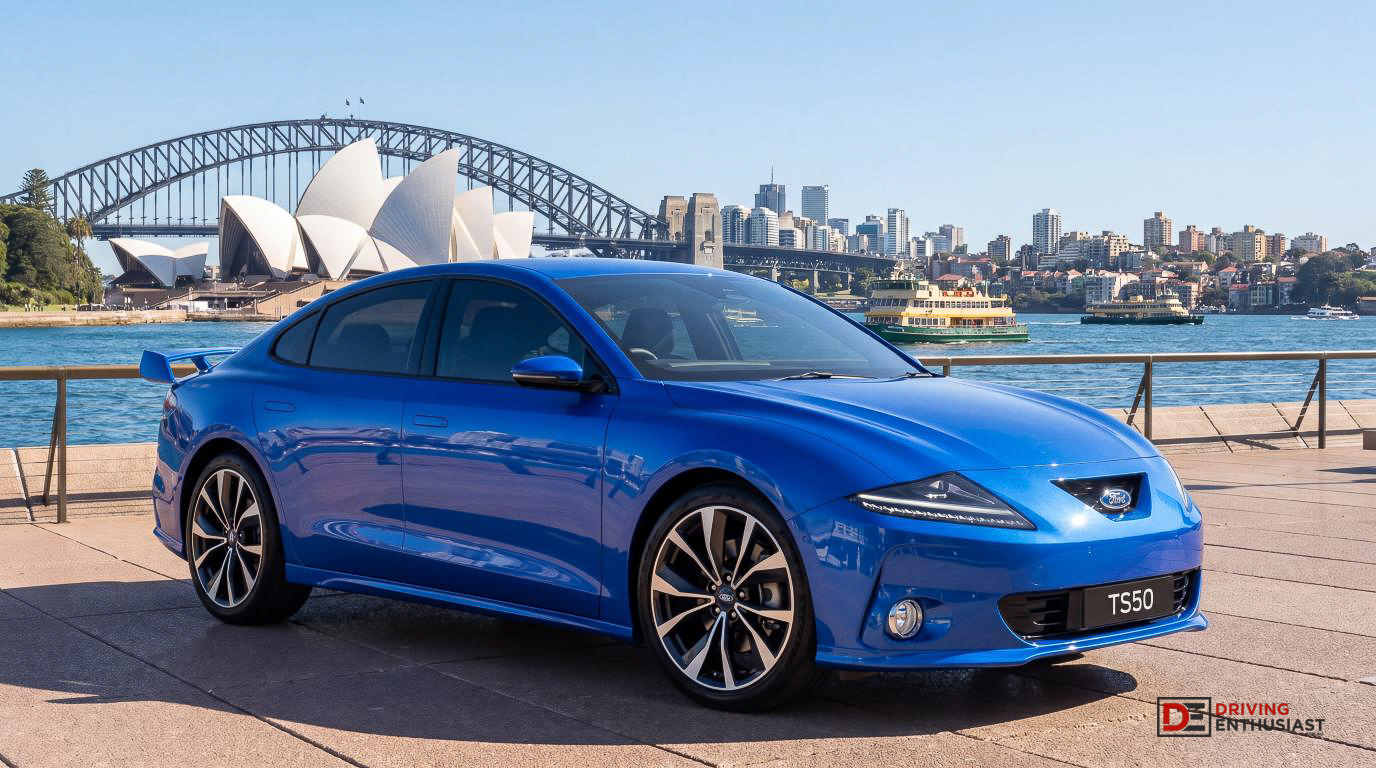
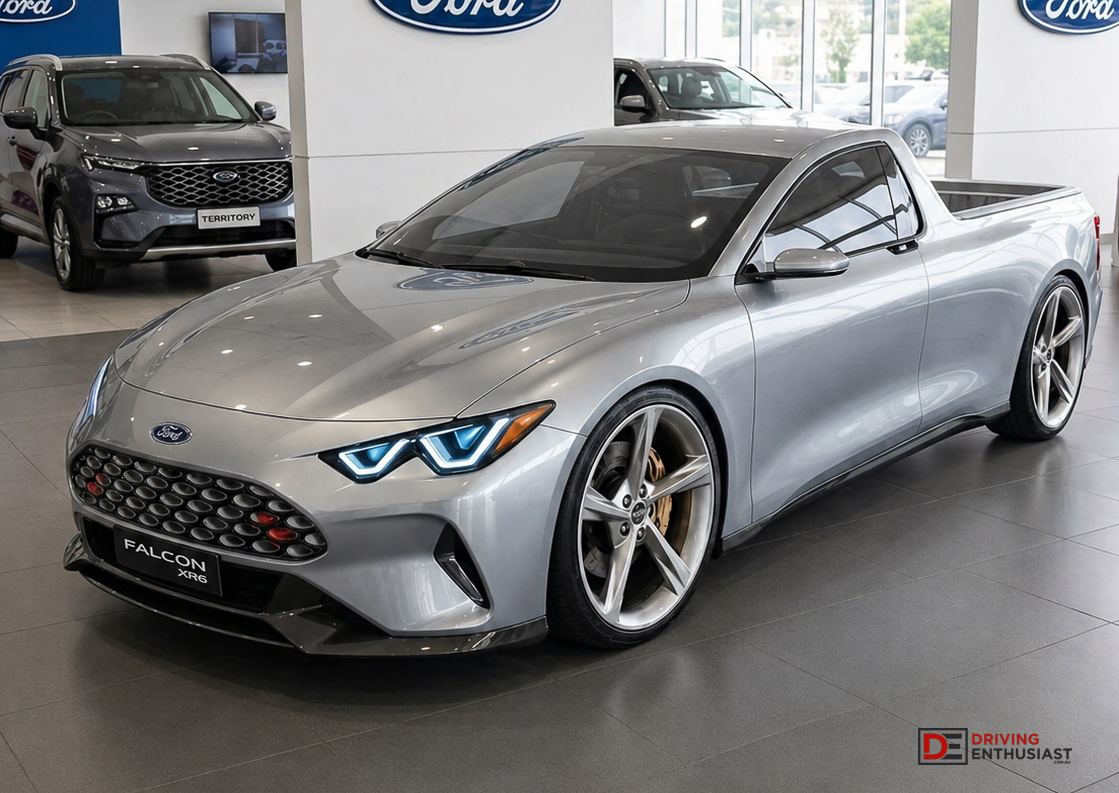
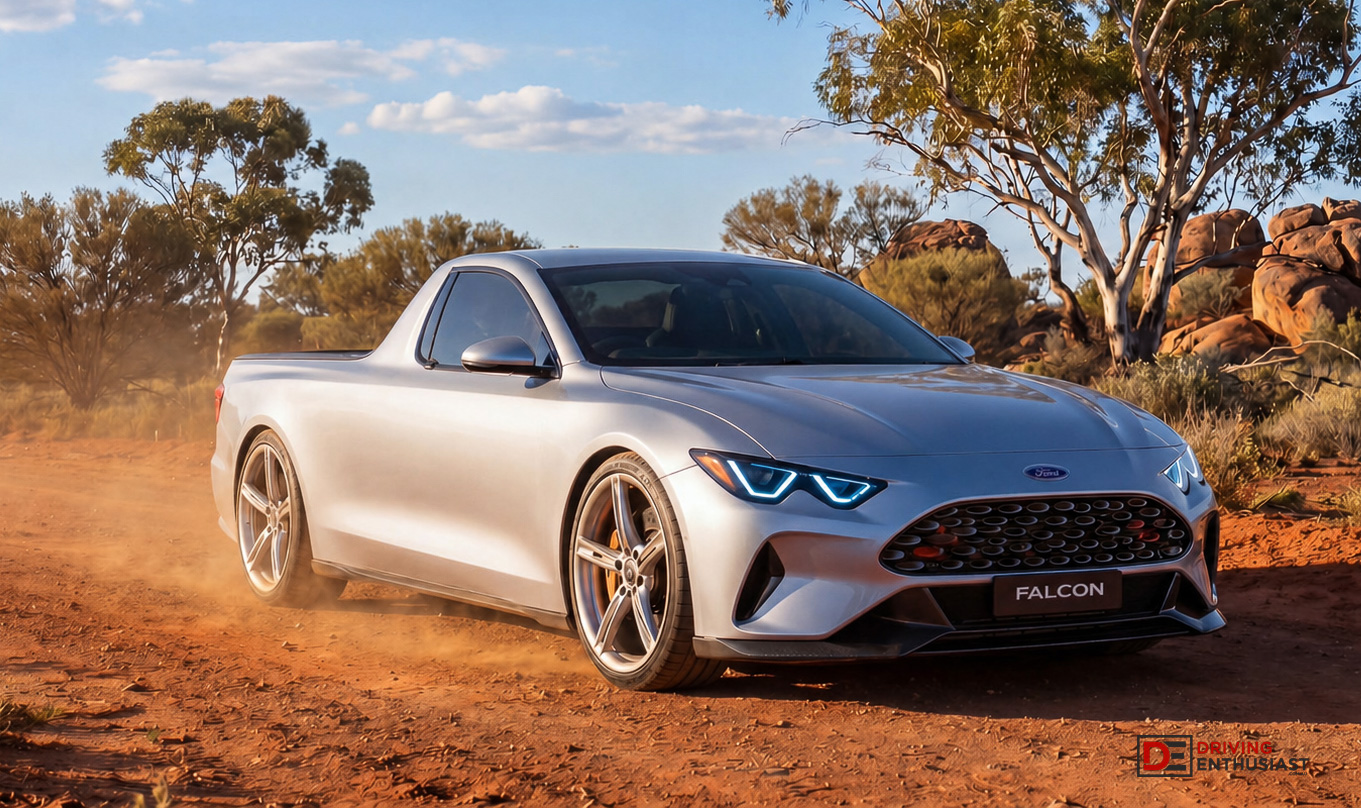
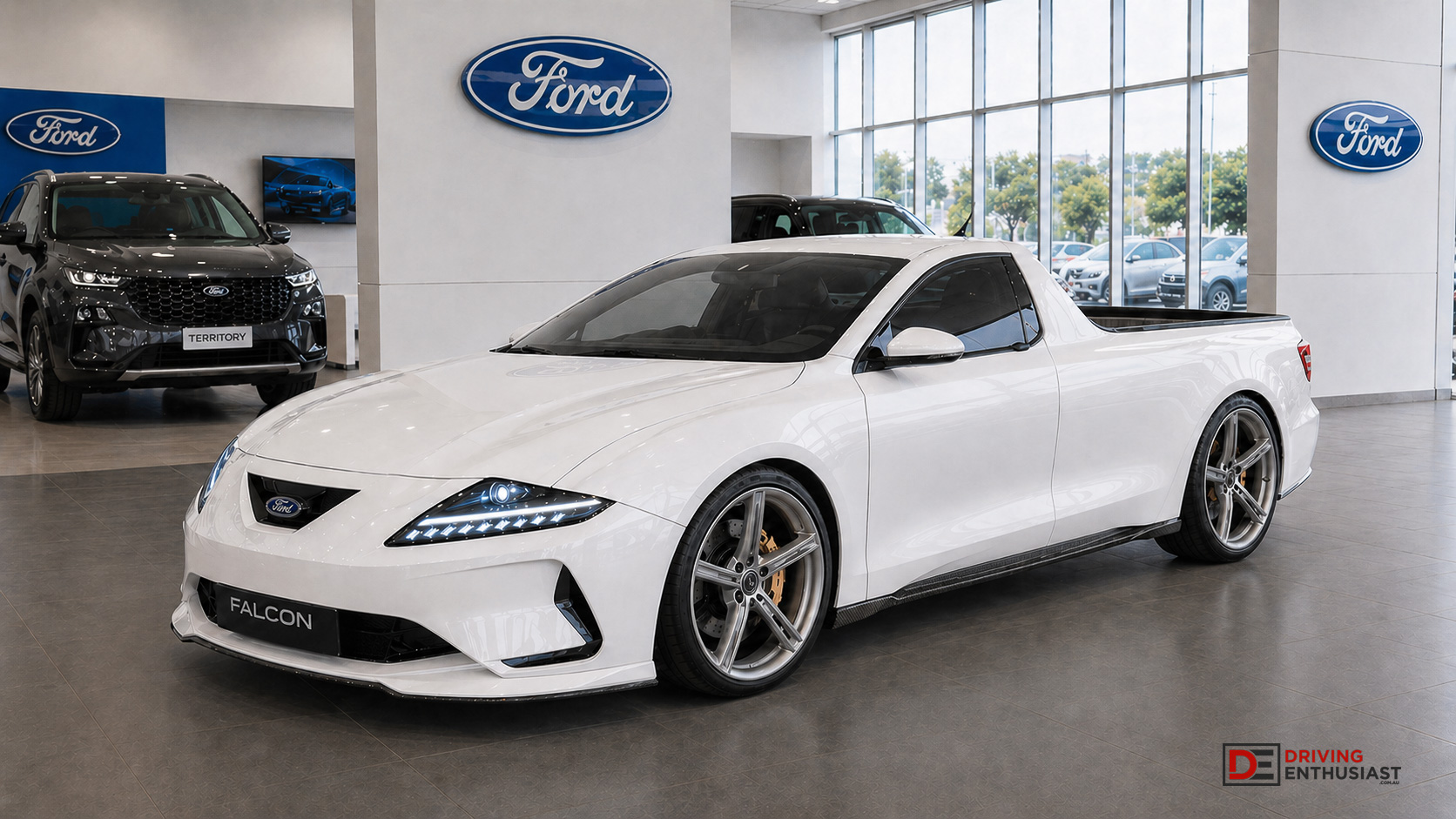
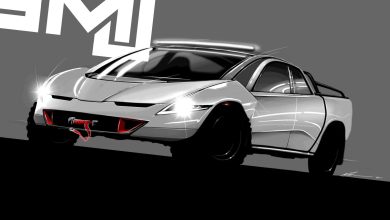
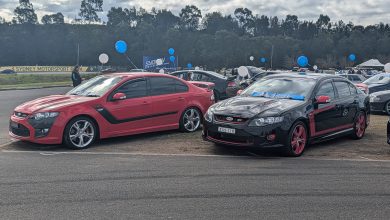
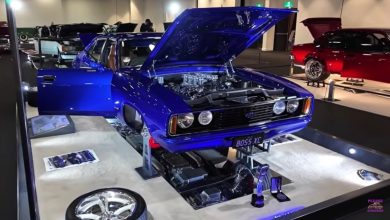
As we drift further and further away from the time when we made muscle sedans in Australia, it’s clear that the passion for Falcons and Commodores has not died down one bit. In fact, even the younger generation are starting to show an affinity for the mighty AU Falcon and tinkering with old Holden Commodores.
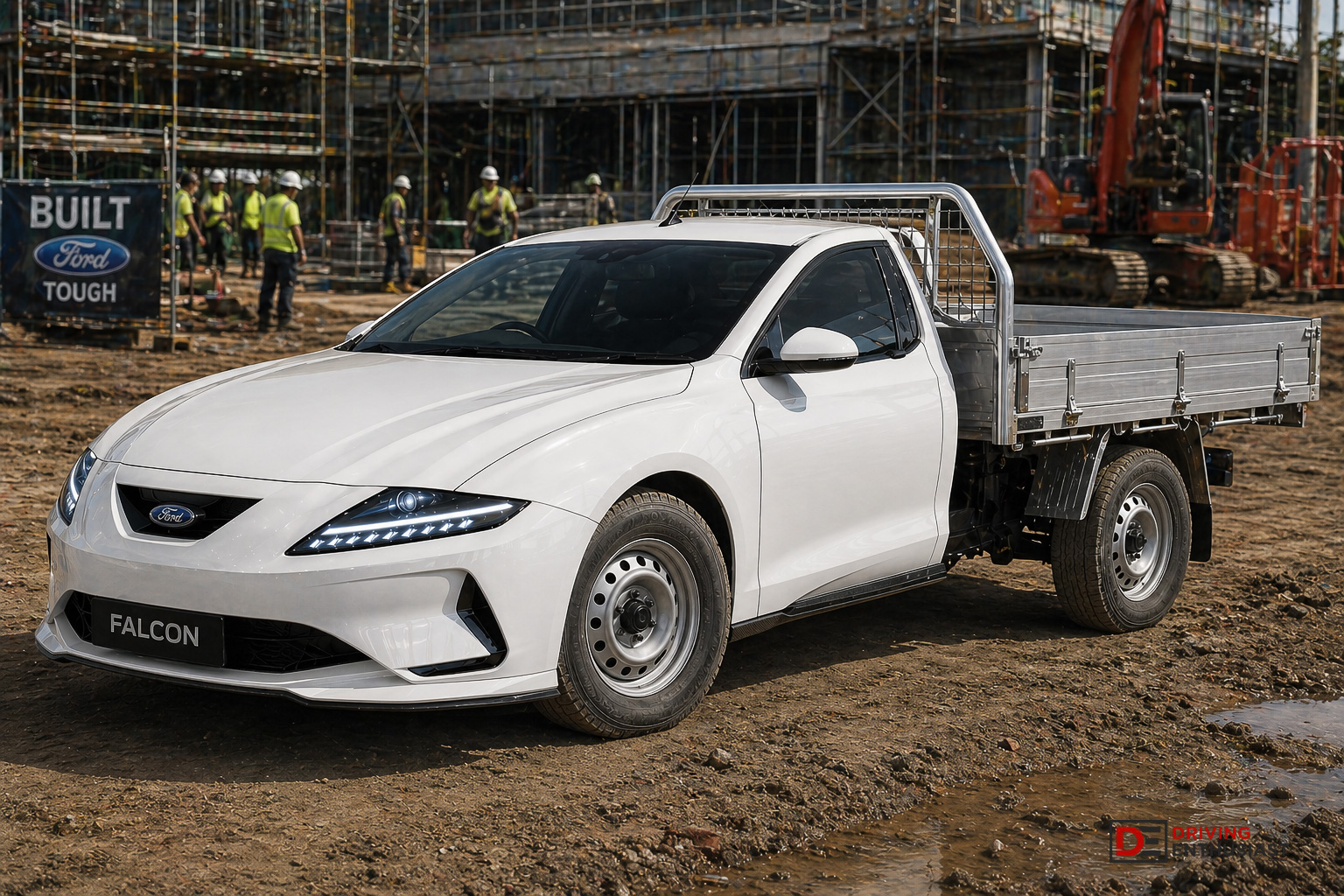
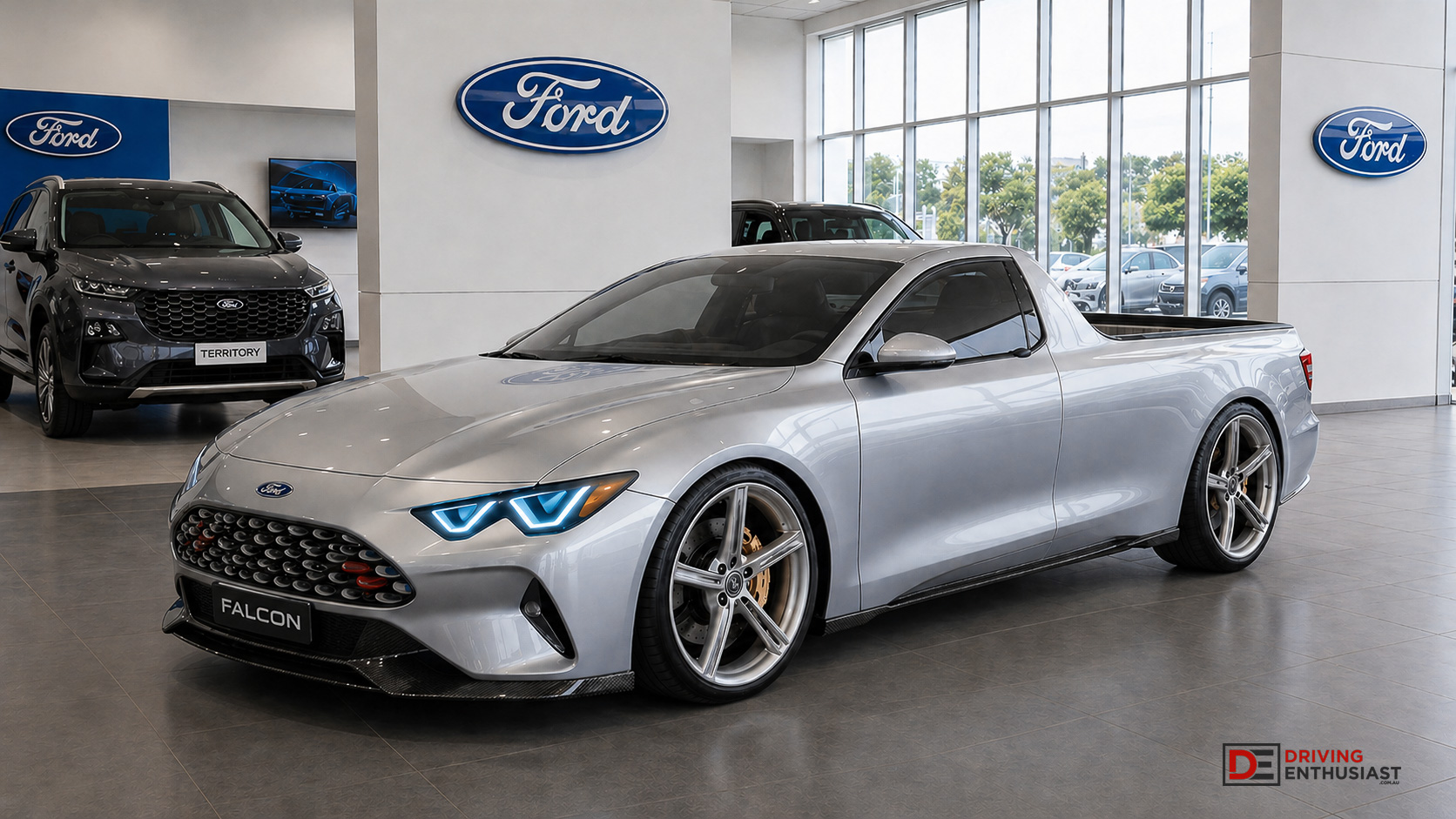
Ford global president, Jim Farley, ruffled some feathers recently by suggesting the Falcon ute could return in some iteration – possibly on Ford’s UEV platform. A cruel tease if just empty rhetoric to work the media crowd, but us Aussie car enthusiasts will clutch onto any sense of hope, not matter how futile.
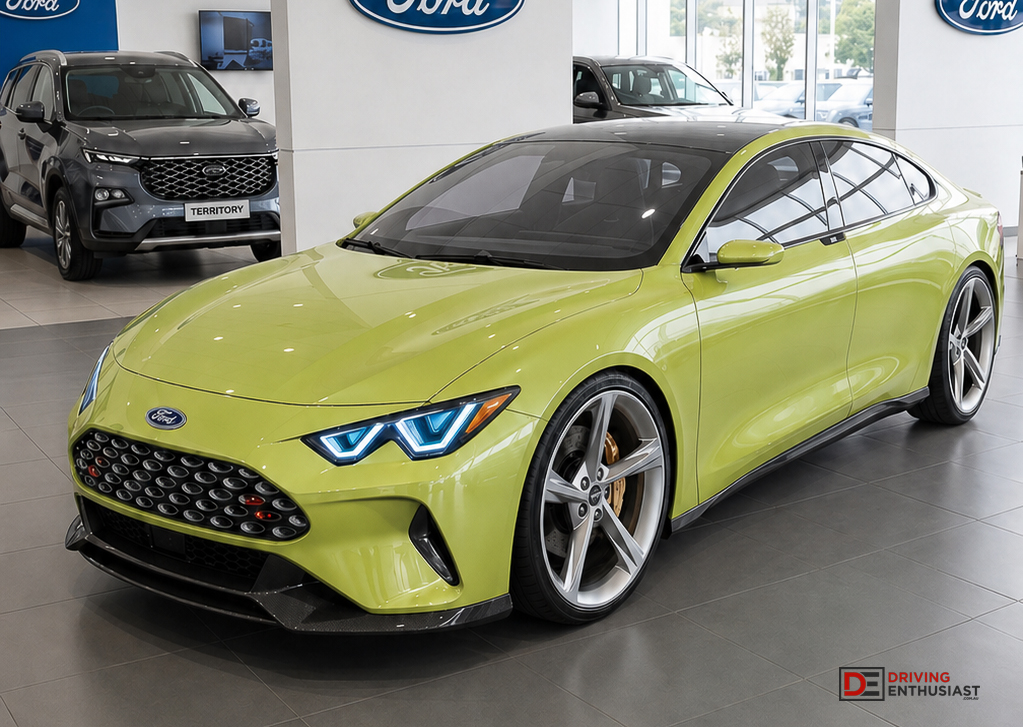
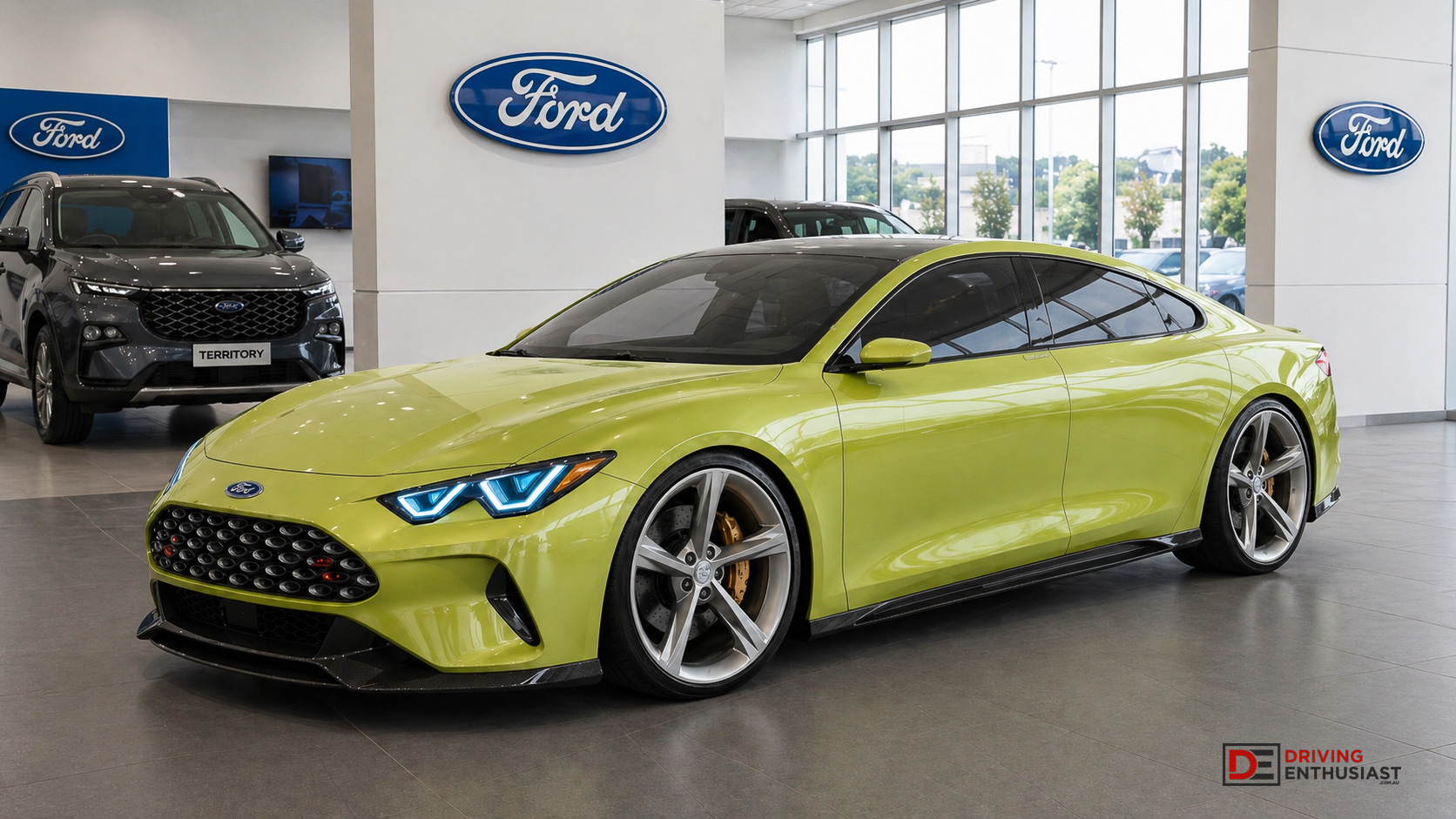
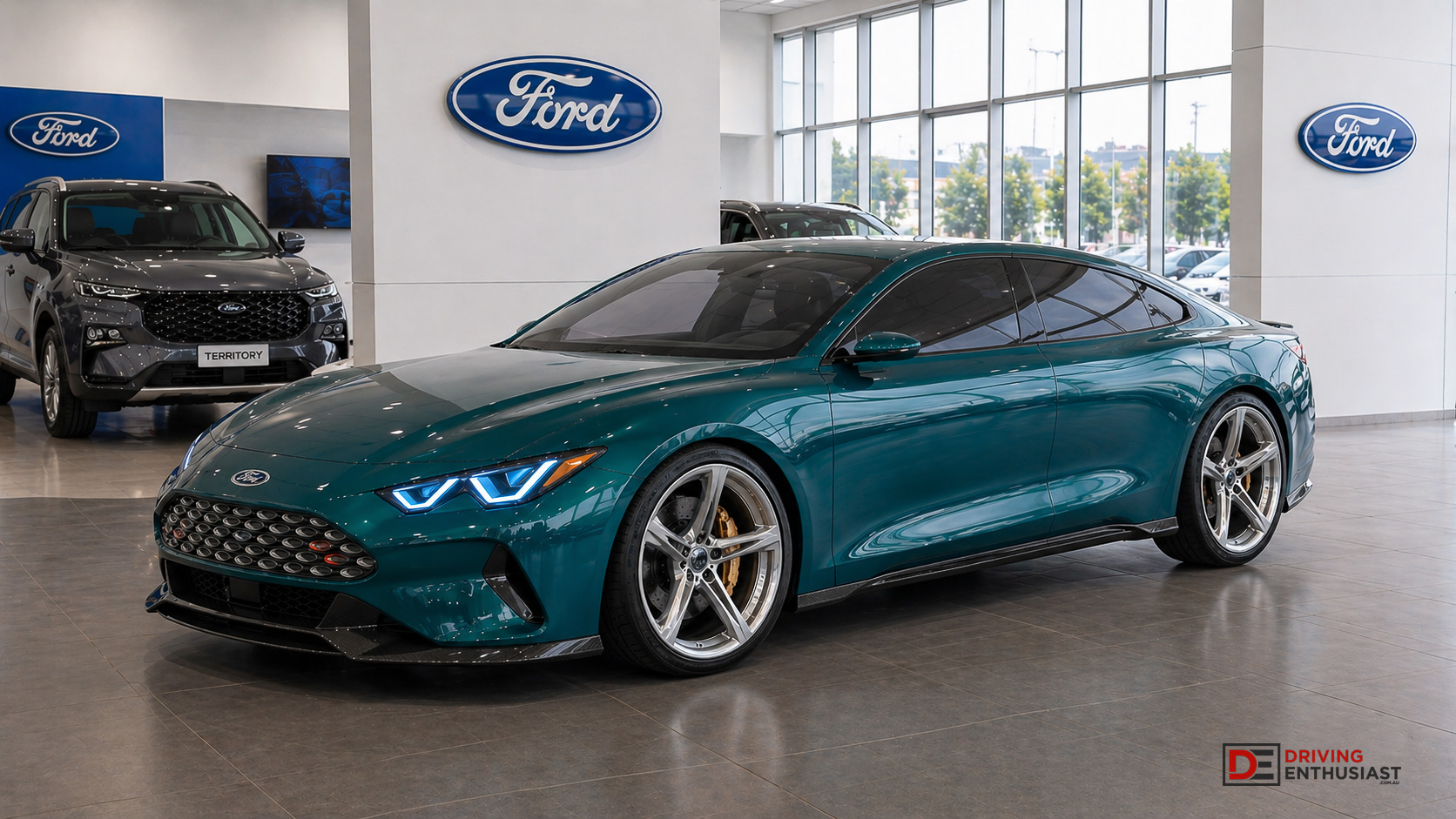
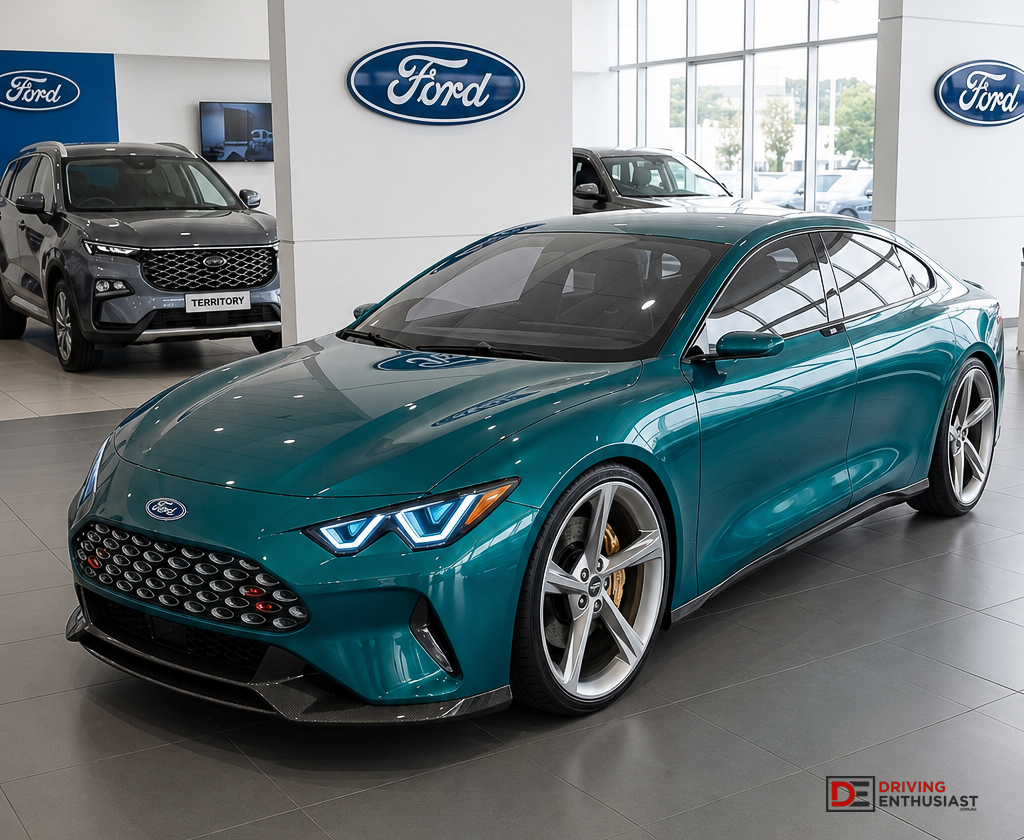
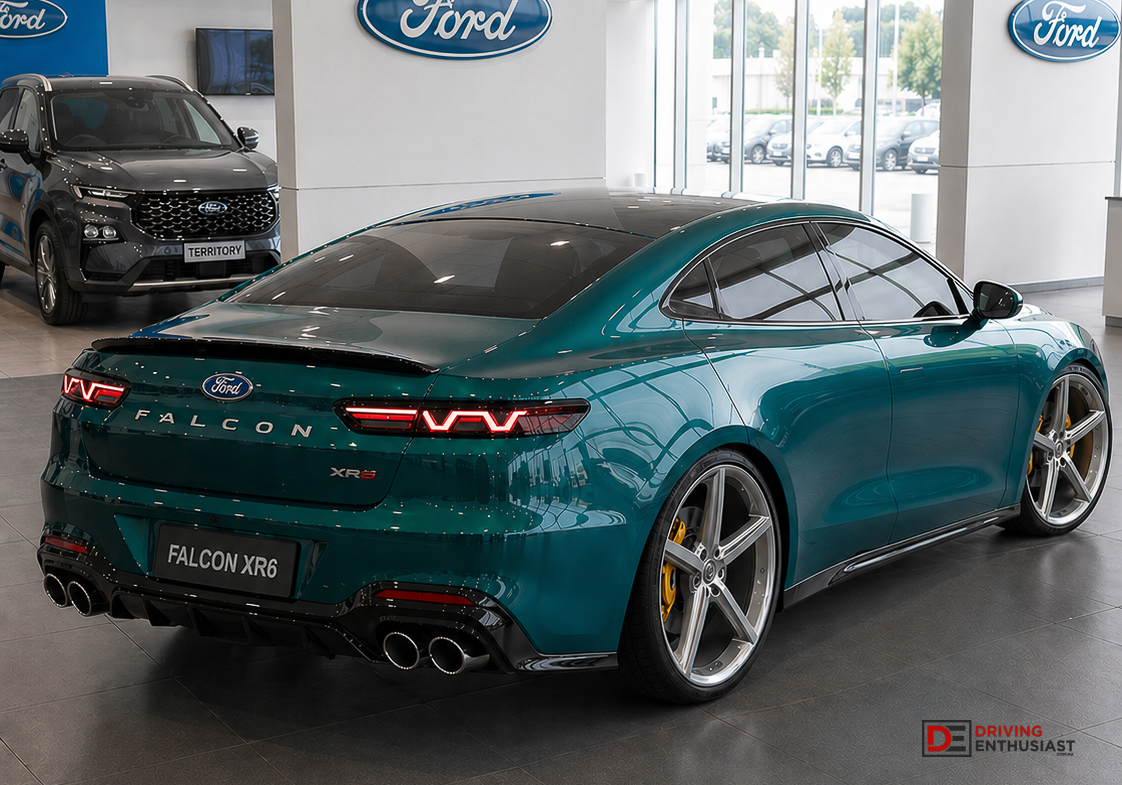
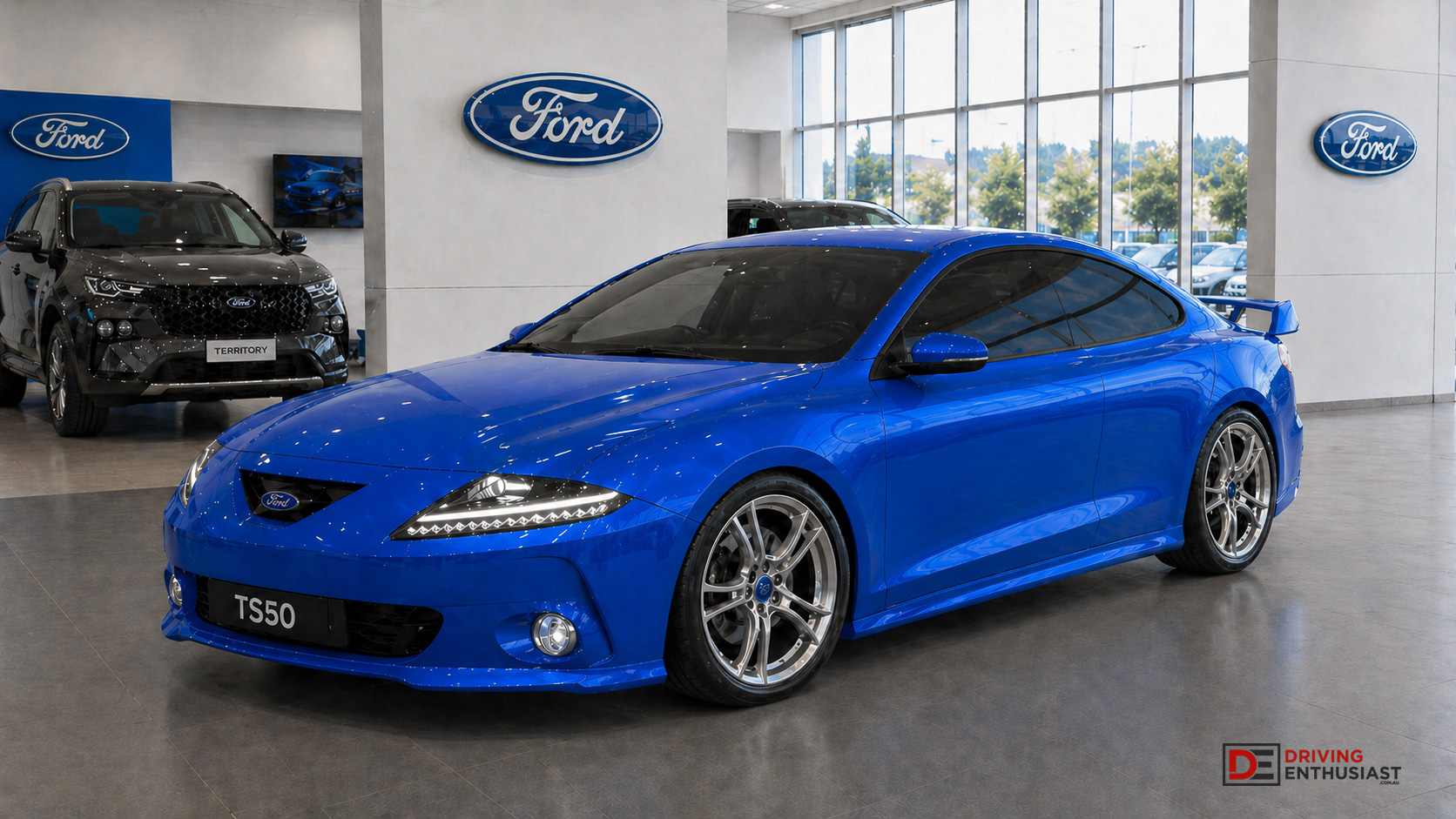
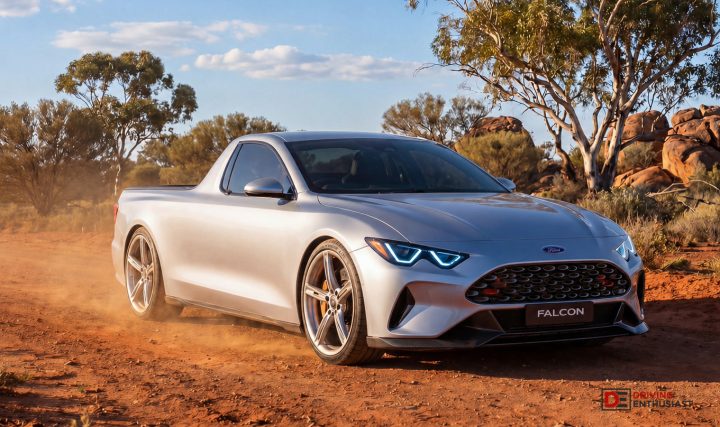
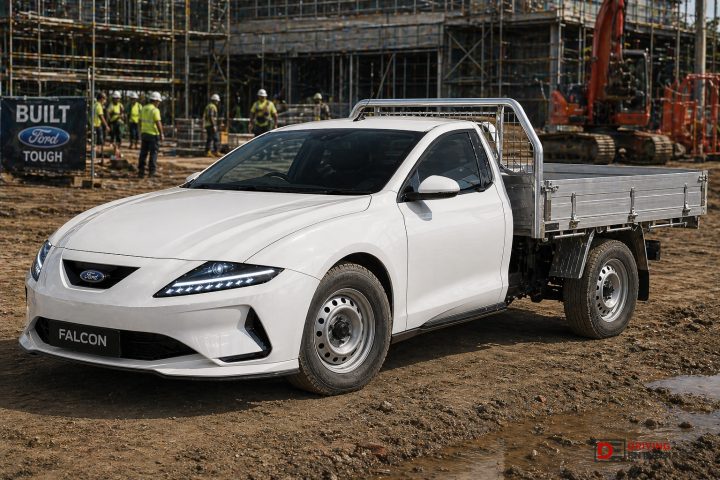
It inspired us to make a video, which then led to a combination of sketching and various LLMs down a rabbit hole to create what I believe to be the ideal iteration of a new Falcon if it returned. Naturally, I couldn’t just leave it at one ute; I got very carried away with other variants as well.
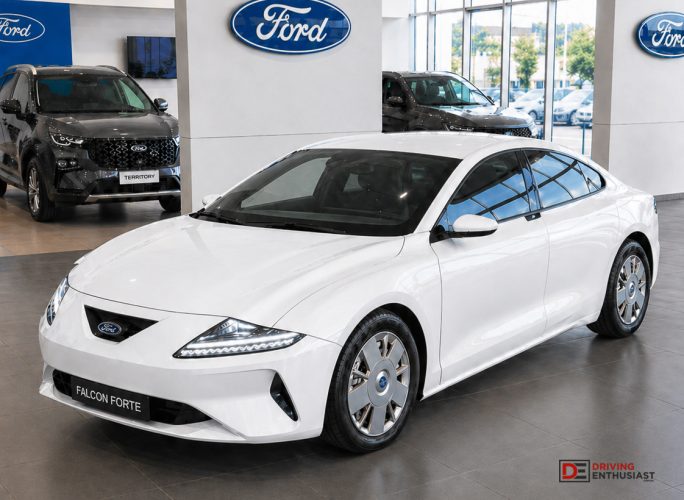
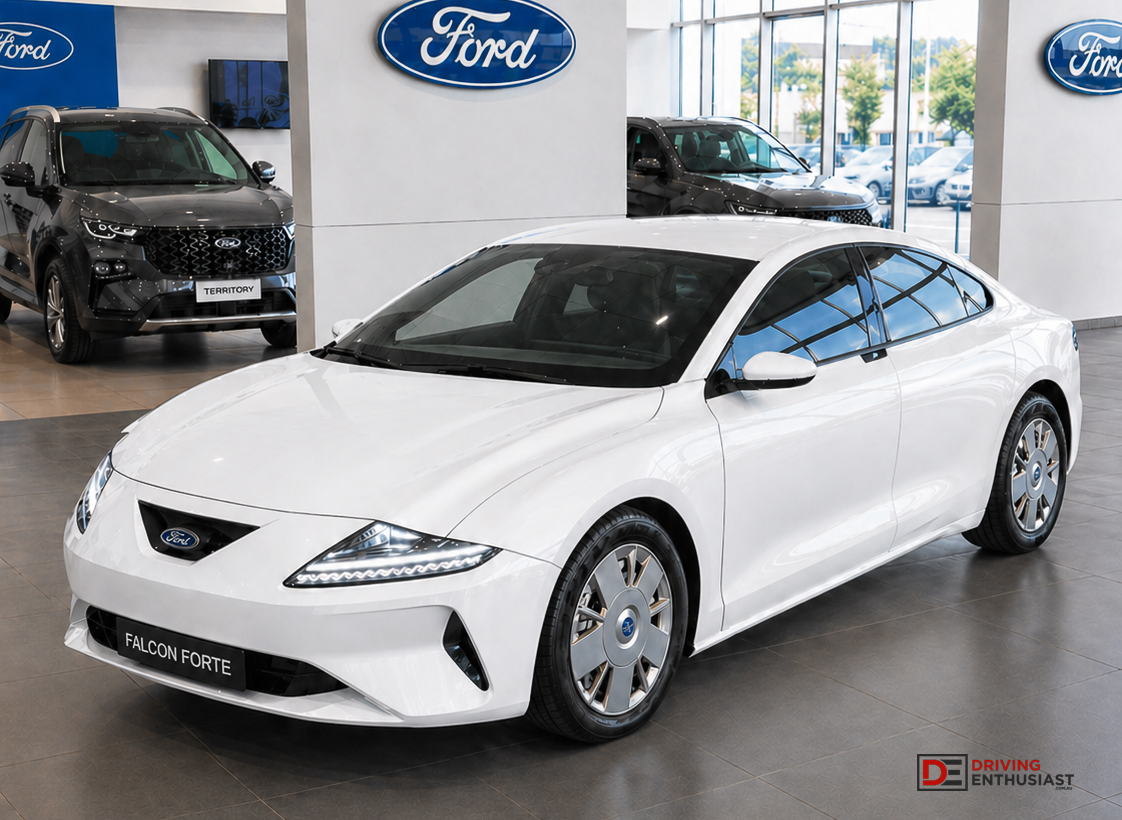
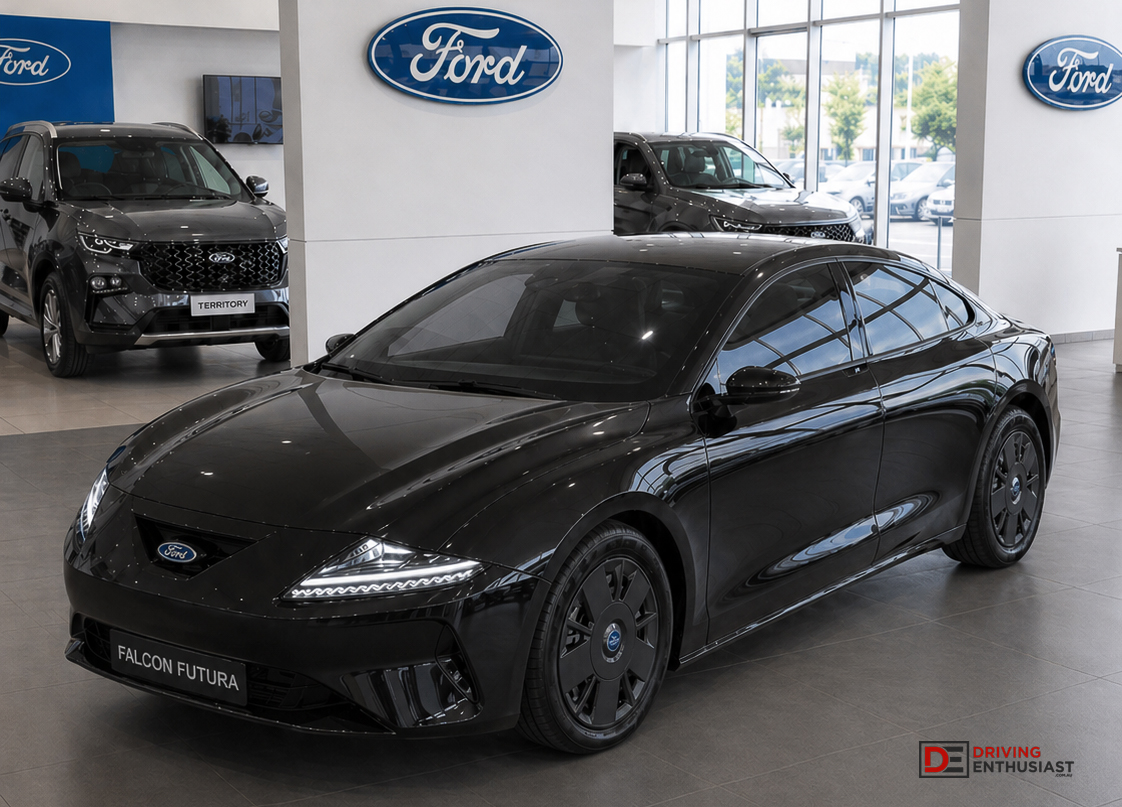
Fast-forward to 2026, and AI has reached a point where anyone can be a car designer with the right prompts. Although I didn’t go to university to study car design, I have always had a keen eye for it, so I can happily say that these are the product of my imagination, with AI’s help. The purpose of this exercise is to recreate the ‘wow’ factor we used to get from opening a Wheels or Motor magazine to see an all-new model detailed, variant-by-variant.
The technical basis is where things get complicated. Instead of being pragmatic and taking the Mustang’s platform or the CD6 RWD architecture which underpins the Explorer and various Lincolns, I wanted to jump the shark a bit and use something a bit more futuristic. I’ve decided to use Ford’s Universal EV platform, as well as its unicasted body, electrical architecture, but modified to accommodate an optional range extender; the ‘NanoBarra.’
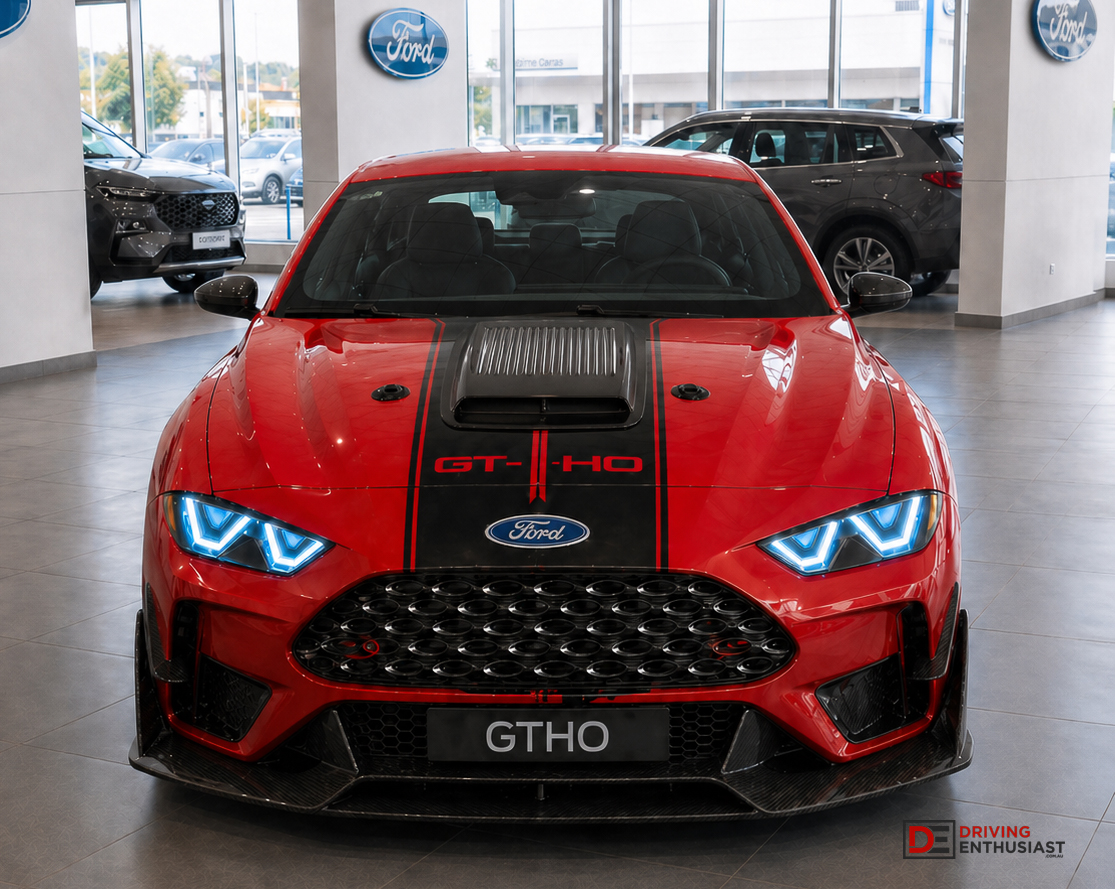
Fans of V8s, fear not – there’s something for you here as well. Unfortunately, Australia’s regulatory climate penalises V8s, so the solution here is ultra low volume, bespoke floorpan based on the Car of the Future control chassis used in V8 Supercars for bespoke, top-tier models. This would include the XR8, GT and GTHO, with total production of under 1000 units to exempt itself from too much of a penalty. Naturally, these would cost in the quarter-of-a-million dollar range, which might seem high until you consider many are still willing to pay that for rare versions of Aussie sports sedans in 2026.
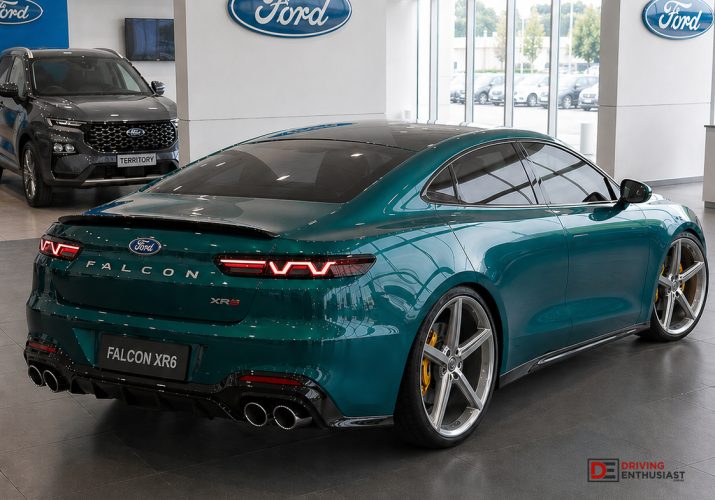
Stylistically, I endeavoured to infuse the Falcon character (AU-esque for low series, a more 3D evolution of FGX for higher series) with the contours seen in some of my favourite new electric sedans; Xiaomi SU7 Ultra, Lucid Air Sapphire, for example.
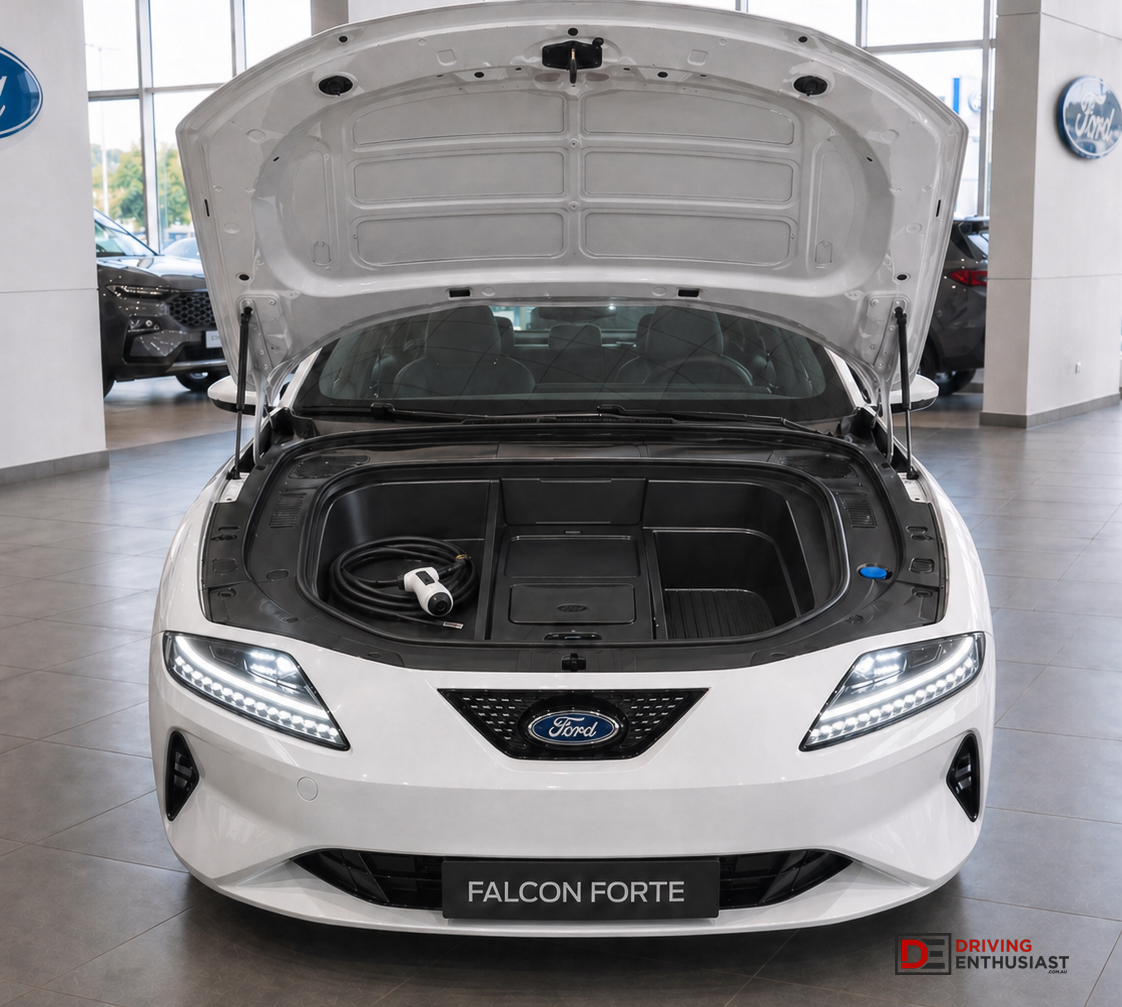
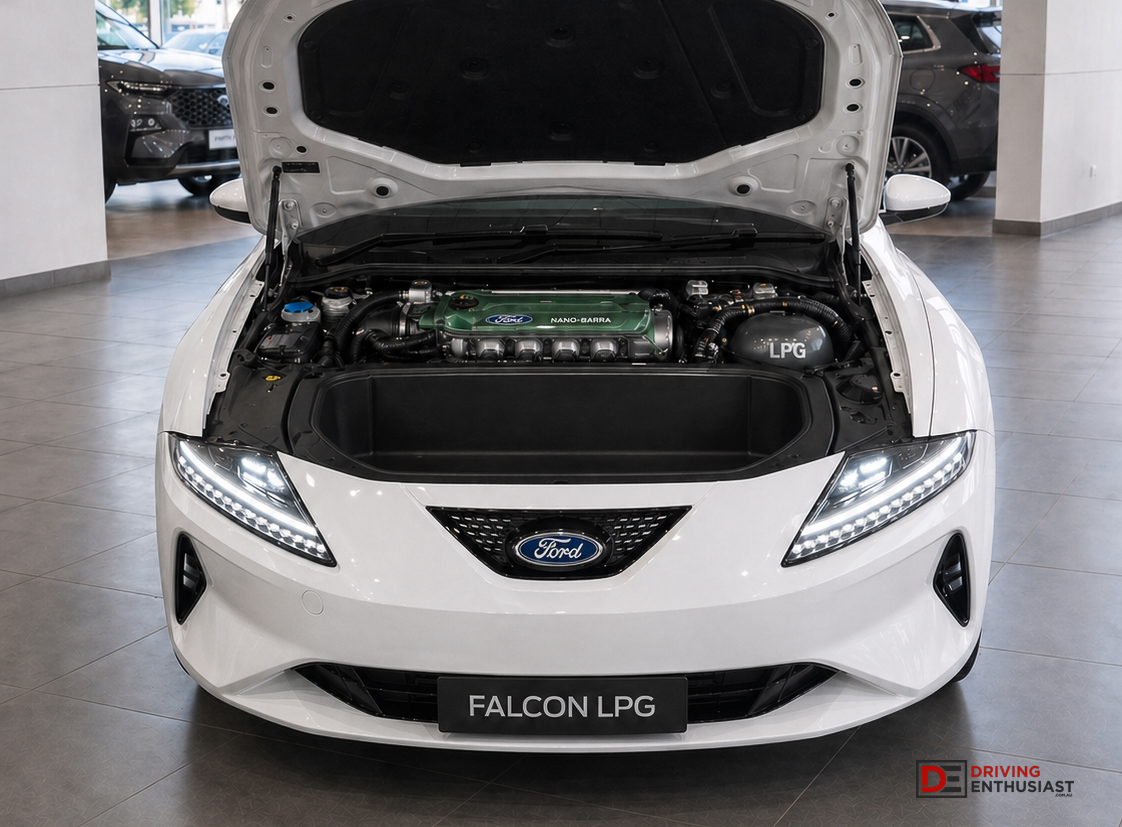
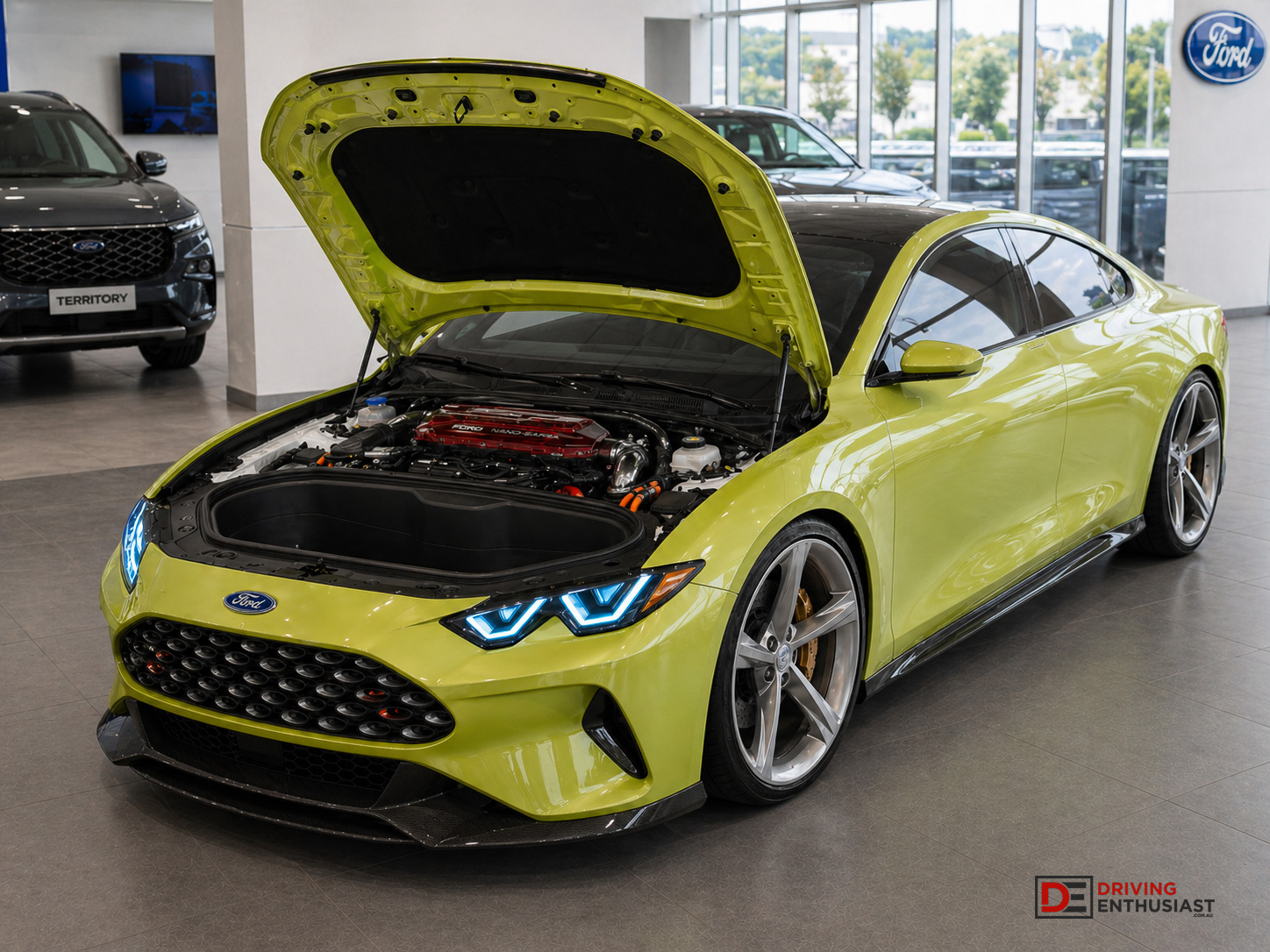
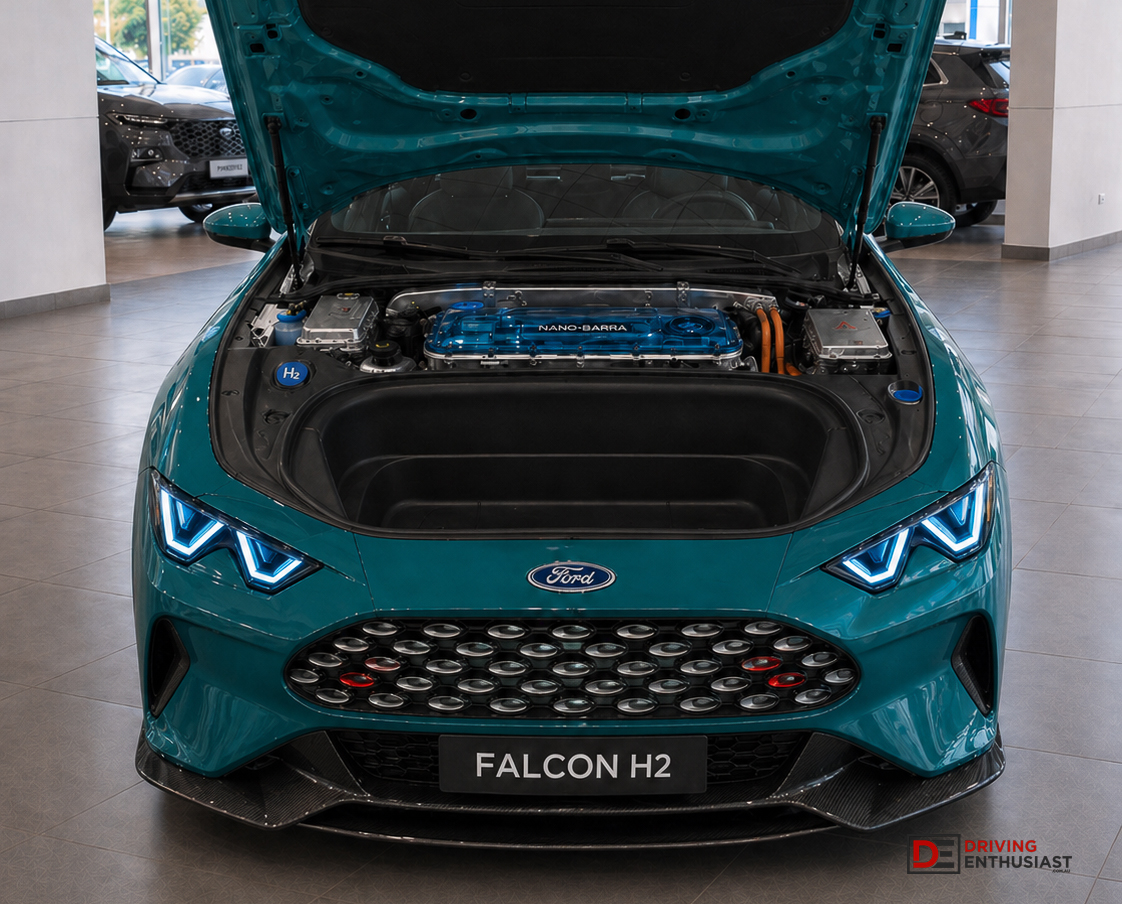
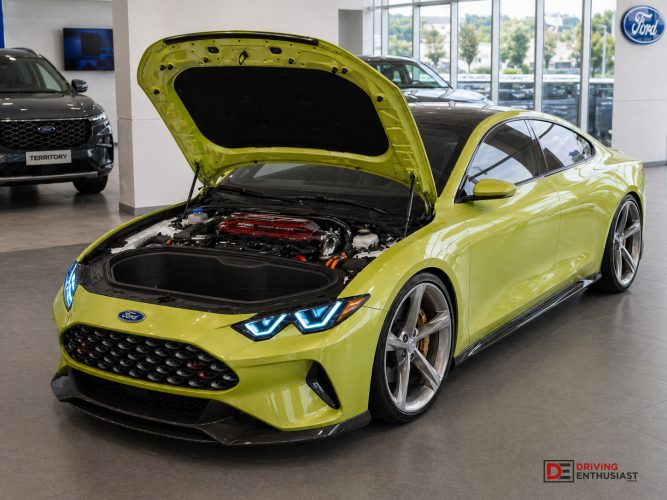
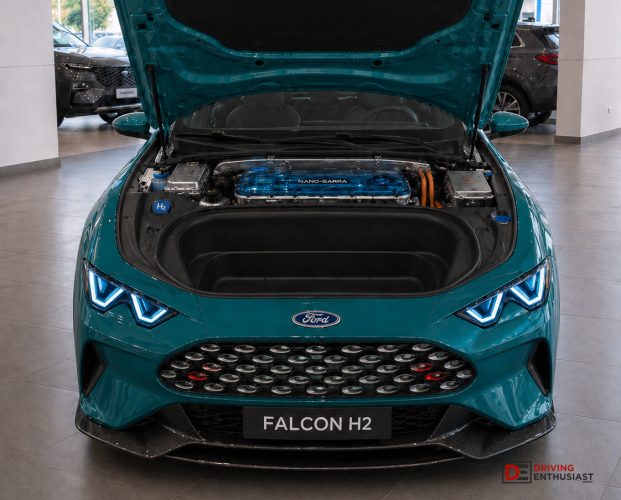
The NanoBarra — what I’ve called the range-extending inline-six at the heart of this project — is a 2159cc unit with a deliberately under-square 77.0mm bore and 77.3mm stroke. Anyone who’s listened to a classic Falcon six will understand why. Oversquare engines rev quickly but they work harder. Under-square engines breathe deeply, pull from low in the rev range, and have that distinct Falcon voice. That was non-negotiable. Because there is no transmission tunnel required for a rear-drive EREV, we can sit it transversely on display and even put a frunk in front of it. That would be a world first.
A mainstream Falcon range would sit on Ford’s Universal EV architecture, but this version has been stretched, widened and stiffened into something far more Australian in flavour. Think of it as an EV-first large sedan platform with the stance, ride quality and rear-drive attitude expected of a Falcon. This is not a petrol car converted into an EV after the fact.
The body-in-white uses large aluminium unicastings front and rear, tied into a high-strength steel passenger cell and structural battery pack. The target torsional rigidity is 40,500Nm/degree for the mainstream models, rising to 42,000Nm/degree for the XR6 Turbo with extra bracing around the front generator cassette and rear e-axle cradle. Length is 4960mm, width is 1920mm, height is 1460mm and the wheelbase is 2980mm, putting it right in the large sedan zone without pushing into limousine territory.
A key distinction is that the NanoBarra never drives the wheels. It is mounted transversely, low and rearward at the base of the firewall, acting purely as a generator. Power goes electrically to the rear wheels in the Forte variants, and to both axles in the XR6 Turbo. That means the floor stays flat, the cabin stays spacious, and the car keeps the instant response and packaging benefits of an EV. The engine is there to extend range, add character and provide a genuine Australian mechanical identity, not to drag a propshaft through the middle of the cabin like it’s 2002.
All mainstream variants use double wishbone front suspension and a five-link independent rear end. I went back and forth on whether a simpler MacPherson arrangement would be more realistic, but a revived Falcon deserves proper front-end geometry. Double wishbone suspension gives the front tyres better camber control under load, which matters when you’re trying to make a two-tonne electric sedan feel like something with Falcon DNA rather than a melted appliance with a blue oval stuck to it.
The durability brief is inspired by Toyota’s upcoming high-output 2.0-litre turbo four philosophy — the so-called “new 2JZ” idea — but translated into a compact inline-six. The NanoBarra uses a compacted graphite iron closed-deck block, aluminium cylinder head, seven main bearings, a forged steel crankshaft, piston oil squirters and a deep structural bedplate. The base Forte petrol uses conventional DOHC 24-valve hardware with dual VVT for cost and serviceability, while the LPG, H2 and XR6 Turbo variants step up to Freevalve camless actuation.
That choice is deliberate. Freevalve is expensive, complicated and absolutely not something you would throw at the base model. But for LPG, hydrogen and the XR6 Turbo, it makes sense. LPG can run higher compression and cleaner cold-start strategies. Hydrogen needs precise valve and combustion control to reduce pre-ignition and NOx. The XR6 Turbo needs big-turbo drama without becoming an undriveable pig. Freevalve gives the engine individual valve control rather than asking fixed camshafts to do seven jobs at once.
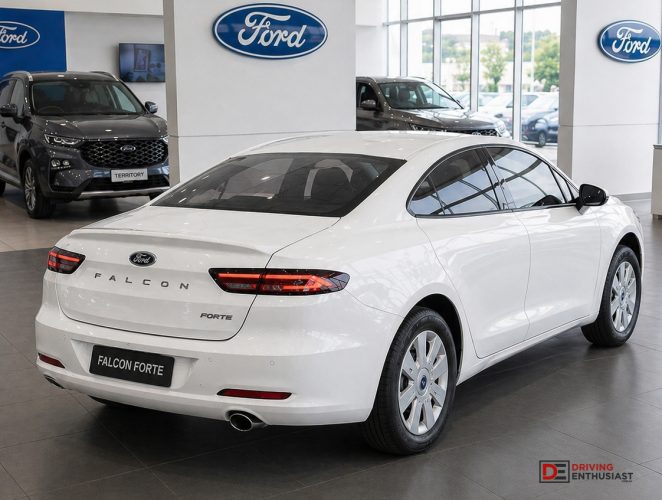
At the entry point is the Falcon Forte EV. This is the cleanest version; an 88kWh structural LFP battery, 255kW/620Nm rear motor, rear-wheel drive and a proper front boot where the NanoBarra would otherwise live. It targets around 560km of WLTP range and a 0-100km/h time in the mid 5.0 second bracket. It is not the wild one, but it would be the version most people could justify because it’s fast enough, quiet enough, spacious enough and still fundamentally rear-drive.
Stepping up, the Forte Petrol adds the base NanoBarra range-extender. This is the pragmatic one. No Freevalve, no big turbo, no clever fuel narrative; just a tough, compact, naturally aspirated inline-six running as a generator on 91 RON. The battery drops to 62kWh, the rear motor remains at 255kW, and the fuel tank gives the car long-distance flexibility that pure EVs still struggle to match in rural Australia. It would be the one for people who like the EV idea but don’t want their life dictated by charging stops between regional towns.
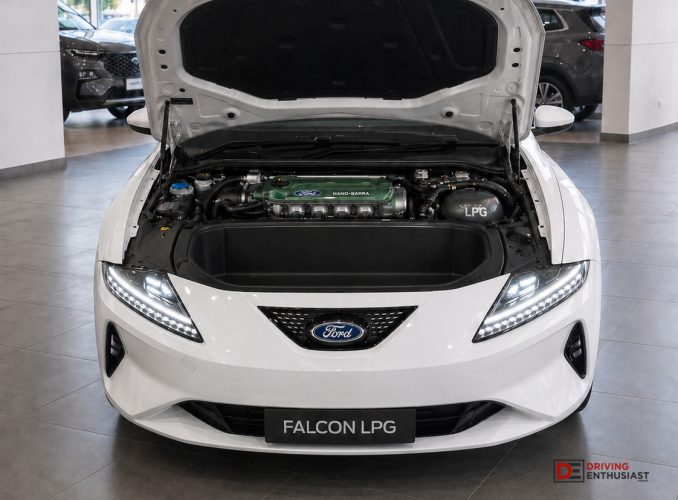
Something more interesting is the Forte LPG. Australia has a long, slightly daggy, deeply practical relationship with LPG Falcons, and this would revive that idea without the old taxi-spec baggage. The LPG NanoBarra gets Freevalve, a higher compression ratio, hardened valve seats, dedicated vapour injection and a translucent green iMac G3-style rocker cover with a flush handle-style oil cap. It targets 43 per cent peak brake thermal efficiency and uses a 68-litre usable LPG tank. It would be cheaper to run than the petrol version in the right conditions, cleaner under load and more characterful than a generic four-cylinder range-extender.
Then there is the Falcon H2. This is the science project, but a properly thought-out one. The NanoBarra burns hydrogen rather than using a fuel cell, because the entire point is to keep combustion character alive without tailpipe carbon. It uses Freevalve, direct hydrogen injection, pre-chamber ignition, cooled EGR and a small e-turbo to stabilise airflow and lean-burn operation. Target BTE is 45 per cent, with a 6.4kg 700-bar hydrogen storage system packaged partly underfloor and partly behind the rear seat structure. It is not the variant that would sell in big numbers. Our infrastructure is nowhere near ready. But as a technical halo for the mainstream platform, it has a reason to exist.
Now the XR6 Turbo is where the whole thing goes from fascinating to faintly unhinged. The N216T+ NanoBarra keeps the same 2.159-litre capacity but gets forged 2618 pistons, H-beam rods, a nitrided forged crank, sodium-filled exhaust valves, dry-sump scavenge assistance, an integrated charge-air water circuit and a much larger single turbo than the earlier concept. Instead of a G35-class unit, this uses an OEM-developed Garrett G45-1500-derived 76mm compressor stage with a divided hot side, speed sensor, water cooling and a 2.2-bar peak boost target.
In a normal manual Falcon, that turbocharger would be anti-social. You’d be waiting until next Tuesday for boost. Here, it works because the car is electrically driven. The engine is a generator, not a direct-drive engine. The front and rear motors cover the bottom end, while the NanoBarra comes onto song in its preferred efficiency and power window. When the driver asks for full theatre, the calibration lets the engine flare, load and howl like a tiny Barra from a parallel universe. But the wheels are still being fed by the battery buffer and e-axles.
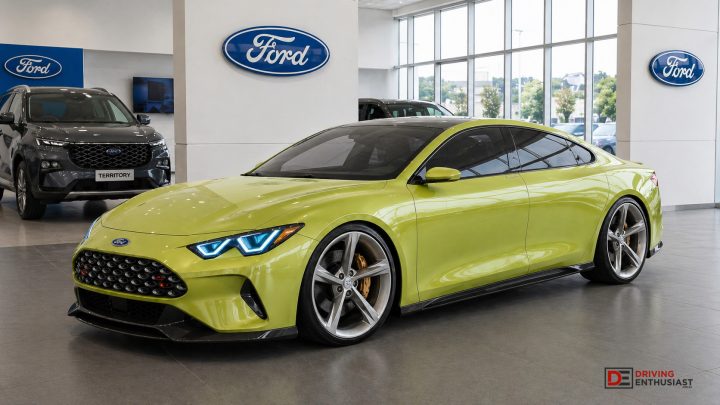
The XR6 Turbo is therefore a twin-motor AWD performance sedan; 480kW/950Nm combined, rear-biased torque delivery and a 0-100km/h target of 3.4 seconds. It gets 800V electrical hardware, a 76kWh high-power battery, adaptive dampers, rear-axle torque vectoring, bigger brakes and 20-inch staggered wheels. This is the model that should make old F6 owners suspiciously quiet after a test drive.
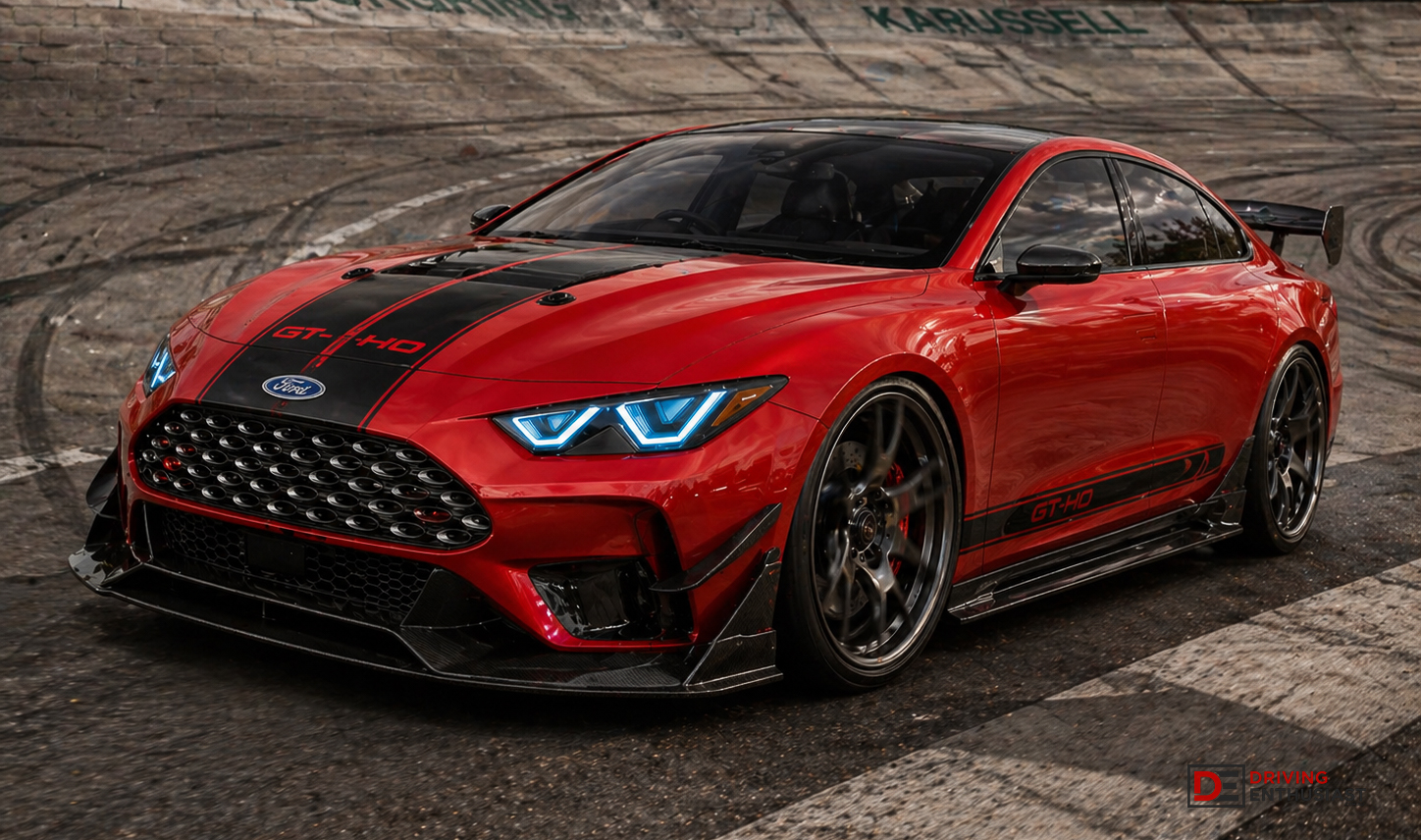
For the V8s, we leave the UEV architecture behind altogether. The XR8 and GTHO use a bespoke low-volume floorpan inspired by the Car of the Future control chassis philosophy, with front-mid engine placement, rear transaxle and double wishbone suspension at both ends. They are not EVs. They are not hybrids. They are there because Falcon history demands at least one irresponsible answer.
The XR8 uses a naturally aspirated 5.2-litre quad-cam V8, closely aligned with the Mustang’s Coyote/Voodoo family but reworked for Australian sedan duty. Output is 430kW at 7600rpm and 610Nm at 5000rpm, sent through a rear-mounted six-speed Hollinger manual transaxle. With a 53:47 weight distribution, 1805kg tare weight and proper tyre under it, this would not be the fastest Falcon here, but it might be the one you remember most vividly.
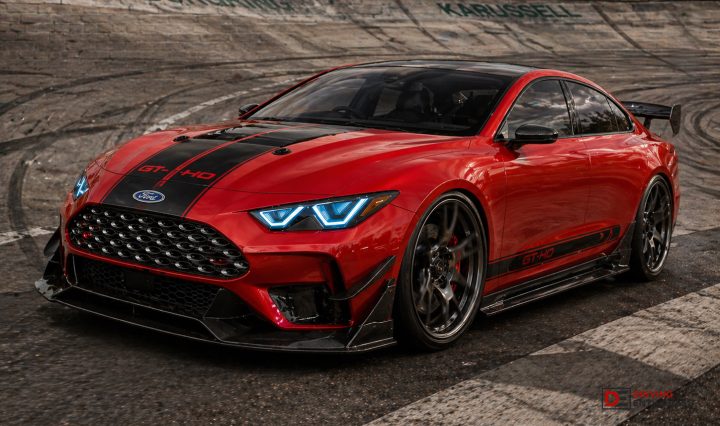
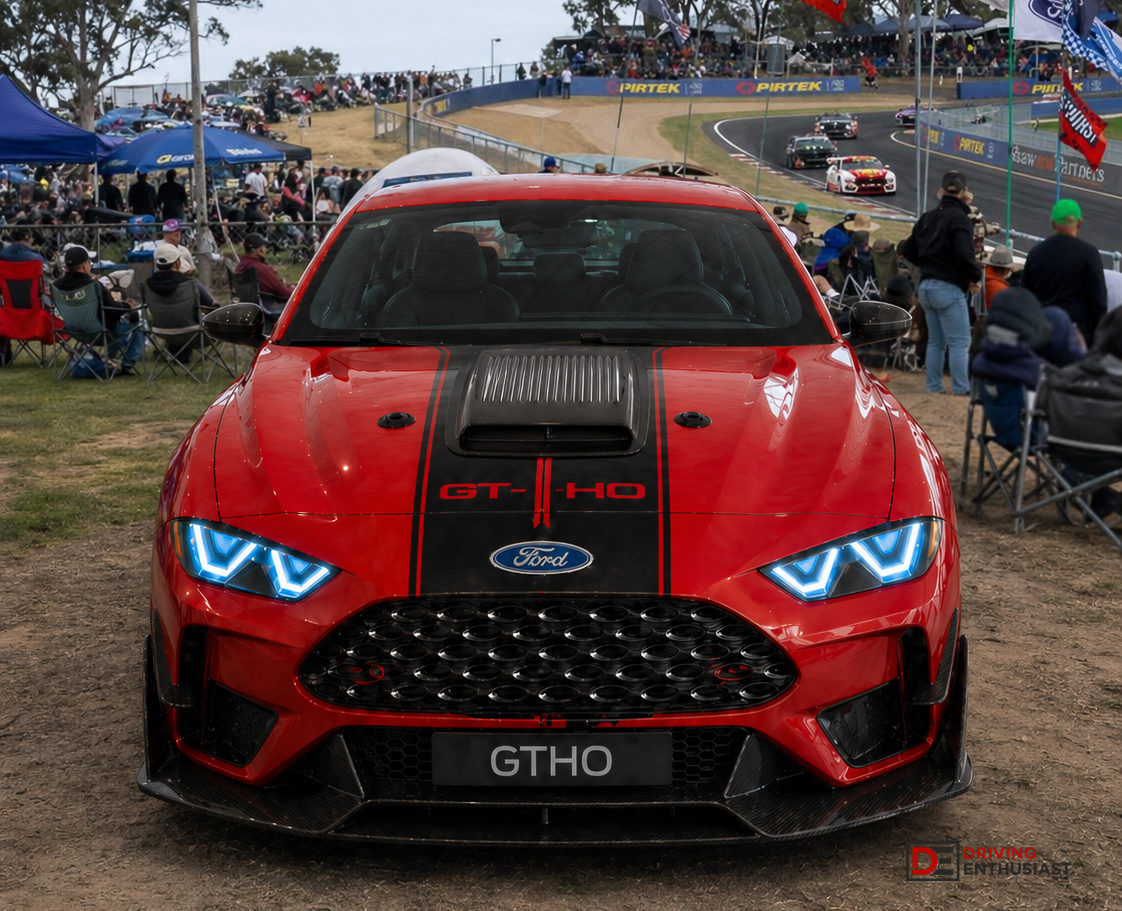
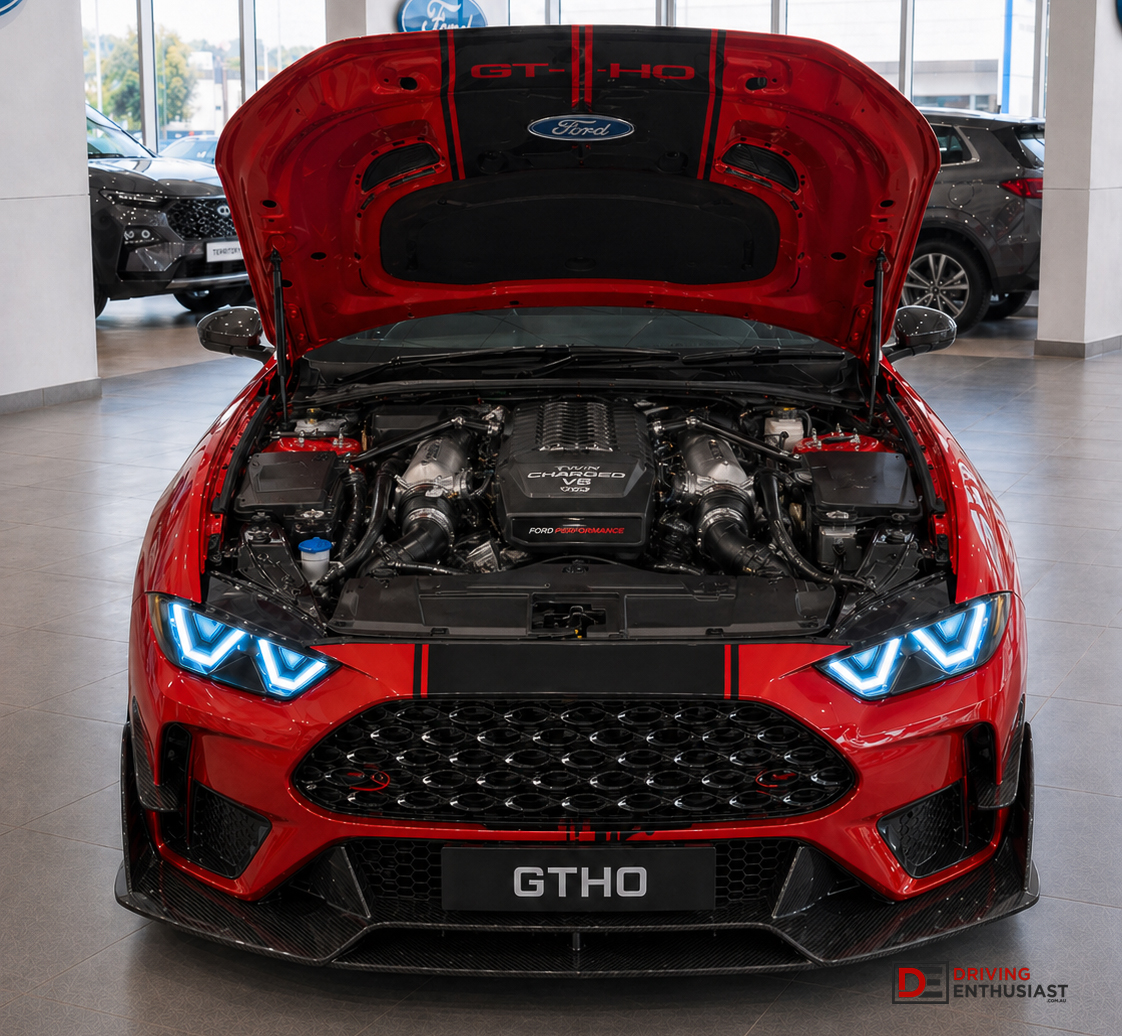
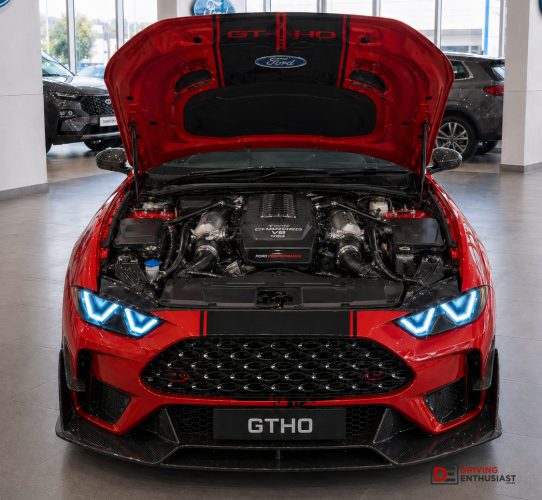
The GTHO is the one nobody asked for and everybody secretly wants. It uses a 5.2-litre twin-charged V8 with a positive-displacement supercharger mounted in the valley and twin turbochargers on the hot side of the vee. No battery assistance, no electric torque fill, no apologetic mild-hybrid badge on the boot. Just 620kW, 980Nm, a Hollinger paddle-shift sequential rear transaxle, and enough cooling hardware to make the front end look like it belongs at Bathurst. The target tare weight is 1875kg and the weight distribution is 51:49. It is not sensible, but neither was the phase of Australian performance history that made the GTHO name matter in the first place.
2028 Ford AU4 Falcon — Interior & Tech Feature List
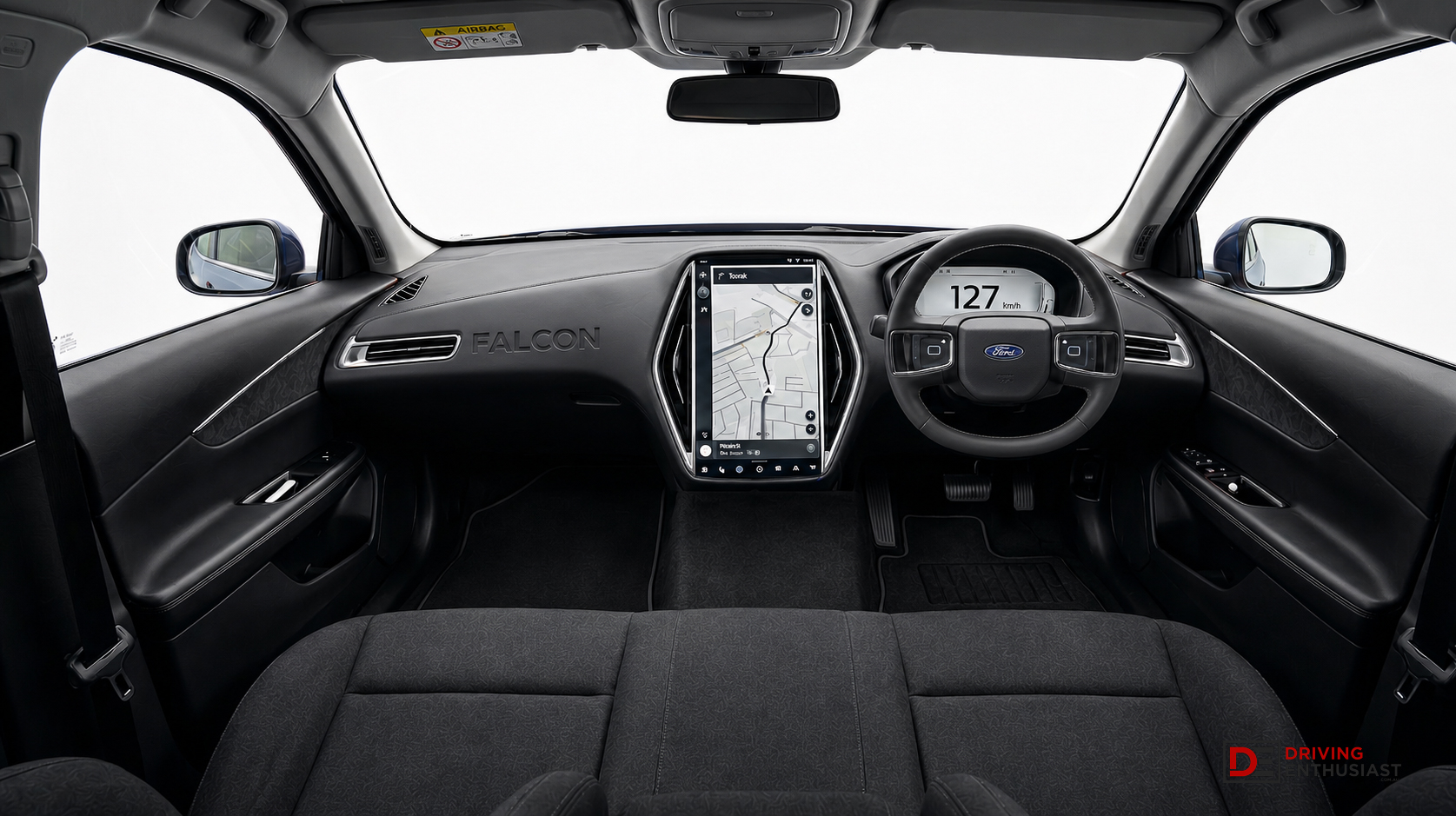
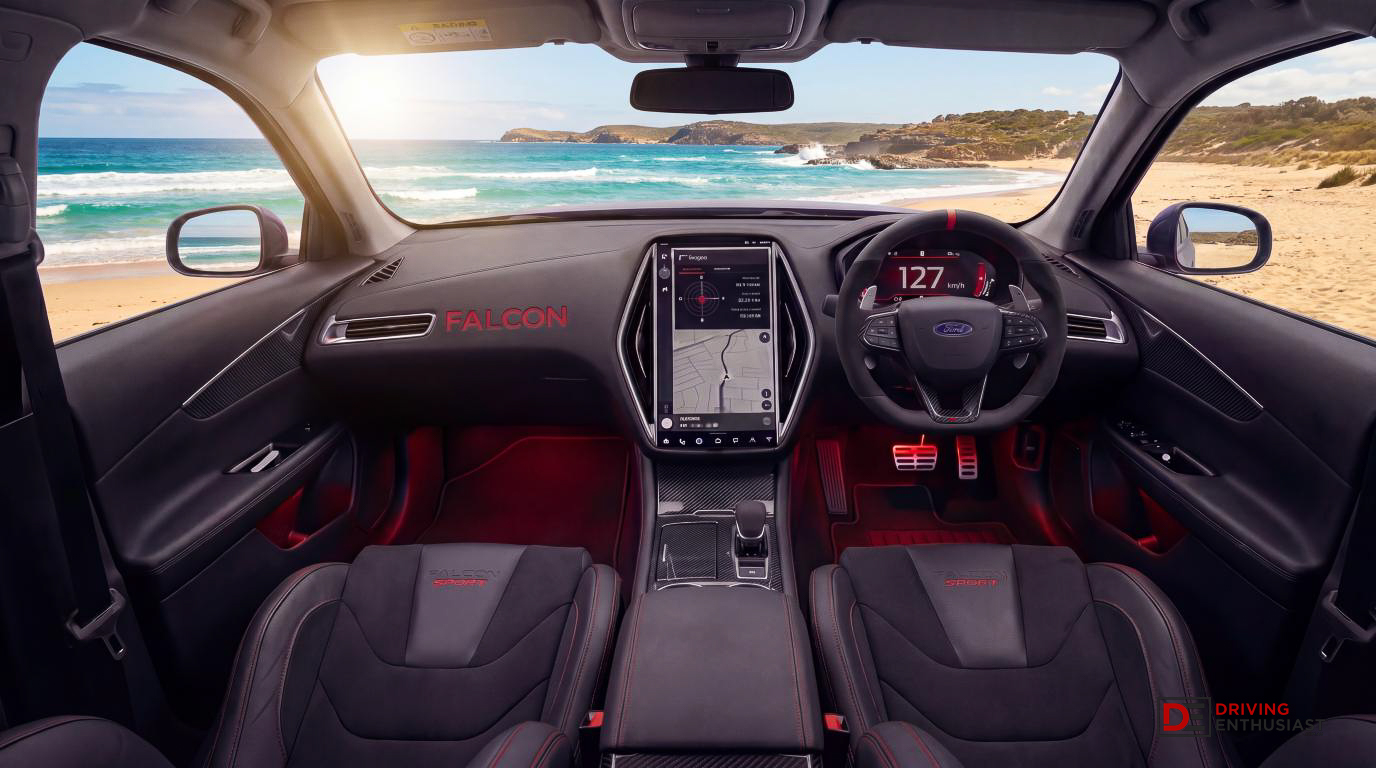
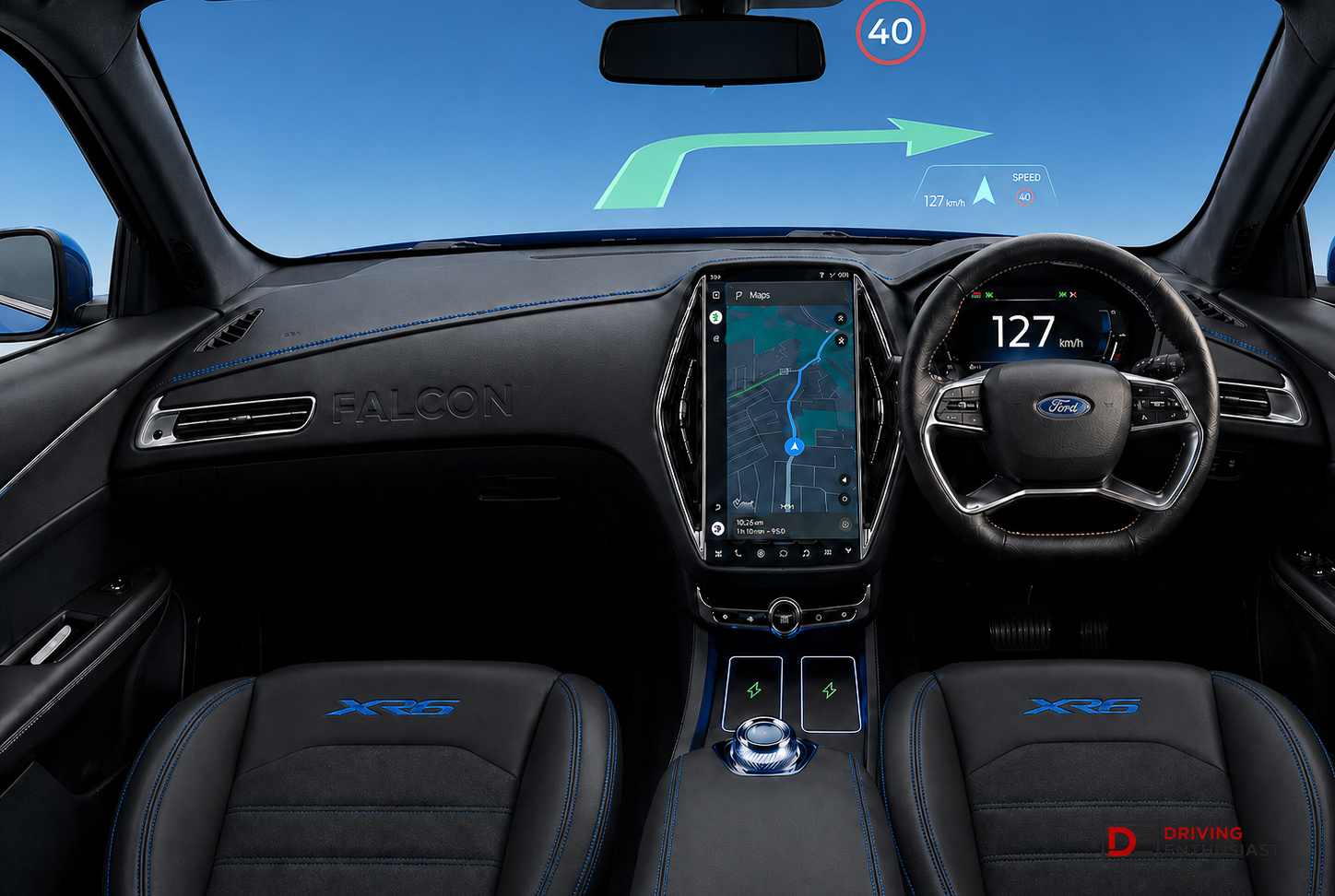
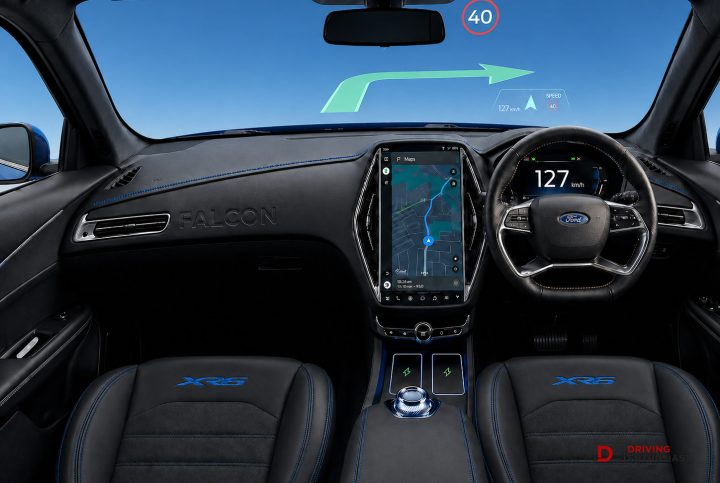
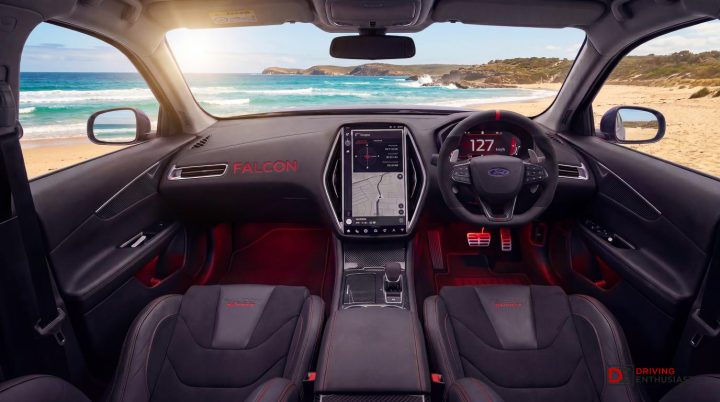
The cabin would need to walk a fine line. It cannot just be a Tesla-style empty room, because Falcon people like switchgear, vents and a sense of mechanical intent. But it also cannot feel like a 2014 FGX with a tablet glued to the dashboard. The ideal cabin would keep the broad, horizontal, driver-focused Falcon architecture, then layer in the best of current Chinese EV display technology, Ford heritage graphics and some properly Australian safety thinking.
Displays
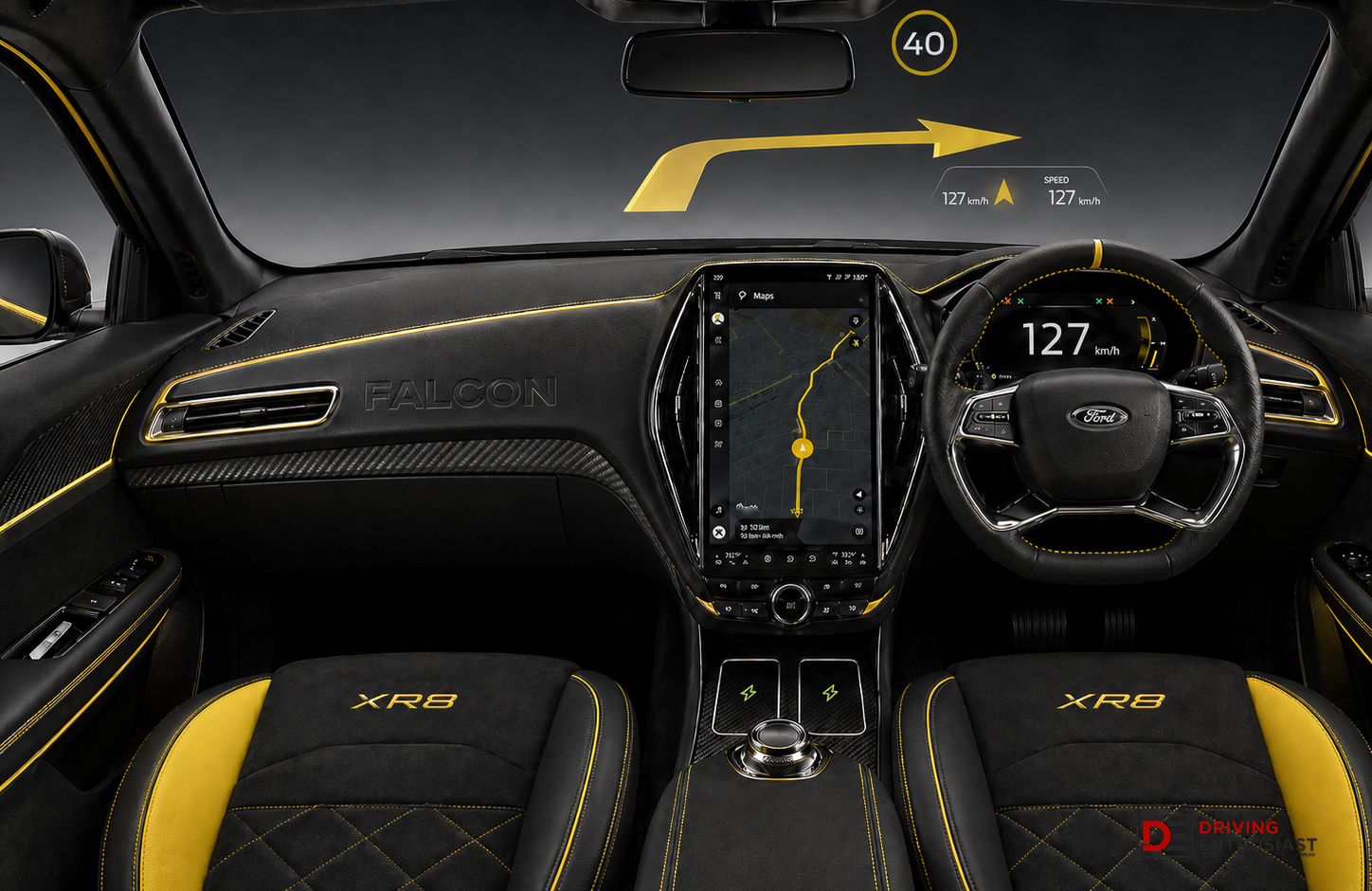
The Forte models use a 14.6-inch AMOLED centre screen, while XR6 Turbo and above step up to a 15.6-inch AMOLED display. Ahead of the driver is a 12.3- to 12.8-inch AMOLED instrument cluster, with a Heritage Cluster Mode that lets you switch between XK, XR/XY, XD/XF, EA/EL, AU, BA/BF and FG/FGX-inspired gauge skins.
XR8, GT and GTHO add a 9.7-inch co-pilot passenger screen, while XR8 and GTHO also gain a Bathurst Lap Timer overlay. The infotainment system runs on a 5nm system-on-chip with an onboard NPU, allowing the voice assistant and core vehicle functions to run locally without relying on the cloud.
The AR head-up display is deliberately over the top; an 87-inch equivalent full-width windscreen projection with 2K resolution, 12,000-nit brightness and electrochromic compensation. It can project true road-surface navigation arrows, speed, posted speed limit and following distance into the primary driver zone. On XR6 Turbo and above, the passenger side can show ETA, charge/fuel state and turbo/generator readouts.
There is also a properly Australian feature: Kangaroo Strike Warning. If the fauna detection system identifies a likely animal crossing event, the windscreen AR projection gives a full-width amber pulse, paired with a seat haptic warning. It sounds like a gimmick until you’ve driven country roads at dusk.
The traffic light countdown function integrates HERE HD Maps and V2I data where available, projecting the countdown to green into the AR HUD. Where live V2I data is not available, it falls back to AI-predicted timing based on camera and traffic flow data.
Climate
The dashboard uses full-length vertical diamond vents with continuous angle adjustment, plus an under-column “crown jewels” vent for lap and lower-body cooling or heating. That sounds silly until you drive long distances in summer and realise it is one of the most Australian features imaginable.
Forte models use two-zone climate control, while XR6 Turbo and above get four-zone control. All variants have heated seats, while XR6 Turbo and above add ventilation and massage. Steering wheel heating is standard on XR6 Turbo and above.
A HEPA and activated carbon bushfire/pollen filter is standard across the range, with dedicated rear underdash and knee-height vents made possible by the flat floor and lack of a transmission tunnel.
Sun visors
The sun visors are another area where this project deliberately overthinks the mundane. All variants use an electrochromic auto-dimming translucent zone and a sliding secondary extension panel that reaches an extra 80mm toward the A-pillar. XR6 Turbo and above add an illuminated makeup mirror on the driver’s side, while XR8, GT50 and GTHO gain fully electric retractable visors that disappear into the headliner.
A slim ADAS alert strip runs along the lower edge, allowing warnings to be delivered without relying solely on the cluster or HUD.
ADAS — Australia-specific
The driver-assist suite is trained around Australian conditions rather than simply imported from a European motorway playbook. The fauna detection neural net is trained on kangaroos, wallabies, wombats and emus, using 77GHz long-range radar, stereo cameras and LiDAR on XR6 Turbo and above.
Predictive mob awareness is designed around the reality that if one kangaroo crosses, the second one is probably about to do something stupid. The system can pre-arm the opposite braking channel, tighten the seatbelt, flash the AR HUD amber pulse and trigger a driver-seat haptic warning simultaneously.
At low speeds, the EV and LPG variants emit a fauna-alert tone tuned below 25km/h. Road condition detection adjusts AEB thresholds for wet, gravel and corrugated surfaces, while the sign-recognition library includes 110km/h zones, road trains, stock routes and temporary country-road signage.
Standard equipment includes AEB, adaptive cruise with stop-and-go, lane centring, blind-spot monitoring, rear cross-traffic alert and a driver-monitoring system capable of detecting drowsiness, distraction and potential medical events.
Grab handles, connectivity and sound
All four door positions get proper overhead grab handles with coat hooks. XR6 Turbo and above finish them in leather and Alcantara, because this is still an Australian car and people will complain loudly if they are missing.
Connectivity includes embedded 5G, OTA updates, remote monitoring and wireless Android Auto and Apple CarPlay with dual simultaneous driver and passenger pairing. Audio starts with a Harman Kardon 12-speaker system in XR6 Turbo, while XR8, GT50 and GTHO move to a Bang & Olufsen 3D 17-speaker setup.
The sound synthesiser is not used to fake something that is not there, but to enhance what is. The H2 uses generator-bay harmonics and even a starter whine designed to evoke an FG Falcon. The GTHO takes a live engine signal and feeds it through the cabin and exterior sound management system, not as a video-game overlay, but as a controlled acoustic amplifier.
XR6 Turbo and above get dual 50W wireless charging pads, while XR8 and GTHO add a pair of 15W rear pads. Ambient lighting ranges from 32 zones in the Forte to 128 zones in the GTHO, with pulse-syncing to audio and engine load in the flagship.
Final thoughts
The most obvious criticism is that none of this is simple. A stretched EV platform, a compact range-extending inline-six, LPG, hydrogen combustion, Freevalve, a twin-motor XR6 Turbo and a separate V8 chassis sounds like the kind of product planning meeting that ends with someone from finance quietly leaving the room.
But that is also the point. A Falcon revival cannot just be an imported SUV with a badge on it. It has to carry some irrationality. It has to make sense on a spreadsheet just long enough for someone passionate to sneak the interesting bits past the people who normally cancel them.
The Forte EV is the sensible one. The Forte Petrol is the regional-Australia one. The Forte LPG is the callback to decades of six-cylinder taxi logic. The Falcon H2 is the technical showcase. The XR6 Turbo is the one that weaponises the EV-first layout while keeping the inline-six spirit alive. The XR8 and GTHO are low-volume indulgences for people who still believe a large Ford sedan should be capable of upsetting neighbours.
These are not cars Ford has confirmed. They are not prototypes hiding behind the fence at You Yangs. They are what a new Falcon could look like if Ford treated the name with the same seriousness Porsche gives 911, Toyota gives LandCruiser, or BMW gives M3.
The platform exists. The battery chemistry exists. The turbo hardware exists. The control-chassis thinking exists. The only thing missing is the will to build the thing.
So if you’re reading this, Jim, you know what to do.
2028 Ford Falcon Forte EV: Specifications
Engine/Electrical: Single rear permanent-magnet synchronous motor, 88kWh structural LFP battery, 400V architecture, SiC inverter, 11kW AC / 185kW DC charging
Output: 255kW / 620Nm
Transmission: Single-speed reduction gear
Drive type: Rear-wheel drive
Platform: Modified Ford Universal EV architecture, aluminium unicast front/rear nodes, high-strength steel safety cell
Front suspension: Unequal-length double wishbone, forged aluminium knuckles
Rear suspension: Five-link independent rear, cast aluminium subframe
Torsional rigidity: 40,500Nm/degree
Length x width x height: 4960mm x 1920mm x 1460mm
Wheelbase: 2980mm
Drag coefficient: 0.22
Weight distribution: 49:51
Wheels: F: 19×8.5, 245/40 R19 / R: 19×9.0, 255/40 R19
Tare weight: 1985kg
Power-to-weight: 7.78:1 (kg:kW)
Official consumption: 16.5kWh/100km
0-100km/h: 5.30 seconds
1/4 mile: 13.30 seconds at 174km/h*
Starting price: $69,990
2028 Ford Falcon Forte Petrol rEX: Specifications
Engine/Electrical: 2.159-litre NanoBarra inline-six range-extender, DOHC 24-valve, dual VVT, rear permanent-magnet motor, 62kWh structural LFP battery, 400V architecture
Engine bore x stroke: 77.0mm x 77.3mm
Capacity: 2159cc
Compression ratio: 12.5:1
Block/head material: Compacted graphite iron closed-deck block, aluminium head
Valvetrain: Chain-driven DOHC, 24-valve, dual VVT
Engine weight: 154kg
BTE: 40.5 per cent peak
Output: 255kW / 620Nm motor; 145kW@5800rpm / 245Nm@3600rpm engine-generator
Transmission: Single-speed rear e-axle, engine-driven generator
Drive type: Rear-wheel drive range-extender EV
Platform: Modified Ford Universal EV architecture
Front suspension: Unequal-length double wishbone
Rear suspension: Five-link independent rear
Torsional rigidity: 40,500Nm/degree
Length x width x height: 4960mm x 1920mm x 1460mm
Wheelbase: 2980mm
Drag coefficient: 0.24
Weight distribution: 51:49
Wheels: F: 19×8.5, 245/40 R19 / R: 19×9.0, 255/40 R19
Tare weight: 1905kg
Power-to-weight: 7.47:1 (kg:kW)
Official consumption: 4.8L/100km charge-sustaining
0-100km/h: 5.65 seconds
1/4 mile: 13.50 seconds at 171km/h
Starting price: $74,990
2028 Ford Falcon Forte LPG: Specifications
Engine/Electrical: 2.159-litre NanoBarra LPG Freevalve inline-six range-extender, rear permanent-magnet motor, 62kWh LFP battery, 400V architecture
Engine bore x stroke: 77.0mm x 77.3mm
Capacity: 2159cc
Compression ratio: 13.8:1
Block/head material: Compacted graphite iron closed-deck block, aluminium head, hardened LPG valve seats
Valvetrain: Freevalve electro-hydraulic-pneumatic camless actuation, 24-valve
Engine weight: 168kg
BTE: 43.0 per cent peak
Output: 255kW / 620Nm motor; 158kW@5600rpm / 270Nm@3200rpm engine-generator
Transmission: Single-speed rear e-axle, engine-driven generator
Drive type: Rear-wheel drive range-extender EV
Platform: Modified Ford Universal EV architecture
Front suspension: Unequal-length double wishbone
Rear suspension: Five-link independent rear
Torsional rigidity: 40,500Nm/degree
Length x width x height: 4960mm x 1920mm x 1460mm
Wheelbase: 2980mm
Drag coefficient: 0.24
Weight distribution: 51.5:48.5
Wheels: F: 19×8.5, 245/40 R19 / R: 19×9.0, 255/40 R19
Tare weight: 1935kg
Power-to-weight: 7.59:1 (kg:kW)
Official consumption: 6.4L/100km LPG charge-sustaining
Fuel tank/Fuel type: 68L usable LPG
0-100km/h: 5.80 seconds
1/4 mile: 13.60 seconds at 170km/h
Starting price: $76,990
2028 Ford Falcon H2: Specifications
Engine/Electrical: 2.159-litre NanoBarra hydrogen Freevalve inline-six range-extender, direct hydrogen injection, pre-chamber ignition, e-turbo, rear permanent-magnet motor, 62kWh LFP battery, 400V architecture
Engine bore x stroke: 77.0mm x 77.3mm
Capacity: 2159cc
Compression ratio: 14.5:1
Block/head material: Compacted graphite iron closed-deck block, aluminium head, hydrogen-specific injectors and ignition hardware
Valvetrain: Freevalve electro-hydraulic-pneumatic camless actuation, 24-valve
Turbocharger: BorgWarner eTurbo-style 54mm compressor, 1.3-bar peak boost, water-cooled
Engine weight: 171kg
BTE: 45.0 per cent peak
Output: 255kW / 620Nm motor; 135kW@5200rpm / 255Nm@2600rpm engine-generator
Transmission: Single-speed rear e-axle, engine-driven generator
Drive type: Rear-wheel drive hydrogen range-extender EV
Platform: Modified Ford Universal EV architecture
Front suspension: Unequal-length double wishbone
Rear suspension: Five-link independent rear, reinforced tank cradle
Torsional rigidity: 40,500Nm/degree
Length x width x height: 4960mm x 1920mm x 1460mm
Wheelbase: 2980mm
Drag coefficient: 0.24
Weight distribution: 50:50
Wheels: F: 19×8.5, 245/40 R19 / R: 19×9.0, 255/40 R19
Tare weight: 1980kg
Power-to-weight: 7.76:1 (kg:kW)
Official consumption: 0.95kg/100km hydrogen charge-sustaining
Fuel tank/Fuel type: 6.4kg compressed hydrogen, 700 bar
0-100km/h: 6.10 seconds
1/4 mile: 14.00 seconds at 165km/h
Starting price: $89,990
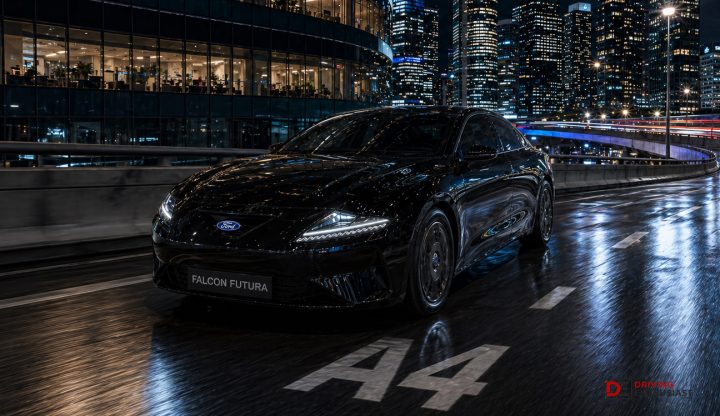
2028 Ford Falcon XR6 Turbo: Specifications
Engine/Electrical: 2.159-litre NanoBarra Freevalve turbo inline-six range-extender, dual-motor AWD, 76kWh high-power battery, 800V architecture
Engine bore x stroke: 77.0mm x 77.3mm
Capacity: 2159cc
Compression ratio: 9.8:1
Block/head material: Compacted graphite iron closed-deck block, aluminium head, structural bedplate
Valvetrain: Freevalve electro-hydraulic-pneumatic camless actuation, 24-valve
Turbocharger: Garrett G45-1500-derived single turbo, 76mm compressor inducer, divided hot side, 2.2-bar peak boost, water-cooled, speed-sensor controlled
Engine internals: Forged nitrided crank, H-beam rods, 2618 forged pistons, sodium-filled exhaust valves, piston oil squirters, dry-sump scavenge assistance
Engine weight: 184kg
BTE: 44.0 per cent peak
Output: 480kW / 950Nm combined motor output; 360kW@6400rpm / 590Nm@4200rpm engine-generator
Transmission: Single-speed front and rear e-axles
Drive type: Rear-biased all-wheel drive
Platform: Reinforced modified Ford Universal EV architecture
Front suspension: Unequal-length double wishbone, forged aluminium knuckles, adaptive dampers
Rear suspension: Five-link independent rear, torque-vectoring rear e-axle, adaptive dampers
Torsional rigidity: 42,000Nm/degree
Length x width x height: 4960mm x 1930mm x 1450mm
Wheelbase: 2980mm
Drag coefficient: 0.26
Weight distribution: 48:52
Wheels: F: 20×9.5, 265/35 R20 / R: 20×10.5, 285/35 R20
Tare weight: 2110kg
Power-to-weight: 4.40:1 (kg:kW)
Official consumption: 6.9L/100km charge-sustaining
Fuel tank/Fuel type: 58L / 98 RON
0-100km/h: 3.4 seconds
1/4 mile: 10.95 seconds at 207km/h
Starting price: $104,990
2028 Ford Falcon XR8: Specifications
Engine/Electrical: 5.2-litre naturally aspirated quad-cam V8, no hybrid assistance
Engine bore x stroke: 94.0mm x 93.0mm
Capacity: 5168cc
Compression ratio: 12.0:1
Block/head material: Aluminium block, aluminium heads
Valvetrain: DOHC, 32-valve, dual independent VCT
Engine weight: 223kg
BTE: 36.0 per cent peak
Output: 430kW@7600rpm / 610Nm@5000rpm
Transmission: Six-speed Hollinger manual rear transaxle
Drive type: Rear-wheel drive
Platform: Bespoke low-volume CoTF-inspired control chassis, aluminium/composite exterior panels
Front suspension: Double wishbone, coil-over dampers
Rear suspension: Double wishbone, rear transaxle cradle, coil-over dampers
Torsional rigidity: 46,000Nm/degree
Length x width x height: 4925mm x 1935mm x 1435mm
Wheelbase: 2920mm
Drag coefficient: 0.30
Weight distribution: 53:47
Wheels: F: 20×10.0, 275/35 R20 / R: 20×11.0, 305/30 R20
Tare weight: 1805kg
Power-to-weight: 4.20:1 (kg:kW)
Official consumption: 12.8L/100km
Fuel tank/Fuel type: 72L / 98 RON
0-100km/h: 4.05 seconds
1/4 mile: 11.85 seconds at 195km/h
Starting price: $249,990
2028 Ford Falcon GTHO: Specifications
Engine/Electrical: 5.2-litre twin-charged quad-cam V8, positive-displacement supercharger in valley, twin turbochargers on hot side of vee, no electrification
Engine bore x stroke: 94.0mm x 93.0mm
Capacity: 5168cc
Compression ratio: 9.5:1
Block/head material: Reinforced aluminium block, aluminium heads, closed-deck conversion
Valvetrain: DOHC, 32-valve, dual independent VCT
Turbocharger/supercharger: Eaton TVS2650 positive-displacement supercharger, twin Garrett G30-770 turbochargers, water-to-air intercooling, dual charge-cooler circuits
Engine weight: 278kg
BTE: 34.5 per cent peak
Output: 620kW@7400rpm / 980Nm@4600rpm
Transmission: Hollinger six-speed paddle-shift sequential rear transaxle
Drive type: Rear-wheel drive
Platform: Bespoke low-volume CoTF-inspired control chassis, aluminium/composite exterior panels, additional front and rear bracing
Front suspension: Motorsport double wishbone, remote-reservoir adaptive dampers
Rear suspension: Motorsport double wishbone, rear transaxle cradle, remote-reservoir adaptive dampers
Torsional rigidity: 48,000Nm/degree
Length x width x height: 4935mm x 1955mm x 1425mm
Wheelbase: 2920mm
Drag coefficient: 0.32
Weight distribution: 51:49
Wheels: F: 20×10.5, 285/30 R20 / R: 20×12.0, 325/30 R20
Tare weight: 1875kg
Power-to-weight: 3.02:1 (kg:kW)
Official consumption: 16.5L/100km
Fuel tank/Fuel type: 72L / 98 RON
0-100km/h: 3.10 seconds
1/4 mile: 10.35 seconds at 226km/h
Starting price: $329,990