

While the Australian market continues to debate the merits of heavy, expensive electric SUVs, the Chinese domestic market is fighting a vastly different, and arguably much more interesting, battle; the war for internal combustion thermal efficiency.
This week, Geely officially launched the Galaxy A7 sedan in China. Priced from a ridiculously sharp US$14,330 (around AU$22,000), it’s available in both BEV and PHEV forms. But looking past the sleek, tech-heavy cabin and the rock-bottom price tag, the real headline is what’s happening under the bonnet of the plug-in hybrid.
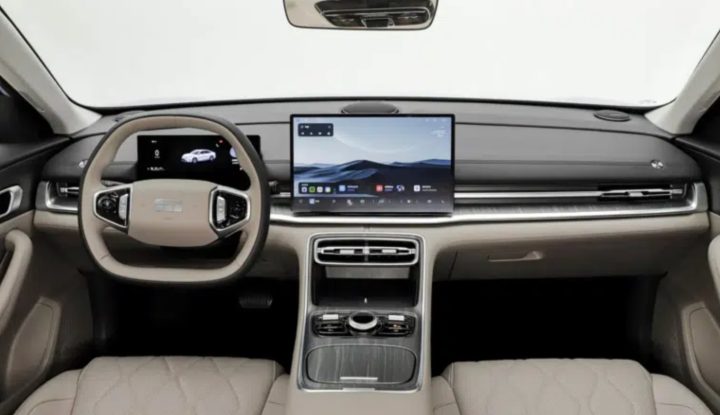
The Galaxy A7 debuts Geely’s Leishen AI Hybrid 2.0 (EM-i) powertrain, boasting a staggering brake thermal efficiency (BTE) of 47.26 per cent. To put that into perspective, most traditional petrol engines hover around the 30-35 per cent mark, turning the rest of their fuel energy into waste heat. Geely’s new 1.5-litre naturally aspirated setup extracts almost half the potential energy from every drop of fuel, resulting in a claimed combined driving range of over 2100 km.
So, how does it stack up against its arch-rivals? It firmly puts Geely at the top of the production PHEV food chain. BYD’s widely praised DM 5.0 system currently sits at around 46.06per cent BTE. It also represents a rapid internal evolution for Geely; the EM-i system found in the Geely Starray (which we are starting to see evaluated for western markets) peaks at 46.5per cent BTE. The A7’s 47.26 per cent leapfrogs both, though Geely is already threatening to break physics again with a Guinness-certified 48.4 per cent i-HEV system slated for future models.
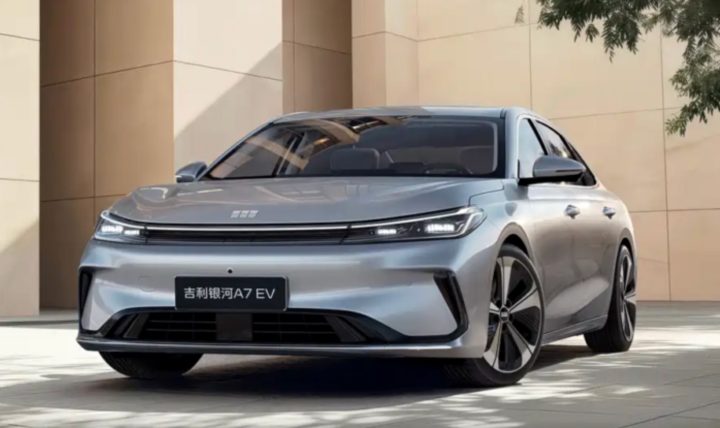
Are we getting the Galaxy A7 in Australia? Almost certainly not. The Australian market’s appetite for mid-size sedans is practically non-existent. However, this matters deeply. As Geely begins its aggressive push into the Australian market, this ultra-efficient hybrid architecture is bound to show up in its local SUV lineup at some point. For those of us who still appreciate the mechanical brilliance of a combustion engine, this is one arms race worth watching.

