GAC has entered the burgeoning Australian premium people-mover segment with the 2026 M8. As traditional passenger vans attempt to shed their utilitarian roots and pivot towards luxury transport, the Chinese newcomer has launched a flagship plug-in hybrid (PHEV) directly aimed at fleet operators and affluent large families.
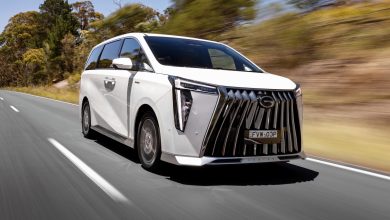
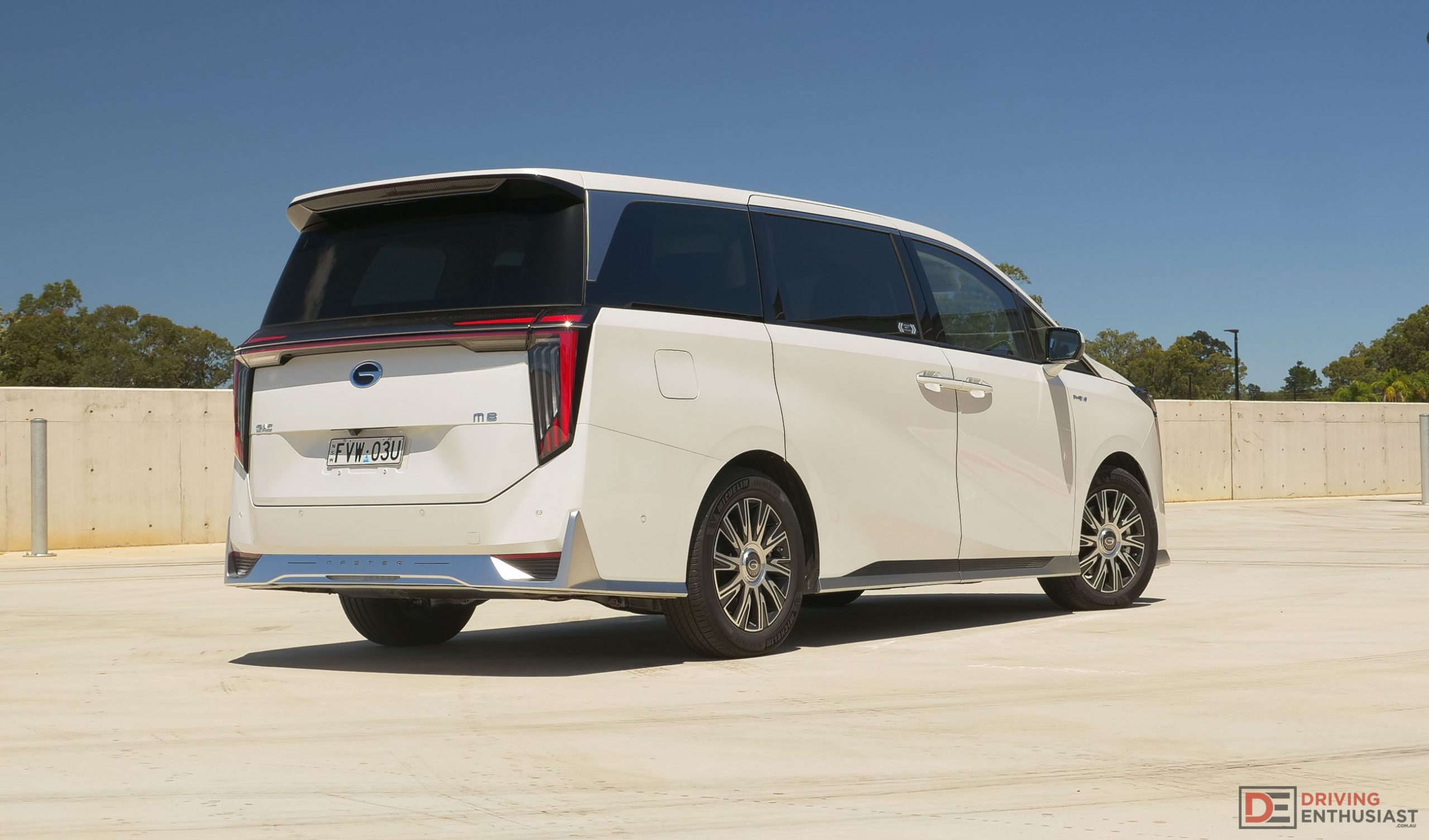
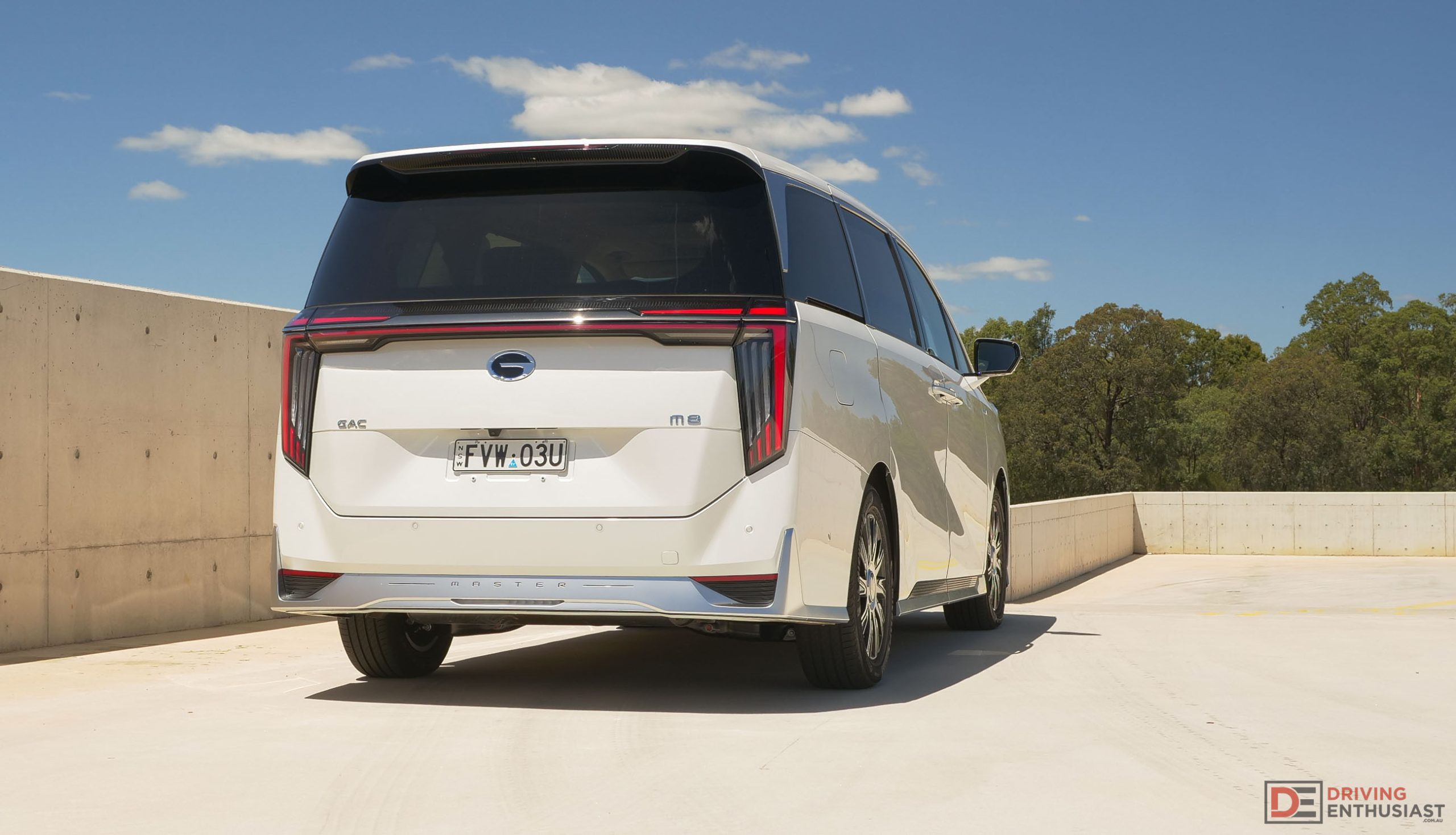
Visually, the exterior execution is polarising. It adopts an unapologetic ‘Master’ design language dominated by a massive front grille that covers almost the entire front fascia, with beautifully elaborate LED ‘tusks’ which earned it the nickname ‘Tuskers’.
Measuring 5212mm in length, 1893mm in width, and 1823mm in height, its dimensions drop it directly into the crosshairs of the segment-leading Kia Carnival, while undercutting the premium positioning of the Lexus LM and Mercedes-Benz V-Class. The core proposition of the M8 is whether a new entrant can leverage a segment-first PHEV powertrain to lure buyers away from established legacy marques without relying on a bargain-basement price tag.

2026 GAC M8 Luxury: Specifications
Engine: 2.0-litre turbo-petrol four-cylinder PHEV
Electrical: 25.6kWh battery, 106km electric range
Output: 274kW / 630Nm
Gearbox: Two-speed hybrid CVT
Drive type: Front-wheel drive
Wheels: F & R: 18×6.5, 225/60
ANCAP: Not tested
Tare weight: 2420kg
Power-to-weight: 8.83:1 (kg:kW)
Official consumption: 1.3L/100km
Our consumption: 7.2L/100kmFuel tank/Fuel type: 56L/91 RON
Power efficiency: 210.7kW:L/100km
0-60km/h: 4.71 seconds*
0-100km/h: 8.12 seconds*
60-110km/h: 4.41 seconds*
1/4 mile: 16.06 seconds at 149.9km/h*
Max acceleration: 0.640g*
100-0km/h braking: 41.87m in 3.65 seconds*
Max deceleration: -1.226g*
Peak decibel at 60-100km/h: 74*
Starting price: $83,590*Figures as tested by Driving Enthusiast on the day. Manufacturers’ claims may be different
2026 GAC M8: How much does it cost?
The 2026 GAC M8 is offered in a streamlined two-variant lineup. The entry-level Premium opens the bidding at $76,590 before on-road costs. Upgrading to the flagship Luxury variant brings the asking price to $83,590 before on-roads.
Attempting to woo buyers with an advanced powertrain and luxury appointments, the M8 wears a relatively high price for a Chinese newcomer. At these figures, the cost of entry essentially matches the flagship Kia Carnival GT-Line hybrid, while comfortably undercutting the all-electric LDV Mifa 9 Luxe ($129,000) and the exorbitant Lexus LM.
GAC covers the M8 with a 7-year, unlimited-kilometre vehicle warranty, backed by an 8-year, 200,000km warranty specifically covering the high-voltage battery and components. The brand includes five years of complimentary roadside assistance as well.
GAC Australia is yet to announce final capped-price servicing figures for the M8, but scheduled maintenance intervals will follow a standard industry cadence. To offset early running costs, buyers taking delivery in the initial launch phase are incentivised with the inclusion of a complimentary 22kW EV wall charger and bonus factory cashback offers.

2026 GAC M8: Interior & packaging
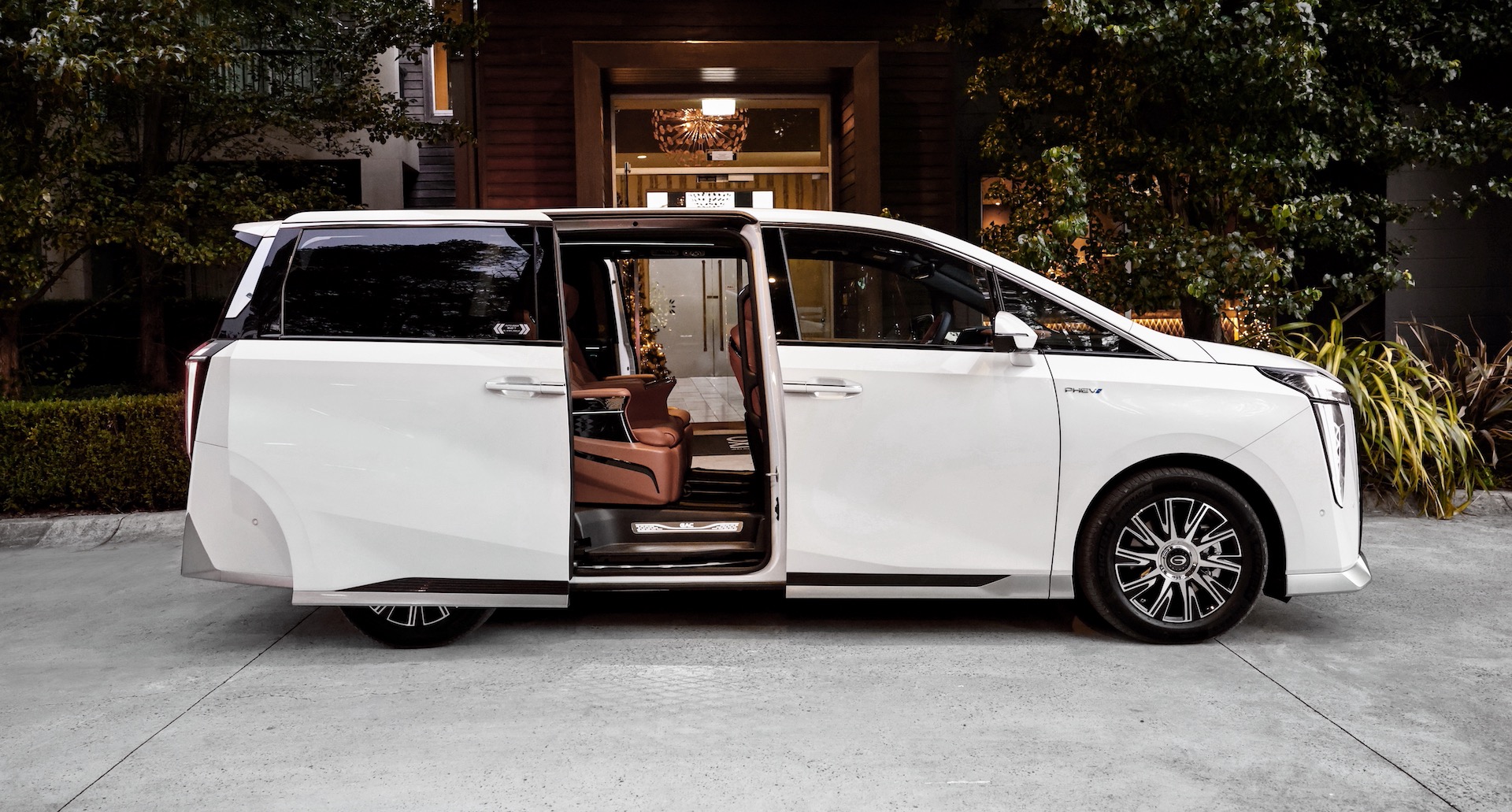
Standard exterior equipment on the Premium includes 18-inch alloy wheels, dual power-sliding side doors, acoustic glass, and a hands-free power tailgate.
Safety hardware is comprehensive, though the M8 currently remains unrated by ANCAP. The standard advanced driver assistance suite incorporates autonomous emergency braking, adaptive cruise control, lane-keep assist, safe exit warning, and rear cross-traffic alert. A 360-degree surround-view camera system is standard, with the Luxury variant upgrading from four to six parking sensors at each end.
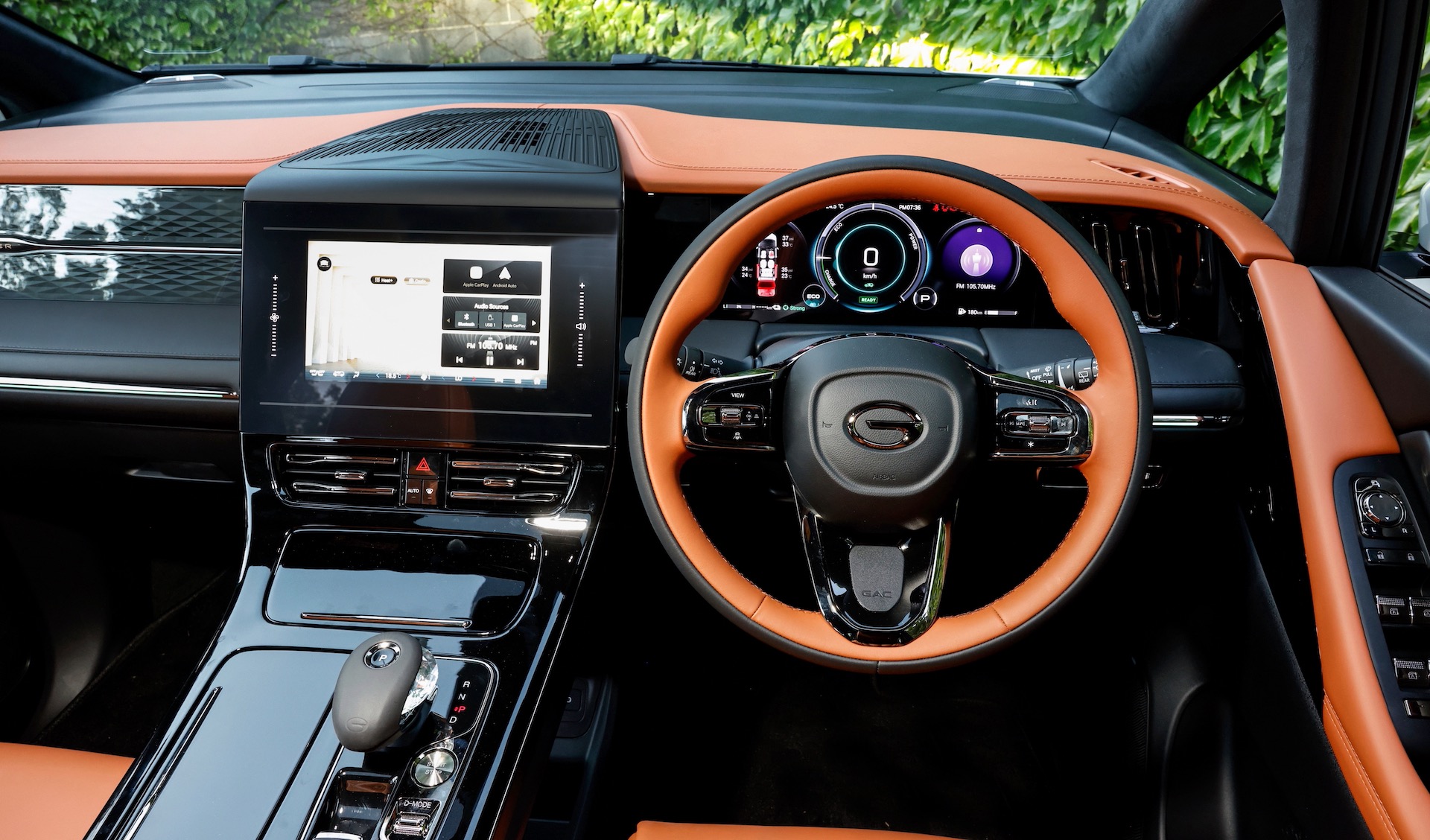
Cabin presentation is where GAC attempts to justify the premium asking price. The dashboard architecture features a deep, car-like cowl that successfully offsets the thick A-pillars. It houses a 12.3-inch digital instrument cluster and a 10.1-inch touch-screen infotainment system offering wireless Apple CarPlay and Android Auto.
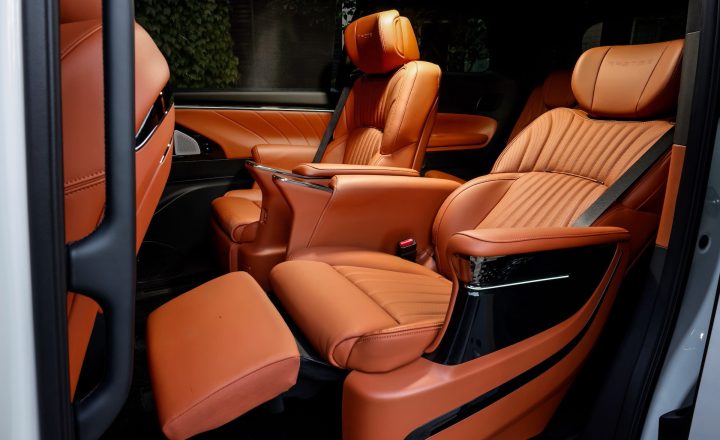
The primary drawcard of the M8 lies in its second row. Both variants are seven-seaters, but the first two rows feature individual captain’s chairs. Stepping into the $83,590 Luxury grade upgrades the upholstery to semi-aniline leather and adds full power adjustment, heating, ventilation, and a 10-point air pump massaging function for the second-row occupants. It also introduces rear tray tables, dedicated LCD control screens mounted in the armrests, and a cabin fragrance dispenser. Another beautiful detail is the LED pattern embossed in the sunroof. Things like this show the capability and ambition of GAC as a brand.
It is a curious mixture of colours with red, black and gold; materials with suede and pleather and actual nice touch points with door-handles that feel like hollow, Temu-sourced trinkets. This ADHD-addled reviewer loved the crystal fidget spinner gear lever, however.

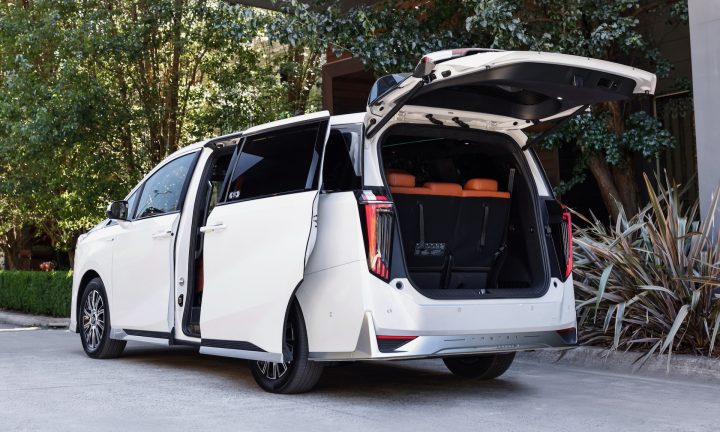
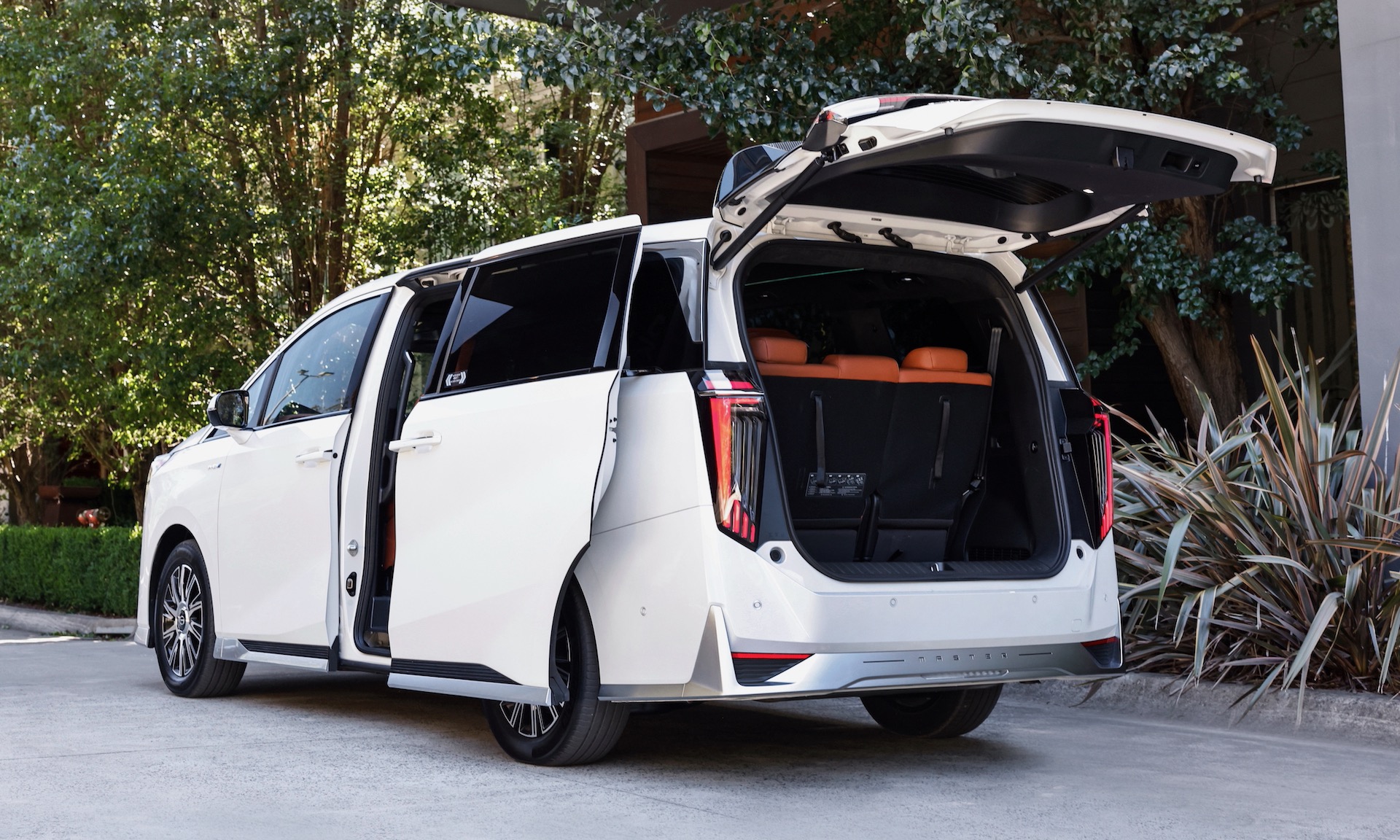
Operating on a lengthy 3070mm wheelbase, passenger accommodation in the first two rows is genuinely cavernous and highly comfortable. The suspension layout and heavily-insulated cabin yield an excellent environment for working on a laptop while on the move. However, the third row (trimmed in basic PVC rather than leather) is a more spartan affair, designed primarily for occasional use or children.
The primary packaging constraint is the vehicle’s payload capability. With a Gross Vehicle Mass (GVM) of 3000kg and a hefty kerb weight of 2420kg, the payload is restricted to just 580kg. If you have seven heavy adults on board, you will technically exceed the legal payload limit before loading any luggage. Boot capacity is rated at 280 litres with all seats deployed, expanding to 1500 litres with the third row stowed.
2026 GAC M8: Powertrain & handling
The M8 is powered exclusively by a plug-in hybrid architecture. A 2.0-litre turbocharged four-cylinder petrol engine works in tandem with a front-mounted electric motor, drawing energy from a 25.57kWh lithium-ion battery. Total system output is rated at a mighty 274kW and 630Nm. Drive is sent strictly to the front wheels via a two-speed Dedicated Hybrid Transmission (DHT).
The powertrain calibration is highly refined, perfectly suiting the luxury van brief. Acceleration is linear and surprisingly brisk, with GAC claiming an 8.8-second sprint to 100km/h – we timed it in 8.12 seconds with a Vbox. With the battery charged, the electric motor can handle the bulk of urban commuting, providing smooth and silent progress. The transition between electric and internal combustion power is cleanly managed, masking the handover effectively without jarring the driveline.
Chassis dynamics are dictated by the vehicle’s mass and its continuously adjustable electromagnetic dampers. GAC has tuned the MacPherson strut front and multi-link independent rear suspension purely for comfort. It filters out broken urban tarmac and maintains a level, composed ride, avoiding the crashing and shuddering typical of older commercial van platforms.

Unsurprisingly for a 2.4-tonne people mover, it does have some limitations. Pushed into a corner, the sheer mass and comfort-oriented damping result in noticeable but predictable body roll. However, the electromagnetic dampers maintain decent lateral control, preventing the vehicle from feeling wallowy or uncoordinated over undulating surfaces. The steering rack is largely numb but light enough to make manoeuvring the 5.2-metre body manageable in tight carparks.
If you want to be a yobbo, turning the traction control off in Sport mode results in unmitigated hilarity. Probably the quickest way to chew through a set of front tyres, so probably avoid this if you don’t want to replace them every month. Still gets its power down better than a TRD Aurion did, though. But, interestingly, this is one of the most powerful FWD vehicles on the new car market, outright, and yet it wears narrow 225/60 tyres.

The primary advantage of the PHEV architecture is its efficiency. GAC claims an electric-only driving range of 106km on the WLTP cycle, and an official combined fuel consumption figure of 1.3L/100km when the 56-litre fuel tank and battery are fully utilised in tandem.
On test, relying solely on the battery, we observed a real-world electric range of approximately 90km before the internal combustion engine was required. Once the battery was depleted and the M8 operated as a conventional hybrid, fuel consumption settled around a respectable 7.2L/100km. The vehicle accepts standard 91 RON unleaded. It supports 35kW DC fast charging, allowing a 0-80 per cent recharge in roughly 30 minutes, alongside standard 6.6kW AC home charging functionality.

2026 GAC M8: Key attractions/reasons to buy
- Executive second-row comfort: The Luxury grade’s captain’s chairs, featuring heating, cooling, massaging, and power leg rests, provide an exceptional passenger experience.
- Refined and powerful PHEV system: Delivering 274kW and 630Nm, the plug-in hybrid powertrain shifts the 2.4-tonne mass effortlessly while providing up to 90km of real-world electric range.
- Compliant ride quality: The electromagnetic adaptive dampers filter out road imperfections to deliver a level, calm ride perfectly suited to a luxury people mover (unique for this class).
- Generous warranty coverage: The 7-year unlimited-kilometre vehicle warranty and 8-year/200,000km battery warranty provide substantial peace of mind for a new-to-market brand.
- Idiosyncratic personality: Fidget spinner and 274kW through the front hoops is worth the price of admission alone – this was a fun car to review!

2026 GAC M8: Key considerations before you buy
- Restrictive payload capacity: A legal payload limit of just 580kg means you cannot physically carry seven heavy adults and their luggage without exceeding the GVM.
- Confronting front-end styling: The unapologetically massive front grille and sheer slab-sided profile will polarise buyers and dominate the vehicle’s visual presence in traffic.
- High initial purchase price: Starting at $76,590 and pushing past $83,000 for the Luxury variant, it demands significant financial outlay for a completely unproven badge in Australia.
- Limited luggage capacity with all seats up: With all seven seats deployed, the 280-litre boot is highly compromised, forcing buyers to choose between passenger count and luggage space.
2026 GAC M8: Video








How does it rate against its rivals?
-
Price
-
Quality look & feel
-
Interior tech
-
Powertrain performance
-
Ride & handling
-
X-factor (does it stand out in its class?)
Final word
It’s the first plug-in hybrid people-mover in Australia, so it has to be rewarded for that. And it is one of the most powerful FWD vehicles currently on sale – not much of a boast for a van, but, it all counts. Where this vehicle stands out is with proper luxury aspirations and features, adaptive suspension, and attention to detail. Yes, the handling is not the best and GAC’s history in Australia isn’t exactly extensive, yet it makes its mark in this class with admirable ambition. Worth a look if you’re shopping in this segment.