Ford Australia has confirmed a round of powertrain updates for its Ranger and Everest lineups, set to roll out from the first half of 2026. The changes mean the 2.0L Bi-Turbo diesel will be gone while the availability of the popular 3.0-litre turbo-diesel V6 will be expanded across more variants.
Yes, the 2.0-litre twin-turbo-diesel four-cylinder engine will soon be deleted from the range, and in its place the ‘low boost’ 2.0-litre single turbo-diesel will come in. However, it’s being revised to feature a new fuel injection system and a new timing chain (replacing the notorious wet belt design), aimed at delivering stronger reliability and smoother operation.
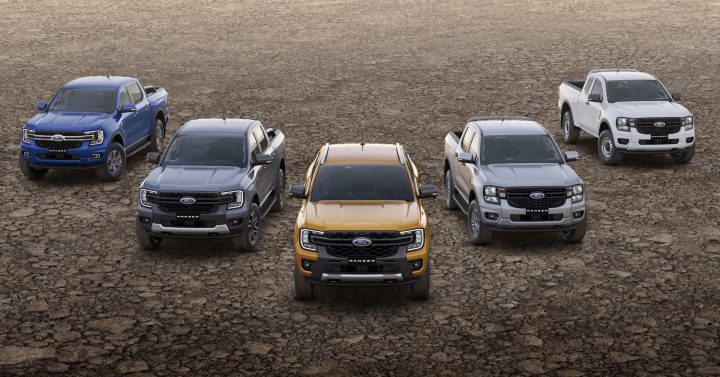
It pairs exclusively with Ford’s 10-speed automatic transmission, which becomes standard across all automatic variants.
With the 2.0-litre Bi-Turbo diesel departing, the V6 will soon be available in a broader range of models, extending its reach beyond higher-grade variants as seen today. This could impact desirability to some fleet buyers that impose a limit on emissions output, however, the 2.0L single-turbo will be the option there.
For example, the current Ranger Sport 2.0 Bi-Turbo offers an average consumption of 7.2L/100km and an average emissions output of 189g/km, while the Sport with the V6 is stamped at 8.4L/100km and 222g/km.
Specific outputs for the new single-turbo 2.0L unit are yet to be confirmed. Right now, the entry engine produces 125kW and 405Nm. It’s only available in entry XL grade and pairs with a six-speed auto. Ford said in a press release:
“The robust 2.0-litre [single] turbo-diesel engine has been upgraded with a new fuel injection system and timing chain for improved durability and performance, giving customers a capable and affordable powertrain option.”
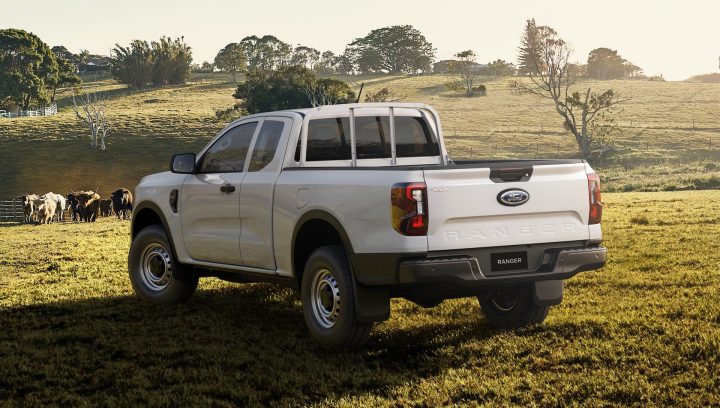
The 3.0-litre twin-turbo petrol V6 in the Ranger Raptor remains untouched, while the recently introduced Ranger PHEV combines a 2.3-litre EcoBoost petrol engine with a 75kW electric motor for a combined output of 207kW.
Full details on which variants will receive the 3.0-litre V6 are expected to be revealed closer to launch, with customer deliveries for the revised Ranger and Everest lineups scheduled to begin in the first half of 2026. Variants from the XLS and above are expected to be offered the V6.