The all-new Toyota LandCruiser Prado has caused a bit of a stir with fans, as it resets one of Australia’s most familiar SUV nameplates with a fresh design, mild-hybrid engine, and controversial boot and third row.
While the broader Prado range still caters strongly to off-road enthusiasts and family-car buyers who want a big and dependable SUV, the Kakadu positions itself as the most road-oriented and luxurious expression of the model.
That positioning brings with it a notable price tag, placing the Kakadu closer than ever to luxury alternatives such as the related Lexus GX 550 (from around $118k). Even so, Prado’s long-standing reputation for durability, broad capability and strong resale value remains central to its appeal.

2026 Toyota LandCruiser Prado Kakadu: Specifications
Engine: 2.8-litre turbo-diesel four-cylinder
Electrical: 48V, 4.3Ahr battery, 8.5kW/65Nm motor-generator
Output: 150kW@3000-3400rpm / 500Nm@1600-2800rpm
Gearbox: Eight-speed auto
Drive type: Four-wheel drive, centre diff lock, rear LSD
Wheels: F & R: 20×7.5, 265/60
ANCAP: Five stars
Kerb weight: 2595kg
Power-to-weight: 17.3:1 (kg:kW)
Official consumption: 7.6L/100kmOur consumption: 10.0L/100km
Power efficiency: 19.73kW:L/100km
0-60km/h: 4.75 seconds*
0-100km/h: 10.35 seconds*
60-110km/h: 7.64 seconds*
1/4 mile: 17.43 seconds at 130.3km/h*
Max acceleration: 0.586g*
100-0km/h braking: 41.90m in 3.39 seconds*
Max deceleration: -1.305g*
Decibel at idle: 47*
Peak decibel at 60-100km/h: 78*
Starting price: $100,690
*Figures as tested by Driving Enthusiast on the day. Manufacturers’ claims may be different
2026 Toyota LandCruiser Prado Kakadu: How much does it cost?
Prices start from $100,690, up slightly from its original $99,990 price tag when it arrived in Australia in 2024-2025. That’s obviously getting up there for a non-premium offering. Is there enough luxuries on board to justify the price? Would any amount of features justify the price?
Well, taking a look at some of its closest rivals, the Ford Everest Platinum starts from $82,990, and the Isuzu MU-X X-Terrain starts from $77,100, all excluding on-road costs. Both of these have crept up in price in recent times as well, and while the MU-X doesn’t come close for luxuries, the Ford does present similar or better credentials.
The thing with the Toyota is you’re also paying for a wider market presence in Australia, with more dealerships and support network around the country than any other. It also pays for a wider spread of parts distribution centres, so if you do break down in the middle of nowhere, chances are, you’ll be able to buy a new fan belt just down the road.
Another factor is resale value. The Prado holds its value better than any rival, according to Redbook private selling price averages, at the time of writing. However, a customer should not have to pay extra for that; it’s just a bonus side-effect of buying a Toyota. Right?

2026 Toyota LandCruiser Prado Kakadu: Interior & packaging
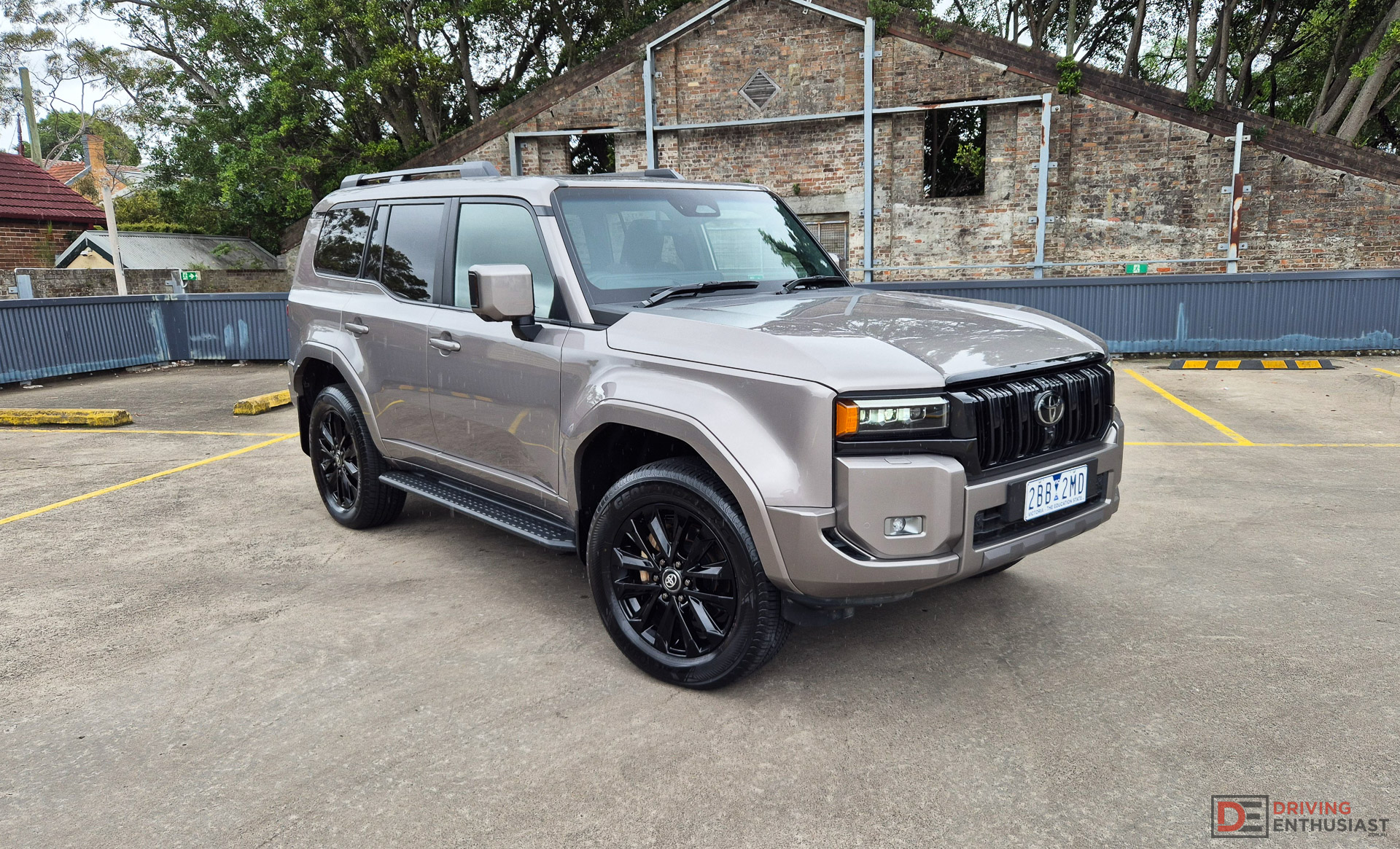
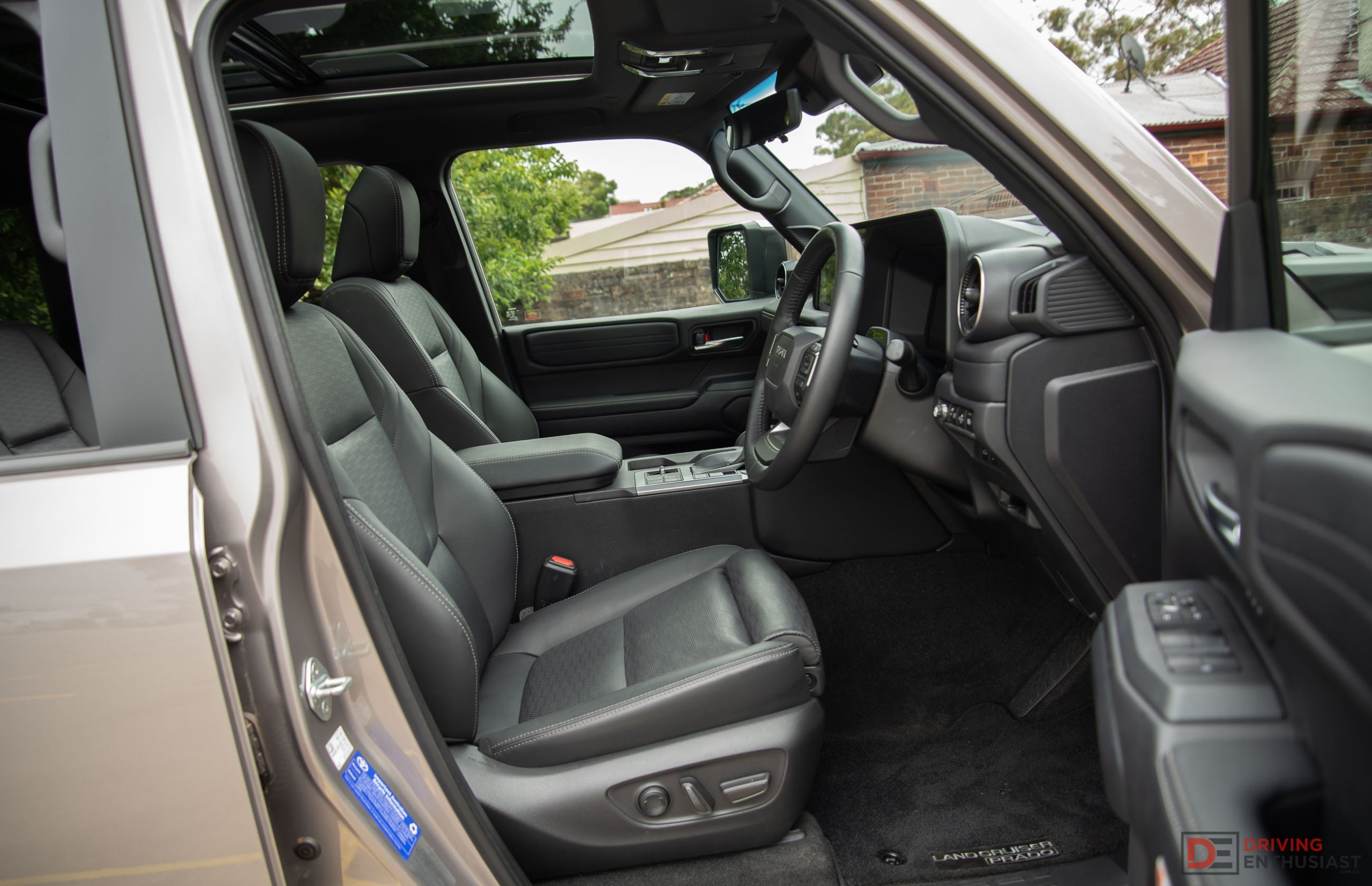
Inside, the Kakadu presents as the most polished Prado cabin to date. The overall layout is upright and functional, yet clearly more refined than previous generations, with improved materials, larger screens and a more premium feel across key touch points. The driving position is commanding and comfortable, with generous adjustment and excellent outward visibility, helped by the Prado’s tall glasshouse and squared-off proportions.
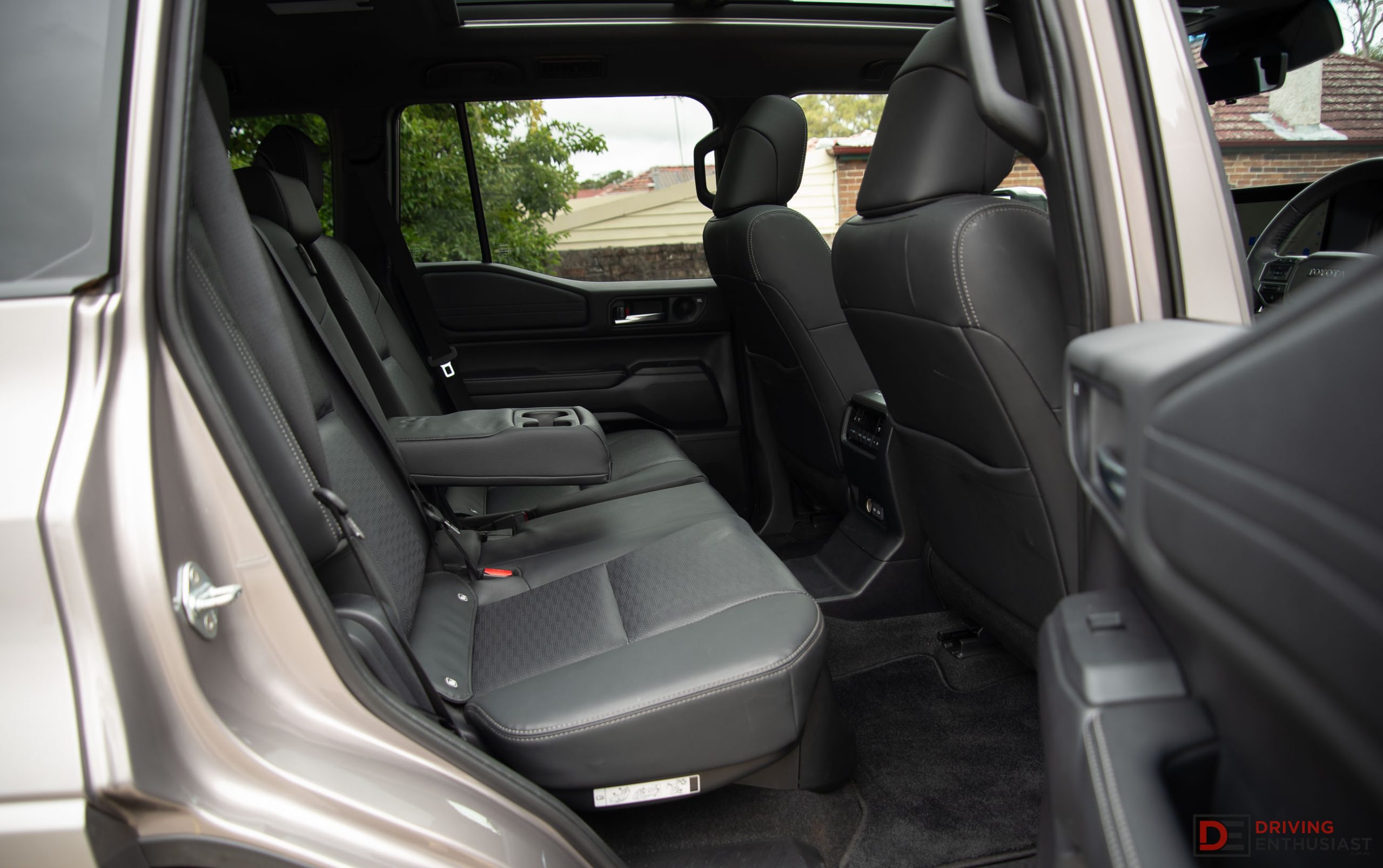
Space is generally strong across the first and second rows, making the Kakadu well suited to family duties. Rear passengers benefit from a comfortable seating position and generous headroom, although the sizeable centre driveline tunnel does compromise comfort for the middle-seat occupant on longer journeys.

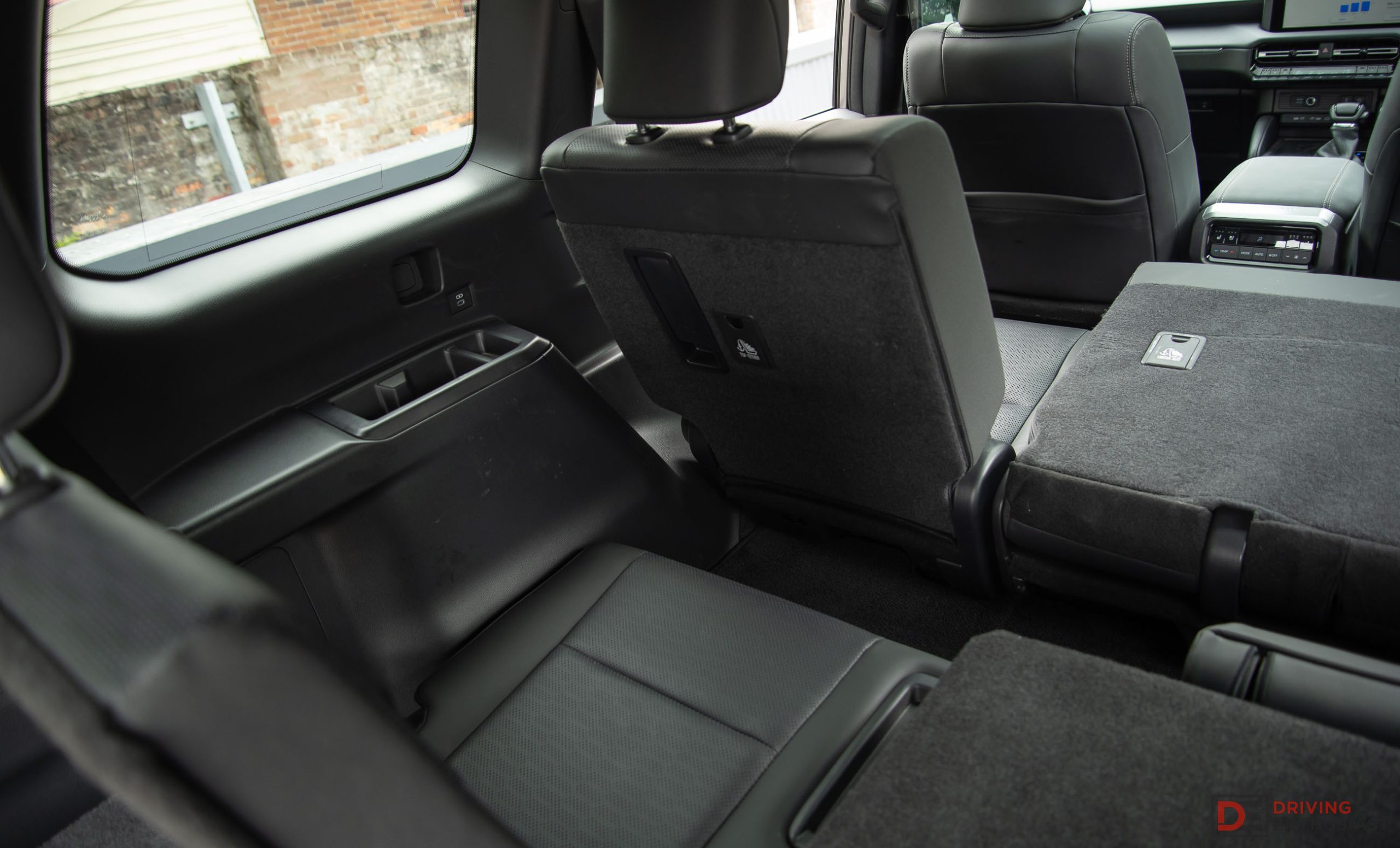
In the third row, headroom and legroom are reasonable, but not class-leading. A decent step-down from the seat bench means your legs and feet can drop down which helps with comfort. But, the second row doesn’t slide forward, which means you can’t adjust the gap between the third and second rows like you can in some rivals.
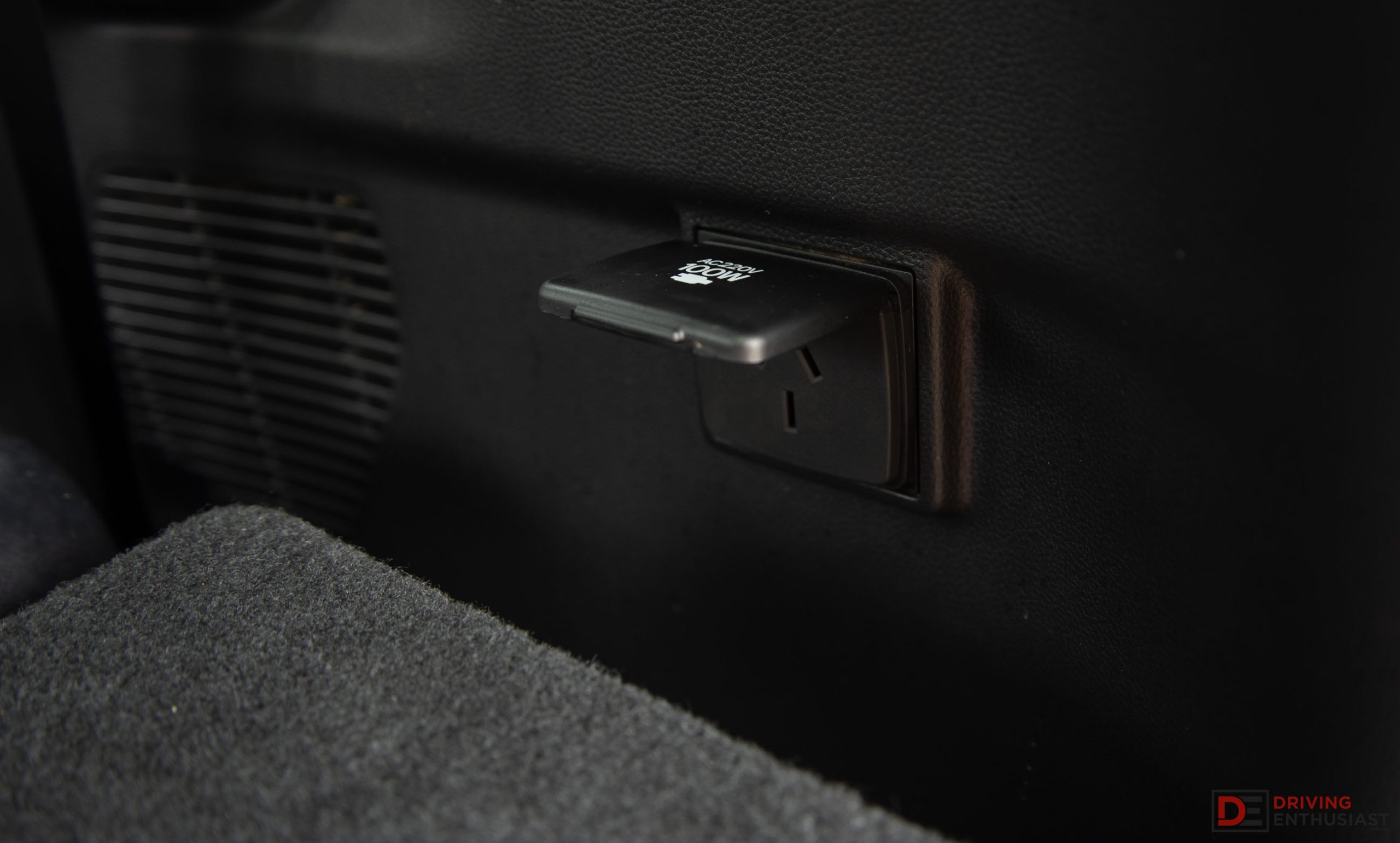
Boot space, however, is one area where the Kakadu has caused the biggest stir. The 48-volt mild-hybrid battery is packaged beneath the boot floor and eats into cargo capacity, seemingly, resulting in a shallower load area than some buyers might expect from a large SUV. It’s not a deal-breaker, but it is noticeable, particularly when compared with similarly-sized rivals or even the Lexus GX, which avoids this issue entirely because it doesn’t feature mild-hybrid tech.

On paper the boot measures 182L with three rows up, or 906L with the third row down, and 1829L with both rear rows down. Now, interestingly, these figures are actually bigger than what was offered in the old model; 120L/620L/1800L in the old Kakadu.
So, although there has been a lot of fuss and complaint about the new boot, it is actually bigger than before. Perhaps thanks to the boxier shape of the new model helping to maximise space efficiency. That tub at the back is also a actual tub and can be used for storage, or removed completely.

In terms of amenities, the Kakadu is comprehensively equipped. Features such as ventilated and heated seating, a panoramic glass roof with an opening section, head-up display and adaptive suspension help justify its flagship status. The interior strikes a careful balance between durability and comfort, feeling well suited to daily commuting while still robust enough for touring duties and family wear and tear.
For example, there are lots of hard plastics used for high-wear areas, such as the lower door trims and grab handles and so on, but softer materials and leather are used for less sensitive areas for better comfort and acoustics. Does it look like a $100k vehicle inside? Not immediately, but the rugged new design theme is more animated than before, with lots of physical buttons showcasing many ‘functions’ and gadgets, which we guess translates to price.

2026 Toyota LandCruiser Prado Kakadu: Powertrain & handling
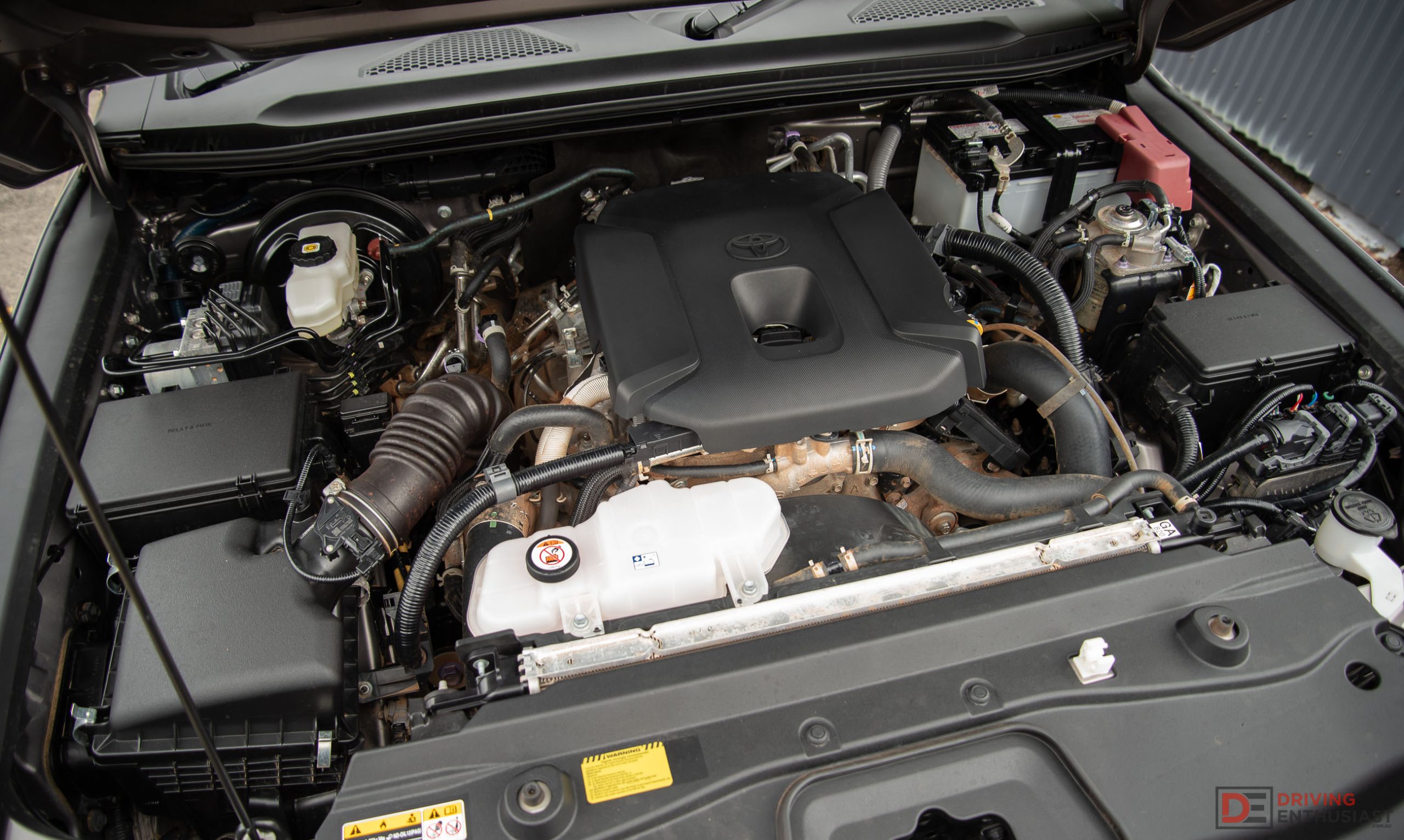
Powering the Kakadu is Toyota’s familiar 2.8-litre turbo-diesel four-cylinder engine, now paired with a 48-volt mild-hybrid system and an eight-speed automatic transmission. On the road, the combination feels smooth, quiet and well matched to the Prado’s relaxed driving character. Throttle response is progressive rather than urgent, but torque delivery is strong, with all 500Nm available from just 1600rpm and up to 2800rpm.
In terms of towing, the GVM of the Kakadu is 3200kg and the GCM is 6600kg across all variants. All are rated at 3500kg braked towing capacity. In Kakadu form you’ll run into the GVM before hitting the GCM. Basically, hook up a 3500kg trailer and you’ll be left with 255kg of GVM, once you take off the 2595kg kerb weight of the Kakadu and account for 350kg of towball download. In other words, lesser variants are better suited to towing really heavy stuff because their kerb weights are going to be lighter, thus eating less into the GVM.
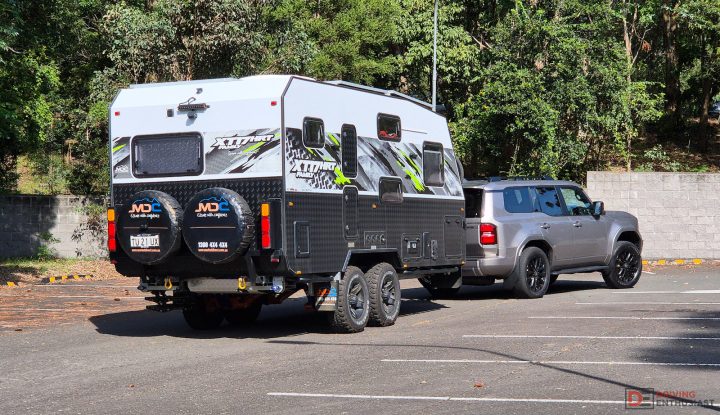
So with just 255kg, minus an 80kg driver, you have 175kg leftover for any other passengers and cargo. It’s not much. Run the Isuzu MU-X X-Terrain through the same calculations and you’ll see it returns the exact-same figures as this. The Ford Everest Platinum is better, leaving you with 301kg of GVM (not including a driver).
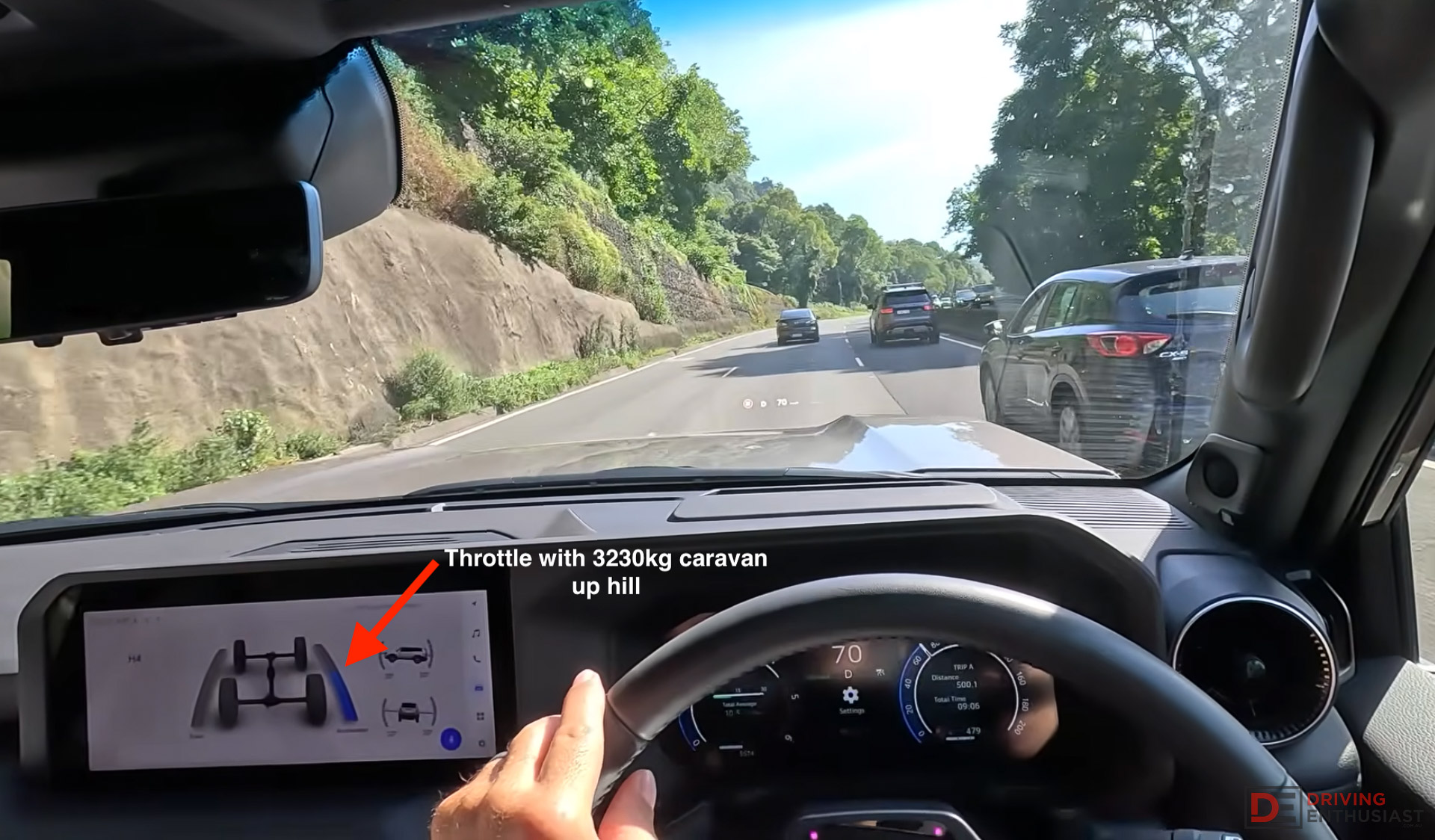
For this test we hooked up a mate’s dual-axle caravan, which had a tested total weight of 3230kg, to see what’s what. And, surprisingly, this 2.8L engine pulled the outfit up a long steep hill without much struggle.

The owner of the caravan uses a modified 300 Series to pull it, and we had a go in that back-to-back to see the difference. With 700Nm in the 300, it obviously pulls up hills with less effort, requiring about 30 per cent throttle rather than 50-80 per cent throttle in the Prado going up the same hill. The 300 also felt more planted and stable, understandably given its larger footprint and higher kerb weight. But overall the Prado did quite well in our opinion (more in the video below).
Driving refinement is one of the main highlights. The diesel remains impressively subdued at highway speeds, with minimal vibration or intrusion into the cabin. And the new transmission shifts smoothly and keeps the engine comfortably within its torque band.

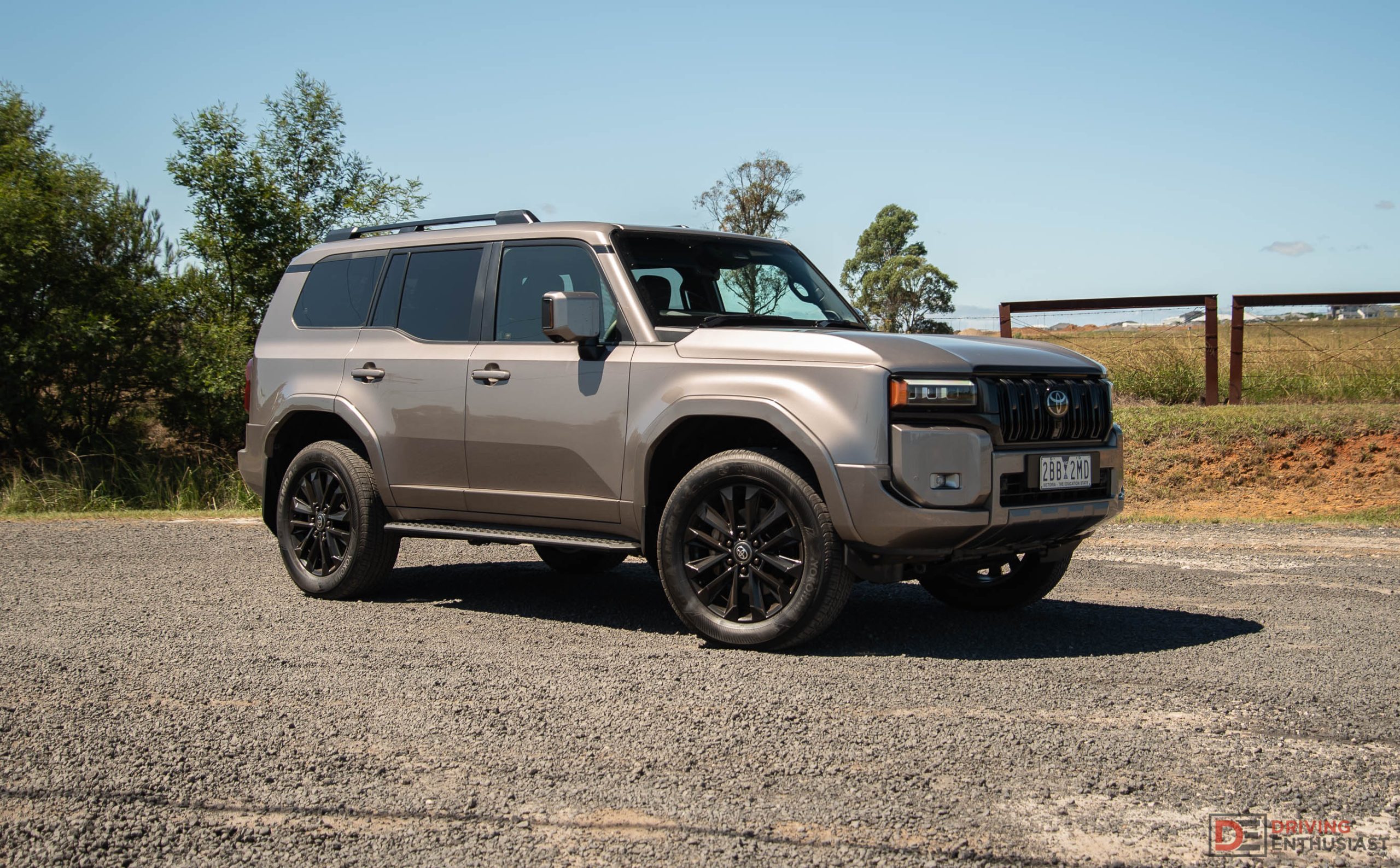
Ride comfort is another strength. Thanks to the Kakadu-exclusive adaptive suspension and highway-terrain tyres, the Kakadu delivers a noticeably calmer and more settled ride than its more off-road-biased siblings. It soaks up rough country roads with ease and feels composed on long highway runs, making it particularly appealing for buyers who spend the majority of their time on sealed surfaces.
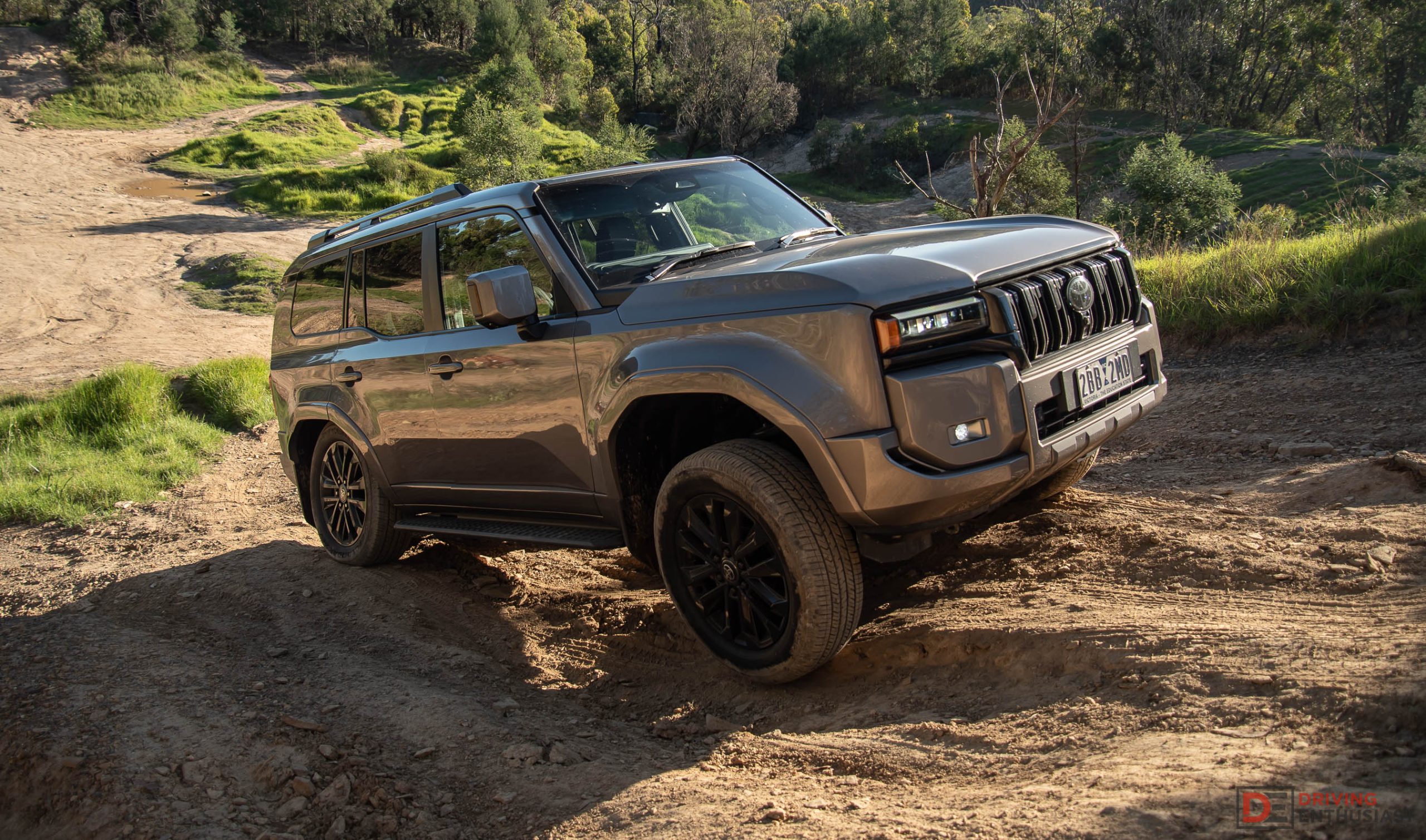
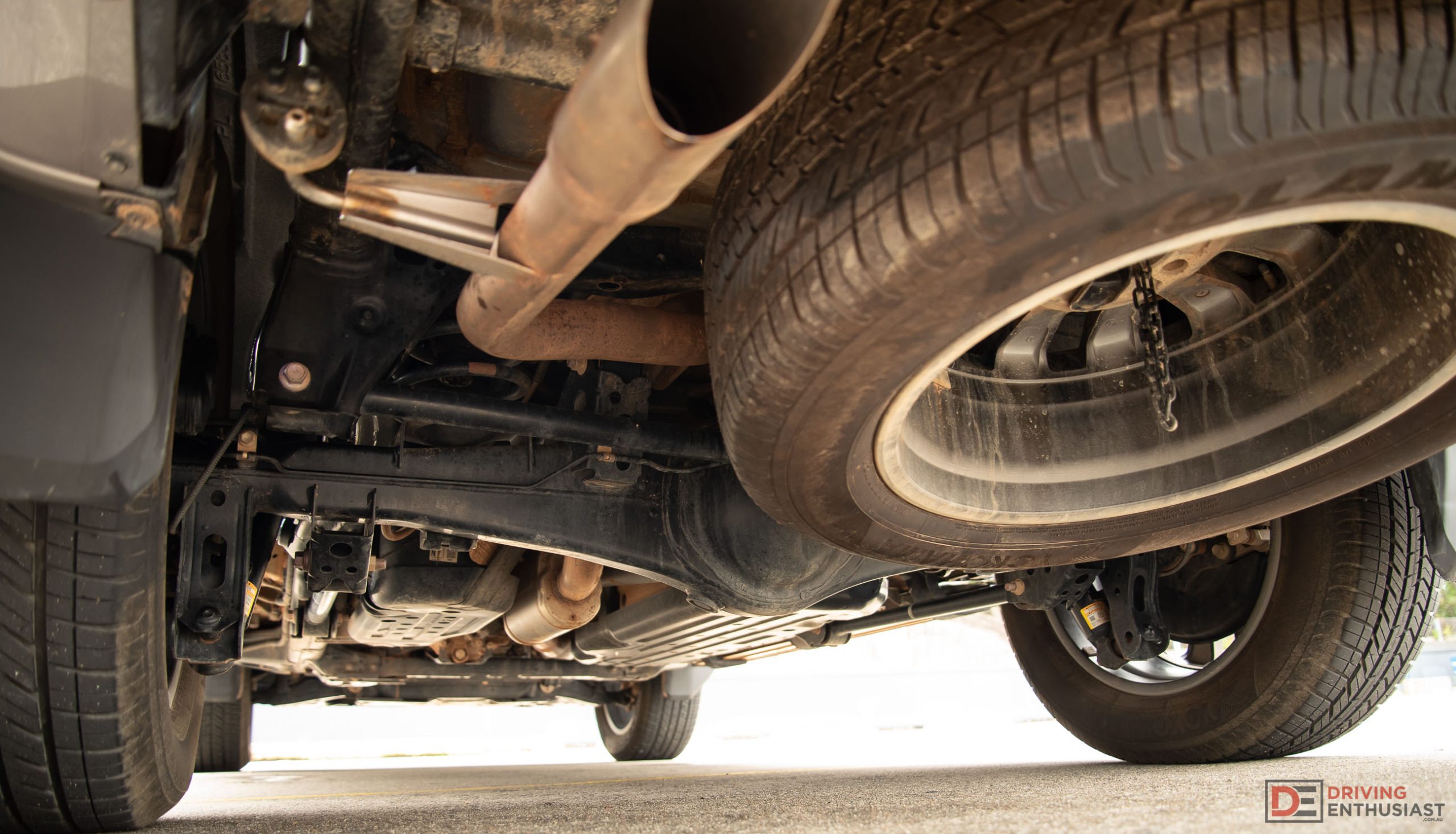
Despite this road-oriented focus, off-road capability remains a strong suit. While the Kakadu lacks a rear differential lock – a feature increasingly common in this segment – it compensates with a centre locking differential, rear limited-slip diff and Toyota’s highly effective traction and crawl control systems. On reasonably tough trails, these systems work seamlessly, delivering confident progress, without the need for expert off-road training.

For most owners, this setup will be more than sufficient for real-world applications. However, those who regularly tackle more extreme terrain may still prefer the mechanical certainty of proper locking diffs, as found in more hardcore variants or rivals. The Kakadu is capable, but its focus is clearly on versatility rather than outright off-road aggression.
Overall, the Kakadu feels like a mature and thoughtfully developed large SUV. Steering is light and predictable, braking performance is decent, and it feels easier to place on the road than its size might suggest. It’s not particularly engaging to drive around corners, but it is calm, reassuring and very easy to live with. Fuel consumption is also respectable, with an official average of 7.6L/100km – we averaged around 10L during our test. Not bad for a big luxury-spec SUV.

2026 Toyota LandCruiser Prado Kakadu: Key attractions/reasons to buy
- Tough new design: It’s the best-looking Prado ever, in our opinion, blending rugged go-anywhere themes with modern and refined highlights. Same with the interior.
- Buttons: Lots of physical buttons inside, making functions easy to engage while on-the-go. But there is a big screen as well for the media and connectivity.
- Resale value and long-term reputation: Let’s face it, one of the reasons anyone buys a Toyota is because of its excellent resale value and reliability history.
- Smooth engine: Of course, it is a bit disappointing there isn’t a V6 option here, but we can’t forget this 2.8L is pleasingly refined and quiet for a four-cylinder unit in this class. Performance is adequate, too.
2026 Toyota LandCruiser Prado Kakadu: Key considerations before you buy
- No V6 option: Using the same 2.8L across multiple model lines in Toyota’s showroom ensures good wide-reaching durability and dependability when it comes to parts and keeping things focused. But a V6 would be nice, especially for this top-spec Kakadu.
- GVM leftover at max towing: You’re left with 255kg of GVM if you hook up a 3500kg trailer. That’s not going to be enough for a family and their luggage. Similar to some rivals, however.
- Price: It is quite expensive, at just over $100k. At least you’ll likely get heaps of that back when it comes time to sell.
2026 Toyota LandCruiser Prado Kakadu: Video









How does it rate against its rivals?
-
Price
-
Quality look & feel
-
Interior tech
-
Powertrain performance
-
Ride & handling
-
X-factor (does it stand out in its class?)
Final word
The new Prado Kakadu is a highly capable flagship that leans decisively toward comfort, refinement and family-friendly usability. It might not be the most hardcore off-roader in the range, nor the most luxurious SUV at its price point, but it strikes a compelling middle ground that will appeal to a broad audience. Factor in Toyota’s excellent resale value and large local network, and it’s easy to see why it is a favourite among Aussie buyers.