American pickup trucks are often labelled as nothing but big petrol-guzzlers. And, yeah, there is some truth to that. They often feature a large-capacity engine, run on petrol, and produce a lot of power just to get the things moving, because they are usually heavy.
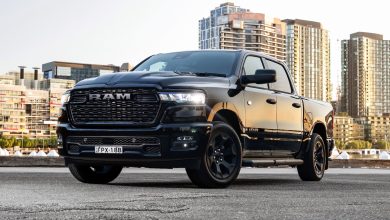
When RAM announced it would be introducing an inline-six petrol engine for its new 1500, I was genuinely excited. Not because of the potential fuel saving benefits, but because I like inline-sixes. Well, the one in the 1500 is quite an interesting one for a couple of reasons.

Firstly, it is twin-turbo and at the perfect capacity, in my opinion; 3.0 litres, which means 500cc per cylinder. That’s a good size piston in my view. Not too big that it’s heavy to push up and down, but big enough to offer decent rotating mass to assist with cruising and to provide a free-revving nature.
The other reason is the power. It’s actually offered in two states of tune; the Standard Output and High Output. In standard form it produces a healthy 313kW and 635Nm, while the HO kicks out a whopping 403kW and 707Nm. These are impressive figures for its capacity; 104.3kW/litre and 134.3kW/litre, respectively.

For reference, the latest Porsche 911 GTS hybrid with its 3.6L engine offers 110.5kW/litre. In other words, this is a serious engine. And honestly, I’d love to see Stellantis (RAM’s parent company) implant this engine into a smaller vehicle, like a large or medium SUV or even a sedan. It would hammer along.
Anyway, the main reason RAM dropped the V8 in the first place (although it does seem like it is coming back in the USA) is because of fuel economy. In standard output form the official average is 10.7L/100km, easily bettering the old RAM 1500 HEMI V8’s 12.2L/100km official average.

So, we thought what better way to test its economy than by doing a simple test; drive it until it runs out of petrol. Now obviously you could do this in mixed conditions, with some city driving, suburban running about, and some highway stuff. However, we thought it might be more interesting to try and get from Sydney to Melbourne on one tank of fuel.
The numbers weigh up perfectly in terms of being a relatively tight challenge. That official 10.7 rating in the standard output model, with its 98L fuel tank, translates to a theoretical average range of 915km. The drive from the heart of Sydney to the heart of Melbourne is about 880km, according to Google Maps.

On paper, it seems doable. But on paper doesn’t factor in traffic, toilet stops, air-con on and cruise control running, and doesn’t factor in weather conditions and other variables.
As you can see in the full trip video below, we managed to easily get from Sydney to Melbourne on one tank, and actually made our way back north about 200km. When the engine spluttered to a stop the trip computer showed 1117.9km, with a total average of 9.5L/100km.

Considering the level of power and torque on offer, and the fact that it can also do 0-100km/h in a Vbox-verified 5.8 seconds, that’s quite amazing. And the RAM 1500 isn’t exactly an aerodynamic masterpiece.
It’s worth noting this test was done with no passengers on board and no load in the back, so you should expect higher consumption if loaded right up. To some degree anyway. But we did run with the air-con on almost the entire trip (until the outside temp dropped below 10 degrees), and had cruise control engaged most of the way. Check out the video below to see how it went.