In Australia, our insatiable appetite for the best new ute shows no signs of abating. While the 4×2 category is down slightly towards the end of 2025, the 4×4 category is up to the tune of 3.5 per cent – and that’s before all the newcomers are counted.
Aussies are always looking for the best ute for towing, and the safest new ute 2026 has to offer, the most technically advanced pickup or just the coolest, meanest thing with a tray that says “GRR! MOVE OVER!”
The big success story of 2025 was the BYD Shark 6. With 8.5 per cent volume at the time of writing, it has acquitted itself well to a segment which many thought would be averse to change. GWM with the Cannon Alpha PHEV and Ford with the Ranger PHEV have followed suit, but the momentum of the Shark shows there is scope to put forth progressive ideas within the segment.
Here, in no particular order, are the top 10 best hybrid and plug-in hybrid utes and pickups expected to be available in Australia in 2026, with an emphasis on efficiency, towing performance, and expected order of arrival.
1. 2026 Toyota HiLux 48V/ EV – early 2026
The veil has come off the 2026 Toyota HiLux, with some shock and awe. Many predicted it might move to the same TNGA-F platform as the USDM Tacoma, as well as the LandCruiser 300, Prado and Tundra, but alas. Said to evoke a sumo wrestler, the front styling is a major departure from the outgoing model. Thankfully, the interior has come in for a much-needed update too.
It’s business as usual from the powertrain front, with the 2.8-litre turbo-diesel 1GD-FTV four-cylinder continuing on. Those hoping for an eight-speed automatic will have to settle for the six-speeder, but to be fair, it’s a combination that works well in the real world. Where it may struggle is rear seat room relative to newer and larger rivals, but ostensibly, it’s a formula that works for many.
Joining the range, for the first time, is the EV version. This could be popular for many use cases including mining companies, with its 144kW/473Nm dual motor system and 59.3kWh battery, good for relatively low 240km of WLTP range. What is the towing capacity of the 2026 HiLux? 3500kg in diesel form, 1600kg for the EV. Additionally, the EV has a 715kg payload versus around 1100kg (depending on model) for the diesel – more if you opt for the factory GVM upgrade.


2. GWM Cannon Alpha PHEV AT-1 tune – early 2026
When the GWM Cannon Alpha plug-in hybrid lobbed in 2025, we saw a lot of potential. 300kW and 750Nm connected to a nine-speed auto is very impressive on paper. Unfortunately, the execution left a lot to be desired with spongey brakes, non-existent secondary damping (which made it bob and jostle) and generally ordinary handling characteristics.
Thankfully, GWM has recruited non-other-than former Holden engineer Rob Trubiani to hone its vehicles with the AT-1 (Australian Tune 1) program, so you can be AT-1 with the car. Early reports indicate a much more harmonious relationship with Australian roads, and gripes addressed with no impediment to capability. It remains a five-star ANCAP vehicle with 3500kg towing capacity.


3. JAC T9 Hunter PHEV– Q1 2026
Although the JAC T9 didn’t exactly bowl us over when we reviewed it, the plug-in hybrid version boasts some head-turning numbers; 385kW and 1000Nm of total system output will propel it to best-in-class for power and torque.
Thanks to its 31.2kWh battery pack, it should manage around 100km of electric range, eclipsing the Shark 6 and Ranger PHEV (80km and 49km, respectively) at the time of writing. This should be enough to propel JAC from also-ran status to attention grabber. Furthermore, with a 3500kg braked towing capacity and a sub 1000kg payload said to be retained, there seems to be little in the way of compromise so we are quite eager to check this one out. It’s set to arrive in the first quarter.

4. MG U9 PHEV – H2 2026
With a modest sales start to the freshly-released MG U9 ute, the brand has explicitly confirmed that it will be adding a PHEV version in the second half of 2026, although the exact specs are unknown at the time of writing. It will no doubt be looking to retain its payload, 3500kg towing capacity and novel features such as the ‘smart hatch’ folding rear bulkhead, as they make up the ute’s USP.
Parent company SAIC manufactures the MG HS PHEV as well as a PHEV version of the MIFA (in other markets), so it’s safe to assume it will follow a similar formula to its rivals. This could entail a 2.0-litre turbocharged four-cylinder engine and a large capacity battery. Expect pricing to be in the $65-75,000 range when it lobs. This will be a very important ute for MG in light of NVES.


5. Chery diesel PHEV ute (name TBC) – Q4 2026
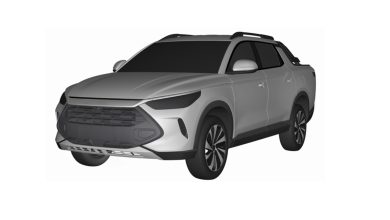
At the launch of the Tiggo 9 Super Hybrid, Chery executives could barely contain their glee at an incoming model aimed at the Australian ute segment. It is expected to be based on the Rely KP3X concept, which means retro-themed, rugged styling front and rear with a focus on accomodation and utility.
While Chery has not confirmed a powertrain yet, the winning combination is said to be a turbo-diesel PHEV, making it one of – if not the first – of its kind to do so. Chery isn’t messing around either, with targets of a 3500kg towing capacity and 1000kg payload. It’s not coming here to concede any ground to Ranger or HiLux.


6. 2026 BYD Shark update: 2.0L, 3500kg towing – late 2026/2027
BYD’s Shark 6 plug-in hybrid ute took Australia by storm in 2025, and it’s set to continue its dominance in 2026. This dual-cab 4×4 combines a petrol engine with dual electric motors, pumping out a massive 321kW and 650Nm – one of the most powerful dual-cabs on sale. With an electric-only range around 100km, the Shark 6 can handle daily commutes on EV power yet still roar to life with petrol for long hauls. The braked towing capacity currently stands at 2500 kg, but an upcoming update is expected to boost that to the magic 3500kg to rival traditional diesel rivals.
An upgrade to a 2.0-litre engine for more grunt when the battery is low is also in store, as well as more powerful electric motors and even a locking diff or two to improve off-road performance. It’s expected to arrive some time in 2026 or early 2027.

7. Deepal heavy duty PHEV ute – late 2026/early 2027
In 2025, we encountered some spicy and exclusive information about a new ute from Deepal. Not the E07 ‘multitruck’ – something bigger and out to hunt Sharks. Unlike its arch-rival, it’s set to bolt out of the gates with a 2.0-litre turbocharged engine, offering up to 480kW and a 3500kg towing capacity.
Most impressively, it is expected to sport a 200km battery-only range, and an interior finished to an extremely high standard in terms of fit-and-finish. At the risk of using a well-worn cliché, this could be a game-changer for interior sophistication in the dual cab ute segment. 17-inch infotainment screen and F-150-style toggle switches and a wide centre console could make this a great place to spend a workday or weekend. Off-roaders will not be disappointed either, with some serious 4×4 hardware on the cards for this unexpected disruptor.

8. Mitsubishi Triton Hybrid – by 2027
Mitsubishi’s all-new Triton has just launched with a diesel for now, but a hybrid Triton is firmly on the horizon and aimed squarely at the likes of BYD and Ford. The company has confirmed it is fast-tracking a petrol-electric hybrid version of the Triton ute, likely within the next year or two.
Interestingly, Mitsubishi is taking a slightly different approach; initial reports indicate the Triton hybrid will use a parallel hybrid (sometimes called a “P2” hybrid) without a plug at first – essentially a powerful electric motor sandwiched between a petrol engine and the transmission (a bit like the Ranger PHEV). This setup will allow the Triton to keep its traditional Super Select 4WD system and mechanical low-range, keeping Mitsubishi’s off-roading reputation intact. This was after Mitsubishi Japan tested a BYD Shark 6 and decided it is best to go with a mechanical setup for more consistent performance. It’s understood Mitsubishi will likely go for a petrol turbo engine – possibly a larger version of the Eclipse Cross’s 4B40 1.5 turbo.


9. Nissan Frontier Pro PHEV – by 2027
We had initially speculated that Nissan could adopt the e-Power system for the all-new Navara, until we saw how much commonality the D27 Navara shares with the Mitsubishi Triton. Interesting news has come in the form of the Nissan Frontier Pro PHEV – it is expected to make its way here by way of China. Although it utilises a 1.5-litre turbo four-cylinder, total system output is a meaty 300kW and 800Nm. An impressive all-electric range of 135km would propel it to top of class. This was apparently confirmed by dealers, but Nissan Australia has been tight-lipped.
Unlike the just-announced Navara and the USDM Nissan Frontier (different to the Pro PHEV) which shared its heritage at one stage, the Frontier Pro uses a different platform, albeit one that retains mechanical connection to the wheels.


10. Isuzu D-Max Plug-in Hybrid – expected in 2027
Some thought Isuzu was going to curl up into a ball and die in the face of impending NVES regulations, but, turns out a reinvention is on the cards.
Australia’s draconian new emissions laws put a lot of ute manufacturers in an adapt-or-die scenario, and Isuzu will be choosing the former with a new plug-in hybrid powertrain made available for its MU-X and D-Max. While details are thin on the ground, we just know Isuzu will not want to aggravate its loyal customer base with compromises to towing, payload and outback dependability. Isuzu customers are some of the most fiercely loyal in the country so it will need to tick a lot of boxes to ensure it remains true to form.
We’ve heard Isuzu is considering a V6, but a four-cylinder seems more likely, paired with a sandwich-type electric motor between the transmission and engine. Like the Ranger PHEV and Triton PHEV, it’s set to offer proper dual-range and a mechanical locking differential rather than just electric motors. Again, official details are yet to be confirmed. However, Isuzu already offers a fully electric D-Max in parts of Europe, so electrification is not as far out from its wheelhouse as you might expect.