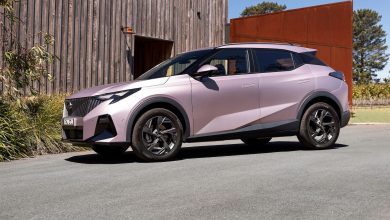
GAC’s expansion into Australia continues with the arrival of the M8 PHEV; a boldly styled seven-seat luxury people-mover that undercuts its segment on price while offering levels of comfort and equipment you’d normally associate with far more expensive machinery.
At the local media launch, we were able to spend some time behind the wheel on typical Aussie country roads and in the suburbs for a first taste. And right away, the M8 is ambitious – not just for GAC, but for the entire MPV segment.

2026 GAC M8: Specifications
Engine: 2.0-litre turbo four-cylinder plug-in hybrid
Electrical: 25.6kWh battery, 106km range
Output: 274kW / 630Nm
Gearbox: Two-speed CVT auto
Drive type: Front-wheel drive
Wheels: F & R: 18×6.5, 225/60Tare weight: 2420kg
Power-to-weight: 8.83:1 (kg:kW)
Official consumption: 1.3L/100km
Fuel tank/Fuel type: 56L/91 RON
0-100km/h (claimed): 8.8 seconds
Starting price: $76,590
2026 GAC M8: How much does it cost?
Priced from $76,590, it enters the market as the only plug-in hybrid people-mover currently on sale in Australia. Two trim levels are offered, with the top Luxury kicking off from $83,590 – a respectable price jump up from the base Premium. (Price excludes on-roads.)
One of the biggest problems facing the M8, in our opinion, is the fact this market segment is very small in Australia. The best-seller is the Kia Carnival, accumulating 9962 sales so far this year (through November, VFACTS). But then from there it drops 1109 units over the same 11-month period for runner-up, the Hyundai Staria.
Even compared with the premium MPV class, sales are very low. Combine the Lexus LM, Zeekr 009, Mercedes-Benz V-Class, Volkswagen Multivan and ID. Buzz, as well as the LDV MiFa9 sales, and you’re still only at 1274 units year-to-date. It’s a small pie.

2026 GAC M8: Interior & packaging
The cabin is easily the highlight. GAC has put genuine effort into making this feel like a premium, lounge-like space. Soft-touch materials cover most contact points, with an upmarket leather trim that exceeds expectations at this end of the market. Even the detailing and stitching look carefully executed rather than rushed and imitation, and the ambience feels closer to a six-figure luxury van than something under $80k.
Second-row passengers are treated to indulgent captain’s chairs with deep recline capability, powered leg rests and multiple comfort adjustments, with available massage functions. It’s all quite opulent. You’ve also got handy flip-down tray tables that are properly mounted with solid aluminium brackets.

Third-row accommodation is practical as well in terms of legroom and headroom, with climate vents and cup holders back here (14 cup holders in total), but accessing this row can be tricky. Instead of a fold-up seat mechanism for the second row, at least in the seven-seater version, the big captain’s chairs only slide forward. And not really far enough. So you have to squeeze through or via the gap between the two chairs in the middle.
Up front, the driver is presented with a cascading dashboard that houses a 10.1-inch touch-screen. The downside here is the reliance on that centre screen for most major functions. Climate settings, media and even some comfort features are only accessible through menus, which can be a distraction on the move. A few more physical toggles or shortcuts would go a long way. The screen itself isn’t that big either, if the measurement of such devices is important to you.

Boot space is only average for a seven-seater van, measuring 280L in standard form and expanding to 1500L when the rear rows are folded. This wouldn’t be ideal for professional drivers who regularly make airport drop-offs with a full load of passengers.
There is some under-floor storage and a tyre repair kit. Throughout the cabin, however, passengers have ample storage options. GAC says there are 15 hooks and 15 storage boxes spread about the place.

2026 GAC M8: Powertrain & handling
The M8 PHEV pairs a 2.0-litre turbo four-cylinder engine with dual electric motors and a two-speed dedicated hybrid transmission. Combined outputs of 274kW and 630Nm are impressive on paper, and more than enough to get the 2420kg MPV moving.
In fact, during the drive program, it felt almost too eager for a front-wheel drive setup wearing 225-section tyres. There’s noticeable wheelspin when accelerating or climbing uneven backroads, especially on coarse country surfaces. An all-wheel drive option would transform the way this car puts power down, and would help it feel more secure at speed.

That said, the electric assistance gives it smooth low-speed response and quiet running around town. Its EV capability is a big drawcard, offering up to 106km of electric range from the 25.6kWh battery. That’s comfortably enough for a daily commute without needing to use any petrol.
With both systems working, the total potential driving range is over 1000km, according to GAC, making it suitable for proper long-distance touring. As with all plug-in hybrids, you get the biggest benefit if you charge regularly. Although you can drive this as a hybrid, as in, never charge it. But if you do that, expect fuel consumption to be higher than a regular hybrid as the petrol engine will be in use all of the time to provide energy and supply some energy to recharge the battery.

Ride comfort is generally good thanks to adaptive damping, which constantly adjusts to keep body movement in check. On the launch route, it felt pretty good over bumps, though the sheer power delivery through the front wheels can unsettle it.
It doesn’t feel really heavy, which is good considering it is actually very heavy. The steering is light and predictable, and refinement at highway speeds is excellent, helped by extensive sound-deadening measures.

2026 GAC M8: First impressions
The new M8 PHEV is one of the most surprising vehicles to arrive in the Australian MPV space for years. It delivers a genuinely premium interior, impressive comfort for all three rows, long EV range and an equipment list that leaves little to be desired. The styling is extravagant and no doubt will be a talking point wherever it goes.
Its biggest dynamic limitation is the amount of power being channelled through the front wheels with 225/60 tyres. With this level of output, an AWD option would better suit Australian conditions, or even just some wider tyres. The touchscreen-heavy control layout also won’t suit everyone.
But when you factor in the asking price, and the fact it is the first and only (current) plug-in hybrid people mover on sale, it is worth a closer look if you’re in this space.

2026 GAC M8: Video